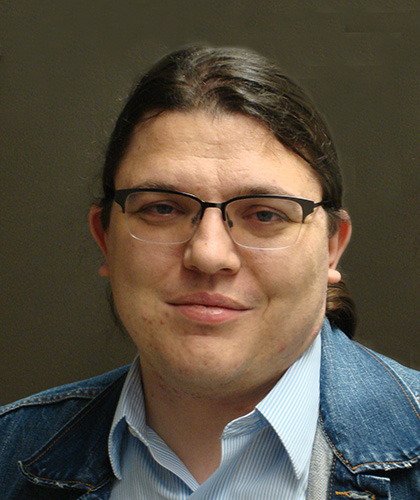
Stephen Pankavich is a Professor and Department Head in the Department of Applied Mathematics and Statistics at the Colorado School of Mines. He holds a PhD in Mathematical Sciences from Carnegie Mellon University, with research focused on partial differential equations, kinetic theory, and mathematical biology. His work bridges theoretical analysis and computational methods, addressing challenges in plasma dynamics, epidemiological modeling, and multiscale systems. Education: PhD, Mathematical Sciences, Carnegie Mellon University (2005) MS, Mathematical Sciences, Carnegie Mellon University (2001) BS, Mathematical Sciences, Carnegie Mellon University (2000) Research interests include the analytical and numerical study of collisionless plasmas, HIV dynamics, and epidemiological models. He has received awards such as the W.M. Keck Mentorship Award and the Colorado School of Mines Alumni Teaching Award. His articles explore topics like plasma decay rates, HIV therapy models, and particle-tracking algorithms. He has advised over 20 graduate and undergraduate students, contributing to impactful research in applied mathematics and computational science.
Yves Bourgault is a Full Professor in the Department of Mathematics and Statistics at the University of Ottawa. He holds a MSc and PhD from Laval University. His research focuses on computational fluid dynamics, numerical methods, finite element techniques, and continuum mechanics modeling, with applications in cardiac electrophysiology and ecological systems. Dr. Bourgault has supervised several graduate students, including Edward Boey (co-supervised), Sana Keita, Saint-Cyr Koyagurebo-Ime, and Kak Choon Loy. His work integrates advanced numerical techniques to address complex problems in biomedical engineering, environmental science, and mathematical physics. Key methodologies include finite element methods, deferred correction schemes, and anisotropic mesh adaptation. His research group is part of the Applied Mathematics division at the University of Ottawa, emphasizing interdisciplinary applications. Recent work explores climate change impacts on ecological systems, cardiac tissue modeling using high-resolution MRI data, and robust numerical methods for reaction-diffusion equations. Publications span topics such as bidomain models for cardiac electrophysiology, fluid-structure interaction in heart mechanics, and mathematical modeling of fuel cells. His contributions bridge theoretical numerical analysis with real-world biomedical and environmental challenges.
Christian Engwer is a full Professor at the University of Muenster in the Institute for Applied Mathematics, specializing in Analysis and Numerics. He leads the Engwer Group focused on Applications of Partial Differential Equations and is actively involved in the Cells in Motion initiative as a supervisor in the CiM-IMPRS Graduate Programme. His research centers on developing numerical methods for partial differential equations, particularly addressing challenges in complex geometries and multi-physics applications. He specializes in Unfitted Discontinuous Galerkin methods, which allow simulations on complex geometries without requiring domain-fitted meshes. His work spans porous media modeling, biological systems, and bioelectromagnetism applications, with significant contributions to EEG/MEG forward modeling in neuroscience. Analysis of his recent publications reveals a strong focus on model order reduction techniques, stabilized numerical schemes for cut-cell meshes, and applications in bioelectromagnetism. His work demonstrates a consistent trajectory toward developing robust, efficient numerical methods applicable to real-world problems in medical imaging and biological modeling, with increasing emphasis on high-performance computing implementations. Professor Engwer actively supervises doctoral students, with recent completions including Lukas Renelt (2025), Michael Wenske (2021), and Maria Carla Piastra (2019), among others working on topics related to numerical methods and biomedical applications. He leads several major research projects including BrainStorm: Highly Extensible Software for Advanced Electrophysiology and MEG/EEG Imaging (NIH-funded since 2019), multiple EXC 2044 Cluster of Excellence projects through 2025, and the InterKI interdisciplinary teaching program on machine learning and artificial intelligence. His group develops several important software packages including DUNE (Distributed and Unified Numerics Environment), duneuro (for bioelectromagnetism applications), and TPMC (Topology Preserving Marching Cubes). These tools support research in numerical methods and their applications to complex scientific problems.
Jim W Evans is a Professor of Physics & Astronomy and Mathematics at Iowa State University, and a Faculty Scientist at the Ames Laboratory (USDOE). His research focuses on non-equilibrium statistical physics and multi-scale modeling of nanoscale systems, including metallic nanoclusters, epitaxial thin films, catalytic surface reactions, and nanoporous materials. Evans holds a B.Sc. (Hons) in Mathematics from the University of Melbourne (1975) and a Ph.D. in Mathematical Physics from the University of Adelaide (1979). He has authored over 360 publications and maintains editorial roles at journals like Nanomaterials and Surface Science . His research interests span: Stability and dynamics of metallic nanocrystals Coarsening mechanisms in epitaxial films Reaction-diffusion systems and non-equilibrium phase transitions Interfacial catalysis and nanoporous transport phenomena Recent work includes: Real-time KMC simulations of nanocrystal intermixing Thermodynamic modeling of intercalated metal systems Statistical mechanics of surface dynamics Honors include APS Fellowship (2002), APS Outstanding Referee (2015), and an h-index of 58 (Google Scholar). He leads DOE-funded projects on exascale software for catalysis modeling and intercalation chemistry in layered materials.
Christian A Parkinson is an Assistant Professor at Michigan State University , affiliated with the Departments of Mathematics and Computational Mathematics, Science and Engineering. His research spans mathematical modeling, computational methods, and interdisciplinary applications in epidemiology, control theory, and differential geometry. Research Interests : Mathematical epidemiology, path planning algorithms, reaction-diffusion systems, stochastic modeling, differential geometry, and network science. Email : chparkin@msu.edu His recent publications focus on: Hamilton-Jacobi equations for optimal path planning in multi-agent systems Reaction-diffusion models for epidemics with human behavior Differential geometry approaches to hyperbolic surfaces Network models for disease-opinion coevolution Environmental crime modeling using level sets He teaches MTH 890: Readings in Mathematics , emphasizing advanced computational and theoretical frameworks.
Yuan Gao is an Assistant Professor of Mathematics at Purdue University's Department of Mathematics (College of Science). His research focuses on analysis and computations of PDEs in materials science, biology, and microfluidics, with recent emphasis on optimal control, Hamilton-Jacobi equations, and non-equilibrium chemical reactions. His work is supported by NSF awards DMS-2204288 and DMS-2440651. Previously, he held the William W. Elliott Assistant Research Professor position at Duke University (2019-2021). Research interests include PDE analysis in materials science (crystal growth, dislocation dynamics), numerical methods for interface dynamics, applied stochastic analysis (Langevin dynamics, transition path theory), and mean-field games for fluid systems. He organizes the PSU-Purdue-UMD Joint Seminar on Mathematical Data Science. Key publications span topics like dislocation evolution, Wasserstein gradient flows, and stochastic algorithms for rare events. Awards include NSF CAREER funding recognizing his contributions to mathematical analysis of non-equilibrium systems.
Dr. Ian Abel is an Associate Research Scientist at the Institute for Research in Electronics & Applied Physics (IREAP) at the University of Maryland, where he has been since 2018. His expertise spans fusion energy, plasma physics, and computational modeling. Abel holds a B.A. in Mathematics (2006) and M.S. in Applied Mathematics (2007) from the University of Cambridge, followed by a Ph.D. in Theoretical Physics from the University of Oxford (2012). His research focuses on magnetically confined fusion systems, particularly edge dynamics in tokamaks and innovative centrifugal mirror concepts. He has contributed to the development of gyrokinetic simulation tools like the GX code and the MaNTA transport model. Abel’s work also explores machine learning applications in plasma turbulence analysis and centrifugal mirror fusion reactor design for space propulsion. His research leverages advanced numerical methods, including GPU-native algorithms and adjoint-based optimization techniques for plasma equilibria. Key projects include the Centrifugal Mirror Fusion Experiment (CMFX), where he investigates plasma confinement and transport phenomena. His publications emphasize interdisciplinary approaches, integrating computational fluid dynamics, statistical physics, and high-performance computing to address challenges in fusion energy and plasma dynamics. While no specific awards are listed, his contributions to gyrokinetic turbulence modeling and centrifugal confinement systems are central to current fusion research.
Travis B. Thompson, Ph.D. is an Assistant Professor in the Department of Mathematics and Statistics at Texas Tech University, leading the TM4 (Texas Tech Translational and Theoretical Mathematical Modeling and Machine Learning in Medicine) research group. His academic journey includes postdoctoral work at Rice University, Simula Research Laboratory, and the University of Oxford, focusing on mathematics applied to neurodegenerative diseases. Education: Ph.D. in Mathematics from Texas A&M University (2013) Dr. Thompson develops theoretical mathematical models and applies scientific computing and machine learning to study neurological pathologies, particularly Alzheimer’s disease. His work explores complex biological processes on networks, translational healthcare applications, and nutritional security implications. Current research trends integrate neuroimaging data with finite element simulations to model tau progression , amyloid beta dynamics , and glymphatic clearance in age-related diseases. Scientific awards and honors were not explicitly mentioned in the provided materials. Dr. Thompson’s interdisciplinary approach connects computational neuroscience with biomedical engineering , utilizing techniques like diffusion tensor imaging and level set methods to analyze pathological protein spread and brain tissue mechanics . The TM4 research group focuses on network neurodegeneration , personalized medicine , and machine learning diagnostics . Their work spans from microfluidic cancer detection to computational modeling of brain clearance mechanisms , addressing challenges in both neurodegenerative diseases and biomedical engineering through rigorous mathematical frameworks.
Professor Tomasz Kapitaniak is a distinguished academic in the field of nonlinear dynamics and theoretical mechanics. He serves as a Professor of Theoretical and Applied Mechanics and Head of the Division of Dynamics at the Faculty of Mechanical Engineering, Technical University of Lodz, Poland. His career spans over three decades at the university, where he has made significant contributions to the understanding of nonlinear systems, chaos theory, and mechanical oscillations. Professor Kapitaniak holds advanced degrees in both mechanics and applied mathematics from the Technical University of Lodz and the University of Lodz. His educational background includes: M.Sc. in mechanics, Faculty of Mechanical Engineering, Technical University of Lodz (1982) M.Sc. in applied mathematics, Faculty of Mathematics, Physics and Chemistry, University of Lodz (1985) Ph.D. in mechanics, Faculty of Mechanical Engineering, Technical University of Lodz (1985) D.Sc. in mechanics, Faculty of Mechanical Engineering, Technical University of Lodz (1988) Professor of technical science, title given by the President of Poland (1995) His research focuses on nonlinear dynamics, with particular emphasis on mechanical oscillations, stability, bifurcations and chaos, stochastic dynamics, and applications of nonlinear dynamics in mechanical engineering. Professor Kapitaniak is renowned for his work on the development of methods for controlling chaos without feedback, identification of new types of bifurcations, synchronization mechanisms in coupled mechanical oscillators, and explaining the origin of randomness in mechanical systems. His research has evolved from fundamental theoretical work to increasingly applied studies involving complex networks, biological systems, and engineering applications. Professor Kapitaniak has published over 300 scientific papers in renowned journals, cited over 8,000 times. His work exhibits a consistent focus on understanding complex nonlinear phenomena across various physical systems. The trend in his recent publications shows continued exploration of synchronization phenomena, extreme events in dynamical systems, and applications of nonlinear dynamics to biological, mechanical, and physical systems. His most recent work demonstrates a growing interest in multistability, chimera states, and the prediction of tipping phenomena in complex systems. Among his notable scientific achievements and distinctions are: Election as a member of the Polish Academy of Sciences (corresponding member in 2013, ordinary member in 2019) Election to Academia Europaea in 2021 Honorary doctorates from Saratov State University (Russia, 2001) and Lublin University of Technology (Poland, 2014) Multiple prestigious fellowships including the British Council Fellowship (1989), King Abdul Aziz Award Fellowship (1990), and Fulbright Fellowship (1997) Editorial roles including Associate editor of Chaos, Solitons and Fractals since 1990 and member of editorial boards of several other prestigious journals Throughout his career, Professor Kapitaniak has been actively involved in mentoring the next generation of researchers, having supervised numerous PhD students including Jerzy Wojewoda, Anton van Wyk, Barbara Błażejczyk-Okolewska, Andrzej Stefański, Andrzej Kozłowski, and Przemysław Szumiński. He has secured significant research funding from various national and international sources including the Ministry of Science and Higher Education (Poland), Deutscher Akademischer Austauschdienst, The Royal Society of London, and others. His research team has maintained strong international collaborations with institutions worldwide, including universities in the United States, United Kingdom, Germany, Brazil, Russia, and Ukraine. He leads the Division of Dynamics at the Technical University of Lodz, which serves as a hub for research in nonlinear dynamics, mechanical oscillations, and related fields. The division maintains strong international collaborations with institutions worldwide and continues to produce cutting-edge research in the field of nonlinear dynamics and its applications.
David Del Rey Fernández is Assistant Professor and Pratt & Whitney Canada Chair in Industrial Artificial Intelligence in the Department of Applied Mathematics at University of Waterloo. His research develops efficient numerical algorithms for solving partial differential equations on high-performance systems. He holds a PhD from University of Toronto and previously worked at NASA Langley Research Center. Research focuses on robust numerical methods, mesh adaptation, and machine learning acceleration. His work includes entropy-stable schemes, summation-by-parts methods, and discretizations for compressible flows. Recent publications address Lyapunov-consistent discretizations and scalable reduced-order modeling.
Assoc. Professor Mariano Rodrigo is affiliated with the University of Wollongong. His primary research focuses on Biological mathematics , Financial mathematics , Numerical solution of differential and integral equations , and Dynamical systems in applications . His work bridges applied mathematics with real-world problems in tourism economics and physical sciences. Research Funding: Weather, climate & geological risks: derivative pricing & risk management (2024–2026, ARC Discovery Project) Modelling the post-stagnation stage of a tourism area life cycle (2023, UOW Internal Grant) Teaching & Supervision: Current PhD supervision topics include Derivative Pricing for Geological Risks , Mathematical Models for Time of Death Estimation , and Weather/Climate Risk Modelling .
Prof Nikolaos Nikiforakis is a Professor at the University of Cambridge, leading the Laboratory for Scientific Computing at the Cavendish Laboratory. He holds roles including Director for Academic Programmes of the Centre for Scientific Computing, Course Director of the MPhil in Scientific Computing, and Deputy Director of the EPSRC Centre for Doctoral Training in Computational Methods for Materials Science. He is also a Fellow and Director of Studies in Mathematics at Selwyn College, Cambridge. He directs The Gianna Angelopoulos Programme for Science Technology and Innovation. He holds a BSc in Aeronautical Engineering from the University of Manchester, followed by an MSc in Aerospace Propulsion and a PhD in 'Evolution of Detonation Waves' from Cranfield Institute of Technology. His postdoctoral research at the University of Cambridge’s Department of Chemistry focused on computational models for stratospheric ozone depletion. He later founded the Laboratory of Computational Dynamics at the Department of Applied Mathematics and Theoretical Physics before joining the Cavendish Laboratory in 2008. His research focuses on numerical algorithms and High Performance Computing for multi-physics simulations involving complex systems of nonlinear PDEs. Applications span detonation dynamics, plasma physics, and materials science, with industry collaborations for software development. His work addresses multi-scale, multi-physics problems previously deemed intractable, with practical applications in aerospace, energy, and environmental fields. He leads academic programmes in scientific computing and supervises doctoral research through the EPSRC CDT. His contributions bridge fundamental science and industrial innovation, emphasizing computational methods for materials and fluid dynamics.
Dr. Tamas Mona is a Postdoctoral Research Associate in the Department of Plant Sciences at the University of Cambridge , affiliated with the Epidemiology and Modelling Group . His work focuses on environmental suitability models for large-scale epidemiological forecasting, particularly in wheat rust outbreaks across Africa, the Middle East, and Asia. Collaborations include the UK Met Office, CIMMYT, and institutions in Ethiopia, Kenya, Bangladesh, and Nepal. PhD in Environmental Sciences (2019), Eötvös Loránd University MSc in Meteorology (2013), Eötvös Loránd University BSc in Physics with Meteorology (2011), Eötvös Loránd University Research interests integrate meteorological applications with epidemiological models to predict crop disease outbreaks. Key projects involve tracking transmission pathways for stem rust pathogens and analyzing how irrigation creates green bridges for intercontinental pathogen spread. Publications emphasize environmental science and computational epidemiology . Current collaborations span Sub-Saharan Africa (EIAR, ATI, KARLO) and South Asia (BWMRI, NARC) through initiatives like the Global Food Security IRC . Modeling frameworks developed by Mona contribute to policy advisory systems for emerging pest threats, aligning with DEFRA and UK government strategies.
Yannis Kevrekidis is a Professor at Princeton University with a distinguished career in computational mathematics and chemical engineering. He is currently a Hans Fischer Senior Fellow at the Technical University of Munich (TUM-IAS) and has held visiting positions at institutions like the Zuse Institute Berlin and Caltech. Education : National Technical University of Athens (Chemical Engineering) University of Minnesota (PhD in dynamical systems) Research Interests : Equation-Free and Variable-Free Modeling Complex Systems Dynamics Multiscale Computation Integration of Machine Learning with Scientific Computing Pattern Formation & Instability Analysis Key Article Trends : Advanced data-driven modeling of dynamical systems Manifold learning for reaction coordinates Projective integration methods Coarse-grained modeling across disciplines Applications in epidemiology, neuroscience, and fluid dynamics Scientific Awards : Guggenheim Fellowship Humboldt Research Award Computing in Chemical Engineering Award (AIChE) Bodossaki Academic Award Allan P. Colburn Award Collaborations : Extensive international collaborations with institutions in Germany, Austria, and the UK Key role in the Complex Systems Modeling and Computation focus group at TUM-IAS
Tasso J. Kaper is a Professor and Chair of the Department of Mathematics and Statistics at Boston University. He holds a Ph.D. in Applied Mathematics from the California Institute of Technology (1992). His research focuses on dynamical systems, nonlinear dynamics, reaction-diffusion equations, and mathematical biology. He is a Fellow of both the American Mathematical Society (AMS) and the Society for Industrial and Applied Mathematics (SIAM). He serves as Editor-in-Chief of Nonlinearity (UK Institute of Physics) and has held editorial roles for journals such as the SIAM Journal on Applied Dynamical Systems and Advances in Differential Equations. His work bridges applied mathematics and interdisciplinary fields, including fluid mechanics, climate modeling, and neuronal dynamics. Recent research highlights include studies on bifurcation phenomena, symmetry-breaking rhythms in coupled oscillators, and delayed Hopf bifurcations in reaction-diffusion systems. He has advised over 15 Ph.D. students, many of whom now hold academic and industry positions. Key awards include the AMS and SIAM fellowships, recognizing his contributions to dynamical systems theory and applications. His lab collaborates on topics ranging from glacial cycle modeling to chimera states in oscillator networks.