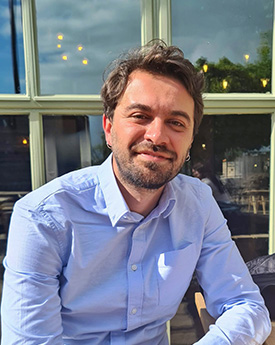
Saion Roy is a Research Fellow in the Department of Electrical and Computer Engineering at Northeastern University. His research focuses on in-memory computing architectures, emphasizing energy efficiency, security vulnerabilities, and hardware optimization. He explores cross-disciplinary areas such as resistive crossbar arrays, MRAM-based systems, and statistical error compensation techniques. Key research interests include: Energy-accuracy-security trade-offs in emerging memory technologies Hardware security against model extraction attacks Signal processing enhancements in analog computing systems Recent work has concentrated on improving signal-to-noise ratios in 22nm MRAM systems and developing benchmarking frameworks for in-memory computing. His 2024 publications highlight advancements in secure computing architectures and energy-efficient design principles. While no formal awards are listed, his contributions to hardware security and semiconductor innovation demonstrate significant scholarly engagement. Advising and grant details are not provided in available materials.
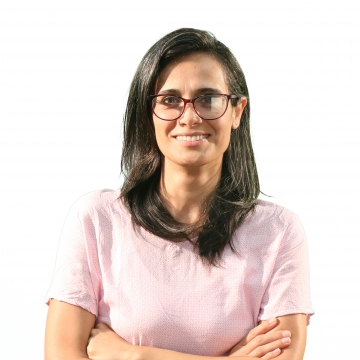
Dr. Iulia Salaoru is an Associate Professor in Materials Science and Engineering at De Montfort University, affiliated with the School of Engineering and Sustainable Development within the Faculty of Computing, Engineering and Media. She is a key member of the Emerging Technologies Research Centre and the Institute of Engineering Sciences, where she leads research in functional electronic materials and green manufacturing technologies. PhD in Solid State Physics, Al.I. Cuza University, Romania MSc in Physics of Thin Films, Al.I. Cuza University, Romania BSc in Physics, Al.I. Cuza University, Romania Postgraduate Certificate in Teaching in Higher Education (Merit), De Montfort University, UK Her research expertise lies in printed and flexible electronics , with a focus on resistive memory devices (ReRAM) , inkjet printing , 3D printing , and green electronics . She investigates novel materials such as polymer composites, TiO2 thin films, and graphene-based materials for applications in sustainable electronics and energy harvesting. Her work bridges fundamental physics with practical device fabrication and manufacturing innovation. The most recent articles highlight a strong trend toward additive manufacturing of memory devices , green electronics , and functional materials for energy . Her publications span high-impact journals in materials science, nanotechnology, and electronic engineering, reflecting interdisciplinary innovation in memory technologies and sustainable fabrication methods. She has received several scientific recognitions, including: Doctoral College studentship (DMU, 2023) Award for Research Engaged Teaching (2020) Certificate of Outstanding Contribution in Reviewing, Additive Manufacturing (2018) Guest Editor for Special Issues in Micromachines (2020) and Materials (2023) Fellow of the Higher Education Academy (2017) Dr. Salaoru actively supervises PhD students and has served as principal investigator on multiple funded research projects, including grants from the Royal Society and De Montfort University. She mentors BSc, MSc, and MPhil students, acts as internal examiner for PhD theses, and has hosted Erasmus trainees. Her leadership in externally and internally funded research demonstrates a strong commitment to advancing knowledge and training future researchers. She is also involved in professional service as a member of editorial and reviewer boards for journals such as Electrochem, Micromachines, and Polymers (MDPI), and serves on organizing committees for international conferences including ICPAM and ICREPQ.
Serdar Tekin serves as a Research Fellow in the Department of Physics at Lancaster University, affiliated with the Quantum Nanotechnology research group. His work centers on advanced semiconductor materials and nanoscale electronic devices. His research interests span semiconductor physics, nanoelectronics, and quantum device engineering with specific focus on memory technologies and novel materials systems. Key areas include resistive switching phenomena and ferroelectric oxide applications in next-generation computing hardware. His recent publication analyzes scaling effects in hafnium oxide-based memory cells, demonstrating expertise in materials characterization and device physics within the semiconductor domain. The work contributes to ongoing efforts in non-volatile memory miniaturization. No scientific awards or student advisement activities are documented in available sources. His experimental research operates within Lancaster's Physics Department infrastructure focusing on nanoscale device fabrication and testing.
Anand Sivasubramaniam is a Professor in the Department of Computer Science and Engineering, specializing in systems optimization and energy efficiency. His research spans hardware-software co-design, edge computing, and sustainable computing infrastructures. He leads multiple NSF-funded projects, including dynamic edge platforms for XR applications and power management in consolidated servers. His research interests focus on: Energy-efficient computer systems and data centers Hardware-software co-design for heterogeneous architectures Storage systems, memory tiering, and SSD optimization Edge computing for VR/AR and IoT applications Latency-aware resource provisioning and power regulation Recent publications emphasize emerging trends in edge-device streaming (e.g., low-bandwidth VR), neural network performance estimation, and adaptive resource orchestration. His work consistently bridges theoretical models with practical system implementations, particularly in distributed environments and green computing. Grant leadership includes: NSF projects on edge platforms (2022-2025), power allocation (2017-2023), and latency reduction (2019-2022) Collaborations on multi-stakeholder systems and ReRAM-based memory architectures
Asal Kiazadeh is an Assistant Professor at the Faculty of Science and Technology (FCT), Universidade Nova de Lisboa, specializing in memristor devices, thin-film transistors, and neuromorphic computing. His research focuses on advancing flexible amorphous oxide materials for resistive switching devices and IoT applications. PhD in Electronics and Optoelectronics from the University of Algarve (2013) Collaboration with Philips Research Laboratories Principal Investigator for NeurOxide (PTDC/NAN-MAT/30812) and OPERA (2022.08132.PTDCO) Local coordinator for TERRAMETA (European Project No. 101097101) His work bridges device physics and system-level innovation, with a particular emphasis on memristor-based neuromorphic computing , reconfigurable smart surfaces , and low-power RF solutions . Recent publications highlight advancements in printed electronics, 2D materials, and sustainable in-memory computing edge devices. Kiazadeh supervises PhD and Master’s students in Micro and Nanotechnology, Electronics, and Materials Science. He has served on the organizing committee of DoCEIS (Doctoral Conference on Computing, Electronics, and Industrial Systems) since 2016 and leads the 'Resistive Switching Technologies for Neuromorphic and RF Solutions' research group.
Mohsen Kaboli is an Assistant Professor (Part-time) at Eindhoven University of Technology (TU/e) in the Netherlands, affiliated with the Department of Electrical Engineering and the Electronic Systems group. Since 2018, he has served as head of the AI, Robotics & Cognitive Vehicle research lab at BMW Group’s Center of Invention in Munich, Germany. Previously, he held positions at Radboud University’s Institute for Brain and Cognition (2019-2022) and Technical University of Munich (TUM) as a postdoctoral research fellow. His research focuses on Embodied Robotics, Visuo-Tactile Interactive Perception, and Machine Learning, with applications in Robotic Grasping, Human-Robot Collaboration, and Neuromorphic Computing. He leads European-funded projects like PHASTRAC (Oscillatory Neural Networks for AI Edge Computing) and INTUITIVE (Tactile User Interfaces). Keywords: Tactile Intelligence, AI, Robotics Application Domains: Mobile Robotics, Medical Instrumentation, Neuroprosthetics His recent publications (e.g., ViTract, Shared Visuo-Tactile Perception) emphasize robust object pose estimation and shape reconstruction using Bayesian filtering and Graph Neural Networks. He has authored ~40 academic works and contributed to 20 patents. Scientific Awards : IEEE Senior Member (2018) Georges Giralt Ph.D. Award (Finalist) IEEE ICRA Outstanding Paper Award (Finalist, 2023) IEEE FLEPS Outstanding Student Award (Winner, 2022) IEEE ROSE Outstanding Paper Award (Winner, 2024) Mohsen Kaboli serves as Editor/Associate Editor for IEEE ICRA, IROS, R-AL, T-RO, and IJRR. His work bridges tactile perception, AI, and robotics, with impacts in wearables, medical devices, and autonomous systems.
Professor Robert Bogdanowicz is Head of the Department of Optoelectronics and Deputy Director of the Doctoral School for Education and Quality at Gdańsk University of Technology's Faculty of Electronics, Telecommunications and Informatics. His research integrates materials science, electrochemistry, and nanotechnology to develop sustainable solutions. Research Focus: His work centers on carbon-based nanomaterials, with emphasis on: Advanced electrode design (3D-printed, boron-doped nanostructures) Electrochemical sensors for environmental/medical applications Neuromorphic computing via graphene-diamond heterojunctions Sustainable wastewater treatment technologies Recent publications (2025) demonstrate consistent innovation in sensor development, materials synthesis, and energy-efficient computing. His research shows strong translational potential in environmental monitoring, healthcare diagnostics, and information technology. Contact: robbogda@pg.edu.pl