
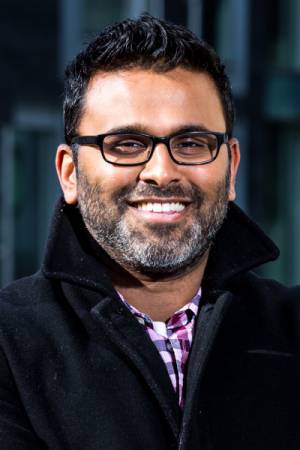
Deva Kannan Ramanan is a Professor at the Robotics Institute of Carnegie Mellon University , focusing on computer vision , machine learning , and human-centered robotics . His work bridges neurorobotics and visual perception , with applications in autonomous driving and 4D reconstruction . Research Topics Computer Vision 3-D Vision and Recognition Visual Servoing Neurorobotics Human-Centered Robotics Graphics & Creative Tools His recent publications in CVPR , ICRA , and ICCV emphasize 4D human reconstruction , neural rendering , and vision-language models for autonomous systems. He serves as General Chair of CVPR 2027 and Program Chair of CVPR 2018 , with IARPA funding for aerial-ground rendering (2023-2027). Current students include PhD candidates Sally Chen, Kangle Deng, and Zhiqiu Lin, while past advisees like Arun Vasudevan and Olga Russakovsky now hold positions at Amazon and Meta respectively.
جستجوی استاد راهنمای دانشگاهی
برای مسیر پژوهشیتان، استاد راهنما، استاد دانشگاه و پژوهشگر مناسب را پیدا کنید و با آنها ارتباط بگیرید.
نمایش ۱-۱۵ از ۷۹۹ استاد راهنما
اطلاعات پروفایلها از صفحات عمومی دانشگاهها گرفته شده و ممکن است بهروز نباشد.
Andrea Tagliasacchi is an Associate Professor in the School of Computing Science at Simon Fraser University (SFU), where he holds the Visual Computing Research Chair. He is also a part-time (20%) Staff Research Scientist at Google DeepMind in Toronto and holds an associate professor (status only) appointment in the Department of Computer Science at the University of Toronto. Education: PhD in Computing Science – Simon Fraser University (NSERC Alexander Graham Bell Fellow) Postdoctoral Research – École Polytechnique Fédérale de Lausanne (EPFL) MSc in Computer Science – Politecnico di Milano (Gold Medalist) His research lies at the intersection of computer vision, computer graphics, and machine learning, with a focus on 3D visual perception. Key areas include neural radiance fields (NeRF), 3D Gaussian splatting, inverse rendering, and geometric deep learning, with applications in robotics, augmented reality, and autonomous systems. His work emphasizes robust and efficient scene understanding and reconstruction from visual data. His recent publications, appearing in top venues like CVPR, SIGGRAPH, NeurIPS, and ECCV, demonstrate a strong emphasis on neural fields, 3D reconstruction, and generative modeling. Trends include improving rendering efficiency, enhancing robustness to noise and distractors, and enabling controllable and 3D-aware generation. His group has made significant contributions to Gaussian splatting, NeRF optimization, and diffusion-based 3D/4D synthesis. Scientific Awards: 2024 CVPR Best Paper Award (Honorable Mention) 2020 CVPR Best Student Paper Award 2015 SGP Best Paper Award NSERC Alexander Graham Bell Canada Graduate Scholarship MITACS Best Paper Award (SIGGRAPH Asia 2009) NSF Best Poster Award (SGP 2012) He has advised numerous PhD and MSc students, many of whom are now researchers at leading institutions and companies. His research has been supported through collaborations with Google, Intel, and academic partners. He serves the community as a Senior Area Chair for CVPR 2025, Associate Editor for IEEE TPAMI (2024–2026), Guest Editor for IEEE TPAMI on 3D GenAI, and Program Chair for 3DV 2024. He leads a vibrant research lab at SFU focused on pushing the boundaries of 3D scene understanding with machine learning.
- Computer Vision
- Computer Graphics
- Machine Learning
- +۱۱ مورد دیگر

Matthew O'Toole is an Associate Professor at Carnegie Mellon University's School of Computer Science, holding joint appointments in the Robotics Institute and Computer Science Department. His research focuses on computational imaging, integrating optics, electronics, and computational processing to innovate visual information capture and display. Education: PhD (Computer Science, University of Toronto, 2016), MSc (2009), BSc (Honors Computer Science and Mathematics, University of British Columbia, 2007). Prior roles include Banting Postdoctoral Fellow at Stanford University and visiting scholar at MIT Media Lab's Camera Culture group. Research interests emphasize programmable imaging systems, transient imaging, non-line-of-sight sensing, and holographic displays. Key innovations include vibration sensing via dual-shutter optics and radar super-resolution for autonomous vehicles. Awards include runner-up best paper recognitions at ICCV 2007, CVPR 2014, and SIGGRAPH 2017 dissertation honors. Advisees include Dorian Chan and Arjun Teh. Grants supported by Canadian Banting Fellowships. Active in workshop organization (CVPR Computational Cameras 2016-2017) and course development on computational imaging at SIGGRAPH 2014. Labs/Teams: Leads research in computational imaging and robotics at CMU, collaborating with industry partners like NVIDIA and MDA. Current projects explore LiDAR-radar fusion, holographic projection systems, and dynamic scene reconstruction.
- Computer Graphics
- Robotics
- Computer Vision
- +۵ مورد دیگر
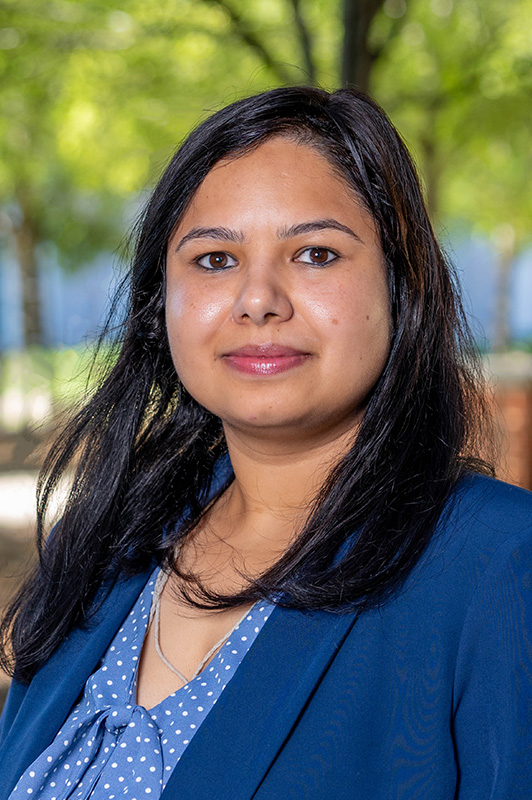
Neha Sharmaمشاهده پروفایل
استادیار
Neha Sharma is an Assistant Professor in the Department of Civil and Environmental Engineering at Auburn University. Her research focuses on nutrient recovery, electrochemical resource recovery, water reuse, trace metal cycling, and pollutant fate and removal.

David B. Lindellمشاهده پروفایل
استادیار
David B. Lindell is an Assistant Professor in the Department of Computer Science at the University of Toronto, with affiliations to the Vector Institute and AXL. He is a founding member of the Toronto Computational Imaging Group. His research focuses on physically based intelligent sensing, integrating physical models, signal processing, and AI to advance sensing systems. Notable projects include imaging around corners, through scattering media, and developing machine learning algorithms for 3D scene reconstruction. Education: Ph.D. in Computational Imaging from Stanford University (advisor: Gordon Wetzstein). Awards include the 2024 Ontario Early Researcher Award and the Best Student Paper at CVPR 2025. His work combines computational imaging with applications in computer graphics and autonomous systems. Research interests span non-line-of-sight imaging, single-photon sensing, and neural representations. Key contributions include the Light-Cone Transform (Nature 2018), confocal diffuse tomography (Nature Communications 2020), and AutoInt (CVPR 2021). His lab develops systems for 3D reconstruction, transient imaging, and photon-efficient sensors. Selected grants and support: NSF CAREER Award, DARPA REVEAL program, and KAUST Visual Computing Center funding. Active collaborations with industry and academic institutions on autonomous driving and medical imaging applications.
Ravi Ramamoorthi is the Ronald L. Graham Professor of Computer Science and Director of the UC San Diego Center for Visual Computing. He holds a faculty position in the Department of Computer Science and Engineering (CSE) and is an affiliate of the Department of Electrical and Computer Engineering (ECE). He joined UC San Diego in 2014, previously at UC Berkeley and Columbia University. He also holds a part-time appointment as a Distinguished Research Scientist at NVIDIA. His research focuses on visual computing, including rendering, computer vision, light field cameras, and physics-based modeling. Notable contributions include foundational work on spherical harmonic lighting, neural radiance fields (NeRF), and Monte Carlo rendering techniques. His work bridges graphics, vision, and signal processing with applications in sparse reconstruction, importance sampling, and real-time rendering. He teaches courses like CSE 167 (Computer Graphics), CSE 168 (Rendering), and advanced topics in computer graphics. Awards include ACM and IEEE Fellowships, the Okawa Foundation Grant, and multiple Frontiers of Science Awards. His research is supported by NSF, ONR, and industry collaborators including Adobe, Sony, and Qualcomm. Key projects include the Center for Visual Computing, Light Field research, and educational initiatives like edX MOOCs on computer graphics and rendering. His work has influenced industry tools (e.g., Pixar, RenderMan) and modern real-time rendering pipelines with denoising techniques.
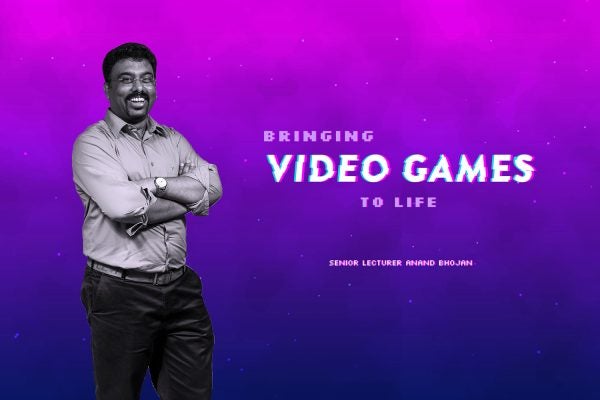
Anand Bhojanمشاهده پروفایل
دانشیار
Anand Bhojan is an Associate Professor (Educator Track) at the Department of Computer Science, School of Computing, National University of Singapore (NUS). He is a member of the Communication and Internet Research Lab and serves on the Graduate Studies Committee. Dr. Bhojan is also the founder of Anuflora Systems and Virtual and Augmented Reality Labs (www.varlabs.org), and serves as Associate Editor of Computers and Electrical Engineering Journal, Elsevier, and Vice President of International Researchers Club, Singapore. Dr. Bhojan earned his Ph.D. in Computer Science & Engineering from NUS in 2011, where his thesis was nominated for the Best PhD Thesis Award. He also holds a Professional Master's in Computer Applications from Bharathidasan University (1999), a Bachelor's degree in Computing with Gold Medal (University topper) from Bharathiar University (1994), and a Postgraduate Certificate in Teaching Higher Education from University of Sheffield, UK (2003). His research spans multiple domains including Distributed Computing and Wireless Networks (IoT, Security, Blockchain), Artificial Intelligence (Generative AI, FinTech), and Entertainment Computing with focus on Games, VR/AR/Metaverse technologies. Dr. Bhojan leads the Metaverse Foundry research group which focuses on content generation for games & XR simulations across multiple domains including entertainment, healthcare, and architecture, while also experimenting with innovative teaching methods for entertainment media technologies. Dr. Bhojan's recent research has pioneered hybrid rendering techniques that strategically combine ray tracing and rasterization to create more realistic video game graphics without compromising performance. His work addresses critical challenges in real-time rendering, particularly in depth of field and motion blur effects, with the goal of making Hollywood-quality graphics accessible on a wider range of hardware. Earlier work focused on energy efficiency in mobile gaming, including power management techniques and latency optimization for cloud gaming. Among his notable achievements: 2012 Nominated for Best PhD Thesis Award (Wang Gungwu Medal & Prize), NUS 2011 Dean's Graduate Research Achievement Award (PhD), SoC, NUS 2006 Best R&D Project award from TOTE Board, Singapore 1995 Gold medal for first Rank (out of 4000) in Computing, Bharathiar University Dr. Bhojan has served as Organizing Chair and Program Chair for multiple international conferences and has delivered keynote talks at IEEE/ACM International Conferences. He teaches courses including Computer Networks Practice, Game Development, Interaction Design for Virtual and Augmented Reality, and Game Development Project. He leads the Metaverse Foundry research group and the Virtual and Augmented Reality Labs, where undergraduate and graduate students have won multiple research and innovation awards. His research bridges entertainment, education, and emerging technologies with practical applications in making immersive experiences more accessible across different hardware capabilities while maintaining energy efficiency.
- Distributed Computing
- Wireless Networks
- IoT
- +۱۳ مورد دیگر
Andrea Tagliasacchi is an Associate Professor at Simon Fraser University's School of Computing Science, holding the Visual Computing Research Chair. He is also a part-time (20%) staff research scientist at Google DeepMind (Toronto) and an associate professor (status-only) at the University of Toronto's computer science department. His research focuses on 3D visual perception at the intersection of computer vision, graphics, and machine learning. Education: EPFL – Postdoc Simon Fraser University – PhD (NSERC Alexander Graham Bell Fellow) Politecnico di Milano – MSc (Gold Medalist) Research Interests: His work emphasizes 3D reconstruction, neural fields, and applications in robotics, autonomous systems, and augmented reality. Recent advancements include scalable 3D Gaussian splatting, robust neural rendering techniques, and diffusion models for 4D generation. Notable Articles: Recent work spans real-time differentiable ray tracing, stochastic rasterization for 3D Gaussian splats, and generative image composition using neural fields. His publications often blend theoretical contributions with practical applications in CVPR, SIGGRAPH, and NeurIPS. Awards: 2015 SGP Best Paper Award 2020 CVPR Best Student Paper Award 2024 CVPR Best Paper Honorable Mention Advising & Grants: Advised 14+ PhD/MSc students (e.g., Baptiste Angles, Sara Sabour) and co-advised with notable figures like Geoffrey Hinton. Active in grants involving neural field compression, robotic perception, and generative AI. Labs & Teams: Leads a lab at SFU focused on 3D vision and neural fields, collaborating with industry partners like Google Brain and Samsung Research.
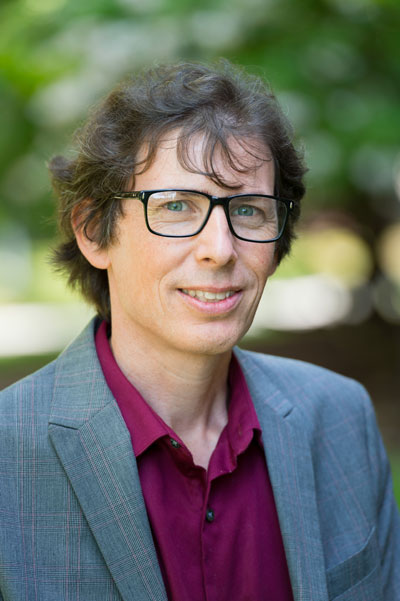
Steven Rogak is a Professor in the Department of Mechanical Engineering at the University of British Columbia's Faculty of Applied Science. He holds a P.Eng. license and degrees including a B.A.Sc. in Mechanical Engineering from UBC, and M.Sc. and Ph.D. from Caltech. P.Eng., University of British Columbia B.A.Sc., University of British Columbia M.Sc., Ph.D., California Institute of Technology His research focuses on aerosol science, particularly solid nanoparticles from combustion processes, their climate and health impacts, and mitigation strategies. Key areas include: Soot morphology and transport properties Engine emission reduction via fuel injectors Indoor air filtration systems Membrane-based energy exchangers Atmospheric particulate analysis The 15 most recent articles span experimental and theoretical studies on soot characterization, membrane technologies, and aerosol dynamics, with applications in climate modeling, healthcare ventilation, and sustainable materials. Collaborations include Westport Innovations and interdisciplinary teams. Rogak leads the Aerosol Laboratory at UBC, where he applies fluid mechanics and heat transfer fundamentals to address environmental and health challenges. He emphasizes experimental rigor and welcomes graduate students with expertise in these areas.
Simon Beaumontمشاهده پروفایل
دانشیار
Dr. Simon Beaumont is an Associate Professor in the Department of Chemistry at Durham University , with additional responsibilities as Associate Dean (PGR) in the Faculty of Science. His research program integrates heterogeneous catalysis , nanomaterials , and in situ spectroscopic techniques to develop sustainable chemical processes. BA & MSci Natural Sciences, University of Cambridge (2003-2007) PhD in Heterogeneous Catalysis, University of Cambridge (2010) Postdoctoral Fellowship at UC Berkeley (2010-2012) Research foci include mechanistic studies of catalytic processes, nanoparticle synthesis , and in situ characterization via X-ray absorption (NEXAFS), DRIFTS, and Raman. His work addresses challenges in CO2 hydrogenation , biomass conversion , and environmental remediation , supported by national/EU/industrial funding. Recent publications highlight trends in selective hydrogenation (furfural), multi-functional catalysts (acid-base systems), and nanoparticle stability under reactive conditions. All studies emphasize molecular-level understanding for practical catalyst design. Scientific awards include Leverhulme Trust and Addison Wheeler fellowships. Teaching portfolio spans first-year laboratories , organic chemistry tutorials , and advanced catalysis lectures . Supervision of five research postgraduates and leadership of industry-funded projects further demonstrate his academic impact.
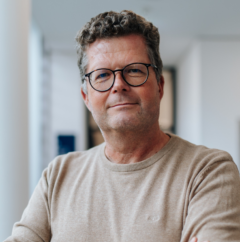
Prof. Marc Stamminger is a Professor of Visual Computing at FAU since 2002, leading the Chair of Computer Science 9 (Computer Graphics). His work focuses on algorithms for synthesizing and analyzing images through 3D modeling, LiDAR/Radar capture, and light simulation. He co-leads FAU Solar, applying 3D modeling for environmental lighting analysis under varying conditions. Stamminger has published over 250 papers, winning prestigious awards like the Siggraph Test-of-Time Award. He holds executive roles in Eurographics and is Vice Dean of FAU's Technical Faculty. Research interests span neural rendering , 3D reconstruction , radar imaging , and medical visualization . Recent work emphasizes radiance field rendering (e.g., VR-Splatting, INPC) and radar-based human motion tracking. His lab's FAU Solar project integrates large-scale 3D models with environmental lighting simulations. Publications trends highlight neural rendering optimizations , radar-MIMO systems , and agricultural digital twins . Key collaborations involve medical imaging (e.g., vocal fold reconstruction) and autonomous driving data generation. Awards: Siggraph Test-of-Time (2023?), 2× Siggraph Best-Of-Show Grants/Teams: FAU Solar Lab, Eurographics leadership, FAU Vice Dean Labs: Chair of Computer Science 9, FAU Solar Initiative
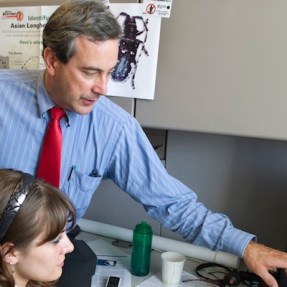
Carey Rappaport is a Professor of Electrical and Computer Engineering at Northeastern University. He serves as deputy director of the U.S. Department of Homeland Security’s ALERT Center (Awareness and Localization of Explosive-Related Threats) and associate director of the Gordon-CenSSIS Center (Bernard M. Gordon Center for Subsurface Sensing and Imaging Systems). His research focuses on microwave and millimeter-wave sensing technologies for homeland security and biomedical applications, including tunnel detection, airport security systems, and breast cancer diagnostics. His work on explosives detection involves standoff and portal-based millimeter-wave radar, X-ray backscatter, IR and Terahertz spectroscopy for trace detection, and electronic sensing of hidden triggers. He has emphasized balancing technological effectiveness with privacy, health, and cost considerations in security systems. His projects include developing airport scanners with improved imaging and analyzing challenges in securing "soft targets" like public events. Rappaport's research has been highlighted in media outlets such as Boston Herald, The Economist, and Northeastern University news. He has discussed technical limitations of ground-penetrating radar in tunnel detection and policy implications for international airport security measures, including the 2011 Moscow airport bombing and 2023 Gaza Metro tunnel network analysis.
Professor Hala Zreiqat AM is a leading biomedical engineer at The University of Sydney , serving as the Director of the ARC Training Centre for Innovative BioEngineering . A Fellow of all major Australian academies (AAS, ATSE, FAHMS, FRSN), she develops 3D printed bioceramics for bone regeneration while championing diversity through initiatives like the IDEAL Society and BIOTech Futures mentorship program. Her work bridges academia, clinical practice, and industry in musculoskeletal research . Research Focus: Her lab creates synthetic bone scaffolds that mimic natural bone architecture, strength, and porosity, enabling non-rejected bone regeneration via patient-matched implants. Key applications include orthopaedic, dental, and maxillofacial repair , with over $18M in competitive funding and multiple patents. Current projects explore AI-driven scaffold performance prediction and anti-senescence strategies for aging-related bone loss. Scientific Trends: Recent publications highlight 3D printed nanovoxelated ceramics , antisenescence biomaterials , and multifunctional theranostic platforms . Her team integrates machine learning for scaffold design, atom probe tomography for interface analysis, and two-photon imaging for cellular monitoring in 3D environments. 2021-2022 Fulbright Senior Scholar 2018 NSW Premier's Woman of the Year 2019 Eureka Prize for Innovative Use of Technology Fellow of Australian Academy of Science (2021) Over $18M in research funding Teaching & Leadership: She designed core courses like Tissue Engineering and Nanomaterials in Medicine , mentoring 158 students in 2020 alone. As Chair of CAAR (2020-2023), she strengthens Australia-Arab collaborations. Her lab trains early-career researchers , with alumni now in academia and industry.
- Biomaterials
- Tissue Engineering
- Regenerative Medicine
- +۱۲ مورد دیگر
Kwang Moo Yiمشاهده پروفایل
استادیار
Kwang Moo Yi is an Assistant Professor in the Department of Computer Science at the University of British Columbia (UBC), where he conducts research in computer vision and machine learning. He is affiliated with the Computer Vision Lab, CAIDA (Centre for Artificial Intelligence Decision-making and Action), and ICICS (Institute for Computing, Information and Cognitive Systems) at UBC. Education: B.Sc. from Seoul National University Ph.D. from Seoul National University under Prof. Jin Young Choi Post-doctoral researcher at École Polytechnique Fédérale de Lausanne (EPFL) with Prof. Pascal Fua and Prof. Vincent Lepetit Dr. Yi's research focuses on Visual Geometry with the goal of understanding local environments, adapting to them, and acting within them. His work spans applications in autonomous vehicles, drones, robots, and Augmented/Mixed Reality systems. He employs machine learning, particularly deep learning, as the primary tool for advancing computer vision capabilities. His recent publications demonstrate a strong focus on neural rendering techniques, especially 3D Gaussian Splatting and Neural Radiance Fields (NeRF). The research trends show increasing sophistication in handling occlusions, improving rendering quality, and developing more efficient training methods for neural fields. There's also significant work connecting computer vision with practical applications in industrial settings and energy systems. Dr. Yi serves as an area chair for top computer vision and machine learning conferences including CVPR, ICCV, ECCV, NeurIPS, ICML, and AAAI. He was part of the organizing committee for CVPR 2023. He supervises graduate students including Eric (who recently completed his PhD), Gopal (now at Samsung Research), and Jeong-Gi (joining as a postdoctoral fellow). His teaching includes CPSC 425: Computer Vision and CPSC 533Y: 3D Computer Vision with Deep Learning. Dr. Yi is actively involved with the Computer Vision Lab at UBC, collaborating with researchers across CAIDA and ICICS. His work bridges theoretical computer vision with practical applications in various domains including astronomy, industrial automation, and energy systems.
Thomas Meierمشاهده پروفایل
استاد مهمان
Professor Thomas Meier is a Visiting Professor at the Department of Life Sciences, Imperial College London (since 2015), and Director of the Centre for Structural Biology (2017–2021). He leads research on ATP synthase structure, drug targets for tuberculosis, and molecular mechanisms of disease. Previously, he was a Group Leader at the Max-Planck-Institute of Biophysics (2006–2015) and ETH Zurich's Institute of Microbiology. His work combines structural biology (X-ray crystallography, electron microscopy) with biochemical studies. Education: Dr. sc. nat. (2002) and Dipl. sc. nat. (1998) from ETH Zurich. Awards include the Wellcome Trust Investigator (2015–present). Research focuses on ATP synthase's role in energy conversion, drug development, and structural biology. His lab includes postdocs and students like Lisa Uhrig and Anthony Cheuk. Key affiliations: Centre for Structural Biology, Membrane Biology Group, and Bacterial Pathogenesis studies. Languages: German, English, French (fluent), Latin (read/write). Publications span structural biology, planetary science, and drug discovery. His work on ATP synthase inhibitors for TB has clinical implications, while astrophysical studies explore planetary formation via giant impacts.
- Structural Biology
- Biochemistry
- Microbiology
- +۵ مورد دیگر
نمایش نتایج تا ۷۵۰ مورد اول. برای یافتن نتایج دقیقتر، جستجوی خود را با فیلترها محدود کنید.