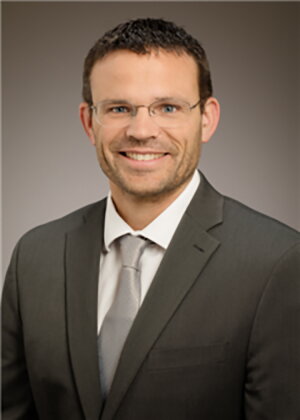
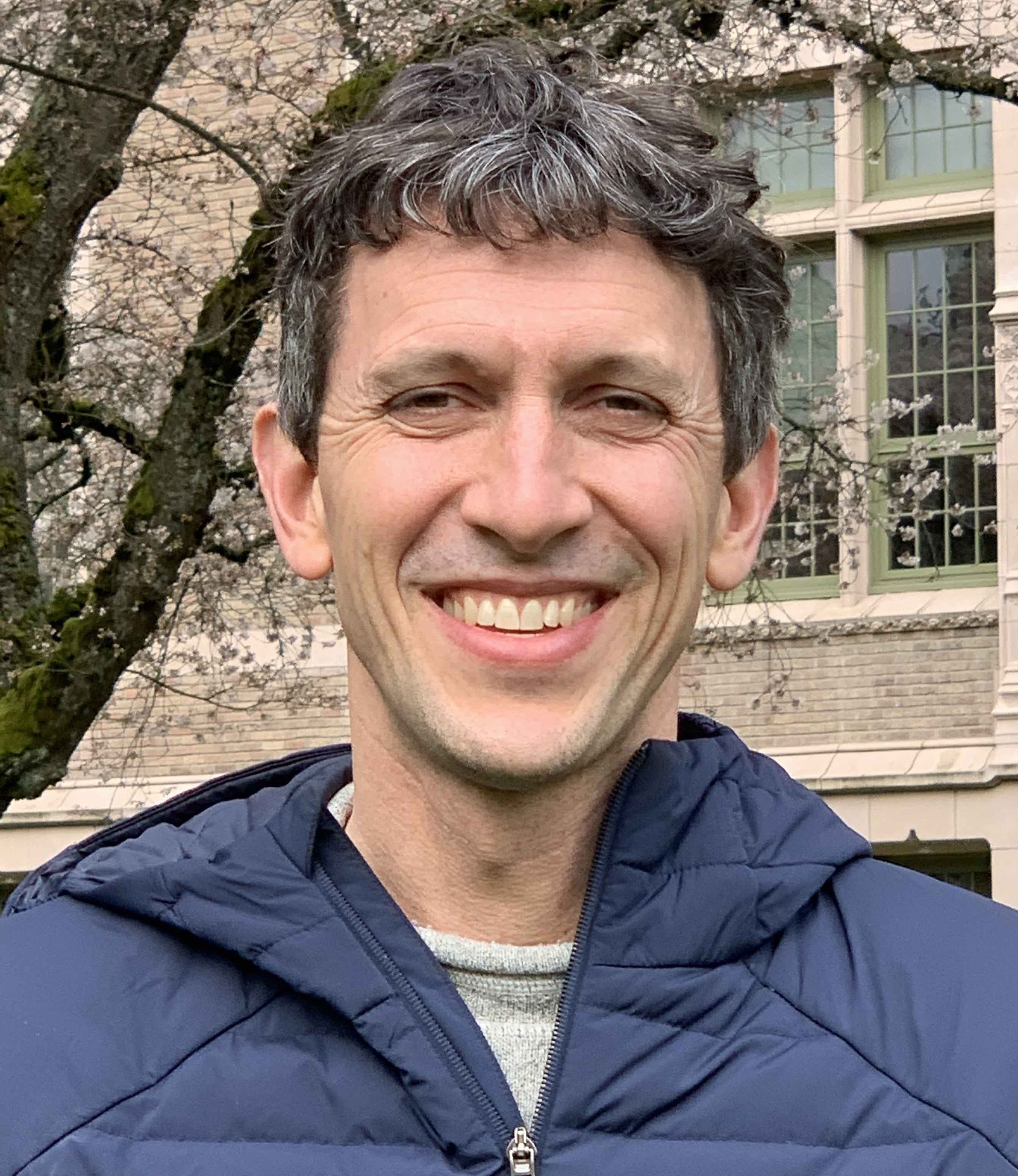
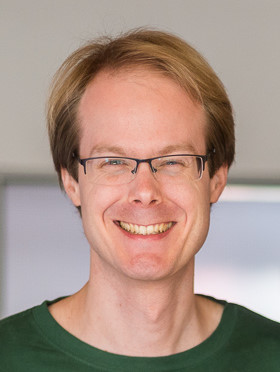
Tony Lelièvre is a Professor of Applied Mathematics at the Ecole Nationale des Ponts et Chaussées, part of the Institut Polytechnique de Paris. He holds a PhD (2004) and Habilitation (2009), specializing in multiscale modeling, molecular simulation, and stochastic processes. His research focuses on free energy computations, numerical analysis of complex fluids, and computational statistical physics. He co-authored two books and over 100 papers, receiving significant awards like the ERC Consolidator Grant (2013-2019) and the Grand prix Alcan. Lelièvre has organized numerous international workshops and serves on editorial boards of journals like ESAIM:M2AN and SIAM/ASA Journal of Uncertainty Quantification. His work bridges applied mathematics, numerical analysis, and computational science with applications in materials science and industrial fluid dynamics. Education: PhD in Applied Mathematics, 2004 Habilitation à Diriger des Recherches, 2009 Research Interests: Multiscale modeling of complex fluids Molecular dynamics and free energy calculations Stochastic methods for metastable systems Numerical analysis of PDEs and SDEs Computational statistical physics Recent Contributions: His work on adaptive biasing force methods and hybrid Monte Carlo techniques has advanced the simulation of rare events and free energy landscapes. He contributed to variance reduction techniques in molecular simulations and mathematical analysis of parallel replica algorithms. Awards: ERC Consolidator Grant (2013-2019), Prix CS 2002, Grand prix Alcan (2010), Ordway Visiting Professorship (2012-2013), and several teaching awards. Professional Activities: Organized major conferences like CEMRACS 2013 and IPAM Long Program on Energy Landscapes (2017). Co-edits journals and authored influential textbooks on magnetohydrodynamics and free energy computations.
Baron G. Peters is the William H. and Janet G. Lycan Professor of Chemical & Biomolecular Engineering and Faculty Affiliate in Chemistry at the University of Illinois. His research focuses on reaction rate theory, catalysis, and nucleation/growth mechanisms, with applications in crystal engineering, polymer upcycling, and ice growth inhibition. He holds a PhD from UC Berkeley (2004) and dual BS degrees in Chemical Engineering and Mathematics from the University of Missouri (1999). Affiliations: School of Chemical Sciences, Department of Chemistry Key Research Areas: Rare event simulations, transition path sampling, crystal nucleation theory, and heterogeneous catalysis on amorphous supports Recent work includes developing microkinetic models for polymer upcycling, studying antifreeze protein mechanisms, and advancing methods for predicting catalyst site heterogeneity. His group has pioneered importance learning techniques and population balance models in catalytic systems. Notable awards include the AIChE Separation Division Award (2021) and induction into the Chemical Engineering Academy of Distinguished Alumni (2024). Collaborations span academia and industry, with notable projects on nanocrystal synthesis and pharmaceutical crystallization.
Dr. Liang Min serves as the Managing Director of the Bits & Watts Initiative at Stanford University's Precourt Institute for Energy and as the founding Managing Director of the Stanford Net-Zero Alliance at the Stanford Doerr School of Sustainability. He leads multidisciplinary programs advancing the digital transformation of the electric grid and promoting net-zero emissions solutions through research, education, and industry collaboration. Dr. Min's educational background includes: Ph.D. from Texas A&M University (2007) M.S. from Tianjin University (2004) B.S. from Tianjin University (2001) His research focuses on the digital transformation of electric grids, with pioneering work on 100% Clean Electric Grid, EV50, AI for Climate and Energy, and the Digital Grid platform for integrating distributed energy resources. He recently launched the Powering AI Sustainably program addressing AI's energy demands while accelerating clean power transition. His work bridges high-performance computing with power system operations to enhance grid reliability, security, and sustainability amid increasing renewable penetration and electrification trends. Analysis of Dr. Min's recent publications reveals a strong emphasis on grid modernization through digital technologies, with particular focus on integrating distributed energy resources, enhancing grid resilience, and applying advanced computational methods to power system challenges. His research spans from fundamental work in power system dynamics and control to practical applications addressing energy transition, electric vehicle integration, and AI's role in sustainable energy systems. Dr. Min has led significant research projects funded by the Department of Energy, Bonneville Power Administration, and other organizations, resulting in multiple U.S. patents related to grid technologies including voltage stability smart meters and synchronized electric meters with atomic clocks. As the founder of the Stanford Energy Executive Education Program, Dr. Min has created platforms to equip energy leaders with strategic insights for navigating the rapidly evolving energy landscape. He also established the Stanford Net-Zero Alliance to bring together industry leaders, faculty, and students for collaborative research and education toward net-zero emissions.
Dr. Sam Jenkins is a Research Fellow affiliated with the University of Tokyo, specializing in particle astrophysics and neutrino physics. He contributes to the Super-Kamiokande experiment and collaborates with the T2K accelerator neutrino program. Key research areas: Neutrino oscillations, cosmic ray interactions, proton decay searches Recent work focuses on neutron capture multiplicity analysis and gadolinium-doped detector optimization Scientific Contributions: Published multiple Physical Review articles on neutrino interactions (2024-2025) Presented at major conferences on detector technology advancements Awards: Gifu University Young Researcher Award
Jason Detwiler is an Associate Professor in the Department of Physics at the University of Washington, part of the College of Arts & Sciences. He holds a Ph.D. from Stanford University (2005) and a B.A. from Occidental College (1999). His research focuses on neutrino properties, beyond the Standard Model physics, and neutrinoless double-beta decay, leading experiments like the Majorana Demonstrator, LEGEND, COHERENT, and KamLAND-Zen. He has contributed to breakthroughs in neutrino oscillation studies and is an APS Fellow (2020). Education: Ph.D., Physics, Stanford University, 2005 B.A., Physics, Occidental College, 1999 Research Interests: Neutrinoless Double-Beta Decay Coherent Neutrino-Nucleus Scattering Dark Matter Detection Grand Unification Theories Publications Highlight Trends in neutrino physics, detector development, and rare-event searches. Awards include the 2020 APS Fellowship and contributions to the 2016 Breakthrough Prize-winning KamLAND/SNO collaborations. Teaching includes courses on mechanics, quantum mechanics, electromagnetism, and optics. He is affiliated with the Kavli Institute for the Physics and Mathematics of the Universe (U. Tokyo).
Boualem Djehiche is a Professor of Mathematical Statistics at the Department of Mathematics, KTH Royal Institute of Technology. He is affiliated with the Digital Futures Faculty and the SCI School at KTH. His research focuses on Stochastic Analysis, including Stochastic Control, Insurance Mathematics, Mathematical Finance, and Game Theory. Djehiche holds editorial roles in journals such as Scandinavian Actuarial Journal and Finance and Stochastics . Education details are not explicitly stated in the provided texts. His teaching responsibilities include courses like Game Theory, Probability Theory, and Financial Mathematics. He advises students in these areas, though explicit student names are not listed. His research explores advanced topics such as mean-field games, time-inconsistent optimal control, and applications in finance and economics. Recent publications address topics like zero-sum Dynkin games, generative AI outcomes as Nash equilibria, and commodity futures pricing with regime switching. Research Interests: Stochastic Control, Insurance Mathematics, Mathematical Finance, Mean-Field Games, System Identification. Editorial Duties: Editor-in-Chief of Scandinavian Actuarial Journal , Associate Editor of Finance and Stochastics , and roles in multiple other journals. Grants & Collaborations: Collaborations include work on disability insurance modeling, credit scoring, and energy market dynamics via mean-field-type games. Labs/Teams: Involved in cross-disciplinary initiatives like the Digital Futures research center, focusing on digital technologies and societal challenges.
Cindy Feng, PhD, is an Associate Professor in the Department of Community Health and Epidemiology at Dalhousie University's Faculty of Medicine. Her research focuses on developing biostatistical models for analyzing correlated public health data, including spatial statistics, longitudinal studies, and environmental health applications. She holds a PhD from Simon Fraser University and has received funding from NSERC, Canadian Statistical Sciences Institute, and MITACS. Dr. Feng collaborates with interdisciplinary teams across medicine, psychology, and environmental sciences. Education: PhD (Simon Fraser University), MSc (Simon Fraser University), BSc (Beijing University of Technology). Her work emphasizes bridging statistical theory and practice in public health, with notable contributions to disease mapping, survival analysis, and infectious disease surveillance. Key grants include NSERC Discovery Grants ($80,000, 2019-2023) and a MITACS Accelerate Grant ($45,000, 2016-2019). Research interests include zero-inflated models, spatial epidemiology, and methodological advancements for correlated data. Recent work addresses pandemic-related mental health trends, occupational injury risk factors, and global health challenges in malaria-schistosomiasis co-endemic regions. She has published over 30 peer-reviewed articles, with a focus on statistical diagnostics, public health policy, and environmental health impacts.
Joachim Hermisson is a University Professor at the Medical University of Vienna, with dual appointments in the Faculty of Mathematics, Department of Mathematics, and at Max Perutz Labs, Department of Structural and Computational Biology. His research bridges mathematical theory and biological applications, focusing on population genetics and evolutionary dynamics. Professor Hermisson's primary research interests include: Population genetics theory and mathematical modeling Adaptive evolution and speciation processes Genetic architecture of quantitative traits Genomic signatures of selection Evolutionary rescue mechanisms Applications to medical conditions like ME/CFS His recent work demonstrates significant evolution from purely theoretical population genetics to increasingly interdisciplinary applications. During the 2008-2015 period, he established foundational frameworks for understanding speciation processes and adaptive evolution. His 2010 MSMS coalescent simulation program (300+ citations) became a standard tool in population genetics. From 2015-2020, he developed unifying frameworks for polygenic adaptation that connected selective sweeps with subtle frequency shifts. His 2020 Nature Reviews Genetics paper on this topic has garnered over 240 citations. More recently, he has expanded into medical applications, contributing to the D-A-CH consensus statement on ME/CFS diagnosis and treatment, and epidemiological modeling during the COVID-19 pandemic through EpiMath Austria. Professor Hermisson's scientific contributions have been widely recognized through high citation counts across his publications. His work appears consistently in top journals including Nature Reviews Genetics, PLoS Genetics, Evolution, and Genetics. His research methodology combines rigorous mathematical approaches with biological relevance, often bridging theoretical concepts with practical applications. Throughout his career, he has maintained active mentorship of junior researchers, with several frequent co-authors (Höllinger, Wölfl, Uecker, Kopp) likely representing former students who have developed into independent investigators. His collaborative approach spans mathematical theorists, computational biologists, and empirical researchers across multiple institutions.
Prof. Aldo Romani is a Professor leading the Materials for Artworks' Conservation research group within an academic department offering degrees in Chemistry, Biological Sciences, and Biotechnology. His work focuses on applying chemical and physical methodologies to cultural heritage conservation, with emphasis on non-destructive analysis and development of portable instrumentation for in-situ studies without artwork sampling or movement. Research interests center on chemical and physical behavior of materials in artworks, including structure/composition analysis for conservation diagnosis, degradation mechanisms of heterogeneous materials, and protection of porous heritage objects. The group utilizes synchrotron radiation, micro-FT-IR, micro-Raman, XRF, XRD, UV-VIS-NIR spectroscopy, GC-MS, and other advanced techniques. Key specialties include micro-spectroscopy for cross-sectional material distribution, contemporary art materials analysis, and emergency conservation protocols. Recent publications reveal strong focus on pigment analysis, varnish degradation, and non-invasive imaging of paintings/manuscripts using hyperspectral techniques. The research demonstrates integration of art historical context with materials science, particularly in Modernist paintings, medieval manuscripts, and street art preservation. The group actively contributes to European heritage science initiatives through the SMAArt Center of Excellence. Prof. Romani's laboratory develops portable instrumentation within MOLAB programs and participates in major European infrastructures including IPERION-HS and E-RIHS. Theoretical modeling complements experimental work for spectral assignments, while collaborations span conservation science and particle physics applications for detector development relevant to cultural heritage analysis.
Pedro Teixeira-Dias is a Professor of Particle Physics in the Department of Physics at Royal Holloway, University of London, where he has been a faculty member since October 2000. He serves as the Principal Investigator of the ATLAS UK Collaboration (representing 15 institutions) since 2023, having previously been Deputy PI from 2020-2022. His administrative roles include Senior Tutor for Physics (since 2019), former Head of Department of Physics (2014-2017), and former Associate Dean (Research) for the Science Faculty (2011-2014). Undergraduate: University of Coimbra, Portugal PhD: University of Heidelberg, Germany (Particle Physics) Post-doctoral: University of Glasgow Previous Research: OPAL (1990-94) and ALEPH (1995-2000) experiments at CERN Professor Teixeira-Dias specializes in experimental particle physics, with a primary focus on Higgs boson research. His work centers on the production of Higgs particles in association with top-quark pairs, a rare process that allows study of the direct interaction between the Higgs boson and the top quark (the heaviest known elementary particle). He was involved in the search for and eventual discovery of the Higgs particle announced at CERN in July 2012. His recent research leverages data from high-energy proton-proton collisions at the Large Hadron Collider, particularly through the ATLAS experiment. His publication record shows consistent output in leading journals with recent work focusing on advanced computational techniques for particle detection, supersymmetry searches, and precision measurements of fundamental particle interactions. The research demonstrates a strong emphasis on both theoretical implications and practical detector applications. Professor Teixeira-Dias has secured substantial research funding through multiple Science and Technology Facilities Council (STFC) grants, including the Consolidated Grant for the Centre for Particle Physics and the Upgrade of the ATLAS detector at the LHC. He has supervised numerous students through final year projects and research reviews. His leadership extends to national committees, having served on the STFC Oversight Committee for the CMS detector upgrade project (2010-2018) and the STFC Projects Peer Review Panel (2010-2012). He has taught across the physics curriculum, including Quantum Mechanics, Particle Detectors and Accelerators, and supervision of major research projects.
Arnd Hartmanns is an associate professor in the Formal Methods and Tools group at the University of Twente, Faculty of Electrical Engineering, Mathematics and Computer Science (EEMCS). Previously, he was a postdoc at both the University of Twente and Saarland University's Dependable Systems and Software group, where he also completed his Ph.D. in computer science in 2015. He has led multiple research projects including the NWO VIDI project 'Trustworthy Analysis of Stochastic Timed Systems (TruSTy)', the Interreg North Sea project 'STORM_SAFE', and coordinates the MSCA RISE project 'MISSION'. His primary research interests focus on modeling tools and formalisms for stochastic timed and hybrid systems, particularly the Modest framework. Hartmanns has been a strong advocate for reproducibility in Computer Science research through artifact evaluation initiatives, tool competitions like QComp, and standardized benchmark sets. His work bridges theoretical foundations with practical applications across various domains including network-on-chip systems, power grids, and space communication infrastructure. He has made significant contributions to probabilistic model checking, statistical verification techniques, and formal methods for system analysis. Hartmanns serves on numerous program committees, particularly focusing on artifact evaluation for conferences like TACAS, QEST, and FORMATS. His leadership in establishing reproducibility standards has influenced the formal methods community significantly. The trends in his recent publications show a strong emphasis on verified implementations of verification algorithms, statistical model checking techniques that go beyond standard approaches, and applications of formal methods to increasingly complex real-world systems. Scientific Recognition 2016 Best Dissertation Award by the GI/ITG Technical Committee for 'Measurement, Modelling and Evaluation of Computing Systems' Hartmanns has supervised numerous Master's and PhD students through his research projects, though specific names aren't listed in the provided information. His grant portfolio includes several major projects funded by NWO (VENI, VIDI, Open Competition) and European programs (MSCA RISE, Interreg North Sea). He is actively involved in developing educational materials for formal methods and has contributed to establishing benchmark sets that are now standard in the field. His work on the Modest modeling language and toolset has created an important infrastructure for quantitative verification research. The integration of formal verification with machine learning techniques, particularly in strategy learning and decision tree generation, represents one of his more recent research directions that connects formal methods with emerging AI approaches.
Matthew Nicol is the John and Rebecca Moores Professor in the Department of Mathematics at the University of Houston. His career includes positions at UMIST, University of Surrey, and visiting appointments at Warwick and New Mexico State. Research specialties encompass ergodic theory, dynamical systems, probability, and extreme value theory. His work applies mathematical frameworks to climate science, medical imaging, and statistical mechanics. Notable publications examine hurricane modeling, nonstationary extremal analysis, and surgical planning algorithms. He received the Leverhulme Trust Research Fellowship (2002-2003). Publication analysis reveals interdisciplinary applications across: Dynamical systems and statistical mechanics Extreme event modeling for climate phenomena Medical applications of mathematical modeling Probability theory in chaotic systems
Pieter-Tjerk de Boer is an Associate Professor at the University of Twente , affiliated with the Electrical Engineering, Mathematics and Computer Science (EEMCS) faculty. He holds dual roles in the Design and Analysis of Communication Systems (Computer Science) and the Digital Society Institute . His research focuses on rare-event simulation, communication systems, and mathematical performance analysis. He earned his PhD in 2000 from the University of Twente with a thesis on queueing models for telecommunication systems. Key research areas include stochastic performance analysis (e.g., importance sampling techniques for queueing networks), computer networking (DNS analysis, IPv6 security), and radio technology (MIMO receivers, harmonic rejection mixers). His work bridges theory and application, addressing challenges in reliability, security, and efficiency of digital systems. Notable contributions include advancements in statistical model checking, automated rare-event simulation for stochastic Petri nets, and open-source intelligence analysis using radio receivers. His findings are published in journals like Simulation , IEEE Transactions , and Performance Evaluation , with over 98 research outputs since 1996. Collaborations span academia and industry, including work on cybersecurity, network management, and hardware-software co-design. Media engagements include discussions on radio receiver usage patterns during the Ukraine war and IPv6-related network vulnerabilities.
Dr. Chelsea Cook is an Assistant Professor in the Department of Biological Sciences at Marquette University. Her research focuses on understanding social behavior through a holistic lens, integrating neurobiology, behavioral genetics, and ecological context. She uses honey bees as a model system to study collective behaviors like thermoregulation and foraging, as well as the effects of social isolation. Dr. Cook holds a B.S. from SUNY Cortland (2009), a Ph.D. from the University of Colorado Boulder (2016), and completed postdoctoral training at Arizona State University (2016–2020). Key research areas include honey bee thermoregulation—specifically how group dynamics influence fanning behavior—and the physiological impacts of social isolation in bees. She employs advanced techniques like electrophysiology and microbiome analysis to explore these topics. Dr. Cook’s work is supported by grants from the National Science Foundation, USDA, and NIH. Current Funding: NSF Integrative Organismal Systems Grant (2023–2026) Previous Funding: USDA SBIR Grants (2017–2020), NIH Postdoctoral Fellowship (2018–2019) Her lab, the Cook Research Team, emphasizes inclusivity and supports graduate students including Ph.D. candidates Casey Lambert, Rachael Halby, and Justine Nguyen. The lab also develops innovative tools like mobile indoor apiary systems to extend honey bee research seasons. Professional affiliations include the Animal Behavior Society and Entomological Society of America. Her recent publications span topics from microbiome roles in social behavior to neurotransmitter modulation of attention in honey bees.
Nicolae-Viorel Buchete is an Associate Professor of Theoretical & Computational Nano-Bio Physics at University College Dublin's School of Physics within the College of Science. He currently serves as Vice Principal for Graduate Studies for the College of Science and Director of the UCD MSc in Computational Physics Programme. His academic journey includes postgraduate degrees from Boston University (USA) and institutions in the EU (Al. I. Cuza University of Iasi, Romania, and the University of Patras, Greece), with a PhD from Boston University and research fellowships at the National Institutes of Health. His educational background includes: PhD from Boston University Research Fellowships at National Institutes of Health (Bethesda, MD, USA) Postgraduate degrees from Boston University, Al. I. Cuza University of Iasi (Romania), and University of Patras (Greece) Buchete's research focuses on theoretical and computational approaches to understanding biomolecular systems. His work spans theoretical and computational biological physics, chemical physics, and nanoscience , with specific emphasis on statistical mechanics and molecular dynamics of biomolecular systems, systems biology, structural bioinformatics, and multiscale modeling of biomolecules and complex fluids. His group employs advanced computational techniques including Markov State Models, Milestoning, and replica exchange molecular dynamics to study protein conformational dynamics, amyloid formation, and molecular mechanisms relevant to diseases like cancer and Alzheimer's. His research output reveals a progression from fundamental biophysics toward increasingly translational applications. Early work focused on protein conformational dynamics, while more recent publications demonstrate expansion into nanomedicine applications, computational toxicology of nanomaterials, and physics-based modeling frameworks for drug delivery systems. A significant portion of his research involves studying conformational transitions in proteins relevant to cancer (such as K-Ras4B and Abl kinase) and neurodegenerative diseases (particularly amyloid systems), with growing emphasis on computational approaches to nanosafety and sustainability. His scientific contributions have been recognized with numerous awards: Certificate of Appreciation from the American Chemical Society Publications Division (2012) Top 20 JCP Reviewer for 2010 from the American Institute of Physics NIH Fellows Award for Research Excellence (FARE) in 2006 and 2007 ACS Chemical Computing Group Excellence Award (2003) Multiple teaching and research awards from Boston University including the Outstanding Teaching Fellow Award (1998) and Feldman Award (2001) Buchete has mentored numerous graduate students through their MSc and PhD research, with students successfully defending theses on computational physics and biomolecular modeling topics. His teaching philosophy emphasizes "research-oriented teaching," integrating research experiences into undergraduate and taught Master's level education. He has secured research funding including the UCD OBRSS Research Support Scheme (2016-2023) and has directed multiple educational programs including the UCD International Pre-Masters Programme (2013-2022) and served as School Head of Teaching and Learning (2021-2022). His research group is affiliated with the UCD Complex & Adaptive Systems Laboratory (CASL), where they develop and apply advanced computational methods to study complex biomolecular systems. The group has organized multiple CECAM workshops on biomolecular modeling and simulations, demonstrating leadership in the computational biophysics community. They collaborate extensively across disciplines, working with experimentalists to validate computational findings and address challenging problems in biophysics and nanomedicine.