Erik Asbjörn Mikkelsen Jensen is a researcher at Chalmers University of Technology affiliated with the Department of Physics, specializing in Subatomic, high-energy and plasma physics. His recent work focuses on applying deep learning techniques to rare event detection in particle physics experiments. Research interests include Subatomic physics Machine learning Object detection The 2025 publication demonstrates a novel CNN-based framework for analyzing 3D track data from the GADGET II TPC, achieving perfect recall for rare two-particle events through simulation-based training with parameter perturbations. This work intersects computer science and high-energy physics.
Gábor Veres is an Assistant Professor at the Institute of Ethnography and Folklore , affiliated with the Faculty of Arts at Eötvös Loránd University. His research spans high-energy physics, focusing on particle interactions at the Large Hadron Collider (LHC) and the CMS experiment. His work includes probing quantum chromodynamics (QCD) through jet production, investigating Higgs boson properties , and exploring exotic phenomena such as long-lived particles, leptoquarks, and dark matter candidates. The 15 most recent publications highlight his contributions to nuclear modification effects , detector simulations , and beyond-Standard Model searches in proton-proton and heavy-ion collisions, with particular emphasis on machine learning techniques for event reweighting and precision measurements like the W boson mass.
Joan Oró is a researcher at the Blanquerna Department of Physical Activity and Sport Sciences and Sports Management within the Faculty of Psychology, Educational Sciences and Sports at Blanquerna - Ramon Llull University. His work focuses on speech synthesis, voice quality analysis, and environmental noise mapping, with a particular emphasis on computational modeling and acoustic sensor networks. Research Interests: Speech signal processing, finite element modeling of phonation, environmental noise monitoring, and machine learning applications in acoustic analysis. Projects: Key contributions to the DYNAMAP initiative for real-time road traffic noise mapping and the FEMVoQ project for 3D voice quality simulation. Publications: Recent work explores vocal tract-glottal source interactions, spectro-temporal noise analysis, and intelligent clustering architectures, spanning interdisciplinary applications in acoustics, signal processing, and urban planning.
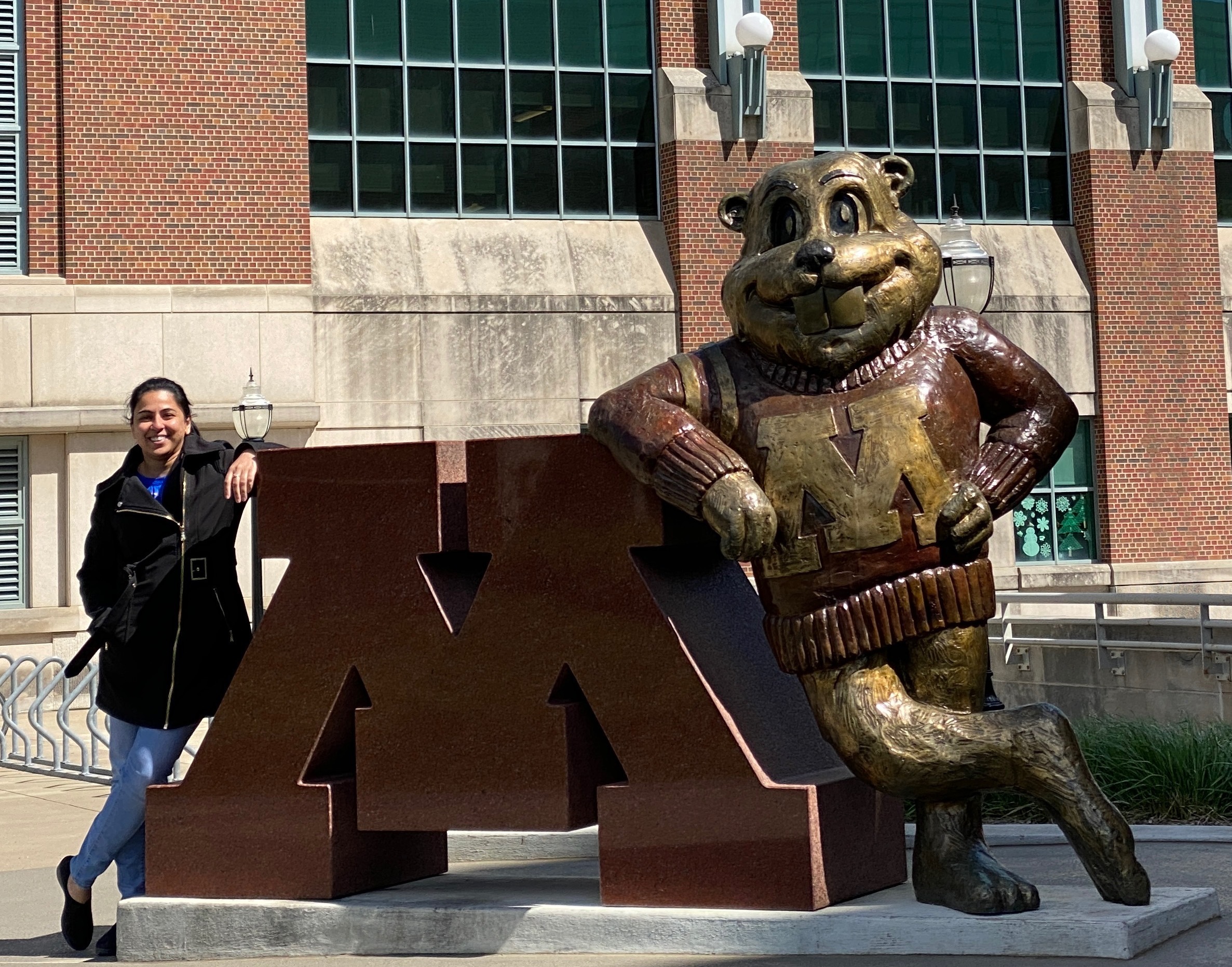
Sapna Sarupria is an Associate Professor in the Department of Chemistry at the University of Minnesota with adjunct appointments at Michigan Technological University (Physics) and Clemson University (Chemical and Biomolecular Engineering). Her research develops cutting-edge computational methods to solve complex problems in condensed matter systems, with applications spanning sustainable energy, biotechnology, and public health. Her academic background includes: PhD in Chemical Engineering from Rensselaer Polytechnic Institute (2009) MS in Chemical Engineering from Texas A&M University (2004) Professor Sarupria's work centers on surface-driven phenomena using molecular modeling and statistical mechanics. The SAMPEL Lab (Simulations and Advanced Methods for Probing Energy Landscapes) pioneers rare event sampling techniques to study previously intractable processes like ice nucleation and protein-surface interactions. Current projects address critical challenges in water purification membranes, enzymatic reactions, and vaccine stabilization, combining method development with real-world applications in energy and biotechnology. Her research bridges computational chemistry with materials science and biophysics through innovative simulation approaches. Recent 2025 publications demonstrate strong integration of machine learning with molecular simulation, particularly in polymorph prediction (LeaPP framework) and solvent-inclusive hybrid methods. Key themes include nucleation kinetics, virus-excipient interactions for biologics, and thermodynamic stabilization mechanisms. These works span computational chemistry, biophysics, and materials science, with consistent focus on developing transferable methodologies for condensed phase phenomena. Professor Sarupria actively mentors students through the SAMPEL Lab's inclusive environment, currently advising 8 PhD candidates with diverse backgrounds. Her leadership extends to departmental DEI initiatives and national roles in AIChE and ACS. The lab maintains robust collaborations with experimental groups at multiple institutions, translating computational insights into practical solutions for membrane technology and biologic formulation. Students gain expertise in high-performance computing while contributing to projects with direct societal impact in water sustainability and vaccine development.
Prof. Dr. Bettina G. Keller is a Professor of Theoretical Chemistry at Freie Universität Berlin, leading the Keller Lab in the Department of Physical and Theoretical Chemistry. Her research integrates molecular dynamics simulations, QM/MM models, and kinetic analyses to study biomolecular systems, chemical reactions, and allosteric mechanisms. She collaborates extensively within SFB consortia and GRK research training groups. Her work spans: Development of grid-based models for molecular association Allosteric regulation in pathogen toxins Fluorination effects on protein-ligand interactions Glycopeptide hydrogel design Advanced sampling algorithms like Girsanov reweighting She has received multiple honors including the Hellmann-Preis (2018) and memberships in elite academies. Current projects involve: SFB 1449: Dynamic hydrogels at biointerfaces GRK 2662: Charging in the future VW Momentum: Molecular mobility Her lab maintains strong computational resources and open-source tools for the scientific community.
Theopisti Dafni is a Professor in the Department of Theoretical Physics at the University of Zaragoza, Spain, where she has been a faculty member since September 2007. She leads research activities within Igor G. Irastorza's Lab, focusing on cutting-edge experiments in particle physics and dark matter detection. Her primary institutional affiliations include the University of Zaragoza, CERN (through the CAST experiment), and multiple international collaborations including IAXO, TREX-DM, and NEXT. Dr. Dafni's research focuses on axion physics and dark matter detection, with particular expertise in experimental techniques using helioscopes and gaseous time projection chambers. Her work spans theoretical modeling, detector development, and data analysis in the search for elusive particles that could explain dark matter. She has made significant contributions to the CAST experiment at CERN and is a key contributor to the development of the next-generation IAXO project. Her recent publications demonstrate a strong focus on advancing detector technology, particularly Micromegas systems with GEM preamplification for enhanced sensitivity in low-background environments. These developments are crucial for pushing the boundaries of axion and dark matter searches. Her work shows consistent progress in optimizing energy thresholds, reducing background levels, and improving detection capabilities across multiple experimental platforms. 284 scientific publications 9,948 citations 52,845 reads according to ResearchGate metrics Dr. Dafni actively supervises research within her group, collaborating with international teams across Europe and beyond. Her laboratory work involves developing ultra-low background detection systems, conducting simulations of particle interactions, and analyzing data from underground experiments. She plays a significant role in training the next generation of physicists through her involvement in major international collaborations and her mentorship at the University of Zaragoza.
Frank Jennings Tipler is an American mathematical physicist and cosmologist holding a joint appointment in the Departments of Mathematics and Physics at Tulane University. Born on February 1, 1947, in Andalusia, Alabama, Tipler has been a faculty member at Tulane since 1981, becoming a full professor in 1987. Tipler's research focuses on cosmology, theoretical physics, and the intersection of physics with theological concepts. His work spans mathematical physics, general relativity, quantum mechanics, and cosmological models. He is best known for developing the Omega Point theory, which proposes a cosmological state in the distant future of the universe that he identifies with God, and for the Tipler cylinder, a theoretical time machine based on general relativity. Tipler's publication record shows consistent output from the 1970s through the 2020s, with his work primarily centered on cosmology, quantum mechanics interpretations (particularly the Many-Worlds Interpretation), and the application of physical laws to ultimate questions about the universe's fate. His recent publications continue to explore connections between quantum mechanics, cosmology, and information theory. Major Books: The Anthropic Cosmological Principle (1986), The Physics of Immortality (1994), The Physics of Christianity (2007) Key Concepts: Omega Point cosmology, Tipler cylinder, Final Anthropic Principle Tipler maintains that his Omega Point theory is a mathematical consequence of established physical laws rather than theological speculation. While his early work in general relativity was well-regarded, his later integration of physics with religious concepts has generated significant controversy within the scientific community, with critics labeling aspects of his work as pseudoscience while supporters view it as a legitimate exploration of physics' ultimate implications.
Christoph Binder is a Professor of Management Accounting and Controlling at ESB Business School, Reutlingen University. He serves as Head of Career Center & Alumni, Programme Director for MA European Management Studies, and Liaison Officer for the German National Academic Foundation. Previously, he served as Dean of ESB Business School from 2019-2024. German-French dual diploma (IPBS) from ESB Reutlingen (1996-2000) Semester at University of Texas at Austin (1997) Management consultant at McKinsey & Company (2000-2008) Doctorate in Management Accounting & Control at European Business School (2004-2006) Professor at Reutlingen University since 2008 Binder's research focuses on management accounting systems with particular emphasis on sustainability controlling, carbon accounting, and geopolitical risk management. His work bridges traditional accounting practices with emerging challenges in risk assessment and sustainable business operations. He has developed frameworks for structured risk identification in SMEs and value-oriented performance measurement systems. His publication record shows consistent contributions to controlling literature since 2014, with increasing focus on geopolitical risks (2023-2025) and sustainability accounting. The articles demonstrate evolution from foundational controlling concepts toward contemporary challenges in risk management and sustainable business practices, reflecting growing industry relevance of these topics. Member of Board of Trustees, International Controller Association Member of Advisory Board, Dieter von Holtzbrinck Stiftung Binder maintains active industry engagement through advisory roles while leading academic programs. His consulting background informs practical applications of controlling frameworks, particularly in energy, logistics, and telecommunications sectors. Current initiatives focus on integrating sustainability metrics into traditional controlling systems and developing risk management tools for volatile geopolitical environments.
Linru Fang is a Postdoctoral Researcher at the Centre for Star and Planet Formation within the Globe Institute at the University of Copenhagen, specializing in planetary formation processes and geochemical analysis of extraterrestrial materials. The research center focuses on interdisciplinary investigations of star and planet formation mechanisms through cosmochemical and astrophysical approaches. Research interests center on volatile element depletion in planetary bodies, with specific expertise in lunar interior geochemistry and carbonaceous meteorite analysis. Dr. Fang employs advanced mass spectrometry and computational modeling to investigate how impact events and thermal processes shaped the chemical evolution of the Moon and early solar system bodies. Key methodologies include isotopic ratio analysis and experimental simulation of high-temperature sublimation processes. Recent publications reveal consistent patterns in volatile depletion mechanisms across different planetary materials, demonstrating how impact-induced sublimation drives compositional changes in both lunar interiors and carbonaceous meteorites. This work establishes critical links between impact dynamics and chemical fractionation during planetary accretion. The Centre for Star and Planet Formation maintains active collaborations with international space agencies and meteorite research facilities, providing Dr. Fang access to cutting-edge analytical instrumentation and rare extraterrestrial samples for ongoing investigations into solar system formation.