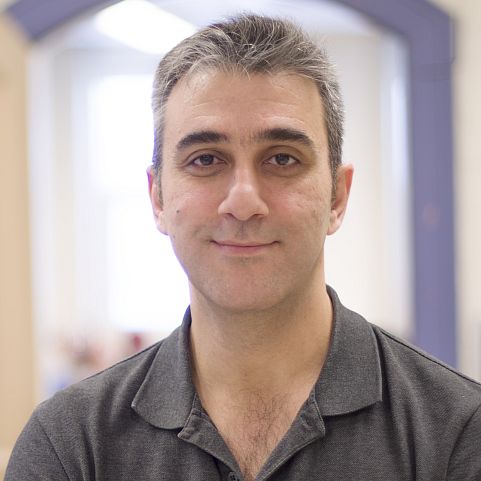
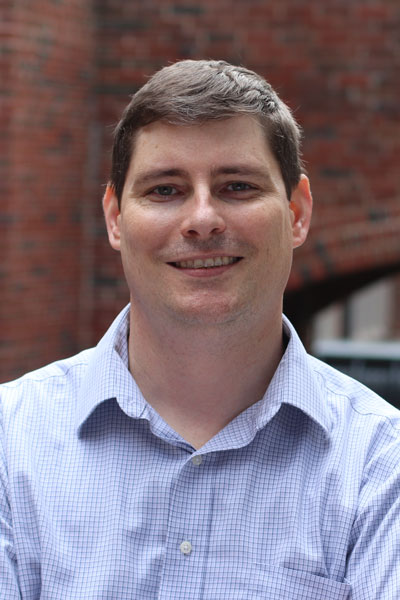
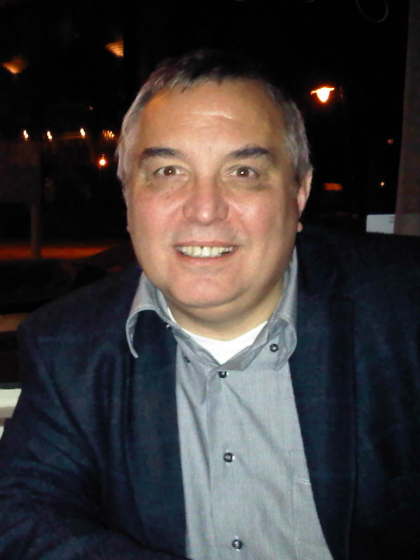
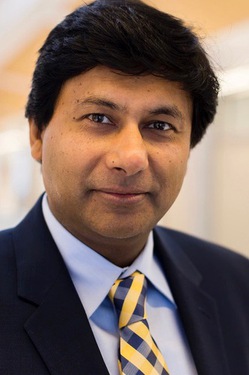
Holger Kleinke is a Professor at the University of Waterloo , specializing in Inorganic Chemistry . His research focuses on thermoelectric materials , crystal structure analysis , and machine learning applications in materials discovery . He can be reached at kleinke@uwaterloo.ca . Research Interests Professor Kleinke's work spans: Thermoelectric materials for energy conversion Zintl phases and intermetallic compounds Machine learning for materials prediction Solid-state synthesis techniques Crystal structure-property relationships Nanostructure engineering for enhanced performance Scientific Contributions Developed explainable AI models for thermoelectric property prediction Pioneered fast cooling methods to improve SnSe thermoelectric performance Investigated complex bismuthide structures like Ba8Zn2-xIn3+xBi10 Explored organic cathode materials through coordination polymer design Optimized electrochemical interfaces for fast-charging batteries
Dr. Vahid Fallah serves as an Associate Professor in the Department of Mechanical and Materials Engineering at Queen's University's Faculty of Engineering. His research is centered at the Azar Advanced Manufacturing Laboratory (AAML), a CFI/ORF-funded infrastructure facility specializing in Laser Powder Bed Fusion (LPBF) systems for reactive metals processing. PhD in Mechanical Engineering-Materials Processing (2011, University of Waterloo) MASc in Materials Identification and Selection (2005, Sharif University of Technology) BASc in Industrial Metallurgy (2002, Sharif University of Technology) With over 15 years of combined academic and industrial experience, Dr. Fallah specializes in Additive Manufacturing of metals , solidification phenomena , and precipitation hardening of aerospace aluminum alloys . His work bridges fundamental metallurgy with industrial applications, particularly in automotive and aerospace sectors. The research portfolio demonstrates deep expertise in laser-based manufacturing, friction stir welding/processing, and computational materials science, with strong emphasis on aluminum and titanium alloys. Recent publications reveal consistent focus on rapidly solidified aluminum alloys , graphene-reinforced nanocomposites , and high-entropy alloys . Key trends include microstructure-texture-property relationships in additive manufacturing, hot-cracking mitigation strategies, and innovative thermomechanical processing routes. The 2023-2025 publications show increasing exploration of reactive metal processing and advanced characterization techniques. Dr. Fallah's Azar laboratory features a custom-designed LPBF system with oxygen-controlled atmosphere for processing reactive metals like Al, Ti, and Zr alloys, equipped with in-situ monitoring capabilities. The facility supports both fundamental research and industry collaborations, including previous work with Novelis Inc. and Airbus on aluminum alloy development. His industrial experience includes leadership roles at Alcereco Inc. where he developed Al-Sc alloys for aerospace and proprietary atomization technology that led to Equispheres Inc. This industry-academia duality enables translation of research into commercial applications, particularly in metal powder production and high-strength alloy development.
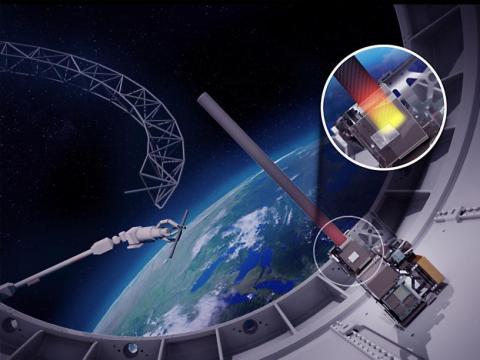
Christopher Hulme is an Associate Professor of Powder Metallurgy and Rapid Solidification at the Department of Materials Science and Engineering, KTH Royal Institute of Technology. His research focuses on understanding the physical mechanisms of metal powder atomization, including droplet formation and solidification, and linking production conditions to powder properties. He employs computational fluid dynamics, stochastic modelling, and thermodynamic analysis, supported by experimental techniques like shadowgraphy and water modelling. His work also examines powder behavior, developing new testing methods for flow and spreading properties, and explores sustainability and equality in engineering education. Key research areas include atomization process optimization, powder flow dynamics, additive manufacturing feedstock development, and X-ray source innovation. His teaching responsibilities span courses such as Casting Processing, Material Selection, and Metal Powder Characterization, emphasizing practical methods and ethical engineering practices. He has contributed to over 50 peer-reviewed publications, with recent work addressing rotating anode X-ray erosion, nickel silicide alloy optimization, and humidity effects on steel powder flowability. Teaching Roles: Course responsible for Metal Powder Production, Materials Processes I, and Material Selection Research Themes: Atomization Science, Powder Behavior Modelling, Sustainable Manufacturing
Jeff Moore is a Professor of Chemistry at the University of Illinois, affiliated with the Beckman Institute. His research focuses on developing functional materials through interdisciplinary approaches, integrating physical organic chemistry and engineering with polymer synthesis. Key areas include energy-efficient polymer manufacturing, self-healing materials, and mechanochemical therapies. The Moore Group emphasizes collaborative research, such as creating vascular networks in polymers for stress-responsive healing and applying these principles to redox flow batteries. Education and teaching include courses like CHEM 232 and 332, alongside mentoring postdoctoral researchers (e.g., Boran Chen) and undergraduate students (Xintong Ling, John-Paul Garzon). The group’s work is supported by grants from agencies like the Army Research Office, DARPA, and the National Science Foundation. Notable innovations include injectable mechanophore nanoparticles for targeted cancer treatment and morphogenic 3D printing techniques. Labs and teams: The Moore Group operates within the Beckman Institute, fostering next-generation scientists through collaborative projects. Current members include postdocs specializing in mechanochemical dynamics and undergraduates involved in experimental design. Grants and funding: The group has secured funding from institutions such as BP International, the Department of Energy, and the Howard Hughes Medical Institute, supporting research into sustainable materials and biomedical applications.
Tao Sun is an Adjunct Associate Professor in the Department of Materials Science and Engineering at the University of Virginia. He holds a B.S., M.S. from Tsinghua University (2002, 2004), and a Ph.D. from Northwestern University (2009). His research focuses on additive manufacturing, synchrotron x-ray techniques, and dynamic material processes. He has pioneered real-time defect detection in 3D printing using machine learning and high-speed imaging. Sun has been affiliated with Argonne National Laboratory and Northwestern University prior to joining UVA in 2019. Education: B.S. Materials Science & Engineering, Tsinghua University (2002) M.S. Materials Science & Engineering, Tsinghua University (2004) Ph.D. Materials Science & Engineering, Northwestern University (2009) Research Interests: Additive manufacturing processes and materials, synchrotron x-ray imaging/scattering, materials characterization, and dynamic material behavior analysis. His work emphasizes high-speed imaging for studying irreversible material phenomena during laser processing. Key Contributions: Pioneered real-time detection of keyhole pores in laser powder bed fusion (published in Science), revealed universal scaling laws for keyhole stability, and developed high-speed x-ray imaging systems for additive manufacturing. His work bridges experimental observations with machine learning models for process optimization. Awards: TMS Young Innovator in Additive Manufacturing Materials Science Award TMS Structural Materials Division JOM Best Paper Award Teaching: Courses include MSE 4592/6592 (X-ray Scattering Techniques), MSE 6120 (Materials Characterization), and ENGR 1624 (Introduction to Engineering). Courses emphasize hands-on experience with advanced characterization tools. Labs/Teams: Leads research teams at UVA and collaborates with Argonne National Laboratory’s X-ray Science Division. Focuses on in-situ synchrotron-based studies of manufacturing processes.
Dr. Mert Celikin is an Assistant Professor at the School of Mechanical and Materials Engineering, University College Dublin (UCD). He holds a PhD in Materials Engineering from McGill University (2012) and postdoctoral experience at McGill Metals Processing Centre and INRS-EMT. His research focuses on alloy design for biomedical and aerospace applications, particularly in additive manufacturing processes. He leads projects on magnesium alloys for biodegradable implants and has secured grants including the Marie-Sklodowska Curie Fellowship (2021–2023). Education: BSc(Eng) from Middle East Technical University, Turkey PhD in Materials Engineering from McGill University, Canada Professional Certificates in University Teaching & Learning from UCD Research interests include solid-state phase transformations, fatigue/creep deformation, and nanostructural characterization. He collaborates with institutions like ESA and MPB Technologies Inc., advancing self-healing composites and aerospace materials. His work integrates additive manufacturing with lightweight alloy development, emphasizing biomedical and aerospace applications. Grants: Additive Manufacturing of Bioresorbable Magnesium Implants (2021–2025) AMBIT: Additive Manufacturing of Magnesium Bioresorbable Implants (2021–2023) iForm: Titanium Alloy Design for Additive Manufacturing (2021–2025) Teaching: Coordinates modules in Materials Science, Engineering, and Project Management. Advocates Process-Oriented Guided Inquiry Learning (POGIL) for experiential education. Current roles include Module Coordinator for Materials in Society and Materials Science & Engineering II . Labs/Teams: Active in the UCD Conway Institute and interdisciplinary collaborations for advanced materials research. Engages in industry partnerships for applied materials development.
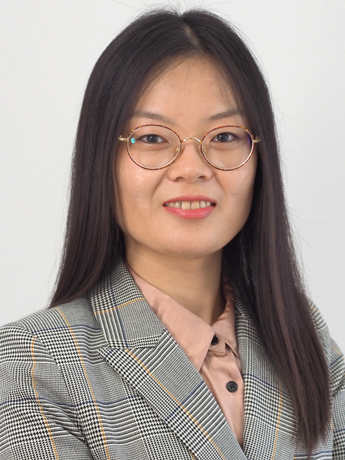
Dr. Shunyu Liu is an Assistant Professor in the Department of Automotive Engineering at Clemson University's College of Engineering, Computing and Applied Sciences. She holds a Ph.D. in Mechanical Engineering from Purdue University (2020), an M.S. in Materials Science from North China Electric Power University (2015), and a B.E. in Materials Science and Engineering from the same institution (2012). Dr. Liu directs research in the Additive Manufacturing and Advanced Materials Laboratory. Her research focuses on: Laser-based additive manufacturing of metallic materials Multiscale microstructure modeling of solidification processes Development of high-performance alloys and composites Process-structure-property relationships in manufactured materials Her publications demonstrate expertise in computational modeling of manufacturing processes, experimental characterization of material properties, and development of novel metallic materials including high-entropy alloys and metallic glass composites.
Dr. Ayodele Olofinjana is a Senior Lecturer in Engineering Materials at the University of the Sunshine Coast (Queensland, Australia). He holds a PhD from the University of Sheffield (1992) and has over 20 years of international experience in academia and research, including roles at the University of Brunei where he established an energy research group. His expertise spans metallic glass characterization, non-equilibrium materials processing, and sustainable construction materials. Research Focus: Dr. Olofinjana’s work centers on rapid solidification of alloys, structural characterization of metallic glasses, and eco-friendly materials. Key areas include energy materials, construction composites, lead-free solders, and recycled materials. His contributions include advancing nano-indentation techniques for material analysis and optimizing multi-stream casting processes for high-strength wires. Teaching: He teaches core courses such as ENG225 Engineering Materials, ENG202 Engineering Design, and ENG301 Materials Technology. His pedagogical approaches emphasize practical applications of material science principles. Technical Contributions: Notable projects include the development of high-strength Cu-Cr alloys, failure analysis of metallic components, and improving thermal stability in wire casting. His work bridges fundamental material science with industrial applications in energy, construction, and electronics.
Eric Lass is an Assistant Professor in the Department of Materials Science and Engineering at the University of Tennessee, Knoxville, within the Tickle College of Engineering. His research focuses on phase transformations, microstructural evolution in metals/alloys, thermodynamic kinetics, high-temperature materials, and additive manufacturing. Education: PhD in Materials Science & Engineering from the University of Virginia. Research interests include advanced alloy design, processing-structure-property relationships in refractory materials, additive manufacturing optimization, and thermal stability analysis. His work spans combinatorial sputtering, CALPHAD modeling, and in-situ TEM analysis for microstructural characterization. Recent articles highlight innovations in refractory compositionally complex alloys, Ni-Ce eutectic systems, and laser powder bed fusion materials. His research bridges fundamental materials science with industrial applications in aerospace, energy, and biomedical fields. Awards: 2018 Henry Marion Howe Medal (ASM), 2018 TMS MPMD Young Leader Award Labs/Teams: Active in materials processing labs at UTK, collaborating with national labs and industry partners on alloy development
Václav Ocelik is a Senior Researcher at the Zernike Institute for Advanced Materials, University of Groningen, specializing in experimental materials science. His research employs advanced electron microscopy techniques to characterize microstructures in amorphous alloys, thin films, and additively manufactured metals under extreme conditions. Ocelik investigates deformation mechanisms in high-entropy alloys and rapid solidification processes. Recent publications focus on laser additive manufacturing of tool steels and magnetic properties of oxide thin films. His work has applications in energy materials and advanced manufacturing. He teaches Materials Science courses and supervises graduate researchers. Experimental approaches include in-situ SEM, EBSD, and dual-beam microscopy to analyze materials behavior from nanoscale to macroscopic properties.
Amit Misra is the Edward DeMille Campbell Collegiate Professor of Materials Science and Engineering and Professor of Mechanical Engineering at the University of Michigan. He also serves as the Faculty Director of the Michigan Materials Research Institute (MMRI). Previously, he was the Department Chair of Materials Science & Engineering from June 2014 to December 2022. Education: B.S. (May 1989), Metallurgical Engineering, Institute of Technology, Banaras Hindu University (now IIT-Varanasi), India M.S. (Aug. 1991), Materials Science and Engineering, University of Michigan, Ann Arbor Ph.D. (Sept. 1994), Materials Science and Engineering, University of Michigan, Ann Arbor Professor Misra's research focuses on nano mechanics, electron microscopy, laser processed metallic alloys, and metallic thin films. His work particularly emphasizes understanding light-weight structural materials, radiation-damage tolerant materials, high strength and high electrical conductivity materials, and other metal-based multiphase and composite materials. His research program centers on designing materials with enhanced functionality through understanding and control of interface and defect phenomena. His recent work has extensively explored additive manufacturing processes, particularly laser powder bed fusion, to create novel metallic alloys and composites with tailored microstructures and properties. Analysis of Professor Misra's recent publications reveals a strong focus on advanced characterization techniques combined with computational modeling to understand materials behavior at multiple scales. His work spans from fundamental studies of dislocation mechanisms and phase transformations to applied research in additive manufacturing and radiation damage tolerance. A significant portion of his recent work involves aluminum-silicon eutectic systems, magnesium alloys, and ferrous alloys processed through various laser-based techniques. Scientific Awards: Fellow, TMS, Class of 2022 TMS Cyril Stanley Smith Award, 2021 Fellow, AAAS, 2018 Brimacombe Medalist, TMS, 2017 Fellow, Materials Research Society (MRS), Class of 2016 2016 DISTINGUISHED SERVICE AWARD, TMS Fellow, Los Alamos National Laboratory, class of 2011 Fellow, American Society of Metals (ASM), International: class of 2011 2011 DISTINGUISHED SCIENTIST/ENGINEER AWARD, TMS 2008 LANL Fellows' Prize for outstanding research in nanomechanics 2013 LANL Distinguished Postdoctoral Mentor award Professor Misra has led numerous research projects, particularly in the areas of radiation damage tolerance, nanomechanics, and additive manufacturing of metallic materials. His group has received significant funding from DOE, NSF, and other agencies supporting fundamental and applied materials research. His mentorship has been recognized with the 2013 LANL Distinguished Postdoctoral Mentor award. He has advised numerous graduate students and postdocs who have gone on to successful careers in academia and industry. Professor Misra leads the Nanomechanics and Metallic Interfaces Laboratory, which is equipped with advanced characterization tools for studying materials at multiple length scales. His research group collaborates extensively with national laboratories and industry partners to address critical challenges in materials science and engineering.
Katarzyna Kowal is a Senior Lecturer in Applied Mathematics at the University of Glasgow, within the School of Mathematics and Statistics. Her academic trajectory includes roles as a Lecturer (2021–2024) and Research Fellow at Trinity College Cambridge (2018–2021). She holds a Ph.D. in Applied Mathematics from the University of Cambridge (2013–2016) and prior degrees from the same institution. Her research focuses on fluid mechanics, geophysical processes, and mathematical modeling of industrial, environmental, and biological systems. Education Ph.D. in Applied Mathematics, University of Cambridge (2013–2016) M.Math. (Part III Mathematics), University of Cambridge (2012–2013) B.A. in Mathematics, University of Cambridge (2009–2012) Research Interests Kowal’s work spans viscous fingering instabilities , ice sheet dynamics , thermocapillary convection , and additive manufacturing fluid mechanics . She combines mathematical modeling, computational methods, and laboratory experiments to study phenomena such as lubricated gravity currents, thin-film flows, and phase-change processes. Key Contributions Recent work includes studies on non-porous viscous fingering (2025), lubricated thin-film dynamics (2024), and grounding zone wedge formation (2020). Her research often bridges theoretical analysis and experimental validation, with applications in environmental science and materials engineering. Awards L’Oreal-UNESCO For Women In Science Fellowship Royal Society Research Grant RG/R1/241306 EPSRC NIA Grant EP/Y021959/1 Advising & Grants Current PhD students include Haolin Yang and Joseph Ijuptil Kwajighu. Active grants total over £1M, supporting projects in fluid-structure interaction and glacial dynamics. She mentors students in areas like ice-ocean interfaces and fluid mechanics of 3D printing .
Duyao Zhang is a Lecturer in the Department of Mechanical Engineering at the University of Bath, specializing in advanced materials processing and additive manufacturing. He holds an adjunct fellowship at RMIT University. His research focuses on developing high-performance titanium and aluminum alloys through innovative additive manufacturing techniques, emphasizing microstructure control, grain refinement, and mechanical property optimization. Key areas include solidification behavior, phase transformations, and corrosion resistance in materials for aerospace and marine applications. He has received the prestigious Discovery Early Career Researcher Award (DECRA) in 2021, recognizing his contributions to materials science. His work bridges fundamental materials research with industrial applications, particularly in tailoring alloys for direct energy deposition and laser powder bed fusion processes. Collaborations span academic and industry partners globally, with a focus on sustainable manufacturing aligned with UN Sustainable Development Goals. Zhang is actively involved in supervising doctoral students, fostering innovation in additive manufacturing technologies. He contributes to academic discourse as an editorial board member of the Journal of Materials Science and Technology . His research outputs emphasize practical solutions for improving material performance and reducing defects in 3D-printed components, with a strong emphasis on interdisciplinary approaches combining machine learning and traditional metallurgy.
Professor Nicola Morley is a leading academic in the School of Chemical, Materials and Biological Engineering at the University of Sheffield , where she was promoted to Professor in 2019. Her research focuses on functional magnetic materials and materials informatics , leveraging advanced fabrication techniques such as spark plasma sintering and additive manufacturing to explore applications in refrigeration , structural health monitoring , and electric motors . Deputy Head of School Teaches modules: MAT1910 - Introduction to Nanoscience , MAT3210 - Advanced Functional Materials Her work combines computational methods (Natural Language Processing, Machine Learning) with high-throughput experimentation to develop high entropy alloys for corrosion resistance , soft magnetism , and fusion materials . She pioneered combinatorial design studies to understand magnetic high entropy alloys and their phase boundaries. Recent publications highlight her contributions to magnetostrictive sensors for aerospace composites, muon spectroscopy in solar cell research, and Fe-based amorphous alloys via laser additive manufacturing. Her 2019 Leverhulme Trust Senior Research Fellowship catalyzed a £2.5m funding influx for magnetic materials research. Selected Awards: Leverhulme Trust Senior Research Fellowship (2019) Senior Member, IEEE Member, Institute of Physics
John Perepezko is a Professor in the Department of Materials Science and Engineering at the University of Wisconsin-Madison, within the College of Engineering. His work focuses on alloy solidification, phase transformations, and microstructural design under extreme conditions. PhD, Carnegie-Mellon University (1973) MS, Polytechnic Institute of New York (1968) BS, Polytechnic Institute of New York (1967) Research interests include phase transformations , interface reactions , metastable phases , kinetics , nucleation , metal powders , superalloys , and microgravity processing . He investigates crystallization mechanisms in amorphous alloys and self-healing coatings via kinetic biasing. Recent publications emphasize high-temperature oxidation , metallic glasses , radiation effects , and Multiphase microstructures . Key themes include predictive modeling of coating behavior, nanocrystal synthesis, and advanced refractory alloy design. 2024 Hilldale Award (Physical Sciences) 2022 AAAS Fellow 2021 Intermetallics Senior Scientist Award 2004 National Academy of Engineering 2004-2024: 13+ additional fellowships and medals Teaches Materials for Elevated Temperature Service and Heat Treatment , advising graduate research projects. His lab explores solidification processing , amorphous phase stability , and multilayer deformation for novel alloy design.