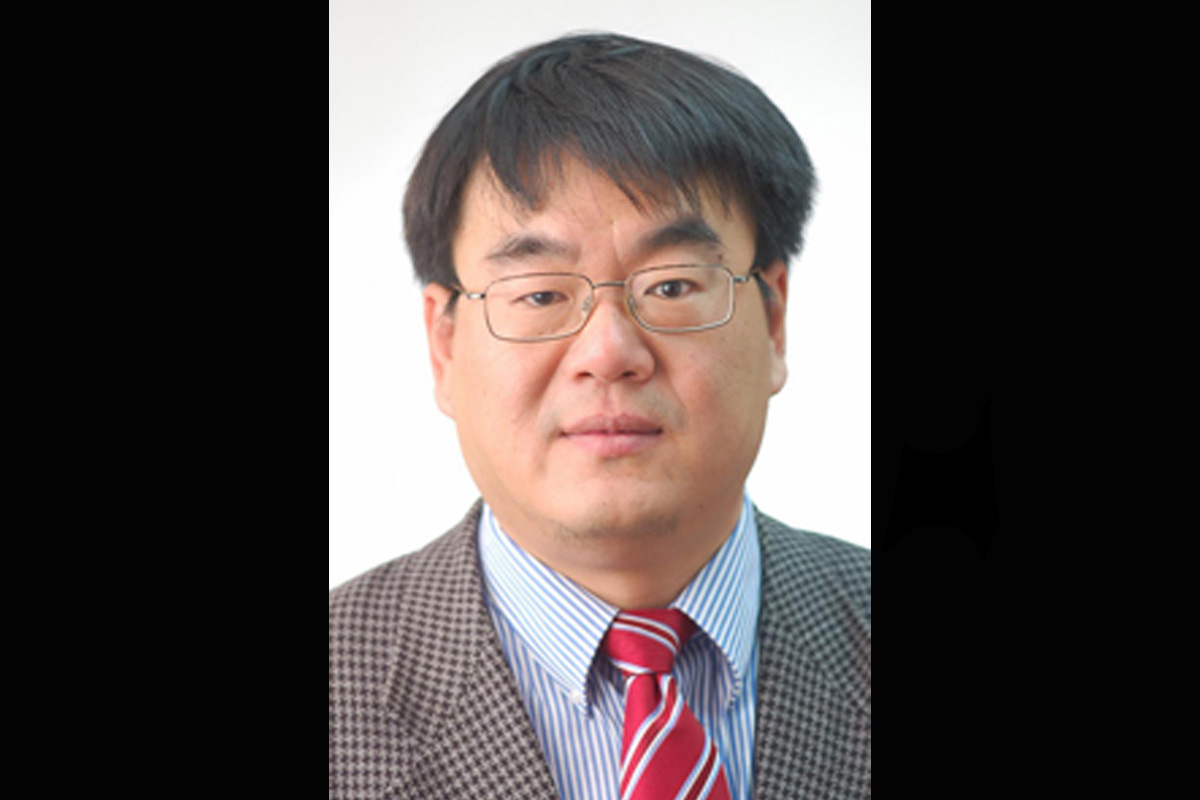
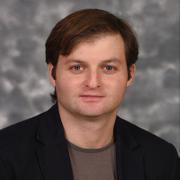
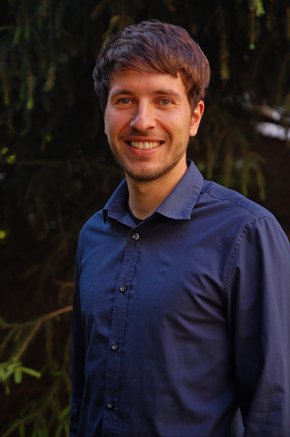
Professor Weidong Zhu is a mechanical engineering professor at the University of Maryland, Baltimore County (UMBC), specializing in vibration analysis, acoustics, and nonlinear dynamics. His research focuses on applications such as high-speed elevator cable dynamics, wind turbine optimization, and automotive systems. He has developed innovative methodologies for vibration measurement using advanced laser Doppler vibrometry techniques. Zhu's work has been recognized with prestigious awards, including the Rayleigh Lecture from the American Society of Mechanical Engineers (2023) and the 2020 Board of Regents’ Faculty Award for Excellence in Scholarship. His research bridges theoretical analysis and practical engineering solutions, addressing challenges in structural health monitoring, energy harvesting, and dynamic system control. Key contributions include studies on rotating machinery dynamics, nonlinear energy sinks, and the integration of machine learning for control systems. His methodologies enhance the understanding and mitigation of vibrations in critical infrastructure, such as wind turbines and tidal energy converters.
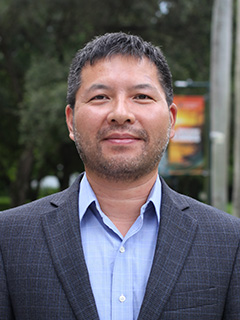
Hebin Li is a Professor of Physics at the University of Miami's College of Arts and Sciences. His research focuses on experimental quantum optics and spectroscopy, particularly using multidimensional coherent spectroscopy to study quantum coherence in atomic systems and solid-state materials. Primary research domains include: Quantum dynamics of atomic vapors and cold atoms Coherent control of quantum emitters Defect centers in diamond and silicon carbide Ultrafast processes in semiconductor materials Recent publications advance spectroscopic methodologies through collinear 2D coherent spectroscopy techniques applied to atomic ensembles and quantum materials. Experimental work characterizes collective quantum states, many-body interactions, and defect photophysics under varied excitation conditions. Laboratory capabilities include ultrafast laser systems, cryogenic spectroscopy, and quantum optics instrumentation for probing coherent phenomena.
Jonay Tomás Toledo Carrillo is a Full Professor at the University of La Laguna, affiliated with the Department of Computer Science and Systems Engineering within the School of Computer Science and Systems Engineering. He leads the GRULL (Robotics Group of the University of La Laguna), focusing on robotics, control systems, and autonomous systems. He earned his PhD in 2008 with a thesis on nonlinear control strategies for quadrotor helicopters, advised by Dr. Leopoldo Acosta Sánchez. His research interests span robotics, autonomous navigation, sensor fusion, and assistive technologies. Key projects include developing mobility aids for visually impaired individuals and enhancing localization systems through adaptive algorithms. Recent work emphasizes real-time sensor processing (e.g., LSTM networks for odometry), magnetic field control for accessibility, and Kalman filter variants for multi-sensor integration. Publications highlight contributions to robotics applications, including autonomous vehicles, wheelchair navigation, and BCI systems. His work bridges theoretical control methods with practical implementations in unstructured environments. Collaborations include interdisciplinary efforts in computer vision, ontology-based navigation, and educational simulators like MNEME for memory hierarchy teaching. Dr. Toledo Carrillo’s research aligns with the university’s engineering and automation priorities, with a focus on real-world impact through low-cost, high-precision solutions. His team’s innovations address challenges in both robotics engineering and accessibility technologies.
Professor Markku Vainio is a leading academic in the Department of Chemistry at the University of Helsinki, specializing in Physical Chemistry. He directs the Laser Spectroscopy Group, focusing on advanced molecular spectroscopy techniques, including mid-infrared vibrational spectroscopy and laser frequency comb technologies. His research emphasizes trace gas detection, nonlinear optics, and innovative instrumentation development. Education & Qualifications: D.Sc. (Tech.), Docent in Physical Chemistry. He teaches courses such as 'Molecular Structure and Spectroscopy' and supervises doctoral candidates in laser-based analytical methods. Research Interests: Mid-infrared spectroscopy, frequency comb generation, cantilever-enhanced photoacoustic sensing, and applications in environmental and chemical analysis. His team develops high-sensitivity instruments for aerosol detection, gas chromatography, and terahertz sensing. Key Projects: Integrated Optical Vortex Comb (Academy of Finland, 2024–2028) BF GIANT (Business Finland, 2024–2026) Euramet-Vainio (External Funding, 2023–2026) Grants & Funding: Over €260,000 from diverse sources including the Research Council of Finland, Business Finland, and private foundations. Labs & Facilities: Manages the Molecular Spectroscopy Kumpula facility, equipped with cutting-edge instrumentation for laser-based research.
Mark R. Bell is a Professor of Electrical and Computer Engineering at Purdue University, based in the Elmore Family School of Electrical and Computer Engineering. His research focuses on information theory, communication systems, radar signal processing, and free-space optical communications. He holds a BS from California State University, Long Beach (1981), an MS (1982), and a PhD (1988) from the California Institute of Technology. His work spans diverse areas including radar waveform design, signal detection in noisy environments, and interdisciplinary applications like biomedical manufacturing and disaster management. Key research interests include advanced radar systems (e.g., bistatic configurations, LFM chirp processing), communication theory (e.g., time-frequency modulation, interference management), and emerging technologies such as AAV production for biotechnology. His contributions also extend to sensor networks, smart grid monitoring, and statistical modeling of wireless interference. Recent publications highlight innovations in radar resolution enhancement, adaptive threshold detection, and cost-effective manufacturing processes. Collaborative projects include spectrum-sharing frameworks for communications and radar systems, and integration of GPR with surface imaging for civil infrastructure analysis. Prof. Bell’s work has been recognized through sustained contributions to IEEE journals and conferences. His research bridges theoretical signal processing with practical applications in defense, healthcare, and environmental monitoring.
Tobias Kofler is affiliated with the Management Center Innsbruck (MCI), where he contributes to teaching and research in mechanical process engineering and particle technology. He has held roles such as lecturer, tutor, and laboratory instructor, focusing on subjects like mechanical elements, process technology, and fluid mechanics. His research emphasizes hydrocyclone optimization, waste treatment systems, and energy-efficient separation technologies. Education: Matura – Höhere technische Schule für Maschinenbau (HTL Innsbruck) DI (FH) – Management Center Innsbruck (MCI) Diplomstudium für Verfahrens- und Umwelttechnik Research Interests: Kofler’s work centers on improving hydrocyclone designs for industrial and environmental applications, including wastewater treatment, biowaste management, and energy efficiency. He explores particle separation mechanisms, flow dynamics, and process optimization through experimental and computational methods. Recent studies address challenges like upcycling glass waste, optimizing screw press separators, and analyzing cyclone performance under varying conditions. Key Contributions: Developed empirical models for cyclone pressure drop and swirl optimization. Co-inventor of patented separation technologies (EP3117904, US Patent 10,668,485B2). Recipient of the MCI Competitive Research Award and merit scholarships for academic excellence. Advising & Grants: Supervised over 20 bachelor’s and master’s theses on topics ranging from hydrocyclone design to energy-efficient processes. Collaborated on funded projects involving laser anemometry, plasma actuation, and renewable energy storage systems. Labs & Teams: Active in MCI’s Fluid Systems and Particle Technology research group, contributing to initiatives like the ‘Robot-LDA’ measurement platform and mobile wastewater testing facilities.
Jan D'hooge is a full Professor at the Faculty of Medicine, KU Leuven, heading the Cardiovascular Imaging and Dynamics unit within the Department of Cardiovascular Sciences. He is a member of the iSi Health Institute for Physics-based Modeling and Leuven.AI Institute for Artificial Intelligence, and serves on the Faculty Council of Medicine and Departmental Council for Cardiovascular Sciences. His research focuses on cardiovascular imaging through echocardiography and ultrasound techniques, specializing in shear wave elastography for myocardial stiffness assessment, high-frame-rate cardiac mechanics imaging, and AI integration in medical diagnostics. He actively explores nanodroplet technologies for super-resolution ultrasound and radiation therapy applications. Recent publications (2025) demonstrate strong trends in ultrasound shear wave imaging for cardiac tissue characterization, natural shear wave analysis for hemodynamic assessment, and development of flexible ultrasound arrays for surgical guidance. These works consistently integrate AI for image analysis and simulation while advancing nanodroplet applications in diagnostics and therapy. He supervises PhD students including N. Burman. Current research is funded by multiple grants: SQUARE: Quantitative assessment of regurgitation in super-resolution echocardiography (2025-2029) Quantification of whole heart function from 2D echocardiographic sequences (2025-2029) AI in pelvic floor imaging for improved diagnostics (2024-2027) Cardiac Active Shear Wave Imaging for non-invasive tissue stiffness assessment (2024-2028) He leads the Cardiovascular Imaging and Dynamics unit which collaborates with iSi Health and Leuven.AI on physics-based modeling and AI for healthcare. The unit pioneers research in cardiac mechanics, ultrasound technology development, and image-guided interventions through advanced imaging facilities.
John M. Pauly is the Reid Weaver Dennis Professor in the Department of Electrical Engineering at Stanford University, with affiliations in the Wu Tsai Neurosciences Institute, Stanford Cancer Institute, Cardiovascular Institute, and Bio-X program. His research focuses on medical imaging, particularly MRI acceleration and reconstruction techniques for applications like cardiac imaging and interventional guidance. He holds a PhD from Stanford University (1990) and has received notable awards including the ISMRM Gold Medal (2012) and IEEE Fellow distinction (2022). His academic appointments include teaching courses such as Medical Image Reconstruction (EE 369C), Signals and Systems II (EE 102B), and The Wireless World (EE 100). He advises numerous PhD and master's students in MRI hardware, reconstruction algorithms, and clinical applications. Research highlights include innovations in deep learning for MRI quality assessment, coil design for pediatric imaging, and non-contact motion sensing via Doppler radar. His work bridges engineering and clinical needs, emphasizing practical translation of compressed sensing and machine learning methods into clinical MRI workflows.
Nathanaël Machicoane is a CNRS Researcher at the Laboratory of Geophysical and Industrial Flows (LEGI) within Grenoble Institute of Technology at University Grenoble Alps. His research focuses on experimental and theoretical aspects of fluid dynamics, particularly in multiphase flows, atomization processes, and turbulence phenomena. He leads investigations using advanced imaging techniques including X-ray radiography and high-speed visualization to study complex fluid behaviors. His educational background includes a Habilitation from University Grenoble Alps (2024), a Ph.D. in Fluid Mechanics from ENS de Lyon (2014), and a Master degree in Physics from ENS de Lyon (2011). Prior to his current position, he completed postdoctoral research at the University of Washington's Multiphase & Cardiovascular Flow Lab (2016-2020) and at FAST laboratory. Machicoane's research interests span atomization and sprays, multiphase flows, turbulence, drops and bubbles, geophysical flows, particles/flow interactions and transport, heat transfer, mixing in two-phase flows, and Lagrangian and Eulerian approaches. His work combines theoretical modeling with sophisticated experimental techniques to investigate fundamental fluid phenomena with applications ranging from industrial processes to biomedical engineering. He has developed expertise in using synchrotron-based X-ray imaging to study liquid jet fragmentation and spray formation mechanisms. His publication record shows a strong focus on atomization mechanisms, particularly gas-assisted atomization, with significant contributions to understanding liquid jet fragmentation, spray formation, and particle dynamics in turbulent flows. His recent work increasingly incorporates advanced imaging techniques and computational validation, with emerging applications in biomedical fluid dynamics as evidenced by his publications on intracranial aneurysm hemodynamics. Machicoane actively participates in the EDT (Two-Phase Flows and Turbulence) team at LEGI, utilizing the laboratory's extensive experimental facilities including hydrodynamic tunnels, rotating platforms, and wave channels. His research often involves international collaborations with institutions such as the University of Washington, where he previously conducted postdoctoral research. His laboratory work employs a variety of sophisticated experimental setups, including high-speed flow visualization systems, Phase Doppler Particle Analysis, and synchrotron-based X-ray imaging. These techniques enable detailed characterization of complex fluid phenomena at multiple scales, from macroscopic spray patterns to microscopic interfacial dynamics.
Kostas Tassis serves as Professor in the Department of Physics at the University of Crete, Greece, having joined in 2012 as Assistant Professor, promoted to Associate Professor in 2018, and to full Professor in 2023. He leads the PASIPHAE project (Polar-Areas Stellar-Imaging in Polarization High-Accuracy Experiment), an ERC Consolidator Grant awarded in 2018, and maintains active affiliations with Skinakas Observatory and the Institute of Theoretical and Computational Physics. His academic background includes: BSc in Physics from the University of Thessaloniki (1999) PhD in Theoretical Astrophysics from the University of Illinois at Urbana Champaign (2005) His research centers on star formation processes, interstellar medium physics, and magnetohydrodynamic simulations, with particular emphasis on cosmic magnetic fields and their role in astrophysical systems. He employs both theoretical modeling and observational polarimetry to investigate phenomena ranging from molecular cloud dynamics to cosmological-scale magnetic field effects. Analysis of his recent publications reveals dominant focus on LiteBIRD mission simulations, interstellar dust polarization, and magnetic field strength estimation techniques. Key thematic clusters include cosmic microwave background polarization analysis, blazar variability studies, and computational approaches to non-ideal magnetohydrodynamics in star-forming regions, demonstrating strong integration of observational data with theoretical modeling. Notable recognitions include: ERC Consolidator Grant for PASIPHAE project (2018) His research program involves extensive international collaboration, particularly through the PASIPHAE survey and LiteBIRD mission consortia. Current work emphasizes polarimetric instrumentation development and large-scale cosmic magnetometry, with significant contributions to understanding magnetic field roles in galaxy evolution and star formation processes. He maintains active involvement with multiple University of Crete research units including the Crete Center for Theoretical Physics (CCTP) and Skinakas Observatory, where observational components of his PASIPHAE work are conducted.
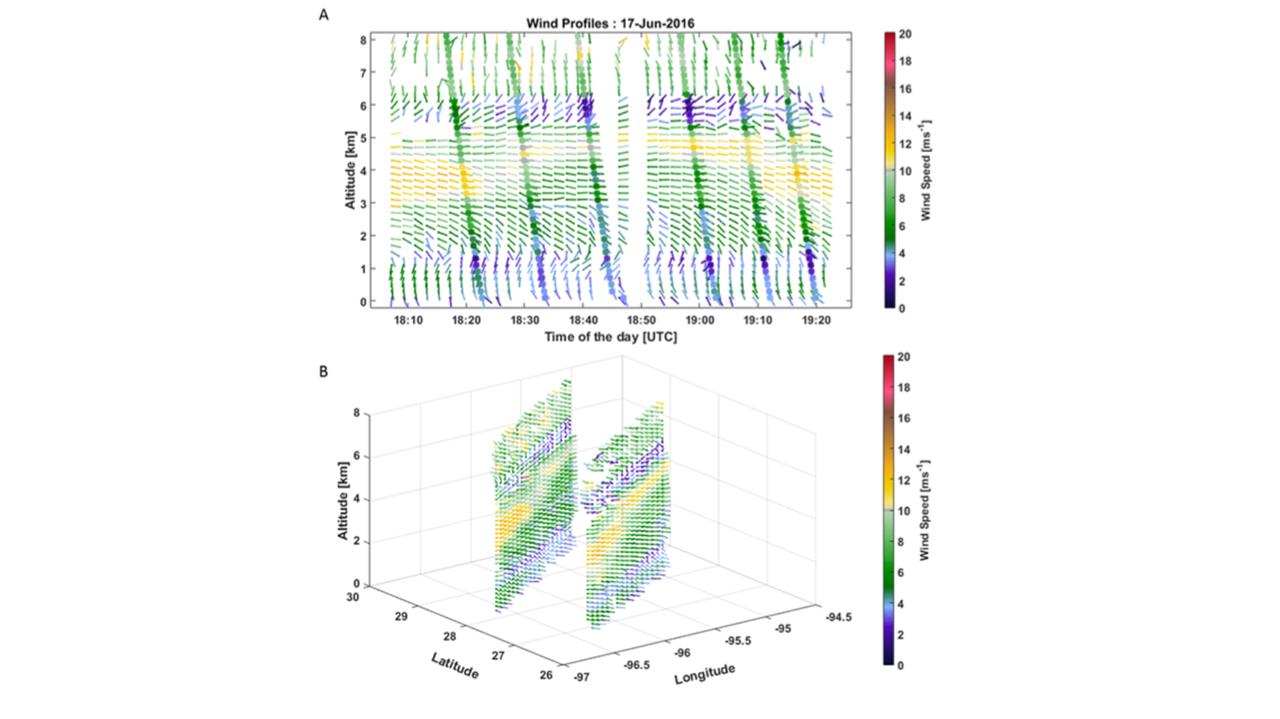
Robert Michael Hardesty is a CIRES Senior Research Scientist and Director of CIRES Environmental Observations at the University of Colorado Boulder. He holds a Ph.D. from the Naval Postgraduate School (1984) and specializes in atmospheric remote sensing using lidar technology. Dr. Hardesty's research interests center around development, evaluation, and application of optical remote sensing techniques to investigate atmospheric processes. Lidar techniques are used to investigate a broad range of phenomena, including boundary layer dynamics, winds and turbulence, air pollution, and greenhouse gas emissions. His work involves deploying lidars on various platforms including surface vehicles, ships, aircraft, and satellites. His research improves understanding, modeling, and forecasting of weather and climate processes, identifies sources of air pollution, and enhances renewable energy production. Currently, Dr. Hardesty is focused on developing and deploying a Doppler lidar in space to measure wind profiles globally. He's working with Ball Aerospace and a CIRES postdoc on the Optical Autocovariance Wind Lidar (OAWL) based on a Mach-Zender interferometer. He's also collaborating with ESA on their Aeolus space-based lidar winds mission, which completed a successful 4-year mission. Both NOAA and ESA are examining Doppler lidar techniques for future space-based wind measurements in the 2030 time frame. His recent publications demonstrate a strong focus on advancing wind profiling technology, particularly through lidar applications. The research spans satellite mission concepts, instrument development and validation, urban meteorology, and greenhouse gas monitoring. Key themes include the integration of passive and active remote sensing techniques, improvements to numerical weather prediction models, and applications to renewable energy and urban air quality. Fellow of the Optical Society of America (1987) Fellow of the American Meteorological Society (1990) NOAA Distinguished Career Award (2014) Lifetime Achievement Award, International Radiation Commission/International Coordinating Group on Laser Atmospheric Studies (2017) Dr. Hardesty has been involved in numerous collaborative research projects, particularly those focused on atmospheric observation systems and their applications to weather forecasting and climate research. His work with NASA, NOAA, and ESA demonstrates significant grant funding and international collaboration. While specific student advising information isn't provided in the text, his role as a senior research scientist suggests he likely mentors postdoctoral researchers and graduate students. He is associated with the Cooperative Institute for Research in Environmental Sciences (CIRES), which connects graduate students and postdocs from various academic units for research collaboration. His work on the Optical Autocovariance Wind Lidar and collaboration with ESA on the Aeolus mission represent significant contributions to atmospheric observation technology.
Prof. Pavel Ginzburg is a faculty member at the School of Electrical Engineering, Tel Aviv University, and leads the Dynamics of Nanostructures Research Laboratory . His work bridges electromagnetic wave interactions with nanostructures across optical, RF, and theoretical domains. Nanophotonics Quantum Mechanics Quantum Optics Metamaterials Radio Physics Antenna Systems The Dynamics of Nanostructures Research laboratory includes four sub-divisions: optical lab (focusing on biophotonics and optical metamaterials), anechoic RF chamber (antenna design, RFID), theoretical/computational group (quantum electrodynamics), and colloidal chemistry lab (fluorescent materials). Recent publications highlight advancements in metamaterials for cloaking, THz generation, drone identification systems, and photonic nanojet arrays, reflecting his interdisciplinary approach. The Dynamics of Nanostructures Research laboratory at Tel Aviv University combines experimental and computational expertise to tackle challenges in electromagnetic wave control. It operates dedicated facilities for optical experiments, radiofrequency testing, computational modeling, and chemical synthesis of nanomaterials.
Håkan Nilsson is a Full Professor in Fluid Dynamics at Chalmers University of Technology. His research focuses on computational fluid dynamics (CFD) with applications in hydropower systems, particularly turbine flow analysis, cavitation modeling, and generator cooling air dynamics. He utilizes OpenFOAM for numerical simulations and develops advanced algorithms for mesh deformation and flow control. Academic Rank: Full Professor Institution: Chalmers University of Technology Primary Research: Hydropower Turbines, Cavitation, CFD, Machine Learning, Multiphase Flow His recent work integrates machine learning with CFD for optimizing turbine operations and predictive maintenance in hydropower plants. Key projects include ALPHEUS and investigations into contra-rotating pump-turbine systems for low-head energy storage. Collaborations span experimental validation with experts in PIV, laser Doppler velocimetry, and industrial partners in renewable energy. Research trends highlight 15+ years of publications on turbulence modeling, vortex dynamics, and fluid-structure interaction in hydraulic systems. Sub-fields include Francis turbine transients, Kaplan turbine rotor-stator interactions, and applications in biomedical fluid dynamics and welding processes. Scientific awards are not explicitly mentioned.
Sebastian Bley is a Researcher at the Leibniz Institute for Tropospheric Research (TROPOS) in Leipzig, Germany, where he works in the Department of Remote Sensing of Atmospheric Processes. He is currently involved in the Aeolus DISC (Data, Innovation, and Science Cluster) and CARDINAL (EarthCARE algorithm development) projects. His academic background includes a Ph.D. in Meteorology from the University of Leipzig and TROPOS (2013-2017), a Master of Science in Meteorology from the University of Leipzig (2009-2012), and a Bachelor of Science in Meteorology from the University of Leipzig (2006-2009). Prior to his current position, he was a Postdoctoral Research Fellow at the European Space Agency (ESA-ESRIN) in Italy (2018-2021), focusing on validation of Aeolus mission products. Bley's research centers on convective cloud life cycles using Meteosat-SEVIRI satellite data, optical and microphysical cloud property measurements through satellite and ground-based systems, synergistic analysis of passive and active satellite observations, and model evaluation of convective processes. His work bridges observational data with climate modeling to improve cloud representation in atmospheric simulations. His publication record reveals a concentrated focus on satellite remote sensing advancements, particularly in cloud and aerosol observation techniques, with significant contributions to the Aeolus wind lidar mission and Meteosat-based cloud property retrieval algorithms. Recent work emphasizes cross-validation between satellite and ground-based instruments for atmospheric process understanding. Bley contributes to major collaborative projects including HD(CP)2 (funded by BMBF) and teaches specialized content on "Doppler Wind Lidar in Space - Aeolus" within the University of Leipzig's Satellite Remote Sensing curriculum, demonstrating active engagement in both research innovation and academic knowledge transfer.