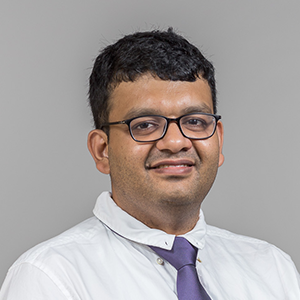
Prof. Dr. Ömer Ilday is a Full Professor at Ruhr University Bochum (Germany) since 2023, holding the prestigious Alexander von Humboldt Professorship. Previously, he served as a Professor at Bilkent University (Turkey) from 2006 to 2023. His academic journey includes a PhD from Cornell University (2003) and postdoctoral work at MIT (2003–2006). He graduated summa cum laude in theoretical physics from Boğaziçi University (1998). Research Focus: His work centers on nonlinear dynamics engineering, particularly in ultrafast laser physics and light-matter interactions. Key areas include nonlinear laser lithography, femtosecond pulse generation, and self-organized pattern formation. His innovations bridge basic science with applications in photonics, materials processing, and biomedical engineering. Grants & Awards: Recipient of ERC Consolidator (2013), Proof of Concept (2021), and Advanced (2022) Grants. Honored with the Findlay Award, TÜBA-GEBIP, and Humboldt Professorship. Elected to the Turkish Academy of Sciences and Academia Europaea. Publications: Over 100 peer-reviewed articles in top journals like Nature Photonics and Nano Letters. Recent work focuses on GHz repetition-rate lasers, 3D silicon sculpting, and burst-mode laser surgery advancements. Labs & Teams: Leads the Nonlinearity Engineering group at Ruhr University, pioneering ultrafast laser systems and nonlinear dynamics research. Collaborates globally on projects like KI-ROJAL and Terahertz-NRW.
Dr. A.J. van der Wekken is a Clinical Professor in Pulmonary Oncology at the Faculty of Medical Sciences, University of Groningen. He specializes in lung cancer treatment, clinical pharmacology, and molecular oncology. His research focuses on drug interactions, precision dosing of cytotoxic agents, and targeted therapies for non-small cell lung cancer (NSCLC). He is actively involved in clinical trials evaluating novel treatments and biomarker-driven therapies. Current roles include Chair of the Molecular Tumor Board and Thoracic Oncology Working Group at the UMCG, as well as leadership positions in national and international oncology societies (NVALT, ESMO, AACR). He advises Longkanker Nederland and participates in committees regulating expensive medications and clinical guidelines. His recent publications address drug safety, resistance mechanisms in ALK-positive tumors, and combination therapies for EGFR/MET-altered NSCLC. Notable contributions include a study on sotorasib adverse events and a phase 2 trial of afatinib/cetuximab in EGFR exon 20 mutations. He also advocates for optimized dosing strategies to improve treatment efficacy and reduce toxicity. Professional activities include organizing multidisciplinary lung cancer masterclasses and contributing to international guidelines for NSCLC and PTO (Pulmonary Thromboembolism Oncology) management. His work bridges clinical practice and research, emphasizing translational oncology and molecular diagnostics.
Dr. Hasini Banneheke is a Lecturer in Medical Sciences at the North Wales Medical School. Her research focuses on molecular biology techniques applied to parasitology and infectious diseases, with a particular emphasis on Toxoplasmosis and viral treatment protocols. Key Research Areas: PCR Amplification, Toxoplasmosis, Ivermectin Therapeutics, Cancer Immunology, Sri Lankan Health Studies Recent work includes: 2025: PCR-based Toxoplasmosis detection in cancer patients (Sri Lanka) 2024: Ivermectin clinical trials for Covid-19 treatment These publications reflect a multidisciplinary approach combining molecular diagnostics and clinical intervention strategies.
David Almeida is a Professor in Human Development and Family Studies with extensive research activity spanning 1990-2025. His work focuses on stress response mechanisms, aging pathways, and behavioral health outcomes, supported by multiple NIH grants. Psychosocial Determinants and Biological Pathways to Healthy Aging Everyday Stress Response Targets in Behavior Change Daily Diary Evaluation of Workplace Interventions His research explores daily stressors , emotional reactivity , and biological aging pathways , with particular attention to gender differences and longitudinal health trajectories . Recent publications analyze stress response interventions, inflammation biomarkers, and loneliness effects on cognition. NIH-funded projects Over 317 research outputs Collaborations with leading behavioral scientists
Brigitte Gicquel is a distinguished Professor at the Pasteur Institute where she has held multiple leadership positions since 1978. She currently serves as Head of the Mycobacterial Genetics Unit at the Pasteur Institute in Paris and Head of the Emerging Bacterial Pathogens Unit at the Pasteur Institute of Shanghai. She previously served as interim scientific co-Director of the Institut Pasteur of Shanghai in 2015 and has been a Professor at the Institut Pasteur since 1998. Dr. Gicquel's research focuses on Mycobacterium tuberculosis genetics and pathogenesis. Her laboratory has developed groundbreaking genetic tools for studying tuberculosis, including the first PCR tests and genotyping methods for rapid tuberculosis diagnosis. Her team determined the first complete DNA sequence of a mycobacterial replicon, developed shuttle vectors for genetic manipulation of mycobacteria, discovered the first mycobacterial transposon, and established procedures for random mutagenesis and allelic replacement. They constructed the first M. tuberculosis mutant library using transposons and identified key virulence genes. Her most significant contributions include discovering DC-SIGN as the major receptor for M. tuberculosis entry into dendritic cells, identifying mechanisms of multi-drug resistance in tuberculosis, and constructing a promising vaccine candidate against tuberculosis currently undergoing clinical trials in collaboration with the University of Saragoza, Spain. Her publication record spans from 1989 to 2012, showing consistent contributions to tuberculosis research with several highly cited papers in molecular microbiology and infectious disease journals. Her scientific achievements have been recognized with prestigious awards: 2008 Canetti Award, France 2006 Award Sustainable Development from the Foundation Ecology and Development, Spain 2004 Chevalier de la Légion d'Honneur 2002 Award Alexandre Joannides from the French Academy of Science Dr. Gicquel's laboratory has participated in implementing rapid tuberculosis diagnostic tests in low-income countries and has made significant contributions to understanding multi-drug resistance mechanisms in M. tuberculosis. Her team discovered that 50% of MDR isolates and over 90% of those resistant to fluoroquinolones also show resistance to pyrazinamide, highlighting the rapid accumulation of additional resistances in MDR strains. Her research unit continues to develop new drug screening approaches for antibacterials targeting M. tuberculosis and has designed algorithms for utilizing remnants from GeneXpert samples for results confirmation and case tracing.
Roy N Alcalay, MD, MS is an Associate Professor of Clinical Neurology at Columbia University's Vagelos College of Physicians and Surgeons. He serves as Columbia's movement disorders fellowship director and is an active member of both the American Academy of Neurology and the Movement Disorder Society. His clinical work focuses on movement disorders with special expertise in Parkinson's disease. Dr. Alcalay's research primarily investigates the genetics and epidemiology of Parkinson's disease, with particular emphasis on biomarkers and genetic risk factors. His work has established important connections between Gaucher disease mutations (particularly GBA) and Parkinson's disease risk, as well as examining LRRK2 mutations in Ashkenazi Jewish populations. His research demonstrates how genetic factors influence disease presentation, progression, and cognitive outcomes in Parkinson's patients. Analysis of Dr. Alcalay's publications reveals a strong focus on genetic aspects of Parkinson's disease, particularly regarding GBA and LRRK2 mutations. His work spans from basic genetic epidemiology to clinical applications, including biomarker discovery and understanding genotype-phenotype correlations. Recent publications show increasing emphasis on neuroinflammation, mitochondrial dysfunction, and the development of diagnostic tools for Parkinson's disease. National Institute of Health (NIH) Brookdale Foundation Parkinson's Disease Foundation Michael J Fox Foundation Smart Foundation As director of Columbia's movement disorders fellowship program, Dr. Alcalay mentors the next generation of movement disorder specialists. His research has been supported by numerous significant grants including NIH K02 and K12 awards, Brookdale Leadership in Aging Fellowship, and multiple Michael J Fox Foundation grants. His work has contributed substantially to understanding genetic risk factors in Parkinson's disease, particularly among Ashkenazi Jewish populations, and has implications for genetic counseling and targeted therapies.
Sin-Ho Jung is a Professor of Biostatistics & Bioinformatics at Duke University and a member of the Duke Cancer Institute and Division of Integrative Genomics. His research integrates advanced statistical methodologies with critical biomedical applications, particularly in oncology and diagnostic development. Education: Ph.D. in Biostatistics, University of Wisconsin, Madison (1992) Research Interests: Dr. Jung specializes in clinical trial design (especially phase II/III cancer trials), survival analysis for time-to-event data, longitudinal and clustered data analysis , ROC curve methodology for diagnostic accuracy, and high-dimensional genomic data analysis . His work bridges theoretical statistics with practical implementation in cancer research, biomarker validation, and big data applications, emphasizing methodological rigor for real-world clinical impact. Publication Trends: Recent publications (2024-2025) demonstrate sustained focus on statistical innovation for oncology trials, including group-treatment trial designs, ROC curve comparisons, and high-dimensional prediction modeling. Key themes involve optimizing trial efficiency, validating biomarkers, and developing robust methods for survival and diagnostic data, reflecting deep integration of biostatistics with translational cancer research. Scientific Awards: No scientific awards mentioned in source text Advising and Grants: Dr. Jung teaches BIOSTAT 907: Phase II Clinical Trials and mentors graduate students in biostatistics methodology. His extensive grant portfolio includes 10 active NIH-funded projects: A Phase II, Multi-centre, Randomised, Double-blind, Group Comparator Trial to Assess the Safety and Efficacy of Emactuzumab vs. Placebo in Patients with Tenosynovial Giant Cell Tumour (SynOx Therapeutics Ltd, 2025-2030) Disparate Survival, Disparate Workforce: An Integrated Approach to Improving Head and Neck Cancer Outcomes and Diversity in the Oncology Workforce (NIDCR, 2024-2029) Cascade Amplification Biosensor Technology for Detecting MicroRNA Biomarkers of Alzheimer Disease (NIA, 2025-2027) Harnessing treatment-induced tumor evolution and collateral sensitivities using a human rectal cancer co-clinical platform (NCI, 2022-2027) Integrated Biostatistical Training for CVD Research (NC State, 2022-2027) RAPID System for Early Detection of Head and Neck Cancer in Low-Resource Settings (NIH, 2022-2027) Detecting missed metastases from nominally early-stage melanomas with pump-probe microscopy (USAMRAA, 2023-2026) Home-based Autologous Hematopoietic Stem Cell Transplantation to Improve Outcomes and Decrease Costs (KUMC, 2025-2026) Improving Accuracy of Next-Generation Microscopy for Early Stage Metastatic Melanoma Detection (NCI, 2024-2025) Prebiotics to Optimize the Microbiota and Improve Outcomes of Allogeneic Hematopoietic Stem Cell Transplantation (KUMC, 2024-2025) Labs and Teams: As a member of the Duke Cancer Institute and Division of Integrative Genomics, Dr. Jung collaborates with multidisciplinary teams spanning oncology, genomics, and biomedical engineering to translate statistical innovations into clinical applications, particularly in cancer diagnostics and therapeutic development.
Dr. Christoph Hellings is a Lecturer at the Department of Physics at ETH Zürich, specializing in quantum technologies and superconducting circuits. His research focuses on quantum error correction, quantum hardware implementation, and the development of scalable quantum systems. He contributes to advancements in superconducting qubit architectures, leakage reduction mechanisms, and fault-tolerant quantum computing protocols. His work bridges theoretical models with experimental validation, particularly in areas like stabilizer code decoding, lattice surgery, and device-independent randomness amplification. Hellings collaborates on projects involving multi-module quantum processors, photonic cluster states, and real-time feedforward systems. His experiments frequently address practical challenges such as magnetic flux control, inter-chip coupling optimization, and mitigation of loss mechanisms in superconducting circuits. Key research themes include improving qubit coherence times, enhancing gate fidelity through dynamic control, and advancing quantum error correction techniques for surface codes. Recent studies explore the integration of leakage reduction units and the characterization of quantum processor performance under realistic conditions.
Divesh Aggarwal is an Associate Professor in the Department of Computer Science at the National University of Singapore (NUS) and a Principal Investigator at the Centre for Quantum Technologies (CQT). He holds a PhD from ETH Zurich (2012) and was a postdoc at EPFL and New York University. His research focuses on discrete structures in theoretical computer science, with emphasis on cryptography, lattices, computational number theory, and coding theory. Aggarwal has advised numerous PhD students and postdocs, and his work bridges cryptography, quantum computing, and algorithm design. He is involved in editorial roles for journals like Information Processing Letters and serves on program committees for top conferences such as CRYPTO, EUROCRYPT, and STOC. Education: PhD in Computer Science from ETH Zurich (2012), under Prof. Ueli Maurer. Postdoctoral research at EPFL (School of Computer and Communication Sciences) and NYU (Department of Computer Science). Research Interests: Information-theoretic Cryptography Randomness Extractors Lattice Algorithms and Applications Coding Theory Quantum Cryptography and Algorithms Computational Number Theory Recent Work Trends: His publications emphasize lattice-based cryptography, quantum-resistant algorithms, and complexity-theoretic hardness. Recent topics include SVP/ CVP algorithms, non-malleable codes, and quantum-proof cryptographic protocols. Over 70 papers in venues like FOCS, STOC, CRYPTO, and ITCS. Advising & Grants: Supervised students now in academia (e.g., IIT Delhi) and industry. Hosts visiting researchers and postdocs. Open to highly motivated PhD candidates and postdocs in theoretical computer science. Labs & Collaborations: Leads research at CQT and NUS School of Computing. Collaborates internationally on projects like quantum-resistant cryptosystems and lattice algorithm optimizations.
Avi Wigderson is the Herbert H. Maass Professor at the School of Mathematics, Institute for Advanced Study, Princeton, where he leads research in theoretical computer science and discrete mathematics. He organizes the CSDM (Computer Science and Discrete Mathematics) program at IAS, fostering interdisciplinary research and collaboration. Research Interests: His primary research areas include randomness and pseudorandomness, computational complexity, circuit and proof complexity, quantum computation, cryptography, and distributed computing. His work bridges computer science and pure mathematics, particularly through algebra, analysis, and combinatorics. He has pioneered foundational results in derandomization, lower bounds, and the interplay between computation and mathematical structures. The recent publications highlight his continued leadership in advancing algebraic and analytic techniques in complexity theory. Themes include operator scaling, invariant theory, expander graphs, arithmetic circuits, and the asymptotic analysis of tensors and matrix spaces. These works often unify computational problems with deep mathematical frameworks, demonstrating the power of interdisciplinary approaches. Scientific Awards: Edsger W. Dijkstra Prize in Distributed Computing (2023) for the paper 'Completeness Theorems for Non-cryptographic Fault-tolerant Distributed Computing' Advising and Grants: Wigderson has advised numerous PhD students, primarily at the Hebrew University and Princeton, and hosted over 50 postdoctoral researchers at IAS, including many who have become leading figures in theoretical computer science. While specific grants are not listed, his sustained productivity and influence suggest long-term funding from major sources such as the NSF, Simons Foundation, or IAS internal support. Labs and Teams: He leads the CSDM (Computer Science and Discrete Mathematics) group at the Institute for Advanced Study, organizing seminars, workshops, and collaborative research initiatives that bring together mathematicians and computer scientists from around the world.
Kirill Petrovnin serves as a Research Fellow in the Department of Applied Physics at Aalto University's School of Science. His work centers on quantum information processing using superconducting microwave circuits, with primary affiliation to the Superconducting Qubits and Circuit QED research group. His research spans Quantum Computing , Quantum Sensing , and Quantum Entanglement with emphasis on parametric amplification techniques. Key focus areas include criticality-enhanced sensing, microwave photon detection, and multipartite entanglement generation in Josephson-based systems. The research group investigates quantum phenomena in superconducting circuits for applications in quantum metrology and information processing. Analysis of his 15 most recent publications (2025-2019) reveals dominant trends in parametric quantum sensing and microwave quantum optics . Works consistently explore criticality effects in superconducting circuits, entanglement engineering via Josephson parametric systems, and broadband quantum light generation. The publications demonstrate strong theoretical-experimental integration with applications in quantum memory and sensing. Affiliated with Aalto University's quantum research ecosystem, Petrovnin contributes to advancing superconducting circuit technologies through the Superconducting Qubits and Circuit QED group. The team focuses on developing novel quantum devices using microwave-frequency superconducting components for next-generation quantum information systems.
Divesh Aggarwal is an Associate Professor at the Department of Computer Science , National University of Singapore , and a Principal Investigator at the Centre for Quantum Technologies . He received his PhD from ETH Zurich under Prof. Ueli Maurer , focusing on theoretical cryptography. His research spans lattices, pseudorandomness, computational complexity, cryptography, and coding theory , with a focus on quantum-safe cryptographic systems. Research Themes: Lattice-based cryptography, quantum algorithms, computational complexity, non-malleable codes, and randomness extraction. Advising: Actively mentors graduate students in theoretical computer science and quantum computing. Professional Service: Serves on program committees for top conferences (CRYPTO, STOC, TCC, etc.) and editorial boards. Group Activities: Organizes a weekly research seminar covering diverse topics in theoretical computer science, including lattice algorithms, quantum computing, and cryptographic protocols.
Daniel Mayer is a researcher affiliated with the Department of Physics at RPTU Kaiserslautern-Landau. His work focuses on quantum physics, particularly in ultracold atomic gases , nonequilibrium thermodynamics , and quantum simulation . Current position: Researcher in the Widera research group Email: dmayer@rhrk.uni-kl.de Research highlights include: Quantum thermometry using single atoms Spin dynamics in Bose-Einstein condensates Non-equilibrium processes in few-body systems Precision spectroscopy of rubidium atoms His publications (2015–2023) demonstrate expertise in quantum optics , atomic physics , and statistical mechanics . He has contributed to advancements in single-atom manipulation and quantum sensing technologies.
Divesh Aggarwal is an Associate Professor in the Department of Computer Science at the National University of Singapore (NUS) and a Principal Investigator at the Centre for Quantum Technologies (CQT). He leads an active research group with multiple PhD students, postdocs, and collaborators focusing on theoretical computer science and cryptography. His research spans two primary themes: (1) fine-grained complexity and exponential algorithms for hard problems, particularly lattice problems, where he works on both finding faster algorithms and proving lower bounds; and (2) randomness extractors and their applications in cryptography, privacy amplification, and tamper-resilient systems. His work intersects cryptography, computational complexity, and quantum computing. Aggarwal's recent publications (2022-2025) demonstrate continued productivity in lattice-based cryptography, with significant contributions to non-malleable codes, quantum security, and hardness assumptions. His work appears consistently in top venues including STOC, FOCS, CRYPTO, and IEEE Transactions. The research shows a strong trend toward quantum-resistant cryptography and exploring the boundaries between classical and quantum computational hardness. He actively mentors students and researchers, with current PhD students including Zeyong Li, Rishav Gupta, Saswata Mukherjee, Aditya Morolia, and Ananta Mukherjee. His alumni have secured positions at institutions including NUS, IIT Delhi, and XJTLU. Aggarwal also organizes a weekly research seminar where his group discusses theoretical computer science topics. His teaching portfolio includes advanced courses such as Computational Complexity, Pseudorandomness, Design and Analysis of Algorithms, and Introduction to Quantum Computing. He serves on program committees for major conferences including CRYPTO, EUROCRYPT, and STOC, and on editorial boards for journals like Information Processing Letters.
Associate Professor David McMillan is an Associate Professor in Microbiology and Theme Leader in Applied Microbiology at the University of the Sunshine Coast (UniSC), Queensland, Australia. He holds a PhD from the University of Wollongong and completed post-doctoral studies at the Queensland Institute for Medical Research and the German Research Centre for Biotechnology. His research focuses on Streptococcus pyogenes infections, vaccine development, antibiotic discovery, and antimicrobial resistance mechanisms. He has led projects funded by the National Health and Medical Research Council, National Heart Foundation, and commercial partnerships. Teaching responsibilities include coordinating the Bachelor of Science program and teaching courses in immunology, molecular biotechnology, and medical microbiology. His expertise spans bacteria, hospital-acquired infections, and medical device-related infections. Key grants include QB-USC-028 (drug discovery) and collaborations on monitoring group B streptococcus infections in Sunshine Coast populations. Research highlights include developing novel vaccines, studying genetic factors in streptococcal disease, and identifying antibiotic compounds from natural sources. Projects also address antibiotic resistance and hospital infection prevention strategies. Teaching and research activities emphasize translational microbiology and public health impact.