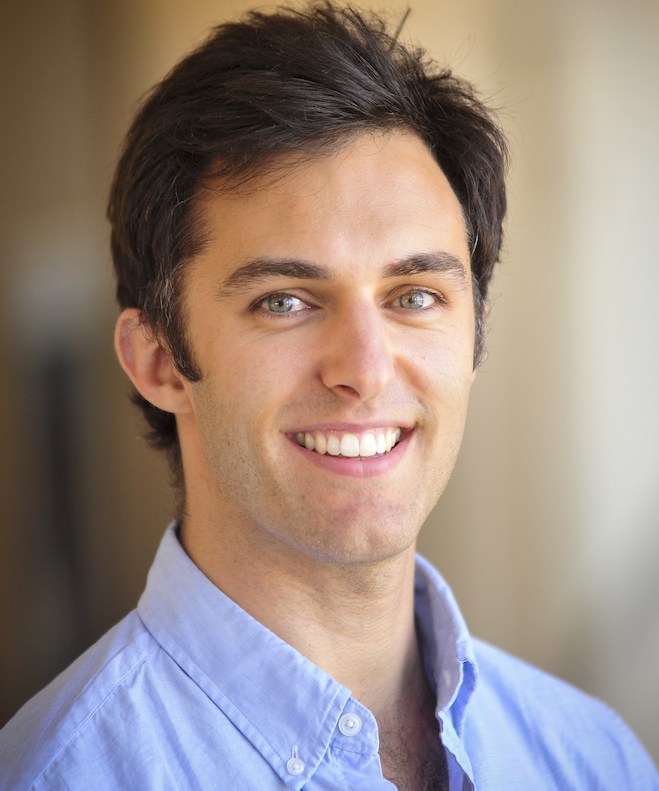
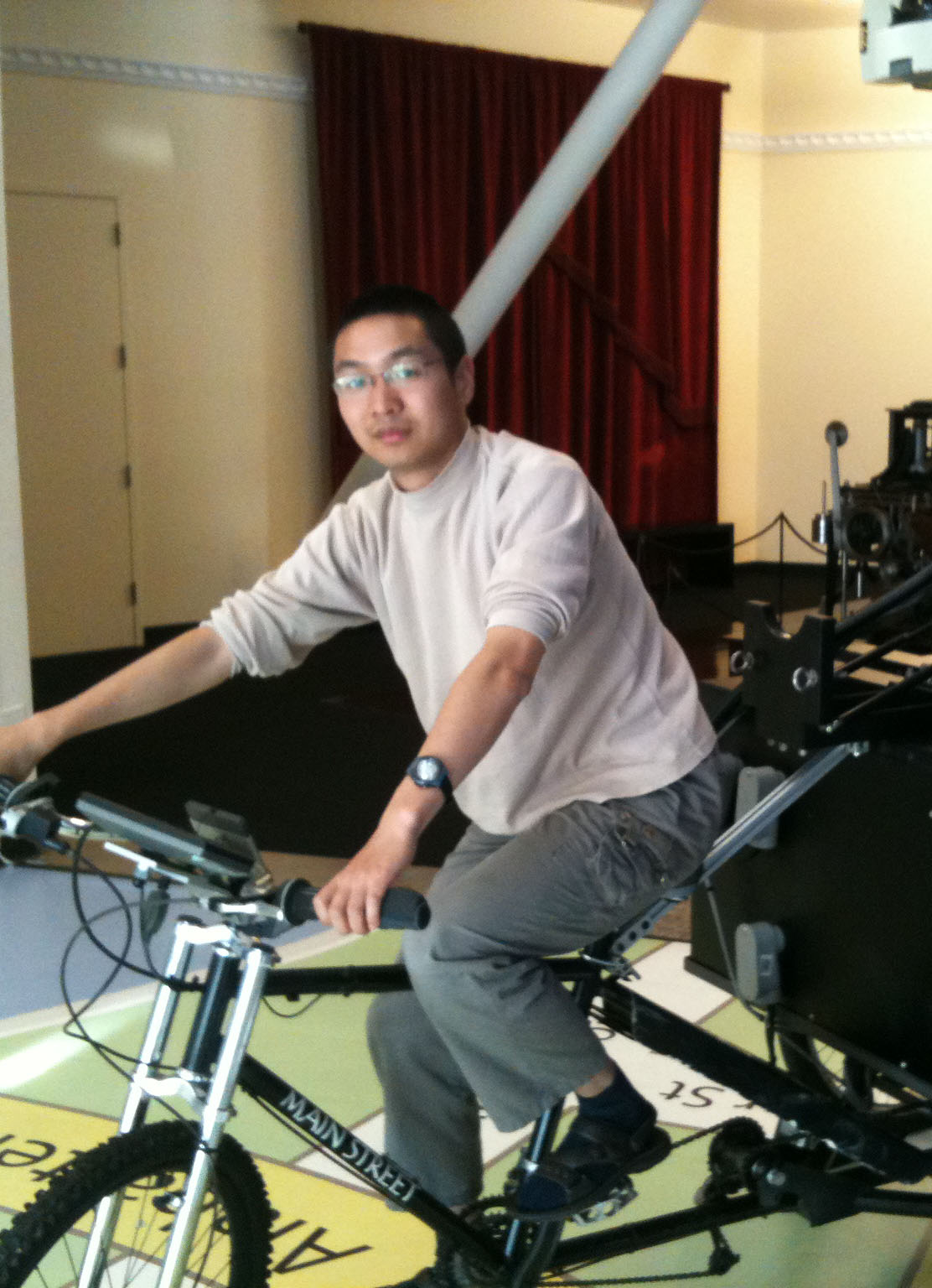
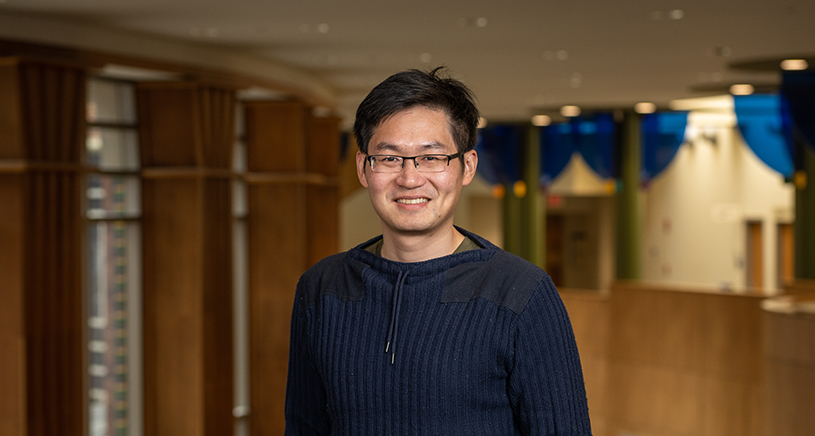
Ozgur Yilmaz is a Professor in the Department of Mathematics at the University of British Columbia (UBC). He is the Director of the Pacific Institute for the Mathematical Sciences (PIMS) and has held roles such as Interim Deputy Director at PIMS and Deputy Director at the Banff International Research Station (BIRS). His research focuses on applied harmonic analysis, signal processing, compressed sensing, and seismic signal processing. Education: PhD in Applied and Computational Mathematics from Princeton University (2001), B.Sc. in Mathematics and Electrical Engineering from Boğaziçi University (1997). Research Interests: Mathematical problems in analog-to-digital conversion, blind source separation, sparse approximations, compressed sensing, and their applications in seismic exploration. He has contributed to advancements in sigma-delta quantization, low-rank matrix recovery, and compressed sensing algorithms. Funding: Recipient of NSERC Discovery Grants, UBC Data Science Institute grants, and leadership in collaborative research groups (CRGs) on high-dimensional data analysis and applied harmonic analysis. His work bridges theoretical mathematics with practical applications in signal processing and AI-driven medical imaging. Students and Postdocs: Supervised numerous PhD and MSc students in areas like compressed sensing, seismic data reconstruction, and machine learning. Current advisees include Aaron Berk and Xiaowei Li. Former students hold positions at academic institutions and tech companies. Labs and Collaborations: Affiliated with UBC’s Data Science Institute (DSI), Centre for Artificial Intelligence Decision-making and Action (CAIDA), and the Institute of Applied Mathematics (IAM). Collaborates on projects integrating AI with scientific discovery, such as retinal biomarker identification using deep learning.
Dr. Julian Sahasrabudhe is a researcher at the Department of Pure Mathematics and Mathematical Statistics (DPMMS) , University of Cambridge, affiliated with the School of Mathematics . His work focuses on combinatorics, number theory, and graph theory, with a emphasis on extremal problems and probabilistic methods. His recent research explores Erdős covering systems, Littlewood polynomials, and monochromatic subgraphs. Publications from 2018–2024 highlight applications of probability generating functions, arithmetic progressions, and density analysis in combinatorial structures. Contact details: jdrs2@cam.ac.uk , Room C2.08, Tel: 01223 337974. Personal homepage .
Dr. David C Mohr is a Professor at Northwestern University Feinberg School of Medicine, holding joint appointments in Preventive Medicine, Medical Social Sciences, and Psychiatry. He serves as Director of the Center for Behavioral Intervention Technologies (CBITs) and Chief of Behavioral Medicine in the Department of Preventive Medicine. With a PhD in Clinical Psychology from the University of Arizona (1991), he transitioned from UCSF to Northwestern in 2006. His research focuses on designing digital mental health interventions leveraging user-centered design and smartphone sensor data. Notable contributions include developing smartphone apps for depression/anxiety management and pioneering implementation strategies for scalable digital mental health solutions. He has led over 400 publications, with recent work emphasizing AI ethics, wearable sensing, and healthcare workforce burnout. Education: BA: University of California, Berkeley (1980) MA/PhD: University of Arizona (1988/1991) Affiliations: Center for Behavioral Intervention Technologies (CBITs) Institute for Augmented Intelligence in Medicine Robert H. Lurie Comprehensive Cancer Center Dr. Mohr’s honors include APA and Society for Behavioral Medicine Fellowships. He advises global initiatives like ImplMentAll (EU-funded) and chairs the Society for Digital Mental Health. His work bridges clinical innovation with real-world implementation, emphasizing equity and sustainability in digital health solutions.
Partha Sarathi Dey serves as Associate Professor in both Mathematics and Statistics at the University of Illinois at Urbana-Champaign, joining the faculty in 2014 after postdoctoral appointments at NYU's Courant Institute and the University of Warwick. His academic credentials include: Ph.D. in Statistics from UC Berkeley (2010) Undergraduate and Masters degrees from Indian Statistical Institute, Kolkata, specializing in Mathematical Statistics and Probability Dr. Dey's research bridges Probability Theory and Statistical Physics, with expertise in First/Last Passage Percolation, Random Growth Models, Stein's Method, Concentration Inequalities, Spin Glasses, Random Graphs, and Random Matrices. His work develops rigorous probabilistic frameworks for physical systems. Recent publications (2023-2025) demonstrate consistent focus on disordered systems and phase transitions, examining random walks on discrete tori, nonlinear Schrödinger equations in higher dimensions, critical-strip path structures, monomer-dimer models, and spin glasses under external fields. These studies reveal deep connections between probabilistic fluctuations and thermodynamic behavior. His distinguished recognitions include: Simons Fellowship Harrison Early-Career Fellowship Though specific advising records and grants are unreported, his extensive co-authorship network reflects active collaboration across international research communities in mathematical physics.
Daniel Roy is a Full Professor at the University of Toronto, holding cross-appointments in the Department of Statistical Sciences, Computer Science, Electrical and Computer Engineering, and the Department of Computer and Mathematical Sciences at UTSC. He is also a Canada CIFAR AI Chair and Research Director at the Vector Institute, reflecting his leadership in AI and machine learning research. His educational background includes a PhD, MEng, and BSc in Computer Science from MIT, where his doctoral work earned the MIT EECS Sprowls Award. Prior to joining Toronto, he was a Newton International Fellow at the Royal Society and a Research Fellow at Emmanuel College, University of Cambridge. His research centers on foundational principles in machine learning, statistics, and probabilistic reasoning. Key interests include statistical learning theory, Bayesian nonparametrics, probabilistic programming, and information-theoretic generalization. His work bridges theoretical computer science, mathematical logic, and applied probability. His recent publications, appearing in ICML, NeurIPS, COLT, and JMLR, reflect a strong focus on theoretical advances in generalization, online learning, and stochastic optimization. Themes include minimax rates, conditional mutual information, and the role of data in PAC-Bayes bounds. His group has made foundational contributions to probabilistic programming, including work on Church and the computability of conditional probability. NSERC Discovery Accelerator Supplement Ontario Early Researcher Award Google Faculty Research Award Newton International Fellowship MIT EECS Sprowls Award Daniel Roy advises numerous PhD students and postdoctoral researchers, many of whom have gone on to prestigious positions in academia and industry. His group actively collaborates with leading researchers in machine learning and statistics. He is also an Action Editor for the Journal of Machine Learning Research and Transactions of Machine Learning Research, underscoring his role in shaping the field. He leads a vibrant research group focused on theoretical machine learning and probabilistic modeling, and maintains active collaborations with institutions such as MIT, Cambridge, and the Vector Institute. He is also the founder and maintainer of the probabilistic-programming.org wiki, a key resource in the community.
Zhengyuan Zhou is an Assistant Professor in the Department of Technology, Operations, and Statistics at the Leonard N. Stern School of Business, New York University. He is also associated faculty at the Department of Computer Science and Engineering, Tandon School of Engineering, and affiliated with the NYU Center for Data Science. He joined NYU Stern in 2020 after serving as an IBM Goldstine Research Fellow and a Visiting Scholar at NYU Stern during 2019–2020. Education: Ph.D., Electrical Engineering, Stanford University, 2019 Master’s in Computer Science, Stanford University Master’s in Statistics, Stanford University Master’s in Economics, Stanford University B.A., Mathematics, UC Berkeley B.S., Electrical Engineering and Computer Sciences, UC Berkeley His research centers on the intersection of machine learning, stochastic optimization, control theory, and game theory, with a focus on data-driven decision-making. He develops algorithms for reinforcement learning, contextual bandits, and policy learning under uncertainty, with applications in inventory control, revenue management, and auction bidding. His work emphasizes sample efficiency, computational tractability, and robustness. The recent publications reflect a strong trend in distributionally robust learning , offline reinforcement learning , and multi-agent systems , particularly in settings with delayed feedback, adversarial environments, and adaptive data collection. His articles span top journals in operations research, machine learning, and control theory. Scientific Awards and Honors: IBM Goldstine Fellowship (2019–2020) INFORMS Nicholson Award Finalist (2017, 2018) NSF and ONR grants (multiple, 2021–2027) NYU Research Catalyst Prize (2023) Horizon Robotics, Bain, and JP Morgan faculty awards (2021) CRA Outstanding Undergraduate Researcher (2013) Zhou advises PhD students in operations management and has served on dissertation committees at Georgia Tech and Tsinghua University. He has received over $1.8 million in research funding from NSF, ONR, and industry partners. He is actively involved in editorial roles as Associate Editor for Management Science , Operations Research , and Mathematics of Operations Research , and as Area Chair for NeurIPS, ICML, and ICLR. He also mentors high school students through logic and cryptography programs at Stanford’s Pre-Collegiate Summer Institute.
Kwaku Ohene-Asare is a Lecturer in Business Analytics at De Montfort University, UK, within the School of Leadership, Management and Marketing. He holds a PhD in Operational Research and Management Science from the University of Warwick, an MSc in Economics and Finance (with distinction) from Loughborough University, and a BSc in Economics (first-class honors) from the University of Ghana-Legon. He also completed a certificate in Decision Science and Machine Learning at MIT, USA. He has held visiting professorships at Warwick University and Stellenbosch University and plays a senior lecturer role at the University of Ghana. His educational background includes: PhD in Operational Research and Management Science, University of Warwick, UK (2012) MA in Decision Science and Machine Learning, MIT, USA MSc in Economics and Finance, Loughborough University, UK (Distinction) BSc in Economics, University of Ghana-Legon (First Class) PGCAP (Part 1), University of Warwick, UK (2009) Certificate in Nonparametric & Bootstrap Methods, Sapienza University of Rome, Italy (2012) Kwaku's research interests span business analytics, management science, artificial intelligence, data science, machine learning, economic efficiency, productivity analysis, data envelopment analysis (DEA), stochastic frontier econometrics, and their applications in energy, finance, insurance, and credit unions. He has developed a research-based DEA course at the University of Ghana and pioneered the advanced quantitative research methods course for PhD students since 2015. His work integrates cutting-edge computational techniques and econometric modeling to address real-world economic and business challenges. The recent trend in his publications shows a strong focus on efficiency and productivity analysis across sectors—particularly in energy, banking, and insurance—using advanced non-parametric and parametric methods. He frequently applies DEA, Malmquist indices, and stochastic frontier models to assess performance in African and ECOWAS economies, with a growing emphasis on sustainability, undesirable outputs, and dynamic efficiency. His work bridges theoretical rigor with practical policy implications. His scientific awards include: Global Leadership Award (2021) DFID Shared Scholarship Scheme Award (2004) Doctoral Research Scholarship, Warwick Business School (2007) He has received multiple research grants, primarily from the University of Ghana Business School (UGBS), as Principal Investigator, including projects on data science and machine learning, energy productivity, banking efficiency, and multinational operations. He has supervised PhD students through course development and research mentorship. His consultancy work includes efficiency analysis for the National Petroleum Authority, Ghana, and market entry feasibility studies for international firms. He is affiliated with the Centre for Enterprise and Innovation (CEI), the Institute for Sustainable Economics, and the Institute of Energy and Sustainable Development (IESD) at DMU, where he contributes to interdisciplinary research on sustainable economic development. He is an active member of professional societies including the Operational Research Society (UK), INFORMS, Association of European Operational Research Societies, British Academy of Management, Productivity Analysis Research Network (USA), and the Economic Society of Ghana.
Lionel Truquet is a Lecturer-Researcher in Statistics and Director of Research at ENSAI (École Nationale de la Statistique et de l'Analyse de l'Information). His research focuses on advanced statistical methodologies, including time series analysis, Markov chains, and ecological data modeling. He has contributed to multivariate autoregressive binary models, compact space time series models, and nonstationary count processes. Research Interests: His work emphasizes statistical theory applied to dependent data, with a strong focus on ecological applications. Key areas include ergodic properties of Markov chains, mixing properties of time series, and modeling presence-absence data. His methods address challenges in high-dimensional and nonstationary environments. Publications: Recent work includes influential contributions such as the TJALLING C. KOOPMANS ECONOMETRIC THEORY PRIZE-winning paper on iterations of dependent random maps. His publications span top journals like Bernoulli, the Annals of Applied Probability, and the Journal of Time Series Analysis, reflecting his expertise in both theoretical and applied statistics. Teaching: He teaches advanced courses such as Asymptotic Statistics and Dependence at the M2 level, reflecting his commitment to training future statisticians in cutting-edge methodologies.
Jop Briët is a Researcher at the Department of Algorithms and Complexity at Centrum Wiskunde & Informatica (CWI) in the Netherlands. His work focuses on theoretical computer science, quantum information theory, combinatorics, and tensor analysis. He has held grants including the Veni Innovational Research Grant from NWO and a Rubicon fellowship. He has authored over 50 publications in leading venues, exploring topics such as Grothendieck inequalities, quantum computing, and additive combinatorics. His research interests span the interplay between combinatorics and computational complexity, with particular emphasis on tensor analysis, probabilistic methods, and algorithm design. Recent work includes studies on Szemerédi’s theorem with random differences and the application of quantum query algorithms to entanglement-based problems. Awards: Outstanding paper award TQC (2020), Andreas Bonn medal (2013), Stieltjesprijs (2011). Professional Activities: Editor for ERCIM News, Board Member of Koninklijk Wiskundig Genootschap, and frequent invited speaker at workshops on quantum computing and combinatorics. Grants: Veni Grant (2014), Rubicon Fellowship (2012). Current teaching includes courses on Additive Combinatorics and Quantum Information Processing, reflecting his commitment to bridging foundational theory with advanced applications in computing and mathematics.
Professor Tomasz Kapitaniak is a distinguished academic in the field of nonlinear dynamics and theoretical mechanics. He serves as a Professor of Theoretical and Applied Mechanics and Head of the Division of Dynamics at the Faculty of Mechanical Engineering, Technical University of Lodz, Poland. His career spans over three decades at the university, where he has made significant contributions to the understanding of nonlinear systems, chaos theory, and mechanical oscillations. Professor Kapitaniak holds advanced degrees in both mechanics and applied mathematics from the Technical University of Lodz and the University of Lodz. His educational background includes: M.Sc. in mechanics, Faculty of Mechanical Engineering, Technical University of Lodz (1982) M.Sc. in applied mathematics, Faculty of Mathematics, Physics and Chemistry, University of Lodz (1985) Ph.D. in mechanics, Faculty of Mechanical Engineering, Technical University of Lodz (1985) D.Sc. in mechanics, Faculty of Mechanical Engineering, Technical University of Lodz (1988) Professor of technical science, title given by the President of Poland (1995) His research focuses on nonlinear dynamics, with particular emphasis on mechanical oscillations, stability, bifurcations and chaos, stochastic dynamics, and applications of nonlinear dynamics in mechanical engineering. Professor Kapitaniak is renowned for his work on the development of methods for controlling chaos without feedback, identification of new types of bifurcations, synchronization mechanisms in coupled mechanical oscillators, and explaining the origin of randomness in mechanical systems. His research has evolved from fundamental theoretical work to increasingly applied studies involving complex networks, biological systems, and engineering applications. Professor Kapitaniak has published over 300 scientific papers in renowned journals, cited over 8,000 times. His work exhibits a consistent focus on understanding complex nonlinear phenomena across various physical systems. The trend in his recent publications shows continued exploration of synchronization phenomena, extreme events in dynamical systems, and applications of nonlinear dynamics to biological, mechanical, and physical systems. His most recent work demonstrates a growing interest in multistability, chimera states, and the prediction of tipping phenomena in complex systems. Among his notable scientific achievements and distinctions are: Election as a member of the Polish Academy of Sciences (corresponding member in 2013, ordinary member in 2019) Election to Academia Europaea in 2021 Honorary doctorates from Saratov State University (Russia, 2001) and Lublin University of Technology (Poland, 2014) Multiple prestigious fellowships including the British Council Fellowship (1989), King Abdul Aziz Award Fellowship (1990), and Fulbright Fellowship (1997) Editorial roles including Associate editor of Chaos, Solitons and Fractals since 1990 and member of editorial boards of several other prestigious journals Throughout his career, Professor Kapitaniak has been actively involved in mentoring the next generation of researchers, having supervised numerous PhD students including Jerzy Wojewoda, Anton van Wyk, Barbara Błażejczyk-Okolewska, Andrzej Stefański, Andrzej Kozłowski, and Przemysław Szumiński. He has secured significant research funding from various national and international sources including the Ministry of Science and Higher Education (Poland), Deutscher Akademischer Austauschdienst, The Royal Society of London, and others. His research team has maintained strong international collaborations with institutions worldwide, including universities in the United States, United Kingdom, Germany, Brazil, Russia, and Ukraine. He leads the Division of Dynamics at the Technical University of Lodz, which serves as a hub for research in nonlinear dynamics, mechanical oscillations, and related fields. The division maintains strong international collaborations with institutions worldwide and continues to produce cutting-edge research in the field of nonlinear dynamics and its applications.
Ross J. Kang is a Canadian mathematician currently serving as an Associate Professor at the Korteweg–de Vries Institute for Mathematics within the Faculty of Science at the University of Amsterdam since 2022. He is an active member of the Discrete Mathematics and Quantum Information group and the NETWORKS consortium. Previously, he held positions as Assistant/Associate Professor at Radboud University Nijmegen (2014-2022), Assistant Professor at Utrecht University (2013), and Researcher at Centrum Wiskunde & Informatica (2012-2013). His academic journey includes postdoctoral positions at Durham University (2010-2012) and McGill University (2008-2010), where he was advised by Bruce Reed and Louigi Addario-Berry. DPhil in Mathematics, University of Oxford (2008) - Thesis: 'Improper colourings of graphs', advised by Colin McDiarmid BSc (Hons) in Mathematics and Computer Science, University of Victoria (2003) - Governor General's Silver Academic Medal recipient Ross J. Kang's research focuses on probabilistic and extremal combinatorics, random discrete structures, graph coloring, geometric graphs, and algorithms. His work bridges theoretical mathematics with practical applications, exploring fundamental questions in discrete mathematics. He has made significant contributions to understanding graph coloring problems, particularly in the contexts of list coloring, distance coloring, and strong coloring. His research often employs probabilistic methods to establish bounds and structural properties in graph theory. Kang's work on the hard-core model, local occupancy method, and triangle-free graphs has advanced our understanding of the interplay between local constraints and global structure in discrete systems. Analysis of his recent publications reveals a strong emphasis on graph coloring problems, particularly list coloring variants and their extensions. His work frequently explores the relationship between graph structure (such as degree constraints, girth, or forbidden subgraphs) and coloring properties. A notable trend is his development and application of the local occupancy method to establish improved bounds for chromatic numbers in various graph classes. His research also demonstrates a consistent interest in extremal problems, seeking optimal configurations under specific constraints, particularly in the context of triangle-free graphs and geometric representations. NWO Open Competition M-1 grant entitled 'Asymptotic triangle-free structure (3Free)', 2022-2026 NWO Vidi grant entitled 'On the edge: theory and techniques at the frontiers of edge-colouring', 2017-2023 NWO Veni grant entitled 'Generalised colouring for random graph models', 2012-2015 Van Gogh travel grants (2020-2021 with Marthe Bonamy; 2016-2017 with Louis Esperet) Governor General's Silver Academic Medal (2003) Ross J. Kang has successfully supervised multiple PhD students including Eoin Hurley (defending May 2025), Stijn Cambie (defended April 2022), and François Pirot (winner of 2020 prix Charles Delorme). His research is supported by significant grants from the Netherlands Organisation for Scientific Research (NWO), including the prestigious Open Competition M-1 grant. Kang is actively involved in the academic community through his editorial role at Combinatorial Theory, co-organization of conferences like the Dutch Days of Combinatorics, and leadership in initiatives such as Innovations in Graph Theory, a diamond open access journal he helped launch in August 2023. As a member of the Discrete Mathematics and Quantum Information group at the University of Amsterdam and the NETWORKS consortium, Kang collaborates with researchers across various institutions. He has established strong international connections through his Van Gogh travel grants and participation in collaborative projects like the Sparse (Graphs) Coalition sessions. His research group focuses on theoretical aspects of discrete mathematics with connections to quantum information science, and he maintains active collaborations with researchers across Europe and North America.
Zhenke Wu is an Associate Professor (with tenure) in the Department of Biostatistics at the University of Michigan School of Public Health. He holds affiliate appointments at the Michigan Institute for Data and AI in Society (MIDAS) and leads the Michigan Statistics for Individualized-healthcare Lab (MiSIL). His research bridges statistical methodology and public health applications, with particular focus on precision medicine. Educational background includes: PhD in Biostatistics from Johns Hopkins University (2014) BS in Mathematics from Fudan University (2009) Dr. Wu's methodological research focuses on: Structured Bayesian latent variable models for disease subtyping and clustering Causal inference methods for sequential interventions in mobile health studies Reinforcement learning frameworks for personalized health interventions Scalable computation for high-dimensional biomedical data His applied work spans infectious diseases, mental health, autoimmune disorders, and cancer through collaborations with multiple research consortia including the Intern Health Study and UZIMA-DS project in Africa. Recent publications demonstrate strong focus on Bayesian methods, causal inference, and reinforcement learning applications in digital health. Article themes include mobile health interventions, synthetic EHR development, fair machine learning algorithms, and novel approaches for longitudinal and survival data analysis. Methodological innovations consistently address challenges in precision medicine and individualized health decision-making. Dr. Wu leads several collaborative initiatives including the Precision Health Use Case for mental health treatment (PROMPT) and partners with the Rogel Cancer Center. He advises multiple PhD students and postdoctoral researchers in statistical methodology development and health applications.
Alastair F. Donaldson is a Professor and Director of Research in the Department of Computing at Imperial College London, where he leads the FastPL research group. His academic career spans over a decade at Imperial, progressing from Lecturer (2011-2014) to Senior Lecturer (2014-2017), Reader (2017-2020), and Professor (2020-present). He has also held significant industry positions, including Founder and Director of GraphicsFuzz Ltd. (acquired by Google in 2018), Senior Software Engineer at Google (2018-2021), and Visiting Researcher at both Google and Microsoft Research Redmond. Donaldson earned his PhD from the University of Glasgow under Alice Miller, following a BSc (hons, First Class) in Computing Science and Mathematics. His postdoctoral work included an EPSRC Postdoctoral Research Fellowship at the University of Oxford and a Research Fellowship at Wolfson College Oxford. His research focuses on formal analysis, software testing and programming languages techniques for improving software reliability, with special emphasis on high-performance systems. Donaldson's work bridges theoretical foundations with practical applications, particularly in compiler testing, GPU programming verification, and metamorphic testing. His research has significantly influenced both academia and industry, as evidenced by the acquisition of his startup GraphicsFuzz by Google. Analysis of his recent publications reveals a strong focus on fuzz testing techniques applied across diverse domains including compilers, GPUs, cryptographic protocols, and large language models. His work consistently combines formal methods with practical testing approaches, addressing challenges in compiler correctness, memory models, and API verification across multiple platforms. 2017 BCS Roger Needham Award EPSRC Early Career Fellowship Best Paper Award, EuroSys 2024 Best Paper Award, MET 2021 Best Paper Award, IWOCL 2019 Best Paper Award, IISWC 2019 Best Paper Award, ICST 2016 ACM SIGSOFT Distinguished Paper Award, ISSTA 2023 ACM SIGSOFT Distinguished Paper Award, FSE 2017 ACM SIGPLAN Most Influential OOPSLA Paper Award, 2022 (for GPUVerify) As Director of Research in the Department of Computing, Donaldson oversees research strategy and development. His FastPL research group investigates novel techniques for programming, testing and reasoning about high performance systems. He has served on numerous program committees and held leadership roles including PLDI Steering Committee Chair (2022-2025) and PACM-PL Advisory Board member. His industry engagement includes testifying as an Expert Witness in the IBM UK Ltd v LzLabs GmbH & Ors case. The FastPL research group, which Donaldson leads, focuses on formal analysis, software testing and programming languages. The group has made significant contributions to compiler testing, GPU verification, and metamorphic testing techniques, with practical impact demonstrated by the acquisition of GraphicsFuzz. Current research directions include fuzzing for zero-knowledge proof circuits, randomized testing of decompilers, and systematic testing of large language models for code generation.
Victor M. Preciado is a Professor in the Department of Electrical and Systems Engineering at the University of Pennsylvania. His research focuses on network science , control theory , and graph signal processing . Research Interests: Modeling and controlling spreading processes on complex networks Optimization algorithms for time-varying systems Applications in public health and cyber-physical security Selected Publications: Recent work includes machine learning for operator inference (2022), hybrid systems stability analysis (2021), and pandemic modeling frameworks (2021). Earlier contributions focus on spectral analysis of epidemics (2009-2016) and geometric optimization (2014).
Thuy T. Le is a Professor of Electrical Engineering at San Jose State University's College of Engineering. With a distinguished career spanning several decades, he teaches graduate and undergraduate courses in digital system design, computer architecture, microprocessor systems, and related fields. His academic journey began with earning B.S., M.S., and Ph.D. degrees from the University of California, Berkeley. Professor Le's research interests encompass a broad spectrum of cutting-edge technological domains. His primary focus areas include System-on-Chip (SoC) and Embedded System Design, Hardware Accelerators for complex algorithms, Quantum Computing, implementation of Probability theory and Monte Carlo simulation, and radiation effects on electronic devices and systems. His work bridges traditional electrical engineering with emerging computational paradigms, demonstrating a consistent ability to adapt to evolving technological landscapes while maintaining strong foundations in core engineering principles. Analysis of Professor Le's publication record reveals a consistent trajectory from nuclear reactor physics and computational methods toward modern hardware acceleration and quantum computing. His early work focused on nuclear reactor simulation and radiation shielding, then evolved to parallel computing and distributed systems, and has recently centered on hardware acceleration for complex algorithms, quantum computing applications, and AI hardware. This progression demonstrates his ability to transition between major technological paradigms while maintaining expertise in computational methods and hardware implementation. Professor Le has demonstrated significant leadership in professional service, having served as keynote speaker, general chair, technical program chair, session chair, reviewer, and committee member for numerous international conferences. His service extends beyond academia through his role as Co-Founder and Advisor of the Vietnamese Strategic Ventures Network and Chairman of the Board of the United States–Vietnam Foundation. In his educational role, Professor Le has made substantial contributions to engineering curriculum development and assessment. He has taught a wide range of courses including EE271 (Advanced Digital System Design), EE210, EE250, and various project/thesis courses. His research advising spans digital system design, ASIC, SOC, and hardware accelerators. He has also collaborated with local companies on projects related to high-performance system architectures, parallel algorithms, digital arithmetic, and System-on-Chip verification.