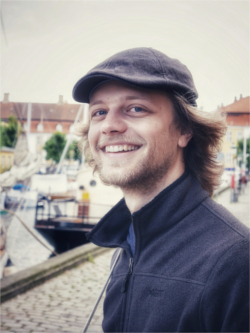
Sebastian Weichwald is an Associate Professor at the Department of Mathematical Sciences , University of Copenhagen. He leads the Copenhagen Causality Lab (CoCaLa) and co-leads the Causality and Explainability (CX) collaboratory at the Pioneer Centre for AI. His academic journey includes a PhD at ETH Zurich (2019) and postdoctoral work at the University of Copenhagen. Research Interests: Causal Modelling, Causal Discovery, Structural Equation Models, Time Series Analysis, Neuroimaging, Biomedical Data Analysis. Awards: Best student paper at CIP 2014, Winner of Causality 4 Climate NeurIPS 2019 competition. Collaborations: Active in interdisciplinary projects with applications in cardiology, neuroscience, and biomedical imaging. Software Tools: Developed open-source libraries including CausalDisco , coroICA , tidybench , and Pymanopt for causal discovery, signal processing, and manifold optimization.
Jürgen Schmiegel is an Associate Professor at the Department of Mechanical and Production Engineering at Aarhus University. His research bridges theoretical and applied domains, focusing on stochastic modeling in turbulence, ambit fields, and non-semimartingale techniques. Key contributions include turbulence analysis via Lévy-driven processes and space-time symmetry studies. Research Themes : Stochastic intermittency in turbulent flows Applications of ambit fields and Lévy processes Non-Gaussian and multifractal modeling Time change and universality in turbulence Collaborations : Collaborated with Ole E. Barndorff-Nielsen on ambit stochastics Worked with F. Pons on von Kármán experiments Activities : Organized/attended conferences on turbulence and stochastic finance Presented on spatial-temporal modeling in biology and geosciences
Ulrik Pedersen-Bjergaard is a Clinical Professor of Endocrinology at the Department of Clinical Medicine, Faculty of Health and Medical Sciences, University of Copenhagen. He is also a Chief Physician at the Department of Endocrinology and Nephrology, Nordsjællands University Hospital Hillerød. His dual appointment reflects his integration of clinical practice and academic research in endocrinology and diabetes care. Medical Doctor (MD), University of Copenhagen, 1986 Certified Specialist in Internal Medicine, 1996 Certified Specialist in Endocrinology, 2006 Doctor of Medical Science (DMSc), University of Copenhagen, 2009 Dr. Pedersen-Bjergaard’s research focuses on glucose control in diabetes, particularly hypoglycaemia, insulin therapy, and diabetes technology such as continuous glucose monitoring (CGM) and automated insulin delivery (AID). He has pioneered work in hypoglycaemia awareness classification and genetic risk factors. His clinical expertise includes type 1 and type 2 diabetes, acute diabetology, and inpatient diabetes management. His recent publications highlight trends in hospital-based diabetes care, cardiovascular effects of hypoglycaemia, and digital health tools. Studies emphasize the benefits of CGM in non-ICU settings, insulin titration algorithms, and systematic reviews of monitoring technologies. His work is increasingly collaborative, involving large consortia like Hypo-RESOLVE and MELISSA under EU funding programs. Scientific contributions include: Principal investigator in clinical trials sponsored by AstraZeneca, Bayer, Novo Nordisk Member of advisory boards for Novo Nordisk and Sanofi Speaker and consultant for multiple pharmaceutical companies Associate Editor, Diabetologia (since 2020) Reviewer for journals including JAMA, The Lancet, and Diabetes Care He has supervised over 18 PhD projects and mentored postdoctoral researchers. His research is funded by the Novo Nordisk Foundation, EU Horizon 2020 and Horizon Europe, and the Research Foundation of Nordsjællands Hospital. He leads the Endocrine Research Unit at Nordsjællands Hospital and collaborates internationally on diabetes outcomes and technology.
Mads Lumholdt serves as a Department Physician ( Afdelingslæge ) at Aalborg University Hospital within The Faculty of Medicine's Department of Anaesthesiology and Intensive Care. His clinical and research work bridges critical care medicine with tropical disease management, reflecting a dual focus on acute patient care and global health challenges. Dr. Lumholdt's research spans two primary domains: blood gas analysis methodology in critical care settings and schistosomiasis treatment in tropical medicine. His work on mathematical arterialization of venous blood gas represents significant methodological innovation for patient monitoring, while his clinical trials on praziquantel dosing regimens address important questions in neglected tropical disease management. His research approach consistently combines rigorous clinical validation with practical applications for improving diagnostic accuracy and treatment protocols. As evidenced by his supervisory role in the project 'Investigating the stability of venous blood gas samples for the purpose of prehospital research,' Dr. Lumholdt actively mentors junior researchers and contributes to advancing prehospital care methodologies. His collaborative work extends across multiple institutions, particularly in tropical medicine research involving international teams focused on schistosomiasis diagnostics and treatment.
Casper Aaskov Drangsfeldt is a Salaried Ph.D. Research Fellow at the Institute of Mechanical and Electrical Engineering , University of Southern Denmark. His work focuses on structural health monitoring (SHM) and condition-based maintenance for offshore wind and maritime systems. Affiliation: SDU Mechanical Engineering Research Interests: Structural Health Monitoring (SHM) for wind turbines and offshore vessels Damage detection using vibration analysis and Random Forest algorithms Condition monitoring systems for crew transfer vessels Maintenance strategies under time-variant operational conditions Reliability engineering in offshore wind applications Data-driven predictive maintenance frameworks Projects: Active participant in the SDU Maritime Research Platform (2022-2026)
Ege Holger Rubak is an Associate Professor in the Department of Mathematical Sciences at Aalborg University's Faculty of Engineering and Science. His research focuses on spatial statistics, point processes, and random matrix theory with applications in computational methods and data analysis. He actively contributes to open-source statistical software development and serves as Principal Investigator for the Novo Nordisk Foundation-funded project AI - Aalborg Intelligence . Academic Rank: Associate Professor Institution: Aalborg University Department: Mathematical Sciences Research Interests: Spatial statistics, determinantal point processes, composite likelihood Email: rubak@math.aau.dk Research Trends: His recent publications emphasize spatial point process diagnostics, simulation methods for determinantal processes, and statistical modeling of complex systems. The 2025 dataset on residential household occupancy reflects interdisciplinary applications in smart energy systems. Collaboration: He collaborates extensively with researchers like Adrian Baddeley, Jesper Møller, and Rasmus Waagepetersen across institutions and disciplines.
Tine Willum Hansen serves as a Clinical Professor at the Department of Clinical Medicine, with research activities focused on diabetes complications and cardiovascular health. Her work bridges clinical medicine and translational research, particularly in metabolic disorders. She maintains active collaborations as evidenced by multi-national studies and maintains professional contact at tine.willum.hansen@regionh.dk. Her primary research explores: Advanced imaging techniques for myocardial microcirculation in diabetes Blood pressure variability and cardiovascular risk stratification Novel therapeutic combinations for diabetes management Renal fat quantification and diabetic kidney disease progression Neuromodulation approaches for glycemic control Recent publications (2025) demonstrate strong focus on diabetes-related cardiovascular and renal complications, utilizing advanced imaging modalities and large-scale clinical data analysis. Research consistently addresses mechanistic pathways in diabetes complications and therapeutic innovations.
Zaigham Saghir serves as a Clinical Associate Professor in the Department of Clinical Medicine at the University of Copenhagen's Faculty of Health and Medical Sciences. His clinical role as a Consultant at Copenhagen University Hospital (Region H) is based at Gentofte Hospitalsvej 1 in Hellerup, with academic affiliation to the Blegdamsvej campus in Copenhagen. His dual appointment bridges clinical respiratory medicine with academic research, focusing on translational applications in thoracic oncology. Dr. Saghir's research centers on lung cancer screening optimization , pulmonary nodule management , and AI integration in thoracic imaging . His work explores the intersection of deep learning algorithms with clinical decision-making, particularly in risk stratification for pulmonary nodules and post-treatment surveillance. Recent publications demonstrate expertise in validating AI models against European screening data and developing safety mechanisms for out-of-distribution detection in medical imaging systems. His research program addresses critical gaps in lung cancer early detection through both technological innovation and population health approaches. Analysis of his 28 research outputs (2023-2025) reveals strong emphasis on translational respiratory oncology with three dominant threads: (1) AI-driven pulmonary nodule assessment (40% of recent work), (2) lung cancer screening program design (30%), and (3) post-treatment surveillance protocols (30%). His publications consistently bridge computational methods with clinical implementation challenges, particularly within the Danish healthcare context. Notable collaborations include the NELSON-POP consortium and SUPE_R Study Group, indicating leadership in European multicenter trials. His research is supported through clinical-academic channels at Copenhagen University Hospital and the University of Copenhagen, with evidence of participation in major European trials. The collaborative network spans radiology, respiratory medicine, oncology, and medical informatics departments across multiple Danish hospitals.
Andreas Røder serves as a Clinical Professor within the Department of Clinical Medicine at the University of Copenhagen, Denmark, specializing in Urology. His institutional base is at Blegdamsvej 3, 2200 København N, under Region Hovedstaden (Capital Region of Denmark), with primary affiliation to the Department of Clinical Medicine and clinical email via regionh.dk. He maintains an active research profile with 138 documented outputs including recent 2025 publications. His research spans Urology, Prostate Cancer, Robotic Surgery, Kidney Transplantation, Surgical Complications, and Artificial Intelligence applications. Key investigations include prostate cancer quality-of-life assessments, robotic kidney transplantation feasibility, AI-driven surgical gesture annotation, and exercise oncology trials. His work emphasizes patient-centered outcomes and surgical innovation through multicenter collaborations. Analysis of his 2025 publications reveals concentrated efforts in robotic-assisted transplantation (ORAKTx trial), prostate cancer interventions (PRO-TEST trial), and AI surgery tools. These reflect a strategic shift toward technology-enhanced urological care, with emphasis on randomized controlled trials and feasibility studies addressing surgical complications and infection prevention. Scientific awards: No awards or fellowships were documented in the provided text. Advising and grants: The available information does not specify any PhD/Master's students, grant funding sources, or research mentorship activities. His leadership is evident in clinical trial design (e.g., REINFORCE, ORAKTx) but institutional support details remain unreported.
Clinical Associate Professor Ulla Benedichte Søsted Knorr is affiliated with the Department of Clinical Medicine, Psychiatry at the University of Copenhagen's Faculty of Health and Medical Sciences. Her research focuses on bipolar disorder, mood disorders, and biomarker development with particular emphasis on cognitive function and neurodegeneration. Her primary research interests include: Bipolar disorder and its neurobiological underpinnings Cerebrospinal fluid biomarkers and synaptic proteins Cognitive function in mood disorders Pharmacological treatments for mania and depression Light therapy interventions for major depression Alcohol use disorder treatments Professor Knorr's recent publications (2024-2025) demonstrate a strong focus on translational neuroscience approaches to mood disorders, particularly examining the relationship between biological markers and cognitive outcomes in bipolar disorder. Her work spans clinical trials, biomarker validation studies, and treatment algorithm development. Her research has been published in high-impact journals including Journal of Psychiatric Research, Journal of Affective Disorders, and BMJ Open, indicating significant contributions to the field of clinical psychiatry. Professor Knorr collaborates extensively with researchers at the University of Copenhagen and regional hospitals in Denmark, particularly in studies involving patient populations with mood disorders and substance use conditions.
Marcus Alexander Landgren is a Clinical Associate Professor at the Department of Clinical Medicine within the Faculty of Health and Medical Sciences at the University of Copenhagen. Based at Blegdamsvej 3 in Copenhagen, Denmark, he maintains dual roles in clinical practice (Orthopaedic Surgery) and academic research, with his professional email hosted through the Danish regional healthcare system (regionh.dk) and academic presence at the University of Copenhagen. Dr. Landgren's research expertise spans several critical areas in orthopaedics: Hand and wrist surgery with specialization in distal radius fractures Volar locking plate fixation techniques and associated complications Long-term functional outcomes after fracture treatment Geriatric orthopaedics, particularly fracture management in elderly patients Biomechanics of bone fracture fixation Evidence synthesis through systematic reviews and scoping reviews His publication record from 2017-2024 reveals a methodical research trajectory evolving from surgical technique evaluation to comprehensive outcomes analysis. Landgren has published extensively on volar locking plate fixation, with particular focus on complications, comparative effectiveness of different fixation methods, and factors influencing recovery. His research frequently utilizes large patient cohorts (up to 822 patients in his 2024 study) and registry data, demonstrating commitment to population-level evidence. Notably, he has contributed both primary clinical research and methodological work through scoping reviews that synthesize evidence from over 140 studies. While specific awards aren't documented in the available materials, his work has garnered significant scholarly attention with individual publications receiving up to 37 citations in Scopus. His research demonstrates international collaboration, including publications in multiple languages and partnerships across Danish institutions. Landgren's clinical-academic work has practical implications for optimizing treatment of one of the most common orthopaedic injuries. His recent focus on geriatric outcomes and patient-reported functioning reflects evolving priorities in orthopaedic care that extend beyond technical surgical success to encompass broader quality-of-life considerations.
Dorthe Lisbeth Jeppesen serves as a Clinical Associate Professor in the Department of Clinical Medicine at the University of Copenhagen, specializing in Paediatrics with clinical affiliations at Copenhagen University Hospital (Region Hovedstaden). Her work spans dual locations at Kettegård Allé 30 in Hvidovre and Blegdamsvej 3 in Copenhagen N, reflecting her integrated role in both academic and clinical settings within Denmark's healthcare system. Her research expertise centers on neonatal cardiovascular development and immune system maturation , with specialized focus on patent ductus arteriosus in term-born infants, childhood hypertension epidemiology, and vaccine-induced immune responses. Key methodologies include large-scale cohort studies like the Copenhagen Baby Heart Cohort, longitudinal analyses of malnutrition impacts in Burkina Faso, and randomized clinical trials examining BCG vaccination effects. Her interdisciplinary approach bridges cardiology, immunology, and epidemiology to address critical gaps in pediatric health outcomes. Analysis of her 39 publications (2020-2025) reveals three dominant research trajectories: (1) cardiovascular dynamics in newborns through echocardiographic studies, (2) vaccine immunology with emphasis on BCG scarification and white blood cell modulation, and (3) environmental determinants of pediatric conditions including delivery mode effects on atopic diseases. Her work consistently employs Danish population data while incorporating international collaborations, particularly evident in malnutrition studies conducted in Burkina Faso. As a core investigator in the Copenhagen Baby Heart Study, Jeppesen contributes to one of Scandinavia's most comprehensive neonatal cardiovascular research initiatives. Her departmental role within Clinical Medicine involves close collaboration with Rigshospitalet's pediatric cardiology unit, facilitating direct translation of research findings into clinical practice for hypertension management and congenital heart condition diagnosis in Danish children.
Yousef Jesper Wirenfeldt Nielsen serves as a Clinical Associate Professor in the Department of Clinical Medicine at the University of Copenhagen, specializing in Radiology with clinical affiliation to the Capital Region of Denmark (Region H). His work bridges diagnostic imaging, gastrointestinal pathology, and surgical outcomes through active clinical research collaborations. Research interests center on Radiology with emphasis on gastrointestinal applications, particularly Inflammatory Bowel Disease imaging biomarkers, Colorectal Surgery complications, and Artificial Intelligence integration in diagnostic workflows. His Hepatology-focused work examines drug-induced biliary pathologies, while surgical interests include abdominal wall integrity and emergency laparotomy outcomes. Recent publications (2022-2025) demonstrate consistent high-impact output across Digestive Diseases and Sciences, International Journal of Obesity, and Clinical Gastroenterology journals. Key trends include AI-driven pneumoperitoneum detection, IBD-musculoskeletal symptom correlations, and metabolic consequences of colorectal resections—highlighting translational research from imaging to clinical decision-making. Scientific recognition includes Scopus-indexed citations (1-14 per publication) and open-access dissemination through university repositories, though formal awards aren't documented in source materials. Collaborative networks span Copenhagen University Hospital departments (Gastroenterology, Surgery, Radiology) and international IBD consortia, with mentoring evident through multi-author studies on cohort protocols and diagnostic accuracy trials. Current projects focus on AI validation in acute abdominal imaging and longitudinal IBD progression markers. Laboratory work occurs within Region H's radiology infrastructure, utilizing CT/MRI datasets for AI training and clinical validation studies, particularly through the Copenhagen IBD Inception Cohort.
Kim Ekelund serves as Clinical Associate Professor in the Department of Anaesthesiology within the Faculty of Health and Medical Sciences at the University of Copenhagen. Based at Blegdamsvej 3 in Copenhagen, Denmark, Dr. Ekelund maintains active clinical and research roles in obstetric anaesthesia with email contact kim.ekelund@sund.ku.dk and phone +4527285042. Research focuses on obstetric anaesthesia complications , particularly epidural failure management and maternal mental health biomarkers. Key projects include ESAIC clinical guidelines development, ultrasound-guided procedure phantoms, and simulation-based training evaluation. Recent work integrates predictive modeling for labour dystocia and educational interventions for anaesthesia trainees. Current publications demonstrate strong emphasis on translational clinical research bridging anaesthesiology, obstetrics, and medical education. The 2025 ESAIC guidelines represent international consensus work, while biomarker studies explore novel physiological connections between pregnancy and mental health. Dr. Ekelund actively collaborates across European institutions, evidenced by multi-center publications and international guideline development. Current research networks include anaesthesiology departments across Scandinavia and ESAIC working groups.
Klaus Hansen is a Guest Researcher at the Department of Computer Science, Faculty of Science, University of Copenhagen, with research spanning computer vision, cryptography, neuropsychology, and the history of computer science. His core research areas include: Computer Vision: Specializing in image feature matching and jigsaw puzzle reconstruction techniques Cryptography: Focusing on RSA efficiency for mobile platforms and X.509 standardization Neuropsychology: Conducting clinical investigations including Pure Alexia case studies History of Computing: Documenting Denmark's digital revolution through oral histories Analysis of his 40 research outputs (2005-2019) reveals consistent interdisciplinary work bridging theoretical computer science with practical applications in healthcare, security, and language standardization, with notable impact in image processing and cryptographic implementations.