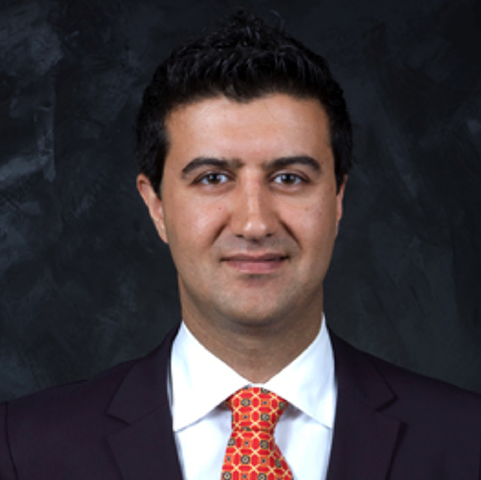
Shahram Sean Yousefi is a tenured Full Professor in the Department of Electrical and Computer Engineering at the Faculty of Engineering, Queen's University, Kingston, Canada. He has served as Acting Department Head and Associate Dean of Engineering, with 25 years of professional experience spanning three continents and 85 countries visited. His educational background includes a B.Sc. in Electrical Engineering from the University of Tehran and a Ph.D. in Telecom from the University of Waterloo, Canada. Professor Yousefi's research focuses on communications, signal processing, machine intelligence, and algorithms with practical applications in healthcare and human resource efficiency. His patented work in data storage has impacted the $500 billion solid-state storage industry, leading to the co-founding of three companies: Canarmony Corp. (2014), MESH Scheduling Inc. (2018), and OPTT Inc. (2018). His notable awards include: Golden Apple teaching award Natural Sciences and Engineering Research Council of Canada’s Discovery Accelerator Supplement (NSERC DAS) award Professor Yousefi advises entrepreneurial ventures and served as Editor-in-Chief of IEEE CJECE journal (2016-2020). His teaching portfolio includes Digital Communications (ELEC 461), Probability and Random Processes (ELEC 326), and Advanced Design and Skills for Innovation (APSC 381). He actively applies algorithmic solutions to real-world challenges at the intersection of technology, academia, and healthcare, guided by his philosophy that communication and compassion enable win-win outcomes.
Junxi Zhang is an Assistant Professor in the Department of Mathematics and Statistics at Concordia University's Faculty of Arts and Science. He joined Concordia University in August 2024 after completing a postdoctoral fellowship at the University of Alberta, where he continues to maintain academic connections. His academic journey includes: PhD in Statistics from the University of Alberta (2023) Master in Mathematics from the University of Kansas (2017) BS in Statistics from Huazhong University of Science and Technology Dr. Zhang's research spans several interconnected areas at the forefront of statistical methodology and machine learning: Bayesian nonparametric models: Conducting asymptotic analysis of random measures, studying consistency properties, and developing dependent and hierarchical models with practical applications Fairness in machine learning: Creating frameworks for fair prediction models, developing metrics for measuring fairness, and applying these approaches to health science domains where algorithmic bias can have serious consequences Reinforcement learning: Addressing fundamental challenges in optimal control within reinforcement learning frameworks Emerging interests: Expanding into conformal inference, causal inference, and time series analysis using machine learning tools His publication record demonstrates a productive trajectory with research appearing in top venues including NeurIPS and Bayesian Analysis. His work bridges theoretical statistical foundations with practical applications, particularly in healthcare and social domains where fairness considerations are increasingly critical. Dr. Zhang has received recognition through publications in prestigious venues and is actively contributing to the academic community through conference presentations and collaborative research. His work on fairness in AI addresses one of the most pressing challenges in contemporary machine learning. As an educator, Dr. Zhang teaches courses including Data Science Lab, Time Series and Forecasting, and specialized topics in statistics with focuses on Bayesian modeling and reinforcement learning. He is currently seeking graduate students for the Mathematics and Statistics MA, MSc, and PhD programs at Concordia University. His research group provides students with opportunities to engage in meaningful research that addresses both theoretical challenges in statistics and practical applications in machine learning, with particular emphasis on developing fair and trustworthy AI systems.
Hany Osman is an Associate Professor in the Master of Data Analytics program at the University of Niagara Falls Canada, holding a PhD in Industrial Engineering from Concordia University and a Professional Engineer (PEng) license in Ontario. His academic-industrial career bridges theoretical research with practical applications across multiple sectors. Dr. Osman's research spans three interconnected domains: Machine Learning & Data Analytics : Specializing in logical analysis of data, cost-sensitive learning, and ensemble techniques for industrial applications Operations Research : Developing nature-inspired metaheuristics (cuckoo search, ant colony optimization) for NP-hard problems in manufacturing and logistics Supply Chain Management : Focusing on sustainable optimization of lot sizing, production planning, and inventory control under stochastic conditions His recent publications (2023-2024) reveal a strategic pivot toward AI-integrated manufacturing systems, notably the CAPP-GPT framework for generative AI in process planning and emission-aware lot sizing models. This work demonstrates consistent translation of theoretical advances into industrial solutions for rail, oil, and smart manufacturing sectors. Professional credentials include: IBM Mastery Certificate in Predictive Data Analytics Professional Engineer (PEng) license from Ontario Dr. Osman leverages extensive industrial experience in supply chain logistics, oil industry optimization, and education technology to inform both research and teaching. His supervision in the Master of Data Analytics program emphasizes hands-on application of machine learning to real-world operational challenges, with students contributing to publications in Manufacturing Letters and related journals. While no formal lab is specified, his research group operates at the intersection of data science and industrial engineering, maintaining strong industry partnerships that drive applied projects.
Victor Ezeugwu is an Assistant Professor in the Department of Physical Therapy at the University of Alberta's Faculty of Rehabilitation Medicine. He is a Physical Therapist and research affiliate with the Glenrose Rehabilitation Hospital. Dr. Ezeugwu is also a member of multiple research institutes including the Neuroscience and Mental Health Institute (NMHI), the Institute for SMart Augmentative and Restorative Technologies and Health Innovations (iSMART), the Women and Children's Health Research Institute (WCHRI), and the Sedentary Behaviour Research Network (SBRN). His educational background includes: Postdoctoral Fellowship - Canadian Healthy Infant Longitudinal Development (CHILD) Cohort Study, University of Alberta PhD - Rehabilitation Science, University of Alberta MSc - Physical Therapy, Obafemi Awolowo University, Nigeria BMR - Physical Therapy, University of Nigeria Dr. Ezeugwu's research primarily focuses on precision rehabilitation, utilizing wearable technologies, behaviour change techniques, and ecological approaches to study movement behaviours across the lifespan. His work involves personalizing rehabilitation interventions for individuals living with stroke, Parkinson's disease, frailty, and Long COVID. He has developed expertise in accelerometer-based movement behavior assessment and has contributed significantly to understanding how sedentary behavior impacts health outcomes in various populations, with particular emphasis on compositional approaches that consider physical activity, sedentary behavior, and sleep together rather than in isolation. Analysis of Dr. Ezeugwu's publication record reveals a strong progression from foundational work on movement behavior patterns to targeted clinical interventions. His recent high-impact publications in journals like The Lancet Neurology demonstrate his growing influence in stroke rehabilitation research. A distinctive theme throughout his work is the application of ecological momentary assessment approaches to understand real-world movement behaviors and develop practical, evidence-based interventions that can be implemented in clinical settings. His research increasingly focuses on precision rehabilitation approaches that integrate multiple movement behaviors rather than addressing them separately. Dr. Ezeugwu teaches PTHER 546 - Adult Neurology, covering theory and application of physical therapy for adults with neurological conditions. The course includes assessment, intervention, outcome evaluation, therapeutic exercise, electrophysical agents, and evidence-based skills. While specific scientific awards are not explicitly mentioned in the available information, his research has been published in high-impact journals including The Lancet Neurology, PLoS One, and Journal of Physical Activity and Health. As a research affiliate with the Glenrose Rehabilitation Hospital, Dr. Ezeugwu maintains strong clinical connections that inform his research agenda. His work with the CHILD Cohort Study demonstrates his commitment to longitudinal research that tracks movement behaviors from early childhood through development. His current research program addresses critical gaps in rehabilitation science, particularly in developing evidence-based approaches to reduce sedentary behavior and promote optimal movement patterns across various patient populations and conditions.