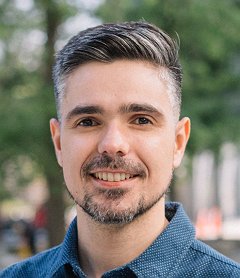
Ms. Prof. Dr. Rongchan Zhu is a Professor at Bielefeld University and serves as a subproject manager for the Collaborative Research Centre (SFB) 1283, titled "Taming uncertainty and profiting from randomness and low regularity in analysis, stochastics and their applications" . Her research focuses on stochastic partial differential equations, with emphasis on exploring new research directions in this field. She is affiliated with the university's mathematical and stochastic research initiatives. Affiliation: Collaborative Research Centre (SFB) 1283, Bielefeld University Her work bridges theoretical analysis and applied stochastics, addressing challenges in low regularity and randomness. No specific student advisees or awards are listed in the provided information.
Prof. Helmut Friess is a Professor and Director of the Department of Surgery at the Klinikum rechts der Isar, Technical University of Munich (TUM), since 2007. His research focuses on pancreatic cancer mechanisms, molecular signaling pathways, and surgical techniques for tumor resection. He has led multinational clinical trials on adjuvant therapies and holds honorary professorships, including at the RE Kavetsky Institute in Ukraine. Prof. Friess studied medicine at the University of Ulm, earned his professorial qualification at the University of Bern (1998), and held roles at institutions in the US, Switzerland, and Germany before joining TUM. Education: Medicine (University of Ulm), Professorial Qualification (University of Bern) Professional Path: Assistant/Senior Physician at Inselspital (Bern, 1997–2001), Senior Consultant at Heidelberg University Hospital (2001–2007) His research emphasizes pancreatic cancer's molecular aggressiveness, metastasis pathways, and surgical outcomes. He has published key articles on postoperative complications, neoadjuvant therapies, and chemoradiotherapy efficacy. Awards include the Dr. Hella Bühler Prize (2005) and the Surgical Research Award (1996). Awards: Dr. Hella Bühler Prize, Feldbausch Foundation Award, Health Quality Award, Surgical Research Award Prof. Friess is actively involved in professional organizations, serving as Secretary of European Digestive Surgery (EDS) and member of the United European Gastroenterology Federation (UEGF). His work bridges clinical surgery and translational oncology, with a focus on improving pancreatic cancer patient outcomes through evidence-based practices.
Prof. Martin Halle is a **Professor and Medical Director** of the Chair of Preventive and Rehabilitative Sports Medicine at the Technical University of Munich (TUM). He holds expertise in sports cardiology, focusing on exercise interventions for cardiovascular and cancer disease prevention. His roles include leadership in the European Association of Preventive Cardiology (EAPC) and editorial positions in cardiology journals. **Education & Training**: Studied human medicine at universities of Kiel, Freiburg, Florida (USA), and King's College (London). Specialized in internal medicine, cardiology, and sports medicine at Freiburg and Göttingen. Habilitation completed in 1999. Since 2003, he leads the TUM Chair. **Research Interests**: Large-scale randomized controlled trials (RCTs) on exercise in cardiovascular disease, type 2 diabetes, and tumors. Key areas include heart failure with preserved ejection fraction (HFpEF), childhood obesity prevention, and extreme exercise effects (e.g., marathon cardiac strain). **Recent Article Trends**: Focus on exercise training efficacy in HFpEF, diet-lifestyle interactions in cancer patients, and post-COVID cardiac rehabilitation. Studies emphasize biomarkers, molecular mechanisms, and clinical outcomes. Leadership**: EAPC President (2020-2022), ESC Research Committee Chair Grants & Studies**: Principal investigator of multinational RCTs (e.g., OptimEx-Clin, JuvenTUM 3), involving 5,000+ participants. Labs/Teams**: Leads a multidisciplinary team including physicians, researchers, and sports scientists focused on translational cardiology and exercise science.
Leonie Sundmacher is a **Professor of Health Economics** at the Technical University of Munich (TUM), leading the **Department of Health Economics** within the TUM School of Medicine and Health. She holds a doctorate from TU Berlin and has held prior professorships at LMU Munich and Berlin institutions. Her **research focuses** include regional health services research, quality management in healthcare, and health economic evaluation. She examines topics such as efficient resource allocation, care quality, and the impact of socioeconomic factors on healthcare access and outcomes. **Education**: PhD in Economics (2010), TU Berlin MSc in Health Economics, University of York Diploma in Political Science, Free University of Berlin **Advisory Roles**: Member of Expert Council for Health & Care (Federal Ministry of Health, since 2023) Scientific Advisory Board for Morbidity-Based Risk Compensation (Federal Social Security Office, since 2018) Member of multiple health-related commissions and boards (e.g., AOK Bayern, Techniker Krankenkasse, German Medical Association) Her **recent publications** address topics like healthcare system efficiency, vaccination coverage, AI in clinical decision support, and the impact of socioeconomic status on diabetes care.
Prof. Dr. Anette Buyken is a Professor of Public Health Nutrition at Paderborn University, affiliated with the Department of Exercise & Health under the Faculty of Science. She holds roles as Second Head of the Department and Chairwoman of the University's Ethics Committee. Her academic career includes a PhD from the University of Bonn (2001) and Habilitation in Nutritional Epidemiology (2014). Her research focuses on dietary carbohydrate quality, chronotype-nutrition interactions, diabetes, and chronic disease prevention. Key projects include the DONALD cohort study and the Healthy Lifestyle Community Program. She leads the Public Health Nutrition group, emphasizing evidence-based research, intervention studies, and school-setting initiatives. Teaching includes coordinating the Master's program in Nutrition Education. She serves on editorial boards (e.g., Nutrition , European Journal of Nutrition ) and national/international advisory bodies (e.g., German Nutrition Society, Federal Ministry of Food and Agriculture). Recent publications explore carbohydrate quality in diabetes subtypes, circadian eating patterns, and lifestyle interventions. Awards include Young Investigator Awards from the European Diabetes Epidemiology Group (2000) and the Diabetes and Nutrition Study Group (1999).
Prof. Philipp Kanske is Chair of Clinical Psychology and Behavioral Neuroscience at TU Dresden, leading the Institute of Clinical Psychology and Psychotherapy since 2020. He holds a PhD (summa cum laude) from Leipzig University and completed postdoctoral research at the Central Institute of Mental Health and Max Planck Institute for Human Cognitive and Brain Sciences. His work focuses on social cognition, emotion regulation, and neuroimaging in psychiatric disorders like bipolar disorder. He has held prestigious roles including Young Academy member at the Leopoldina and BMBF Health Research Forum. Education: M.Sc. Psychology (University of Oregon, 2004), Diploma in Psychology (TU Dresden, 2005), Dr. rer. nat. (Leipzig, 2008), and psychotherapist license (2011). Research emphasizes neural mechanisms of empathy, theory of mind, and stress responses using fMRI/EEG. Editor roles include Cognition and Emotion and Scientific Reports . Key awards include the Otto Hahn Medal (2008) and Heinz Maier-Leibnitz Award (2017). His 78+ peer-reviewed papers explore social brain networks, with a SCOPUS h-index of 25. Collaborations span clinical, neuroimaging, and interdisciplinary projects addressing mental health vulnerability and neuroplasticity in interventions.
Maximilian Pilhatsch, MD is a Privatdozent and holds dual roles as Physician-in-Chief at the Psychiatric Hospital and Outpatient Clinics of Elblandklinikum Radebeul, and Head of the Outpatient Center for Addictive Disorders at TU Dresden's Department of Psychiatry and Psychotherapy. His academic career includes residency training at Charité Berlin and TU Dresden, followed by postdoctoral research in neuroimaging at TU Dresden. He obtained his MD from Charité Berlin (2005) and completed his habilitation in Psychiatry at TU Dresden (2016). Research focuses on substance use disorders, affective disorders, and neurobiological mechanisms using advanced imaging and neuroendocrine techniques. He leads the Collaborative Research Centre TRR 265 investigating drug addiction control mechanisms and has pioneered German-language psychotherapy protocols for methamphetamine dependence. His work bridges clinical psychiatry with translational neurobiology, emphasizing digital health innovation. Award highlights include the MeDDrive Grant (2017), DAAD Travel Grant (2013), and recognition in the Society for Neuroscience's 'Hot Topics' collection. He currently edits Frontiers in Psychiatry and contributes to the International Group for the Study of Lithium-Treated Patients (IGSLI).
Dr. Anita Chasiotis is a Researcher at the Leibniz Institute for Psychology Information (ZPID), where she has been a staff member since 2016. She holds a PhD in Psychology (Dr. rer. nat.) from Trier University (2020). Her primary role involves managing the KLARpsy service (klarpsy.de), which develops plain language summaries of psychological meta-analyses to enhance public understanding of science. She previously led the PLan Psy research project (2021-2022). Key responsibilities include content curation for journal articles, development of evidence-based guidelines for plain language summaries, and promoting science communication through workshops and conferences. Her research focuses on science communication efficacy, health information seeking behaviors, and empowering marginalized groups to access scientific evidence. In recent work, she has demonstrated how plain language summaries improve user knowledge retention and trust in science through randomized controlled trials. Her team's KLARpsy guidelines (2024) are now widely used in German-speaking psychology circles. Collaborations span institutions like the German Psychological Society (DGPs) and Swiss Society of Early Childhood Research. She actively participates in initiatives like the Psychology Communication Network (PsyComm) to bridge research and public engagement. Chasiotis has authored over 50 peer-reviewed publications, with a focus on metascience and health communication. Her work has been presented at major conferences including EARLI, ECP, and DGPs Congresses. She frequently delivers invited talks on science communication strategies and serves on advisory boards for research synthesis initiatives like PSYNDEX.
Prof. Johannes Reuter is a Professor in the Department of Control Engineering at Konstanz University of Applied Sciences and a member of the Institute for System Dynamics (ISD). He serves as Vice Dean and Dean of Studies for the Electrical Systems M.Eng. program. His expertise includes control engineering, tracking, and multi-sensor data fusion. Reuter holds a doctorate in Automatic Control and System Dynamics from Berlin Technical University. Before joining Konstanz in 2007, he worked at IAV GmbH, IAV Automotive Engineering (USA), and Eaton Corp.'s Innovation Center (USA). His research focuses on autonomous systems, maritime control, and optimization algorithms, with contributions to conferences like ICRA and journals such as the Journal of Ocean Engineering. He leads projects on energy-efficient autonomous vessels (Solgenia) and advanced control strategies for dynamic systems. Education: Studied Mathematics/Physics at Bielefeld University Electrical Engineering degrees from Bielefeld University of Applied Sciences and Berlin Technical University Doctorate in Automatic Control and System Dynamics, Berlin Technical University Research Interests: Reuter’s work bridges theoretical control engineering with practical applications, emphasizing autonomous systems, maritime robotics, and sensor data fusion. Key areas include model predictive control (MPC), trajectory optimization, and energy-efficient vessel design. His research often integrates advanced algorithms like MPPI (Model Predictive Path Integral) for stochastic systems and develops methods for extended object tracking using LiDAR and radar sensors. Publications: Recent work highlights energy-optimal vessel docking, trajectory planning with signal temporal logic, and extended object tracking. His articles reflect a focus on interdisciplinary solutions combining control theory, robotics, and sensor technology. Awards/Grants: No specific awards listed, but his work is supported through academic and industrial collaborations. Labs/Teams: Active in the Institute for System Dynamics (ISD), Konstanz, which focuses on control systems, signal processing, and dynamic optimization across robotics, marine systems, and energy management.
Dr. phil. Irene Corvacho del Toro is a Senior Academic Councillor in the Department of German Studies at the University of Siegen , Faculty I. She earned her doctorate from Goethe University Frankfurt and has held research positions at Goethe University and the University of Bamberg. Her work is deeply embedded in language didactics, orthography, and multilingual education. University: University of Siegen School: Faculty I Department: German Studies Position: Senior Academic Councillor (AOR) Email: corvacho.del.toro@germanistik.uni-siegen.de Her research focuses on orthography acquisition , spelling difficulties , teacher expertise , multilingualism , and the application of artificial intelligence in education . She investigates how teachers' subject knowledge impacts student spelling performance and develops interventions for students with learning difficulties. Her work bridges linguistic theory and practical classroom application, particularly in primary and secondary education. The recent publications reflect a strong trend in empirical educational research , with a focus on spelling interventions , digital learning tools , teacher training evaluation , and language support in multilingual contexts . Many studies employ mixed methods and are often co-authored with interdisciplinary teams from psychology and education. Scientific Prize of the Federal Association for Dyslexia and Dyscalculia (2017) 1822 University Prize for Excellent Teaching at Goethe University (2016) Dr. Corvacho del Toro is actively involved in advising and academic leadership. She serves as a co-editor of the journal Lernen und Lernstörungen and has led and co-led multiple research projects funded by the BMBF and MSB NRW, including initiatives on AI in teaching (KIMADU), language and emotion in education (SEM), and the Orthography Competence Center. She has also contributed to the development of digital training units for teachers and published numerous teaching materials. Her work demonstrates a sustained commitment to improving educational practices through research, teacher development, and public engagement. She is affiliated with several professional organizations, including the Symposium on German Didactics (SDD), the IDeA Center at DIPF, the Federal Association for Dyslexia and Dyscalculia (BVL), and the Professional Association for Integrative Learning Therapy (FiL), where she serves on the board.
Rahul Telang is a Professor of Information Systems and Management at the H. John Heinz III School of Public Policy and Management at Carnegie Mellon University. His work spans digital piracy , computer security , and the economics of information systems , with a focus on policy implications of technology. His research examines the interplay between online piracy and cybersecurity , including how malware propagates through infringing sites. He also investigates privacy regulation (e.g., app privacy labels ), search engine advertising , and the economics of software vulnerabilities . Recent papers analyze artificial intelligence in copyright policy and workforce analytics using occupational skill embeddings . While Telang’s articles frequently use empirical methods and natural experiments , no formal scientific awards are listed in the available data. His collaboration network includes scholars from Carnegie Mellon, Emory, Chapman University, and Indian School of Business, covering topics like ride-hailing congestion and data breach impacts . No student advising or lab affiliation details are explicitly mentioned.
Michael Pehl is an Associate Professor at the Chair of Security in Information Technology at Technische Universität München (TUM), where he leads the Hardware-Intrinsic Security research group. His work focuses on Physical Unclonable Functions (PUFs), side-channel analysis, and secure hardware design. His primary research interests include Physical Unclonable Functions, Hardware Security, Side-Channel Analysis, Fault Injection Attacks, Post-Quantum Cryptography, Secure Hardware Design, and Trusted Electronics. Pehl has developed significant expertise in PUF security mechanisms, with particular emphasis on countermeasures against side-channel attacks and entropy optimization in security primitives. His recent publications demonstrate strong trends in hardware security, particularly in PUF architectures (oscillator-based, resistor-based, memristor-based), side-channel countermeasures, and entropy analysis. The research spans both theoretical foundations and practical implementations for secure embedded systems. Kurt-Fischer Prize (2013) Outstanding Reviewer Award at ICASSP 2022 Outstanding Reviewer Award at DATE 2024 Pehl has secured substantial research funding through multiple high-profile projects including STAMPS-PLUS (DFG), Edu4Chip (EU), APRIORI (BMBF), and VE-FIDES (BMBF). He serves as an Associated Editor for IEEE Transactions on Information Forensics & Security and has held leadership roles in major conferences including Program Co-Chair of COSADE 2023. His research group actively collaborates with industry partners and contributes to TUM's Center of Competence for Design of Electronic Circuits and Systems (DECS). Pehl's laboratory focuses on Hardware-Intrinsic Security research, with specialized facilities for PUF evaluation, side-channel analysis, and fault injection testing. The team develops innovative security primitives for embedded systems and IoT devices, with particular emphasis on post-quantum security solutions.
Casimir Katz is an Adjunct Professor at the Chair of Computing in Civil and Building Engineering at the Technical University of Munich , specializing in computational mechanics, finite element analysis, and wind engineering. He has contributed extensively to structural simulation, building information modeling (BIM), and digital twinning. Education: Diplom in Civil Engineering (1976, TU Munich) Key research areas: Wind Load Analysis , Nonlinear Structural Mechanics , Computational Fluid Dynamics , Finite Element Method , and Engineering Software Development . His work bridges theoretical advances in Scaled Boundary FEM and CFD modeling with practical applications in bridge engineering , urban wind analysis , and tunneling . He co-founded SOFiSTiK AG , a leader in structural engineering software, and has advised on projects like the Arnulfsteg and Rader Hochbrücke bridges. Current teaching focuses on Computational Mechanics and BIM applications in structural engineering. His recent publications emphasize dynamic soil-structure interaction , polyhedral mesh generation , and nonlinear design methodologies . Collaborations span academia, industry, and research groups like the BIM Lab at TU Munich.
Federico Olmedo is an Assistant Professor at the Computer Science Department of the University of Chile, where he teaches courses like Program Analysis and Verification ( CC4101 ) and Discrete Mathematics for Computer Science ( CC3101 ). His research focuses on the semantics and verification of probabilistic programs , with applications in language-based security , differential privacy , and formal verification of cryptographic systems . Previously, he was a postdoctoral researcher at RWTH Aachen University and earned his PhD from the Technical University of Madrid in 2014. Research Interests : Program Verification Probabilistic Programming Language-Based Security Theorem Provers Quantum Computing Cryptographic Proofs Publications span formal methods for probabilistic programs, including weakest precondition calculi , runtime analysis of quantum programs , and machine-checked proofs for cryptographic protocols . Notable works include the Best Theory Paper Award at ECOOP 2016 and foundational research on conditioning in probabilistic programming . He co-developed the CertiCrypt and CertiPriv frameworks for verifying cryptographic proofs and differential privacy in Coq. Scientific Awards : ECOOP 2016 Best Theory Paper Award
Boaz Barak is a Professor at the Weizmann Institute of Science in the Department of Computer Science, Faculty of Mathematics and Computer Science. With an h-index of 64 and over 17,301 citations, he is a leading researcher in theoretical computer science with significant contributions spanning computational complexity, cryptography, and machine learning theory. His research interests include: Computational Complexity Cryptography Zero-Knowledge Proofs Program Obfuscation Interactive Proofs Privacy-Preserving Computation Machine Learning Theory Barak's publication record reveals a trajectory from foundational work in theoretical computer science to contemporary research at the intersection of theory and practice. His early work established impossibility results for program obfuscation and advanced techniques for zero-knowledge proofs beyond black-box simulation. His influential textbook "Computational Complexity: A Modern Approach" has become a standard reference in the field. More recently, his research has expanded into machine learning phenomena like double descent and scaling laws for language models, demonstrating the evolving nature of his theoretical contributions. His work consistently bridges deep theoretical insights with practical implications for computing. His notable collaborations include extensive work with Sanjeev Arora (77 publications, 6,879 citations), David Steurer (95 publications, 4,945 citations), and Oded Goldreich, among others. Professor Barak leads a research group at the Weizmann Institute focused on theoretical aspects of computer security and complexity theory. His work has been consistently supported by major research funding, enabling significant contributions to the theoretical foundations of computer science. He maintains an active research program with publications spanning over two decades, demonstrating sustained impact in multiple subfields of theoretical computer science.