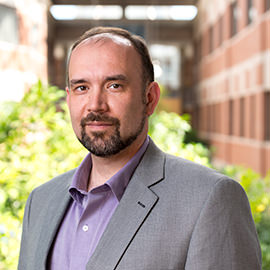
Professor Arul Earnest is a leading academic research biostatistician at Monash University's School of Public Health & Preventive Medicine, where he serves as Deputy Head of the Clinical Outcomes Data Reporting and Research Program (CORRP). He holds a Professor (Research) appointment in Biostatistics, Data Analytics/Modelling, and Health Economics. His expertise spans Bayesian spatio-temporal modelling, machine learning applications in healthcare, and clinical registries analysis. He coordinates the MPH5270 unit on Advanced Statistical Methods for Clinical Research and developed the 'Clinical Registries Data Analysis using Stata' course. His research collaborations include government bodies, patient advocacy groups, and international organizations, with a focus on improving healthcare data quality and patient outcomes. Professor Earnest has authored over 245 peer-reviewed publications, a textbook on biostatistical collaboration, and earned 19 scientific awards. He manages a statistical team supporting ~30 clinical registries and leads national projects on ovarian cancer management, real-time patient outcome measures, and chronic disease priority-setting strategies. His work contributes to UN Sustainable Development Goals addressing health and well-being (SDG 3), and he actively participates in grant review panels, ethics committees, and statistical conferences.
Dr. Peter Davies-Peck is an Assistant Professor in the Department of Computer Science at Durham University. His research focuses on distributed algorithms, graph theory, and parallel computing. He has held roles on programme committees for major conferences like PODC and ICDCS, and has been an invited speaker at workshops associated with DISC. His research interests include Graph Algorithms, Distributed Algorithms, Randomised Algorithms, and Communications Networks. Notable work involves applying the Lovász Local Lemma to distributed computing challenges and developing efficient message-passing protocols in noisy environments. Recent contributions include advancements in parallel derandomization for graph coloring, optimal message-passing in radio networks, and distributed mean estimation techniques. His work bridges theoretical algorithm design with practical distributed system challenges, emphasizing scalability and resilience. Esteem indicators include Programme Committee membership for PODC 2023, ALGOSENSORS 2022, and ICDCS 2021. His publications span top venues like STOC, SODA, and the Journal of the ACM, reflecting impactful contributions to theoretical computer science and distributed systems.
Bastiaan Bloem is Professor of Movement Disorder Neurology at Radboud University Medical Center's Department of Neurology in Nijmegen, The Netherlands. He serves as Secretary-elect of the International Parkinson and Movement Disorder Society and member of the Michael J Fox Foundation's Executive Advisory Board. Founder of both the Parkinson Centre Nijmegen (ParC) and nationwide ParkinsonNet healthcare network, his work integrates clinical practice with systemic innovation. Education: Medical Degree, Leiden University Medical Centre (1993, with honors) PhD (1994) Movement Disorders Fellowship, The Parkinson's Institute, California Clinical Fellowship, MRC Human Movement Unit, Queen Square, London (2000-2001) His research centers on cerebral compensatory mechanisms for gait/balance in Parkinson's disease and healthcare innovation for patient-centered collaborative care. The ParkinsonNet model—connecting 70 Dutch professional networks—demonstrates evidence-based quality improvement with significant cost reduction. He emphasizes clinical observations in single patients as valuable research contributions. With over 675 publications (510+ peer-reviewed), his scholarly output reveals consistent focus on movement disorder mechanisms and care delivery systems. Key trends include freezing of gait pathophysiology, cerebral compensation strategies, and scalable healthcare innovations. His work bridges clinical neurology, rehabilitation science, and health policy with exceptional translational impact. Scientific Awards: Hippocrates Prize (1992) National Healthcare Hero (2011) Citizen of Year for Nijmegen (2012) Value Based Health Care Award (2015) Koninklijke Hollandsche Maatschappij der Wetenschappen membership (2018) Tom Isaacs Memorial Award (2018) His ParkinsonNet initiative has secured recognition as a national center of excellence since 2005 and attracted major funding through awards like the Value Based Health Care Prize. As former ZonMw board member (2009-2017) and current Michael J Fox Foundation advisor, he shapes research priorities in movement disorders. The IMPACT trial demonstrates his commitment to evidence-based multidisciplinary care models. He directs the Parkinson Centre Nijmegen (ParC) and leads Radboudumc's 'Disorders of Movement' research theme. ParkinsonNet—his signature innovation—operates as a nationwide network of 70 specialized professional teams covering all Netherlands. His laboratory environment emphasizes translational research connecting basic gait mechanics with real-world care delivery.
Dr. Linsay McCallum is an Honorary Clinical Senior Lecturer at the School of Cardiovascular & Metabolic Health, University of Glasgow. She specializes in hypertension research, cardiovascular health, and clinical trials, with a focus on machine learning applications in medicine. Her work includes studies on long-term effects of SARS-CoV-2 on vascular health, genotype-dependent antihypertensive therapies, and patient empowerment via digital health tools. Research Interests: Dr. McCallum’s studies span hypertension pathophysiology, blood pressure variability, and translational research. She leads initiatives like the LOCHINVAR project examining post-COVID vascular impacts and the OPTIMA-BP trial evaluating web-based patient education. Her work integrates clinical data with machine learning techniques to improve diagnostic accuracy and treatment personalization. Grants & Collaborations: She has secured funding from Heart Research UK (2021–2024) for SARS-CoV-2 vascular effects research and the Mason Medical Research Foundation (2018–2020) for studies on hypospadias-related cardiovascular risks. Collaborations include teams at the University of Glasgow and international clinical centers. Labs/Teams: Affiliated with cardiovascular research groups within the School of Cardiovascular & Metabolic Health, focusing on translational hypertension research and clinical trial coordination.
Kim May Lee is a Research Fellow at King’s College London (since 2021), specializing in clinical trial methodology. She previously held roles as Lecturer in Medical Statistics at Queen Mary University of London (2020–2021) and Research Associate at the MRC Biostatistics Unit, University of Cambridge (pre-2020). She earned her PhD in Statistics from the University of Southampton, following an undergraduate degree in Mathematics with Actuarial Science from the same institution. Her research focuses on advancing clinical trial methodologies, particularly adaptive designs, platform trials, and subgroup analysis. Key interests include improving trial efficiency through personalized approaches, handling missing data, and optimizing experimental designs. She also provides statistical consultation for clinical trials and has lectured in medical statistics across multiple institutions. Recent publications emphasize innovative trial designs, sample size calculations, and methodological challenges in adaptive approaches. Notable work includes evaluating the Personalised Randomized Controlled Trial (PRACT) framework and exploring the impact of heterogeneity in platform trials. Her expertise bridges statistical rigor with practical clinical applications, addressing gaps in trial conduct and data quality. Current research trends highlight collaboration with multi-disciplinary teams to enhance methodological solutions for modern clinical challenges.
Philip Brown is a researcher at Newcastle University actively contributing to interdisciplinary studies in medicine, neuroscience, and biomedical engineering. His work focuses on: Real-world gait analysis using wearable sensors Immunotherapy for rheumatoid arthritis Digital mobility outcomes and patient-centered design Neuroimaging and algorithm development for movement disorders Recent publications highlight collaborations with Mobilise-D consortium and advancements in wearable technology validation. While no formal awards or student advising details are listed, his research spans clinical trials, deep learning applications, and sensor-based rehabilitation strategies.
Jens Søndergaard is a Professor at the Department of Public Health, Faculty of Health Sciences, University of Southern Denmark. He serves as the director of the Research Unit of General Practice and is affiliated with the Danish Aging Research Center. His academic and clinical expertise lies in general practice, clinical pharmacology, and public health research. University: University of Southern Denmark School: Faculty of Health Sciences Department: Department of Public Health Position: Professor Email: JSoendergaard@health.sdu.dk His primary research interests include general practice, primary health care, chronic obstructive pulmonary disease (COPD), comorbidities, prescribing patterns, and aging. His work emphasizes improving healthcare delivery and patient safety in primary care settings. His recent publications focus on self-care interventions in gestational diabetes, antibiotic use in nursing homes, video consultations in cancer care, and accreditation in general practice. These studies reflect a strong trend toward improving quality, safety, and efficiency in primary and cross-sectoral healthcare using both interventional and observational methodologies. Scientific awards include: Paper of the Year Award (2022) Expertscape World Expert in General Practice (2020, 2021, 2022) Kraks Blå Bog recognition He has supervised multiple students, including PhD and Master’s candidates, and is involved in teaching and academic leadership. He leads significant research projects such as the Danish Symptom Cohort (DaSC) and contributes to initiatives on medication safety, continuity of care, and digital health. His work is frequently featured in press and media, underscoring its societal impact.
Nicolás Vila Blanco is an Assistant Professor at the University of Santiago de Compostela, primarily affiliated with the Information Technologies Research Center (CiTiUS). His work bridges Medical Image Processing and Deep Learning through software development and algorithm optimization. Education includes: PhD in Information Technology Research (Universities of Santiago de Compostela and Coruña) M.Sc. in Data Science and Computer Engineering (University of Granada) B.Sc. in Computer Science (University of Vigo) Research focuses on applying Artificial Intelligence to biomedical challenges, particularly in dental imaging and cardiac diagnostics . Key contributions include: Developing IDALib (Image Data Augmentation Library) Creating DenTiUS Deep Plaque software for dental plaque analysis Designing PrimerEvalPy for microbiome primer evaluation Building gVARVI for heart rate response analysis Recent publications demonstrate expertise in: Clinical software development Deep learning architectures (U-Net, Few-Shot Learning) Medical imaging applications Biomedical data processing AI in dental diagnostics Microbiome sequencing techniques
Stéphane Airiau is a Lecturer in Computer Science at Paris Dauphine University . He previously earned a degree from ENSEEIHT, Toulouse , followed by a master's and doctorate from the University of Tulsa (USA). His postdoctoral work includes positions at RMIT University (Australia) and the Institute for Logic, Language and Computation (Netherlands). Current affiliation: Paris Dauphine University (LAMSADE) Education: ENSEEIHT (Toulouse), University of Tulsa (MSc & PhD) Research interests: Artificial Intelligence, Multi-Agent Systems, Fairness in Collective Decisions, Reinforcement Learning His research focuses on multi-agent systems and computational game theory , particularly mechanisms for fair resource allocation and coalition formation. He has made significant contributions to topics like: Algorithmic game theory and strategic voting Fair division protocols with ordinal preferences Learning agents in iterative voting environments Multi-issue election modeling and agenda formation Key trends in his recent publications (2023-2024) include applications of computational social choice to: Fair rent division under budget constraints Condorcet market mechanisms Permutation-based tournament solutions He serves on the board of directors of Paris Dauphine University and the MIDO department council . His work bridges theoretical computer science with practical applications in agent coordination and decision support systems.
Professor Karen Ginn is a Professor of Musculoskeletal Anatomy in the School of Medical Sciences, Faculty of Medicine and Health at the University of Sydney. She teaches functional, applied anatomy to various health professional groups and maintains a part-time private practice as a musculoskeletal physiotherapist. Professor Ginn is regularly invited to present at national and international conferences and serves as a Visiting Lecturer at the University of Gothenburg, Sweden, where she has designed and teaches a subject entitled "Physiotherapy and Shoulder Rehabilitation" in the MSc program. Professor Ginn's research focuses on the assessment and treatment of shoulder dysfunction, with particular interest in evaluating the validity and reliability of components of the physical examination of the shoulder. Her work spans multiple areas including evidence-based medicine , musculoskeletal diseases , orthopaedics , physiotherapy , and shoulder function . She has developed a continuing education course for health professionals entitled "Functional rehabilitation of shoulder muscles - evidence & application" which she conducts in Australia and internationally. Professor Ginn's extensive publication record, with over 60 publications in prestigious journals such as Journal of Orthopaedic Research and Physical Therapy, demonstrates consistent contributions to understanding shoulder biomechanics, rehabilitation approaches, and clinical assessment methods. Her recent work shows increasing focus on diagnostic imaging for shoulder conditions, cross-cultural adaptation of assessment tools, and the application of electromyography to understand muscle activation patterns in both healthy subjects and patients with shoulder dysfunction. Professor Ginn has held significant leadership roles including Past President of Shoulder & Elbow Physiotherapists Australasia (SEPA) and SEPA representative on the Board of the International Congress of Shoulder & Elbow Therapists. She is also a member of the Australian Physiotherapy Association. 2020: Is online ergonomics training, with & without individual feedback on adherence, effective in reducing musculoskeletal upper limb pain & work performance in sonographers: a cluster randomised trial 2014: The BEST at Home pragmatic fall prevention program: effectiveness, cost effectiveness and implementation (NHMRC Partnership Project) 2005: A comparison of shoulder muscle function in patients with rotator cuff tears and age-matched control subjects 2004: A Randomised, Controlled, Clinical Trial To Evaluate The Efficacy Of Passive Joint Mobilisation Applied To The Shoulder Region Joints For The Treatment Of Shoulder Pain 2002: Rotator cuff muscle activity during shoulder rotation exercises Professor Ginn maintains strong international collaborations, serving as one of three invited international representatives on a project entitled "Shoulder pain in Europe: optimizing management across the lifespan" coordinated by Dr. Karen McCreesh from the University of Limerick, Ireland. She also collaborates with the Royal National Orthopaedic Hospital London on a randomized controlled clinical trial investigating the effectiveness of surgery in the treatment of atraumatic shoulder instability.
Dr Lucinda Bell is a Postdoctoral Research Fellow at Flinders University's Caring Futures Institute (Better Lives Theme) within the College of Nursing and Health Sciences. A nationally recognized public health nutrition researcher, she specializes in enhancing children's health and nutrition from early life through rigorous dietary assessment, nutrition epidemiology, and evidence synthesis. Her research focuses on: Prevention of childhood obesity through community and childcare interventions Development of dietary assessment tools for young children Evidence-based approaches to child nutrition and weight management Oral health-nutrition connections in early development Her work directly informs national guidelines and policy through initiatives like the NHMRC EPOCH-Translate Centre. Dr Bell leads significant projects including the COMS-EPOCH initiative developing standardized obesity prevention outcome measures and the dietary component of the NHMRC-funded SMILE birth cohort study. Her publication record shows consistent high-impact output across public health nutrition, with 61 research outputs including 45 articles and 8 review papers. Award highlights include: Flinders University Vice-Chancellor’s Early Career Researcher Award (2016) CoNHS Vice President’s Award for Research (2017) Dietitians Association of Australia Award of Merit (2018) Numerous student research prizes during doctoral studies As an active supervisor, she has guided 1 PhD student to completion, currently supervises another PhD candidate, and has mentored 9 Honours students. Her professional engagement includes editorial board membership for Nutrition and Dietetics, leadership in the National Nutrition Network for Early Childhood Education, and contributions to the Royal Commission on Early Childhood Education.
Florian Simatos is a Professor of Probability and Statistics at ISAE-SUPAERO's Department of Complex Systems since February 2015, where he leads the Applied Mathematics research group (2020-2025). His academic journey includes positions as a Researcher at Inria (2014), Lecturer at École Normale Supérieure de Paris (2014), Post-doc at Eindhoven University of Technology (2012-2013), Post-doc at CWI (2010-2011), PhD at Inria under Philippe Robert (2006-2009), MSc in Electrical Engineering from Stanford (2005), and undergraduate studies at École Polytechnique (2001-2004). His research spans three interconnected domains: Applied Probability (branching processes, scaling limits, heavy traffic analysis), Reliability Theory (importance sampling in high dimensions, sensitivity analysis), and Sustainable Aviation (environmental impact beyond climate, planetary boundaries). His work integrates rigorous mathematical frameworks with real-world aeronautical challenges, particularly in decarbonizing air transport. Current projects include analyzing high-dimensional rare events (Jason Beh's PhD) and broadening aviation's environmental impact assessment (Bastien Païs' PhD). His publication trends reveal a strategic pivot from foundational probability (2009-2015) toward reliability engineering (2015-2021) and sustainable aviation (2021-present), reflecting both theoretical depth and applied relevance. This evolution demonstrates his ability to bridge abstract mathematics with pressing industrial challenges. ACM SIGMETRICS Rising Star Researcher Award (2014) ACM SIGMETRICS 2010 Best Paper Award (for Load balancing via randomised local search ) As a supervisor, he mentors seven PhD candidates across probability, reliability, and sustainable aviation, often co-supervising with domain experts like Jérôme Morio (reliability) and Lorie Hamelin (environmental science). His service includes editorial roles for Queuing Systems (2016-2021) and extensive journal reviewing (>50 reviews across probability, queuing theory, and environmental science). He actively collaborates with aerospace stakeholders through ISAE-SUPAERO's Applied Mathematics group, focusing on quantitative sustainability frameworks for aviation.
Professor Ling Li is a faculty member at the Australian Institute of Health Innovation (AIHI) and leads the Centre for Health Systems and Safety Research. She holds concurrent roles as a Specialist Advisor at the Therapeutic Goods Administration (TGA) and an Associate Editor for BMC Health Services Research. Her expertise spans biostatistics and health services research, focusing on patient safety, healthcare delivery optimization, and clinical epidemiology. She has a PhD in Statistics, MBiostats, MComBus, MComIT, and BEcon degrees. Her research interests include biostatistics, quantitative health service methodologies, sepsis management, and medication safety. Notable projects include developing risk identification tools for early sepsis detection, evaluating healthcare IT impacts, and analyzing large-scale clinical datasets. She has contributed to over 180 peer-reviewed publications and leads several funded projects addressing healthcare system challenges, such as improving emergency department efficiency and reducing unprofessional behaviors in clinical teams. Professor Li has served on the NHMRC Grant Review Panel and the TGA’s Advisory Committee on Vaccines, reflecting her role in shaping national health policies and guidelines. Her work emphasizes translational research, bridging statistical rigor with real-world healthcare applications to enhance patient outcomes and system efficiency.
Roman Makarov is a Professor in the Department of Mathematics at Wilfrid Laurier University, specializing in Mathematical Finance and Computational Methods. His research focuses on asset price models, derivative pricing, credit risk, and the application of Monte Carlo methods. He is affiliated with the Faculty of Science and teaches courses in financial mathematics and stochastic processes. Dr. Makarov's work integrates numerical methods and high-performance computing to address challenges in computational finance. His office is located at LH3049, and he is reachable via rmakarov@wlu.ca. Research Interests: His ongoing projects include developing solvable diffusion models, analyzing systemic risk components in financial securities, and advancing statistical learning strategies for trading. He explores the intersection of stochastic processes with real-world financial applications, emphasizing both theoretical rigor and computational feasibility. Publications: His recent work spans 2024-2018, covering topics like spectral expansions for credit risk, multi-asset jump-diffusion models, and high-frequency statistical modelling. These publications highlight his focus on bridging mathematical theory with practical financial applications. Awards: No specific awards are listed in the provided materials. Advising & Grants: While student advisees are not listed, his research interests suggest active involvement in supervising graduate students in mathematical finance and computational methods. Grant details are not specified here. Labs/Teams: No specific lab affiliations are mentioned, though his research likely involves collaborations within the Department of Mathematics and interdisciplinary groups at Wilfrid Laurier University.
Dr. Saurabh Kumar is a Clinical Associate Professor of Medicine in the Sydney Medical School at the University of Sydney, affiliated with the Faculty of Medicine and Health (FMH). He serves as a Cardiologist, Cardiac Electrophysiologist, and Program Director for Ventricular Arrhythmias and Sudden Cardiac Death at Westmead Hospital. His research focuses on mechanisms and treatments of cardiac arrhythmias, particularly ventricular arrhythmias and sudden cardiac death. He leads the Translational/Clinical Electrophysiology Arm of the Westmead Applied Research Centre. His academic journey includes postdoctoral training at Harvard Medical School and clinical electrophysiology fellowships at the Royal Melbourne Hospital and Brigham & Women’s Hospital. He has received prestigious awards, including the Ralph Reader Prize and multiple early-career accolades. His clinical expertise spans catheter ablation, arrhythmia management, and innovative technologies like smartphone ECGs for arrhythmia diagnosis. Research interests include ventricular arrhythmia mechanisms, substrate characterization, and clinical trials (e.g., CAAD-VT, WAHOO Trial). He supervises PhD and master’s students, focusing on topics like arrhythmia substrate identification and catheter ablation improvements. Current projects involve AI-driven substrate analysis, scar characterization via ultrasound (SOUNDSCAR), and wearable device diagnostics. Major Awards: Ross Hoenen Award (2019), Young Author Award (2017), Dean’s Award (2014) Key Projects: CAAD-VT Trial, SmartECG Study, SoundScar Study Advising: 5 completed PhD students, 4 current PhD students, and 1 master’s student His work integrates clinical practice, research, and education to advance cardiac electrophysiology and reduce sudden cardiac death risks.