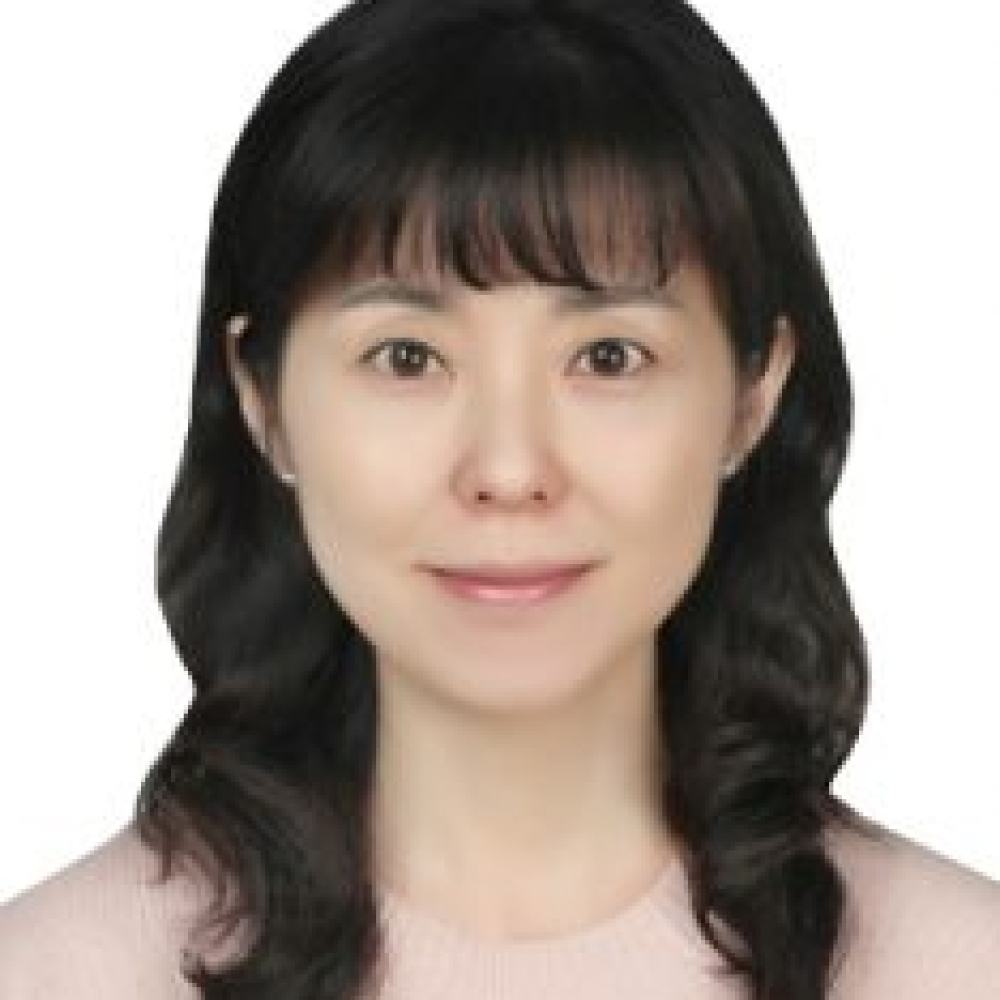
Chantal David is a Professor in the Department of Mathematics and Statistics at Concordia University. Her research focuses on number theory and its intersections with mathematical statistics. Formal Affiliation: Concordia University, Department of Mathematics and Statistics Email: chantal.david@concordia.ca Office: Library Building, LB 927.09 Research Interests revolve around Number Theory , particularly: L-functions and their non-vanishing properties Elliptic curves over finite fields and function fields Statistics of group structures and root numbers Connections to random matrix theory and metaplectic functions Extremal primes and Frobenius distributions Drinfeld modules and supersingular reductions Article Trends show a focus on cubic and quartic L-functions, non-vanishing phenomena, and statistical properties of elliptic curves over finite fields. Recent work explores metaplectic theta functions, extreme value distributions, and one-level density analysis. Labs & Teams : She is affiliated with the Montreal Number Theory Group (CICMA) .
Aleksandar Jeremic is an Associate Professor in both the Electrical & Computer Engineering department and the McMaster School of Biomedical Engineering at McMaster University. His research focuses on biomedical signal processing, statistical signal processing, and biometrics, with applications in healthcare and biomedical systems. He holds a Dipl. Ing. from the University of Belgrade, and an M.S. and Ph.D. from the University of Illinois at Chicago. His expertise spans physiological signal analysis (e.g., ECG/EEG), medical imaging, and machine learning for biomedical applications. He has authored over 50 technical articles and two book chapters, and has been recognized with a teaching award from the McMaster Electrical and Computer Engineering Society (2018). He supervises graduate students in both theoretical and applied research areas. Dr. Jeremic teaches advanced courses such as Biomedical Signal Modeling and Processing and Advanced Probability and Random Processes , emphasizing practical applications of signal processing in healthcare. His work includes clinical implementations like neonatal seizure monitoring software and microwave imaging for breast cancer detection.
Benjamin Landon is an Assistant Professor in the Department of Mathematics at the University of Toronto, where he has been faculty since 2021. His office is located in the Bahen Centre for Information Technology, Room 6264. Prior to joining the University of Toronto, he was a CLE Moore Instructor at the Massachusetts Institute of Technology from 2018-2021. Education: PhD in Mathematics, Harvard University (2018). Advisor: Horng-Tzer Yau M.Sc. in Mathematics, McGill University (2013). Advisors: Vojkan Jaksic and Robert Seiringer B.Sc., McGill University (2012) Dr. Landon's research focuses on Probability and Mathematical Physics, with particular expertise in Random Matrix Theory. His work spans various aspects of spectral statistics, eigenvalue distributions, and universality phenomena in random matrix ensembles. He has made significant contributions to understanding the behavior of extremal eigenvalues, linear spectral statistics, and connections to other areas of mathematical physics such as spin glasses and the KPZ universality class. His research often involves developing novel analytical techniques to establish precise asymptotic behavior in complex random systems. Analysis of Dr. Landon's publication record reveals a strong focus on the intersection of probability theory and mathematical physics. His work consistently explores universality phenomena across different random matrix ensembles and related stochastic systems. A notable trend is his investigation of connections between random matrix theory and other areas of mathematical physics, particularly spin glass models and the KPZ equation. His research demonstrates both technical depth in establishing rigorous asymptotic results and breadth in connecting seemingly disparate areas of mathematical physics.
Yingli Qin is an Associate Professor in the Department of Statistics and Actuarial Science at the University of Waterloo, part of the Faculty of Mathematics. His research focuses on high-dimensional statistics and random matrix theory, with applications to covariance matrix analysis and hypothesis testing. He holds a PhD in Statistics from Iowa State University, alongside MA and BSc degrees in Mathematics and Statistics from Iowa State University and Northeast Normal University, China. Education : PhD in Statistics, Iowa State University, USA MA in Statistics, Iowa State University, USA BSc in Applied Mathematics, Northeast Normal University, China Research Interests : Qin’s work emphasizes high-dimensional statistical methodologies, including covariance matrix estimation, spectral distribution analysis, and the application of random matrix theory to address challenges in large-scale data. His contributions include developing bias-reduced estimators and testing frameworks for high-dimensional datasets. Publications : Qin has published extensively in top-tier journals such as the Annals of Statistics , Journal of Multivariate Analysis , and Biometrika , with a focus on advancing statistical theory for high-dimensional settings. Teaching : He teaches advanced courses including Multivariate Analysis (Stat 923), Estimation and Hypothesis Testing (Stat 850/450), and Mathematical Statistics (Stat 330).
Hyejin Ku is a Full Professor in the Department of Mathematics and Statistics at York University's Faculty of Science. Her research focuses on the intersection of Mathematical Finance and Machine Learning, addressing challenges in risk measurement, portfolio optimization, and quantitative finance. She develops advanced mathematical models to enhance decision-making through reinforcement learning and data analytics. Notable projects include novel algorithms for credit rating prediction using neural networks and sequence-based clustering for credit risk assessment. Her work integrates applied mathematics with real-world financial applications, such as systemic risk reduction in multi-layer networks and option pricing under liquidity constraints. She holds a prominent position in mathematical finance, contributing to both theoretical advancements and practical solutions for financial markets. Her research trends emphasize interdisciplinary approaches, combining machine learning techniques with financial modeling to solve complex problems in risk management and asset valuation. Her publications span over two decades, showcasing contributions to portfolio optimization, derivatives pricing, and computational finance. Dr. Ku is affiliated with York University’s Department of Mathematics and Statistics, where she contributes to academic leadership and research mentorship. Her office is located in DB 2025, and she can be reached at hku@yorku.ca.
Patrick Desrosiers serves as an Adjunct Professor in the Department of Physics, Physical Engineering and Optics within Université Laval's Faculty of Science and Engineering, while conducting neuroscience research at the CERVO Brain Research Center. He co-directs Dynamica, a multidisciplinary complex systems research group, and participates in UNIQUE (neuroscience-AI integration) and CIMMUL (mathematical modeling applications). His academic training spans physics and mathematics at Université Laval, the University of Melbourne, and CEA-Saclay. Dr. Desrosiers' research centers on mathematical and computational neuroscience , with signature contributions in dimensionality reduction and network resilience analysis . His work bridges biological and artificial neural networks , zebrafish brain mapping , and neurovascular coupling using advanced techniques from spectral graph theory , random matrix theory , and dynamical systems . Current investigations focus on neural decoding under chronic stress and structural-functional relationships in brain networks. Analysis of his 2023-2025 publications reveals three dominant trajectories: (1) Low-dimensional representations for predicting cognitive decline and neural dynamics, (2) Network reconstruction methodologies applied to neuroscience and biodiversity, and (3) Development of computational tools like NeuroTorch for neural data analysis. His work consistently integrates mathematical rigor with biological relevance across species and scales. His recognition includes: Professeur étoile prize for exceptional teaching (Faculty of Science and Engineering, Université Laval, 2018) As Dynamica co-director, he mentors a research team comprising Antoine Légaré, Arthur Légaré, Benjamin Claveau, Jordan Charest, Marziyeh Pourmousavi, Pierre-Luc Larouche, Vincent Savard, Vincent Thibeault, and Zahra Yazdani. His collaborative framework connects physics, mathematics, and neuroscience to address fundamental questions in neural network organization, with funding evident through sustained publication output and lab operations. Dynamica Lab ( https://dynamicalab.github.io/ ) serves as the operational hub for his interdisciplinary research, maintaining active collaboration with CERVO Brain Research Center and international institutions.
Bhushan Gopaluni is a Professor in the Department of Chemical and Biological Engineering at the University of British Columbia, where he also serves as Associate Dean for Education and Professional Development in the Faculty of Applied Science. He holds associate faculty positions in multiple interdisciplinary institutes including the Institute of Applied Mathematics, Institute for Computing, Information and Cognitive Systems, Pulp and Paper Center, and Clean Energy Research Center. He previously held the Elizabeth and Leslie Gould Teaching Professorship from 2014 to 2017. Education: Ph.D. in Chemical Engineering, University of Alberta (2003) Bachelor of Technology in Chemical Engineering, Indian Institute of Technology, Madras (1997) Research Interests: Professor Gopaluni's research spans several critical areas at the intersection of chemical engineering, machine learning, and process control. His primary focus includes the development of advanced process control strategies using reinforcement learning and machine learning techniques. He has made significant contributions to battery technology research, particularly in capacity estimation and remaining useful life prediction for lithium-ion batteries. His work also encompasses sustainable energy systems, industrial process monitoring, fault diagnosis, and the application of digital twin technology in chemical processes. His research methodology emphasizes the integration of data-driven approaches with fundamental process understanding, leading to practical solutions for complex industrial challenges. This includes the development of interpretable machine learning models for industrial applications, real-time optimization strategies, and advanced monitoring systems for process industries. Publications and Research Impact: Professor Gopaluni's recent publications demonstrate a strong focus on cutting-edge applications of machine learning in chemical engineering. His work prominently features battery technology and energy systems, with multiple papers addressing lithium-ion battery capacity estimation and management. He has also contributed significantly to process control applications, including drilling process monitoring, greenhouse gas reduction in marine transport, and renewable carbon tracking in biofuel processing. His research extends to advanced computational methods including deep learning, reinforcement learning, and causal discovery in industrial processes. Awards and Recognition: Killam Teaching Prize (University of British Columbia) Dean's Service Medal (University of British Columbia) D.G. Fisher Award in Process Control (Canadian Society for Chemical Engineers) Elizabeth and Leslie Gould Teaching Professor (2014-2017) Professional Service and Editorial Roles: Professor Gopaluni currently serves as Associate Editor for three prestigious journals: Journal of Process Control, The Journal of Franklin Institute, and Results in Control and Optimization. His service to the academic community extends through his role as Associate Dean for Education and Professional Development, where he oversees educational initiatives across the Faculty of Applied Science. Industry Experience: From 2003 to 2005, Professor Gopaluni worked as an engineering consultant at Matrikon Inc. (now Honeywell Process Solutions), where he designed and commissioned multivariable controllers for British Columbia's pulp and paper industry and implemented controller performance monitoring projects across oil & gas and chemical industries.
Dr. Sara Ahmadian is a Researcher at the University of Waterloo's Department of Combinatorics and Optimization. She completed her Ph.D. in 2017 under the supervision of Prof. Chaitanya Swamy, earning the 2017 University of Waterloo Outstanding Achievement in Graduate Studies award. Her research focuses on designing efficient algorithms for optimization problems in machine learning and big data analysis, particularly in facility location and clustering. She has held visiting research positions at the University of Alberta, Hausdorff Research Institute for Mathematics, and École polytechnique fédérale de Lausanne. Education: Ph.D. in Combinatorics and Optimization, University of Waterloo (2017) Master's in Combinatorics and Optimization, University of Waterloo (2010) Bachelor's in Computer Engineering, Sharif University of Technology (2008) Research interests include approximation algorithms, online algorithms, and algorithmic game theory applied to clustering and facility location problems. Her work has led to advancements in k-means and k-median problems, with a notable improvement in the fundamental k-means algorithm. Scientific Awards: 2017 University of Waterloo Outstanding Achievement in Graduate Studies (Ph.D.) designation Advising and Grants: No specific advising or grant information is provided in the text. Labs/Teams: No specific lab or team affiliations mentioned.
Prof. Mihai Nica is an Assistant Professor in the Department of Mathematics and Statistics at the University of Guelph, affiliated with the CARE-AI institute and Vector Institute. His research focuses on probability theory, stochastic processes, and their applications to machine learning, particularly deep neural networks (DNNs). He explores scaling limits of DNNs, numerical methods using neural networks, and phase transitions in high-dimensional learning problems. Education: B.Math in Pure & Applied Math with Physics Option, University of Waterloo PhD in Mathematics, Courant Institute of Mathematical Sciences, New York University Postdoctoral Fellow at University of Toronto (supervised by Jeremy Quastel) Research Interests: His work bridges mathematical theory and practical AI applications, emphasizing topics like the neural tangent kernel, KPZ universality class, and stochastic processes in machine learning. Notable contributions include studies on neural network dynamics, random matrices, and directed polymers. Publications: Over 15 peer-reviewed articles in journals like Communications in Pure and Applied Mathematics and Electronic Journal of Probability , with a focus on theoretical foundations of AI and stochastic systems. Recent work explores infinite-width limits of neural networks and their connections to differential equations. Labs/Teams: Affiliated with CARE-AI (bridging mathematics, engineering, and philosophy) and the Vector Institute, fostering interdisciplinary collaborations.
Peter Nelson is an Associate Professor in the Department of Combinatorics and Optimization at the University of Waterloo, Canada. He currently serves as the Associate Chair for Undergraduate Studies, coordinating academic advising and managing departmental operations. His research focuses on structural and extremal matroid theory, graph theory, and their connections to coding theory, additive combinatorics, and finite geometry. He holds an NSERC Discovery Grant and has contributed to foundational work on matroid minors, binary matroid classification, and combinatorial enumeration. His recent interests include formalizing proofs in the LEAN theorem prover. Education: Ph.D. in Mathematics (University of Waterloo, 2008) with a thesis titled *Exponentially dense matroids*. His academic journey includes postdoctoral research and teaching roles prior to his current position. Research Interests: Structural matroid theory (e.g., minor-closed classes, forbidden configurations) Binary matroid extremal problems Applications to coding theory and additive combinatorics Formal proof systems like LEAN Advising & Grants: As Associate Chair, he oversees undergraduate academic advising via coundergrad.officer@uwaterloo.ca . His NSERC grant supports investigations into matroid density and extremal configurations. He has collaborated extensively with institutions globally, including co-authoring over 40 peer-reviewed publications. Labs/Teams: Active member of the Combinatorics and Optimization research group at Waterloo, contributing to collaborative projects on matroid theory and discrete mathematics.
Richard Dansereau is a Professor and Associate Dean (Graduate Studies) in the Department of Systems and Computer Engineering at Carleton University, part of the Faculty of Engineering and Design. He holds a Ph.D. from the University of Manitoba and is a Professional Engineer (P.Eng.) and Senior Member of IEEE. His research focuses on signal processing, including biomedical applications, compressive sensing, medical imaging, and fractal complexity analysis. He has led the Signal Processing and Machine Learning Lab and advised numerous PhD students in areas like PET image reconstruction and drone detection through Riemannian geometry. His academic roles include serving as Clerk of Senate and Academic Editor for IET Signal Processing. Key research contributions span deep learning for compressive sensing (e.g., DEQ-based networks), cervical cell segmentation, and biomedical signal processing. Over 150 publications highlight his work on topics like PET-MRI fusion, audio-visual speech enhancement, and radar systems. Collaborations include projects on cardiac PET imaging and drone detection algorithms. Awards include the IEEE Senior Member designation. His teaching spans courses such as Digital Signal Processing, Wavelets, and Biomedical Systems across Carleton and the Georgia Institute of Technology.
Archer Yang is an Associate Professor in the Department of Mathematics and Statistics at McGill University, with additional affiliations as an Associate Academic Member of Mila - Quebec AI Institute, Associate Member of the School of Computer Science, and Member of the Quantitative Life Science Program. His academic journey began with a PhD from the University of Minnesota under the supervision of Hui Zou, establishing his foundation in statistical methodology and machine learning. Dr. Yang's research spans three interconnected themes: statistical machine learning, applications in drug discovery, and computational genomics and healthcare. In statistical machine learning, he focuses on developing dimensionality reduction, probabilistic models, and causality-inspired methods to address complex high-dimensional data challenges. His work in drug discovery involves creating machine learning models to accelerate drug candidate identification and enhance understanding of drug efficacy and safety. In computational genomics and healthcare, he develops techniques to analyze genomic data, identify biomarkers, and explore the genetic basis of diseases, with the goal of improving precision medicine and predicting patient outcomes. His overarching objective is to bridge advanced data-driven methodologies with impactful applications in pharmacology, genomics, and healthcare. His recent publications reveal a strong trend toward applying machine learning to healthcare challenges, particularly in congenital heart disease analysis, mortality prediction, and drug discovery. His work demonstrates expertise in developing interpretable models that can handle complex, high-dimensional biomedical data while maintaining statistical rigor. The integration of causal inference methods with machine learning appears to be a growing focus in his research trajectory. ICML Spotlight Paper (top 2.6%, 313/12,107) Dr. Yang actively supervises a large research group including multiple postdoctoral fellows, PhD students, and Master's students. His lab has developed several notable software tools, including ml-mr for machine learning in Mendelian randomization. His supervision extends across statistics, computer science, and biomedical applications, reflecting the interdisciplinary nature of his work. He appears to maintain strong collaborative relationships with researchers in healthcare and genomics fields. His laboratory, the Archer Yang Lab, maintains active GitHub repositories focused on machine learning applications in healthcare and drug discovery, with particular emphasis on interpretable models and statistical methodology development. The lab appears to work at the intersection of theoretical statistics and practical biomedical applications, with projects spanning from algorithm development to clinical implementation.
Simone Brugiapaglia is an Associate Professor in the Department of Mathematics and Statistics at Concordia University in Montréal, Canada. His academic journey includes a PhD in Mathematical Models and Methods from Polytechnic University of Milan (2016), an MSc in Mathematics from University of Pisa (2012), and a BSc in Mathematics from University of Pisa (2010), all earned cum laude . Prior to his current role, he held postdoctoral positions at École polytechnique fédérale de Lausanne (2016) and Simon Fraser University (2016-2019). Dr. Brugiapaglia's research bridges mathematics, data science, and computational methods. Key interests include: Foundations of deep learning and neural networks Compressed sensing and sparse recovery algorithms High-dimensional approximation theory Numerical methods for PDEs and diffusion equations Physics-informed machine learning Optimization techniques for large-scale problems His work develops rigorous mathematical frameworks for data-driven algorithms. His publications (30+ including two books) consistently focus on high-dimensional computation , featuring recent advances in neural network theory (e.g., generalization bounds, rank collapse), compressed sensing techniques (e.g., greedy algorithms, unrolled networks), and physics-informed learning. A strong trend involves combining traditional numerical methods with deep learning for PDE solutions. Awards & Fellowships: Concordia Research Fellow (2023) Leslie Fox Prize for Numerical Analysis (2nd place, 2019) PIMS Postdoctoral Fellowship (2016-2018) Multiple INdAM scholarships during graduate/undergraduate studies He has supervised over 20 trainees across postdoctoral, graduate, and undergraduate levels. While specific grants aren't detailed, his fellowship history indicates sustained research funding. No explicit research labs or teams are mentioned, but his supervision record and collaborative publications suggest active leadership in research groups focused on computational mathematics.
Mikael Pichot is an Associate Professor in the Department of Mathematics and Statistics at McGill University, located in Montreal, Quebec. His research focuses on Geometric Group Theory, Analysis, and related areas such as Operator Algebras and Metric Geometry. He is actively involved in organizing academic events and seminars, including the Group Theory Seminar and CRM-ISM Colloquium, and has contributed to numerous collaborations, often with co-authors like Sylvain Barre and Robert Graham. His teaching includes courses such as Math 223 (Linear Algebra) and Math 570/571 (Higher Algebra sequences). Pichot's research interests span topics like geometric group actions, sofic dimension, L2 invariants, and random groups. He has published extensively in peer-reviewed journals and presented at international conferences. His work often bridges algebraic, geometric, and analytic approaches to group theory. Despite his active academic contributions, no specific awards or grants are explicitly listed in the provided texts. He maintains a personal webpage and collaborates on projects such as 'Surgery on discrete groups' and 'Random groups and nonarchimedean lattices.' His research also touches on foundational questions in operator algebras and geometric topology, reflecting a deep engagement with the structural properties of groups and their applications.
Evangelos E. Milios is a Professor in the Faculty of Computer Science at Dalhousie University , Halifax, Nova Scotia. He has been a faculty member since 1998 and leads the MALNIS (Machine Learning and Networked Information Spaces) research group. He is affiliated with the Institute of Big Data Analytics and served as Scientific Director of DeepSense , an innovation hub for ocean data analytics. Education: PhD in Electrical Engineering and Computer Science, MIT (1986) SM & EE, MIT (1983) Dipl. Eng. in Electrical Engineering, NTUA, Greece (1980) His research focuses on visual text analytics, text mining, graph mining, social network analysis, and machine learning . He has made significant contributions to modeling and mining of networked information spaces, with applications in data science and AI. The recent publications reflect a strong trend in data mining, robotics, pattern recognition, and semantic analysis , particularly in log analysis, pose estimation, and information retrieval. His work bridges theoretical algorithms with practical applications in robotics and web technologies. Scientific Awards and Honors: Distinguished Research Professor (2017–2022) Killam Chair in Computer Science (2006–2011) Senior Member, IEEE Professional Engineer, Ontario (1998–2024) He has served in key administrative roles including Associate Dean, Research (2008–2017) and Director of the Graduate Program (1999–2002) . He has supervised numerous graduate students and taught a wide range of courses in AI, machine learning, data science, and networking. His research is supported by major grants and collaborations, including NSERC and industry partnerships. Research Labs and Teams: MALNIS – Focuses on machine learning and networked information spaces. DeepSense – Ocean data analytics and AI innovation. Institute of Big Data Analytics – Cross-disciplinary big data research.