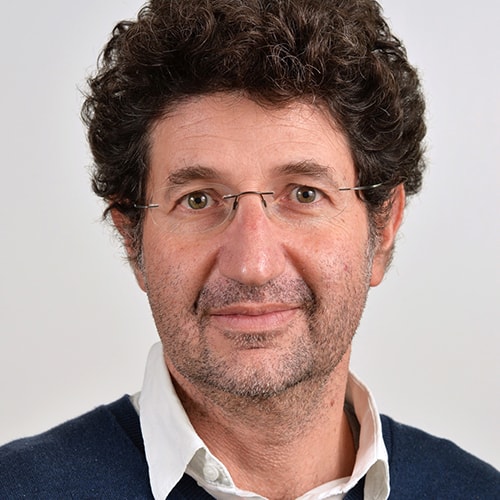
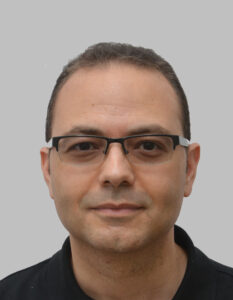
Professor Vitali Wachtel of Bielefeld University's Faculty of Mathematics specializes in advanced stochastic processes, probability theory, and their applications in mathematical modeling. Since 2021, he holds a W3 Professorship and serves as Principal Investigator in CRC 1283 'Taming uncertainty and profiting from randomness and low regularity in analysis, stochastics and their applications' since 2023. Chaired Examination Boards for Bachelor & Master Business Mathematics Member, Bielefeld Graduate School in Theoretical Sciences Research focus: Markov processes, random walks in cones, branching processes Research Trends: His recent work spans critical multitype branching in random environments (2025), asymptotic expansions for conditioned random walks (2024), and invariance principles for integrated processes. He explores connections between stochastic processes, combinatorial structures, and risk modeling with level-dependent premiums. Awards: Feodor Lynen Research Fellowship (2017), Alexander von Humboldt Foundation Teaching: Coordinates modules including 'Stochastic Processes' (24-M-PT-STP) and 'Introduction to Probability Theory' (24-B-EW-5). Active in curriculum development and academic governance through multiple university committees.
Dr. Fengzhu Sun is a Professor of Quantitative and Computational Biology and Mathematics at the University of Southern California. His research spans computational biology, bioinformatics, statistical genetics, and mathematical modeling, with a focus on metagenomics, protein interaction networks, and genome sequence analysis. Dr. Sun earned his Bachelors in Mathematics from Shandong University, Masters in Probability and Statistics from Peking University, and PhD in Applied Mathematics from USC. He returned to USC in 2000 as an associate professor after serving at Emory University (1995-2000), becoming a full professor in 2006. His research interests encompass protein interaction networks, gene expression, SNPs, linkage disequilibrium, and their applications in predicting protein functions, gene regulation networks, and disease gene identification. He pioneered alignment-free methods for genome and metagenome sequence comparison, with recent work focusing on virus-host interactions in metagenomic data. His publication record shows consistent innovation, with recent work (2023-2025) emphasizing deep learning approaches (DeepMicroClass, DeepDecon, DeepLINK) and novel statistical methods. His research demonstrates strong interdisciplinary integration of computational methods with biological applications. Fellow of American Association for the Advancement of Sciences (AAAS, 2012) Fellow of American Statistical Association (ASA, 2015) Fellow of Institute of Mathematical Statistics (IMS, 2023) Fellow of International Society for Computational Biology (ISCB, 2024) Fellow of Asia-Pacific Artificial Intelligence Association (AAIA, 2025) Member of International Statistical Institute (ISI, 2012) USC Mellon Mentoring award for faculty mentoring (2012) USC Dornsife College senior Raubenheimer Outstanding Faculty Award (2017) Dr. Sun has mentored numerous successful students and postdocs, many now in academic positions or at leading tech and biotech companies. His research group develops computational methods for complex biological data analysis, with current focus on advanced deep learning for metagenomic classification, cancer cell fraction estimation, and virus-host interaction analysis. He has created influential software tools including DeepMicroClass, ImputeCC, DeepDecon, and ViralCC that have become standard resources in computational biology.
Professor Matthew Simpson is a leading figure in applied mathematics at the School of Mathematical Sciences, Faculty of Science, Queensland University of Technology (QUT). He holds the position of Professor of Applied Mathematics and is an Australian Research Council (ARC) Future Fellow, reflecting his sustained research excellence. His work bridges mathematical theory and biological applications, particularly in cell migration, tissue invasion, and multiscale modeling. BE (Environmental) Honours 1, University of Newcastle (1995–1998) PhD (with Distinction), Environmental Engineering, University of Western Australia (2000–2003) Research Fellow, Department of Mathematics and Statistics, University of Melbourne (2003–2006) ARC Postdoctoral Fellow, University of Melbourne (2006–2009) Lecturer (2010–2011) and Senior Lecturer (2011–2013), QUT Associate Professor (2013–2014), QUT Professor and ARC Future Fellow (2014–present), QUT Matthew Simpson’s research focuses on mathematical and computational modeling of biological systems , particularly collective cell motion, diffusion processes, and reaction-diffusion dynamics. His interests span multiscale modeling , random walk processes , cell biology , and numerical and computational mathematics . He develops and analyzes models to understand phenomena such as wound healing, cancer progression, and tissue engineering. His recent publications (2023–2025) demonstrate a strong trend toward integrating data-driven modeling , likelihood-based inference , and equation learning with traditional mechanistic models. These works emphasize parameter identifiability , uncertainty quantification , and prediction robustness in biological contexts. Themes include sharp-fronted wave propagation, mechanical cell interactions, tumor spheroid formation, and generalized diffusivity in food drying, showcasing the breadth and depth of his modeling expertise. Among his key accolades are: J.H. Michell Medal (2012) – Awarded by ANZIAM for distinguished research by an early-career applied mathematician in Australia and New Zealand. ARC Future Fellowship (2013–2017) – For the project 'New data-driven mathematical models of collective cell motion' (FT130100148). Professor Simpson has also played significant editorial and leadership roles, including: Executive Associate Editor, Journal of Engineering Mathematics Academic Editor, PLoS ONE Editorial Board Member, ANZIAM Journal Co-chair of the 2015 ANZIAM meeting He has supervised PhD students on topics such as moving boundary problems, first-passage times, stochastic simulations, and curvature-dependent growth in biological systems. His research projects have been funded by competitive Australian grants (ARC DP and FT schemes), including studies on 3D cell migration, ghrelin’s role in cell invasion, and epithelial-to-mesenchymal transition in cancer and wound healing. He is actively involved in developing computational tools for biological modeling and promoting best practices in scientific publishing.
Dr. Quirin Thomas Simon Vogel is a Senior Lecturer at the Department of Statistics, University of Klagenfurt. He previously held postdoctoral positions at the Technical University of Munich, New York University Shanghai, and served as an Interim Professor at Ludwig-Maximilians University of Munich. His research bridges probability theory with statistical mechanics and algorithmic applications. Current role: Senior Lecturer (2025) Previous roles: Postdoc (TUM, NYU Shanghai), Interim Professor (LMU Munich) His research focuses on: Random walks and their geometric/stochastic properties Randomized algorithms with applications in statistical models Quantum-inspired probabilistic systems (e.g. interacting bosonic loop soups) Large deviation theory for complex systems Percolation and phase transitions in particle models The articles reflect trends in probability theory, mathematical physics, and algorithmic applications. Key topics include high-dimensional percolation, Bose gas models, neural network theory, and stochastic geometry. The work combines rigorous mathematical analysis with interdisciplinary applications in physics and computer science. Scientific awards and functions cannot be determined from the provided data, as they describe other researchers. The department's research activities include projects on statistical learning, quantum models, and algorithmic probability, though Vogel's direct involvement in these specific funded projects isn't explicitly stated.
Santosh S. Vempala is the Frederick P. Storey II Chair and Professor of Computer Science at Georgia Institute of Technology's College of Computing with joint appointments in the H. Milton Stewart School of Industrial and Systems Engineering (ISyE) and the School of Mathematics. He teaches courses including CS6150: Computing for Good (C4G) and CS6550/CS8803DAA: Continuous Algorithms: Optimization and Sampling. His research spans multiple interconnected domains: Algorithmic convex geometry and high-dimensional sampling Continuous optimization methods Computational models of brain function Randomized algorithms with applications to machine learning Vempala's recent publications reveal a strong focus on developing efficient algorithms for high-dimensional problems, particularly logconcave sampling and convex body integration. His work bridges theoretical computer science with practical applications in optimization and neuroscience, with increasing attention to the intersection of theoretical frameworks and brain computation models through his collaboration with Christos Papadimitriou. He leads the Computing for Good (C4G) initiative which applies computational approaches to social challenges, including projects like Safe and Easy Passwords!, LifeNet, C4G BLIS, and Shelter-to-Home that address problems in resource-constrained settings. Vempala currently advises PhD students Xinyuan Cao, Mirabel Reid, Max Dabagia, and Yunbum Kook, and has authored influential books including 'Spectral Algorithms' and 'The Random Projection Method' that have shaped research in algorithmic convex geometry. His tutorials at major conferences, including STOC 2015 on 'Sampling and Volume Computation in High Dimension' and FOCS 2020 on 'Computation in the Brain,' demonstrate his leadership in connecting theoretical computer science with broader scientific challenges.
Elsa Arcaute is a Professor of Complexity Science at the Centre for Advanced Spatial Analysis (CASA) at University College London. She is a physicist with expertise spanning mathematical physics, urban systems, and complexity science. Her work bridges theoretical physics with practical applications in urban planning and policy. Her educational background includes a PhD in Theoretical Physics from the University of Cambridge (2006) and a Masters in Mathematics (part III of the Mathematical Tripos). She began her career in theoretical physics with research on Clifford algebras applied to Penrose's twistors before transitioning to complex systems during a visit to Prof. Henrik Jensen at Imperial College London. Arcaute's research focuses on modeling urban systems through the lens of complexity science, with particular emphasis on urban scaling laws, hierarchical structures in cities, and the definition of city boundaries. She applies network theory, percolation theory, and multifractal methodologies to analyze urban infrastructure, socio-economic patterns, and spatial inequality. Her work often involves interdisciplinary collaboration with economists, geographers, and data scientists. Analysis of her recent publications reveals a strong focus on urban complexity, with significant contributions to understanding city hierarchies, commuting networks, knowledge spillovers, and the impact of digital platforms on urban systems. Her research demonstrates how complex systems theory can provide novel insights into urban dynamics, scaling phenomena, and spatial organization. Arcaute has been involved in several major research projects, including an EPSRC grant on Digital Economies, an ERC-funded project MECHANICITY (led by Prof. Michael Batty) focusing on morphology, energy, and climate change in cities, and a MacArthur-funded project on smart cities and policy. She serves as a Review Editor for Frontiers in Energy Systems and Policy and has contributed to numerous publications that have garnered significant attention across academic and policy circles. Her work has been referenced in policy sources, news outlets, and social media, demonstrating the real-world impact of her research.
Rekha R. Thomas is a Professor of Mathematics and Undergraduate Program Director at the University of Washington. She holds a Ph.D. in Operations Research from Cornell University (1994), with postdoctoral experience at Yale University and the Konrad-Zuse-Zentrum in Berlin. Her research focuses on optimization, applied algebraic geometry, and computer vision, with contributions to semidefinite programming, graphical designs, and geometric algorithms. She has held distinguished positions such as the Robert R. and Elaine F. Phelps Professorship (2008–2012) and the Robert B. Warfield Jr. Faculty Fellowship (2017–2020). Her work bridges theory and application, addressing challenges in computer vision, combinatorial optimization, and algebraic geometry. Notable contributions include advancements in multiview geometry, kernel learning, and the geometric analysis of rank-deficient matrices. She actively collaborates across disciplines, publishing extensively and supervising numerous graduate students and postdocs. Rekha also engages in academic leadership, mentoring students, and participating in international conferences. Her research has been recognized through invited talks at major events like the International Congress of Mathematicians (2018) and SIAM Annual Meetings. She continues to explore the intersections of algebraic geometry, optimization, and computational methods.
Wooram Park is an Associate Professor in the Department of Mechanical Engineering at the University of Texas at Dallas (UT Dallas), affiliated with the Erik Jonsson School of Engineering and Computer Science. He leads the Robotics and Intelligent Systems Laboratory (ROBINS Lab) and holds a PhD from Johns Hopkins University (2008), along with MS and BS degrees from Seoul National University (2003 and 1999). His research focuses on robotics, biomedical robotics, computational structural biology, and image processing. Key projects include flexible needle steering for medical applications, haptic feedback systems, and advanced algorithms for motion planning and image reconstruction. He has received notable awards such as the Creel Fellowship (2007) and Critics’ Choice Award in ArtBot Design (2004). His work spans theoretical contributions in stochastic systems and practical innovations like vibratory magnetic robots (Vimbot) and wearable haptic devices. The ROBINS Lab emphasizes interdisciplinary research at the intersection of mechanical engineering, computer science, and biomedical applications.
Frederi G. Viens is a Professor of Statistics at Rice University, where he leads research in probability theory, stochastic processes, and their applications to finance, climate science, and agro-ecology. Previously, he was a full professor at Michigan State University (2016–2022) and Purdue University (2000–2015), serving as Department Chair and Director of Actuarial Science. His work bridges theoretical mathematics with practical problems in agriculture, economics, and nuclear physics. Education: Ph.D. Mathematics, University of California, Irvine (1996) M.S. Mathematics, University of California, Irvine (1991) Maîtrise de Mathématiques Pures, Université de Paris VII, France (1991) Research Interests: Probability Theory & Stochastic Analysis Quantitative Finance & Actuarial Science Climate Science & Bayesian Statistics Agro-ecology & Agricultural Economics His collaborative projects include climate modeling, nuclear physics simulations, and sustainable crop diversity initiatives like the DRIVES network. Awards & Honors: Fellow of the Institute of Mathematical Statistics (2012) Franklin Fellow, U.S. State Department (2010) Purdue College of Science Research Award (2013) Grants & Collaborations: Funded by the NSF, USDA, and private donors, Viens has organized major conferences and serves on editorial boards for journals like Annals of Finance . He advises transnational research groups, including Sustainability Lake Chad , addressing agrarian sustainability in West Africa. Labs & Initiatives: Founding member of the DRIVES agro-ecology collaborative and moderator of the Seminar on Stochastic Processes.
Professor Paul Neville Balister is a faculty member and Fellow in the Mathematical Institute at the University of Oxford, where he serves as a University Lecturer and Professor of Mathematics. His research is centered in combinatorics and discrete mathematics, with strong ties to probabilistic methods and theoretical computer science. His research interests include combinatorics, graph theory, random graphs, probabilistic combinatorics, cellular automata, and discrete probability. These areas are evident from his extensive publication record in top-tier mathematical journals such as the Journal of the European Mathematical Society and Random Structures and Algorithms . The recent publications demonstrate a consistent focus on structural and probabilistic aspects of discrete systems, particularly in monotone cellular automata, graph saturation games, and random graph orderings. His work often explores threshold phenomena, extremal configurations, and asymptotic behavior in combinatorial models. While no formal awards are listed in the provided text, his active collaboration with leading mathematicians and publication in premier venues indicate significant recognition in the field. Professor Balister advises students and contributes to research grants, though specific names and projects are not detailed. He is part of the Combinatorics research group at Oxford, which fosters collaborative work in discrete mathematics and its applications.
Giacomo Fiumara is an Associate Professor at the University of Messina, Department of Mathematical and Computer Sciences, Physical Sciences and Earth Sciences. He holds academic rank since October 2021. Previously, he served as a Permanent Researcher (2008–2021) and secondary school teacher (1997–2008). He earned a Doctorate in Physics (1993) and a Degree in Physics (1989), both from the University of Messina. He is an associate member of the Accademia Peloritana dei Pericolanti and qualified as an associate professor in INF/01 and ING-INF/05 sectors. His research focuses on social network analysis, network science, data science, criminal networks, knowledge representation, bioinformatics, and computational modeling. He has supervised over 170 theses and advised PhD students in Mathematics and Computational Sciences. Key collaborations include work with Prof. Pasquale De Meo on criminal networks and complex systems, and international projects with institutions in the US, UK, China, and Australia. Teaching includes courses on Algorithms, Data Structures, Bioinformatics, and Machine Learning across Computer Science, Engineering, and Medical programs since 2000. He also contributed to international programs at Lviv Polytechnic, Birzeit University, Cluj-Napoca, and Murcia. His editorial roles include Associate Editor of IEEE Access and Academic Editor of Complexity. He holds a patent for predictive analysis of criminal organizations' social structures and has received FFABR research funding. Key awards include FFABR funding (2017) and recognition in the FFABR Unime 2020 II edition. He organized conferences like Crimenet 2014 and participated in high-profile events such as the 2022 Complex Networks conference in Palermo, presenting on quantum walks for criminal network analysis.
Vito Latora is a Professor of Applied Mathematics and Chair of Complex Systems at the School of Mathematical Sciences, Queen Mary University of London, and also holds the position of Professor of Theoretical Physics at the University of Catania. He leads the Complex Systems and Networks Group, driving cutting-edge research at the intersection of physics, mathematics, and interdisciplinary sciences. His research focuses on complex systems, particularly the structure and dynamics of networks, including multiplex, temporal, and higher-order networks such as simplicial complexes and hypergraphs. He explores applications in social, biological, financial, and cognitive systems, with recent work on creativity, innovation, and success through network analysis. The 15 most recent publications reveal a strong trend in advancing network theory beyond pairwise interactions, with a focus on higher-order structures, memory effects, synchronization, and epidemic spreading. His work combines rigorous mathematical modeling with real-world applications, often published in high-impact journals like Nature Communications , Physical Review Letters , and Science Advances . Dual communities in spatial and biological networks Modeling epidemics with limited detection resources Synchronization via higher-order and directed interactions AI-driven financial risk management Evolutionary games on hypergraphs Interdisciplinary success and funding dynamics Vito Latora has mentored several researchers who appear as co-authors, including Iacopini, Williams, Di Bona, and Lacasa. While specific grants are not listed, his collaborative projects with neuroscientists and anthropologists, along with frequent publications, suggest active funding. He is involved in major scientific events such as NetSci 2023, indicating leadership in the network science community. He leads the Complex Systems and Networks Group at Queen Mary, fostering a collaborative environment for studying complex systems through theoretical, computational, and data-driven approaches.
Youness Lamzouri is a Professor of Mathematics at the Université de Lorraine, France, affiliated with the Institut Elie Cartan de Lorraine (IECL) and a Junior Member of the Institut Universitaire de France (IUF). His research focuses on analytic and probabilistic number theory, particularly character sums, L-functions, prime number distributions, and random multiplicative functions. PhD in Mathematics from Université de Montréal (2009) B.Sc. in Pure Mathematics from Université de Montréal (2004) He has contributed extensively to understanding extreme values in character sums, biases in prime number races, and statistical properties of L-functions. His recent work explores GCD graphs, random walks in number theory, and probabilistic models for prime distributions. He has received prestigious awards including the CMS Blair Spearman Doctoral Prize and NSERC Postdoctoral Fellowship. Currently, he supervises doctoral and master students and contributes to editorial boards of leading journals.
Joel M. Cohen is a Professor of Mathematics at the University of Maryland, College Park. He specializes in Algebraic Topology , Harmonic Analysis , and Functional Analysis , with a focus on Operator Theory and Differential Equations on Trees . His work bridges abstract mathematical theory with applications in Mathematical Physics and Geometric Analysis . His recent publications include studies on Carleson measures, harmonic structures on trees, and the Radon transform. He has received the 2006 Lester R. Ford award for his article in the American Mathematical Monthly. Key Collaborators: Flavia Colonna, David Singman, Massimo Picardello Courses Taught: Math 136 (Calculus for Life Sciences), Math 734 (Algebraic Topology) Cohen has served in various academic roles, including Former Member of the University Senate and Founding Member of the Coalition on Intercollegiate Athletics . His research has been published in journals such as Ann. Inst. Fourier Grenoble, American Journal of Mathematics, and Advances in Applied Mathematics.
Balint Toth is a distinguished academic with dual affiliations: a Research Professor at the Alfréd Rényi Institute of Mathematics in Budapest and a Professor of Probability (Heilbronn Chair) at the University of Bristol 's School of Mathematics. His work bridges Probability Theory , Mathematical Physics , and Statistical Mechanics , focusing on stochastic dynamics, random walks in complex environments, and scaling limits. Key Roles: Co-Editor-in-Chief of Probability Theory and Related Fields , organizer of probability seminars in Budapest-Vienna and Bristol, and former leader of the BME Stochastics Seminar (1999–2020). Teaching: Delivers advanced courses like Probability 2 , Stochastic Differential Equations , and Percolation , emphasizing rigorous mathematical foundations. Research Themes include hydrodynamic limits, self-interacting random walks, diffusion in random media, and symmetry breaking in spin systems. His recent publications explore non-equilibrium stochastic models, anomalous diffusion, and connections between probability and physics. Teaching Materials span bilingual resources (Hungarian/English) for undergraduate and graduate courses in probability and stochastic analysis.