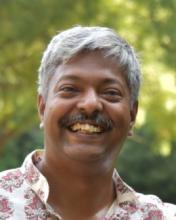
Giuseppe Carlo Marano is a Full Professor at the Department of Structural, Building and Geotechnical Engineering at Politecnico di Torino. He is also a component of the SISCON Interdepartmental Center for Infrastructure Safety. With expertise in civil and structural engineering, his work focuses on machine learning applications, seismic risk reduction, and sustainable structural optimization. Education Graduated cum laude in Structural Engineering from Polytechnic University of Bari PhD in Structural Engineering from University of Florence (2000) Research Interests Marano's research spans structural optimization, seismic engineering, and machine learning applications in civil infrastructure. He develops advanced computational models for: Seismic retrofitting of existing structures Optimization of steel and masonry structures Recycled materials in concrete production AI-driven structural health monitoring Multiobjective design methodologies Publication Trends His recent work emphasizes: Machine learning for concrete mix design and damage assessment Optimization of gridshells and arch structures Seismic isolation systems and vibration control Sustainable construction practices with recycled materials Multiobjective genetic algorithms for structural design Scientific Recognitions National Scientific Qualification - First Band (2013, MIUR Italy) Certificate of Appreciation for Outstanding Lecture (2012, China) Academic Contributions As an educator, he teaches: Consolidamento Strutturale (Structural Consolidation) Dinamica delle Vibrazioni Random (Random Vibration Dynamics) Progettazione Generativa (Generative Design) He also leads Challenge@PoliTo initiatives and contributes to national infrastructure safety regulations. Research Projects ADAPT4CE - Adaptive Digital Systems for Circular Economy (2025-2028) AI-ENVISERS - AI for Seismic Retrofit Environmental Impact (2023-2025) ADDOPTML - Additive Manufacturing Optimization (2021-2025)
Stefan Vandewalle is a full professor at the Department of Computer Science, Faculty of Engineering Sciences, KU Leuven. His research focuses on numerical analysis, applied mathematics, and computational methods for stochastic differential equations, wind energy modeling, and uncertainty quantification. Department Chair, KU Leuven Member, Subdivision Numerical Analysis and Applied Mathematics Member, iSi Health Institute Observer, Faculty Council of Sciences Chair, Department Council for Computer Science His recent work explores multiscale modeling, Monte Carlo methods, and data assimilation techniques. Projects include micro-macro Parareal algorithms, wind turbine aeroelasticity, and turbulent flow reconstruction for wind farms. He supervises PhD candidates and collaborates on interdisciplinary studies involving structural mechanics and renewable energy systems. Publications highlight advancements in parallel-in-time methods, stochastic optimization for tokamak reactors, and DNS-based control of turbulent flows. Key keywords: Multiscale numerical methods Uncertainty quantification Wind energy simulation Monte Carlo algorithms PDE-constrained optimization Stochastic differential equations He contributes to academic governance as a member of extended faculty boards and evaluation committees.
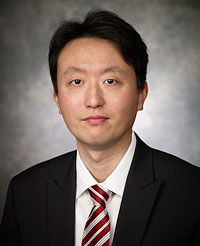
Wooram Park is an Associate Professor in the Department of Mechanical Engineering at the University of Texas at Dallas (UT Dallas), affiliated with the Erik Jonsson School of Engineering and Computer Science. He leads the Robotics and Intelligent Systems Laboratory (ROBINS Lab) and holds a PhD from Johns Hopkins University (2008), along with MS and BS degrees from Seoul National University (2003 and 1999). His research focuses on robotics, biomedical robotics, computational structural biology, and image processing. Key projects include flexible needle steering for medical applications, haptic feedback systems, and advanced algorithms for motion planning and image reconstruction. He has received notable awards such as the Creel Fellowship (2007) and Critics’ Choice Award in ArtBot Design (2004). His work spans theoretical contributions in stochastic systems and practical innovations like vibratory magnetic robots (Vimbot) and wearable haptic devices. The ROBINS Lab emphasizes interdisciplinary research at the intersection of mechanical engineering, computer science, and biomedical applications.
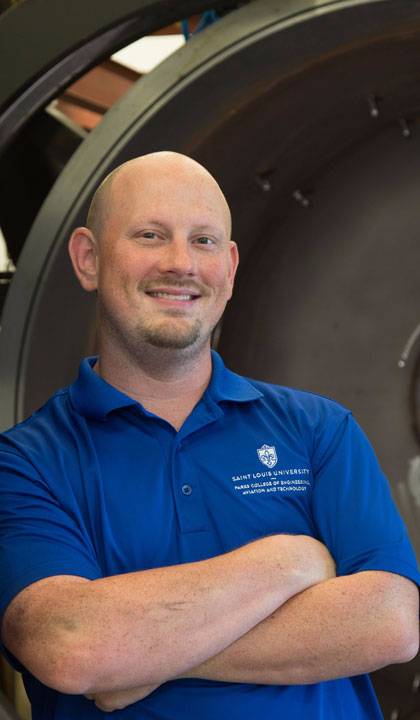
Mark McQuilling is an Associate Professor of Aerospace and Mechanical Engineering at Saint Louis University's School of Science and Engineering. He holds a Ph.D. in Engineering from Wright State University, alongside M.S. and B.S. degrees in Mechanical Engineering from the University of Kentucky. His research focuses on experimental fluid mechanics, low Reynolds number flows, laminar-to-turbulent transition, airfoil design, unsteady aerodynamics (turbomachinery and airdrop systems), bio-fluid flows, and flow control. His work integrates advanced fluid dynamics techniques with practical applications in aerospace and biomedical engineering. Dr. McQuilling oversees the Fluid Systems Laboratory, which includes subsonic and supersonic wind tunnels, a water tunnel, and thermal system facilities. These labs support undergraduate and graduate research, with capabilities such as Laser Doppler Velocimetry, DPIV systems, and strain gauge balances. His thermal research spans micro-scale fluid phenomena to planetary atmospheric modeling, including studies on Uranus/Neptune vortex dynamics and airdrop parachute aerodynamics. Highlighted research areas include low-pressure turbine blade aerodynamics, parachute drag prediction, and bio-fluid studies like pharyngeal airflow analysis in sleep apnea patients. His peer-reviewed publications (over 20 entries) address topics ranging from micro-air vehicle wing design to thermal management in turbine blades. McQuilling is active in professional organizations like AIAA, ASME, and ASEE, and previously worked at the Air Force Research Laboratory. His email is mark.mcquilling@slu.edu.
Professor Vinay Kumar Gupta is a faculty member in the Department of Civil Engineering at Indian Institute of Technology Kanpur. He specializes in Structural Engineering with research focus on Random Vibrations and Earthquake Engineering. With over two decades of service at IIT Kanpur, he has established himself as a leading expert in seismic analysis and structural dynamics. His educational background includes a PhD and M.S. from University of Southern California, USA (1989, 1990), and M.E. and B.E. from University of Roorkee (1985, 1982). Professor Gupta teaches courses in Mechanics of Solids, Structural Analysis, Structural Design, Structural Dynamics, Earthquake Analysis and Design of Structures, and Random Vibrations. His research focuses on earthquake engineering, particularly in the areas of random vibrations, response spectrum analysis, and structural dynamics under seismic loads. His publications demonstrate expertise in analyzing multistoried buildings, spectral velocity ordinates, modal combination rules, and wavelet-based simulation of aftershock accelerograms. His work bridges theoretical analysis with practical applications in seismic design. Young Engineer Award, 1997 from Indian National Academy of Engineering (INAE) Editor, ISET Journal of Earthquake Technology (since May, 1998) Vice-President, Indian Society of Earthquake Technology (ISET) (04/03-03/07) Life Fellow, ISET since February, 2003 Kapitsa Gold Medal in 2004 from the Russian Academy of Natural Sciences Professor Gupta has mentored students including Riya Catherine George and Varun Kumar Singla. His research group contributes significantly to advancing knowledge in earthquake engineering and structural dynamics. His work has practical applications in improving building safety standards and seismic design methodologies.
Dr. Boyin Ding is an Associate Professor at the University of Adelaide , serving as Academic Director at Haide College and researcher in the Mechanical Engineering department within the Faculty of Sciences, Engineering and Technology. He leads the Wave Energy Research initiative established in 2014, while also contributing to Robotics and Biomechanics through his work with the Flinders Medical Device Research Institute. Research Areas: Ocean Wave Energy Harvesting Control Systems for Renewable Energy 6DOF Robotic Testing Spine Biomechanics Transnational Education Programs Key Collaborations: Australia-China Joint Research Centre for Offshore Wind & Wave Energy Acoustics, Vibration and Control Research Group Scientific Awards: Australian Endeavour Fellowship Malcolm Kinnaird Engineering Excellence Award (2012) His recent publications focus on hybrid offshore energy systems, nonlinear hydrodynamics in wave energy converters, and biomechanical testing technologies. He has developed control algorithms for floating offshore wind-wave systems and pioneered 6DOF robotic platforms for medical applications. As an eligible PhD supervisor, he actively collaborates with global industries and academic institutions.
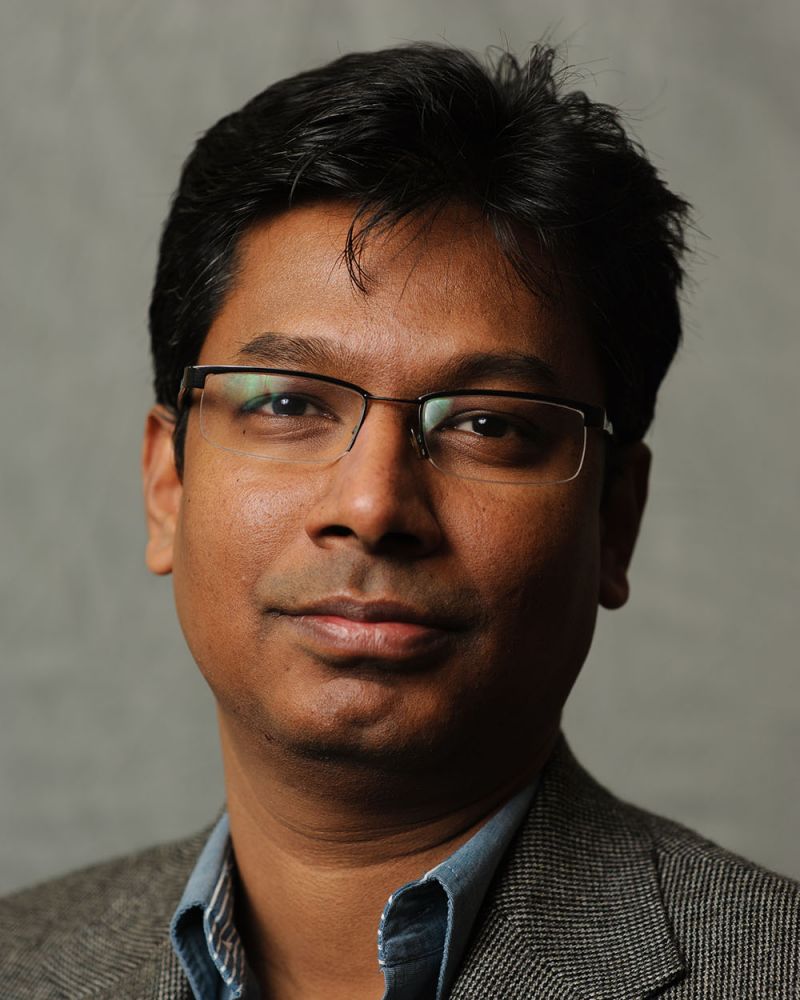
Dr. Sameer Mulani is an Associate Professor, Associate Department Head, and Director of Graduate Programs in the Department of Aerospace Engineering and Mechanics at the University of Alabama's College of Engineering. He leads the Stochastic Mechanics and Multi-Disciplinary Optimization Laboratory (SMO Lab) and is an integral part of the Remote Sensing Center and Alabama Materials Institute. Dr. Mulani's research spans uncertainty quantification, random vibrations, multi-disciplinary optimization, and composite structures' multi-scale analysis and design. His work combines computational methods with machine learning to develop innovative solutions for aerospace engineering challenges. He has made significant contributions to self-healing composite materials, uncertainty quantification techniques, and optimization of composite structures. His research group has published extensively on topics including polynomial chaos expansion for uncertainty quantification, self-healing composites, stochastic buckling analysis, and machine learning applications in structural mechanics. The publications demonstrate a strong trend toward integrating probabilistic methods with traditional engineering analysis to improve reliability and safety of aerospace structures. AIAA Associate Fellow, Class of 2025 2025 Department of the Air Force Summer Faculty Fellowship Program 2024 Department of the Air Force Summer Faculty Fellowship Program MSC Software Contest Winner (2011) Night on the Town: General Electric Award (2007) DAAD Fellowship (1999-2000) Dr. Mulani has advised numerous graduate students who have gone on to successful careers at institutions including Los Alamos National Laboratory, Cirrus Aircraft, L3Harris, and Lockheed-Martin. His lab collaborates with various research centers including the Remote Sensing Center where they work on antenna design, manufacturing, and integration for aircraft systems. The SMO Lab utilizes advanced software including MSC NASTRAN/PATRAN, ANSYS Mechanical/FLUENT, ABAQUS, SOLIDWORKS, and CATIA for their simulations and analyses.
Oscar Carl Olof Dahlsten is an Associate Professor in the Department of Physics at City University of Hong Kong. He works in the field of quantum information science with research spanning information thermodynamics, foundations of quantum theory, and quantum computation and machine learning. His academic journey includes training at Imperial College and previous positions at ETH Zurich, NUS Singapore, Oxford University, and SUSTech before joining CityUHK. Dahlsten's research interests focus on the intersection of quantum mechanics and information theory. His work explores how quantum systems process information, the thermodynamic implications of quantum operations, and the application of quantum principles to computational problems. Key areas include quantum causal inference, quantum energy harvesting, black hole information theory, and quantum machine learning algorithms. His fingerprint analysis shows strong contributions to Quantum Theory (100%), Statistical Mechanics (55%), Quantum Dot physics (55%), and Free Energy concepts (40%). Recent publications demonstrate a strong trend toward experimental validation of quantum information concepts, particularly in quantum causal inference and quantum thermodynamics. His work bridges theoretical foundations with practical applications, especially in energy harvesting and quantum computing. The integration of quantum principles with thermodynamic laws appears as a consistent theme across his recent publications. Dahlsten currently serves as Principal Investigator for the GRF project 'Exploiting Quantum Systems for More Efficient Extraction of Energy From Random Sources' starting September 1, 2025. He actively supervises PhD students in quantum information science and is accepting new PhD candidates. His research group focuses on cutting-edge problems at the intersection of quantum information, thermodynamics, and computation.
Professor Tomasz Kapitaniak is a distinguished academic in the field of nonlinear dynamics and theoretical mechanics. He serves as a Professor of Theoretical and Applied Mechanics and Head of the Division of Dynamics at the Faculty of Mechanical Engineering, Technical University of Lodz, Poland. His career spans over three decades at the university, where he has made significant contributions to the understanding of nonlinear systems, chaos theory, and mechanical oscillations. Professor Kapitaniak holds advanced degrees in both mechanics and applied mathematics from the Technical University of Lodz and the University of Lodz. His educational background includes: M.Sc. in mechanics, Faculty of Mechanical Engineering, Technical University of Lodz (1982) M.Sc. in applied mathematics, Faculty of Mathematics, Physics and Chemistry, University of Lodz (1985) Ph.D. in mechanics, Faculty of Mechanical Engineering, Technical University of Lodz (1985) D.Sc. in mechanics, Faculty of Mechanical Engineering, Technical University of Lodz (1988) Professor of technical science, title given by the President of Poland (1995) His research focuses on nonlinear dynamics, with particular emphasis on mechanical oscillations, stability, bifurcations and chaos, stochastic dynamics, and applications of nonlinear dynamics in mechanical engineering. Professor Kapitaniak is renowned for his work on the development of methods for controlling chaos without feedback, identification of new types of bifurcations, synchronization mechanisms in coupled mechanical oscillators, and explaining the origin of randomness in mechanical systems. His research has evolved from fundamental theoretical work to increasingly applied studies involving complex networks, biological systems, and engineering applications. Professor Kapitaniak has published over 300 scientific papers in renowned journals, cited over 8,000 times. His work exhibits a consistent focus on understanding complex nonlinear phenomena across various physical systems. The trend in his recent publications shows continued exploration of synchronization phenomena, extreme events in dynamical systems, and applications of nonlinear dynamics to biological, mechanical, and physical systems. His most recent work demonstrates a growing interest in multistability, chimera states, and the prediction of tipping phenomena in complex systems. Among his notable scientific achievements and distinctions are: Election as a member of the Polish Academy of Sciences (corresponding member in 2013, ordinary member in 2019) Election to Academia Europaea in 2021 Honorary doctorates from Saratov State University (Russia, 2001) and Lublin University of Technology (Poland, 2014) Multiple prestigious fellowships including the British Council Fellowship (1989), King Abdul Aziz Award Fellowship (1990), and Fulbright Fellowship (1997) Editorial roles including Associate editor of Chaos, Solitons and Fractals since 1990 and member of editorial boards of several other prestigious journals Throughout his career, Professor Kapitaniak has been actively involved in mentoring the next generation of researchers, having supervised numerous PhD students including Jerzy Wojewoda, Anton van Wyk, Barbara Błażejczyk-Okolewska, Andrzej Stefański, Andrzej Kozłowski, and Przemysław Szumiński. He has secured significant research funding from various national and international sources including the Ministry of Science and Higher Education (Poland), Deutscher Akademischer Austauschdienst, The Royal Society of London, and others. His research team has maintained strong international collaborations with institutions worldwide, including universities in the United States, United Kingdom, Germany, Brazil, Russia, and Ukraine. He leads the Division of Dynamics at the Technical University of Lodz, which serves as a hub for research in nonlinear dynamics, mechanical oscillations, and related fields. The division maintains strong international collaborations with institutions worldwide and continues to produce cutting-edge research in the field of nonlinear dynamics and its applications.
Dr. Manuela Angioi is a Reader in Sports and Exercise Medicine Education at Queen Mary University of London's Faculty of Medicine and Dentistry, leading the iBSC Sports and Exercise Medicine Course. She specializes in curriculum development for intercalated degrees, supervising student research projects and managing academic modules. Her research focuses on injury prevention in performing arts, particularly dance and judo, and the application of exercise in healthcare, such as dementia care. She collaborates with organizations like the National Centre for Circus Arts and Dancefit Prime. Teaching includes modules on research methods, exercise physiology, and dance medicine at levels 6 and 7. Research interests span physiological determinants of performance, musculoskeletal injury risk in dancers, and cardiovascular health interventions. She has contributed to high-impact journals and international conferences. Collaborations include the Royal Ballet School and NHS projects on dance-based therapies.
Daniel Ventus is a Project Leader at Åbo Akademi University's Faculty of Education and Welfare Studies, specializing in interdisciplinary research across Psychology, Sexual Health, and Educational Technology. He leads the Experience Lab Health-related solutions and contributes to EU-funded projects like INTAKT and APOLLO2028 , focusing on academic procrastination interventions and healthcare worker resilience. Key research areas: Premature Ejaculation, High-Intensity Interval Training, Resilience Processes, Educational Robotics, and Mental Health interventions Recipient of the 2024 Best Poster Presentation Award at SWESrii for internet interventions His recent publications (2024-2025) examine: HIIT's impact on ejaculation control Real-time resilience assessment tools LLM-powered language learning systems for vulnerable children Physiological and psychological factors in sexual dysfunction As a peer reviewer for journals including Andrology and Scientific Reports , he contributes to multiple disciplines. Media visibility includes coverage in Finland-Swedish educational initiatives and sexual health research outreach (2018-2025).
Dr Dee Wu serves as a Senior Lecturer at the School of Civil and Environmental Engineering at the University of Technology Sydney (UTS), specializing in the integration of computational mechanics, machine learning, and engineering design. With a strong research profile focused on structural reliability and safety assessment, Dr Wu develops innovative frameworks that bridge theoretical mechanics with practical engineering applications, particularly in the realm of composite materials and uncertain structural behavior. Dr Wu's research interests center on computational stochastic and non-stochastic mechanics, with particular emphasis on machine-learning-aided engineering safety assessment, nondeterministic methods for isogeometric analysis with polymorphic uncertainties, and AI techniques for composite material design. Their work addresses critical challenges in structural engineering where uncertainty quantification becomes essential for safety evaluation. The research output reveals a clear trajectory toward developing virtual modeling techniques that significantly enhance computational efficiency while maintaining accuracy in structural analysis. Dr Wu's publications demonstrate expertise in phase-field methods, support vector regression variants (including Extended SVR, Capped SVR, and Twin SVR), and uncertainty quantification frameworks that handle both aleatoric and epistemic uncertainties. These techniques have been successfully applied to fracture mechanics, buckling analysis, vibration analysis, and impact assessment problems. Dr Wu actively pursues funded research in three main areas: Digital twin applications in Civil Engineering, Machine learning aided engineering analysis and design, and Safety assessment for Smart City initiatives. Currently, they are a key participant in the ARC Discovery Project 'Assessment of Dynamic Pile Driving Using Machine Learning' (DP230102781), running from June 2023 to May 2026, working alongside researchers Khabbaz M, Fatahi B, and Zhang X. In teaching, Dr Wu delivers courses including Introduction to Civil and Environmental Engineering (48310), Advanced Engineering Computing (48371), and Finite Element Analysis (49047), demonstrating commitment to both foundational and advanced engineering education. Their ORCID identifier is 0000-0002-7284-5024, and they maintain an active Google Scholar profile reflecting their substantial research contributions in computational structural engineering.
Professor Hailiang Yu is an Honorary Fellow at the University of Wollongong's School of Mechanical, Materials, Mechatronic and Biomedical Engineering. His research focuses on engineering materials, manufacturing processes, and mechanical engineering, with over 100 journal/conference publications and 30 science-focused newspaper commentaries. He serves as co-Editor-in-Chief of Modeling and Numerical Simulation of Material Science , and holds editorial roles in Scientific Reports and International Research Journal of Engineering Science, Technology and Innovation . Yu has secured significant funding through grants such as the Australian Research Council's 'Large-volume gradient materials' project (2017–2020) and 'A Physical-based abrasive wear model' (2013–2016). His work emphasizes cryorolling, microstructure optimization, and advanced material fabrication techniques. He currently supervises Master's and PhD students in materials engineering and manufacturing innovation. Key research themes include cryogenically processed alloys, bimetallic clad sheets, and high-entropy composites. His publications in journals like Metallurgical and Materials Transactions A and Journal of Materials Processing Technology reflect expertise in structural optimization, tribology, and corrosion resistance. Yu aims to become an international leader in materials manufacturing and mechanical engineering.
Goong Chen is a Professor at Texas A&M University (TAMU) within the College of Arts & Sciences. His research focuses on Control Theory, Applied Mathematics, and interdisciplinary applications in computational mechanics, fluid dynamics, and quantum systems. He holds a Ph.D. from the University of Wisconsin (1977) and a B.S. from National Tsing-Hua University (1972). His research interests span computational biomechanics, forensic modeling, nanofluidics, and mathematical physics. Recent work includes modal analysis of animal motion, crash mechanics of aircraft, and forensic reconstruction of disasters. He has contributed to theoretical advancements in PDEs, nonlinear dynamics, and quantum computing. Chen’s articles address cutting-edge topics like thermoelastic plates, Volterra equations, and DFIM systems. He has pioneered numerical methods for complex systems using OpenFOAM and finite element techniques. His computational models have been applied to real-world scenarios such as submarine implosions and chemical warfare forensics. No academic awards are explicitly listed, but his extensive publication record reflects significant contributions to applied mathematics and engineering. He leads research teams focused on interdisciplinary challenges in computational science and engineering.
Anirban Chakraborti is a Professor at the School of Computational and Integrative Sciences, Jawaharlal Nehru University (JNU), New Delhi, India, where he has been a faculty member since 2014. He previously held academic positions at École Centrale Paris (France) as Chercheur Senior (Associate Professor) and Chargé de Recherche (Assistant Professor), and earlier roles at Banaras Hindu University, Brookhaven National Laboratory (USA), and Helsinki University of Technology (Finland). He is a leading figure in the interdisciplinary field of econophysics and complex systems. Education: Diplôme d’Habilitation à Diriger des Recherches (2013), Université Pierre et Marie Curie – Paris VI, France (Physics) Ph.D. in Physics (2003), Saha Institute of Nuclear Physics, Jadavpur University, India Post-M.Sc. in Physics (1999), Saha Institute of Nuclear Physics, Jadavpur University, India (Ranked First) M.Sc. in Physics (1998), University of Calcutta, India (Ranked First) B.Sc. in Physics (1996), Scottish Church College, University of Calcutta, India His research interests lie at the intersection of physics, economics, and data science. He is particularly known for pioneering work in econophysics , including the statistical mechanics of money, wealth distribution, agent-based market models, and network-based analysis of financial and social systems. He also works on complex systems , computational finance , statistical physics , and nanosciences , with applications in sensing and imaging. His work often involves modeling socio-economic phenomena using tools from statistical physics. His recent publications span topics such as financial fluctuations, wealth inequality, network analysis of conflicts, order book dynamics, and nanomaterial characterization. These works reflect a strong trend toward interdisciplinary research combining physics, economics, and data analytics, with a focus on real-world applications in finance, inequality, and social systems. Scientific Awards: Indian National Science Academy Young Scientist Medal (2009) He has advised Ph.D. students such as Kiran Sharma and leads the ETC (Experimental-Theoretical-Computational) Lab at JNU, which brings together physicists, computer scientists, and mathematicians. The lab has been involved in international collaborations, including projects funded by the Estonian Ministry of Education and Research and consultancies with TCS Innovation Labs and DONO Consulting. His research has been supported through grants and collaborative projects, reflecting strong industry and global academic engagement.