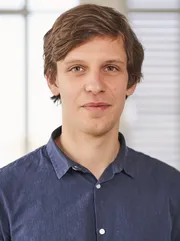
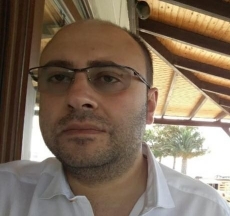
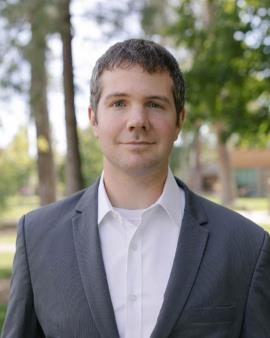
Igor Bisio is a Full Professor at the Department of Naval, Electrical, Electronics, and Telecommunications Engineering (DITEN) at Università di Genova. His research focuses on IoT-driven structural health monitoring, microwave imaging for biomedical applications, and wireless surveillance systems. Teaches courses on telecommunications, IoT, and machine learning Pioneers low-cost IoT solutions for SHM and post-stroke rehabilitation Develops microwave tomography techniques for pediatric stroke diagnostics Advances privacy-preserving Wi-Fi-based crowd monitoring Recent research trends include edge AI integration, compressive sensing for vibration analysis, and multi-class object tracking in aerial scenes. He also explores UAV-based monitoring systems, WiFi fingerprinting for localization, and Banach space inversion models for electromagnetic imaging. His work spans interdisciplinary domains combining electrical engineering, biomedical applications, and wireless network security.
Dr. Muni Rami Reddy Rasappagari is a casual academic staff member at the University of Southern Queensland (UniSQ) , Australia, within the School of Engineering . He holds a Diploma in Civil Engineering from SV Govt Polytechnic Tirupati, a Bachelor of Technology from Nagarjuna University, a Master of Science in Civil Engineering from Indian Institute of Technology (IIT), and a PhD from the University of Madras . His research spans composite materials , structural mechanics , fracture mechanics , and nanomaterials , with a particular focus on graphene-reinforced composites , functionally graded materials , and delamination modeling . His work integrates finite element analysis , fractal methods , and vibration analysis to address complex structural integrity problems. Dr. Rasappagari's recent publications (2018–2022) emphasize graphene nanoplatelet (GPL) reinforcement in composite plates, exploring free and forced vibration , flexural behavior , and boundary condition effects . Earlier work (2007–2009) centered on fractal finite element methods for crack sensitivity analysis and stress intensity factor computation in anisotropic and multi-crack systems . Contact: 📧 muniramireddy.rasappagari@unisq.edu.au
Felix Schneider is a Researcher at the Chair of Structural Mechanics at Technical University of Munich since 2018. He holds an M.Sc. in Civil Engineering from TU Munich (2018) and completed a semester abroad at the Norwegian University of Science and Technology. His research focuses on uncertainty analysis in structural and acoustic models, Bayesian updating techniques, and stochastic reduction methods in the frequency domain. He has contributed to advancements in rational polynomial chaos expansions and sparse Bayesian learning for structural dynamics applications. Education: 2011-2018: Study of Civil Engineering at Technical University of Munich 2018: Master of Science (M.Sc.) in Civil Engineering 2016: Semester abroad at Norwegian University of Science and Technology 2009: Abitur at Humboldtgymnasium Solingen Research emphasizes computational methods for structural dynamics, including: Bayesian parameter estimation for linear systems Rational surrogate models for uncertainty quantification Frequency-domain stochastic reduction techniques Applications in seismic risk assessment and vibroacoustic simulations Key contributions include a Maurer Söhne Prize for his Master's thesis and a published MATLAB toolbox for rational polynomial chaos expansions on the LRZ Git repository. Teaching responsibilities include courses on random vibrations, structural dynamics, and continuum mechanics. He has participated in research stays at ETH Zurich (2023) and collaborates with international institutions on uncertainty quantification projects.
Haiyang Zhao is a Researcher at RMIT University's School of Engineering, specializing in multi-scale modelling for expansive soils and advanced materials analysis. His work focuses on waste management, computational modelling, and composite materials, with applications in civil engineering and environmental sustainability. He holds a PhD and is actively engaged in research projects involving discrete element method (DEM) simulations for soil, concrete, and granular materials. Key research interests include: Fracture mechanics of concrete and rock-like materials Recycled aggregate concrete performance DEM-based modelling of granular systems Biomineralization processes in geotechnical engineering He is open to supervising Masters and PhD students in topics such as multi-scale material modelling and sustainable construction materials. His research has been published in high-impact journals, with a focus on advancing numerical methods and experimental validation techniques.
Patrick Le Tallec is a Professor of Mechanics at École Polytechnique in France, where he currently serves as Dean of the Bachelor Program and is a member of the M3DISIM project. His distinguished academic career spans multiple institutions including Université Paris Dauphine, INRIA (French National Institute for Research in Digital Science and Technology), and international universities such as Stanford University, University of Wisconsin, and Shanghai Jiao Tong University. He has held leadership positions including Vice President for Education and Head of the Laboratory of Solid Mechanics at École Polytechnique. His educational background includes: Graduate from École Polytechnique Ph.D. in Engineering Mechanics from The University of Texas at Austin (1980) Thèse d'Etat in Applied Mathematics from Université Pierre et Marie Curie in Paris (1981) Professor Le Tallec's research focuses on computational mechanics and applied mathematics with expertise in nonlinear mechanics, domain decomposition methods, and multiscale modeling. His work bridges theoretical mathematics with practical engineering applications, particularly in material science and fluid-structure interactions. He has developed advanced numerical methods for elasticity, viscoelasticity, and fluid dynamics with applications in industrial manufacturing and biomedical engineering. His recent publications demonstrate progression from foundational numerical methods to sophisticated multiscale approaches addressing complex engineering challenges in material science. The research shows particular emphasis on rubber mechanics, fatigue analysis, and computational methods for nonlinear structures, reflecting his ongoing commitment to solving real-world engineering problems through mathematical innovation. His scientific honors include: CISI award in Scientific Computing Prize Blaise Pascal of the French Academy of Sciences Chevalier des Palmes Académiques Chevalier de la Légion d'Honneur Officier de l'Ordre National du Mérite Professor Le Tallec has directed over 40 Ph.D. students from 10 different nationalities, demonstrating significant impact in academic mentoring. His research has been supported through extensive collaborations with industrial partners including Michelin, PSA Group, and Dassault Aviation, as well as scientific advisory roles at the French Alternative Energies and Atomic Energy Commission. He has served as president of the French Society of Applied and Industrial Mathematics and held editorial positions with leading journals in his field. His laboratory work centers around computational mechanics research, particularly through the M3DISIM project at École Polytechnique. His research team brings together mathematicians, engineers, and computer scientists to develop innovative solutions for complex problems in material science and structural mechanics, with applications ranging from industrial tire manufacturing to biomedical engineering.
Giuseppe Quaranta is an Associate Professor in the Department of Structural and Geotechnical Engineering at Sapienza University of Rome, Faculty of Civil and Industrial Engineering. He is actively engaged in teaching Construction Techniques and Construction Process Management, and maintains regular office hours for students. His research focuses on structural monitoring, dynamic identification, seismic protection systems, and AI applications in civil engineering. Department: Department of Structural and Geotechnical Engineering Faculty: Faculty of Civil and Industrial Engineering Institution: Sapienza University of Rome Email: giuseppe.quaranta@uniroma1.it Dr. Quaranta's research interests span structural monitoring and control, sensing systems, dynamic identification, diagnostics of civil structures, passive vibration control devices, structural concrete, and the analysis and design of reinforced concrete and composite steel-concrete structures. His work integrates computational modeling, experimental validation, and data-driven approaches, particularly using artificial intelligence and machine learning for structural health monitoring and seismic assessment. He investigates energy harvesting using piezoelectric materials for powering wireless sensors in smart infrastructure. The recent publications of Dr. Quaranta demonstrate a strong trend toward energy-based seismic engineering, machine learning for structural performance prediction, nonlinear dynamics of isolation systems, and advanced modal identification techniques. His work combines theoretical modeling, numerical simulation, and experimental testing, with applications to bridges, buildings, and historical structures like the Leaning Tower of Pisa and the Colosseum. Dr. Quaranta is involved in the research project titled "Smart technologies and decision support tools for the assessment of deteriorating reinforced concrete infrastructures in seismic areas at territorial scale," which aligns with his expertise in corrosion hazard mapping, seismic resilience, and smart monitoring systems. While student advising is implied through research collaboration, specific names of advisees are not listed in the provided materials. Smart technologies and decision support tools for the assessment of deteriorating reinforced concrete infrastructures in seismic areas at territorial scale His research team conducts experimental and computational studies on structural systems, including dynamic monitoring of iconic structures such as the Leaning Tower of Pisa and the Colosseum. The lab focuses on developing and applying advanced signal processing techniques, nonlinear system identification methods, and AI-driven tools for structural health monitoring and seismic risk assessment.
S.F. Asokanthan is a Professor in the Department of Mechanical and Materials Engineering at Western University, Canada. His research focuses on Dynamic Systems and Control with applications to Flexible Structures, Rotating/Axially Moving Systems, and MEMS/NEMS. Prior to Western, he held a faculty position at the University of Queensland, Australia, and worked as an NSERC industrial postdoctoral fellow in Canada. Research Interests: Dynamic Systems and Control Flexible Structures and Rotating Systems MEMS/NEMS for Inertial Sensing Energy Harvesting Systems Biological and Aerospace Applications Stochastic Stability Analysis Publication Trends: His recent work (2022-2017) emphasizes nonlinear dynamics of ring-based MEMS gyroscopes and energy harvesters, stochastic stability under random perturbations, and biomedical applications like magnetic seizure therapy. Keywords span Mechanical Engineering, Micro/Nano Systems, and Aerospace Engineering, with subfields including Vibratory Sensors, Uncertainty Quantification, and Nonlinear Modeling. Students: He has supervised numerous PhD and Master's students in topics such as MEMS design, dynamic stability, and biomedical devices.
Pererik Andreasson is a Lecturer at the Academy of Information Technology , Halmstad University. His research focuses on 3D printing, materials science, electromagnetic compatibility testing, and wireless communication. Key contributions include optimizing 3D-printed radar lenses, advancing phase-change material characterization via femtosecond x-ray diffraction, pioneering augmented reality methods for electromagnetic field visualization, and developing substrate integrated waveguide antennas for IoT devices. 3D printing of optical components Dynamic processes in phase-change materials Augmented reality for electromagnetic testing IoT antenna design His recent work on frequency-adjustable SIW antennas (2024) and AR-based EMC visualization (2021) demonstrates cross-disciplinary innovation. While no scientific awards are documented, his 15+ publications since 2007 highlight sustained expertise in material science and wireless technologies.
Dr. Masato Inoue is a Professor at the Faculty of Science and Engineering , School of Advanced Science and Engineering at Waseda University. He holds a Doctor of Medical Science from Kyoto University. Education: 2003 - Kyoto University Graduate School of Medicine 2003 - Kyoto University His research spans multiple disciplines at the intersection of Medical Informatics , Bioinformatics , and Statistical Mechanics . Key areas include: Medical Imaging : Developing Bayesian super-resolution algorithms and Prior Ensemble Learning for improved MRI reconstruction Voice Analysis : Creating innovative voice quality quantification systems for clinical diagnostics Genetic Analysis : Advancing haplotype inference methods and gene network modeling Signal Processing : Applying statistical mechanics to diverse problems from coding theory to neuroscience His recent publications (2021-2012) demonstrate consistent contributions to medical imaging algorithms , voice disorder classification , and genetic data analysis . Notable collaborations include work with Kyoto University researchers , Swedish medical institutions , and cross-disciplinary teams in bioengineering.
David Schipf is an Assistant Professor of Engineering and Physics at Whitworth University , located in the Eric Johnston Science Center. He leads the Wave Information Laboratory (WIL), focusing on advanced research in optoelectronics, metamaterials, and additive manufacturing. His academic role includes teaching courses such as Optics , Control Systems , and Engineering Design . Dr. Schipf holds a Ph.D. in Engineering from the University of Washington. His research interests span Optics/Photonics , MEMS , Acoustic Metamaterials , and Additive Manufacturing of piezoelectric ceramics. Notable projects include developing mirrorless MEMS imaging systems and binder-jet-printed piezoelectric composites . His work emphasizes all-optical deep learning and fluid-optical encryption systems . Recent publications (2013–2024) cover topics like underwater 3D imaging, electrowetting lens dynamics, and non-reciprocal metamaterials. He has received prestigious awards including the National Research Council Postdoctoral Fellowship (2019–2022) and Boren Fellowship (2015–2016). Dr. Schipf is expanding his lab’s capabilities with a planned acquisition of a BlueWave Spectrometer from StellarNet, Inc. His teaching includes Principles of Engineering Design and Thermal Fluids Lab . Current research also explores acoustic wave control and metamaterial-based sensors .
Dr. NÉMETH Róbert is an Associate Professor and Head of the Department of Structural Mechanics at the Budapest University of Technology and Economics . With a PhD in Civil Engineering (2004), he has contributed significantly to nonlinear structural mechanics, particularly in elastic rod analysis and finite element modeling. Current roles: Associate Professor, Department Head Key affiliations: Budapest University of Technology and Economics, Cornell University (visiting scientist) His research focuses on nonlinear dynamics of elastic systems, with applications to: Nonlinear normal modes Free vibration analysis Seismic response of masonry structures Elastic filament networks Continuum mechanics Finite element modeling Article trends show a consistent exploration of piecewise linear systems and cracked structures across decades, combining analytical and numerical approaches. Scientific awards include: DAAD Scholarships (1999, 2001) Dr. Imre Korányi Civil Engineering Scholarship (2004-2005) He has taught courses in structural dynamics, finite element methods, and mechanics in Hungarian, German, and English, while also serving on university committees.
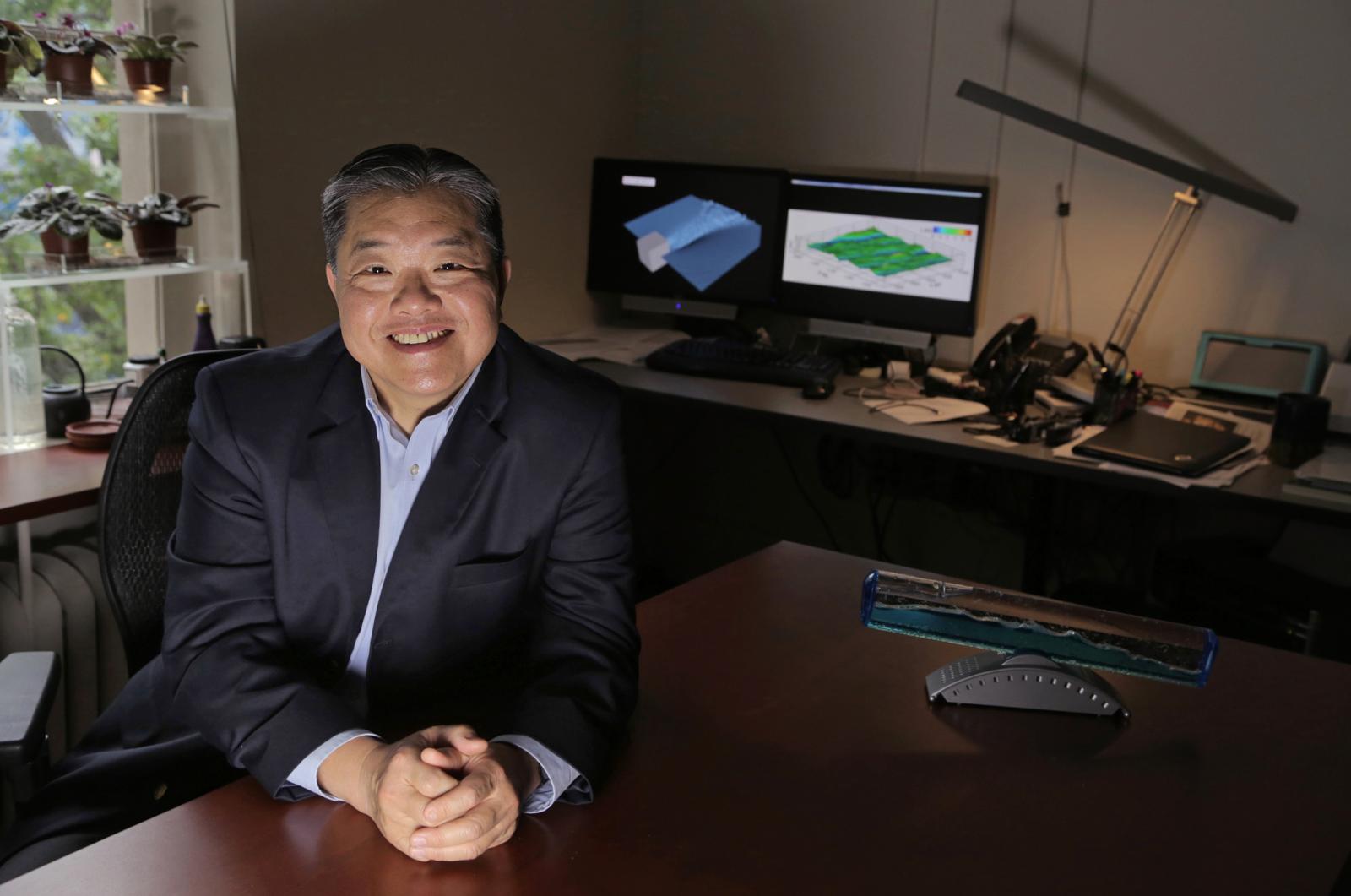
Professor Dick K. P. Yue is the Philip J. Solondz Professor of Mechanical Engineering at MIT. His research focuses on wave hydrodynamics, fluid mechanics at the air-sea interface, and the dynamics of ships and ocean structures. He holds a B.Sc., M.Sc., and Sc.D. from MIT. Yue has held leadership roles including Associate Dean of Engineering and Director of International Programs in the School of Engineering. He is a member of the U.S. National Academy of Engineering and has received numerous awards including the Gordon Y. Billard Award for service at MIT. His research encompasses surface and internal wave dynamics, turbulence, two-phase flows, and the hydrodynamics of marine organisms. Notable contributions include studies on ship wave breaking, wave energy converters, and fluid-structure interactions. Yue has also pioneered computational methods for simulating complex fluid phenomena, such as the Boundary Data Immersion Method and Eulerian label advection techniques. Awards and honors include the 2020 National Academy of Engineering membership, Georg Weinblum Lectureship, and Skolkovo Chair professorship. His work bridges academic research with practical applications in ocean engineering, renewable energy, and marine robotics. Yue has advised numerous students and collaborates globally, including visiting professorships at Shanghai Jiao Tong University, TU Delft, and the Norwegian University of Science and Technology.
Paul Sava is a Professor and C.H. Green Chair of Exploration Geophysics at the Colorado School of Mines, serving as Department Head of Geophysics since 2019. He holds a PhD in Geophysics from Stanford University (2005), an MSc from Stanford (1998), and an Engineer Geophysicist degree from the University of Bucharest (1995). His research focuses on seismic and radar wavefield imaging, planetary geophysics, and infrastructure monitoring. Notable contributions include advancements in wave-equation migration and planetary radar tomography. Education: PhD in Geophysics, Stanford University, 2005 MSc in Geophysics, Stanford University, 1998 Engineer Geophysicist, University of Bucharest, 1995 Research interests emphasize wavefield-based methods for subsurface imaging, planetary resource exploration, and autonomous data acquisition. Recent work explores seismic imaging of asteroids and Mars, leveraging orbital radar systems. His publications span seismic inversion, microseismic monitoring, and elastic wavefield tomography. Awards include the Reginald Fessenden Award (2007), T.K. Young Leadership Award (2020), and multiple Top 30 presentations at SEG Annual Meetings. He leads the Center for Wave Phenomena and actively collaborates with NASA and industry consortia on grants totaling over $6 million. Advising and grants involve mentoring over 30 students and postdocs, with grants focused on planetary radar imaging, seismic FWI, and Mars subsurface analysis. Key projects include the Planetary Orbital Radar Processing and Simulation System (PORPASS) and autonomous seismic exploration systems. Labs/Teams: Directly leads the Center for Wave Phenomena and the Seismic Imaging Team at CWP, advancing open-source tools like Madagascar for reproducible geophysical research.
Professor David P Connolly is a leading academic in Civil Engineering at the University of Leeds, serving as the Programme Leader for the 'Railway Engineering with Project Management' MSc. He holds a PhD and first-class honours in Civil Engineering from the University of Edinburgh, and is a chartered professional engineer with prestigious fellowships from the Institution of Civil Engineers (CEng FICE), Permanent Way Institution (FPWI), and Higher Education Academy (FHEA). His research focuses on transportation systems , climate resilience , artificial intelligence , computer vision , and geotechnical engineering . Notable projects include Hyperloop aerodynamics modeling, railway track dynamics under extreme conditions, and sustainable infrastructure design. He has secured significant industry and governmental grants, supervising numerous PhD and postdoctoral researchers. Key contributions include the development of InSAR and satellite monitoring for infrastructure health, energy harvesting systems for railways, and climate change mitigation strategies for built environments. His work bridges theoretical modeling (e.g., FEM/DEM simulations) with practical applications like geotextile analysis and railway transition zone optimization. Professor Connolly actively mentors international scholars, advising on CSC/ Commonwealth Scholarship applications and co-authoring Marie Skłodowska-Curie fellowship proposals. His research themes emphasize net zero and sustainability , with innovations in recycled materials for construction and smart sensing technologies.
John Saxton is Professor of Clinical Exercise Physiology at the School of Rehabilitation Sciences, University of East Anglia (UEA), a position he has held since March 2010. He also holds an honorary role as Honorary Visiting Research Fellow at Sheffield Hallam University. His career spans academic and research leadership across multiple institutions, including Oxford Brookes University, the University of Sheffield, and Sheffield Hallam University, where he led the Active Health Research Group. His educational background includes a degree from Loughborough University (1990) and PhD research in skeletal muscle physiology at the University of Wolverhampton and the University of Massachusetts at Amherst, USA. Professor Saxton’s research centers on the role of exercise and lifestyle interventions in the prevention and management of age-related chronic conditions, including cancer, cardiovascular disease, peripheral vascular disease, chronic heart failure, and multiple sclerosis. His work aims to optimize exercise therapy and understand differential patient responses. He has secured major research funding from bodies such as the British Heart Foundation, Cancer Research UK, the American Institute for Cancer Research, and the Multiple Sclerosis Society. His recent publications, including the 2024 article on exercise sustainability post-colorectal surgery, reflect a strong focus on exercise oncology, prehabilitation, and recovery pathways. The articles collectively highlight interdisciplinary research spanning clinical rehabilitation, patient experience, biomarker analysis, and implementation science, with a recurring emphasis on evidence-based interventions and long-term health outcomes. His scientific contributions include editing key texts such as Exercise and Cancer Survivorship (2010) and Exercise and Chronic Disease (2011), and contributing numerous book chapters and invited reviews. He is an editorial board member of Clinical Science and a Fellow of the British Association of Sport and Exercise Sciences. Professor Saxton has supervised seven PhD students to completion and currently mentors five doctoral candidates across UEA and Sheffield Hallam University. He has led funded projects such as the PREPARE-ABC trial and the MS Society study on exercise therapy. He previously served as Associate Dean for Enterprise and Engagement (2010–2012) and continues as Director of Learning and Teaching Quality (Postgraduate Research) since 2011. He has been involved in expert panels including the Breast Cancer Campaign Research Gap Analysis, the Multiple Sclerosis International Federation Consensus Meeting, and the UK Physical Activity Guidelines Consensus Meeting, demonstrating national and international leadership in shaping public health policy.