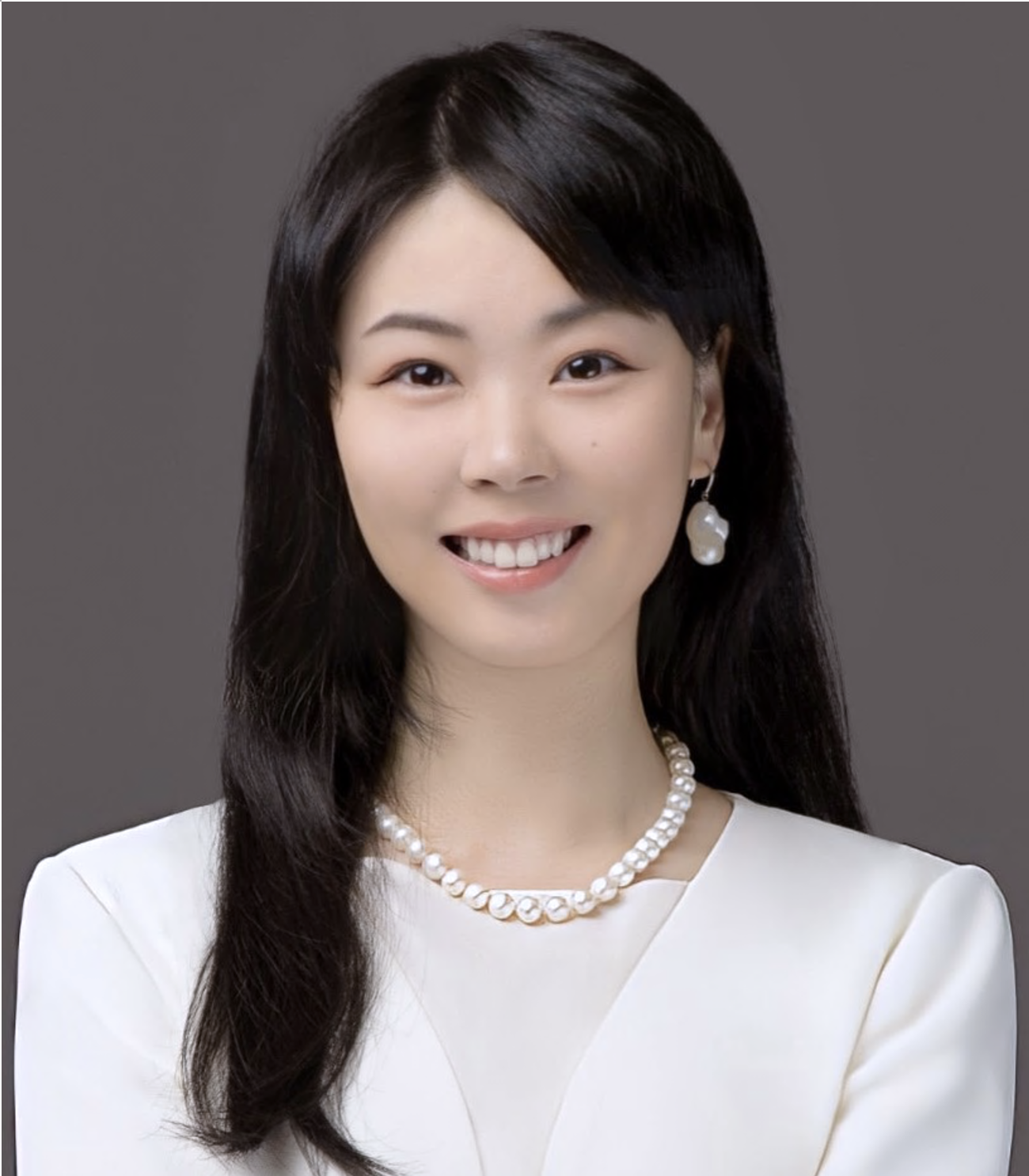
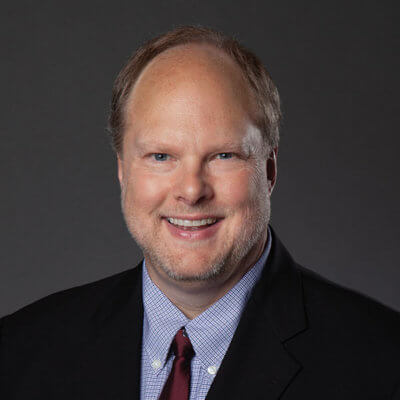
Prof. Dr. Wolfgang Taube is a leading academic at the University of Fribourg , affiliated with the Faculty of Science and Medicine and specializing in Motor Control and Neuroplasticity within the Movement and Sport Sciences department. His work bridges Neuroscience , Physiology , and Rehabilitation through rigorous experimental designs. Role: Professor Location: PER 21 bu. F429, Bd de Pérolles 90, 1700 Fribourg, Switzerland Contact: wolfgang.taube@unifr.ch ORCID: 0000-0002-8802-2065 His research explores neural mechanisms of motor learning , age-related adaptations , and interventions to enhance balance and sensorimotor function . Key areas include: Modulation of GABAergic inhibition through training fNIRS/fMRI studies on cortical activation patterns Biomechanical analysis in sports performance Neurorehabilitation strategies for chronic pain Recent publications demonstrate a focus on age-related neuroplasticity , external focus of attention , and technology-driven training interventions across sports like football and swimming. Methodologically, he integrates randomized trials , meta-analyses , and machine learning applications in motor control studies.
Professor Silvio Franz is affiliated with the Department of Mathematics and Physics 'Ennio De Giorgi' at the University of Salento (Italy). His research career spans over 30 years with 110+ publications, focusing on the statistical mechanics of disordered systems and their interdisciplinary applications. Key contributions include the development of the Franz-Parisi potential for studying glass transitions and rigorous mathematical frameworks for spin glasses. PhD in Theoretical Physics Full Professor at University of Salento Research Interests center on spin glasses and glassy systems , with applications to: Theoretical Neuroscience Machine Learning Population Genetics Constraint Satisfaction Problems Random Matrix Theory Theoretical Computer Science His work connects statistical physics to: Information Theory Optimization Algorithms Neural Network Modeling Evolutionary Biology Complex Systems Theory Key Publications demonstrate: Landau theory for glasses Universality in jamming transitions Stochastic stability analysis Effective temperature formulations Replica symmetry breaking Applications to error-correcting codes
Moncef Gabbouj is a Professor of Signal Processing at the Department of Computing Sciences, Tampere University, Finland. He holds a PhD from Purdue University and has held academic positions including Academy of Finland Professor (2011–2015) and Head of the Department of Signal Processing (2002–2007). His research focuses on artificial intelligence, machine learning, multimedia signal processing, and nonlinear signal/image processing. He has authored over 800 papers and supervised 64 doctoral and 72 master’s theses, earning accolades such as IEEE Fellow, Finnish Cultural Foundation Award, and TUT Foundation Grand Award. Education: BS (Electrical Engineering, Oklahoma State University, 1985), MS and PhD (Electrical Engineering, Purdue University, 1986–1989). Visiting roles include Hong Kong University of Science and Technology and University of Southern California. Research interests include Big Data analytics, multimedia content analysis, pattern recognition, and video coding. He leads the Artificial Intelligence Research Task Force of the Research Alliance on Autonomous Systems (RAAS) and directs the NSF IUCRC Center for Visual and Decision Informatics (CVDI). Awards highlight contributions to signal processing and AI, including IEEE Fourier Award Committee membership and leadership roles in EURASIP and IEEE. Grants and projects span EU Horizon programs, NSF, and industry collaborations.
Dr. Liya Zhao is a Senior Lecturer in the School of Mechanical and Manufacturing Engineering at the University of New South Wales (UNSW Sydney), where she leads the Dynamic Smart Structures and Energy Harvesting Laboratory. She previously held academic positions at the University of Technology Sydney (UTS), first as a Lecturer (2017) and later promoted to Senior Lecturer (2021), before joining UNSW in 2022. Her research is highly interdisciplinary, focusing on smart structures, nonlinear dynamics, and sustainable energy technologies. Education: Ph.D. in Structures & Mechanics, Nanyang Technological University, Singapore (2015) B.Eng. in Civil Engineering, Tongji University, China (2009) Research Interests: Dr. Zhao's work centers on energy harvesting from ambient sources (wind, vibration, human motion, waves), smart materials (piezoelectric, triboelectric), metamaterials, and nonlinear dynamics. She designs adaptive structures for broadband energy harvesting and vibration suppression, with applications in self-powered wireless sensor networks, structural health monitoring, and wearable devices. Her research integrates theoretical modeling, numerical simulation, and experimental validation. Publication Trends: Over the past decade, her research has evolved from fundamental electromechanical modeling toward multifunctional metastructures and real-world deployment. Her recent work emphasizes hybrid energy harvesting, nonlinear tuning for broadband response, and integration with self-powered sensing systems, reflecting a strong trend toward practical, sustainable technologies. Scientific Awards: ARC Discovery Early Career Researcher Award (DECRA), 2021–2024 World's Top 2% Scientists (Stanford University), 2020–2023 Nanyang Engineering Doctoral Scholarship (NEDS), NTU Singapore Grants & Supervision: Dr. Zhao has secured multiple competitive grants, including ARC Discovery Projects and internal university funding, as both sole and chief investigator. She actively supervises research students and welcomes motivated candidates in mechanics, dynamics, and energy systems. Her lab, Dynamic Smart Structures and Energy Harvesting Lab , fosters innovation through experimental and computational research. She also contributes to teaching, including Mechanics of Solids II and Introduction to Aircraft Engineering. Lab & Team: She leads a dynamic research group focused on next-generation smart structures, supported by state-of-the-art facilities at UNSW. Her team develops novel materials and systems for sustainable energy and sensing, aiming to bridge the gap between fundamental science and real-world applications.
Ingve Simonsen is a Professor in the Department of Physics at the Norwegian University of Science and Technology (NTNU), specializing in surface physics and light scattering phenomena. His research focuses on the theoretical and experimental characterization of randomly rough surfaces, electromagnetic wave interactions, and nanoscale optical phenomena. Affiliated with NTNU's Faculty of Natural Sciences, he maintains an active research program with extensive collaborations across international institutions. His research interests center on surface physics and light scattering , particularly the inversion of scattering data for surface characterization, plasmonics in nanostructures, and statistical properties of rough surfaces. His work bridges theoretical modeling with experimental validation, applying techniques like Mueller matrix ellipsometry and reduced Rayleigh equations to solve complex problems in optical metrology and nanomaterial characterization. Analysis of his recent publications reveals strong emphasis on multi-scale surface topography , polarized light interactions with disordered systems, and nanophotonic applications . His research demonstrates consistent innovation in developing computational frameworks for surface characterization and exploring novel optical phenomena in two-dimensional materials. Professor Simonsen actively mentors students and researchers, evidenced by frequent co-authorship with junior researchers on complex projects. His collaborative approach spans disciplines including condensed matter physics, materials science, and biomedical optics, as seen in his work on graphene-based virus detection sensors.
Stephan Schönecker is a Researcher and Associate Professor (Docent) at KTH Royal Institute of Technology, specializing in computational materials science and electronic structure theory. He holds key administrative roles including Studierektor (since January 2025) and Lokalt skyddsombud (2021–2024). His research focuses on multicomponent alloys, superconductivity, magnetism, and energy materials, with applications in nanotechnology and materials design. His academic background includes a strong foundation in theoretical physics and materials science. Research interests span bulk/interfacial properties of alloys, strain engineering in thin films, and ab initio treatments of magnetism and lattice vibrations. Notable contributions involve predicting novel materials through computational methods and exploring high-entropy alloys for magnetic refrigeration and structural applications. Recent publications highlight advancements in data-driven alloy design, magnetocaloric materials, and the mechanical behavior of refractory alloys. Collaborations with institutions like the Technical University of Denmark and Chinese universities reflect his international research network. His work bridges theoretical predictions with experimental validation, emphasizing both fundamental physics and practical engineering applications. Professional service includes roles in academic governance and union representation (Saco-S styrelseledamot, 2022–2025). His lab focuses on computational modeling and materials informatics, though specific lab names are not explicitly mentioned in the text.
Associate Professor Amit Pujari is a biomedical engineer and neuroscientist at the University of Hertfordshire, leading the Neu(RAL)² Laboratory. He holds an honorary position at the University of Aberdeen and is a Royal Academy of Engineering Industrial Fellow. His work focuses on developing non-invasive neuromodulatory devices for stroke and spinal injury rehabilitation. Education: PhD in Biomedical Engineering, University of Aberdeen (2016) MSc in Biomedical Engineering, University of Strathclyde (2007) BE in Instrumentation & Control Engineering, Pune University (2003) Research Interests: Optimizing neuromodulatory stimuli (vibrotactile/electrical) for rehabilitation, neurophysiological basis of vibration therapy, and assistive technologies. His lab is equipped with advanced tools like high-density EMG systems, TMSi devices, and custom vibration stimulators. Awards: Academy of Medical Sciences’ Top 25 Emerging Leaders (2023) British Science Association Award Lecture (2022) Winston Churchill Memorial Trust Fellowship (2017) Grants/Projects: VECTOR: Randomized controlled trial for Crohn’s disease rehabilitation (2024–2027) SPASMS: Wearable sensor technology for spasticity management (2023–2025) User-led design of neurotechnologies for stroke survivors (2023–2025) Labs: Neu(RAL)² Laboratory focuses on neural systems rehabilitation, housing state-of-the-art equipment for EMG/EEG, TMS, and custom devices.
Erik Johnson is a Professor of Civil Engineering at an unspecified university, affiliated with the Sonny Astani Department of Civil and Environmental Engineering. He has held leadership roles such as Associate Chair, Interim Chair, and currently serves as Vice Dean for Academic Programs. His research focuses on smart structures, structural vibration control, and computationally-efficient simulation algorithms for dynamical systems, with applications in controllable damping devices and seismic mitigation. Education: B.S., M.S., Ph.D. in Aeronautical and Astronautical Engineering (University of Illinois at Urbana-Champaign), Graduate Certificate in Biblical Studies (Trinity Evangelical Divinity School) Professional Affiliations: Senior Member of AIAA; Member of ASCE and ASME; Chair of ASCE technical committees; Associate Editor, ASCE Journal of Engineering Mechanics His work spans disciplines including control theory, structural engineering, and computational methods. Articles highlight Bayesian approaches, inverse problems, and sensor placement optimization under uncertainty. Erik contributes to advancing seismic resilience and mechatronic systems for civil infrastructure. Scientific Awards: 2001 NSF CAREER Award, 2005 International Association for Structural Safety and Reliability Medal, 2016 University of Illinois Distinguished AE Alumnus Award
B. F. Spencer Jr. is the Nathan M. and Anne M. Newmark Endowed Chair in Civil Engineering at the University of Illinois at Urbana-Champaign, where he directs the Multi-Axial Full-Scale Sub-Structured Testing & Simulation Facility and the Smart Structures Technology Laboratory. He joined the university in 2002 after serving as Leo E. and Patti Ruth Linbeck Professor of Engineering at the University of Notre Dame (1985-2002). Education includes: Ph.D. in Theoretical and Applied Mechanics, University of Illinois at Urbana-Champaign (1985) M.S. in Theoretical and Applied Mechanics, University of Illinois at Urbana-Champaign (1983) B.S. in Mechanical Engineering, University of Missouri-Rolla (1981) His research focuses on pioneering innovations in structural health monitoring, stochastic mechanics, and smart sensor technologies. Key areas include development of wireless sensor networks for real-time infrastructure assessment, seismic hazard mitigation strategies, and AI-driven damage detection systems. His work bridges theoretical computational mechanics with practical civil engineering applications to enhance resilience against natural disasters. Recent publications emphasize digital twins, UAV-based structural inspection, machine learning for damage identification, and advanced sensor networks. Trends show strong integration of AI, 3D visualization, and edge computing for rapid post-disaster evaluation and predictive maintenance of critical infrastructure. Major scientific honors: ASCE Housner Medal (2015) J.M. Ko Medal (2014) Foreign Member of Polish Academy of Sciences (2005) Structural Health Monitoring Person of the Year (2011) JSPS Fellowships (1999, 2000) He leads significant infrastructure projects including NSF-funded facilities and industry collaborations. Laboratory initiatives involve full-scale testing of bridges, gates, and seismic mitigation systems. Educational outreach includes K-12 STEM programs like 'Shakes and Quakes' to inspire future engineers.
Martin Steinberger is an Associate Professor at the Institute of Control and Automation (IRT) at Graz University of Technology (TU Graz). His work focuses on advanced control systems, networked control, model predictive control (MPC), and automation in manufacturing and autonomous systems. He leads research into real-time optimization, fault diagnosis, and safety-critical applications in industries like pharmaceuticals and automotive. Research interests include: Networked Control Systems Model-Based Control Autonomous Vehicle Trajectory Planning Process Automation Robotics and Industrial Automation His work bridges theoretical control engineering with practical applications in manufacturing lines, chemical processes, and autonomous driving. Recent studies emphasize digital real-time release testing for pharmaceuticals, universal control concepts for manufacturing systems, and safety-aware trajectory optimization for automated vehicles. His publications frequently address challenges in time-varying delays, packet loss mitigation, and robust observer design for nonlinear systems. Steinberger collaborates on EU-funded projects and regularly contributes to conferences like the International Workshop on Variable Structure Systems. His research often involves experimental validation, as seen in work with compact pharmaceutical manufacturing setups and small-scale autonomous vehicle testing platforms.
Dr. Ying Fang serves as an Assistant Professor in the Department of Physical Therapy within the College of Health Professions at Rosalind Franklin University of Medicine and Science. Her primary appointment reflects her expertise in biomechanics and rehabilitation science, with a focus on developing evidence-based interventions for vulnerable populations. PhD in Biomedical Engineering, Worcester Polytechnic Institute MS in Kinesiology (Biomechanics), University of Tennessee, Knoxville BS in Kinesiology, Shanghai University of Sport Dr. Fang's research program centers on gait rehabilitation using assistive devices and biofeedback systems , with particular emphasis on improving balance and preventing falls in older adults and developing exercise interventions to prevent bone loss in spinal cord injury. Her work integrates principles of neuromuscular control and biomechanics to address mobility challenges across diverse patient populations. The research employs advanced methodologies including movement analysis, exoskeleton technology, and sensor-based biofeedback systems to develop practical clinical solutions. Her publication record demonstrates strong focus on ankle exoskeleton applications for cerebral palsy and elderly populations, spinal cord injury rehabilitation , and bone health preservation . The research consistently bridges engineering principles with clinical rehabilitation needs, resulting in practical interventions that address real-world mobility challenges. NIH F32 Postdoctoral Fellowship Funding from Eunice Kennedy Shriver National Institute of Child Health and Human Development (NICHD) Dr. Fang directs the Movement Analysis Laboratory within the Department of Physical Therapy, where she leads research on human movement biomechanics and rehabilitation technology development. Her laboratory serves as a hub for interdisciplinary collaboration between physical therapy, biomedical engineering, and clinical rehabilitation sciences.
Ada Fort is an Associate Professor in the Department of Information Engineering and Mathematics at the University of Siena, Italy. Her research focuses on advanced sensor systems, including environmental monitoring, biomedical instrumentation, and IoT applications. She holds a Laurea in Electronic Engineering (1989) and a Ph.D. in Nondestructive Testing (1992) from the University of Florence. Key research areas include wearable sensors for air quality monitoring, magnetic detection of contaminants, and QCM-based biosensors. Her work integrates machine learning for signal processing and fault detection in industrial and environmental systems. Notable projects involve self-sufficient IoT nodes powered by solar energy and low-cost sensor networks for agriculture and healthcare. Publications highlight innovations in sensor design, data imputation for environmental monitoring, and entropy-based security systems. Her contributions span interdisciplinary fields, linking engineering principles with applications in healthcare, agriculture, and climate science.
Reza Talemi is a Professor and Head of the Elooi Research Laboratory within the SCALINT Division at the Department of Materials Engineering (MTM), Faculty of Engineering Technology, KU Leuven, Belgium. His research focuses on structural integrity of materials fabricated through advanced manufacturing techniques, with particular expertise in impact dynamics, fracture mechanics, and fatigue analysis of metallic materials. His educational background shows extensive specialization in materials science and engineering, with research focusing on structural integrity assessment of advanced materials. His work bridges experimental and numerical approaches to understand material behavior under various loading conditions. Talemi's research interests span structural integrity of advanced materials, tribo-mechanical fracture, innovative testing methods for material behavior assessment, and advanced numerical modeling of material failure. His work has significant applications in aerospace, energy, and manufacturing sectors where material integrity is critical for safety and performance. His recent publications demonstrate a strong focus on additive manufacturing technologies, particularly examining fretting fatigue behavior of additively manufactured components, residual stress characterization, and microstructural analysis. The research shows consistent advancement in understanding how advanced manufacturing processes affect material properties and structural performance. Among his notable contributions are development of specialized testing apparatus for evaluating material performance in dovetail joint configurations, advanced numerical modeling techniques for predicting material behavior, and innovative approaches to characterize material integrity under complex loading conditions. Professor Talemi actively supervises numerous PhD students and leads multiple research projects, including 'Precise advanced material processing via controlled fatigue fracture' and 'Hybrid Experimental and Numerical Framework for Monitoring Structural Integrity in Aerospace Structures,' demonstrating his leadership in both academic and applied research domains.
Val Zwiller is a Professor at the Royal Institute of Technology (KTH) in the Department of Quantum and Nanophysics, affiliated with the School of Engineering Sciences (SCI). His research focuses on quantum photonics, superconducting single-photon detectors, nanowire quantum dots, and integrated photonic systems. He teaches and coordinates courses such as Quantum Photonics (SK2900) and Quantum Technology (SK2903), and advises on degree projects in engineering and applied physics. Research Interests: Zwiller's work spans quantum entanglement generation, single-photon detection technologies, and applications in quantum communication and sensing. His recent studies include fractal superconducting nanowire detectors, telecom-band quantum dots, and quantum state tomography. His research bridges fundamental quantum physics with practical photonic device development. Course Responsibilities: Quantum Photonics (SK2900) - Examiner, Course Coordinator, Teacher Quantum Technology (SK2903) - Teacher, Assistant Optical Physics (SK2303) - Examiner Supervision of Degree Projects in Engineering Physics and Applied Physics Publications Trends: Zwiller's recent articles emphasize scalable quantum detection systems, nanowire-based quantum emitters, and advanced LIDAR technologies with single-photon sensitivity. His work frequently intersects quantum optics with material science and engineering. Awards/Grants: No specific awards or grants were explicitly mentioned in the provided texts. Lab/Teams: While not detailed in the input, his affiliation with the Department of Quantum and Nanophysics suggests involvement in KTH's quantum photonics and nanotechnology research groups.
Dario Anastasio is a Fixed-term Assistant Professor in the Department of Mechanical and Aerospace Engineering (DIMEAS) at Politecnico di Torino. He is affiliated with the College of Mechanical, Aerospace, and Automotive Engineering and actively contributes to both teaching and research activities in mechanical engineering. Dr. Anastasio's research focuses on several key areas within mechanical engineering and dynamics. His primary interests include: Nonlinear dynamics and structural dynamics System identification and modal analysis Energy harvesting, particularly vibration energy harvesting Dynamics of mechanical systems with nonlinear characteristics Pantograph-catenary dynamic interaction in railway systems His work spans both theoretical modeling and experimental validation, with particular emphasis on negative stiffness oscillators, railway contact line dynamics, and nonlinear system identification techniques. Dr. Anastasio applies advanced methodologies including subspace identification, Bayesian model selection, and signal processing to solve complex mechanical engineering problems related to vibration analysis and structural dynamics. Analysis of Dr. Anastasio's publications reveals a strong focus on nonlinear dynamics, particularly in mechanical systems with complex behaviors. His research consistently bridges theoretical modeling with experimental validation across multiple domains including railway systems, energy harvesting devices, and nonlinear oscillators. The publications demonstrate progression from fundamental nonlinear dynamics research toward practical applications in railway engineering and vibration-based energy harvesting systems. Dr. Anastasio has received notable recognition for his work: Quality Award 2019 conferred by Politecnico di Torino, Italy (2020) Dr. Anastasio actively contributes to the academic community through extensive teaching activities across multiple programs. He serves as a Teaching Assistant for "Dynamics and Identification of Nonlinear Systems" and as a Course Collaborator for "Dynamics of Mechanical Systems" and "Vibration Mechanics" at both Master's and Bachelor's levels. His teaching spans from 2019/20 through the upcoming 2025/26 academic year, demonstrating his ongoing commitment to mechanical engineering education. Additionally, he contributes to PhD-level instruction in "Rotordynamics of High-Speed Rotating Machinery." Dr. Anastasio is a key member of the "Dynamics of mechanical systems and identification" research group within DIMEAS. His research integrates multiple ERC sectors including Mechanical and manufacturing engineering, ODE and dynamical systems, Signal processing, and Simulation engineering and modelling. His work aligns with Sustainable Development Goals 7 (Affordable and clean energy) and 9 (Industry, Innovation, and Infrastructure).