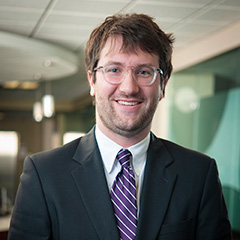
Thao T Doan serves as an Adjunct Lecturer in the Department of Pharmacology at Northwestern University's Feinberg School of Medicine, with her current appointment confirmed through 2024 disclosures. Her research integrates pharmacogenomics with clinical pharmacology, focusing on drug metabolism mechanisms and therapeutic optimization for inflammatory conditions. Key investigations include genetic determinants of drug transporters and biologic dosing strategies for gastrointestinal disorders, demonstrating translational expertise from molecular pathways to clinical trial design. Publications reveal two primary research trajectories: the 2022 Gastroenterology paper establishes her work in optimizing adalimumab regimens for Crohn's disease through the SERENE CD trial, while the 2006 Clinical Pharmacology and Therapeutics study demonstrates foundational contributions to pharmacogenomic understanding of OATP1B1 transporters. Collectively, these works highlight expertise in bridging genetic variability with drug efficacy in both gastroenterology and systemic pharmacology contexts.
Dr. Jose Salazar Osuna serves as an Assistant Professor in the Department of Surgery, Division of Pediatric Surgery at the Medical College of Wisconsin. He holds attending physician privileges at multiple institutions including Children's Wisconsin, Columbia St. Mary's, Aurora Sinai Medical Center, Froedtert Hospital, and Marshfield Clinic. As a member of the Cardiovascular Research Center, he bridges clinical practice with research in pediatric surgical outcomes. Dr. Salazar Osuna's research interests focus on pediatric surgical outcomes, risk stratification models, necrotizing enterocolitis, gastroschisis, pediatric trauma, and appendicitis management. His work emphasizes large database analyses to identify risk factors and improve surgical outcomes. His most significant contribution is the development of a novel multispecialty surgical risk score for children that demonstrated superior predictive capability (ROC 0.901-0.959) compared to the Charlson Comorbidity Index (ROC 0.587-0.596) in predicting inpatient mortality. Analysis of Dr. Salazar Osuna's recent publications (2020-2025) reveals a strong focus on optimizing outcomes for complex pediatric surgical conditions. His work spans neonatal surgery (necrotizing enterocolitis, gastroschisis), emergency surgery (appendicitis, trauma), and surgical quality improvement. He has made significant contributions to understanding risk factors for neurodevelopmental impairment after intestinal resection, variability in surgical techniques, and the impact of comorbidities on surgical outcomes. Scientific Awards: Surgical Intern Colleague Award, Johns Hopkins Nursing (2011) Resident Teaching Award, University of Maryland General Surgery Residency Program (2017) Dr. Salazar Osuna maintains an active clinical practice while conducting research that informs pediatric surgical care. His dual expertise in clinical pediatric surgery and outcomes research allows him to identify clinically relevant research questions and translate findings into practice improvements. His collaborative approach is evident in his extensive list of co-authors across multiple institutions, suggesting strong interdisciplinary partnerships that enhance the scope and impact of his work.
Dr. Ahmad Farooqi serves as Assistant Professor at Central Michigan University College of Medicine, where he provides statistical leadership through the Clinical Research Institute (CRI). He delivers weekly statistics instruction to medical trainees at Children's Hospital of Michigan and offers comprehensive analytical support for clinical research projects across the institution. His academic credentials include: Ph.D. in Biostatistics from Wayne State University M.S. and M.A. in Statistics from University of Windsor M.Phil in Statistics from Government College University, Lahore Dr. Farooqi's research pioneers non-parametric, robust, and exact statistical methodologies applied to pediatric clinical challenges. His work addresses critical gaps in small-sample clinical studies through innovative approaches to longitudinal data analysis, survival modeling, and diagnostic accuracy assessment. As a SAS-certified expert, he implements advanced techniques across SAS, R, and SPSS environments to solve complex analytical problems in cardiology, emergency medicine, and immunology research. His publication record demonstrates consistent high-impact contributions across pediatric specialties, with particular emphasis on cardiac outcomes, emergency department operations, and immunological responses. The research portfolio reveals strong methodological rigor combined with practical clinical applications, often addressing resource-constrained scenarios requiring robust analytical solutions. Key recognitions include: Best Article Award in Pediatric Neurology (2019) Best Paper Award at ICCS-15 statistical conference Wayne State University Full Tuition Scholarship Dr. Farooqi actively mentors medical researchers through statistical consulting and teaching, with collaborations spanning multiple departments and international institutions. His role in the CRI facilitates cross-disciplinary research partnerships while advancing methodological standards in clinical investigation. Current work focuses on refining statistical approaches for pediatric cardiac interventions and emergency care protocols through ongoing clinical data analysis projects.
Dr. Julie A. Van Dyke serves as Senior Research Scientist and Vice President of Research and Strategic Initiatives at Haskins Laboratories, an independent research institute affiliated with Yale University and the University of Connecticut. She holds adjunct professorships at McMaster University and the City University of New York Graduate Center while maintaining affiliate status at UConn's CT Institute for Brain and Cognitive Sciences. Her NIH-funded research investigates neurocognitive mechanisms underlying language comprehension and reading disorders. Her educational background includes: Ph.D. in Cognitive Psychology from University of Pittsburgh M.Sc. in Computational Linguistics from Carnegie Mellon University Honors B.A. in Computer Science and Linguistics from University of Delaware Dr. Van Dyke's research centers on cue-based retrieval theory, examining how retrieval interference causes comprehension failures in both normative processing and clinical populations (dyslexia, ADHD, age-related decline). She pioneered the application of speed-accuracy tradeoff methodology to diagnose direct-access retrieval mechanisms and investigates individual differences in eye-movement control during reading. Her work bridges cognitive theory with clinical applications through machine learning classifiers for reading disability and fixation-related brain imaging of word-by-word processing. Analysis of her recent publications reveals consistent focus on retrieval interference mechanisms across multiple methodologies: eye-tracking studies establish individual skill factors in oculomotor control, neuroimaging work identifies neural correlates of interference resolution, and machine learning approaches develop diagnostic classifiers. Key trends include the role of predictive timing in fluency disorders and dissociation between grammatical vs. semantic interference effects. Her scientific recognition includes: NIH/NICHD Institutional Post-doctoral National Research Service Award NIH/NICHD Individual Post-doctoral National Research Service Award Dr. Van Dyke actively shapes her field through editorial roles as Associate Editor for Journal of Experimental Psychology: General and Section Editor for Language and Linguistics Compass. Her NIH-funded grants support collaborative projects with researchers including Victor Kuperman, Luca Campanelli, and Clint Johns, focusing on retrieval interference, reading disability mechanisms, and neural underpinnings of comprehension. Current initiatives integrate computational linguistics with cognitive neuroscience to model real-time processing during reading. As Vice President at Haskins Laboratories, she leads a multidisciplinary team utilizing eye-tracking, EEG, fMRI, and machine learning to investigate language processing. Her lab collaborates with the CT Institute for Brain and Cognitive Sciences and maintains strong ties with UConn's neuroscience community, with ongoing data collection for fixation-related brain imaging studies.
Dr. Tri M. Le serves as Associate Professor of Mathematics and Computer Science and Program Coordinator for the M.S. in Data Science at Mercer University's College of Professional Advancement, Department of Informatics and Mathematics. He joined Mercer in 2017 after working as a Predictive/Computational Statistician at the University of Nebraska-Lincoln, bringing expertise in statistical software (SAS, SPSS, R) and extensive teaching experience at undergraduate and graduate levels. His educational background includes: PhD and MA in Statistics, University of Missouri-Columbia (2014) MS in Probability and Statistics, Ho Chi Minh City University of Natural Sciences (2002) BS in Mathematics and Informatics, Ho Chi Minh City University of Natural Sciences (1999) Dr. Le's research spans Bayesian analysis, decision theory, spatio-temporal modeling, and machine learning. His work addresses fundamental questions in model uncertainty, prediction reliability, and the interpretability-performance trade-off in statistical learning. He has published in leading journals including Journal of Machine Learning Research and Bayesian Analysis, with recent focus on model averaging superiority over selection and theoretical foundations of ensemble methods. Analysis of his 2016-2022 publications reveals consistent focus on Bayesian predictive modeling, with increasing emphasis on interpretable machine learning. His work bridges theoretical statistics and practical applications in healthcare analytics and environmental systems, demonstrating interdisciplinary relevance through collaborations in geoscience and criminal justice research. Dr. Le actively contributes to the academic community as reviewer for Bayesian Analysis and International Conference on Fuzzy Systems and Data Mining, and as Session Chair for the Joint Statistical Meetings. His leadership extends to Mercer's Tenure and Promotion committee and the M.S. in Data Science program coordination. While no dedicated research lab is mentioned, Dr. Le's role as Program Coordinator provides structured opportunities for students through the M.S. in Data Science curriculum. His courses in Data Analytics and Healthcare Data Analytics offer practical training grounded in his research on predictive modeling and statistical inference.
Elizabeth Hoover is a Clinical Professor in the Department of Speech, Language & Hearing Sciences at Boston University, where she also serves as Clinical Director of the Aphasia Resource Center. Her clinical and research expertise centers on neurogenic communication disorders, with specialization in stroke, traumatic brain injury, and Parkinson's disease rehabilitation. Her educational foundation includes: BA from University of California, Los Angeles MS from California State University, Hayward PhD from Boston University School of Medicine Dr. Hoover's research program systematically advances aphasia rehabilitation through three interconnected pillars: (1) developing evidence-based implementation tools for global clinical adoption, (2) innovating conversation-based interventions for severe aphasia including telepractice delivery, and (3) pioneering psychosocial outcome measurement through qualitative identity-focused approaches. Her work consistently bridges laboratory research with real-world clinical application, particularly through the Rehabilitation Treatment Specification System framework. Her distinguished recognition includes: Fellow of the American Speech-Language-Hearing Association (2024) Tavistock Trust for Aphasia Distinguished Scholar Award (2024) Gerry Cormier Communicative Access Award (2021) As an educator, Dr. Hoover trains future clinicians through graduate courses in Motor Speech Disorders and Aphasia while supervising clinical practicum. Her lab operates as a dynamic nexus where clinical service, student training, and international research collaborations converge to advance evidence-based neurorehabilitation practices. Current projects focus on telepractice optimization, cross-cultural implementation barriers, and identity-centered rehabilitation models.
Dr. Asa B. Smith serves as Assistant Professor in the Community & Health Systems department at Indiana University School of Nursing, where his research pioneers pain management solutions for chronic heart failure patients through deep phenotyping and omics methodologies. Education: PhD, University of Michigan (2020), funded by Rita and Alex Hillman Foundation predoctoral fellowship BSN, University of Michigan (2016) Research Focus: Dr. Smith's work bridges symptom science, cardiovascular nursing, and genomics to address critical gaps in heart failure pain management. His innovative approach combines emergency medical services data with molecular analyses to develop targeted self-management interventions, while simultaneously advancing nursing education through mentorship quality assessment frameworks. Scientific Recognition: Rita and Alex Hillman Foundation Pre-Doctoral Fellowship National Institute of Nursing Research T32 Postdoctoral Fellowship Research Impact: Dr. Smith maintains active grants from Sigma Theta Tau International and the Hillman Foundation, supporting his development of novel pain interventions. His mentorship initiatives have transformed PhD training evaluation across multiple institutions, reflecting his dual commitment to scientific advancement and educational excellence within nursing academia. Collaborative Environment: Leading a dynamic research group at Indiana University, Dr. Smith cultivates a uniquely supportive ecosystem where interdisciplinary teams collaborate on cutting-edge projects spanning VR cognitive interventions, genomic pain characterization, and community reintegration strategies for heart failure patients.
Alan M. Polansky is an Associate Professor in the Department of Statistics and Actuarial Science at Northern Illinois University (NIU), where he has maintained a continuous faculty appointment since 1995. His research program centers on advancing nonparametric statistical methodologies with significant contributions to bootstrap theory, smoothing techniques, and observed confidence levels. His academic credentials include a Ph.D. from Southern Methodist University and M.S./B.S. degrees from the University of Texas at San Antonio. As an Honors Faculty Fellow (2022-2023), he developed and taught an innovative seminar on Data and Social Justice for the University Honors Program. Polansky's research spans several interconnected domains: Foundational work on bootstrap methodology and confidence interval construction Development of observed confidence levels as an alternative to multiple comparison techniques Asymptotic theory for statistical limit theorems Emerging research on network data analysis and Bayesian inference for stochastic processes His 25+ year publication record shows consistent evolution from core nonparametric methods toward contemporary applications, with recent work focusing on network statistics and Bayesian approaches while maintaining theoretical rigor. Publications appear in premier journals including the Journal of the Royal Statistical Society, Technometrics, and Computational Statistics and Data Analysis. Key recognitions include: Honors Faculty Fellowship (2022-2023) Authorship of two influential monographs: 'Observed Confidence Levels' (2007) and 'Introduction to Statistical Limit Theory' (2011) As an educator, Professor Polansky maintains regular office hours in DuSable Hall and has advised students across statistics and actuarial science programs. His research demonstrates sustained methodological innovation with practical applications in insurance, manufacturing, and emerging network-based domains, reflecting both deep theoretical expertise and commitment to real-world problem solving.