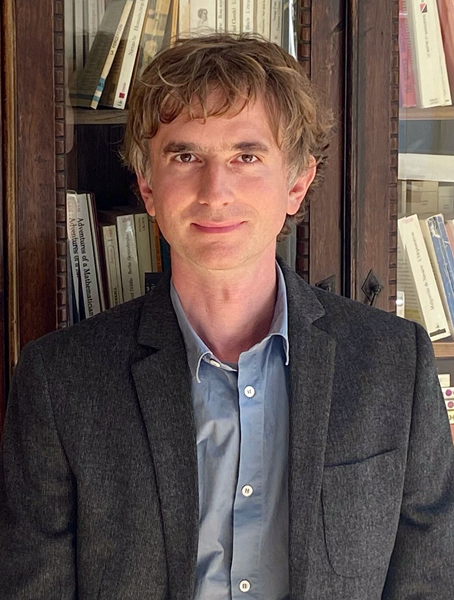
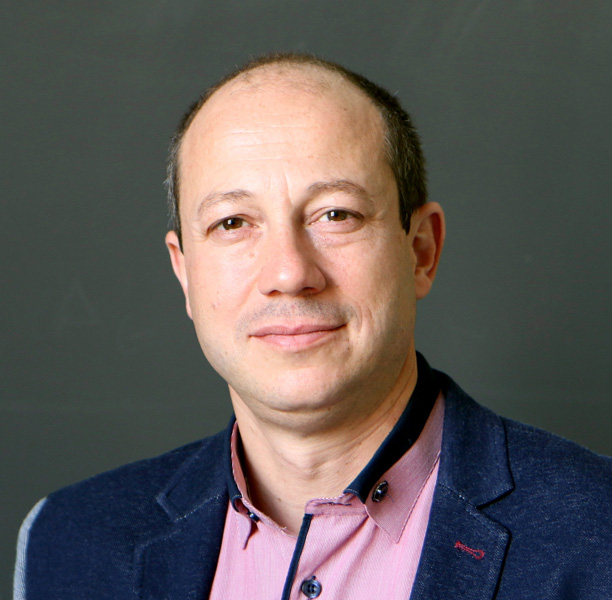
Emmanuel Breuillard is a Professor of Pure Mathematics at the University of Oxford. Previously, he held positions as Sadleirian Professor at the University of Cambridge (2017-2021), Professor at Université Paris-Sud (2008-2017), and Associate Hadamard Professor at École Polytechnique (2006-2008). His academic journey includes a PhD from Université Paris-Sud and Yale University, supervised by Frédéric Paulin and Gregory Margulis, and a Master in Mathematics from Cambridge. PhD: Université Paris-Sud (2004), supervised by Frédéric Paulin; Yale University, supervised by Gregory Margulis Master: University of Cambridge (2000) Ecole Normale Superieure (1997-1999) His research spans Combinatorics , Geometric Group Theory , Ergodic Theory , and Number Theory , focusing on approximate groups, expansion in finite simple groups, and Diophantine geometry. His recent work analyzes Elekes-Szabo problems in projective geometries. He has authored 50+ publications in prestigious journals, addressing topics like random polynomials, C*-simplicity, and uniform independence in linear groups. Fellow of the Royal Society (2024) ERC Consolidator Grant (2014-2019) Prix Charles-Louis de Freycinet (2013) European Mathematical Society Prize (2012) ERC Starting Grant (2008-2013) Cours Péccot, Collège de France (2006)
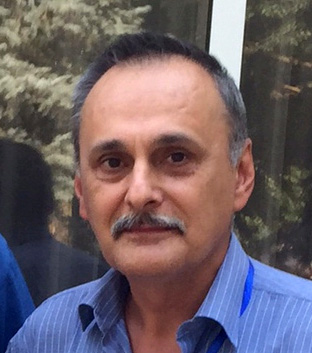
Philipp Schindler serves as an Assistant Professor in the Department of Experimental Physics at the University of Innsbruck, Austria. His research is centered on experimental quantum computing using trapped ion systems, with a focus on advancing quantum error correction and scalable quantum processor architectures. Dr. Schindler's primary research interests include quantum error correction, fault-tolerant quantum computing, quantum simulation, and the development of trapped ion quantum hardware. His work bridges theoretical concepts with experimental implementations, contributing to the realization of practical quantum computers through innovations in ion trap design, qudit-based processing, and verification protocols. Key methodologies involve precision control of molecular ions and multiqubit operations within cryogenic environments. Analysis of his recent publications (2022-2025) reveals a consistent emphasis on experimental demonstrations of quantum error correction, novel ion trap architectures, and the use of qudits for enhanced quantum processing. Key themes include fault-tolerant operations, two-dimensional connectivity for scalability, and verification protocols for quantum computations. His research shows increasing focus on molecular ion systems and cross-verification techniques for quantum hardware validation. No scientific awards were mentioned in the provided information. Details regarding his students and research grants are not available in the given text. Dr. Schindler operates within the quantum computing research group at the Department of Experimental Physics, utilizing specialized facilities including cryogenic setups and microfabricated ion traps at Technikerstraße 25 in Innsbruck.
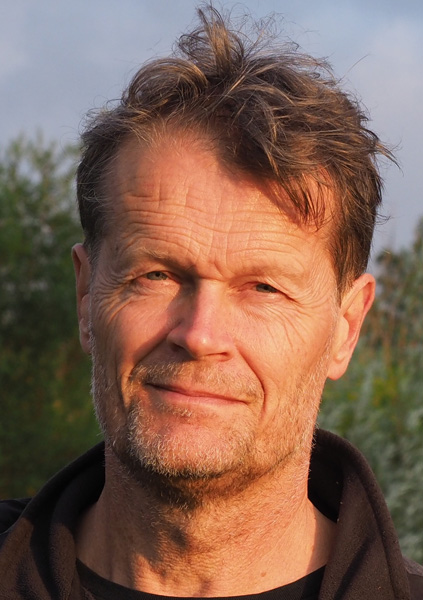
Martin Steinberger is an Associate Professor at the Institute of Control and Automation (IRT) at Graz University of Technology (TU Graz). His work focuses on advanced control systems, networked control, model predictive control (MPC), and automation in manufacturing and autonomous systems. He leads research into real-time optimization, fault diagnosis, and safety-critical applications in industries like pharmaceuticals and automotive. Research interests include: Networked Control Systems Model-Based Control Autonomous Vehicle Trajectory Planning Process Automation Robotics and Industrial Automation His work bridges theoretical control engineering with practical applications in manufacturing lines, chemical processes, and autonomous driving. Recent studies emphasize digital real-time release testing for pharmaceuticals, universal control concepts for manufacturing systems, and safety-aware trajectory optimization for automated vehicles. His publications frequently address challenges in time-varying delays, packet loss mitigation, and robust observer design for nonlinear systems. Steinberger collaborates on EU-funded projects and regularly contributes to conferences like the International Workshop on Variable Structure Systems. His research often involves experimental validation, as seen in work with compact pharmaceutical manufacturing setups and small-scale autonomous vehicle testing platforms.
François Labourie is a Professor at the University of Nice Sophia Antipolis (Université Côte d'Azur) in the Department of Mathematics. He previously held positions as Professor at Paris-Sud University (1994–2014) and Assistant Professor at École Polytechnique (1991–2001), alongside a CNRS Research Fellowship at École Polytechnique (1986–1994). His research focuses on geometry of surfaces, Teichmüller theory, dynamics, and geometric structures. Key achievements include the European Mathematical Prize (1992), Carrière Prize (1993), and an ERC Advanced Grant (2009). He has delivered an invited lecture at the 1998 International Congress of Mathematicians (ICM). His work bridges dynamical systems, differential geometry, and representation theory, with notable contributions to Anosov flows and higher Teichmüller theory. Labourie's recent projects include the ERC-funded Geometry and Analysis of Surface Groups (2023–2028) and the ANR-DynGeo project (2017–2021). He teaches advanced courses in differential geometry, hyperbolic geometry, and group theory at the undergraduate and graduate levels. Contact: francois.labourie@univ-cotedazur.fr , Laboratoire de Mathématiques, Université Côte d'Azur, Nice, France.
Helmut Hlavacs is a Professor at the Faculty of Computer Science, leading the Research Group on Education, Didactics, and Entertainment Computing. His expertise spans serious games, game design, virtual reality, and health informatics. He has contributed to over 218 publications since 2005, focusing on topics like hedonic experiences in gaming, VR applications in therapy, and AI-driven behavior trees. His work intersects technology, education, and healthcare, with notable projects such as Conquer Catharsis (VR anxiety treatment) and PhyLab (VR physics experiments). Hlavacs has secured research funding for initiatives like Programmieren lernen durch Computerspielentwicklung and Dig-Equality FF , emphasizing digital equity and education. In 2019, he won the Best Poster Award at IFIP for his work on health data from serious games. Research Interests: Serious Games for health and education Virtual Reality applications in therapy and learning Game design methodologies and AI-driven NPC behavior Psychological impacts of gaming and digital consumption Procedural content generation for games Key Projects: Programmieren lernen durch Computerspielentwicklung (2008): Game-based learning for programming skills Dig-Equality FF (2020-2021): Digital competence promotion for equity TP1 PRECIOUS (2013-2016): VR conferencing and stress management Grants and Advising: Hlavacs has advised on projects involving AI in military command systems, VR therapy for anxiety disorders, and participatory design of social media literacy tools. He collaborates internationally on topics like gamification for behavior change and multicultural health interventions. Labs/Teams: His research group focuses on Serious Storytelling and Entertainment Computing , developing tools like the Prototypical game framework and InvisibleSound for blind musicians. Current work includes FiGHT (a web-based tool for eating disorder communication) and OutSmart! (a serious game for social media literacy).
Stefan Rass is a Professor at the Institute of Networks and Security within the Faculty of Engineering & Natural Sciences at Johannes Kepler University Linz (JKU), where he leads the LIT Secure and Correct Systems Lab. As Principal Investigator for FFG-funded projects including reSilienz (digital supply chain resilience, 2023–2025) and ITPUK (AI signature verification, 2022–2024), he bridges theoretical game theory with practical cybersecurity solutions for critical infrastructures and robotics systems. His research spans game-theoretic security models (patrolling games, defense-in-depth strategies), quantum cryptography (QKD network architectures), and cyber deception frameworks like Honeyquest for measuring honeypot effectiveness. Recent work addresses robotics security benchmarking (RobotPerf), cryptographic instruction chaining for control flow protection, and risk assessment methodologies for interdependent infrastructures. His mathematical decision-making approach integrates bounded rationality and stochastic modeling to solve real-world security challenges. Professor Rass actively shapes the field through program committee roles (ARES 2023), peer reviews, and invited talks on security transparency. His current projects focus on cost-benefit-aware monitoring for cyber-physical systems and quantum key distribution standardization, reflecting Austria’s strategic priorities in digital resilience. The LIT Secure and Correct Systems Lab under his direction develops foundational theories while deploying tools for industrial applications, particularly in critical infrastructure protection and secure robotics workflows.
Marina Grishakova serves as Chair Professor of Literary Theory and Intermedial Studies at the Institute of Cultural Research, Faculty of Arts and Humanities, University of Tartu. Elected to Academia Europaea in 2016, she holds prominent leadership roles including membership on the International Comparative Literature Association (ICLA) Executive Council and supervision of the International Research Training Group Baltic Peripeties (Universities of Greifswald, Tartu, and Trondheim). Her academic trajectory shows steady progression from Lecturer (1993-2004) to Associate Professor (2008-2015) and finally to full Professor (2015-present), with significant international engagement through Fulbright, DAAD, and British Academy fellowships. Professor Grishakova's research spans narratology, literary theory, intermedial studies, and semiotics of culture, with particular focus on narrative complexity, literature-film relationships, and cognitive approaches to narrative. Her scholarly evolution demonstrates movement from early work on Nabokov's spatial models toward increasingly sophisticated interdisciplinary frameworks that bridge humanities with cognitive science. She has made substantial contributions to understanding how narrative structures shape human cognition and cultural evolution, especially during periods of crisis and transformation. Her recent publications reveal thematic concentration on narrative complexity, intermediality in digital contexts, and pandemic narratives. The 15 most recent articles show consistent exploration of how narrative forms adapt to represent complex systems and experiences, with growing emphasis on cross-media applications and the epistemological dimensions of fiction. Her work increasingly integrates insights from cognitive science, systems theory, and media studies to develop new theoretical frameworks for understanding narrative representation. Member of Academia Europaea (2016) British Academy Visiting Scholar grant (2011) Honorary badge of the University of Tartu (2011) Fulbright scholarship for senior researchers (2008) DAAD research scholarship (2007) NordForsk grant as project leader (2008) Special issue of CompLit nominated for ESCL Excellence Award (2023) Professor Grishakova has supervised 9 doctoral students and 5 postdoctoral researchers across international institutions, with projects spanning cognitive approaches to fiction, narrative ethics, and digital storytelling. She has led major international collaborations including the European Network of Comparative Literary Studies (2011-2013) and Nordic Network of Narrative Studies (2007-2011), and currently participates in COST Action INDCOR on Interactive Narrative Design and the CELSA project 'Re-Familiarizing the Body and its Umwelt.' Her extensive service includes editorial board membership for five international journals and advisory roles for prestigious book series. Directing the Narrative, Culture, Cognition research group at the University of Tartu, Professor Grishakova maintains an active international presence with over 30 recent guest lectures and plenary presentations across Europe. Her scholarly impact extends through translation of her works into French, Spanish, Czech, Bulgarian, and Chinese, demonstrating significant global influence in literary theory and narratology.
Gabriel Ciobanu is a Professor at Alexandru Ioan Cuza University of Iasi, Romania, and a Senior Researcher at the Romanian Academy, Iasi. He has held various academic positions internationally including as a Visiting Professor at Newcastle University (UK) from 2010-2015 and as a Research Fellow/Professor at the National University of Singapore (2000-2004). His educational background includes PhD studies at A.I.Cuza University and Edinburgh University (1990-1994) under the mentorship of Robin Milner, and his undergraduate studies in the Faculty of Mathematics and Computer Science at A.I.Cuza University of Iasi (1977-1982). Professor Ciobanu's research focuses on Membrane Computing and Natural Computing , Distributed Systems Models including process calculi with emphasis on semantics, behavioral equivalences, logics, and verification. He has made significant contributions to bridging membrane computing and process calculi, and to the Foundations of Mathematics and Computer Science through his work on Finitely Supported Mathematics. His research has applications in theoretical computer science, formal methods, and computational biology. His publication record shows a consistent research trajectory focusing on theoretical computer science with applications to natural computing, membrane systems, process calculi, and finitely supported structures. Recent work (2023-2025) continues to explore these areas with increasing focus on multi-agent systems, continuation semantics, and applications to medical systems and reaction systems. Scientific Awards and Recognition 2013 Grigore Moisil Award, Romanian Academy (as co-author of "Mobility in Process Calculi and Natural Computing", Springer) 2010-2013 Member of the National Research Council (CNCS) in Romania 2008-2010 Royal Society of London Joint International Project (Newcastle University, School of Computing) 2004 Octav Mayer Award for Scientific Achievements, Romanian Academy of Sciences, Iasi branch 2000 Grigore Moisil Award of the Romanian Academy of Sciences for results in Theoretical Computer Science 1995-1996 Japan Society for the Promotion of Science Fellowship (Tohoku University and Kyoto University) 1994 DAAD Research Fellowship (Institute of Computer Science, University of Kiel) 1991-1992 Royal Society of London and Romanian Academy Fellowship (University of Edinburgh) Professor Ciobanu has supervised 8 PhD students and numerous master's students. He has served as Editor-in-Chief of the Scientific Annals of Computer Science since 2006 and has been a guest editor for special issues of several international journals. He has collaborated with researchers from numerous countries including UK, France, Netherlands, Spain, Italy, Russia, China, Singapore, and India. He has been involved in various research projects and has spent research periods at prestigious institutions worldwide including Edinburgh University, Universite de Paris XI, CWI and VU Amsterdam, Tohoku and Kyoto University, National University of Singapore, and Newcastle University.
Aad van der Vaart is a distinguished Professor of Statistics at Delft University of Technology (since 2021). Previously, he held Full Professorships at Leiden University (2012–2021) and Vrije Universiteit Amsterdam (1996–2012). His research focuses on foundational statistical theory and applications, including high-dimensional statistics, Bayesian methods, inverse problems, and genomics. He has made seminal contributions to nonparametric Bayesian inference, empirical processes, and semiparametric theory. Van der Vaart has authored influential textbooks such as Asymptotic Statistics (1998) and Fundamentals of Nonparametric Bayesian Inference (2017, with S. Ghosal). His work bridges theoretical rigor and practical applications, with over 34,830 citations (Google Scholar, 2023) and an H-index of 60. Key honors include the Spinoza Prize (2015, Netherlands’ highest science award), DeGroot Prize (2020), and membership in the Royal Netherlands Academy of Sciences. His academic journey includes roles such as Miller Fellow at UC Berkeley (2000), visiting positions at leading universities, and leadership in statistical societies. His research group actively explores modern challenges in statistical theory and methodology, including causal inference, adaptive estimation, and large-scale data analysis. Notable grants include an ERC Advanced Grant (2012) for Bayesian inverse problems. Collaborations span academia and industry, emphasizing interdisciplinary impact. While specific lab affiliations are not explicitly stated, his work is rooted in foundational mathematical statistics with broad applicability.
Robert F. Tichy is a Professor at the Institute of Analysis and Number Theory , Graz University of Technology, Austria. His career spans over four decades with significant contributions to Diophantine equations , uniform distribution , and quasi-Monte Carlo methods . He has held multiple editorial board positions and administrative roles , including Dean of the Faculty of Mathematics, Physics and Geodesy (2018-2019). Research Interests : Uniform distribution, Diophantine equations, algorithmic number theory, fractal structures, quasi-Monte Carlo methods, and mathematics in finance/insurance. Awards : Austrian Mathematical Society award (1985), Honorary Doctorate (University of Debrecen, 2017), Jean-Morlet Chair (2020), and memberships in prestigious societies. Publications : Over 200 papers with recent works (2024) focusing on Diophantine problems , pseudorandom sequences , and Carlitz coefficients . Teaching : Regular courses for engineering and mathematics students, including annual lectures on insurance mathematics .
Nathanael Berestycki is a University Professor (Univ.-Prof.) in the Department of Mathematics within the Faculty of Mathematics. His research spans multiple areas of probability theory and mathematical physics with a particular focus on stochastic processes and their connections to statistical mechanics and quantum gravity. Professor Berestycki's research interests center around probability theory, with significant contributions to the understanding of Gaussian free fields, Liouville quantum gravity, and random processes. His work explores deep connections between statistical mechanics and mathematical physics, particularly in the context of conformal invariance and scaling limits. He has made substantial contributions to the theory of dimers, Brownian motion, random graphs, and branching processes, often revealing unexpected connections between seemingly disparate areas of mathematics. Analysis of his recent publications shows a consistent focus on the intersection of probability theory and mathematical physics, with particular emphasis on conformal invariance properties, scaling limits of discrete models, and the mathematical structure of quantum gravity. His work often bridges theoretical developments with concrete applications in statistical mechanics, demonstrating how deep mathematical structures emerge from seemingly simple probabilistic models. The breadth of his research is reflected in publications across top probability and mathematical physics journals. Throughout his career, Berestycki has maintained a high level of productivity with consistent publication output across leading journals in probability theory and mathematical physics. His collaborative work with researchers across institutions demonstrates strong connections within the mathematical community, particularly in the European probability research network.
Vienna University of Economics and BusinessAustria
Manfred Frühwirth is Associate Professor at the Department of Finance, Accounting and Statistics at Vienna University of Economics and Business (WU Wien) and permanent member of WU Executive Academy faculty. He has held academic leadership roles including Academic Director of Professional MBA programs (2011-2019) and Vice Head of institutes at WU Wien (2004-2005, 2008-2010). As visiting professor, he has taught at Harvard University (2005/2006), Bordeaux Business School (2003-2005), ETH Zurich, Bocconi University, and other institutions across Europe and USA. His research focuses on Bond Pricing (yield computation, duration, credit risk), Corporate Finance (capital structure, real options, equity tax shields), Accounting (tax strategies, earnings management), and Behavioral Finance (prospect theory, cognitive biases, weather/mood effects on markets). Recent publications explore behavioral corporate finance, investor biases, and psychological market dynamics. Stephan Koren Prize for best Ph.D. thesis (2000) Capital Market Award for Research (2009) Multiple teaching awards from WU Wien (2009, 2011, 2014, 2018) He has consulted in Austria and Switzerland on business valuation and commodity price modeling, while maintaining editorial roles (Investment Management and Financial Innovations) and reviewing activities for journals/conferences. His teaching spans fixed income valuation, financial management, and behavioral finance across international programs including CEMS, JOSZEF, and GEWINN magazine's behavioral finance series (2018-present).
Benjamin Sudakov is a Professor of Mathematics at ETH Zurich, where he has held positions since 2013. Previously, he served as a Professor at UCLA (2007-2014) and as an Assistant Professor at Princeton University (2002-2007). He has also been affiliated with the Institute for Advanced Study (2005-2006) and held prestigious fellowships including the Veblen Instructorship (1999-2002). His academic journey began with a Ph.D. from Tel Aviv University in 1999 under the supervision of Noga Alon. Education: Ph.D. in Mathematics, Tel Aviv University (1999) Advisor: Noga Alon Sudakov is a leading expert in combinatorics, with primary research interests in probabilistic and extremal combinatorics, random structures, and the application of combinatorial methods to theoretical computer science and mathematics. His work spans algebraic combinatorics, Ramsey theory, and graph theory, addressing foundational questions and developing novel methodologies. His publications and talks highlight his contributions to Ramsey graphs, equiangular lines, hypergraph theory, and submodular optimization. Key themes include structural graph theory, extremal problems, and probabilistic techniques in discrete mathematics. Scientific Awards: Humboldt Research Award (2014) Fellow of the American Mathematical Society (2013) Invited Speaker, ICM 2010 David Saxon Presidential Term Chair (2007-2011) NSF CAREER Award (2006-2011) Alfred P. Sloan Fellowship (2004-2006) Sudakov has mentored 21 Ph.D. students, including prominent mathematicians like Peter Keevash, Jacob Fox, and Matija Bucic, many of whom hold academic positions globally. He has received significant funding, including the SNSF grant 200021_196965, and actively participates in editorial boards and workshops on extremal combinatorics and related fields. Notable among his collaborative efforts is a series of workshops and seminars at institutions like Banff Research Center, IPAM, DIMACS, and BIRS, focusing on probabilistic and extremal combinatorics. His teaching includes graduate-level courses such as Graph Theory, Probabilistic Methods in Combinatorics, and Algebraic Methods in Combinatorics.
Professor Ferreira Mendes José Fernando is a Full Professor of Physics at the University of Aveiro, leading the Physics Department from 2004–2010 and serving as Vice-Rector for Research and Doctoral Studies from 2010–2018. He has held visiting roles at EPFL and Nanyang Technological University. His research focuses on complex networks, including their structure, function, and applications to biological and information systems. He authored a seminal book on complex networks (Oxford University Press) and reviews in Advances in Physics and Reviews of Modern Physics , with over 90 journal papers and 5,500+ citations. Leadership Roles: Director of the Institute of Nanostructures, Nanomodelling and Nanofabrication (I3N, 2009–2010); Scientific Team Leader since 2002. Awards: Gulbenkian Science Prize (2004), Fellowships from Network Science Society and APS (both 2019). His research spans percolation phenomena, network dynamics, and interdisciplinary applications. He has organized multiple international conferences and coordinated research groups at Aveiro and Porto.
Alan R. Fersht is a distinguished academic and researcher, currently serving as the Herchel Smith Professor of Organic Chemistry at the University of Cambridge. He has held significant roles such as Director of the MRC Centre for Protein Engineering and Director of the MRC Unit for Protein Function and Design. His research focuses on protein folding, molecular biology, and structural biology, with contributions to understanding protein misfolding in diseases like cancer. Fersht's work integrates biochemical, biophysical, and computational methods to study protein dynamics and chaperone mechanisms. Key honors include Fellowship of the Royal Society (1983), the Copley Medal (2020), and membership in multiple prestigious academies. His awards span decades, recognizing his contributions to biochemistry, structural biology, and protein engineering. Fersht's publications explore protein folding pathways, molecular chaperones (e.g., GroEL), and the thermodynamics of protein stability. His research interests include protein design, folding initiation sites, and the role of electrostatic interactions in folding. Notable studies on barnase-barstar interactions and chaperone-assisted folding highlight his experimental and theoretical approaches to understanding protein behavior. Fersht's work bridges fundamental research and applications in biotechnology and medicine.