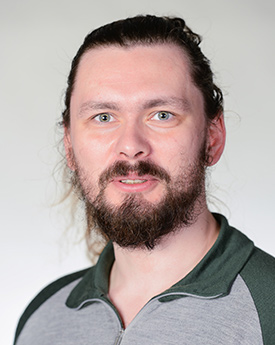
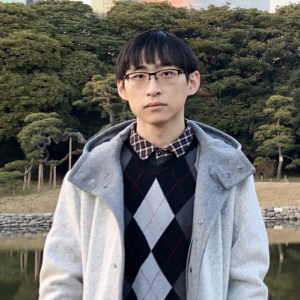
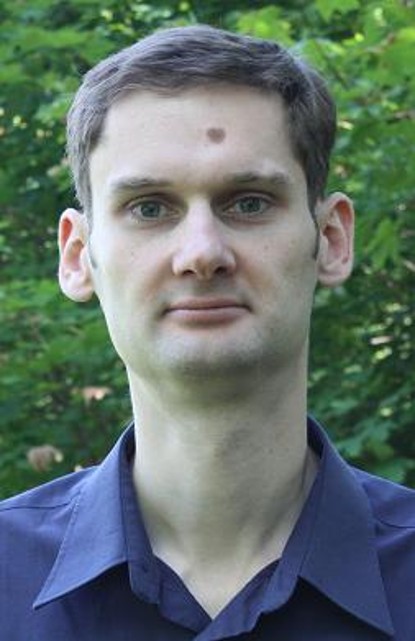
Prof. Dr. rer. nat. Reiner Creutzburg is a professor at the Brandenburg University of Technology Cottbus-Senftenberg in the Department of Computer Science and Media , specializing in Applied Computer Science with a focus on Algorithms and Data Structures . Research Focus: Cybersecurity, Machine Learning, Computer Vision, IoT Security, Open Source Intelligence (OSINT), and Critical Infrastructure Protection Recent Trends: Over 15 recent publications explore AI-driven cybersecurity solutions, image/video processing for event management, and secure voting systems using blockchain.
Prof. Dr. Karsten Borgwardt is Director of the Research Department of Machine Learning and Systems Biology at the Max Planck Institute of Biochemistry in Martinsried, Germany. A leading figure in the intersection of machine learning, bioinformatics, and systems biology, he heads a multidisciplinary team that develops novel computational methods to extract knowledge from large biomedical data sets. Research Mission: The Borgwardt lab converges big data analytics and biomedical research . Two overarching goals drive their work: (1) Automatically generating new biological and medical knowledge from massive data via state-of-the-art machine-learning algorithms. (2) Understanding the molecular underpinnings of biological system function, with emphasis on personalized medicine and biomarker discovery. Their methodological toolbox spans graph neural networks, kernel methods, conformal prediction, deep learning on sequences and structures, and topological data analysis . Application domains include antimicrobial resistance prediction, protease engineering, acute-kidney-injury forecasting, coronary-artery-disease diagnostics, single-cell spatial proteomics, and Long-COVID immune profiling. Recent Publication Landscape (2023-2025): The group’s latest articles demonstrate a clear trend toward translationally relevant machine learning . High-impact venues such as Nature Communications , Science , ICLR , and RECOMB feature their work on: Data-driven protein engineering using DNA-recorded deep mutational scanning. Guaranteed antimicrobial resistance detection from MALDI-TOF spectra via conformal prediction. Graph-based biomarker discovery with theoretical guarantees. Deep phenotyping of human iPSC-derived neuronal networks to study disease mutations. Multi-modal learning that fuses genomics, proteomics, and clinical data for patient stratification. These contributions collectively advance both the theoretical foundations and real-world deployment of machine learning in medicine. Scientific Awards & Honors: While no explicit award list is provided, the breadth and impact of publications, invited book chapters, and keynote-level conference presentations (ICLR, RECOMB, ISMB/ECCB) testify to sustained international recognition. Laboratory & Collaboration Ecosystem: The Borgwardt lab operates at the Max Planck Institute of Biochemistry —a world-leading biomedical research campus. Collaborations span multiple Max Planck centers, university hospitals across Europe, and international consortia such as the EyeConic study on optogenetics therapy. The lab’s open-source footprint includes the Multi-SConES R package for multi-task network-regularized feature selection, fostering reproducible science across the community.
Julia Kowalski serves as Professor and Chair of the Department of Methods of Model-Based Development in Computational Engineering at RWTH Aachen University's Faculty of Mechanical Engineering. She holds dual appointments on the Steering Committees for the university's Profile Areas in Production Engineering (ProdE) and Modeling & Simulation Sciences, operating from the Collective Building of Mechanical Engineering in Aachen, Germany. Her research integrates computational engineering with geohazard prediction and cryorobotics, developing advanced numerical methods for multiphysics problems including ice-penetration probes, landslide susceptibility mapping, and wind-energy systems. She pioneers machine learning applications that bridge physical models with engineering design while championing FAIR data principles across cryosphere and geohazard research domains. Current projects focus on model coupling techniques for environmental flows and space exploration technologies. Analysis of her 15 most recent publications reveals dominant trends in surrogate modeling for geotechnical stability, cryorobotic exploration systems, and FAIR data frameworks for environmental science. Her work consistently bridges machine learning with physical modeling across renewable energy, planetary science, and natural hazard mitigation through international collaborations like the TRIPLE project. Scientific awards are not documented in provided materials, though her leadership in DLR-funded space exploration initiatives and editorial roles in topical collections indicates significant recognition. As department chair, she oversees graduate advising and research direction within her computational engineering group, with active grant funding evidenced by German Space Agency collaborations and multi-institutional projects targeting geohazard prediction and cryosphere exploration. Her work demonstrates strong industry-academia-government partnerships. Kowalski leads the Methods of Model-Based Development research group, which operates as an integrated lab for numerical simulation, model coupling, and data-driven engineering solutions. Future work focuses on enhancing uncertainty quantification in geohazard models, advancing cryorobotic technologies for extraterrestrial environments, and developing robust frameworks for FAIR geoscientific data.
Lukasz Grabowski is Professor for Theoretical Mathematics at the Institute of Mathematics, Leipzig University, actively engaged in research, teaching, and academic outreach. His institutional affiliation places him within Germany's prominent research-focused university system. His research centers on advanced mathematical structures with three core emphases: Group Theory (discrete groups, group rings, l2-invariants, and finite approximations), Measured and Borel Combinatorics (expansion properties, Kazhdan property, Aldous-Lyons conjecture, and equidecompositions), and Algorithms/Complexity Theory for graphs and groups (including Lovasz Local Lemma applications). These interconnected fields address fundamental questions in theoretical mathematics with implications for computational theory. Professor Grabowski currently supervises PhD students Jardon Hector Sanchez (Aldous-Lyons conjecture and Kazhdan property in groupoids) and Onur Bilge (Borel and measurable combinatorics), building on mentorship of former postdocs Joan Claramunt and Tomasz Ciesla. He actively promotes mathematical talent through the Mathe-Zirkel program for secondary students and delivers specialized lectures internationally, as evidenced by his 2024 Bonn talk on unimodular random graphs and 2018 Madrid lecture notes on L2-invariants. He leads a dynamic research group within Leipzig University's Institute of Mathematics, fostering collaboration through seminar presentations and academic exchanges while maintaining strong institutional ties through departmental teaching responsibilities including Algebraic Topology courses.
Denny Wu is a Faculty Fellow at the New York University Center for Data Science and affiliated with the Flatiron Institute 's Center for Computational Mathematics. He completed his PhD in Computer Science at the University of Toronto and the Vector Institute for Artificial Intelligence , advised by Assistant Professors Jimmy Ba and Murat A. Erdogdu . Prior, he earned an undergraduate degree in Computational Biology from Carnegie Mellon University as a research assistant under Ruslan Salakhutdinov . His research focuses on Theoretical Machine Learning , particularly Neural Network Optimization , Generalization Performance , and High-Dimensional Statistics . His work has been presented at top conferences like NeurIPS , ICML , and AISTATS , alongside publications in journals such as Nature Protocols and Journal of Statistical Mechanics: Theory and Experiment . Collaborative efforts include partnerships with RIKEN AIP 's Deep Learning Theory Team and Microsoft's Deep Learning Group. Borealis AI Fellowship 2023 UChicago Rising Star in Data Science Denny actively collaborates with institutions like the Vector Institute , RIKEN AIP , and Flatiron Institute , focusing on mathematical frameworks for understanding deep learning systems.
Professor Michael Zaiser is a distinguished academic at Friedrich-Alexander-Universität Erlangen-Nürnberg (FAU), where he holds the Chair of Materials Simulation within the Department of Materials Science. Since 2012, he has led research in computational materials science, with prior appointments at the University of Edinburgh where he served as Professor of Mechanics of Materials (2008-2012), Reader (2005-2007), and Lecturer (2001-2005). He maintains significant international collaborations as a Visiting Professor at Imperial College London since 2014 and previously served as Adjunct Professor of Physics at Michigan Technological University (2006-2012). Professor Zaiser's research spans computational materials science with particular expertise in dislocation dynamics, plasticity, fracture mechanics, and hierarchical materials. His work bridges theoretical physics and practical materials engineering, developing innovative computational approaches to understand material behavior at multiple scales. His research group employs advanced simulation techniques including continuum dislocation dynamics, peridynamics, and phase field modeling to investigate fundamental mechanisms of material deformation and failure. Recent work has focused on disordered mechanical metamaterials, hierarchical structures, and the relationship between microstructure and mechanical properties. Analysis of Professor Zaiser's recent publications reveals a strong focus on multiscale modeling approaches that connect atomic-level phenomena with macroscopic material behavior. His work demonstrates increasing integration of machine learning techniques with traditional computational methods, particularly in predicting material failure. The research spans diverse material systems including metals, ceramics, foams, and composites, with consistent emphasis on understanding how microstructural features govern mechanical properties. A notable trend is the investigation of hierarchical and disordered structures to achieve superior mechanical performance. Professor Zaiser leads an active research group at FAU's Department of Materials Science, supervising numerous doctoral students and postdoctoral researchers. His work has been supported by various research grants enabling extensive computational resources and collaborative opportunities with international institutions. His research group maintains strong connections with the Max Planck Society, Fraunhofer Institutes, and Helmholtz Association, reflecting FAU's position as one of Germany's most research-intensive universities. The research laboratory under Professor Zaiser's leadership focuses on computational materials science, with particular emphasis on developing and applying advanced simulation methodologies. The group maintains close collaborations with experimental researchers to validate computational predictions and guide new experimental investigations. Recent work has increasingly incorporated machine learning approaches alongside traditional physics-based modeling to address complex materials challenges.
Daniel Mayer is a researcher affiliated with the Department of Physics at RPTU Kaiserslautern-Landau. His work focuses on quantum physics, particularly in ultracold atomic gases , nonequilibrium thermodynamics , and quantum simulation . Current position: Researcher in the Widera research group Email: dmayer@rhrk.uni-kl.de Research highlights include: Quantum thermometry using single atoms Spin dynamics in Bose-Einstein condensates Non-equilibrium processes in few-body systems Precision spectroscopy of rubidium atoms His publications (2015–2023) demonstrate expertise in quantum optics , atomic physics , and statistical mechanics . He has contributed to advancements in single-atom manipulation and quantum sensing technologies.
Dr. Felix Schmidt is a Researcher leading his own Arbeitsgruppe within Prof. Artur Widera's team in the Department of Physics at RPTU Kaiserslautern-Landau. His work focuses on experimental quantum physics with single atoms in ultracold quantum environments, contributing significantly to quantum sensing and non-equilibrium dynamics research. Dr. Schmidt's research centers on quantum physics with emphasis on single-atom manipulation in ultracold gases, quantum sensing using individual neutral atoms as probes, and non-equilibrium thermodynamics of dilute atomic systems. His experimental work explores spin dynamics in Bose-Einstein condensates, precision measurement techniques, and quantum simulation of complex phenomena like the Fröhlich polaron. This research bridges atomic physics, quantum information science, and condensed matter physics through innovative single-atom control methodologies. Analysis of his 14 publications from 2015-2020 reveals consistent contributions to high-impact journals including Physical Review Letters , Nature Physics , and Physical Review X . His work shows increasing focus on quantum sensing applications, with several papers featured in Physics viewpoint stories and covered by science media outlets like phys.org and Science Daily . Key trends include the development of single-atom thermometers, quantum probes for ultracold gases, and optimization of quantum gas production through evolutionary algorithms. Dr. Schmidt's research group operates within RPTU's Department of Physics, which recently secured significant funding (nearly 900,000 euros from Carl-Zeiss-Stiftung) for quantum sensor development targeting neurological disease research. The department maintains international collaborations, including a recent partnership with Politehnica University of Bucharest focused on experimental physics excellence. His work contributes to RPTU's growing reputation in quantum technologies and precision measurement.
Prof. Dr. Frank Aurzada is a Professor of Stochastics at the Department of Mathematics, Darmstadt University of Technology (Technische Universität Darmstadt). He serves as Vice Dean and leads the Stochastics Research Group (Arbeitsgruppe Stochastik). His office is located at Schlossgartenstraße 7, 64289 Darmstadt, Germany, in room S2|15 341. Professor Aurzada's research focuses on probability theory and stochastic processes, with particular expertise in persistence probabilities, fractional Brownian motion, Lévy processes, and Brownian motion. His work often examines first passage problems, asymptotic analysis, and path properties of stochastic processes. He has made significant contributions to understanding the behavior of processes under various constraints and conditions, including conditioned Brownian motion and persistence exponents in diverse settings. His recent publications demonstrate a consistent focus on theoretical aspects of stochastic processes with applications spanning from communication networks to interacting particle systems. The research trends show increasing sophistication in handling complex constraints on stochastic processes and developing perturbation methods for analyzing persistence phenomena. Professor Aurzada has organized numerous academic events, including multiple Spring Schools on specialized topics in probability theory dating back to 2014. His most recent and upcoming events include the Spring School on "Extrema of logarithmically correlated random fields and applications" (March 2025) and the Spring School on "Multiplicative chaos and cascades" (February 2024). For teaching, Professor Aurzada offers courses such as "Statistik I für Cognitive Science und Wirtschaftsingenieurwesen" and "Stochastische Prozesse" for the Winter 2025/2026 semester. His research group actively collaborates with institutions worldwide, including universities in Russia, France, and the United States.
Dr. Yariv Aizenbud is an Assistant Professor in the Department of Applied Mathematics at Tel Aviv University's School of Mathematical Sciences. His academic journey includes a Ph.D. in Applied Mathematics from Tel Aviv University and a Gibbs assistant professorship at Yale University's Applied Math Program. Research Focus: Statistical recovery of geometric structures Applications: Latent tree variable models, Manifold Learning, Randomized Algorithms in Numerical Linear Algebra Academic Roles: Organizes the Applied Math Seminar at Tel Aviv University Contact: Office: 108 Schreiber Building, Department of Mathematics, Tel Aviv University, Israel, 69978.
Prof. Niv Buchbinder is a faculty member in the Department of Statistics and Operations Research at the School of Mathematical Sciences, Tel Aviv University. His research centers on algorithmic solutions for combinatorial optimization in offline and online contexts, with significant contributions to primal-dual methodologies and algorithmic game theory. His academic background includes a Ph.D. in Computer Science from the Technion (2008) under Prof. Seffi Naor and an M.Sc. in Computer Science from the Technion (2003) under Prof. Erez Petrank. Key research areas encompass Combinatorial Optimization, Online Algorithms, Algorithmic Game Theory, Primal-Dual Methods, and Submodular Optimization, focusing on competitive analysis for problems like set cover, ad-auctions, and caching. Recent publications (2012-2015) reveal a concentrated effort in submodular optimization and online decision-making, with applications in advertising, resource allocation, and machine learning. These works consistently employ primal-dual frameworks to achieve strong competitive ratios in adversarial settings. Scientific recognition includes: Best Paper Award at ESA 2007 for “Online Primal-Dual Algorithms for Maximizing Ad-Auctions Revenue” Best Paper Award at FOCS 2011 for “A Polylogarithmic Competitive Algorithm for the k-Server Problem” No information is available regarding student advising or research grants. Similarly, details about laboratory facilities, research teams, or future projects are not provided in the source materials.
Dr. Akwum Onwunta is a researcher affiliated with the Max Planck Institute for Dynamics of Complex Technical Systems and holds a Ph.D. in Applied Mathematics from Otto von Guericke University, Magdeburg, Germany . His work bridges computational mathematics and quantitative finance. Research Focus: Uncertainty Quantification, Stochastic PDEs, Optimal Control, Numerical Linear Algebra, Tensor-based Algorithms, and Credit Risk Modeling. Onwunta's publications emphasize low-rank methods for solving high-dimensional problems in fluid dynamics and financial risk assessment. His expertise includes stochastic Galerkin systems and preconditioning techniques for unsteady PDEs with random inputs. Notable collaborations include work with Peter Benner and Martin Stoll on computational frameworks for uncertainty propagation in fluid mechanics. His academic output spans both theoretical and applied domains.
Dr. Hooman Latifi is a Researcher at the Institute of Geography and Geology within the Faculty of Philosophy at University of Würzburg, Germany. He also maintains an affiliation with the Faculty of Geodesy and Geomatics Engineering at K. N. Toosi University of Technology in Tehran, Iran, where he is listed as a staff member with the email address hooman.latifi@kntu.ac.ir. Dr. Latifi has been working at the Chair of Remote Sensing at University of Würzburg since June 2012. Dr. Latifi received his educational background in Iran and Germany: Doctoral studies (Dr. rer. nat) at Albert-Ludwigs-Universität Freiburg (2008-2011), funded by a DAAD scholarship under the supervision of Prof. Dr. Barbara Koch M.Sc. in Natural Resources from University of Mazandaran, Iran (2003-2005), with thesis titled "Evaluating Landsat ETM+ data for forest-ecotone-rangeland mapping in the timberline of northern forests of Iran" B.Sc. in Natural Resources from University of Guilan, Iran (1999-2003) Dr. Latifi's research focuses on the application of remote sensing technologies, particularly LiDAR and satellite imagery, to forest ecology and management. His work spans multiple areas including forest inventory, biomass estimation, biodiversity assessment, and environmental monitoring. He has made significant contributions to understanding forest structure through advanced remote sensing techniques, with particular emphasis on temperate forests in Europe and forest ecosystems in Iran. His research often involves multi-sensor data fusion, combining optical, hyperspectral, and LiDAR data to improve forest parameter estimation. Analysis of Dr. Latifi's publication record from 2005 to 2022 reveals a strong focus on forest remote sensing applications. His early work focused on forest type mapping in Iran using Landsat data (2005-2008). After his doctoral studies in Germany, his research expanded to include LiDAR applications for forest structure analysis in European forests (2010-2014). In recent years (2015-2022), his work has broadened to include multi-sensor approaches, biodiversity assessment, and applications in various forest ecosystems worldwide, including agroforestry systems in Africa and invasive species mapping. His publications appear in leading remote sensing and forestry journals such as Remote Sensing, Forests, and International Journal of Applied Earth Observation and Geoinformation. Dr. Latifi has collaborated extensively with researchers across multiple institutions, particularly with colleagues at University of Würzburg (especially Prof. Barbara Koch and Dr. Markus Heurich), as well as international partners in Iran, India, Chile, and Africa. His work demonstrates a progression from regional studies in Iran to increasingly global applications of remote sensing in forest ecology. At University of Würzburg, Dr. Latifi is part of the Earth Observation Research Cluster within the Institute of Geography and Geology. His work contributes to advancing the operational application of remote sensing technologies in forest inventory and ecological monitoring, with a particular focus on transitioning research methods to practical forest management solutions.
Bin Gao is an Associate Professor at the Academy of Mathematics and Systems Science (AMSS), Chinese Academy of Sciences. He holds a Ph.D. in Applied Mathematics (2019, University of Chinese Academy of Sciences) and a B.Sc. in Mathematics (2014, Sichuan University). His postdoctoral experience includes positions at UCLouvain (2019-2021) and the University of Münster (2021-2022). Research Interests: Riemannian optimization, tensor computation, parallel/distributed algorithms for orthogonality constraints, machine learning applications. Key Contributions: Development of retraction-free methods on Stiefel manifolds, preconditioned Riemannian algorithms, and geometric frameworks for symplectic eigenvalue problems. Article Trends: Recent work focuses on overcoming the curse of dimensionality via manifold-based optimization, including distributed algorithms for Stiefel manifolds, graph-regularized tensor completion, and second-order methods for symplectic structures. Keywords span numerical analysis, quantum information, and machine learning. Scientific Awards: 2021 Zhong Jiaqing Mathematics Award 2018 Best Student Paper Award (CSIAM) 2018 CAS Special President Scholarship 2017 National Scholarship for Doctoral Students (China) 2016 Honor Student Award (International Workshop on Modern Optimization and Application) Advising & Collaborations: Collaborates with researchers from UCLouvain, University of Münster, and AMSS. Mentors students in Riemannian optimization and tensor computation. Leads the popman research group.
Clélia de Mulatier is an Assistant Professor at the University of Amsterdam , affiliated with both the Institute for Theoretical Physics and the Informatics Institute . She leads research at the intersection of statistical physics, information theory, and computer science , focusing on theoretical and numerical methods for complex systems . Her work spans collaborations with experimentalists in neuroscience and biology , and she actively participates in educational programs across multiple Dutch universities. Research Labs : Computational Soft Matter Lab, Computational Science Lab Affiliations : Dutch Institute for Emergent Phenomena (DIEP), Netherlands Platform Complex Systems (NPCS) Her research develops minimally complex spin models for high-order data analysis , applying exact Bayesian model selection to uncover hidden variable communities in binary datasets. This work has produced open-source tools like MinCompSpin and MinCompSpin_Greedy for different system sizes. Publications demonstrate expertise in tensor networks for dimensional reduction , epidemic modeling , and branching random walks in confined environments . Teaching includes Python programming , complex systems theory , and statistical inference for physics students across multiple institutions. She serves as program committee member for International Conference on Computational Science and organizes academic discussions through initiatives like Behind the CV: story from a Physicist .