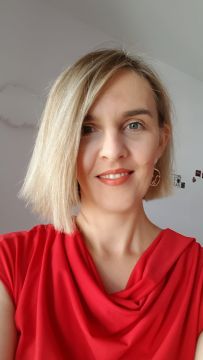
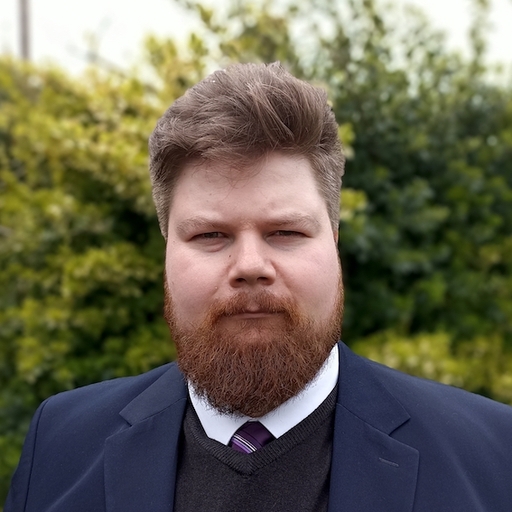
Artur Siemaszko is a Professor in the Faculty of Mathematics and Computer Science at the University of Warmia and Mazury in Olsztyn. He serves as a promoter for doctoral candidates and specializes in topological dynamical systems, ergodic theory, and classical/quantum stochastic processes. Department: Department of Analysis and Differential Equations Email: artur@uwm.edu.pl Research Interests: Topological Dynamical Systems Ergodic Theory Classical and Quantum Stochastic Processes Group Theory (Modular Groups) Scientific Contributions: His research spans integrability in geometric structures, spectral quantization of random walks, and the interplay between algebraic and topological properties in dynamical systems. Articles highlight applications in mathematical physics, computer science, and epidemiology. Grants & Resources: He confirms funding availability and infrastructure support for doctoral projects through the Department of Analysis and Differential Equations.
Vassilis D. Papaefstathiou is a researcher in computer architecture and high-performance computing, affiliated with the Department of Computer Science at the University of Crete and the Institute of Computer Science at FORTH-ICS. His work focuses on energy-efficient manycore systems, network-on-chip design, FPGA prototyping, and RDMA-based communication. His educational background includes a Ph.D. (2013), M.Sc. (2005), and B.Sc. (2002), all from the University of Crete. His research spans advanced topics in computer systems, including hybrid memory management, cache optimization, and scalable interconnects. His research interests include Computer Architecture , Network-on-Chip (NoC) , Reconfigurable Computing , Energy-Efficient Computing , RDMA , and High-Performance Computing . He has made significant contributions to FPGA-based prototyping of manycore systems and low-latency interconnects. His recent publications demonstrate a strong trend in optimizing on-chip networks, memory hierarchies, and communication mechanisms for performance and energy efficiency. Key areas include dual data-rate NoCs, hybrid memory systems with intelligent data migration, and RDMA-enhanced architectures. His work often integrates hardware-software co-design principles for scalable and efficient computing. HiPEAC Paper Award (2012) HiPEAC Paper Award (2016) HiPEAC Paper Award (2017) HiPEAC Paper Award (2020) Best Paper Award Finalist at IEEE/ACM NOCS 2018 He has advised several researchers and students, including Antonis Psistakis, Evangelos Vasilakis, and Ahsen Ejaz, who have co-authored significant publications with him. His collaborative projects include SARC, ExaNeSt, and ECOSCALE, often funded by EU initiatives or research councils. These projects focus on next-generation HPC systems, reconfigurable computing, and scalable architectures. He is a key contributor to the Formic FPGA prototyping platform and has worked extensively on RDMA-capable NICs, cache-integrated network interfaces, and virtualized communication systems. His work is deeply embedded in international research consortia and high-impact venues.
Walid Kamal Abdelbasset is a prominent academic researcher affiliated with Prince Sattam Bin Abdulaziz University in Saudi Arabia, with significant contributions to biological sciences, medical research, and physical therapy. His career spans institutions including Cairo University and the Faculty of Physical Therapy in Egypt. Research Interests Chemical and physical properties of biological fluids Bioactive metabolites evaluation Ultrasonic technology in food processing Medical condition treatment (epileptic seizures) Nanomaterials for wound healing Geriatric frailty indicators Publication Trends (2020–2022): Focus on interdisciplinary applications of physical therapy, chemical synthesis, and geriatric assessments Key technologies: laser therapy, ultrasonic processing, ionic liquid catalysis Targeted journals: Burns , Archives of Gerontology and Geriatrics , Photobiomodulation, Photomedicine, and Laser Surgery Grants & Sponsorships include funding from the Japan Society for the Promotion of Science and the Bill and Melinda Gates Foundation , with additional support from National Institutes of Health and King Saud University Deanship of Scientific Research .
Lech Duraj is a researcher at the Department of Algorithmics, part of the Faculty of Mathematics and Computer Science at Jagiellonian University in Kraków, Poland. His research focuses on computational complexity, combinatorics, and algorithm design, with notable contributions to graph theory and transportation systems optimization. He holds a doctoral degree from Jagiellonian University, with his thesis titled Optimal graph orientation problems , completed in 2010. His work spans theoretical computer science, including subquadratic algorithms, hypergraph properties, and geometric intersection graphs. He has collaborated with prominent researchers such as Grzegorz Gutowski, Jakub Kozik, and Adam Polak, contributing to projects like Colorings, cliques, and independent sets in graph classes and Development of innovative mathematical and IT models for intelligent transport systems . Dr. Duraj’s publications address topics ranging from dynamic pricing in ride-sharing to algorithmic lower bounds for sequence analysis. His grants include a 2020–2025 National Science Center project and a 2017–2020 initiative on transport systems. He is affiliated with the Algorithmics Research Group and actively participates in academic service and student mentorship.
Professor Adam Niesłony is a Full Professor at Opole University of Technology, working in the Department of Mechanics and Fundamentals of Machine Design within the Faculty of Mechanical Engineering. With extensive experience in materials science and fatigue analysis, he has established himself as a leading researcher in the field of structural durability under various loading conditions. His educational background includes Mechanical Engineering studies at Opole University of Technology (1998-2003). Prior to his current position, he served as Head of Department at the Science and Technology Park in Opole (2017-2018) and completed a PostDoc position at the Fraunhofer Institute for Structural Durability and System Reliability in Germany (2006-2007) through a Humboldt Research Fellowship. Professor Niesłony's research focuses on strength of materials and structures, numerical calculations in fatigue strength and FEM analysis, fatigue tests under random loading, and determination of fatigue strength in both time and frequency domains. His work bridges theoretical models with practical industrial applications, particularly in solving real-world engineering problems related to material durability. His extensive publication record shows a consistent focus on spectral methods for fatigue life assessment, multiaxial fatigue criteria, and the effects of non-Gaussian loading on material fatigue. Recent work emphasizes additive manufacturing materials, composite materials, and advanced methods for fatigue life prediction under complex loading conditions. Scientific Award of the Division IV of the Polish Academy of Sciences for research on fatigue damage evaluation using spectral methods (2010) Humboldt Research Fellowship for Postdoctoral Researchers at Fraunhofer Institute (2006) Professor Niesłony maintains an active research laboratory focused on fatigue testing and analysis, collaborating with numerous researchers across Europe. He has supervised numerous students and participates in international research projects, particularly those addressing industrial applications of fatigue analysis. His work with electromagnetic shakers for durability testing has contributed significantly to acceleration methods for vibration tests, benefiting multiple industries including automotive and aerospace sectors.
Dariusz Borkowski serves as an Assistant Professor in the Department of Computer Science at the Faculty of Mathematics and Computer Science, Nicolaus Copernicus University in Toruń, Poland. Dr. Borkowski's research spans computer and information sciences with specialized expertise in: Image processing and denoising techniques Artificial intelligence applications in image analysis Statistical methods and probability theory Stochastic processes including fractional Brownian motion Numerical methods and random fields analysis Addressing JPEG artifacts and inverse problems His scholarly output comprises 25 publications with a total impact factor of 3.513, accumulating a ministerial score of 391. Dr. Borkowski has completed 1 research project and received 1 notable achievement in his academic career. Total Impact Factor: 3.513 Total Ministerial Score: 391 Publications: 25 Projects: 1 He maintains professional presence through ORCID (0000-0002-7034-2263) and major academic databases including Scopus, Web of Science, and Europe PMC. Dr. Borkowski can be contacted via email at dbor@mat.umk.pl or by phone at +48 56 611 34 44 from his office in room E311.
Marta Szastok, Ph.D., is an Assistant Professor at SWPS University's Faculty of Psychology in Katowice, specializing in Clinical and Health Psychology. She combines academic teaching with private psychotherapy practice and is a certified cognitive-behavioral therapist trained at SWPS University (2017-2021). She contributes to research through the Emotion Cognition Lab at the Institute of Psychology. Education: Doctoral degree in Psychology from Jagiellonian University Her research focuses on cognitive aging, emotion processing, and political psychology. Recent work explores experiential avoidance mechanisms, gender disparities in STEM, and intersections between pandemic stress and climate activism. She has published in journals like Aging Neuropsychology and Cognition and presented at academic conferences. Key article trends show interdisciplinary work bridging cognitive neuroscience, political behavior, and social psychology. Her publications span schema processing theory, radical leadership dynamics, and gender equity research. She actively participates in the Polish Association for Cognitive and Behavioural Therapy (PTTPB) and contributes to team research awards, including winning a research poster contest at SWPS University.
Robert Pilch is a Professor at the Department of Machine Design and Operation within the Faculty of Mechanical Engineering and Robotics at AGH University of Science and Technology in Kraków. His research focuses on reliability engineering, preventive maintenance strategies, and safety integrity level (SIL) assessment of complex technical systems. Research Interests: Reliability assessment of technical systems Preventive maintenance optimization Adaptive maintenance strategies Network systems reliability Safety integrity level (SIL) modeling Simulation-based failure prediction Scientific Awards: No specific awards mentioned in provided materials. Contact: pilch@agh.edu.pl
Dr. Michał Cieśla is a Professor in the Department of Statistical Physics at Jagiellonian University. His research focuses on computer modeling across diverse domains, including random packing, liquid crystals, polymers, and socio-economic systems. He holds consultations on Thursdays and can be reached at michal.ciesla@uj.edu.pl. Research interests include: Computer modeling of physicochemical processes (diffusion, adsorption) Biological systems modeling (DNA) Image processing and astrophotography Cognitive science applications Recent work emphasizes diffusion dynamics in confined geometries, agent-based game theory models, and cooperative adsorption phenomena. His research projects explore nematic phase symmetries, maximal packing in condensed matter, and symmetry-breaking mechanisms in liquid crystals. Advising and grants: Actively involved in tutoring master's theses and collaborative programming workshops. No specific grants mentioned in available materials. Labs/teams: Engaged in collaborative initiatives through the Department of Statistical Physics, though no dedicated lab names specified.
Prof. Ewa Skubalska-Rafajłowicz is a faculty member at Wrocław University of Science and Technology, where she holds the position of Professor in the Department of Computer Engineering within the Faculty of Information and Communication Technology. Her office is located at building C-3, room 212, ul. Janiszewskiego 11/17, 50-372 Wrocław, and she can be contacted via email at ewa.skubalska-rafajlowicz@pwr.edu.pl. Research Focus: Her core expertise spans dimensionality reduction, random projection methodologies, and neural network optimization, with applications in computer vision and statistical learning. Key domains include: High-dimensional data analysis using random projections Image processing for classification and feature extraction Change-point detection in multivariate data streams Neural network training strategies and optimization Privacy-preserving machine learning techniques Publication Trends (2013-2025): Recent works demonstrate strong emphasis on scalable algorithms for image/data processing, with evolving applications in biomedical imaging (tissue classification), security (face recognition), and geospatial analysis. Theoretical contributions in classifier stability and dimensionality reduction foundations remain consistent themes.
Professor Przemysław Perlikowski is a leading academic in the field of nonlinear dynamics and synchronization at the Faculty of Mechanical Engineering, Lodz University of Technology. He has held visiting positions at Humboldt University of Berlin and National University of Singapore. His research spans mechanical systems, chaos theory, and vibration control, with a focus on synchronization phenomena and complex dynamical behavior. PhD in Mechanics (2007), Lodz University of Technology Habilitation (D.Sc) in Mechanics (2012), Lodz University of Technology His research interests include synchronization in nonlinear oscillators, dynamics of coupled mechanical systems, vibration damping technologies (e.g., inerter-based tuned mass dampers), and chaotic behavior in engineering applications. He has contributed extensively to understanding synchronization thresholds, multistability, and energy harvesting from mechanical oscillations. The 15 most recent publications highlight his work on vibro-impact systems, sample-based analysis of multistable systems, and optimization of damping devices. Key topics include attractor switching, dynamic response under harmonic excitation, and modeling of nonlinear couplings in pendula and oscillators. Recipient of Start scholarships, Marie Curie Fellowships, and multiple awards from Polish science institutions Principal investigator for projects on synchronization and Lyapunov exponent estimation As a reviewer for journals like Nonlinear Dynamics and Chaos , he contributes to advancing nonlinear science. His collaborations with institutions in Germany, Singapore, and the UK underscore his international impact.
Milena Bieniek (PhD habilitated) is an Adjunct Assistant Professor at the Department of Research Methods in Management , Faculty of Economics, University of Maria Curie-Skłodowska. With academic qualifications in mathematics (MA 1999, PhD 2006), her research spans inventory management, supply chain optimization, and stochastic demand modeling. Specializes in Vendor Managed Consignment Inventory systems Expertise in Newsvendor Problem with demand shocks Investigates organic food market dynamics and consumer behavior Develops stochastic location optimization models Her publications appear in high-impact journals like Operations Research and Decisions , Sustainability , and European Journal of Operational Research , with total citations (GS: h-index 9, Scopus: h-index 8). Her work combines mathematical rigor with practical applications in logistics and economic policy. Current research explores pandemic-type demand shocks in inventory systems, barter exchange mechanisms, and EU Green Deal implementation challenges. She uses probabilistic models, statistical analysis, and game theory to address supply chain complexities.
Dr. Agata Kozina is affiliated with the Department of Process Management at Wrocław University of Economics. Her work focuses on applying machine learning and data science techniques to solve complex business and financial problems. She specializes in areas such as decision support systems, deep learning algorithms, and predictive analytics for industry applications. Her research interests include optimizing business processes through cognitive technologies, analyzing financial risks using machine learning models, and leveraging AI in decision-making frameworks. Notable projects involve developing predictive models for leasing default analysis, public transportation delays, and food demand forecasting. Dr. Kozina has contributed to advancements in data transformation techniques for deep learning, including studies on feature encoding methods like One Hot Encoding and the Hashing Trick. Her interdisciplinary work bridges computer science with economics, finance, and business management.
Dr. Monika Kornacka is an Assistant Professor and psychologist specializing in emotional regulation in mood disorders, repetitive negative thinking, and cognitive-behavioral therapy. She holds roles as Deputy Director of the Institute of Psychology and Head of the Emotion Cognition Lab (ECL) at SWPS University's Faculty of Psychology in Katowice. Her research focuses on transdiagnostic processes, mental disorder risk factors, and the application of new technologies like VR, mobile apps, and eye-tracking in clinical psychology and psychopathology research. Funded by grants from the National Science Centre (NCN) and NAWA, her work includes developing tools like the CBT Dynamic Network App for symptom analysis. She teaches clinical psychology, methodology, and CBT, and advises master’s theses. Research Interests: Emotional regulation in mood disorders Repetitive negative thoughts and maladaptive daydreaming Cognitive-behavioral therapy (CBT) Executive function training New technologies in clinical interventions Awards: Secured a EUR 285K NCBiR grant for CBT Dynamic Network App development, recognized as a top NCN grant recipient, and led a winning research poster team. Her work bridges psychology with interdisciplinary collaboration in technology and health. Labs/Teams: Leads the Emotion Cognition Lab, which integrates psychologists, IT specialists, engineers, and UX designers to advance tech-driven psychological research and interventions.
Jakub Klikowski is an Assistant Professor in the Department of Computer Systems and Networks at the Faculty of Electronics, Wrocław University of Science and Technology. He has been employed since October 2018 and earned his PhD in engineering and technical sciences in March 2022 for his dissertation on ensemble methods for imbalanced data stream classification. He is actively involved in research and teaching, contributing to multiple research teams including the Machine Learning Team and Advanced Data Analysis Methods Team. Research Interests: Classification of imbalanced and streaming data Ensemble learning and one-class classification Natural language processing (NLP) Concept drift detection and adaptive learning Graph neural networks and spam/disinformation detection Multi-criteria optimization and evolutionary algorithms His research is primarily conducted within the IDSTREAM and GEOM projects, focusing on developing robust classifiers for challenging data environments. His recent work emphasizes hybrid preprocessing, ensemble weighting, and drift detection mechanisms. Publication Trends: His publications from 2019 to 2022 reveal a consistent focus on improving classification performance in imbalanced data streams using ensemble techniques, preprocessing strategies, and drift detection. Key themes include weighted bagging, Hellinger distance, centroid analysis, and genetic optimization, all applied to real-world decision-making tasks. Scientific Awards: Rector of Wrocław University of Science and Technology Award (2020) Distinction in the Secundus program for young scientists (2023) Honorable Mention for doctoral dissertation (2022) Advising and Grants: Dr. Klikowski supervises diploma theses on topics such as NLP, text summarization, hate speech detection, and graph neural networks. He is involved in research projects including IDSTREAM and GEOM, which support his work in data stream classification and optimization. He collaborates with leading researchers like Prof. Michał Woźniak and Prof. Robert Burduk. Labs and Teams: He is an active member of the Machine Learning Team, Advanced Data Analysis Methods Team, and other research groups at the Department of Computer Systems and Networks. These teams foster interdisciplinary research in AI, data science, and network optimization.