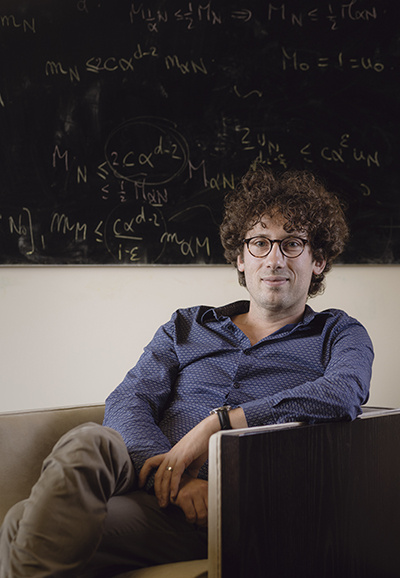
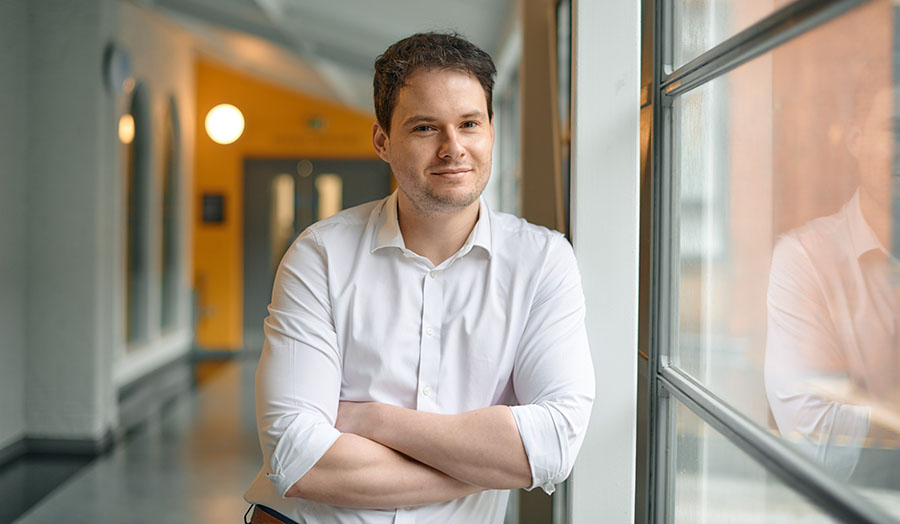
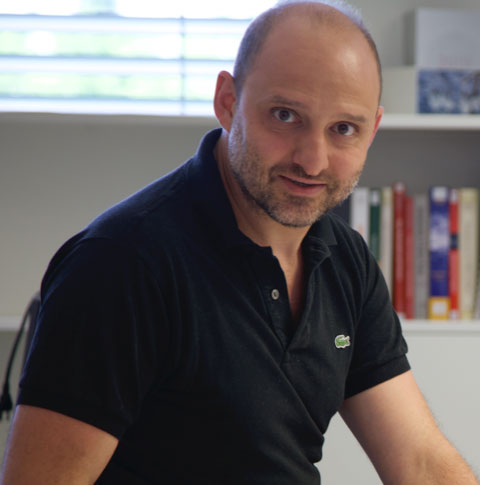
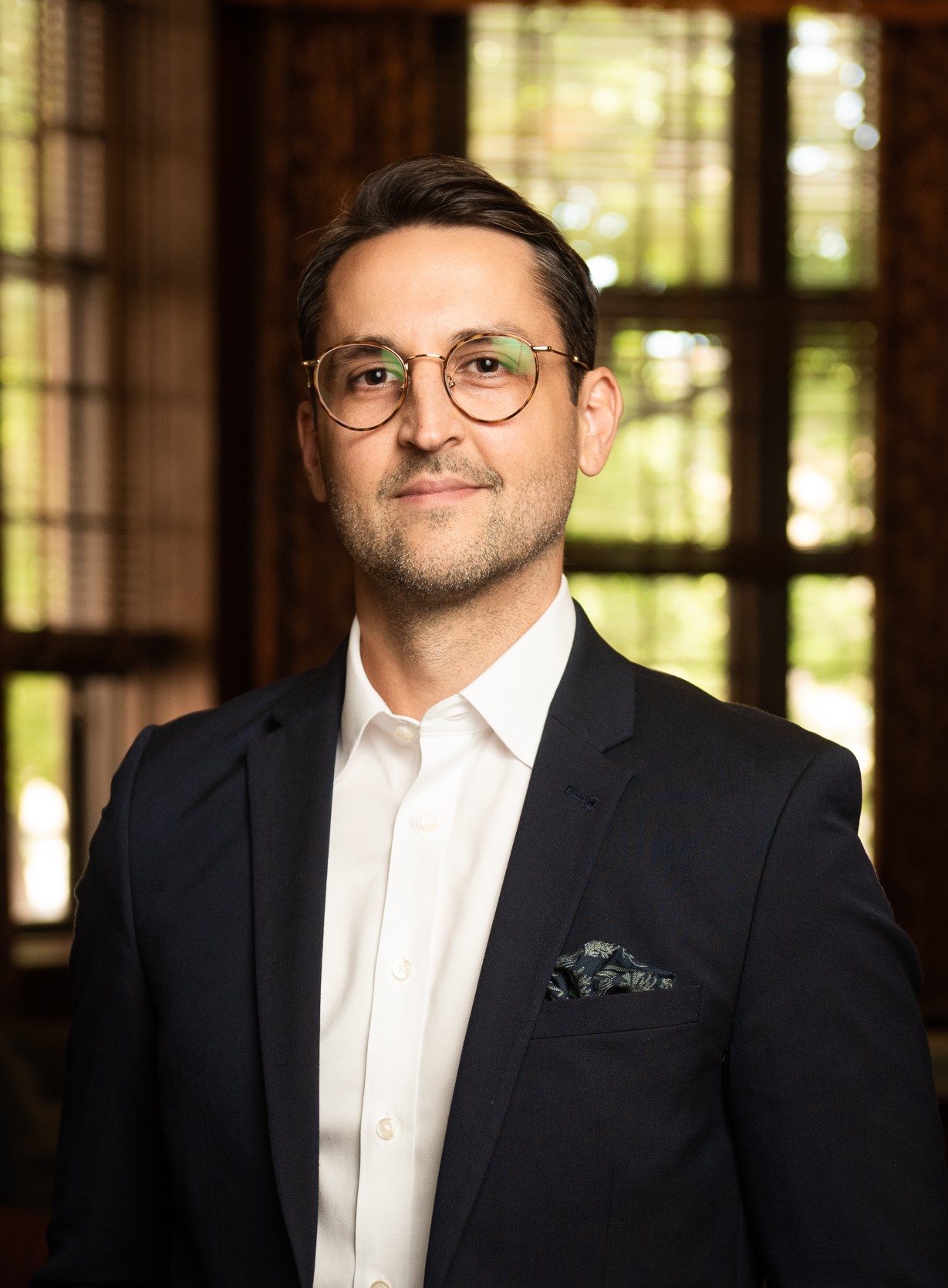
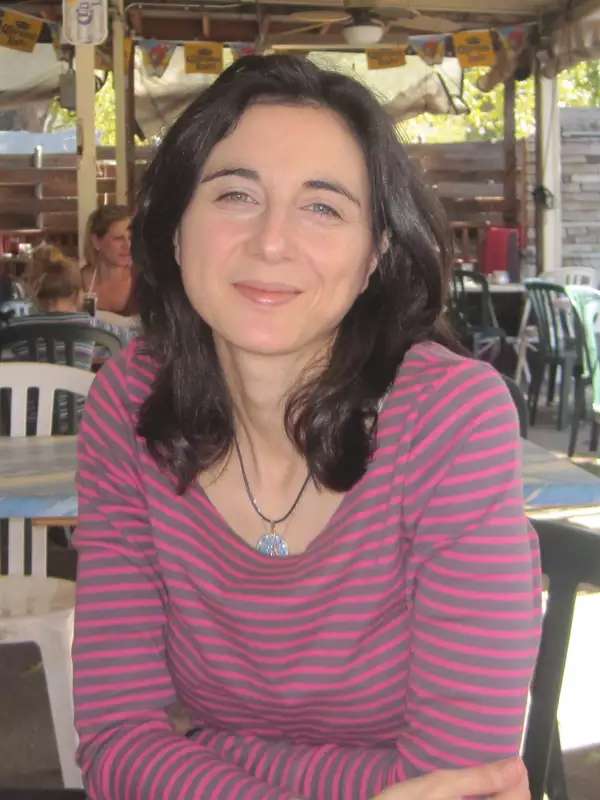
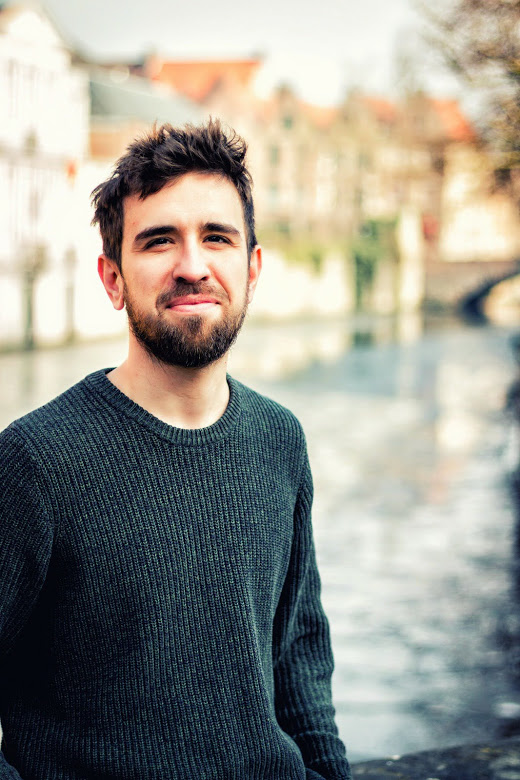
Hugo Duminil-Copin is a Full Professor at the University of Geneva and a permanent professor at the Institut des Hautes Études Scientifiques (IHES) since 2016. His research focuses on Mathematical Physics , Combinatorics , and Probability Theory . Education : École Normale Supérieure (ENS) Paris, University of Paris-Saclay Awards : 2022 Fields Medal for work in statistical physics Research Trends : Probabilistic aspects of lattice models Phase transitions and critical phenomena Conformal invariance and percolation theory Collaborations : Active collaborations with researchers such as R. Panis, S. Goswami, I. Manolescu, and others. Teaching : Offers courses in mathematical physics and probability at the University of Geneva. His recent publications emphasize critical models, random-cluster models, and Gaussian free fields, with applications in planar and high-dimensional systems. He supervises doctoral students including Emile Averous , Aman Markar , and Tiancheng He .
Noam Berger Steiger is a Professor of Stochastic Processes at the Technical University of Munich (TUM), within the School of Computation, Information and Technology and the Department of Mathematics. His office is located at Parkring 11, Garching bei München, and he can be contacted at noam.berger@tum.de. His research focuses on stochastic processes in random environments, percolation theory, and random walks. Key contributions include asymptotic analysis of preferential attachment graphs, quenched invariance principles for non-elliptic random walks, and slowdown phenomena in ballistic random motion. His work bridges theoretical probability with applications in complex systems. Analysis of his 2012-2014 publications reveals consistent focus on random walk dynamics in disordered media, with significant results on ballisticity conditions, trail detection in random scenery, and distributional limits. His research employs advanced probabilistic techniques published in top-tier journals including Annals of Probability and Probability Theory and Related Fields . Professor Berger has supervised 11 theses: 5 bachelor's theses at TUM covering Brownian motion properties and investment strategies for risk-averse investors, and 6 master's theses (3 at TUM, 3 at Hebrew University) on topics including return times for random walks, mass transport principles, and spin-glass percolation. His current teaching includes Markov Chains, Probability on Graphs, and Brownian Motion seminars. He is an active member of TUM's Probability Theory research group, which participates in the TUM-ICL Mathematical Sciences Hub and Exzellenzcluster MCQST. The group collaborates on quantum science initiatives while maintaining strong foundations in classical probability theory and stochastic analysis.
Prof. Dr. Wolfgang Nejdl is a Professor at the Institute for Data Science within the Faculty of Electrical Engineering and Computer Science at Leibniz University Hannover. He serves as Executive Director of the L3S Research Centre and Leibniz Forschungszentrum Inclusive Citizenship. Web Science Information Retrieval Artificial Intelligence Deep Learning His recent research focuses on AI applications in medicine , multimodal data fusion , and ethical AI systems . Projects include CAIMed (AI in Causal Medicine) and DAISEC (AI & Cybersecurity). His publications span conferences like AAMAS, WWW, and SIGIR. Notable awards include membership in the National Academy of Science and Engineering (acatech) . Former students hold positions at institutions like Stanford, TU Dresden, and ETH Zürich. Current projects involve climate resilience AI , federated learning for healthcare , and quantum-inspired data science .
Paras N. Prasad is a SUNY Distinguished Professor with joint appointments in Physics, Chemistry, Medicine, and Electrical Engineering at the University at Buffalo. He serves as Executive Director of the Institute for Lasers, Photonics and Biophotonics (ILPB), which he founded in 1999. Dr. Prasad holds the Samuel P. Capen Chair of Chemistry and has pioneered interdisciplinary research at the interface of photonics, nanotechnology, and biomedicine. Education: BSc, Bihar University, India (1964) MSc, Bihar University, India (1966) PhD, University of Pennsylvania (1971) Postdoctoral Fellow, University of Michigan (1971-74) Research Focus: Dr. Prasad's multidisciplinary research spans photonics, nanophotonics, and biophotonics, with emphasis on nonlinear optical processes in nanostructured materials. His work develops photonic technologies for information processing, medical imaging, and cancer therapy through nanoparticle-based drug delivery systems and diagnostic platforms. The ILPB laboratory features state-of-the-art instrumentation for advanced optical research. Publication Trends: Recent articles demonstrate strong focus on nanomedicine applications, particularly cancer theranostics using functional nanoparticles. Key themes include drug delivery systems, chiral photonic materials, bioimaging technologies, and nanoparticle synthesis techniques. The research consistently bridges fundamental materials science with translational medical applications. Honors and Awards: SPIE Gold Medal (2016) IEEE Photonics Society William Streifer Award (2021) American Chemical Society Peter Debye Award (2018) OSA Michael Feld Biophotonics Award (2017) IEEE Pioneer Award in Nanotechnology (2017) Fellow of National Academy of Inventors (2016) Guggenheim Fellowship (1997) Leadership: As ILPB Executive Director, Dr. Prasad leads multidisciplinary teams developing photonic technologies with applications in healthcare, energy, and communications. His research has generated nine spin-off companies, including Nanobiotix currently in advanced cancer therapy trials.
Dr. Mark Thompson is a Senior Lecturer in Psychology and Researcher of Sport Psychology at London Metropolitan University's School of Social Sciences and Professions. He holds a PhD from the University of Hull and is a Fellow of the Higher Education Academy (FHEA). His academic work bridges sport psychology, healthcare rehabilitation, and youth athlete development. Dr. Thompson's education includes a PhD in Psychology from the University of Hull. His research focuses on emotional processes in elite athletes, doping propensity in youth sports, and post-COVID-19 patient rehabilitation. Notable projects include NHS-funded studies on telerehabilitation and collaborations with the International Olympic Committee and World Anti-Doping Agency. Research Interests: Psychophysiological responses to stress in sports Emotional regulation strategies among athletes Anti-doping education and youth athlete behavior Telehealth applications in post-hospitalization recovery His publications emphasize qualitative methodologies, exploring topics like athlete performance under stress, doping prevention programs, and healthcare professional perspectives on self-management approaches. Awards: Fellow of the Higher Education Academy (FHEA). Dr. Thompson has delivered presentations at major conferences such as the American College of Sports Medicine and contributed to media discussions on doping in elite sport via LoveSport Radio. His teaching spans foundational psychology to advanced modules like cognition and behavior, often serving as module leader.
Vincent Dufour-Décieux is a researcher at the Professorship for Energy and Process Systems Engineering at ETH Zürich , focusing on developing computational methods for material screening in separation processes and global net-zero transitions. He earned his Master's in Materials Chemistry from Ecole Polytechnique (France) and a PhD in Materials Science from Stanford University , where he pioneered statistical methods combining Kinetic Monte Carlo and random graph theory to study planetary diamond formation. Research Highlights: Application of Classical Density Functional Theory (cDFT) for 100x faster adsorption property predictions in porous materials Development of science-based definitions for "hard-to-abate" emissions to guide climate action prioritization Integration of Coulombic interactions in cDFT for CO2 adsorption accuracy Article Trends : His work spans computational materials science (cDFT, random graph theory) and climate policy analysis, with recent publications in Joule , AIChE Journal , and Physical Review E . These studies emphasize scalable solutions for carbon capture, material screening efficiency, and accurate thermodynamic modeling. Collaborations : Active in international conferences (FOA15, MolMod, Gordon Research Conference) and cross-institutional projects with teams at Stanford, ETH Zürich, and industry partners.
Daniel Frischemeier is a Professor of Mathematics Didactics with a focus on Primary Education at the University of Münster's Faculty of Mathematics and Computer Science. He has established himself as a leading researcher in statistics and data science education for primary school students, with extensive contributions to educational methodology and teacher training. University of Münster (2021-present) TU Dortmund (2020-2021) University of Paderborn (2009-2020) Ludwig-Maximilians-Universität München (2017-2018) Dr. Frischemeier completed his doctoral studies at the University of Paderborn with a dissertation on statistical thinking and research using TinkerPlots software. His educational background includes graduate studies in Mathematics and undergraduate studies in Mathematics and Physics for teaching at various school levels. His research focuses on the design and testing of teaching-learning environments for primary mathematics education, particularly in the areas of data analysis, probability, and statistics. He conducts qualitative analysis of learners' cognitive processes related to the guiding principle of 'data and chance' in primary education. His work also includes the design and evaluation of teaching materials in data science and civil statistics, the use of learning videos to promote process-related skills, and the implementation of Fermi tasks and computer science education within primary mathematics lessons. Analysis of Dr. Frischemeier's recent publications reveals a strong emphasis on data literacy development in primary education, with increasing focus on the integration of digital tools and the conceptual understanding of data as models. His work bridges mathematics education with emerging fields of data science, addressing both theoretical frameworks and practical classroom applications. The research demonstrates a progression from basic statistical concepts toward more complex data modeling approaches suitable for young learners. Elected member of the International Statistical Institute (ISI) Chair of the Local Organizing Committees for IASE Satellite 2025 Conference Council-Member of the International Statistical Institute Special Edition Editor of the Statistics Education Research Journal Member of International Program Committees for major statistics education conferences Co-Leader of CERME Thematic Working Group 5 on Probability and Statistics Education Dr. Frischemeier serves in numerous editorial capacities and review roles for prominent journals in mathematics and statistics education. He leads significant research projects including 'Promoting Data Science Education for Teacher Education at the University level (DataSETUP)' and 'Data Science Education in STEAM for Civic Engagement and Social Justice from the Early Years (DataScEd4CiEn)'. His work has substantial impact on teacher education programs and curriculum development in statistics and data science for primary schools. He is actively involved in the development and leadership of the Math Center Münster (MaZ), which promotes mathematical potential for all students. His team includes numerous research assistants and doctoral candidates working on various aspects of mathematics education research, particularly focusing on data literacy and statistical reasoning in primary education contexts.
Pietro de Anna is an Associate Professor at the Institute of Earth Sciences (ISTE), University of Lausanne, since August 2021. He holds an Italian nationality and completed a Master's in Theoretical Physics (2009) at the University of Florence, followed by a PhD in Earth Sciences at the University of Rennes 1 (2012). His research focuses on reactive transport in porous media, filtration, and interactions between bacteriological activity and flow dynamics. He directs the Environmental Fluid Mechanics Laboratory since 2015, employing microfluidics, numerical simulations, and theoretical models to study coupled physical, biological, and chemical mechanisms in confined systems. He has published 21 peer-reviewed articles, teaches environmental science courses at the Bachelor's and Master's levels, and supervised two PhD theses and four postdoctoral researchers. His work includes investigations into microbial biomass accumulation in porous media, diffusion-limited mixing, and biocementation processes. Key research themes are spatial heterogeneity effects, chemotaxis, and quorum sensing in microbial systems. He has pioneered methods combining microfluidics with microscopy to analyze transport at pore scales.
Stefano Leonardi is a Full Professor in the Department of Computer, Control and Management Engineering Antonio Ruberti at Sapienza Università di Roma. His research focuses on Algorithm Theory, Algorithms and Data Science, and Economics and Computation. He leads the ERC Advanced Grant project AMDROMA, exploring algorithmic mechanisms for online markets. He has held roles as Conference Chair for STOC 2021, WWW 2015, and FUN 2018, and coordinates the Sapienza School of Advanced Studies (2016-2018). His work spans approximation algorithms, online algorithms, and mechanism design. Awards include the ERC Advanced Grant and EATCS Fellowship. His research interests emphasize foundational algorithmic problems in web-based markets, leveraging rigorous design and large-scale data analysis. Recent projects include ALGADIMAR (PRIN 2019-2022) for digital market algorithms. He chairs the Highlights of Algorithms conference series and serves on program committees for top venues like EC, ICALP, and SODA. His lab focuses on web algorithmics and data mining, addressing challenges in online labor markets and fair division. Leonardi's academic contributions include over 100 publications, with recent work on fair algorithms, prophet inequalities, and mechanism design in auctions. He has pioneered methods for submodular optimization, online learning, and multi-agent systems. Grants and awards reflect his leadership in bridging theory with real-world applications, particularly in digital economies. Grants: ERC Advanced Grant (2018-2023), PRIN ALGADIMAR (2019-2022) Leadership: Chair of ACM STOC 2021, WWW 2015, and 9th FUN Conference Labs/Teams: Laboratory on Web Algorithmics and Data Mining Key Projects: AMDROMA (algorithmic mechanisms), ALGADIMAR (digital markets)
Professor Denis Doorly is a Professor of Fluid Mechanics in the Department of Aeronautics at Imperial College London's Faculty of Engineering. His research focuses on biomedical fluid mechanics, particularly respiratory and cardiovascular systems, with expertise in computational fluid dynamics (CFD) and aerosol transport. He has published extensively on nasal airflow modeling, cardiovascular MRI simulations, and aerosol dynamics in medical contexts. Key contributions include CFD cohort studies on nasal decongestion effects, benchmarking models for SARS-CoV-2 transmission, and ventilator strategies during the pandemic. Research interests span biological fluid mechanics, biomedical flows, and medical device design. His work integrates computational modeling with clinical applications, addressing issues like tracheal compression, myocardial perfusion, and aerosol extraction during surgeries. Collaborations include studies on isolated heart models and particle deposition in respiratory systems. Affiliations include the Biological Fluid Mechanics and Biomedical Flows groups at Imperial. His publications (139+ articles) highlight interdisciplinary applications of fluid mechanics to healthcare challenges.
Jeffrey Kennedy is an Assistant Professor at the Faculty of Law, McGill University. His research focuses on criminal law and theory, emphasizing democratic ideals in criminal justice, judicial ethics, punishment, and victim participation. He also explores democracy in legal education and academic governance, supported by grants and recognized with awards like the 2021 Stan Marsh Award and 2024 John W. Durnford Excellence in Teaching Award. Education: D.C.L. (McGill, 2020), LL.M. (McGill, 2014), LL.B. (Leicester, 2012), B.A. (Queen’s, 2010). Former roles include Senior Lecturer at Queen Mary University of London (2018–2023) and Director of the Criminal Justice Centre. Research spans criminal sentencing, democratic legitimacy, and institutional reform. Key works include Deliberative Sentencing (under contract) and articles in Criminal Justice Ethics and Studies in Higher Education . Teaching excellence awards highlight his impactful pedagogy. Awards include national recognition for teaching and contributions to democratic innovations in universities. His work bridges theory and practice, influencing criminal justice reform and academic governance policies.
Daniela De Silva is the Olin Professor of Mathematics and Chair of the Department of Mathematics at Barnard College, Columbia University. She holds a B.A. from the University of Naples Federico II and a Ph.D. from the Massachusetts Institute of Technology (MIT). Her research focuses on partial differential equations (PDEs), particularly free boundary problems and geometric analysis. She teaches advanced courses such as Calculus and Analysis at Barnard and organizes the Geometry and Analysis seminar at Columbia University. Her work explores regularity theory for free boundaries, phase transitions, and harmonic analysis. Notably, her contributions include studies on energy-minimizing free boundaries and monotonicity formulas. De Silva has also contributed to nonlinear Schrödinger equations and has held academic positions at institutions like Johns Hopkins University and MIT before joining Barnard in 2007. Her research interests span theoretical and applied aspects of PDEs, with a focus on geometric implications and singularities. While her work has been featured in prestigious journals like Comm. on Pure and Applied Math , Duke Math. J. , and Indiana Univ. Math. J. , she remains active in academic outreach, including discussions on topics like the mathematics of melting ice and the significance of π in popular media.
Professor Vitali Wachtel of Bielefeld University's Faculty of Mathematics specializes in advanced stochastic processes, probability theory, and their applications in mathematical modeling. Since 2021, he holds a W3 Professorship and serves as Principal Investigator in CRC 1283 'Taming uncertainty and profiting from randomness and low regularity in analysis, stochastics and their applications' since 2023. Chaired Examination Boards for Bachelor & Master Business Mathematics Member, Bielefeld Graduate School in Theoretical Sciences Research focus: Markov processes, random walks in cones, branching processes Research Trends: His recent work spans critical multitype branching in random environments (2025), asymptotic expansions for conditioned random walks (2024), and invariance principles for integrated processes. He explores connections between stochastic processes, combinatorial structures, and risk modeling with level-dependent premiums. Awards: Feodor Lynen Research Fellowship (2017), Alexander von Humboldt Foundation Teaching: Coordinates modules including 'Stochastic Processes' (24-M-PT-STP) and 'Introduction to Probability Theory' (24-B-EW-5). Active in curriculum development and academic governance through multiple university committees.
Michele Salvi is an Associate Professor in Mathematics at Università degli Studi di Tor Vergata in Rome. He previously held a Marie Skłodowska-Curie fellowship, conducting research in Berlin, Munich, and Paris. His work focuses on Probability Theory, with emphasis on random processes in random media, random graphs, and statistical mechanics, bridging applications in Physics, Computer Science, and Biology. Random processes in random media Random graphs Mathematics of Neural Networks Stochastic homogenization Mixing times for Markov chains Statistical mechanics Salvi’s recent publications highlight interdisciplinary trends, particularly in the spectral analysis of deep neural networks, scale-free percolation dynamics, and spanning tree geometry in random environments. His collaborations span Europe, with projects involving probabilistic models in epidemiology, reinforcement learning, and stochastic homogenization. He has received the Marie Skłodowska-Curie fellowship, reflecting his international research experience. His work is aligned with the Department of Mathematics at Tor Vergata, which holds the "Department of Excellence" MatMod@TOV 2023-2027 grant.
Jennifer Neville is a Senior Principal Researcher at Microsoft Research Redmond and holds the Samuel Conte Chair Professor of Computer Science and Statistics at Purdue University. With over 100 publications and 10K citations, her research spans data mining, machine learning, and AI algorithms for relational and networked domains including social networks, epidemiology, and web analytics. Education: BS in Computer Science, University of Massachusetts Amherst (2000) MS in Computer Science, University of Massachusetts Amherst (2004) PhD in Computer Science, University of Massachusetts Amherst (2006) Her work focuses on relational learning techniques that exploit connections between entities to enhance pattern discovery. Recent research explores large language models (LLMs), emphasizing alignment with user intent through interaction at scale, while addressing statistical biases from graph structures. Selected scientific awards include the NSF Career Award (2012), ICDM Best Paper (2009), and IEEE’s 10 to Watch in AI (2008). She served on the AAAI Executive Council (2015-2018) and chaired multiple conferences including SIAM Data Mining (2019) and ACM Web Search (2016). Contact: neville@cs.purdue.edu jenneville@microsoft.com