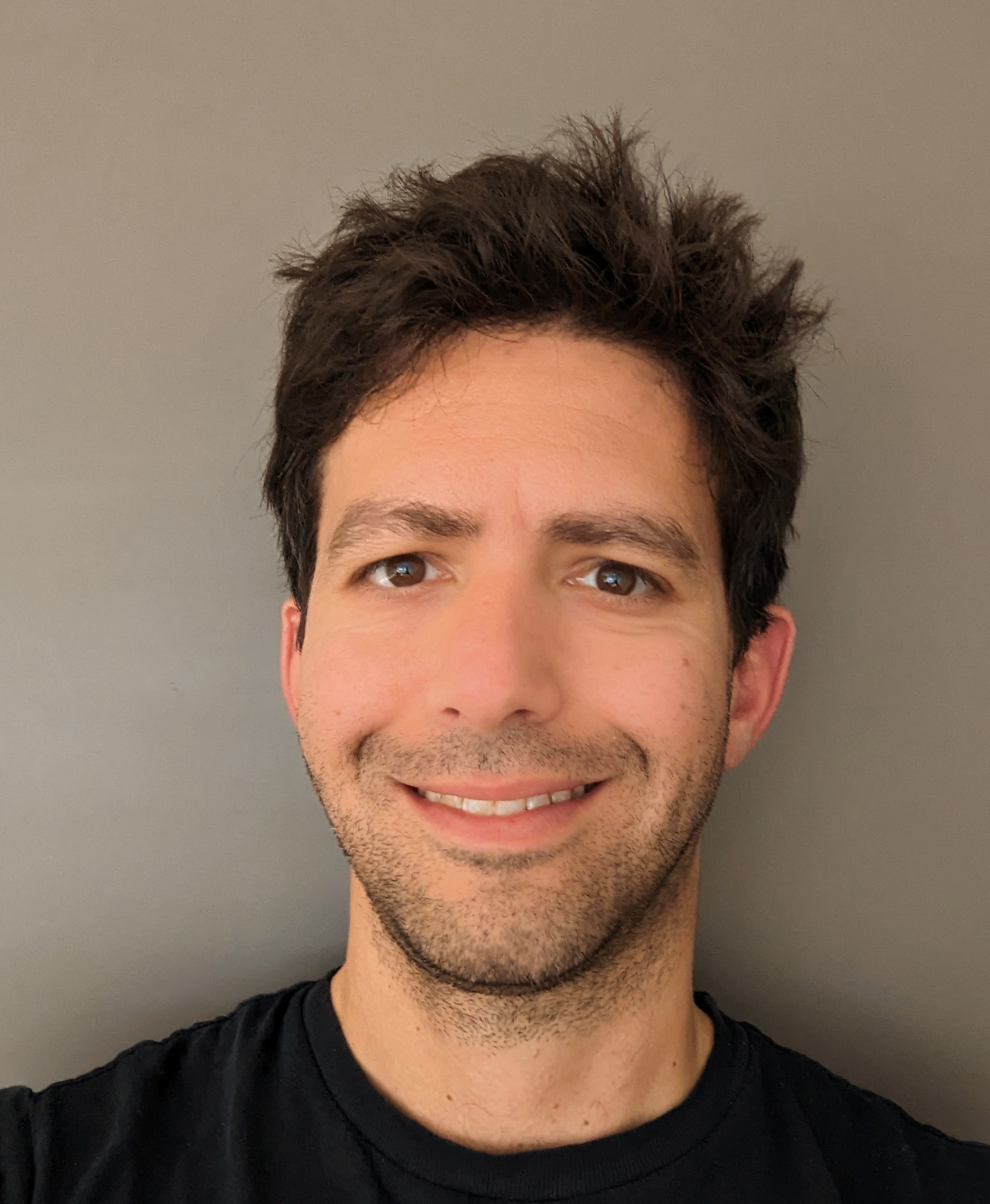
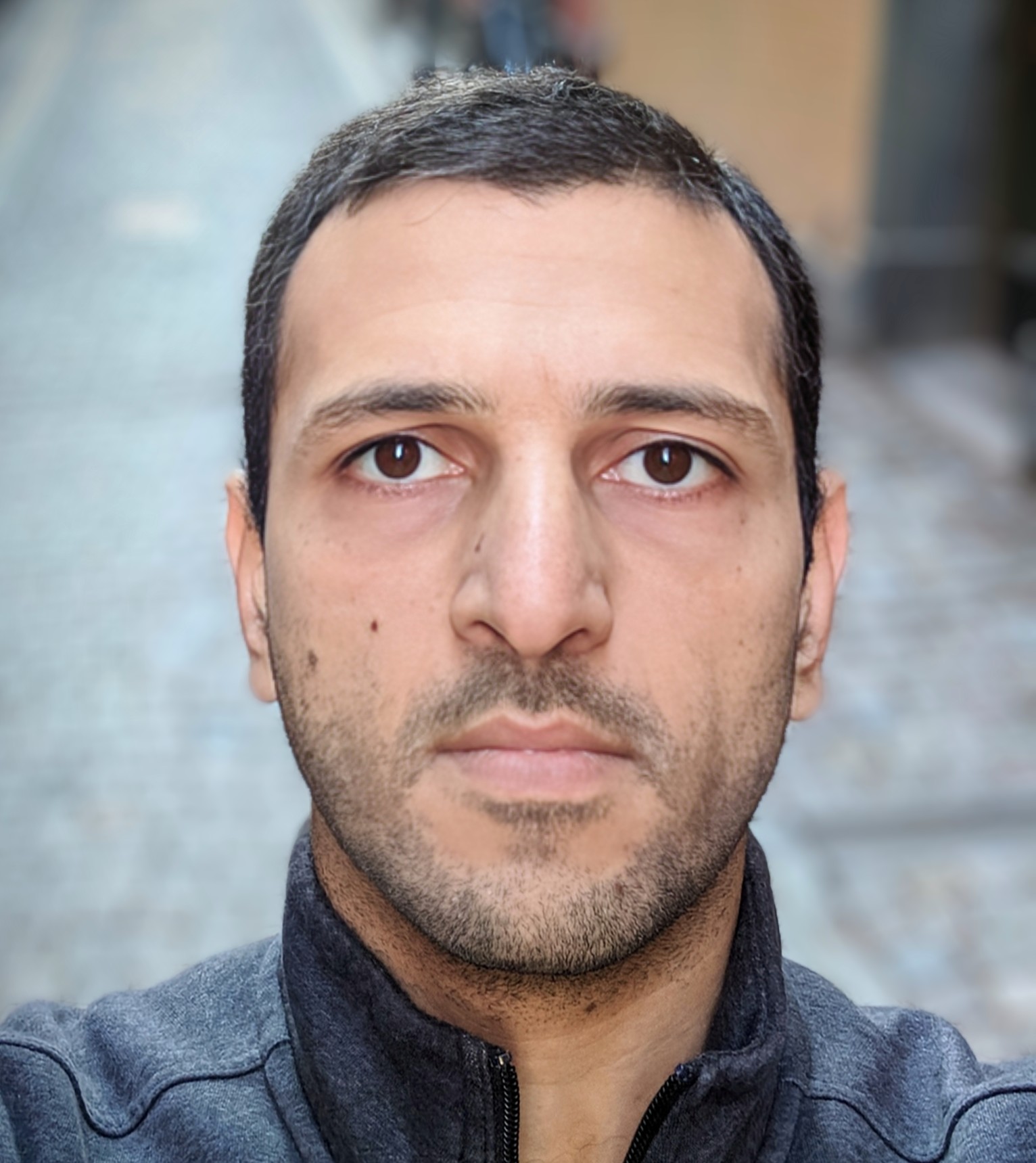
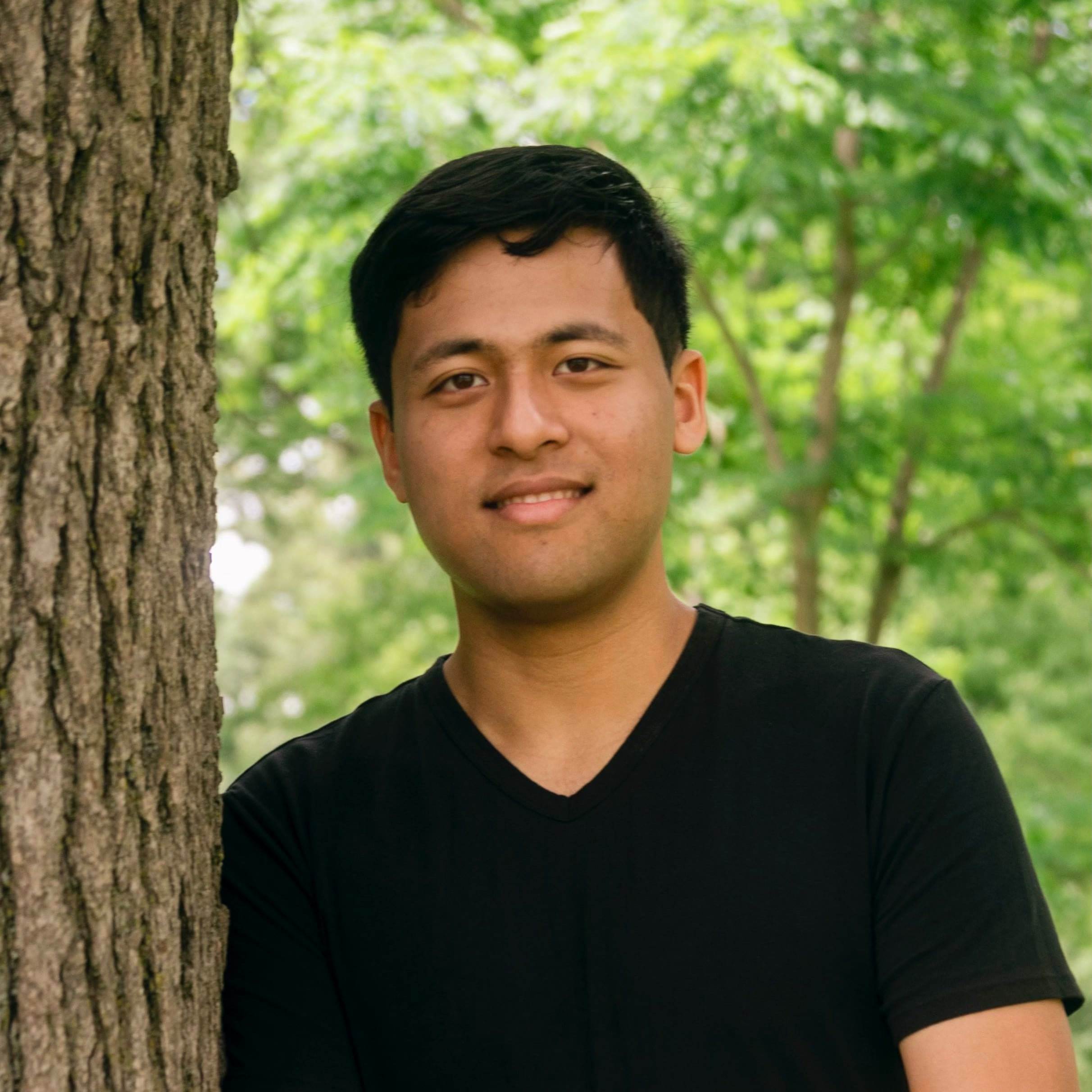
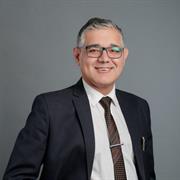
Dietmar Weinmann is a Senior Researcher at the CNRS (Centre National de la Recherche Scientifique) affiliated with the IPCMS (Institut de Physique et Chimie des Matériaux de Strasbourg) and the University of Strasbourg. His work focuses on theoretical solid-state physics, particularly quantum effects in electronic properties, mesoscopic physics, and quantum transport phenomena. His research explores non-local heating in quantum thermoelectrics, scanning gate microscopy applications in graphene and semiconductor heterostructures, power dissipation asymmetry in quantum point contacts, and orbital magnetization mechanisms in mesoscopic systems. Key themes include electron correlations, spin-orbit interactions, and disorder effects in nanoscale devices. Scientific awards include the Marie Curie Fellowship during his postdoctoral work at SPEC Saclay. He teaches an elective course on Electronics for Quantum Science and Technology at the University of Strasbourg. As a member of the Mesoscopic Quantum Physics team, his research combines theoretical modeling with experimental collaborations on quantum transport imaging and inverse problem solving via machine learning.
Giona Casiraghi is a Senior Researcher at ETH Zurich specializing in network science and complex systems, with a primary focus on resilience modeling in social organizations and data-driven network analysis. His work bridges theoretical advances in statistical network models with practical applications in supply chain management, open-source software ecosystems, and online social dynamics. His research interests center on developing quantitative methods for analyzing complex systems, particularly through the generalized hypergeometric ensemble of random graphs (gHypEG). Casiraghi's work spans multiple disciplines including network science, statistical physics, data science, and resilience theory, with particular expertise in temporal network analysis, multi-edge networks, and zero-inflation models for sparse networks. His research group develops the ghypernet R package , providing open-source tools for network regression and inference. Analysis of his recent publications reveals a strong trend toward applying network science to real-world resilience problems, particularly in pharmaceutical supply chains and social organizations. His 2025 Science paper on US tariffs threatening medicine supply chains exemplifies this practical turn, while his methodological work on zero-inflated network models (PNAS Nexus 2025) demonstrates continued theoretical innovation. Casiraghi frequently collaborates with Frank Schweitzer and others in the Systems Group at ETH Zurich, producing interdisciplinary work that bridges computer science, economics, and social science. Casiraghi's research has significant implications for understanding how social organizations withstand shocks and how supply chains can be made more resilient to disruptions. His work on the gHypEG framework provides foundational tools for network scientists across multiple disciplines, while his applied research offers concrete insights for policymakers and industry practitioners dealing with complex system failures. He has contributed to numerous projects examining online migration after community bans, developer productivity in open-source projects, and reconstruction of social relations from interaction data. His research methodology typically combines large-scale data analysis with advanced statistical modeling, often developing new network analysis techniques to address specific research questions.
Hsiao-Chun Wu is a Professor and holder of the Michel B. Voorhies Professorship at Louisiana State University (LSU), affiliated with the Division of Electrical & Computer Engineering within the School of Electrical Engineering and Computer Science. He earned his Ph.D. in 1999 from the University of Florida. His research focuses on statistical learning, embedded algorithms, digital signal processing, and wireless communications. Key areas include optimization techniques for detection and estimation, image/speech processing, and networked systems design. He has contributed to advancements in sensor deployment strategies, tensor-based signal processing, and machine learning applications for posture recognition and multimedia classification. Notable technical interests span computational photography, robust multichannel decorrelation, and energy-efficient data collection in wireless sensor networks. His work often integrates tensor analysis and graph convolutional networks to address challenges in high-dimensional data processing. Dr. Wu's academic contributions include pioneering methods for indoor line-of-sight coverage optimization and developing novel modulation recognition techniques. His research also addresses industrial IoT performance optimization and biomedical applications such as noninvasive activity recognition using mmWave radar.
Professor Christoph Thäle is a faculty member in the Faculty of Mathematics at Ruhr-Universität Bochum . His research focuses on stochastic geometry, geometric probability, limit theorems for random structures, and applications of Malliavin calculus and Stein's method. He has supervised numerous PhD and master's students, including Tristan Schiller, Nils Heerten, and Kathrin Meier. His work bridges theoretical probability with geometric analysis, particularly in high-dimensional spaces. Research Interests: Stochastic Geometry, Convex Geometry, Limit Theorems, Random Structures in High Dimensions Team Members: Postdocs (Panagiotis Spanos, Ercan Sönmez), PhD students (Philipp Tuchel, Bahareh Yousefi), and collaborators like Anna Gusakova and Zakhar Kabluchko. Key contributions include studies on random polytopes, Poisson hyperplane tessellations, and geometric analysis in hyperbolic spaces. His recent publications (2023–2025) explore intersection probabilities, radial spanning trees, and large deviations in high-dimensional settings. Thäle's research has been supported by collaborations with institutions like the University of Duisburg-Essen and the University of Osnabrück.
Jake Levinson is an Assistant Professor in the Department of Mathematics at Simon Fraser University, Faculty of Science. His research bridges algebraic geometry and combinatorics, focusing on the interplay between geometric structures and discrete mathematics. Levinson's primary research interests include: Algebraic Geometry, particularly moduli spaces of stable curves (M_{0,n}), Hilbert schemes, and intersection theory. Algebraic Combinatorics, with emphasis on Schubert calculus, Young tableaux, crystal structures, and combinatorial aspects of representation theory. Representation Theory of GL_n, flag and Grassmannian varieties, and equivariant cohomology. His recent publications reveal a strong trend in studying the combinatorial geometry of moduli spaces, especially M_{0,n}, through degenerations, multidegrees, and products of cohomology classes. He also investigates crystal-like structures on shifted tableaux and topological proofs of conjectures in real algebraic geometry. Collaborations with Maria Gillespie, Kevin Purbhoo, and Sean T. Griffin are frequent, indicating active research networks in combinatorial algebraic geometry. Levinson teaches advanced courses such as Math 819 Topics in Algebraic Geometry: Schemes, using foundational texts by Hartshorne and Vakil. His educational background includes a Ph.D. from the University of Michigan advised by David Speyer, an NSERC Postdoctoral Fellowship at LaCIM, and an Acting Assistant Professorship at the University of Washington. He also spent a year as an AI Resident at Google Research, reflecting an interdisciplinary reach. His undergraduate studies were at Williams College, with formative experiences at Budapest Semesters in Mathematics and the SMALL REU program. He has not received any scientific awards mentioned in the text. He does not appear to have advised any students listed publicly. He is involved in computational mathematics, having run a Lean workshop, and maintains an interest in mathematical exposition and public engagement through blog posts and mini-courses on Schubert calculus.
Paolo Ricci is a Full Professor and Director at the Swiss Plasma Center (SPC) at École Polytechnique Fédérale de Lausanne (EPFL) since October 2023. He previously held the Tenure Track Assistant Professor position (2010) and Associate Professor position (2016) at EPFL. His academic affiliations include leadership roles in multiple SPC sub-groups, such as Theory, Low Temperature Plasma Physics and Applications, International Installations, Tokamak Physics, Material Group, Plasma Processing, Applied Superconductivity, Edge Plasma Physics, and Administration. Politecnico di Torino (Italy): Master's in Nuclear Engineering (2000) Los Alamos National Laboratory: Doctoral studies in kinetic simulation of magnetic reconnection Dartmouth College: Postdoctoral research in gyrokinetic simulations of Z pinch plasmas Ricci's research focuses on plasma turbulence and instabilities, numerical simulations of laboratory and fusion plasmas, and computational methods for plasma physics. His work spans tokamak and stellarator boundary layer dynamics, scrape-off layer turbulence, fast ion transport, and validation of plasma simulation codes like GBS. His recent publications emphasize global fluid simulations in diverted geometries, snowflake magnetic configurations, and theoretical scaling laws for scrape-off layer widths. His scientific awards include the 2016 Section de Physique Teaching Prize, 2021 Craie d'Or (EPFL physics bachelor students), and 2021 Polysphère d'Or (AGEPoly). Ricci has supervised numerous Ph.D. theses on topics ranging from gyrokinetic moment-based models to scrape-off layer simulations, and actively collaborates with institutions on plasma turbulence validation projects.
Jaime Camelio is a Professor at the University of Georgia's School of Electrical & Computer Engineering, specializing in cyber-physical systems security, smart manufacturing, and statistical process control. His work integrates advanced technologies like machine learning, reinforcement learning, and Bayesian inference to enhance manufacturing resilience and safety. He focuses on vulnerabilities in production systems, digital twin applications, and data-driven quality control. His research spans aerospace composites, IIoT-enabled worker well-being monitoring, and synthetic data frameworks for manufacturing simulations. Research interests include cybersecurity in additive manufacturing, occupational safety monitoring via statistical control charts, and innovative approaches to fault detection in assembly systems. He leads projects funded by NSF CPS initiatives, such as collaborative research on manufacturing security and cyber-physical vulnerability assessments. His work bridges theoretical advancements with real-world applications in aerospace, automotive, and industrial IoT sectors. Scientific contributions include frameworks for digital thread integration in product lifecycle management and NURBS-based statistical monitoring of manufacturing surfaces. Publications emphasize both technical innovations and systemic risk mitigation strategies for modern manufacturing ecosystems. His lab explores cutting-edge topics like LLM applications in manufacturing workflows and random sampling strategies to counteract cyber-physical attacks.
Clemens Huemer is a professor affiliated with the Department of Mathematics at the Escola d'Enginyeria de Telecomunicació i Aeroespacial de Castelldefels (EETAC), part of the Universitat Politècnica de Catalunya (UPC). He is a key member of the DCCG (Discrete, Combinational, and Computational Geometry) research group, where he contributes extensively to theoretical and applied geometric research. His work spans computational, discrete, and combinatorial geometry with strong ties to graph theory and combinatorics. His primary research interests include computational geometry, discrete and combinatorial geometry, Voronoi diagrams (especially higher-order variants), geometric graphs, point set configurations, and algorithmic geometry. He investigates structural properties of geometric objects, combinatorial configurations, and optimization problems in discrete settings. His recent publications emphasize Voronoi constructions, matching problems in colored point sets, spectral properties of token graphs, and production matrices for enumerating geometric graphs. The trends in his recent articles (2021–2024) reflect a deep focus on higher-order Voronoi diagrams, geometric matching, and combinatorial properties of point sets and graphs. His work combines theoretical depth with algorithmic insights, often involving polynomial representations, spectral analysis, and geometric enumeration. The recurring themes include structural analysis of geometric arrangements, extremal problems in point sets, and algebraic-combinatorial methods in geometry. Clemens Huemer has been involved in multiple competitive R&D projects, including those funded under the Spanish State Research Plans and Horizon 2020, often in collaboration with leading researchers in computational geometry. He has served on scientific committees of conferences such as the Workshop on Geometric Networks and the Intensive Research Program on Discrete, Combinatorial and Computational Geometry, indicating leadership in the academic community. He advises and collaborates with numerous researchers and students, though specific advisees are not listed in the provided data. His research is supported through national and European grants, and he actively contributes to the dissemination of results via conference presentations and journal publications in top venues such as Discrete and Computational Geometry , Computational Geometry: Theory and Applications , and European Workshop on Computational Geometry . Clemens Huemer is based at the Baix Llobregat campus of UPC and is deeply embedded in the UPC research network, with extensive collaborations across institutions in Spain and internationally. His work is central to the DCCG group’s efforts in advancing the theoretical foundations of discrete and computational geometry.
Alfredo Camara Casado is a Senior Lecturer (Profesor Titular de Universidad) at the Polytechnic University of Madrid, affiliated with the Department of Continuous Mechanics and Structural Theory. His research focuses on structural dynamics, seismic analysis, and wind-vehicle-bridge interactions, with a particular emphasis on multi-hazard scenarios involving earthquakes, wind, and live loads. He holds a Doctor of Engineering degree and is a member of the Computational Mechanics Group and the Ignacio da Riva University Institute of Microgravity (IDR). His work addresses innovative methods for bridge design, analysis of cable-stayed bridges under seismic and wind loads, and vibration control using tuned mass dampers and rocking isolation techniques. His recent publications highlight trends in asymmetric bridge dynamics (2024), spatial ground motion variability in cable-stayed bridges (2024), skew wind effects on traffic safety (2023), and advanced modeling of rocking piers (2022). Key subfields include earthquake engineering, wind-vehicle interactions, computational mechanics, and structural stability. As a Senior Lecturer, he contributes to teaching and research in structural engineering. His collaborations span institutions like ETH Zurich and Tongji University, focusing on seismic resilience, renewable energy structures, and computational modeling. Current projects involve dynamics of slender bridges, soil-structure interaction, and aerodynamic damping.
Dapeng Zhan is a Professor in the Department of Mathematics at Michigan State University (MSU), where he has held this position since 2017. He earned his Ph.D. in Mathematics from the California Institute of Technology in 2004. His research focuses on Schramm-Loewner evolution (SLE), a stochastic process describing random fractal curves in two-dimensional spaces, with applications to critical phenomena in statistical physics models like percolation and the Ising model. Zhan has held prior academic positions, including Gibbs Assistant Professor at Yale University (2007–2009) and Morrey Assistant Professor at UC Berkeley (2004–2007). His research interests include Probability Theory, SLE, and statistical lattice models. He has received prestigious awards such as the Salem Prize (2012), Sloan Research Fellowship (2011–2015), and Simons Fellowship (2016). His work frequently appears in top journals like *Annals of Probability* and *Inventiones Mathematicae*. Zhan teaches advanced courses in probability and analysis, including *Brownian Motion and Stochastic Analysis* and *Analysis I*. He has advised numerous research projects and holds grants from the NSF, including a CAREER award (2011–2018). His contributions span theoretical developments in SLE's reversibility, duality, and boundary behavior, with recent work exploring multi-force-point SLE and boundary Green’s functions.
Tarek Anous is a Senior Lecturer in Mathematical Sciences at Queen Mary University of London (UKRI Future Leaders Fellow). He holds a position within the School of Mathematical Sciences, focusing on theoretical physics research with strong ties to quantum gravity and holography. His work explores de Sitter space cosmology, black hole physics, and string theory applications. Anous' research group investigates topics such as quantum field theory in expanding spacetimes, holographic dualities (e.g., AdS/CFT), and the interplay between quantum mechanics and gravitational systems. Education details are not explicitly stated in the provided texts, but his academic trajectory is evident through his publications and research focus. His research interests include exact solvable models in de Sitter backgrounds, low-dimensional gravity models, and disordered systems mimicking black hole behavior. Notable collaborations include work with Dionysios Anninos on topics like discrete series representations and rotating black hole horizons. His advising includes PhD student Johnny Brendan Gleeson. Anous' work has been supported through fellowships and grants, though specific funding bodies are not listed. He maintains an active research group with current and past members engaged in cutting-edge theoretical physics projects. His webpage tarek-ano.us provides further details on ongoing research and collaboration opportunities. Key research trends from his articles include advancements in de Sitter quantum field theory (e.g., Schwinger model analysis), exploration of black hole phase transitions (rotating horizons), and development of holographic models for glassy systems. He frequently employs techniques from conformal field theory, string theory, and quantum mechanics to address foundational questions in gravitational physics.
Sevak Mkrtchyan is an Associate Professor of Mathematics and Co-director of Graduate Studies in Mathematics at the University of Rochester. He holds a PhD in Mathematics and specializes in random tilings, determinantal point processes, and asymptotic combinatorics. His research explores connections between probability theory, statistical mechanics, and algebraic structures. Education: PhD in Mathematics (University of California, Berkeley, 2009). Research Focus: His work centers on asymptotic representation theory, scaling limits of random structures, and the interplay between combinatorics and stochastic processes. Key areas include random skew plane partitions, entropic measures in matrix ensembles, and phase transitions in polymer models. Publications Overview: Recent work investigates limit shapes in sandpile models, rigidity in geometric graphs, and phase diagrams of polymer systems. Earlier contributions address symmetrization of tableaux and asymptotics of isotypic components in representation theory. Academic Leadership: Oversees graduate studies in mathematics, shaping curricula and research training programs.
Yang P. Liu is an Assistant Professor in the Computer Science Department at Carnegie Mellon University. Previously, he was a Postdoctoral Member at the Institute for Advanced Study and earned his PhD from Stanford University under the supervision of Aaron Sidford. His research focuses on theoretical computer science and mathematics, emphasizing graph algorithms, optimization, high-dimensional geometry, and additive combinatorics. He has received notable awards including the A.W. Tucker Prize and Google PhD Fellowship, alongside multiple best paper recognitions at major conferences like FOCS, STOC, and ITCS. Education: PhD in Computer Science from Stanford University (2023); BS from MIT (2018). Research Interests: Graph Algorithms Optimization (especially convex and high-dimensional) Algorithmic Techniques in Additive Combinatorics Geometric and Structural Aspects of Computation Teaching: Currently instructing CS 15-759: A Principled Approach to Optimization (Spring 2025), covering topics like gradient descent, interior-point methods, and sparsification techniques. Course emphasizes rigorous mathematical foundations. Awards: Recognized for contributions to optimization theory and algorithmic complexity. His work bridges discrete mathematics and continuous optimization paradigms.
Dr. Neil Spencer is an Assistant Professor in the Department of Statistics at the University of Connecticut. His research integrates Bayesian inference, network analysis, and computational statistics, with applications ranging from forensic science to neurological disorders. He earned a PhD in Statistics and Machine Learning from Carnegie Mellon University, MSc from University of British Columbia, and BScH from Acadia University. Research focuses on developing novel methods for network data analysis (latent position models, efficient MCMC), robust Bayesian inference, and forensic statistics. Publications demonstrate consistent innovation in computational techniques for complex data structures and interdisciplinary applications. Teaching includes STAT5410 (Statistical Computing) and STAT3345Q (Probability Models for Engineers). He co-advised PhD candidate Tolani Olarinre and participates in the New England Statistical Society's NextGen committee. Research publications emphasize methodological innovations in network modeling, Bayesian computation, and experimental design, with significant applications in neuroscience and forensic science.
Professor Reza Hoseinnezhad is a faculty member in the School of Engineering at RMIT University, Australia. His research focuses on advanced engineering systems, including robotics, artificial intelligence, and autonomous systems. His work spans domains such as multi-object tracking, sensor fusion, and control systems with applications in underwater vehicles, autonomous driving, and manufacturing. He actively supervises research projects in areas like electronic seatbelt systems, anomaly detection, and swarm tracking. Research interests include Electrical and Electronic Engineering, Artificial Intelligence, Mechanical Engineering, and Manufacturing Engineering. His contributions leverage statistical methods, machine learning, and optimization to solve complex engineering challenges. Recent projects emphasize robust filtering, adversarial attack defenses, and distributed information fusion in connected systems. Professor Hoseinnezhad’s publications address cutting-edge topics like geometrically-informed particle filters, reinforcement learning for quadrupedal robots, and defect detection via point pattern analysis. His work bridges theoretical advancements with practical industrial and safety applications.