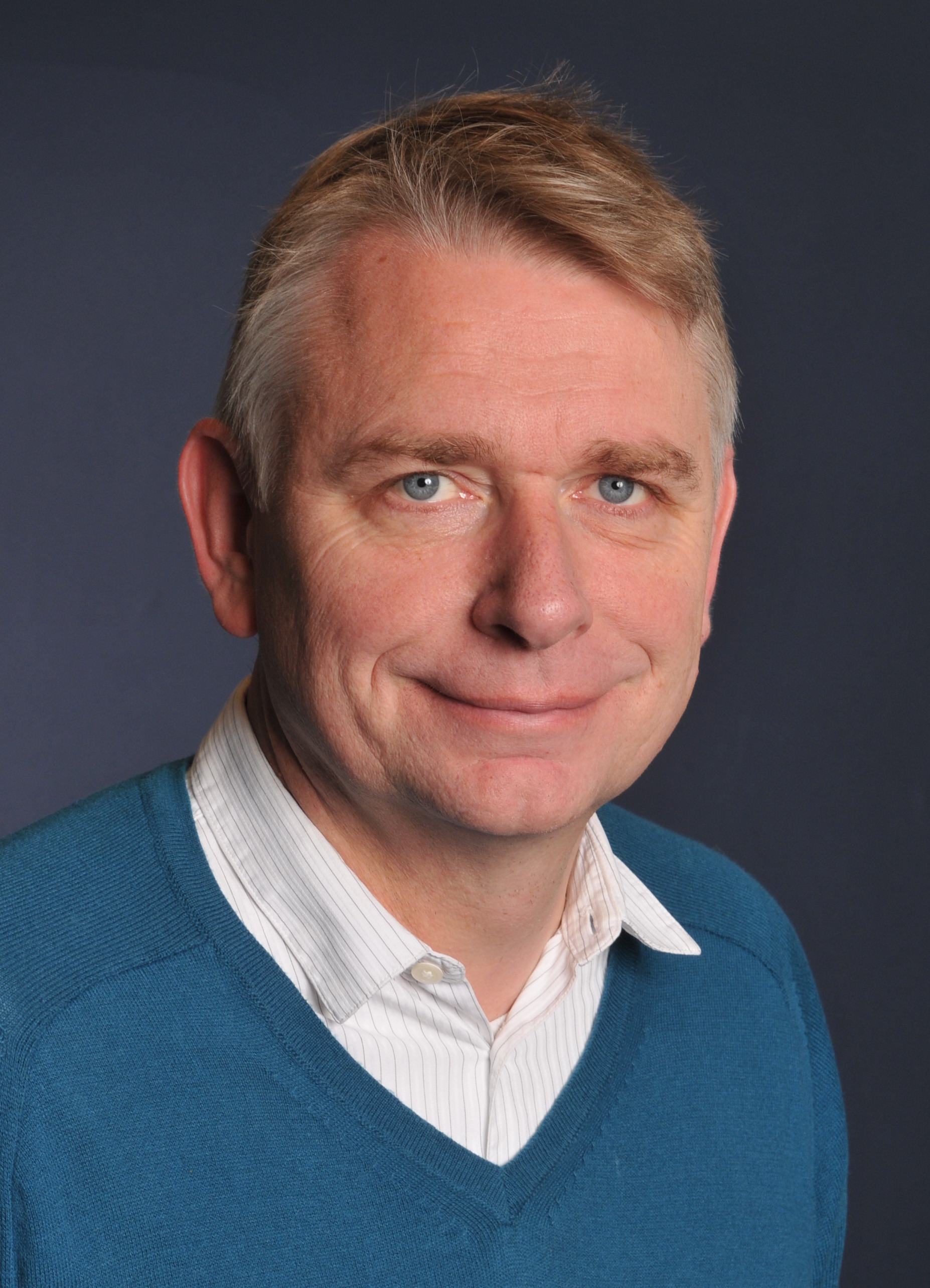
Yulij Ilyashenko is an Adjunct Professor in the Department of Mathematics at Cornell University. He holds a Ph.D. from Moscow State University (1969). His research focuses on dynamical systems, particularly the study of limit cycles, nonlocal bifurcations, and complex foliations. A key area of interest is Hilbert's 16th problem, exploring the number and location of limit cycles in polynomial vector fields. He has pioneered approaches applying complex analysis and Riemann surfaces to real differential equations. His work includes defining new attractor properties, studying robust invariant sets, and advancing the theory of functional cochains and nonlinear Stokes phenomena. Recent contributions include a novel framework for global planar bifurcation theory. Collaborations with students like A. Glutsyuk, V. Kaloshin, and S. Yakovenko have yielded significant results. His editorial roles include overseeing volumes on nonlinear Stokes phenomena and Hilbert's 16th problem. Ilyashenko's research bridges pure and applied mathematics, with implications for understanding chaotic systems and turbulence. His publications span foundational monographs to specialized articles in journals like Inventiones Mathematicae and Bulletin of the AMS .
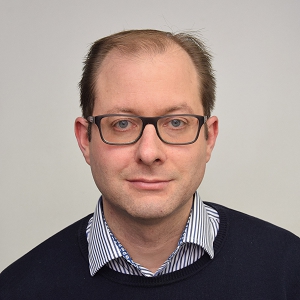
Professor Jeroen Lamb holds the position of Professor of Applied Mathematics at the Department of Mathematics, Imperial College London, within the Faculty of Natural Sciences. He leads the DynamIC research group, co-founded with Stefano Luzzatto, focusing on dynamical systems, bifurcation theory, and random systems. His academic journey includes a PhD in Theoretical Physics from the University of Amsterdam (1994) and postdoctoral roles at the University of Warwick and Imperial College London. He has held visiting positions at institutions like IMPA (Brazil), MSRI (USA), and RIMS (Japan). Research interests span dynamical systems (local/global bifurcations, random dynamical systems, network dynamics), mathematical physics, and applications in machine learning. Notable works include studies on reversible Hamiltonian systems, aperiodic tilings, and bifurcation analysis under stochastic perturbations. He coordinates EU-funded projects like CRITICS (Critical Transitions in Complex Systems, 2015–2019) and BREUDS (Brazilian-European Partnership in Dynamical Systems, 2013–2016). His students and postdocs include researchers like Bernat Bassols-Cornudella and Hugo Chu. Awards include the NWO Talent Research Fellowship (1998) and EPSRC Advanced Research Fellowship (2001–2006). Current activities involve exploring machine learning applications in nonlinear dynamics and advancing stochastic bifurcation theory.
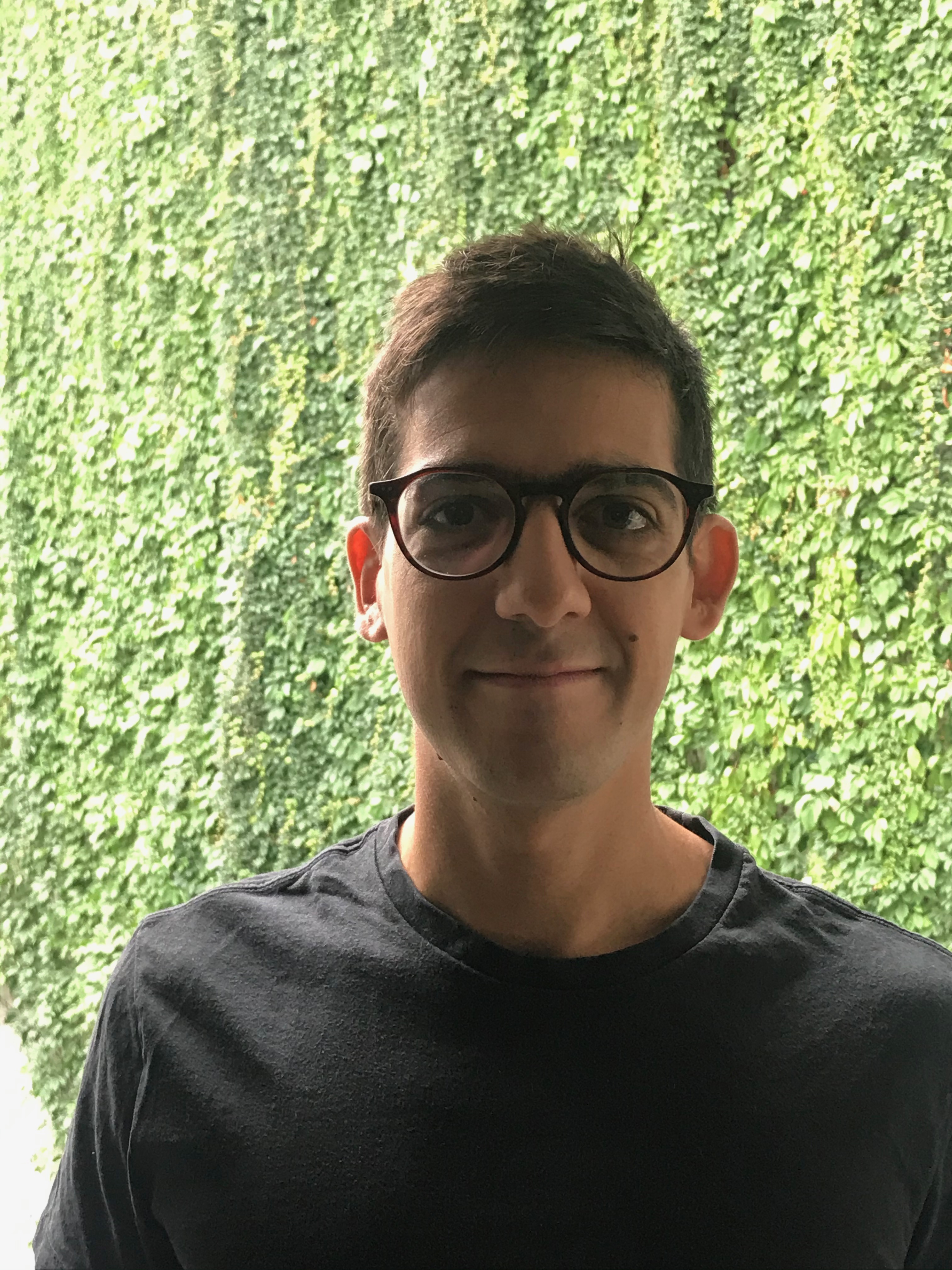
Professor Martin Rasmussen holds a position in the Department of Mathematics at Imperial College London, within the Faculty of Natural Sciences. His research focuses on the development of the Qualitative Theory of Nonautonomous and Random Dynamical Systems, with contributions to stability, bifurcation theory, invariant manifolds, and Morse decomposition theory. He is affiliated with groups such as the Dynamical Systems, Applied Mathematics and Mathematical Physics, and the CNRS-Imperial Abraham de Moivre UMI. His research interests include dynamical systems, ordinary differential equations, and their applications to stochastic processes and mathematical modeling. Notable achievements include awards such as the Imperial College Prize for Excellence in Personal Tutoring (2019) and Marie Sklodowska-Curie Fellowships for collaborative research projects. Professor Rasmussen supervises PhD students and postdoctoral researchers, contributing to a vibrant academic community. His work bridges theoretical advancements with practical applications in areas like ecological modeling and stochastic analysis. Key grants and fellowships highlight his role in fostering international collaborations and training early-career researchers. Awards: Best Paper Award from ISDE (2006), EPSRC Grant (2013–2015), Marie Curie Fellowships (2008–2010 and 2018–2020). Grants: Marie Sklodowska-Curie Innovative Training Network (2015–2019), EPSRC New Directions Grant (2013–2015). His publications span foundational contributions to dynamical systems theory, with recent work exploring bifurcations under noise, quasi-ergodic measures, and applications to ecological systems. He maintains active collaborations within Imperial College's mathematics community and international networks.
Marianna Russkikh is an Assistant Professor in the Department of Mathematics at the University of Notre Dame, affiliated with the College of Science. She holds a Ph.D. in Mathematics from Université de Genève (2014–2019). Her research focuses on complex analysis, probability theory, and mathematical physics, with a particular emphasis on dimer models, conformal invariance, and statistical mechanics. Her work explores connections between discrete models and continuous theories, often employing advanced analytical techniques and geometric insights. Her publications span topics such as lozenge tilings, Gaussian Free Fields, and exact solutions in critical lattice models. She has contributed to understanding t-embeddings of planar graphs and their relationship to holomorphic functions. Her research also addresses hedgehog domains, Aztec diamonds, and Ising model extensions beyond traditional isoradial cases. Marianna’s work often bridges combinatorics, probability, and physics, with applications to random surface theory and discrete differential geometry. She is associated with the Department of Mathematics at Notre Dame, where she contributes to both research and education initiatives in mathematical physics and analysis.
Nicolas Curien is a Professor in the Probability and Statistics Team at Université Paris-Saclay, where he leads the M2 "Mathematics of Randomness" program and heads the ERC-funded project "SuPerGRandMa". His office is located in Building 307, Orsay. Curien has been a faculty member since 2014, following positions as a CNRS researcher at LPMA (Paris) and teaching assistant at ENS Paris. He completed his PhD under Jean-François Le Gall in 2011. Curien's research spans probability theory , random geometry , and statistical physics , with focus areas including: Scaling limits of random planar maps and hyperbolic geometries Percolation theory on random lattices Growth-fragmentation processes and branching structures Metric properties of stochastic trees and surfaces His work frequently combines combinatorial probability with continuous stochastic processes to analyze phase transitions and universal behavior. Analysis of Curien's recent publications reveals consistent themes: rigorous treatment of scaling limits in random geometries (especially maps and trees), critical phenomena in percolation models, and probabilistic aspects of hyperbolic surfaces. Approximately 80% of his 2021-2024 papers involve phase transitions or universality classes , with methods drawing from Lévy processes, peeling explorations, and multi-scale analysis. Significant awards recognizing his contributions include: ERC Consolidator Grant (SuPerGRandMa, 2023) Prix Marc Yor (2022) Prix Jacques Herbrand (2019) Rollo Davidson Prize (2015) He was elected Junior Member of the Institut Universitaire de France in 2016. Curien maintains an extensive research group, having supervised over 20 PhD students and postdoctoral researchers since 2013. Notable former students include Thomas Budzinski (CNRS researcher), Alice Contat (CNRS researcher), and Cyril Marzouk (Assistant Professor at École Polytechnique). His ERC project currently supports 4 early-career researchers. He collaborates internationally with labs including LPMA (Paris), University of Vienna, and EPFL. Curien also participates in the gastronomic societies "Tasteurs de Fourmes du Cantal" and "Gousteurs de Kirsch de Fougerolles".
Cyril Marzouk is an Assistant Professor at École Polytechnique , affiliated with the Centre de Mathématiques Appliquées (CMA) (UMR 7641 CNRS). He holds a habilitation à diriger les recherches and is qualified as a professor in mathematics sections 25 and 26. His research focuses on the asymptotic behavior of large random combinatorial structures, particularly random trees, Lévy processes, and random maps, with applications to stochastic geometry and continuum limits. Education: Began studies at Université Paris Diderot and Université Paris-Sud, earned a master's in 2012. Conducted PhD research at the University of Zurich under Jean Bertoin, followed by postdoctoral positions at Sorbonne Université, Université Paris-Saclay, and Université Paris-Cité under Guillaume Chapuy's ERC CombiTop project. Research Interests: Asymptotic analysis of random discrete structures, Lévy trees, random maps, stable laws, percolation, and laminations. Active in the GT ALEA and GDR Branchement networks, organizing seminars at École Polytechnique. Teaching: Teaches probability and stochastic processes at École Polytechnique, including courses for engineering students and the M1 Applied Mathematics and Statistics program. Responsibilities include the Formation préparatoire EV2 and co-organizing the Parcours d'Approfondissement en Mathématiques Appliquées . Labs/Teams: Research conducted at CMA, collaborating on European projects like ERC GeoBrown and ANR Random Graphs and Trees .
Prof. Benedikt Stufler is a Professor of Mathematics at Technische Universität Wien's Institute of Discrete Mathematics and Geometry. His research focuses on the interplay between combinatorics and probability, particularly the analysis of random structures such as graphs, trees, and maps. He holds a Habilitation in Mathematics (2022) and a Doctorate from Ludwig-Maximilians-Universität München (2015). Education: Habilitation in Mathematics, TU Wien (2022) Doctorate in Mathematics, LMU Munich (2015) Master's (Diplom-Mathematiker), LMU Munich (2013) Study abroad at Universidad de Buenos Aires (2011) Research Interests: His work combines stochastic methods with combinatorial constructions to study models of random structures. Key areas include: Limits of random structures (Gromov-Hausdorff-Prokhorov convergence) Branching processes and random maps Enumerative combinatorics and Gibbs partition models Phase transitions in weighted graphs Algorithmic sampling of combinatorial structures Recent Grants: FWF Project 'Limits of random networks' (2024–2027, €435k) Principal Investigator in SFB 'Discrete Random Structures' (2024–2028, €3.9M total) Lab/Group: Current members include postdoc Dr. Colin Desmarais and PhD students Niccolò Bosio and Philipp Beltran. He supervises master's theses in probability theory.
Juan José Rue Perna is an Associate Professor in the Department of Mathematics at Universitat Politècnica de Catalunya (UPC), affiliated with the Faculty of Mathematics and Statistics (FME) and the Institute of Mathematics of UPC-BarcelonaTech. He also serves as Director of CFIS (Centre de Formació Interdisciplinària Superior) and maintains strong connections with the Centre de Recerca Matemàtica (CRM). His research focuses on combinatorial mathematics, particularly in the areas of random graphs, discrete mathematics, enumerative combinatorics, and additive combinatorics. Rue Perna has made significant contributions to the understanding of planar maps, extremal combinatorics, and probabilistic methods in discrete structures. His work often bridges theoretical mathematics with practical applications in computer science and network analysis. Rue Perna's recent publications demonstrate consistent research output across multiple high-impact journals in combinatorics and discrete mathematics. His work spans theoretical investigations of graph structures, enumeration problems, and applications to number theory. The research trends show a strong emphasis on probabilistic methods, asymptotic analysis, and connections between algebraic structures and combinatorial phenomena. Premi Albert Dou de la SCM Rue Perna has successfully advised multiple PhD students to completion, including Clément Requilé, Christoph Spiegel, Vasiliki Velona, and Maximilian Wötzel. His research has been supported by numerous competitive grants including projects from the Spanish Ministry of Science, European Research Council (ERC), and the Berlin Mathematical School. He has organized several significant academic events including EUROCOMB 2021 in Barcelona and various workshops on combinatorics and discrete mathematics. He is an active member of the GAPCOMB research group (Geometric, Algebraic and Probabilistic Combinatorics) at UPC, collaborating extensively with researchers across Europe. Rue Perna also contributes to the mathematical community through editorial work for journals including the Journal of Number Theory, European Journal of Combinatorics, and Integers: electronic journal of combinatorial number theory.
Asaf Nachmias is a Professor at the Department of Theoretical Mathematics within the Tel Aviv University 's Faculty of Exact Sciences . His research focuses on Probability theory and Statistical physics , particularly on problems involving random walks , percolation , uniform spanning trees , and planar graphs . Scientific contributions: Studied critical percolation and scaling limits in high-dimensional graphs and hypercubes Explored circle packing theorem applications to random walks and graph theory Investigated unimodular random maps , electrical resistance in branching random walks Co-authored foundational works on noise sensitivity , cover time analysis, and random graph components Editorial roles: Associate editor, Annales de l'Institut Henri Poincaré (B) (2016–present) Associate editor, Annals of Probability (2021–present)
Dr. Yinon Spinka is a Senior Lecturer in the Department of Theoretical Mathematics at Tel Aviv University's School of Mathematics Sciences, where he has been employed since 2021. His research focuses on probability theory and its connections to statistical mechanics, ergodic theory, and combinatorics. Dr. Spinka completed all his academic training at Tel Aviv University: B.Sc. in Mathematics and Physics (2010), M.Sc. in Mathematics (2013), and Ph.D. in Mathematics (2018). His research explores phase transitions in discrete systems, finitary codings for Markov random fields, and the behavior of loop models at criticality. Spinka has developed novel techniques for analyzing stochastic domination, finitary factors, and spatial mixing properties across various probabilistic models. His work often bridges combinatorics, probability theory, and mathematical physics, with particular emphasis on lattice models and their phase transitions. A significant portion of his research investigates the relationship between different probabilistic notions and graph properties, especially amenability. Dr. Spinka's publication record shows consistent output in top journals including Inventiones Mathematicae, Annals of Probability, and Journal of the European Mathematical Society. His work demonstrates increasing sophistication in connecting different areas of probability theory, with recent papers showing strong integration of techniques from statistical mechanics, combinatorics, and ergodic theory. His research on finitary codings has established important connections between spatial mixing conditions and factor properties of random fields. Alix De Rothschild Scholarship in Science and Technology (2015) Israel Academy of Sciences and Humanities Adams Fellowship (2015) Israeli Mathematical Union Haim Nessyahu Prize (2020) Bernoulli Society Wolfgang Doeblin Prize (2022) Dr. Spinka has established a robust collaborative network with leading researchers including Ron Peled, Gourab Ray, Omer Angel, and Hugo Duminil-Copin. His research has been supported through prestigious fellowships including the Adams Fellowship. While specific grant details aren't provided in the source material, his publication record in top journals suggests sustained research funding. His work contributes significantly to Tel Aviv University's strong reputation in probability theory and mathematical physics. Dr. Spinka's research contributes to several active areas within the Department of Theoretical Mathematics, particularly in probability theory and its applications to statistical mechanics. His work connects with broader research efforts in mathematical physics and combinatorics, advancing fundamental understanding of phase transitions and critical phenomena in discrete systems.
Dmitry Chelkak is the Keeler Professor of Mathematics at the University of Michigan's College of Literature, Science, and the Arts (LSA). His primary affiliation is within the Department of Mathematics, focusing on Probability Theory, Mathematical Physics, and Analysis. Chelkak holds a Ph.D. from the PDMI RAS (2003). His research interests center on critical phenomena in statistical physics, including the Ising model, dimer models, and conformal invariance. He has made significant contributions to understanding spin correlations, universality in lattice models, and the interplay between discrete and continuous systems. His work often employs advanced techniques from complex analysis and discrete geometry. Recent articles highlight investigations into universality in the Ising model on isoradial graphs, dimer models on planar graphs, and the application of tau-functions to cylindrical event probabilities. His studies frequently bridge combinatorial structures with probabilistic and geometric frameworks. No scientific awards are explicitly listed in the provided texts. Chelkak's advising record and grants are not detailed here, but his research has explored foundational topics in statistical mechanics and mathematical physics.
Adrien Kassel is a Researcher at CNRS based at École Normale Supérieure de Lyon, working within the Unit for Pure and Applied Mathematics (UMPA) in the Probabilities team. His research spans the intersection of probability theory, combinatorics, and mathematical physics, with particular focus on random structures on graphs and surfaces. Dr. Kassel's research centers on probabilistic combinatorial structures, especially determinantal point processes , random spanning trees and forests , and loop models . His work connects deep mathematical concepts from statistical mechanics with geometric and topological structures. He investigates scaling limits of discrete models, connections to conformal field theory, and applications to mathematical physics. His research often reveals profound connections between seemingly disparate areas of mathematics through the lens of probability. His publications demonstrate a consistent focus on the interplay between combinatorial structures and probabilistic phenomena. The research trajectory shows increasing sophistication in handling geometric aspects of random processes, with recent work exploring connections to quantum gravity and conformal field theory through Schramm-Loewner evolution. Dr. Kassel received the prestigious Paul R. Halmos - Lester R. Ford Award for his article "The Looping Rate and Sandpile Density of Planar Graphs" co-authored with David B. Wilson. This award recognizes expository excellence in mathematical writing. He has advised Héloïse Constantin, who successfully defended her PhD thesis on "Spanning forests and phase transition" in June 2023. Dr. Kassel teaches advanced courses including "Determinantal processes" at the Master's level and "Integration and Probability" at the undergraduate level. He has co-organized numerous academic events including the ICJ-UMPA probability seminar, workshops on random maps and matrices, and meetings between ENS Lyon and SISSA. As coordinator of MathαLyon from 2017-2022, he actively engaged in mathematical outreach, bringing exhibits to middle and high schools across the Lyon region. His commitment to popularization extends to writing for Images des Mathématiques and participating in various math circles and outreach programs.
Dr. Ahmed Bou-Rabee is an NSF Postdoctoral Fellow and Courant Instructor at the Courant Institute of Mathematical Sciences, New York University, sponsored by Scott Armstrong. Previously, he served as a postdoc at Cornell University under Lionel Levine and earned his PhD in Mathematics from the University of Chicago (2022), advised by Charles K. Smart. He holds a B.S. in Mathematics and an M.S. in Statistics from Stanford University. His research focuses on probability theory, partial differential equations, and their interplay with statistical mechanics, particularly stochastic homogenization, the Abelian sandpile model, and Liouville quantum gravity. Dr. Bou-Rabee has presented at leading institutions including ETH Zurich, University of Toronto, UCLA, and the Institute for Advanced Study. His work bridges discrete and continuous models, with contributions to random walks on graphs, harmonic functions on percolation clusters, and scaling limits in random planar maps. He is an NSF Postdoctoral Fellow and has developed open-source tools for studying sandpile dynamics and matrix methods. Education: PhD (Mathematics), University of Chicago (2022); M.S. (Statistics), Stanford University (20XX); B.S. (Mathematics), Stanford University (20XX) Awards: NSF Postdoctoral Fellowship Teaching: Taught courses at NYU (Ordinary Differential Equations, Analysis, Discrete Mathematics) and served as a teaching assistant at the University of Chicago and Stanford. His research explores critical phenomena in stochastic systems, including superdiffusive limits, rigidity of harmonic functions, and universality in random matrix models. Ongoing projects investigate implications for Anderson localization and higher-dimensional Ising models.
Yann Strozecki is an Associate Professor (Maître de Conférences HDR) at the University of Versailles Saint-Quentin, where he is based in the DAVID Laboratory and leads the ALMOST research team focused on algorithms and stochastic models. He is currently on a part-time assignment at LIGM, Gustave Eiffel University, and has previously held positions at LIP6 (RO team), Paris-Sud University (ALGO team), and completed a postdoctoral fellowship at the University of Toronto's Theory Group. He earned his PhD from Paris Diderot (Paris 7) under Arnaud Durand. His research lies at the intersection of theoretical computer science and discrete mathematics, with core interests in: Enumeration complexity, especially delay and space constraints Algorithmic game theory, particularly simple stochastic games (SSGs) Graph and matroid algorithms Cheminformatics and molecular structure generation Sparse polynomials and algebraic complexity Analysis of his recent publications reveals a strong trend in developing efficient enumeration algorithms with provable delay and space bounds, advancing the theoretical foundations of output-sensitive computation. He also contributes to practical algorithms for Cloud RAN scheduling and cheminformatics, often combining theoretical rigor with real-world applications. His work on geometric amortization and strategy improvement in SSGs demonstrates innovation in algorithm design. Notable scientific contributions include: Generic strategy improvement methods for SSGs Polynomial-delay enumeration via closure operations Efficient deterministic scheduling for low-latency networks Tools for molecular cage generation in chemistry Yann Strozecki actively supervises PhD and master’s students, including Noé Demange, Maël Guiraud, and Xavier Badin de Montjoye. He co-organizes the ALMOST team seminar and has advised numerous interns in algorithmics and game theory. His research has been supported through collaborations with Nokia Bell Labs (CIFRE thesis) and interdisciplinary projects in cheminformatics and networking.
Steffen Rohde is a Professor of Mathematics at the University of Washington, affiliated with the College of Arts & Sciences and the Department of Mathematics. He earned his PhD from Technische Universität Berlin in 1989 and has held academic positions at institutions including TU Berlin, UC San Diego, and the University of Michigan. His research focuses on complex analysis, probability, and geometric function theory, with notable contributions to Schramm-Loewner Evolution (SLE), conformal mappings, and random planar maps. Education: PhD, Technische Universität Berlin, 1989 Habilitation in Mathematics, TU Berlin, 1996 Diplom (Master's equivalent), TU Berlin, 1987 Research Interests: Complex Analysis Probability Theory (including SLE) Geometric Function Theory Conformal Invariance Random Planar Maps His work bridges classical analysis with modern probabilistic methods, emphasizing applications in stochastic geometry and mathematical physics. Awards & Recognition: Robert B. Warfield Jr. Faculty Fellow (2014) Eisenbud Professorship, MSRI (2012) Continuous NSF Support since 1998 Advising & Grants: Supervised PhD students including Daniel Meyer and Joan Lind Directed NSF-funded research projects on geometric function theory Supported postdoctoral researchers such as Jim Gill and Brent Werness Teaching & Service: Taught courses on complex analysis, probability, and geometric group theory. Served on NSF panels, departmental committees, and organized conferences like the Ahlfors-Bers Colloquium.