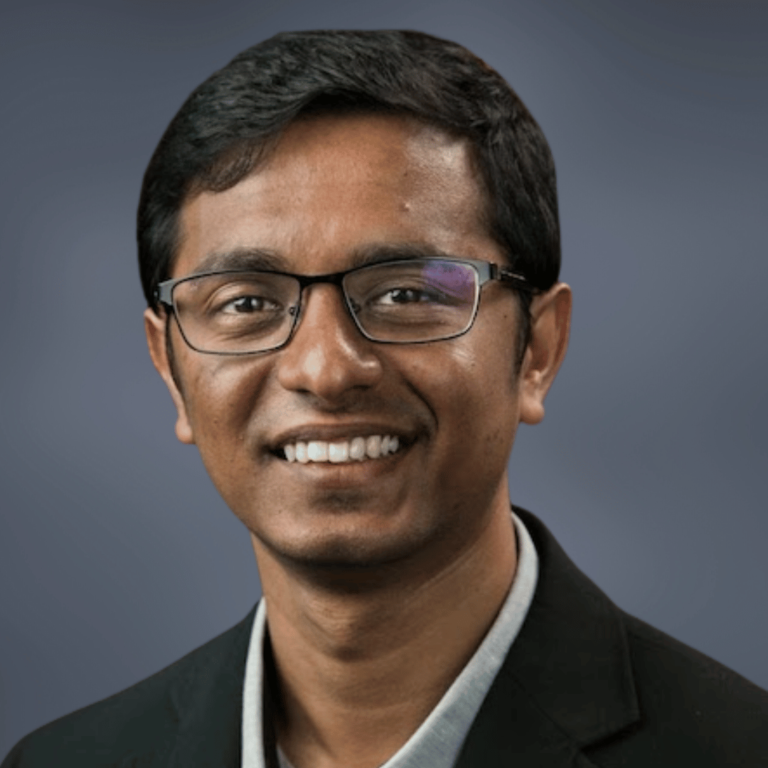
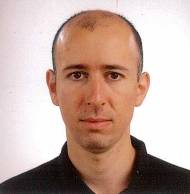
Sergio Burgos, PhD is an Associate Professor in the Department of Animal Science at McGill University's Faculty of Agricultural and Environmental Sciences, and a Scientist at the Research Institute of the McGill University Health Centre (RI-MUHC). He leads an interdisciplinary research program integrating animal nutrition, human health, and environmental sustainability. Pan-American School of Agriculture, Zamorano, Honduras (Agrónomo) University of Florida (BSc Animal Science) University of California, Davis (MSc Animal Science) University of Guelph (PhD Animal Science, 2009) Research Focus examines protein foods' roles in: Human Nutrition & Cardiometabolic Health Dairy Production Systems & Rumen Microbiome Milk Metabolomics & Bioactive Compounds Climate Impact Reduction through Dietary Transitions Publication Trends demonstrate: 2024-2025: Prioritization of plant-animal protein substitutions for climate & health 2020-2023: Mechanistic studies on amino acid regulation of mammary cell function 2016-2020: Foundational work on insulin resistance and dairy nutrition Awards Richard and Edith Strauss Postdoctoral Fellowship (2010-12) Professional Affiliations Regroupement OptiLAIT (2015-present) American Society for Nutrition (2015-present) Canadian Diabetes Association (2012-present) Teaches core courses in animal nutrition, protein metabolism, and computational ration balancing.
David B. Dunson is the Arts and Sciences Distinguished Professor of Statistical Science at Duke University, with a joint appointment in the Department of Mathematics. He is also a Faculty Network Member of the Duke Institute for Brain Sciences. His research bridges theoretical statistics with practical applications across multiple scientific domains, focusing on developing new tools for probabilistic learning from complex data. Dr. Dunson earned his Ph.D. from Emory University in 1997 and his B.S. from Pennsylvania State University in 1994. Dr. Dunson's research focuses on developing statistical methods directly motivated by challenging applications in ecology/biodiversity, neuroscience, environmental health, and criminal justice/fairness. His methodological work spans models for low-dimensional structure in data (latent factors, clustering, geometric and manifold learning), flexible/nonparametric models (neural networks, Gaussian/spatial processes), Bayesian inference frameworks, and models for "object data" (trees, networks, images, spatial processes). His approach emphasizes creating practical tools that scientists and decision makers can use routinely. Dunson's recent publications demonstrate a strong focus on advancing Bayesian methodology for complex data structures across applications in biodiversity mapping, brain connectomics, environmental health, and infectious disease modeling. His work shows consistent innovation in nonparametric Bayesian methods, computational efficiency, and the handling of high-dimensional and structured data, always with an eye toward solving real-world scientific challenges. Dr. Dunson has received numerous prestigious awards including: IMS Medallion Lecturer (2019) Mitchell Prize from the International Society of Bayesian Analysis (2018) Carnegie Centenary Professorship (2018) DeGroot Prize (2017) COPSS Award: President's Award (2010) Fellow of the Institute of Mathematical Statistics (2010) His extensive publication record with numerous co-authors suggests an active research group mentoring graduate students and postdocs. His research on projects like biodiversity mapping (funded by a European Research Council Grant) and brain connectomics indicates well-funded research programs addressing significant scientific challenges across multiple domains. Dr. Dunson's work involves collaborations across multiple labs and teams, particularly through his affiliation with the Duke Institute for Brain Sciences. His research on biodiversity mapping, brain connectomics, and environmental health suggests involvement in large, interdisciplinary teams addressing complex scientific questions that require sophisticated statistical approaches.
Matthew Jenssen is a Reader in Probability at King's College London and a UKRI Future Leaders Fellow. He holds a BA and MMath from the University of Cambridge (2012–2013) and a PhD from the London School of Economics (supervised by Jozef Skokan and Julia Boettcher). His research focuses on the intersection of combinatorics, statistical physics, and theoretical computer science, particularly on large-scale structure formation in systems with local interactions. Notable contributions include advancements in sphere packing, Ramsey numbers, and random matrix theory. Jenssen has held postdoctoral positions at the University of Oxford and the University of Birmingham before joining King’s in 2023. His research group at King’s explores discrete probability, extremal combinatorics, and algorithms, with applications to statistical physics and high-dimensional geometry. Key achievements include a groundbreaking improvement on sphere packing lower bounds and resolving extremal questions in graph theory. Jenssen’s work often bridges combinatorial theory with computational methods, yielding impactful results in probabilistic combinatorics. Scientific awards include the UKRI Future Leaders Fellowship (2020). His grants include a 2023–2026 project on statistical physics methods in combinatorics and geometry. Jenssen collaborates widely, with notable co-authors including Will Perkins, Jozef Skokan, and Felix Joos. He is actively involved in the Probability Group at King’s and contributes to international conferences and arXiv publications.
Cynthia Yan is a Visiting Professor in the Physics Department at Stanford University, affiliated with the School of Humanities and Sciences. Her academic appointment was noted for the 2019 academic year. Her research focuses on theoretical physics with an emphasis on quantum gravity, string theory, supersymmetry, and black hole physics. She explores topics such as BPS black hole microstates, entanglement in quantum systems, and holographic dualities. Her work bridges advanced mathematical techniques with foundational questions in high-energy physics, including studies on wormholes, topological quantum field theories, and the interplay between QCD effects and particle physics observables like the Z boson forward-backward asymmetry. While specific grants or awards are not listed, her publications reflect engagement with cutting-edge theoretical frameworks and interdisciplinary methods. Though no student advisees are explicitly documented here, her contributions to areas like matrix theory and emergent spacetime suggest involvement in graduate-level research training. Contact information specific to her role is not provided in the available data.
James B. Orlin is the E. Pennell Brooks (1917) Professor in Management and a Professor of Operations Research at the MIT Sloan School of Management. He specializes in network and combinatorial optimization with applications spanning transportation, computer science, operations, and marketing. BA in Mathematics, University of Pennsylvania MA in Mathematics, California Institute of Technology MMath, University of Waterloo PhD in Operations Research, Stanford University His research focuses on designing efficient algorithms for network optimization problems, including shortest path, max flow, and min cost flow. He has contributed to algorithmic theory in logistics, telecommunications, and inventory management, with work on stochastic demand models and data-driven inventory policies. Recent publications include advancements in directed shortest path algorithms, robust submodular function maximization, and energy storage problem complexity. His seminal textbook Network Flows: Theory, Algorithms, and Applications (1993) remains a foundational reference. Leonard G. Abraham Prize Khachiyan Prize Test of Time Award As a mentor, he has advised numerous researchers through collaborative publications and teaching. His work addresses both theoretical algorithm development and practical implementation across diverse domains including airline scheduling, logistics, and network design.
Eren C. Kızıldağ is an Assistant Professor in the Department of Statistics at the University of Illinois Urbana-Champaign, with additional affiliations in the Department of Electrical and Computer Engineering. He holds a PhD in Electrical Engineering and Computer Science from MIT, where he was part of the Laboratory for Information and Decision Systems (LIDS) and the Institute for Data, Systems, and Society (IDSS). Previously, he was a Distinguished Postdoctoral Fellow at Columbia University. His research bridges probability, statistics, and computer science, focusing on statistical-computational trade-offs in random models such as optimization problems and statistical inference. Key interests include understanding algorithmic barriers in high-dimensional problems, discrepancy theory, and neural network theory. His work often explores connections to statistical physics and combinatorial structures. Recent publications highlight contributions to topics like low-rank tensor recovery, algorithmic obstructions in partitioning problems, and geometric barriers in discrepancy minimization. His research also addresses theoretical foundations of overparameterized neural networks and hardness results for partition functions in spin glass models. Kızıldağ’s academic journey includes a Master’s from MIT and a B.S. (summa cum laude) from Bogaziçi University, with early work in MRI technology at ISMRM. His research is supported by collaborations with institutions like LIDS and IDSS, and his work frequently appears in top venues such as Annals of Applied Probability, Mathematics of Operations Research, and IEEE ISIT.
Sally Paganin is an Assistant Professor of Statistics at The Ohio State University, affiliated with the Department of Statistics within the College of Arts and Sciences. She joined the faculty in 2023 and holds a PhD from the University of Padova (2019). Her research focuses on Bayesian statistics, computational methods, and latent variable modeling, with recent emphasis on genomic data analysis for cancer detection and software development for hierarchical models. Her expertise spans Bayesian nonparametrics, statistical computing, and domain knowledge integration in modeling frameworks. She actively contributes to the NIMBLE project, an R-based platform for hierarchical modeling, and has developed open-source tools like the compareMCMCs package for MCMC efficiency analysis. Dr. Paganin serves as an Associate Editor for the software section of The New England Journal of Statistics in Data Science and previously served as Treasurer of j-ISBA (2021–2022). Her work bridges theoretical advancements with practical applications in healthcare and computational statistics. Key research themes include Bayesian model assessment, latent variable models, and statistical methods for complex data structures. Her publications reflect contributions to MCMC algorithms, semiparametric IRT models, and prior-driven clustering techniques.
Srijan Sengupta is an Associate Professor of Statistics at North Carolina State University (NC State) since 2020. Previously, he served as an Assistant Professor at Virginia Tech from 2016 to 2020. He holds a Ph.D. in Statistics from the University of Illinois at Urbana-Champaign (2016) and degrees from the Indian Statistical Institute (B.Stat and M.Stat with Distinction). His research focuses on statistical methodology for network data, anomaly detection, bootstrap methods, and scalable inference, with applications in healthcare analytics, epidemiology, and cybersecurity. Education: Ph.D. in Statistics, University of Illinois at Urbana-Champaign (2011–2016) M.Stat (1st Division with Distinction), Indian Statistical Institute (2007–2009) B.Stat (1st Division with Distinction), Indian Statistical Institute (2004–2007) Research Interests: His methodological work includes statistical inference in networks, anomaly detection, bootstrap techniques, and scalable algorithms for big data. Applications span social determinants of health, healthcare analytics, space physics, epidemiology, and cybersecurity. He emphasizes interdisciplinary collaborations, particularly in patient safety event analysis and medical device safety. Awards and Grants: Norton Prize for Outstanding PhD Thesis (2015) NIH R01 Grant ($890,055, Principal Investigator) for statistical algorithms in patient safety (2019–2022) Multiple grants for network inference and anomaly detection (NSF, Socially Determined Inc., Virginia Tech Foundation) Advising and Service: Advises over 20 students across PhD, master’s, and undergraduate research programs. Serves as an Associate Editor for Sankhya, Series B and peer reviewer for top journals. Active in university service roles at NC State and Virginia Tech, including faculty hiring committees and curriculum development. Labs and Collaborations: Leads research on statistical network analysis, including projects funded by NIH and NSF. Collaborates with institutions globally on topics like epidemic thresholds, cybersecurity defenses (e.g., phishing detection), and healthcare analytics.
Hugo Paquet is a Researcher at INRIA Paris and a member of the ANTIQUE team at École Normale Supérieure , PSL University. He completed a PhD in Computer Science (2015–2019) at the University of Cambridge under Glynn Winskel , focusing on concurrent game semantics for probabilistic programming. His postdoctoral work includes positions at LIPN, Paris (2022–2024, funded by a Marie Skłodowska-Curie Award) and University of Oxford (2020–2022). He has contributed to conferences including LICS , ESOP , FSCD , and POPL . Education : PhD in Computer Science (University of Cambridge, 2019) Research Interests : Probabilistic programming (semantics, inference algorithms, nonparametric models), categorical semantics (game semantics, concurrency models, adjunctions), combinatorial species, and 2-dimensional categories. Teaching : Category Theory (2023–2024), Bayesian Statistical Probabilistic Programming (2021–2022), Lambda-calculus and Types (2020–2021), and small-group teaching at Cambridge (Logic, Discrete Mathematics, Semantics). Awards : Marie Skłodowska-Curie Award under the Paris Region Fellowship Programme Labs : INRIA Paris, ANTIQUE team (2024–present)
Alexander D Maloney serves as the Kathy and Stan Walters Endowed Professor of Quantum Science and Director of the Institute for Quantum and Information Science at Syracuse University's College of Arts and Sciences, Department of Physics. His leadership bridges theoretical physics and quantum information science through institutional and research initiatives. His academic foundation includes a Ph.D. in Physics from Harvard University (2003) with dissertation "Time-Dependent Backgrounds of String Theory," complemented by dual B.Sc. and M.Sc. degrees in Physics and Mathematics from Stanford University (1998). Maloney's research centers on quantum gravity and information theory, exploring black hole physics through string theory frameworks. His work connects quantum field theory, cosmology, and information paradox resolution, with particular focus on wormhole geometries, resurgence phenomena, and holographic dualities. This interdisciplinary approach examines how quantum information principles shape spacetime structure. Recent publications reveal evolving emphasis on Narain ensemble statistics, modular invariance applications, and quantum cosmology in reduced dimensions. His 2020-2025 output demonstrates methodological progression from semiclassical gravity to non-perturbative quantum gravity techniques, increasingly integrating machine learning concepts with theoretical frameworks. His scientific recognition includes: James McGill Professor at McGill University (2023) Sir William Macdonald Chair in Physics at McGill University (2020) Maloney secures major research funding including NSERC Discovery Grants (2015-2020, 2020-2025) and Simons Foundation's "It from Qubit" collaboration (2015-2022). He actively shapes academic discourse through search committee leadership, journal reviewing (Journal of High Energy Physics since 2007), and international conference organization at Aspen Center for Physics and Institute for Advanced Study. As Director of Syracuse's Institute for Quantum and Information Science, he cultivates collaborative research environments exploring quantum gravity applications to quantum computing and cosmological modeling.
László Kozma is an Assistant Professor at the Theoretical Computer Science group of the Institute of Computer Science (Freie Universität Berlin). He obtained his PhD from Saarland University under Raimund Seidel, followed by postdoctoral positions at Tel Aviv University and TU Eindhoven. His research focuses on self-adjusting data structures , adaptive algorithms , and combinatorial optimization with applications to problems like the Traveling Salesman Problem, binary search trees, and geometric data structures. Academic Affiliation: Freie Universität Berlin (since 2018) Education: PhD in Computer Science (Saarland University, 2016); postdoc at Tel Aviv University and TU Eindhoven. His work explores the intersection of data structures, combinatorial algorithms, and geometric methods. He has made significant contributions to problems involving pattern-avoidance in inputs, saddlepoint detection , and self-adjusting heaps . Key areas include: Adaptive algorithms for pattern-avoiding inputs Optimal tree and heap structures Geometric and stochastic approaches to optimization Complexity analysis of classical algorithms Recent publications highlight efficient solutions for exponential cut problems (ESA 2025), balanced TSP partitioning (EuroCG 2025), and randomized saddlepoint algorithms (ESA 2024). His research often bridges theory and practice, exemplified by the smooth heap implementation and fun projects like Recursi and Cuckoo Hashing visualization.
Dr. Julian Sahasrabudhe is a researcher at the Department of Pure Mathematics and Mathematical Statistics (DPMMS) , University of Cambridge, affiliated with the School of Mathematics . His work focuses on combinatorics, number theory, and graph theory, with a emphasis on extremal problems and probabilistic methods. His recent research explores Erdős covering systems, Littlewood polynomials, and monochromatic subgraphs. Publications from 2018–2024 highlight applications of probability generating functions, arithmetic progressions, and density analysis in combinatorial structures. Contact details: jdrs2@cam.ac.uk , Room C2.08, Tel: 01223 337974. Personal homepage .
Ross J. Kang is a Canadian mathematician currently serving as an Associate Professor at the Korteweg–de Vries Institute for Mathematics within the Faculty of Science at the University of Amsterdam since 2022. He is an active member of the Discrete Mathematics and Quantum Information group and the NETWORKS consortium. Previously, he held positions as Assistant/Associate Professor at Radboud University Nijmegen (2014-2022), Assistant Professor at Utrecht University (2013), and Researcher at Centrum Wiskunde & Informatica (2012-2013). His academic journey includes postdoctoral positions at Durham University (2010-2012) and McGill University (2008-2010), where he was advised by Bruce Reed and Louigi Addario-Berry. DPhil in Mathematics, University of Oxford (2008) - Thesis: 'Improper colourings of graphs', advised by Colin McDiarmid BSc (Hons) in Mathematics and Computer Science, University of Victoria (2003) - Governor General's Silver Academic Medal recipient Ross J. Kang's research focuses on probabilistic and extremal combinatorics, random discrete structures, graph coloring, geometric graphs, and algorithms. His work bridges theoretical mathematics with practical applications, exploring fundamental questions in discrete mathematics. He has made significant contributions to understanding graph coloring problems, particularly in the contexts of list coloring, distance coloring, and strong coloring. His research often employs probabilistic methods to establish bounds and structural properties in graph theory. Kang's work on the hard-core model, local occupancy method, and triangle-free graphs has advanced our understanding of the interplay between local constraints and global structure in discrete systems. Analysis of his recent publications reveals a strong emphasis on graph coloring problems, particularly list coloring variants and their extensions. His work frequently explores the relationship between graph structure (such as degree constraints, girth, or forbidden subgraphs) and coloring properties. A notable trend is his development and application of the local occupancy method to establish improved bounds for chromatic numbers in various graph classes. His research also demonstrates a consistent interest in extremal problems, seeking optimal configurations under specific constraints, particularly in the context of triangle-free graphs and geometric representations. NWO Open Competition M-1 grant entitled 'Asymptotic triangle-free structure (3Free)', 2022-2026 NWO Vidi grant entitled 'On the edge: theory and techniques at the frontiers of edge-colouring', 2017-2023 NWO Veni grant entitled 'Generalised colouring for random graph models', 2012-2015 Van Gogh travel grants (2020-2021 with Marthe Bonamy; 2016-2017 with Louis Esperet) Governor General's Silver Academic Medal (2003) Ross J. Kang has successfully supervised multiple PhD students including Eoin Hurley (defending May 2025), Stijn Cambie (defended April 2022), and François Pirot (winner of 2020 prix Charles Delorme). His research is supported by significant grants from the Netherlands Organisation for Scientific Research (NWO), including the prestigious Open Competition M-1 grant. Kang is actively involved in the academic community through his editorial role at Combinatorial Theory, co-organization of conferences like the Dutch Days of Combinatorics, and leadership in initiatives such as Innovations in Graph Theory, a diamond open access journal he helped launch in August 2023. As a member of the Discrete Mathematics and Quantum Information group at the University of Amsterdam and the NETWORKS consortium, Kang collaborates with researchers across various institutions. He has established strong international connections through his Van Gogh travel grants and participation in collaborative projects like the Sparse (Graphs) Coalition sessions. His research group focuses on theoretical aspects of discrete mathematics with connections to quantum information science, and he maintains active collaborations with researchers across Europe and North America.
Gary L. Miller is a Professor of Computer Science at Carnegie Mellon University's School of Computer Science. His research focuses on Spectral Graph Theory, Algorithms, Computational Geometry, and Scientific Computing. He has developed influential methods in graph partitioning, mesh generation, and numerical linear algebra solvers. Teaching includes advanced courses like Spectral Graph Theory, Algorithms, and Computational Geometry. Active in publishing, recent work involves weighted Cheeger inequalities, exact manifold metric computations, and adaptive graph sketching techniques. Projects include Orasis, 3D Meshing Software, Tumble, and Sangria. His work bridges theoretical foundations with applications in machine learning, image processing, and scientific computing. Current projects emphasize efficient graph algorithms and scalable numerical methods.
Maria Axenovich is a Professor at the Department of Mathematics , Karlsruhe Institute of Technology (KIT). Her research focuses on graph theory and combinatorics , emphasizing unavoidable structures in graphs, Ramsey-type problems, Turán densities, and extremal graph theory. Education : Undergraduate in Novosibirsk, Russia; Ph.D. at the University of Illinois at Urbana-Champaign under Zoltan Füredi. Positions : Previously at Iowa State University; since 2012 at KIT. Editorial Roles : Editor-in-Chief of the Electronic Journal of Combinatorics (2020–present); Associate Editor of Order (2016–present). Recent Research Trends : Her 2023–2025 publications address hypercubes , poset Ramsey numbers , interval colorings , extremal subgraphs , and canonical Ramsey theorems . Collaborations span institutions in the US, UK, Hungary, and Germany. Students and Collaborations : Supervises Ph.D., Master’s, and Bachelor students. Current advisees include Dingyuan Liu , Christian Winter , and Lea Weber . Former students like Jonathan Rollin and Torsten Ueckerdt have contributed to extremal graph theory and hypergraphs. Courses : Teaches Linear Algebra , Combinatorics , and Graph Theory at KIT. Leads seminars on Extremal Set Theory and Discrete Mathematics .