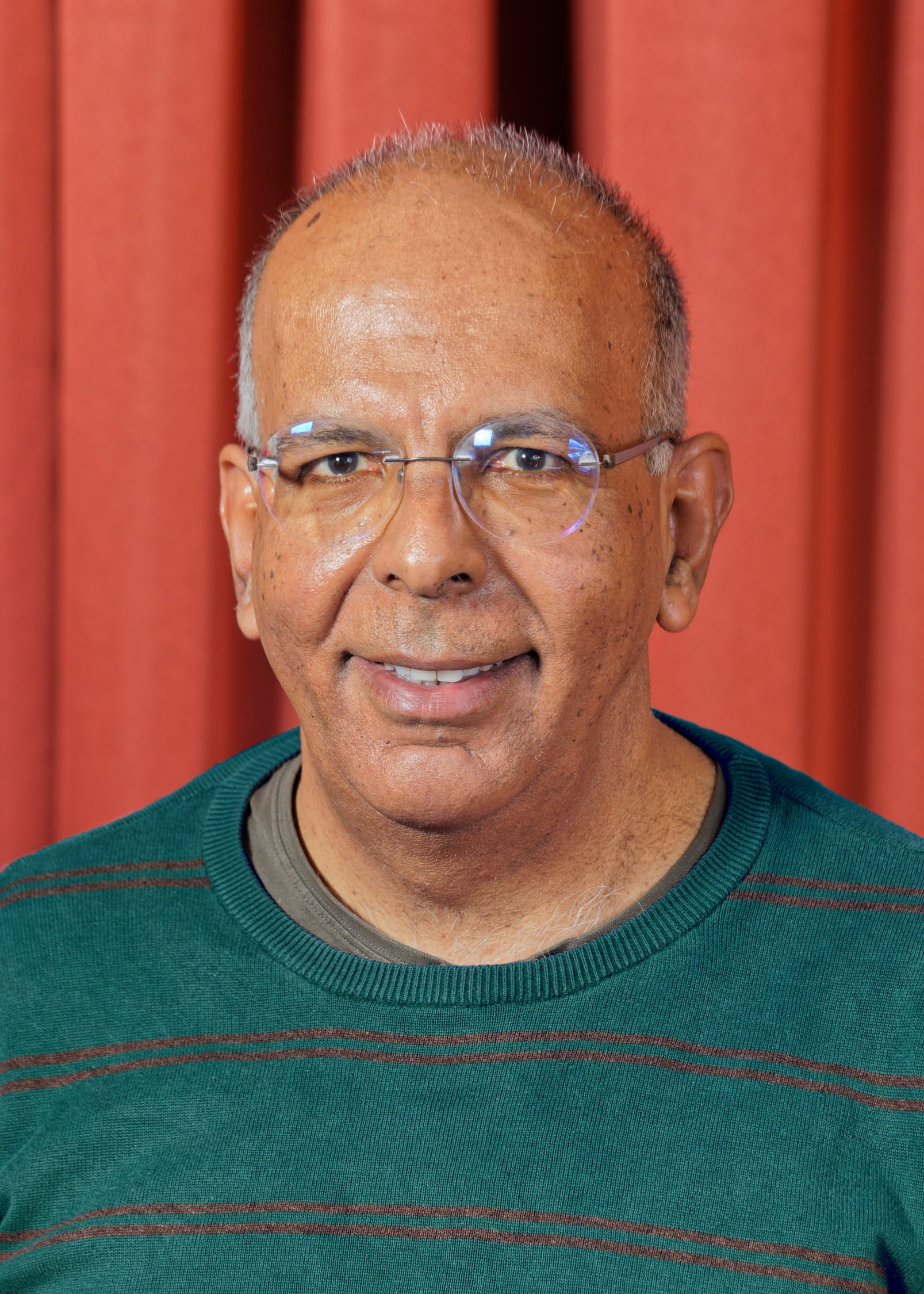
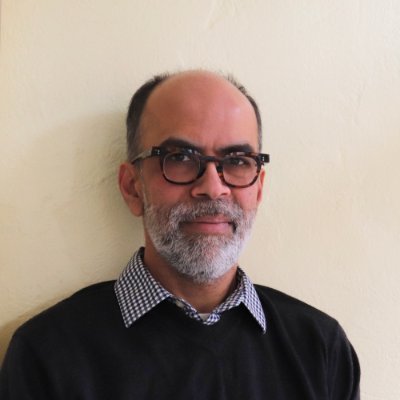
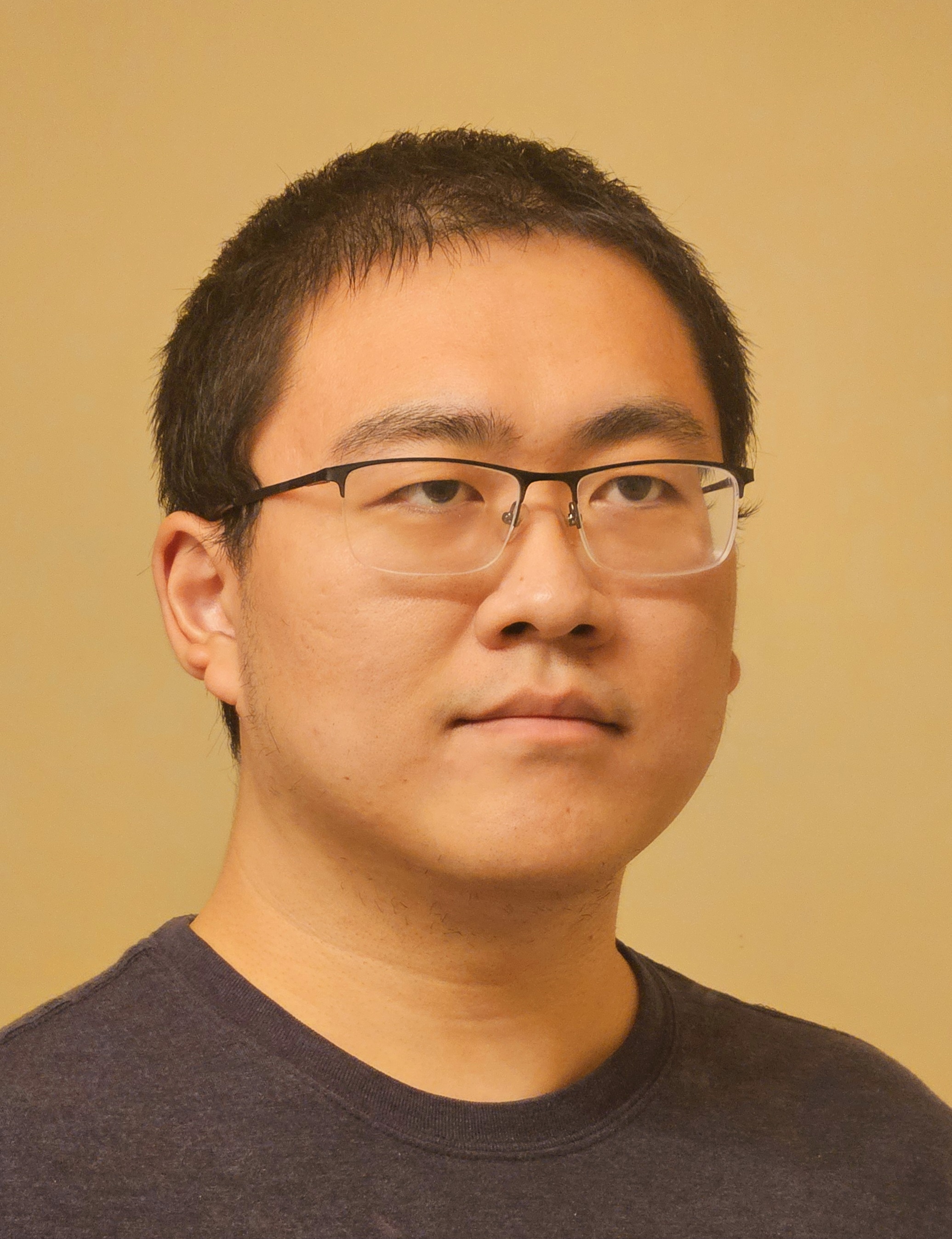
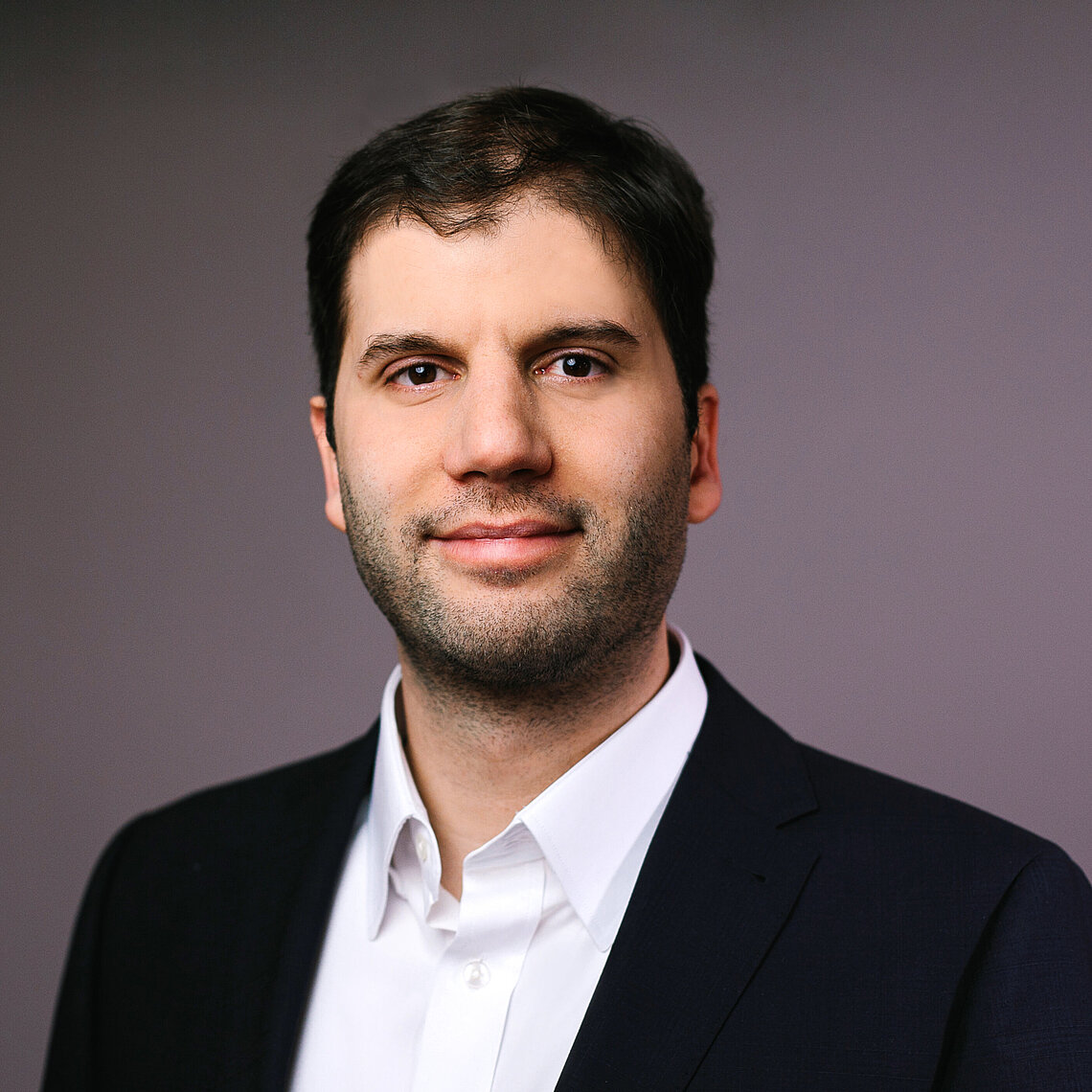
Professor Anuj Dawar is a leading academic in Theoretical Computer Science at the University of Cambridge's Department of Computer Science and Technology. He holds a PhD from the University of Pennsylvania (1993) and has been a faculty member since 1999. His research focuses on computational complexity via logic, descriptive complexity, and finite model theory, with applications to databases, verification, and games. Education: PhD in Computer Science, University of Pennsylvania (1993) Masters, University of Delaware Bachelor's, Indian Institute of Technology (Delhi) Research Interests: His work bridges logic and computation, investigating limits of symmetric algorithms and complexity through formal languages. Notable themes include: Descriptive complexity and homomorphism preservation Finite model theory and its applications Algorithmic model theory and constraint satisfaction Professional Activities: Editor-in-Chief, ACM Transactions on Computational Logic Former president of European Association for Computer Science Logic Committee roles for Gödel Prize, Church Award, and Nerode Award Advising & Teaching: Supervised over 15 PhD students and taught advanced courses like Quantum Computing, Complexity Theory, and Foundations of Functional Programming. Currently on sabbatical (2024–25).
Anupam Gupta is an Adjunct Professor in the Computer Science Department at New York University's Courant Institute of Mathematical Sciences. Previously, he held a faculty position at Carnegie Mellon University. His research focuses on algorithms, complexity, and theoretical computer science, with an emphasis on network design, metric embeddings, and approximation algorithms. He has received notable awards, including the ACM Fellowship (2021) and the Herbert A. Simon Award for Teaching Excellence (2019). Education: Ph.D., University of California, Berkeley (2000); B.Tech., Indian Institute of Technology Kanpur (1996) Teaching: Taught courses on algorithms, theoretical computer science, and real-world applications at both undergraduate and graduate levels. Research: Explores algorithms for uncertain environments, stochastic optimization, and online algorithms. His work bridges theoretical foundations with practical applications in networking and combinatorial optimization. Awards: ACM Fellow, Sloan Fellowship, and multiple teaching awards. Students: Advised over 15 Ph.D. students, including notable researchers in algorithms and theoretical computer science. Grants: Supported by NSF grants, including a CAREER Award, and collaborates on projects like the Indo-US Algorithms under Uncertainty initiative. His work on metric embeddings and graph algorithms has had significant impacts, with contributions to approximation algorithms and competitive analysis. He actively participates in academic conferences and serves as an organizer for programs like the Simons Institute's Algorithms and Uncertainty initiative.
Eric Torng is an Associate Professor in the Department of Computer Science and Engineering (CSE) at Michigan State University (MSU), serving as Associate Chair for Research and Faculty Development in CSE and Associate Dean of MSU's Graduate School. He holds a Ph.D. from Stanford University (1994) and has received awards including the NSF CAREER Award (1997) and multiple teaching excellence awards. His research focuses on algorithms, online algorithms, scheduling, perimeter defense strategies, and packet processing. Notable contributions include multi-vehicle perimeter defense systems, fast packet classification techniques (e.g., TupleMerge), and algorithmic approaches to resource optimization. Dr. Torng has authored over 100 publications and secured over $2 million in external grants. His work bridges theoretical computer science with practical applications in networking, robotics, and distributed systems.
Jonathan Leake is an Assistant Professor in the Department of Combinatorics and Optimization at the University of Waterloo . His research focuses on log-concave polynomials and their applications in combinatorics and computer science. Education: PhD in Mathematics, UC Berkeley (2014-2019) MS in Mathematics, Texas A&M University (2010-2012) BS in Computer Engineering and Applied Math, Texas A&M University (2006-2010) Research Interests: His work centers around log-concave polynomials and their connections to combinatorics, optimization, and computer science. Key areas include: Lorentzian polynomials and their applications Polynomial capacity and optimization Sampling algorithms and combinatorial structures Representation theory and algebraic combinatorics Scientific Awards: Dirichlet Postdoctoral Fellowship (TU Berlin, 2020-2022) James H. Simons Fellowship (Simons Institute, UC Berkeley, Spring 2019) Previous Positions: Postdoc Fellowship, Institut Mittag-Leffler, Stockholm (Spring 2020) Postdoc, KTH, Stockholm (Fall 2019) Developer, Teacher Retirement System of Texas (2012-2014)
Travis Martin is an Assistant Professor (Lecturer) in the School of Computing at the University of Utah. His primary focus is on computer science undergraduate education. His research interests include computer science theory, machine learning, network science, graph algorithms, and mechanism design. He holds a PhD in Computer Science and Engineering (CSE) from the University of Michigan, completed in June 2016 under the advisement of Mark Newman and Mike Wellman. Previously, Martin worked as a Software Engineer at Recursion Pharmaceuticals and Google, contributing to data engineering and machine learning integration in Android systems. His academic work bridges theoretical computer science with practical applications in networks and algorithms, evident from his publications in journals like Phys. Rev. E and World Wide Web. Despite his research background, Martin currently does not supervise undergraduate or graduate research. His professional activities include open-source contributions and maintaining an updated code portfolio.
Maria Jose Serna Iglesias is a Full Professor at the Faculty of Informatics of Barcelona (FIB), Universitat Politècnica de Catalunya (UPC)-BarcelonaTech, where she is affiliated with the Department of Computer Sciences. She is a leading member of the ALBCOM research group, focusing on Algorithmics, Bioinformatics, Complexity, and Formal Methods, and serves as the coordinator of the PhD program in Computing. Her academic leadership and research excellence are central to UPC's contributions in theoretical computer science. Licenciado en Ciencias Matemáticas Licenciado en Informática Doctorat en Informàtica (Doctorate in Computing) Her research interests lie at the intersection of theoretical computer science and game theory, with a strong focus on algorithmic game theory , social network analysis , and computational complexity . She investigates influence propagation models, cooperative games, weighted voting systems, and graph algorithms. Her work often involves the design and analysis of algorithms for discrete structures, with applications in network science and decision-making systems. The analysis of her recent publications reveals a consistent trend in studying strategic interactions in networks, particularly through influence models and cooperative game theory . Her work spans both theoretical foundations—such as complexity and dimensionality of games—and practical applications in social networks, education, and synthetic data validation. The keywords across her articles highlight a deep engagement with discrete mathematics, optimization, and algorithmic decision theory. She has received scientific recognition, including competitive awards and active participation in scientific committees of major international conferences such as the International Conference on Algorithmic Decision Theory and the Discrete Mathematics Days. Premiada (Awarded) Scientific committee member for multiple international conferences Maria Jose Serna has led and participated in numerous competitive R+D+i projects, often in collaboration with other prominent researchers in the ALBCOM group. She has advised multiple students and researchers, contributing to the training of the next generation of computer scientists. Her collaborations span institutions in Spain and internationally, particularly in the domains of algorithms and game theory. She is a core member of the ALBCOM research group (Algorísmia, Bioinformàtica, Complexitat i Mètodes Formals) at UPC, which is a leading force in theoretical computer science in Spain. The group fosters interdisciplinary research in algorithms, complexity, and formal methods, with strong ties to mathematical and computational sciences.
Dr. Dirk Zeindler is a Senior Lecturer in the School of Mathematical Sciences at Lancaster University , focusing on Pure Mathematics. His research spans diverse areas including Probability, Random Matrix Theory, Number Theory, Representation Theory, Function Theory, and Combinatorics. Current projects explore connections between permutations with random cycle weights and Bose-Einstein condensation. He actively supervises PhD students, including Jack Ye (h.ye7@lancaster.ac.uk). His recent publication in 2025, 'Strange and pseudo-differentiable functions with applications to prime partitions,' reflects his work at the intersection of Number Theory and Combinatorics. Contact details: Office B39a, B-Floor, Fylde College; Email: d.zeindler@lancaster.ac.uk .
Dr. Peizhong Ju is an Assistant Professor in the Department of Computer Science , Stanley and Karen Pigman College of Engineering at the University of Kentucky since 2024. He earned his PhD in Electrical and Computer Engineering from Purdue University (2021) and a BSc in Electrical Engineering from Peking University (2016). His research bridges mathematical rigor with practical applications in machine learning, smart grid, and wireless communication systems. Education Purdue University (PhD, Electrical and Computer Engineering, 2021) Peking University (BSc, Electrical Engineering, 2016) Dr. Ju’s research focuses on theoretical foundations of machine learning , including generalization performance analysis, federated learning, continual learning, and optimization frameworks. His work combines probability theory, optimization, game theory , and random matrix theory to study complex systems under uncertainty. Prominent publication trends include edge computing (2024-2025), multi-agent reinforcement learning (2023-2024), diffusion models (2025), and multi-objective optimization (2024-2025). Earlier works (2018-2022) concentrated on neural tangent kernels , full-duplex communication , and power distribution networks . Scientific Awards Best Paper Award, ACM e-Energy 2022 Bilsland Dissertation Fellowship 2021 Best Paper Finalist, ACM e-Energy 2018 National and corporate scholarships in China (2013-2016) He has received funding through the NSF AI Institute on Future Edge Networks and Distributed Intelligence (AI-EDGE) and has participated in workshops such as the NeTS Early Career Workshop (2025). His teaching includes advanced courses on generative AI and artificial intelligence .
Claudia Redenbach is a Professor and Dean of Mathematics at RPTU Kaiserslautern, Germany. She is affiliated with the Department of Mathematics and leads the Statistics Working Group (AG Statistik), with additional connections to the Department of Statistics and the Graduate School 'Mathematics as a Key Technology.' Position: Dean of Mathematics Institution: RPTU Kaiserslautern Location: Building 48, Room 534, Gottlieb-Daimler-Straße, 67663 Kaiserslautern Contact: claudia.redenbach@rptu.de | +49 (0)631 205 3620 Professor Redenbach's research focuses on the intersection of stochastic geometry, spatial statistics, and image analysis with applications in materials science. Her work bridges theoretical mathematics with practical engineering applications, particularly in analyzing microstructures of concrete, foams, composites, and other materials. She has developed innovative methods for analyzing spatial point patterns, directional data, and 3D image data from various microscopy techniques including CT, FIB-SEM, and light-sheet microscopy. Her recent publications (2024-2025) reveal a strong emphasis on computational methods for materials analysis, including crack detection in concrete, fiber orientation analysis, artifact removal in imaging, and the development of mathematical morphology techniques for directional data. She frequently collaborates with materials scientists and engineers, with K. Schladitz appearing as a consistent co-author across numerous publications. Her work demonstrates a consistent focus on developing mathematical tools that solve practical problems in materials characterization and analysis. Professor Redenbach has made significant contributions to spatial statistics, particularly in anisotropy analysis of point patterns, and to the application of stochastic geometry models for material microstructure analysis. Her research spans both theoretical developments in statistical methods and their practical implementation for real-world materials science problems.
Peter Nejjar is a Tenure-Track Juniorprofessor for Probability Theory at the University of Potsdam since January 2023. His research addresses fundamental questions of universality in stochastic systems , investigating why identical probability distributions emerge across disparate contexts like random matrices and growth models, with connections to combinatorics, mathematical physics, and numerical analysis. His primary research domains include stochastic particle systems (TASEP/ASEP), KPZ universality class phenomena, and Markov chain mixing behavior —particularly the cutoff phenomenon. Nejjar's work reveals deep structural parallels between shock fluctuations in interacting particle systems and random matrix eigenvalue distributions, leveraging connections to algebraic combinatorics through Schur processes. Recent publications demonstrate evolving focus from shock fluctuation theory (2015-2018) toward dynamical phase transitions in KPZ systems (2020-2022) and emerging interdisciplinary applications like DNA-based molecular tagging (2025). His collaborative network prominently features Patrik Ferrari across 7 publications, reflecting sustained focus on universality in exclusion processes.
Alan Zame is a Professor in the Department of Mathematics at the University of Miami , College of Arts and Sciences. His research spans diverse areas in mathematics, statistics, and probability theory. Education & Training: (Details not explicitly provided in the text) Research Interests: Dr. Zame's work includes combinatorics , probability theory , game theory , and number theory . He has contributed to understanding stochastic processes, tournament planning, urn schemes, and subgroup chains. Publication Trends: His publications from 1984–2010 focus on probabilistic modeling, strategic games, and mathematical structures. Key topics include random sequences, gambling strategies, string matching, and combinatorial fairness in tournaments. Advising & Grants: No specific students or grants are listed in the provided text.
Alistair Sinclair is the Kikuo Ogawa and Kaoru Ogawa Professor of Computer Science in the Department of Electrical Engineering and Computer Sciences at UC Berkeley. He received his BA in Mathematics from the University of Cambridge (1982) and PhD in Computer Science from the University of Edinburgh (1988). After briefly serving on faculty at Edinburgh, he joined UC Berkeley in 1994. Sinclair has held visiting positions at DIMACS, Princeton University, Rutgers University, Microsoft Research, École Polytechnique, University of Paris-Orsay, and University of Rome III. His research explores: Randomized algorithms and Markov chain Monte Carlo methods Phase transitions in statistical physics Algorithmic applications of stochastic processes Nonlinear dynamical systems Combinatorial optimization Analysis of Sinclair's recent publications (2017-2025) reveals strong emphasis on statistical physics models (especially Ising and random-cluster systems), Markov chain dynamics, phase transitions, and algorithmic solutions for combinatorial problems. Key methodologies include spatial mixing analysis, entropy decay measurements, and deterministic approximation techniques. Scientific Awards: 1996 ACM-EATCS Gödel Prize 2006 Fulkerson Prize 2017 SIGACT Distinguished Service Prize Sinclair has advised 17+ PhD students including notable researchers in theoretical computer science and mathematics. He served as Founding Associate Director (2012-2017) of the Simons Institute for the Theory of Computing, receiving recognition for developing its research programs on probability, geometry, and computational complexity.
Xiaowei Deng is an Assistant Researcher at the Institute for Quantum Science and Engineering at Southern University of Science and Technology (SUSTech), China. His work focuses on quantum optics and superconducting quantum computing, particularly in the experimental analysis of continuous-variable quantum systems and entanglement structures. 2007-2011: B.S. in Optical Information Science and Technology, Shanxi University, China 2011-2017: Ph.D. in Quantum Optics, State Key Laboratory of Quantum Optics and Quantum Photonic Devices, Shanxi University, China Deng's research involves characterizing quantum entanglement in Gaussian states, studying the effects of lossy channels on quantum communication, and exploring multipartite entanglement in photonic systems. His work connects quantum metrology with entanglement criteria via squeezing coefficients and the Fisher information, revealing robustness of entanglement under noise and loss. His publications span topics such as Einstein-Podolsky-Rosen steering, Greenberger-Horne-Zeilinger states, and cluster-state quantum computation. Recent studies analyze multi-mode entanglement across partitions and demonstrate experimental techniques for preserving entanglement under correlated noise. National Scholarship for Doctoral Students (2016) Wang Daheng Optical Award (2017) President's Distinguished Postdoctoral Fellow, SUSTech (2017) Second Prize, National Conference on Quantum Optics (2016) Outstanding Graduate Student, Shanxi University (2017)
Dr. Viresh Patel is a Lecturer in Optimisation at the School of Mathematical Sciences, Queen Mary University of London. His research focuses on extremal and probabilistic combinatorics, graph polynomials, phase transitions, and approximation algorithms. University: Queen Mary University of London School: School of Mathematical Sciences Email: viresh.patel@qmul.ac.uk Research Interests: Patel’s work bridges combinatorics, graph theory, and statistical physics. Key areas include Hamiltonian cycles in dense graphs, algorithmic approaches to graph polynomials, and complexity analysis of physical models. Publication Trends: Recent articles address structural graph theory (cycle/path decomposition), computational complexity (Potts/Ising models), and approximation algorithms using probabilistic and Taylor series methods. Collaborations: Regular co-authorship with researchers like Guus Regts, Allan Lo, and Matthew Jenssen indicates strong interdisciplinary engagement.
Dr. Alston Misquitta is a Lecturer in Condensed Matter and Materials Physics at the School of Physics and Astronomy, Queen Mary, University of London . His research focuses on intermolecular forces, symmetry-adapted perturbation theory (SAPT), and computational modeling of molecular and solid-state systems. Research Interests Development of ab initio and non-empirical force fields Intermolecular interaction energy decomposition Electronic structure theory applied to molecular and nanoscale systems Crystal structure prediction and validation High-pressure materials science Publication Trends Dr. Misquitta’s publications span computational chemistry, condensed matter physics, and materials science, with a strong emphasis on SAPT-based methods, polarizable force fields, and molecular dynamics simulations for organic and inorganic systems. His work addresses challenges in modeling hydrogen bonding, dispersion interactions, and excited-state phenomena. Contact Information Email: a.j.misquitta@qmul.ac.uk Phone: 020 7882 3427 Room: G Jones 216 Address: 327 Mile End Road, London, E1 4NS