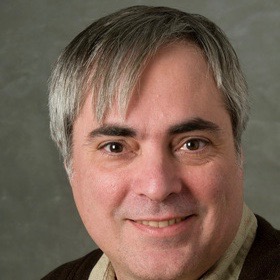
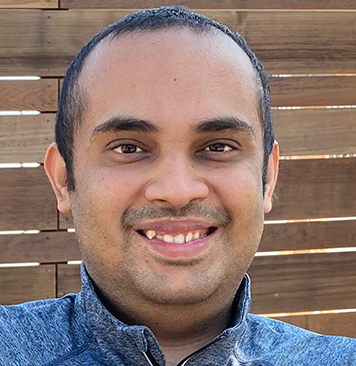
Sebastian U. Stich is a tenured Professor at CISPA Helmholtz Center for Information Security and a member of the European Lab for Learning and Intelligent Systems (ELLIS). His research focuses on optimization for machine learning, collaborative learning (distributed, federated, and decentralized methods), efficient optimization techniques, adaptive stochastic methods, and privacy/security in machine learning. Recent appointments include ERC Consolidator Grant 2024 for the CollectiveMinds project. Key contributions in federated/decentralized learning, uncertainty estimation, and communication-efficient optimization. Active in workshop organization, including the Optimization for Machine Learning workshop at NeurIPS 2024. Teaching modern optimization methods at Saarland University (2023-2025). His work has been recognized with awards such as the Google Research Scholar Award (2023) and Meta Privacy-Enhancing Technologies Award (2022) . His research group includes postdocs Dr. Anton Rodomanov and Dr. Rotem Mulayoff, and PhD students Xiaowen Jiang and Yuan Gao.
Stuart Kurtz is a Professor in Computer Science and the College at the University of Chicago, and serves as Master of the Physical Sciences Collegiate Division. He holds the endowed position of George and Elizabeth Yovovich Professor. His research focuses on theoretical computer science, including computational complexity theory, randomness in computation, type theory, and formal logic. He has contributed to foundational areas such as the Berman-Hartmanis Isomorphism Conjecture and the computational properties of random sets. Kurtz is affiliated with the Theoretical Computer Science and Programming Languages Groups at the University of Chicago. He has been recognized with the 2009 Quantrell Award for teaching excellence. His service roles include Director of Undergraduate Studies and Department Chair in Computer Science. He actively mentors Ph.D. students and has advised multiple graduates in complexity theory and related fields. His academic background includes a Mathematics Ph.D. from the University of Illinois, supervised by Carl Jockusch. He approaches type theory as an intersection of formal logic and functional programming. Research interests span measure-theoretic randomness, computational logic, and complexity class separations. His recent work explores connections between theoretical computer science and interdisciplinary fields like physics and statistics. In teaching, Kurtz has instructed courses such as Formal Language Theory, Discrete Mathematics, and Honors Intro Programming. His service contributions include roles in the Computation Institute and Toyota Technological Institute at Chicago. His lab affiliations and collaborative work reflect a strong commitment to advancing theoretical foundations in computer science.
Li-Yang Tan is an Assistant Professor of Computer Science at Stanford University , focusing on theoretical computer science. His research emphasizes computational complexity, machine learning theory, and algorithm design. Education: Ph.D. in Computer Science from Columbia University , advised by Rocco Servedio His work explores: Boolean function complexity Decision tree learning algorithms Circuit lower bounds Computational-statistical tradeoffs Query complexity Massively parallel algorithms Recent publications analyze computational-statistical tradeoffs via NP-hardness, improve decision tree learning techniques, and establish direct sum theorems for query complexity. His research often bridges complexity theory, learning theory, and algorithm design, with applications in pseudorandomness and correlation clustering. Awards: Best Paper Award at FOCS Best Paper Award at CCC Best Paper Award at SAT Sloan Fellowship Li-Yang collaborates with students and researchers including Guy Blanc, Caleb Koch, and Carmen Strassle. He has delivered invited special issue papers at FOCS, CCC, and SAT conferences.
Ron Steinfeld is an Associate Professor at the Cybersecurity Lab of the Faculty of Information Technology , Monash University . His research focuses on lattice-based cryptography , post-quantum cryptographic protocols , and privacy-preserving technologies . He has contributed to advancements in secure multiparty computation , digital signatures , and blockchain confidentiality . Key areas: Lattice-Based Cryptography, Zero-Knowledge Proofs, Blockchain Security Recent work trends: Quantum-safe protocols, Efficient sampling algorithms, Scalable blockchain solutions Scientific Awards : BEST PAPER AWARD (ASIACRYPT 2015) He has served on program committees for major conferences including CRYPTO , EUROCRYPT , and ASIACRYPT . Ron is a member of the Discrete Mathematics Research Group and has collaborated with institutions like Macquarie University in the past.
Aayush Jain is an Assistant Professor in the Computer Science Department at Carnegie Mellon University. Previously, he was a Postdoctoral Fellow at NTT Research and a PhD student at UCLA, advised by Professor Amit Sahai. His work bridges theoretical and applied cryptography with core computer science principles. Education PhD in Computer Science, University of California, Los Angeles (UCLA) Postdoctoral Fellowship, NTT Research Research Focus His research explores: foundational cryptography, indistinguishability obfuscation, functional encryption, lattice-based cryptography, secure multi-party computation, and post-quantum security. Work emphasizes rigorous theoretical frameworks with practical implications. Publication Trends Recent articles (2021-2024) demonstrate consistent focus on cryptographic primitives, obfuscation techniques, and security reductions. Dominant venues include CRYPTO, EUROCRYPT, FOCS, and STOC with emerging work in machine learning interfaces. Awards Best Paper Award at STOC 2021 for foundational contributions to indistinguishability obfuscation Advising and Collaboration Current PhD advisees: Alper Cakan, Quang Dao (co-advised), Sagnik Saha, Noah Singer (co-advised). Mentored postdocs: Mitali Bafna (2022-2023) and Rex Fernando (2022-2023). Teaches graduate courses in cryptography and theoretical tools. Leadership Leads the CMU Cryptography research group; organized the CMU Cryptography Workshop. Program committee member for FOCS, TCC, ITCS, and ICALP.
Gianluca Setti is a Full Professor at the Department of Electronics and Telecommunications (DET) at Polytechnic University of Turin, where he has been serving since 2017. He previously held positions at the University of Ferrara from 1997 to 2017. His institutional roles include being the Contact Person for the Research Quality Evaluation process, Member of the Interdepartmental Center SmartData@PoliTO - Big Data and Data Science Laboratory, and Member of the University Quality Assurance Committee. He serves as Editor-in-Chief of the Proceedings of the IEEE, the first non-US editor to hold this position. Dr. Setti's research spans multiple interdisciplinary fields including machine learning, artificial intelligence, big data analytics, Internet of Things, biomedical signal processing, power electronics, and electromagnetic compatibility. His work bridges theoretical foundations with practical applications, particularly focusing on compressed sensing, neural networks, and circuit design for specialized applications. His research has significant implications for healthcare, sustainable infrastructure, and next-generation electronics. His publication record reveals a consistent trajectory from foundational work in chaotic systems and neural networks to contemporary applications in AI, IoT, and edge computing. The most recent publications demonstrate his focus on anomaly detection at the edge, neural oracles for biosignal processing, and power electronics innovations. His work shows strong integration between theoretical signal processing and practical circuit implementation. 1998 Caianiello prize (best Italian Ph.D. thesis on Neural Networks) IEEE Fellow (2006) IEEE Circuits and Systems Society Distinguished Lecturer (2004, 2015) 2004 IEEE CAS Society Darlington Award 2013 IEEE CAS Society Meritorious Service Award 2013 IEEE CAS Society Guillemin-Cauer Award 2019 IEEE Transactions on Biomedical Circuits and Systems best paper award Multiple best paper awards at major conferences including ECCTD2005, EMCZurich2005, ISCAS2011, PRIME2019, and EMCCOMPO2019 Dr. Setti has supervised numerous PhD students across various research domains including electromagnetic compatibility, signal and power integrity, communication networks, mechatronics and robotics. His research is supported by significant funding including national PRIN projects, EU-funded JTI-ECSEL initiatives, and commercial contracts. He leads the VLSILAB Group at DET, focusing on circuit architectures, embedded systems, and AI applications. His current projects include DECORI (anomaly detection), StorAIge (embedded storage for AI), PROGRESSUS (energy infrastructure), CONNECT (smart grid), and CONVERGENCE (wearable healthcare applications).
Prabhanjan Ananth is an Assistant Professor in the Department of Computer Science at the University of California, Santa Barbara (UCSB), holding the Glen and Susanne Culler Endowed Chair in Computer Science. He earned his Ph.D. from UCLA in 2017, followed by a postdoctoral fellowship at MIT's CSAIL. His research focuses on cryptography, particularly in classical and post-quantum cryptography, with emphasis on unclonable primitives, pseudorandomness, and cryptographic protocols. Education: Ph.D. in Computer Science from UCLA (2013–2017), postdoctoral research at MIT (2017–2019). Research Interests: His work spans theoretical computer science and cryptography, including post-quantum security, quantum-resistant systems, and unclonable cryptographic primitives. He explores topics like pseudorandomness in quantum models, revocable encryption, and cryptographic protocols for multi-user environments. Recent Publications: His 2025 work advances revocable encryption and pseudorandom unitaries in quantum models. He also contributes to unclonable secret sharing and modular cryptographic design. His research often bridges theoretical foundations with practical applications in quantum-safe systems. Awards: Glen and Susanne Culler Endowed Chair in Computer Science (UCSB). Advising: Current Ph.D. advisees include Aditya Gulati, Yao-Ting Lin, and Divyanshu Bhardwaj. Past students have secured roles at institutions like JPMorgan Chase and EPFL. Teaching: Teaches courses on automata theory (CS 138) and cryptography (CS 178), emphasizing rigorous mathematical proofs and foundational concepts.
Justin Thaler is an Associate Professor in the Department of Computer Science at Georgetown University, researching algorithms and computational complexity with focus on probabilistic proof systems, verifiable computation, and streaming algorithms. Education: PhD Computer Science, Harvard University BS Computer Science and Mathematics, Yale University Research Interests: Develops protocols for verifying computations (including zero-knowledge proofs), analyzes the power of low-degree polynomials, and designs efficient streaming/sketching algorithms for large datasets. Publications: Research advances theoretical foundations of proof systems, with recent work on SNARKs, lookup arguments, and Fiat-Shamir security. Authored the monograph 'Proofs, Arguments, and Zero-Knowledge'. Advising & Labs: Advises PhD students in theoretical computer science. Contributes to open-source projects including DataSketches library of streaming algorithms. Currently on leave at a16z crypto research.
Howard Bondell is a Professor of Statistical Data Science at the School of Mathematics and Statistics, University of Melbourne, since 2018. He serves as Head of School since 2021, Co-Director of the Melbourne Centre for Data Science, and holds an ARC Future Fellowship (2020-2024). Ph.D. in Statistics, Rutgers University (2005) Academic Career: North Carolina State University (2005-2018) His research focuses on model selection , robust estimation , regularisation , Bayesian methods , and uncertainty quantification in statistical and machine learning. His publications emphasize applications in regression analysis, quantile modeling, variable selection for high-dimensional data, and genetic data analysis. Scientific awards include: Fellow of the American Statistical Association (2017) ARC Future Fellow (2020-2024)
Todd Millstein is a Professor in the Computer Science Department at the University of California, Los Angeles (UCLA). He served as the Computer Science Department Chair from 2022-2025 and is also an Amazon Scholar. His research focuses on making software systems more reliable through programming languages techniques, with significant contributions to network verification and probabilistic programming. Millstein received his Ph.D. from the University of Washington Department of Computer Science, where he was a member of the Cecil group led by Craig Chambers. Prior to that, he completed his undergraduate studies at Brown University under the guidance of Paris Kanellakis and Pascal Van Hentenryck. Millstein's research spans several areas of programming languages and systems with a focus on reliability. He has made significant contributions to network verification, developing the Batfish network configuration analyzer which is now managed by Amazon Web Services and forms the basis of Oracle Cloud's Network Path Analyzer. His work has been recognized with the ACM SIGCOMM Networking Systems Award in 2025. He also works on interactive program verification through lemma synthesis and scalable reasoning methods for probabilistic programming languages. His research bridges programming languages theory with practical systems challenges, as highlighted in his SPLASH/OOPSLA 2024 keynote "Everything is a Program (even if it's not)". Millstein's recent publications demonstrate a consistent focus on verification and reliability across multiple domains. His work shows a progression from foundational programming language techniques to practical applications in networking and probabilistic systems. Key themes include data-driven approaches to program analysis, synthesis of verification artifacts, and applying programming languages techniques to non-traditional domains like network configuration. Millstein's scientific achievements have been recognized with numerous prestigious awards including an NSF CAREER Award, an ACM SIGPLAN Most Influential PLDI Paper Award, an ACM SIGCOMM Networking Systems Award, IEEE Micro Top Picks selection, best-paper awards from PLDI, OOPSLA, and SIGCOMM, a Microsoft Research Outstanding Collaborator Award, an Okawa Foundation Research Grant, an IBM Faculty Award, and a Facebook Research Award. He has also received both the Northrop Grumman Excellence in Teaching Award (for junior faculty) and the Eon Instrumentation Inc. Excellence in Teaching Award (for senior faculty) from UCLA Engineering. Millstein advises several Ph.D. students including Ana Brendel, Poorva Garg (co-advised with Guy Van den Broeck), Rajdeep Mondal (co-advised with George Varghese), and Rathin Singha (co-advised with George Varghese). His research has been supported by various grants including an NSF CAREER Award, Okawa Foundation Research Grant, IBM Faculty Award, and Facebook Research Award. He has also been a Co-Founder and Chief Scientist of Intentionet, which was later acquired by Amazon Web Services. Millstein is actively involved in the Batfish project, an open-source network configuration analyzer that has had significant practical impact. Batfish is now managed by AWS, powers Oracle Cloud's Network Path Analyzer, and is used by dozens of companies. His research group continues to work on network reliability, developing techniques for scalable BGP policy verification and behavioral testing of protocol implementations.
Mohammad Mahmoody is an associate professor in the Computer Science Department at the University of Virginia. His research focuses on theoretical aspects of cryptography, computational complexity, and machine learning, particularly on understanding barriers such as lower bounds and impossibility results. He has taught courses including Algorithms, Cryptography, and Theory of Computation. His work explores foundational questions in cryptography, adversarial robustness in machine learning, and computational assumptions underlying cryptographic primitives. Education: Ph.D. in Computer Science from Princeton University (2010) Affiliations: University of Virginia, Department of Computer Science Research Interests: His interests span cryptography (e.g., encryption schemes, coin-tossing, and registration-based systems), theoretical computer science (computational complexity, algorithms), and machine learning (adversarial robustness, data poisoning). He emphasizes formal proofs and rigorous analysis in security and learning frameworks. Publications: Recent work includes studies on quantum-resistant cryptography, adversarial machine learning, and cryptographic protocol design. Key themes involve impossibility results, lower bounds for cryptographic assumptions, and the interplay between computational constraints and learning theory. Service & Grants: - Served on program committees for ICML, NeurIPS, CRYPTO, and TCC - Organized workshops on cryptography and lower bounds - Research funded by grants exploring adversarial robustness and cryptographic foundations Labs/Teams: - Collaborations with researchers in cryptography, machine learning, and theoretical computer science - Advises a team of graduate students and postdocs in security and learning theory.
James B. Orlin is the E. Pennell Brooks (1917) Professor in Management and a Professor of Operations Research at the MIT Sloan School of Management. He specializes in network and combinatorial optimization with applications spanning transportation, computer science, operations, and marketing. BA in Mathematics, University of Pennsylvania MA in Mathematics, California Institute of Technology MMath, University of Waterloo PhD in Operations Research, Stanford University His research focuses on designing efficient algorithms for network optimization problems, including shortest path, max flow, and min cost flow. He has contributed to algorithmic theory in logistics, telecommunications, and inventory management, with work on stochastic demand models and data-driven inventory policies. Recent publications include advancements in directed shortest path algorithms, robust submodular function maximization, and energy storage problem complexity. His seminal textbook Network Flows: Theory, Algorithms, and Applications (1993) remains a foundational reference. Leonard G. Abraham Prize Khachiyan Prize Test of Time Award As a mentor, he has advised numerous researchers through collaborative publications and teaching. His work addresses both theoretical algorithm development and practical implementation across diverse domains including airline scheduling, logistics, and network design.
Wolfgang Merkle is a Privatdozent at Universität Heidelberg's Institut für Informatik, affiliated with the Faculty of Mathematics and Computer Science. His research focuses on Theoretical Computer Science and Discrete Mathematics, particularly randomized algorithms and Kolmogorov complexity. He teaches courses including 'Randomized Algorithms' and seminars on Kolmogorov complexity for Bachelor and Master programs. Research interests span algorithmic randomness, computational complexity, and information theory, with significant contributions to understanding computability limits and the foundations of theoretical computer science. His recent publications explore the interplay between randomness and computational efficiency, with works examining superspeedability, relativized depth, and information distance theories.
Dominique Unruh is a Professor at RWTH Aachen University , leading the Chair for Quantum Information Systems . Additionally, they hold a Professorship in Cryptography at the Institute of Computer Science of the University of Tartu , Estonia. Their research spans quantum computing , quantum cryptography , post-quantum cryptography , and formal verification of cryptographic protocols and programs. Research Focus : Quantum programs, zero-knowledge proofs, lattice-based cryptography, and quantum random oracle model. Key Contributions : Advancements in NTRU encryption efficiency, quantum Hoare logic, and rewinding techniques for security proofs. Tools : Active development in the EasyCrypt framework for cryptographic verification. Email : unruh@cs.rwth-aachen.de
Wenlong Mou is an Assistant Professor at the University of Toronto's Department of Statistical Sciences, with additional affiliation at the Vector Institute for AI. His research develops optimal statistical methods and efficient algorithms for data-driven decision-making, focusing on reinforcement learning, stochastic approximation, and causal estimation. He teaches advanced courses in theoretical statistics (STA3000) and stochastic processes (STA447/2006). Education: Ph.D. in EECS, University of California, Berkeley (2023) B.Sc. in Computer Science and Economics, Peking University Research Focus: Mou's work bridges statistical theory with machine learning practice. Key areas include: Theoretical foundations of reinforcement learning (e.g., Bellman equations, continuous-time systems) Efficient algorithms for semi-parametric estimation and debiasing Non-asymptotic analysis of stochastic optimization and MCMC methods High-dimensional statistical inference and causal modeling Publication Trends: Recent articles (2023–2025) emphasize reinforcement learning theory (policy evaluation, adaptive interpolation), causal inference (debiased estimators, propensity scores), and statistical computing (diffusion processes, Langevin algorithms). Methodological rigor and non-asymptotic guarantees characterize his work. Awards: INFORMS APS Student Paper Competition Finalist (2022) Advising and Labs: Actively recruiting PhD students with backgrounds in mathematics or deep learning. Students access GPU clusters via the Vector Institute. Grants unspecified in sources.