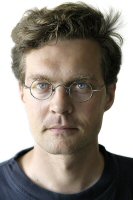
Dr. Nicky van Foreest is an Associate Professor at the Faculty of Economics and Business , University of Groningen. His research bridges probability theory and optimization , focusing on applications in manufacturing, inventory, queueing, and service processes. His 15 most recent articles explore computational methods in probability, recursion, and entropy (e.g., Solving Wordle with Entropy ), geometric properties (e.g., Sagemath Proofs for Three Circles ), and stochastic system analysis (e.g., Memoryless Excursions ). He develops educational materials and open-source software, including contributions to stochastic_or and sicm_sagemath . Contact: n.d.van.foreest@rug.nl | University Profile | Personal Homepage .
Renato Ferrero is an Associate Professor at the Department of Control and Computer Science (DAUIN), Politecnico di Torino (Polito) , with key roles as contact person for training activities and member of the PIC4SeR Interdepartmental Center for Service Robotics . His research spans Wireless Sensor Networks (WSN) , Internet of Things (IoT) , and Environmental Monitoring , supported by competitive grants like AGRITech Spoke 6 (2022-2025) and MIUR funding (2017). He has published extensively on topics including air pollution monitoring , quantum-inspired security , and agricultural technology , with recent work focusing on deep learning for mask/respirator detection and biofertilizer analysis . As an IEEE Access Associate Editor and program committee member for conferences like COMPSAC and RFID-TA, he contributes to academic governance. His teaching includes Computer Architecture (2019-2025) and Ubiquitous Computing (2019-2021) at Polito. He advises PhD students Chiara Panico and Nicola Dilillo , with projects in Data Science , Computer Vision , and AI Life Sciences .
Violeta Tomasevic is a Professor at Singidunum University's Faculty of Informatics and Computing, where she has been employed since 2007. She teaches across all academic levels (bachelor's, master's, and doctoral) in computer science and informatics fields, with courses including Computer Organization and Architecture, Advanced Software Architectures, and Expert Systems. Her academic journey began with a strong foundation in electrical engineering from the University of Belgrade. Her educational background includes: Doctoral studies in Cryptanalysis at the Faculty of Electrical Engineering, University of Belgrade (1998-2005) Master's studies in Digital Signal Processing at the Faculty of Electrical Engineering, University of Belgrade (1988-1994) Basic studies in Electronics at the Faculty of Electrical Engineering, University of Belgrade (1983-1988) Tomasevic's research primarily focuses on cryptology, specializing in cryptanalysis, RFID systems security, and multi-criteria decision making. Her work bridges theoretical cryptography with practical applications in information security and business decision support. She has made significant contributions to time-memory trade-off techniques in cryptographic analysis and has extended her expertise into insurance technology applications, particularly regarding cybersecurity threats in modern insurance systems. Her research demonstrates a consistent trajectory from foundational work in expert systems to advanced cryptographic research and practical business applications. Her publication record shows a clear evolution from early work on expert systems and business decision support to specialized cryptographic research, particularly in RFID protocols and stream ciphers like RC4. Recent publications demonstrate her expanding interests into educational data mining and insurance technology applications. The interdisciplinary nature of her work connects computer science with business applications, reflecting Singidunum University's emphasis on practical, industry-relevant research. Tomasevic has participated in numerous research projects throughout her career, including domestic projects funded by the Ministry of Science (BEST, FIDES), commercial projects for domestic and international clients (BASF), and European Commission FP6 projects (PROMETEA, Web4Web). She was also involved in the Joint Project Office cooperation program with the Fraunhofer FIRST Institute from Berlin. She has authored several textbooks including 'Basics of computer architecture and organization' (2019), 'Basics of computer technology' (2012), and 'Application software development' (2012), which support her teaching activities in computer science education at Singidunum University.
Xiaowei Deng is an Assistant Researcher at the Institute for Quantum Science and Engineering at Southern University of Science and Technology (SUSTech), China. His work focuses on quantum optics and superconducting quantum computing, particularly in the experimental analysis of continuous-variable quantum systems and entanglement structures. 2007-2011: B.S. in Optical Information Science and Technology, Shanxi University, China 2011-2017: Ph.D. in Quantum Optics, State Key Laboratory of Quantum Optics and Quantum Photonic Devices, Shanxi University, China Deng's research involves characterizing quantum entanglement in Gaussian states, studying the effects of lossy channels on quantum communication, and exploring multipartite entanglement in photonic systems. His work connects quantum metrology with entanglement criteria via squeezing coefficients and the Fisher information, revealing robustness of entanglement under noise and loss. His publications span topics such as Einstein-Podolsky-Rosen steering, Greenberger-Horne-Zeilinger states, and cluster-state quantum computation. Recent studies analyze multi-mode entanglement across partitions and demonstrate experimental techniques for preserving entanglement under correlated noise. National Scholarship for Doctoral Students (2016) Wang Daheng Optical Award (2017) President's Distinguished Postdoctoral Fellow, SUSTech (2017) Second Prize, National Conference on Quantum Optics (2016) Outstanding Graduate Student, Shanxi University (2017)
Professor John Towse is a distinguished academic in the Department of Psychology at Lancaster University, with expertise spanning cognitive psychology, cybercognition, and metascience. His research investigates the intricate relationships between working memory, executive functions, and real-world cognitive performance, as well as the psychological aspects of cybersecurity and software development. His research interests include: Working memory and executive functions - examining how active maintenance of transient information influences cognitive development and skills Cybercognition - studying how cognitive systems interact with online environments and digital interfaces Metascience - exploring ways to enhance research credibility and optimize research processes Psychology of computer security - investigating human factors in secure software development Professor Towse's recent publications reveal a strong focus on the intersection of cognitive psychology and cybersecurity, with particular attention to working memory mechanisms, data sharing practices in psychological research, and cognitive factors influencing susceptibility to email fraud. His work bridges theoretical cognitive science with practical applications in digital security and research methodology. Notable contributions include investigations into theoretical foundations of working memory systems, psychological predictors of vulnerability to cyber fraud, security perceptions among software developers, and ethical frameworks for digital behavioral data research. Professor Towse actively supervises postgraduate research, currently guiding PhD student Matthew Ivory in research related to protecting ordinary people from deepfakes. He has led significant research projects including 'Why Johnny doesn't write secure software? Secure Software development by the masses' (2017-2021), funded by EPSRC with £518,783.44, where he served as Co-Investigator. His professional activities include membership in the Experimental Psychology Society, editorial roles for journals including the Journal of Numerical Cognition and Psychologia, and participation in the ESRC Peer College Review. He also serves on the Expert Group on Open Science (EGOS).
Michael A. Zazanis is a Professor in the Department of Statistics at the Athens University of Economics and Business (AUEB), where he has been a faculty member since 1997. He previously held positions as Assistant Professor at Northwestern University (1986-1993) and Associate Professor at the University of Massachusetts, Amherst (1993-1997). Dr. Zazanis received his Engineering Diploma from the National Technical University of Athens (1982), followed by an M.Sc. (1983) and Ph.D. (1986) in Applied Mathematics from Harvard University. His academic journey reflects a strong foundation in both engineering and theoretical mathematics. His research focuses on Applied Probability, Queueing Systems, Stochastic Simulation, and applications in Manufacturing and Risk Management. Over his career, his work has evolved from foundational perturbation analysis of queueing systems to contemporary research on age-of-information metrics in communication networks. His contributions span theoretical developments in stochastic processes and practical applications in production control systems and risk analysis. Dr. Zazanis has published extensively in leading journals including Journal of Applied Probability, Stochastic Processes and their Applications, Operations Research, Management Science, and Queueing Systems. His 1988 paper in Management Science on perturbation analysis for the M/G/1 queue is considered seminal in the field. Best Publication Award from the TIMS College on Simulation (1990) He has served in administrative roles including Graduate Program Director (2003-2006) and Head of the Statistics Department (2006-2008) at AUEB. Dr. Zazanis teaches undergraduate courses in Mathematical Methods, Stochastic Processes, and Probabilities, as well as graduate courses in Advanced Stochastic Processes and Operations Research. He is married to Corinna Anastassakou and has one son, Aristomenes.
Maciej Huk is an Assistant Professor at Wroclaw University of Science and Technology, working in the Department of Applied Informatics within the Faculty of Information and Communication Technology. He has been affiliated with the university since 2007, previously working in the Department of Artificial Intelligence and Department of Security of Computer Systems before moving to his current department in 2016. His academic credentials include Ph.D. and D.Sc. degrees in Computer Science from Wroclaw University of Technology (2007, magna cum laude) and an M.Sc. Eng. degree in Computer Science (magna cum laude). Dr. Huk's research spans multiple areas of artificial intelligence and computer science, with particular emphasis on contextual systems, artificial neural networks, and machine learning. His work explores contextual neural networks, selective attention mechanisms, genetic algorithms, and ensembles of classifiers. He has developed several research software systems including H2O Snowflake for distributed training of contextual neural networks, CxNNS, GACS for context-sensitive text mining, and DYDO for educational applications. His research bridges theoretical computer science with practical applications in IoT, embedded systems, and robotics. His publication record shows consistent productivity with research spanning from 2006 to the present (2025), demonstrating evolving focus from foundational neural network research to more applied contextual systems. The publication trends indicate a strong specialization in contextual neural networks, with recent work expanding into biomedical applications (CRISPR-Cas9 analysis), educational technology (attendance systems), and energy optimization. His work consistently addresses the challenge of context representation and utilization in machine learning systems. Dr. Huk serves as an Academic Editor for PLOS ONE Journal and Evolving Systems Journal, and has reviewed over 130 papers since 2016 for journals registered in ISI Web of Science. He has been actively involved in the academic community as a program and organization committee member for numerous conferences including ACIIDS (2016-2021), ICCCI (2016-2020), and others. He has chaired special sessions on Intelligent and Contextual Systems at IEEE conferences. His professional activities extend beyond pure academia, including serving as Software Architect/Data Analyses Architect at Gigaset Communications since 2008, and organizing clinical research including the Phase 3 randomized multicenter clinical study NCT04952519 on amantadine treatment for COVID-19 patients. He is certified to organize clinical trials with human subjects through NIH NIAID Good Clinical Practices 2.0.
Tuğrul TAŞCI serves as an Assistant Professor in the Department of Information Systems Engineering at Sakarya University's Faculty of Computer and Information Sciences, where he has maintained continuous academic service since 2001. His career progression includes Research Assistant positions across multiple university units before advancing to his current faculty role in 2016. His academic credentials include: Doctorate in Computer and Information Engineering (2014) from Sakarya University Institute of Science, thesis: Real-Time Motion Tracking with Particle Filtering Based on Data Fusing Master's degree in Computer and Information Engineering (2004) with thesis: Design of an Integrated Web-Based Distance Education System Bachelor's degree in Computer Engineering (2001) with thesis: Course Scheduling with Genetic Algorithms Dr. TAŞCI's research centers on Artificial Intelligence applications, particularly Natural Language Processing for Arabic text and Computer Vision . His work integrates particle filtering , data fusion , and optimization algorithms (e.g., Artificial Bee Colony, Firefly) to solve problems in text summarization, motion tracking, and image processing. Recent publications demonstrate expansion into deep learning for industrial defect detection and time series analysis. Analysis of his 2019-2024 publications reveals three dominant research trajectories: (1) Arabic NLP with focus on extractive summarization using PageRank and word embeddings, (2) Computer vision systems for motion tracking and text detection leveraging particle filters and curvature features, and (3) Hybrid optimization techniques applied to diverse domains from emergency management to customer churn prediction. Current academic advising activities and research grant details are not publicly documented in available sources. Similarly, no institutional laboratories or research teams are explicitly associated with his profile in the provided materials.
Dr. Magdalena Łysakowska is a researcher at the University of Zielona Góra, affiliated with the Department of Computer Science Applications. She teaches courses in linear algebra, logic and set theory, combinatorial analysis, differential geometry, and general algebra. Research focuses on combinatorial geometry (cube partitions, Keller's hypothesis) Nonlinear analysis (Lipschitz maps, fixed point theorems) Stochastic inclusions and multivalued equations Iterative algorithms (Gaussian and Archimedes-Borchardt) Applications of computer science to secure data transmission and software development She participates in Erasmus teaching collaborations, delivering courses at the University of Debrecen (Hungary) and Ilmenau University of Technology (Germany). Her work spans theoretical and applied mathematics, emphasizing geometric structures, functional equations, and computational methods.
Dr. Aditya Japa serves as a Lecturer in Computer Engineering at Ulster University's School of Computing, Engineering and Intelligent Systems, Derry~Londonderry campus. His academic appointment is housed within the Faculty of Computing, Engineering and Built Environment. His research focuses on cutting-edge hardware security solutions, specializing in Physical Unclonable Functions (PUFs), True Random Number Generators (TRNGs), power side-channel analysis countermeasures, secure neural network accelerators, and compute-in-memory security architectures. His work bridges energy efficiency with robust security mechanisms for emerging computing paradigms. Recent publications demonstrate strong thematic consistency in energy-efficient security implementations, particularly through novel transistor technologies like FeFETs and VGSOT-MTJ structures. His work consistently targets SAT attack resilience while optimizing power consumption in logic locking and memory systems. Dr. Japa previously held a Research Fellow position at Queen's University Belfast's Centre for Secure Information Technologies. His educational background includes a PhD in ECE from Dr. SPM IIIT Naya Raipur, India, with dissertation work on Tunnel FET based Energy Efficient Circuit Design for Hardware Security.
Dr. Ernestas Filatovas is a Senior Researcher and Chief Researcher in the Project at Vilnius University's Institute of Data Science and Digital Technologies (formerly Institute of Mathematics and Informatics), where he has been affiliated since 2013. He leads the Blockchain and Quantum Technologies Group, focusing on cutting-edge research at the intersection of quantum computing, blockchain, and artificial intelligence. Previously, he served as an Associate Professor and Lecturer at Vilnius Gediminas Technical University's Faculty of Fundamental Sciences from 2013 to 2019. Dr. Filatovas earned his Doctor of Technology in Computer Science Engineering from Vilnius University Institute of Mathematics and Informatics in 2012. His dissertation, supervised by Prof. Dr. Olga Kurasova, focused on the interactive solution of multi-criteria optimization problems. His research spans multiple high-impact domains, with particular expertise in blockchain technologies, quantum computing, artificial intelligence, and machine learning. He has pioneered work in quantum blockchain implementations, reproducibility of AI research through blockchain verification, and quantum machine learning applications. His research bridges theoretical computer science with practical applications in financial markets, healthcare, and distributed systems. His extensive publication record—over 50 scientific papers, with more than 25 in Clarivate Analytics-indexed journals—demonstrates consistent productivity and international collaboration. Recent work shows a clear trajectory toward quantum-enhanced AI systems, blockchain-based research verification frameworks, and quantum algorithms for practical problems. Laureate of the 4th LMA Young Scientists' Conference (2014) INFOBALT scholarship 2nd place winner (2014) Lithuanian State Science and Studies Foundation funding recipient (2009, 2010) Recognized as one of Lithuania's most active doctoral students Master's degree with honors (2006) Dr. Filatovas leads multiple significant research projects, including the 2021-2024 project 'Solving the problems of reproducibility of scientific research in the field of artificial intelligence using blockchain technologies' as team leader, and the 2023-2027 project 'Development and validation of quantum machine learning methods using prepared datasets' as Chief Researcher. He has also contributed to international collaborations such as the Spanish-funded 'High Performance Solutions for Modern Scientific Computing Challenges' (2019-2021). His popular science contributions, including the VU news portal article 'Quantum Computing: Who and Why?', demonstrate his commitment to science communication. As a key member of Vilnius University's Blockchain and Quantum Technologies Group, Dr. Filatovas contributes to Lithuania's growing reputation in quantum computing research and blockchain innovation, working closely with international collaborators across Europe.
Dr. Samy Missoum is a Professor in the Department of Aerospace and Mechanical Engineering at the University of Arizona's College of Engineering. His academic career spans over two decades with continuous research and teaching contributions in multidisciplinary design optimization, reliability-based design, and computational mechanics. He has maintained an active teaching schedule offering graduate-level courses including Finite Element Methods, Design Optimization, and Advanced Finite Element Analysis through Fall 2025. Dr. Missoum's research focuses on Multidisciplinary Design Optimization, Reliability-Based Design Optimization, Finite Element Analysis, Probabilistic Design, Structural Dynamics, and Aeroelasticity. His work bridges theoretical developments with practical engineering applications, particularly in handling uncertainty in complex systems. He has pioneered approaches using Support Vector Machines for engineering design problems, especially for discontinuous responses and multiple failure modes. His research has significant applications in aerospace structures, mechanical systems, and renewable energy technologies. His recent publications (2022-2024) demonstrate a strong focus on reliability assessment of uncertain systems subjected to random vibrations, stochastic optimization of nonlinear energy sinks, and thermal optimization for concentrated solar power systems. His work employs sophisticated computational approaches including surrogate modeling, multi-fidelity methods, and advanced optimization techniques to address complex engineering problems with uncertainty. Dr. Missoum's scholarly achievements have been recognized through several awards including being named an Associate Fellow of the American Institute of Aeronautics and Astronautics (2017) and receiving the 'Most Helpful to Their College Education' award from AME Seniors (2014). He was also invited as a Professor at Ecole Centrale in Marseille, France during 2021. His research has been consistently supported by grants that enable his work on structural reliability, optimization under uncertainty, and multidisciplinary design. He maintains active collaborations with researchers both nationally and internationally, as evidenced by his co-authored publications with scholars from various institutions. Dr. Missoum leads the CODES Laboratory at the University of Arizona, which focuses on Computational Optimization and Design under uncertainty. The laboratory conducts research on reliability assessment, multidisciplinary design optimization, and development of novel computational methods for engineering design problems with complex constraints and uncertainties.
Rachid Guerraoui is a Moroccan-Swiss computer scientist and Full Professor in the School of Computer and Communication Sciences at EPFL. He is renowned for his significant contributions to distributed and concurrent computing, holding the prestigious Chair in Distributed Computing at the Collège de France (2018-19). As an ACM Fellow (2012) and recipient of the Dahl-Nygaard Senior Prize (2024), his work has shaped both theoretical foundations and practical implementations in distributed systems. Guerraoui earned simultaneous Master's degrees in Computer Engineering from École supérieure d'informatique électronique automatique (ESIEA) and in Computer Science from Pierre and Marie Curie University in 1989. He completed his PhD at Université d'Orsay in 1992 under the supervision of Christian Fluhr, with a dissertation titled "Programmation Répartie par Objets: Études et Propositions." Following postdoctoral research at EPFL, he joined the computer science faculty in 1999 after working at HP Labs and MIT. Guerraoui's research spans distributed computing, concurrent systems, transactional memory, and asynchronous algorithms. His work on establishing theoretical foundations of Transactional Memory, including the concept of opacity, has been highly influential. He has also made significant contributions to scalable information dissemination methods, asynchronous distributed computations, and the mathematical abstraction of indulgence. His research bridges theoretical rigor with practical implementations, as evidenced by systems like SwissTM and STMBench7. His publication record shows a clear evolution from theoretical foundations to practical implementations and broader applications. Early work focused on fundamental problems like consensus and renaming, while more recent publications address machine learning applications and public understanding of AI. The consistent thread throughout his career is a focus on making distributed systems more reliable, efficient, and accessible. Guerraoui has received numerous prestigious awards including: ACM Fellow (2012) ERC Advanced Grant Award (2013) Google Focused Award (2014) Middleware Best Paper Award (2014) Middleware 10-Years Best Paper Award Chair in Distributed Computing, Collège de France (2018-19) Dahl-Nygaard Senior Prize (2024) As an academic advisor, Guerraoui has mentored students including El Mahdi El Mahmdi, with whom he co-created the Wandida project - a collection of educational videos on computer science. His research has been supported by significant grants from the European Research Council and Google. Beyond research, Guerraoui actively participates in public discourse, particularly regarding computer science education and technology policy. Guerraoui leads the Distributed Computing Laboratory (DCL) at EPFL, which focuses on advancing the state of the art in distributed systems. The lab's work spans theoretical foundations, practical implementations, and educational outreach, reflecting Guerraoui's holistic approach to computer science research and education.
Marco Reale serves as a Research Fellow within the Department of Physics and Chemistry at the University of Palermo, specializing in advanced nanophotonic systems and carbon-based nanomaterials. His academic activities span teaching core physics courses and conducting cutting-edge research in optical phenomena at the nanoscale. His research program centers on: Quantum dot superparticles and wavelength-tunable lasing mechanisms Carbon nanomaterial engineering for photoluminescence enhancement Random lasing phenomena in disordered systems Ultrafast photophysics of distorted nanographenes Hybrid optical structures using nanocarbons Analysis of his 13 recent publications (2022-2025) reveals a dominant focus on carbon nanomaterials (quantum dots, nanographenes) for lasing applications, with significant contributions to understanding surface interactions, plasmonic effects, and femtosecond-scale photophysical processes. His work bridges fundamental nanophotonics with practical applications in optical labeling, random number generation, and energy conversion. Teaching responsibilities include Physics II (6 CFU) for Robotics Engineering students and Physics Applied to Nutrition (2 CFU) for Dietitian training. Office hours are held Mondays 3:00-5:00 PM at the Department of Physics and Chemistry (Via Archirafi 36), or by appointment via the student portal.
Khanh Duy Trinh is a Professor (non-tenure-track) at Waseda University's Global Center for Science and Engineering, specializing in probability theory and its applications to random matrix theory and stochastic topology. He holds a PhD from Osaka University (2012) and has held academic positions at Tohoku University and Kyushu University. Current affiliation: Waseda University (2025-present) Past roles: Associate Professor at Waseda (2019-2025), Tohoku University, Kyushu University Research areas: Beta ensembles, Random topology, Spectral measures, Stochastic geometry His work demonstrates universal behavior in random matrix models through spectral analysis and topological persistence. Key contributions include central limit theorems for eigenvalue statistics, Poisson approximations in high-temperature regimes, and geometric interpretations of persistence diagrams. His recent papers focus on generalized beta processes and higher-dimensional complex structures. Current projects include: JSPS Grant 2024-2029: Universal approaches in random matrix theory Past JSPS Grant 2019-2023: Multi-aspects of beta ensembles Teaching activities at Waseda include: Introduction to Probability and Statistics Advanced Probability and Statistics Master's Thesis advising in Pure and Applied Mathematics