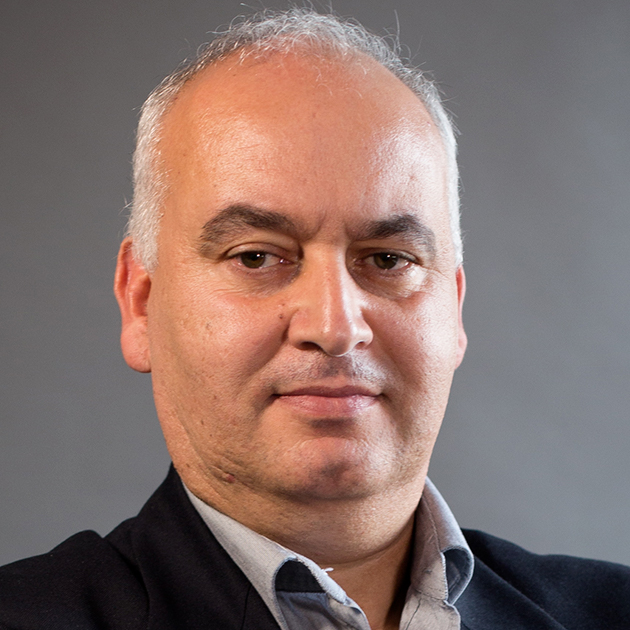
Alice C. Niemeyer is a University Professor at RWTH Aachen University, holding the Chair B for Mathematics and specializing in Algebra. She is also affiliated with the Centre for the Mathematics of Symmetry and Computation at the University of Western Australia. Her research spans Group Theory, Finite Classical Groups, and Combinatorics, with interdisciplinary applications in 3D concrete printing and topological interlocking assemblies.
Dr. Matthias Stosiek is a Lecturer and researcher at the Technical University of Munich (TUM) , affiliated with the TUM School of Natural Sciences , Department of Physics , and the Chair of AI-based Materials Science led by Prof. Dr. Patrick Rinke. His role involves both teaching and advanced research in applying machine learning to materials science and biophysical systems. Education: PhD (Dr. rer. nat.), Universität Regensburg , 2020. Dissertation: "Self-consistent-field ensembles of disordered Hamiltonians: Superconductor-Insulator Transition" under Prof. Dr. Ferdinand Evers. Research Interests: Dr. Stosiek's research integrates machine learning with materials science and biophysics . He focuses on understanding the structure-property relationships of Lignin-Carbohydrate Complexes (LCCs) , a key component in plant biomass. His work includes developing AI-driven models to predict and optimize material properties, contributing to sustainable materials and biorefinery processes. He also explores disordered systems and superconductivity , particularly the superconductor-insulator transition in 2D materials. Publications Overview: His recent publications (2018–2025) span machine learning applications in materials science , including datasets for LCCs, optimization of polymer actuators, and AI-guided biorefinery processes. Earlier works delve into quantum transport and superconductivity in disordered systems , highlighting his expertise in both fundamental physics and applied AI. Teaching: Dr. Stosiek co-teaches courses such as "Introduction to Machine Learning for Materials Science 2" and its associated computer tutorials. He also supervises student theses, fostering the next generation of interdisciplinary scientists. Labs & Teams: He is an integral part of the Chair of AI-based Materials Science , working alongside Prof. Rinke and a multidisciplinary team including Casper Larsen, Xiangzhou Zhu, Nitik Bhatia, and Prajwal Pisal. The group is located at the Garching campus, a hub for cutting-edge research in physics and materials science at TUM.
Benedek Valko is a Professor in the Department of Mathematics at the University of Wisconsin-Madison, specializing in probability theory and stochastic processes. He maintains an active teaching schedule across undergraduate and graduate probability courses and has advised numerous PhD students. His research interests focus on probability theory, stochastic processes, random matrix theory, and Brownian motion. His scholarly work includes co-authoring the textbook Introduction to Probability (2017) with Anderson and Seppäläinen, which has become a standard reference for undergraduate probability courses. His recent publications demonstrate expertise in martingale theory and limit theorems, with particular emphasis on central limit theorems for martingales and foundational probability concepts. His work bridges theoretical developments with practical applications in stochastic processes. Valko is an active member of the UW probability group, participating in the probability seminar and graduate student reading seminar. His teaching portfolio spans from introductory probability (MATH 431) to advanced graduate courses like Theory of Probability (MATH 733/734) and Topics in Probability (MATH 833). He has advised multiple PhD students including Yahui Qu (current), Jiaming Xu, Yun Li, Hans Chaumont, Diane Holcomb, and Chris Janjigian, demonstrating his commitment to graduate education in probability theory.
Imre Varga is an Associate Professor at the Department of Theoretical Physics, Budapest University of Technology and Economics. His office is located in Room F III. GF 8, and he can be contacted via email at varga.imre@ttk.bme.hu or by phone at +36 1 463 1059. Dr. Varga's research focuses on theoretical physics with emphasis on: Disordered quantum systems and Anderson localization transitions Multifractality in critical random matrix ensembles Quantum chromodynamics at high temperatures Quantum chaos and mesoscopic transport phenomena Finite-size scaling at metal-insulator transitions His publications predominantly explore critical phenomena in condensed matter and high-energy physics, with recurring themes of multifractal analysis, disorder effects, and quantum transport. Recent works investigate complexity measures in quantum systems (2025), phase space entropies (2022), and Dirac operator spectra in QCD (2015). No scientific awards or student advising relationships are mentioned in the available information. Laboratory affiliations, team collaborations, or grant information are not specified in the provided materials.
Mohamed Ndaoud is an Associate Professor of Statistics at ESSEC Business School and a member of the Statistics Department at CREST. Previously, he held a tenure-track position as Assistant Professor in the Department of Mathematics at the University of Southern California (USC) from August 2019. He earned his PhD in theoretical statistics under the supervision of A.B. Tsybakov. His educational background includes: PhD in Theoretical Statistics, supervised by A.B. Tsybakov. Dr. Ndaoud's research centers on high dimensional statistics, with core contributions in variable selection, estimation, and community detection. He also actively explores robust statistics, stochastic processes, harmonic analysis, random matrix theory, and spiked models, often bridging theoretical statistics with machine learning applications. Analysis of his publication record (2018-2024) reveals a consistent focus on developing robust and adaptive methods for high-dimensional data. Key themes include outlier-robust regression, clustering algorithms for mixture models, minimax optimal procedures, and harmonic analysis techniques for Gaussian processes. His work frequently introduces non-convex and tuning-free approaches to address challenges in sparse modeling and statistical learning. Scientific Awards: No awards were listed in the provided information. Research funding includes support from the CY Initiative of Excellence Paris-Seine. There is no information available regarding student advising or additional grants. Dr. Ndaoud is an integral member of CREST's Statistics Department and serves on the organizing committee for the Meeting in Mathematical Statistics (2023-2025) in Luminy, France. He actively participates in the international statistics community through workshops and tutorials, such as the upcoming Heidelberg-Paris workshop on mathematical statistics in January 2025.
Djalil CHAFAÏ is a University Professor of Mathematics at Université Paris-Dauphine - PSL, with dual affiliation at CEREMADE (Centre de Recherche en Mathématiques de la Décision) and DMA (Département de Mathématiques et Applications) at École normale supérieure (Paris) - PSL. He currently serves as Directeur des études du DMA (2021-2026) and Directeur scientifique du RNBM (2021-2025). His extensive research spans multiple areas of probability theory, mathematical physics, and applied mathematics. CHAFAÏ's research interests center around geometric and probabilistic functional analysis, random matrices, random graphs, free probability, and high-dimensional phenomena. His work connects mathematical theory with applications in biology, physics, and data science. He has made significant contributions to understanding cutoff phenomena in high-dimensional diffusions, Riesz energy problems, and Coulomb gases. His research often combines theoretical analysis with visual illustrations created using computational tools like Octave, Python, and Julia. Analysis of his recent publications reveals a strong focus on cutoff phenomena in various stochastic processes, equilibrium measures in potential theory, and the mathematical properties of random matrix ensembles. His work demonstrates a consistent pattern of bridging abstract mathematical concepts with concrete physical phenomena, particularly in statistical physics. The interdisciplinary nature of his research is evident in the diverse applications ranging from mathematical biology to data science. CHAFAÏ has successfully advised numerous doctoral students whose work continues to influence the field. His current doctoral students include Samuel Chan-ashing, Rémi Bonnin, and Kewei Pan, while his former students have gone on to positions at prestigious institutions worldwide. He is actively involved in the mathematical community through organizing conferences, seminars, and workshops, including the Matrices Et Graphes Aléatoires (MEGA) project and the Conviviality project funded by ANR.
Professor Timothy Trudgian is a leading mathematician in the field of analytic number theory , currently affiliated with the School of Physical, Environmental and Mathematical Sciences at UNSW Canberra . He also collaborates closely with the Number Theory Group at UNSW Sydney. With a BSc (Hons) from Australian National University (2005) and a DPhil from the University of Oxford (2010) , his work focuses on the Riemann zeta-function , distribution of primes , and primitive roots . He actively supervises PhD students and offers scholarships for high-achieving applicants. Education : BSc (Hons) - Australian National University (2005), DPhil - University of Oxford (2010) Research Areas : Analytic number theory Distribution of primes Primitive roots Riemann zeta-function Finite field arithmetic Computational number theory His recent publications and grants, including an Australian Research Council Future Fellowship (2016-2020) , emphasize explicit bounds and zero-free regions for zeta and L-functions. He supervises students such as Matteo Bordignon and Valeriia Starichkova , with a focus on collaborative research and international conferences. Professor Trudgian's work spans both theoretical and computational aspects of number theory.
P.F.A. Van Mieghem is a Professor at the College of Electrical Engineering, Mathematics and Computer Science, specializing in Network Architectures and Services. His research focuses on mathematical modeling of complex networks, including reliability analysis, epidemic dynamics, and temporal graph generation. Network Reliability Polynomials Continuous-Time Markov Processes Temporal Contact Graphs Community Detection Algorithms He received the James P.G. Sterbenz Best Paper Award (2019) for his contributions to topological network analysis. Recent work explores fractional calculus applications in epidemiological network models and random walker-based graph reproduction techniques.
Lily Qiao is a Senior Lecturer in Space Systems Engineering at the School of Engineering and Technology , University of New South Wales (UNSW) Canberra . She holds a PhD in Guidance, Navigation, and Control (GNC) from Nanjing University of Aeronautics and Astronautics (2011) and has been affiliated with UNSW since 2011, progressing from Research Associate to her current role. Her teaching includes postgraduate courses on Space Systems Design (ZEIT8008) and Global Navigation Satellite Systems (GNSS) (ZEIT8009), and undergraduate Radar Technology and Application (ZEIT4227). PhD in Guidance, Navigation, and Control (NUAA, 2011) Study exchange at UNSW Sydney Certificate of Completion with Merit (Graduate Teaching Training Program, UNSW Canberra, 2015) Foundations of University Learning and Teaching (FULT) Program (2019) National Mental Health First Aid Certificate (2019–2021) UNSW Course Design Institute (2023) Her research focuses on space systems engineering and the application of AI/CI-based methods to aerospace challenges, including autonomous spacecraft navigation (GNSS, celestial navigation), spacecraft attitude determination and control , Kalman filter technology , and cybersecurity for space systems . She has published over 50 peer-reviewed works and supervised six PhD students. Her recent publications highlight trends in cybersecurity for space systems, GNSS reflectometry for Earth observation, and modular design analysis for CubeSats. Notable awards include the UNSW Career Advancement Fund for Female Academics (2018–2020) and IEEE Senior Membership (2024) . Associate Editor, IEEE Transactions on Aerospace and Electronic Systems Chair, IEEE Australian Capital Territory (ACT) Section (2024) Founder and Chair, AESS Chapter in IEEE ACT Section (2022–2024) President, Women in Space Chapter (WiSC) , National Space Society of Australia Executive Committee, IEEE ACT Section (2020–2023) UNSW Canberra Representative, Women in Research Network (since 2021) She offers $35,000 AUD scholarships for PhD candidates with H1/High Distinction in undergraduate or Master’s programs. Current research supervision topics include AI Test and Evaluation , Real-Time Cybersecurity Platforms , and Dynamic Modular System Architectures .
Afonso S. Bandeira is a Professor of Mathematics at ETH Zurich with a joint appointment at the Institute for Operations Research (IFOR) and a courtesy affiliation with D-ITET. His research spans High Dimensional Probability , Random Matrices , and Theoretical Computer Science , focusing on mathematical frameworks for data analysis. Ph.D., Applied and Computational Mathematics, Princeton University (2015) M.S. and B.S. in Mathematics, University of Coimbra (2010, 2009) His work bridges Signal Processing , Machine Learning , and Mathematical Optimization , with publications on stochastic block models , random matrix bounds , and graph Laplacian inequalities . Recent trends include non-asymptotic analysis of random matrices and theoretical foundations of community detection in networks. Group members include Daniil Dmitriev, Konstantin Donhauser, Anastasia Kireeva, Kevin Lucca, Chiara Meroni, Gil Kur, Petar Nizic-Nikolac, and Almut Roedder. Contact: bandeira@math.ethz.ch .
Risto Wichman is a Professor in the Department of Information and Communications Engineering at Aalto University's School of Electrical Engineering. His research focuses on signal processing techniques for wireless communication systems, spanning physical layer design and MAC layer innovations with applications in next-generation networks. His research interests center on in-band full-duplex communications, multiple antenna systems (including massive MIMO), RF non-ideality compensation, spectrum sharing, cooperative communications, and network topology optimization. He employs advanced methodologies from communication theory, detection and estimation theory, stochastic geometry, random matrix theory, and large system analysis to solve complex wireless challenges. Recent publications (2024-2025) reveal strong emphasis on satellite-terrestrial integration, optical wireless networks, and machine learning-driven resource allocation. Key themes include line-of-sight optimization for positioning/sensing, Doppler effect characterization in LEO networks, full-duplex protocol design, and information harvesting for wireless power transfer. His work bridges theoretical foundations with practical implementations for 5G/6G systems. No scientific awards are documented in the provided materials. Information regarding student advising and research grants is not specified in the available sources. His leadership of the Risto Wichman Research Group drives collaborative work in wireless signal processing. The Risto Wichman Research Group focuses on cutting-edge wireless communication systems, with active projects spanning satellite networks, optical wireless integration, full-duplex technologies, and machine learning applications for network optimization. The group maintains strong industry and academic collaborations while developing solutions for real-world deployment challenges.
Scott Aaronson is a Professor of Computer Science at the University of Texas at Austin, holding the David Bruton, Jr. Centennial Professorship. Prior to joining UT, he was a faculty member in Electrical Engineering and Computer Science at MIT for nine years. His research focuses on theoretical computer science, particularly the capabilities and limits of quantum computers and computational complexity theory. Professor Aaronson's research spans a wide range of topics in quantum computing , computational complexity theory , and quantum information . His work explores fundamental questions about what problems quantum computers can solve efficiently, how they compare to classical computers, and the theoretical limits of quantum computation. He has made significant contributions to areas such as quantum algorithms, quantum complexity classes, quantum cryptography, and the theoretical foundations of quantum mechanics. Analysis of Aaronson's recent publications reveals a strong focus on establishing quantum advantage and understanding the separation between quantum and classical computation. His work spans theoretical foundations (such as complexity class relationships and query complexity) to more applied aspects (like quantum randomness generation and quantum cryptography). A recurring theme is using computational complexity theory to address fundamental questions in quantum mechanics and quantum gravity, particularly through connections to the AdS/CFT correspondence. 2018 - Tomassoni-Chisesi Award 2016 - Vannevar Bush Faculty Fellowship 2015 - IT from Qubit: Simons Collaboration on Quantum Fields, Gravity, and Information 2012 - Alan T. Waterman Award of the National Science Foundation 2011 - Best Paper, International Computer Science Symposium in Russia 2010 - US Presidential Early Career Award for Scientists and Engineers 2009 - Junior Bose Teaching Award, MIT 2009 - DARPA Young Faculty Award 2009 - TIBCO Career Development Chair, MIT 2009 - Sloan Research Fellowship Aaronson has supervised numerous PhD students who have gone on to successful careers in academia and industry. His research has been supported by major grants from the National Science Foundation, Department of Defense, and private foundations. His work on quantum supremacy experiments, particularly related to random circuit sampling and certified randomness, has had significant impact in both theoretical and experimental quantum computing communities. Professor Aaronson maintains an active research group at UT Austin focused on quantum computing and theoretical computer science. His group collaborates with both theoretical physicists working on quantum gravity and experimental quantum computing groups. He is also known for his influential blog "Shtetl-Optimized," where he discusses technical topics in quantum computing as well as broader issues in science and academia.
Christ Richmond is a Professor in the Department of Electrical and Computer Engineering, focusing on advanced signal processing and communication systems. His work bridges theoretical analysis and practical applications in radar, sonar, and wireless networks. Institution: Department of Electrical and Computer Engineering Role: Faculty member His research interests include signal processing for high-clutter environments, cooperative radar-communication systems, and robust adaptive beamforming. He explores statistical methods to handle model misspecification and employs Bayesian nonparametric techniques for tracking and estimation challenges. Key trends in his publications span radar-communication integration (2019-2022), SAR image change detection (2015-2020), and theoretical bounds for parameter estimation under uncertain models (2000-2020). The Learning to Communicate project (2022) investigates next-generation communication networks using data-driven approaches, addressing variability in wireless links and evolving system modeling paradigms.
George C. Linderman is a Physician Scientist at Harvard Medical School's Department of Surgery, Massachusetts General Hospital, with a dual MD/PhD background from Yale University (PhD in Applied Mathematics). His primary focus combines clinical surgical training with advanced computational research in high-dimensional data analysis. His research interests span High Dimensional Data Analysis , Machine Learning , Computational Biology , and Single-Cell Genomics , with particular emphasis on developing novel algorithms for dimensionality reduction and data visualization. He has made significant contributions to the field through his development of widely-used software packages including FIt-SNE (Fast Fourier Transform-accelerated Interpolation-based t-SNE), ALRA (Adaptively-thresholded Low Rank Approximation), and t-SNE Heatmaps . Linderman's publication record demonstrates a consistent trajectory of impactful research in both theoretical and applied domains, with recent work published in premier journals including Nature Biotechnology , Nature Methods , and SIAM Journal on Mathematics of Data Science . His research bridges computational mathematics with biomedical applications, particularly in single-cell RNA sequencing analysis. His teaching experience includes serving as a Teaching Fellow for Linear Algebra with Applications at Yale and mentoring in the Directed Reading Program across multiple semesters, demonstrating his commitment to academic education alongside his research and clinical pursuits.
Talel Abdessalem is a Professor at Télécom Paris , where he has held leadership roles including Director of LTCI Research Laboratory (since 2017) and Dean of Research (since 2018). He currently serves as Deputy Vice-President for Research at Institut Polytechnique de Paris . PhD in Computer Science from Paris-Dauphine University Habilitation (HDR) from UPMC-Sorbonne University His research spans large-scale data management , recommender systems , social network analysis , and uncertain data modeling . He has participated in numerous national (ANR, FEDER) and European (FP7) research projects, with recent work focusing on stream-based learning , graph analytics , and privacy-preserving systems . His publications include diverse contributions to directed graph centrality algorithms (2021), stream recommender frameworks (River, Scikit-Multiflow), and geospatial recommendation models (ALGeoSPF). He has supervised 14 PhD students and collaborates with researchers in France, Brazil, and Indonesia. Co-leads DIG (Data, Intelligence and Graphs) research team Director of LTCI (Information Processing and Communication) laboratory