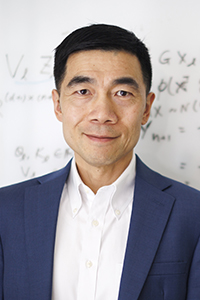
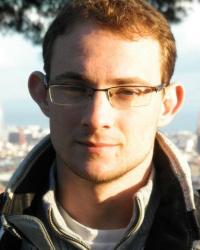
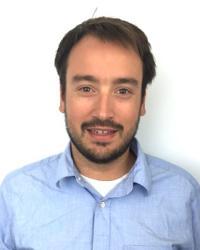
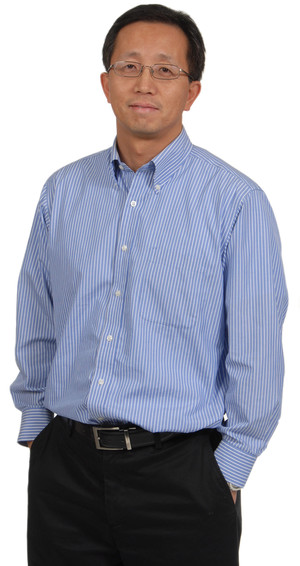
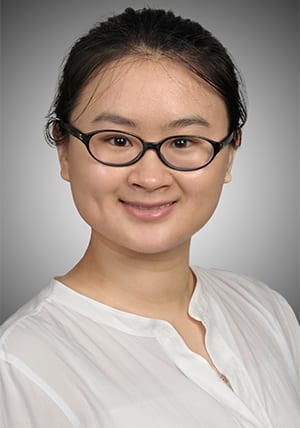
Greg Anderson is a Professor in the School of Mathematics at the University of Minnesota, Twin Cities campus. His office is located in Vincent Hall, and he can be contacted at gwanders@umn.edu . His primary research interests lie in the areas of: Free probability theory Random matrix theory These fields explore the probabilistic behavior of large matrices and the algebraic structures underlying non-commutative random variables, with applications ranging from quantum information theory to statistical physics.
Khanh Duy Trinh is a Professor (non-tenure-track) at Waseda University's Global Center for Science and Engineering, specializing in probability theory and its applications to random matrix theory and stochastic topology. He holds a PhD from Osaka University (2012) and has held academic positions at Tohoku University and Kyushu University. Current affiliation: Waseda University (2025-present) Past roles: Associate Professor at Waseda (2019-2025), Tohoku University, Kyushu University Research areas: Beta ensembles, Random topology, Spectral measures, Stochastic geometry His work demonstrates universal behavior in random matrix models through spectral analysis and topological persistence. Key contributions include central limit theorems for eigenvalue statistics, Poisson approximations in high-temperature regimes, and geometric interpretations of persistence diagrams. His recent papers focus on generalized beta processes and higher-dimensional complex structures. Current projects include: JSPS Grant 2024-2029: Universal approaches in random matrix theory Past JSPS Grant 2019-2023: Multi-aspects of beta ensembles Teaching activities at Waseda include: Introduction to Probability and Statistics Advanced Probability and Statistics Master's Thesis advising in Pure and Applied Mathematics
Yue Lu is the Gordon McKay Professor of Electrical Engineering and Applied Mathematics at Harvard University, serving as Faculty Director of Graduate Studies. His research spans applied mathematics, control theory, machine learning, and signal processing, with a focus on high-dimensional data analysis and algorithmic foundations. He leads the Signal and Information Processing lab in Maxwell Dworkin 113. Notable recognitions include being named a Harvard College Professor (2024) and achieving tenure in 2019. His work addresses topics like random matrix theory, optimization in machine learning, and statistical signal processing. Recent contributions include studies on neural networks, kernel methods, and phase retrieval algorithms. He has published extensively on the theoretical underpinnings of modern learning systems, with a particular emphasis on universality principles and asymptotic analysis. Research Highlights: Developed frameworks for analyzing approximate message passing algorithms Advanced theories of in-context learning and feature learning dynamics Contributed to understanding phase transitions in high-dimensional estimation problems Explored optimal regularization strategies for sparse regression Awards: Harvard College Professor (2024) Full Tenure in Electrical Engineering (2019) His lab focuses on bridging theory and applications in signal processing and AI, with projects ranging from imaging systems to brain network analysis. Ongoing work explores the statistical physics of learning and scalable algorithms for large-scale inference problems.
Dmitriy Drusvyatskiy is a Professor in the Department of Mathematics at the University of Washington and holds the Paul Tseng Faculty Fellow title. He also serves as an Adjunct Professor in the Department of Statistics. His research focuses on continuous optimization, particularly in large-scale problems arising in data science, leveraging tools from convex/nonlinear optimization, variational analysis, semi-algebraic geometry, and high-dimensional probability/statistics. Education: PhD in Operations Research from Cornell University (2013). Research Interests: His work emphasizes optimization theory and applications, including stochastic optimization, nonsmooth analysis, matrix recovery, and statistical learning. He explores foundational aspects like convergence guarantees, algorithm design, and applications in machine learning and data-driven decision-making. Notable Trends in Publications: Recent work highlights advancements in stochastic algorithms with geometric step decay, low-rank matrix recovery, and generalization properties of flat minima. His studies often bridge theoretical guarantees with computational efficiency in high-dimensional settings. Awards: Paul Tseng Faculty Fellow (2020+). Advising & Grants: No explicit student advisee list provided. His research is supported by grants focusing on nonsmooth optimization’s structure, complexity, and conditioning. Collaborations span mathematical theory and interdisciplinary applications in data science.
Thomas Trogdon is the Chair and Professor of Applied Mathematics at the University of Washington. He holds a Ph.D. in Applied Mathematics from the University of Washington (2013). His research focuses on numerical analysis, random matrix theory, nonlinear waves, and scientific computing. Key interests include Riemann-Hilbert problems, numerical linear algebra, and the application of these methods to problems in mathematical physics and data science. He has organized major conferences such as the Conference on Random Matrix Theory and Numerical Linear Algebra (2022, 2025). His work bridges theoretical developments with computational implementation, exemplified by collaborations on algorithms for orthogonal polynomials and inverse scattering transforms. He leads a team within the Department of Applied Mathematics, contributing to both research and education. Education: Ph.D., Applied Mathematics, University of Washington, 2013 Grants: NSF CAREER Award (DMS-1945652) Collaborators: Includes researchers like Sheehan Olver, Percy Deift, and Xiucai Ding His recent work emphasizes the convergence of numerical methods, stability analysis of algorithms, and applications to high-dimensional data and physical systems. A co-author of the book Riemann-Hilbert Problems, Their Numerical Solution and the Computation of Nonlinear Special Functions (SIAM, 2016), he also develops software tools such as the RHPackage for Riemann-Hilbert problem computations.
Hongkai Zhao is the Ruth F. DeVarney Distinguished Professor of Mathematics and Chair of the Department of Mathematics at Duke University's Trinity College of Arts & Sciences. He holds a Ph.D. in Mathematics from UCLA (1996) and has held prior positions including Chancellor's Professor at UC Irvine and Gábor Szegő Assistant Professor at Stanford University. His research focuses on computational and applied mathematics with applications in inverse problems, imaging, PDEs, and scientific computing. Key research areas include numerical methods for wave propagation, radiative transfer, and shape analysis. Zhao has led NSF-funded projects on PDE learning, radiative transfer, and analysis training. He has received prestigious awards including the Feng Kang Prize (2007) and SIAM Fellowship (2022). Teaching includes advanced courses on stochastic processes, numerical linear algebra, and mathematical analysis. His work bridges theory and practice, contributing to medical imaging algorithms, computational physics, and geometric modeling.
Partha Dey is an Associate Professor in the Department of Mathematics at the University of Illinois at Urbana-Champaign (UIUC), where he also serves as Director of the NetMath Program. He holds affiliations in both Mathematics and Statistics departments. His research focuses on Probability Theory and its intersections with Statistical Physics, emphasizing First/Last Passage Percolation, Random Growth Models, Stein’s Method, Spin Glasses, and Random Matrix Theory. Education: Ph.D. in Statistics from UC Berkeley (2010), supervised by Sourav Chatterjee and Steve Evans. Prior to UIUC, he was a Courant Instructor/Simons Fellow at NYU (2010-2013) and a Harrison Early-Career Assistant Professor at the University of Warwick (2013-2014). Undergraduate and Master’s studies at Indian Statistical Institute Kolkata (Mathematical Statistics & Probability). Research interests include analyzing stochastic processes in complex systems, with recent work on fluctuation phenomena in percolation models, spin glasses under external fields, and Stein’s method applications. His publications span high-impact journals like ALEA , Annals of Probability , and Communications in Mathematical Physics . Awards/Funding: No explicitly listed honors, though his positions suggest sustained academic recognition. Grants/Advising: No detailed grant info provided; no advisee names listed in texts. Labs/Teams: Leads NetMath Program, a distance-learning initiative in mathematics education. Collaborates widely on interdisciplinary projects in probability and statistical physics.
Alex Eskin is the Arthur Holly Compton Distinguished Service Professor of Mathematics at the University of Chicago's Department of Mathematics, within the Physical Sciences Division. His research focuses on dynamical systems, geometric group theory, ergodic theory, and their applications to number theory. Eskin holds a B.S. from UCLA and a Ph.D. from Princeton University (1993), advised by Peter Sarnak. Key research interests include Teichmüller dynamics, billiards on rational polygons, and the geometry of moduli spaces. He has made seminal contributions to understanding SL(2,R) actions on moduli spaces, Lyapunov exponents, and the classification of invariant measures. His work bridges dynamics, geometry, and number theory, with profound implications for the study of flat surfaces and homogeneous flows. Eskin has received numerous accolades, including the Breakthrough Prize in Mathematics (2019), Clay Research Award (2007), and membership in the National Academy of Sciences (2015). He has authored over 60 papers, advancing topics like counting closed geodesics in moduli spaces, volumes of strata of abelian differentials, and the rigidity of quasi-isometries in solvable groups. Notable achievements include proving the 'Magic Wand Theorem' with Mirzakhani and Mohammadi, resolving the classification of orbit closures for SL(2,R) actions, and advancing the understanding of Lyapunov exponents via algebraic geometry. His teaching includes courses like Math 203 (Analysis) at the University of Chicago.
Isabella Verdinelli is a dual-affiliated professor serving as Professor in Residence at Carnegie Mellon University's Department of Statistics (Dietrich College of Humanities and Social Sciences) and as Full Professor at Sapienza University of Rome's Department of Statistical Sciences. She splits her academic year between Pittsburgh (fall) and Rome (spring), maintaining active research collaborations at both institutions. Her education includes a Master's degree from University College London and a PhD from Carnegie Mellon University. Her career spans postdoctoral work, assistant/associate positions, and professorship roles since her student days in Rome. Verdinelli's research focuses on: Nonparametric and high-dimensional methods for uncovering latent structures in complex datasets Bayesian experimental design with applications in medicine and engineering Manifold/filament estimation and minimax convergence theory Monte Carlo Markov Chains and hypothesis testing using Bayes factors Multiple testing procedures (FDR control) Her publications demonstrate sustained focus on Bayesian methodologies, nonparametric inference, and optimization techniques. Recent work (2007-2010) emphasizes high-dimensional data structures and theoretical statistics, while earlier contributions center on experimental design and Bayesian model selection.
Martin Hildebrand is a Professor in the Department of Mathematics & Statistics at the University at Albany. His research focuses on Probability on finite groups and Combinatorics . Contact: Hudson 247A, (518) 442-4016, mhildebrand@albany.edu Courses: Spring 2025: Mathematics 367 (Discrete Probability), 468/555 (Mathematical Statistics). Fall 2025: Mathematics 403 (Actuarial Mathematics), 467/554 (Mathematical Statistics), 469 (Actuarial Exam P Preparation). His publications analyze random processes on finite groups, including Markov chains , random walks , and Chung-Diaconis-Graham processes , with applications in probability theory and combinatorics. Recent work (2022) explores symmetrized random processes, while earlier studies (2000-2014) address packing density, log-concavity, and convergence rates of random walks.
Dr. Mengyu Xu is an Associate Professor in the Department of Statistics and Data Science at the University of Central Florida (UCF). She holds a Bachelor's degree from Renmin University of China (2010), and a M.S. and Ph.D. from the University of Chicago (2012 and 2016). Her research focuses on high-dimensional statistical methods, time series analysis, and machine learning applications in diverse fields such as gas turbine performance prediction, terahertz spectroscopy of molecular crystals, and financial market dynamics. She is affiliated with the College of Sciences at UCF and teaches courses in statistics. Her research interests include covariance matrix estimation, dynamic network recovery from high-dimensional time series, distribution theory of quadratic forms, and hypothesis testing. Notably, she has contributed to advancements in fentanyl detection via terahertz spectroscopy and anomaly detection in industrial systems. Her work bridges statistical theory with practical applications in engineering, finance, and chemistry. Publications highlight her expertise in high-dimensional data analysis, machine learning integration with traditional statistical methods, and the development of novel methodologies for real-world challenges such as drug identification and predictive maintenance in gas turbines. She has explored asymmetric self-exciting processes in Bitcoin returns and contextual factors influencing student performance in online education environments. Labs/Teams: While no specific lab or team names are listed, her work suggests collaboration with interdisciplinary groups in data science, engineering, and computational chemistry at UCF.
Jialin Liu is an Assistant Professor in the Department of Statistics and Data Science at the University of Central Florida (UCF) and a member of the UCF AI Initiative. His academic background includes a B.S. in Automation from Tsinghua University (2015) and a Ph.D. in Applied Mathematics from UCLA (2020). Education: B.S. in Automation, Tsinghua University (2015) Ph.D. in Applied Mathematics, University of California, Los Angeles (2020) Liu's research bridges AI, data science, and mathematics. He focuses on developing AI/data-driven methodologies to address computational mathematical problems such as optimization, differential equations, and numerical linear algebra. His work emphasizes the need for stable, safe, and explainable data-driven methods while establishing rigorous theoretical foundations for integrating AI into mathematics and science. The 15 most recent publications highlight interdisciplinary advancements in areas like matrix completion, graph neural networks for optimization, sparse coding for phase restoration, and theoretical frameworks for learning-to-optimize. These works span algorithm design, mathematical foundations of AI, and applications in computational mathematics.
John R. Klein is a Professor in the Department of Mathematics at Wayne State University, which is part of the College of Liberal Arts and Sciences. His office is located in room 1213 FAB, and he can be contacted at klein@wayne.edu or ae9462@wayne.edu. Dr. Klein's primary research interests include: Algebraic Topology Geometric Topology K-Theory Poincaré Duality Homotopy Theory Quantum Information Theory Dr. Klein's research spans several decades with a consistent focus on algebraic and geometric topology. His work often explores the intersection of topology with other mathematical disciplines and physical applications. Recent publications demonstrate an expanding interest in applications to quantum information theory and mathematical physics, particularly in the analysis of quantum states and systems. His research combines deep theoretical insights with practical applications in areas such as quantum computing and statistical mechanics, showing a clear evolution from foundational topological work to interdisciplinary applications. Dr. Klein has taught a variety of mathematics courses at Wayne State University, including Calculus I-III, Differential Equations and Matrix Algebra, and Algebra I. He is scheduled to teach Calculus III and Algebra I in the Fall Term 2025, indicating his ongoing active role in the department. Dr. Klein maintains an extensive collaborative network, working with prominent mathematicians including Bruce Williams, Thomas Goodwillie, and Vladimir Y. Chernyak. These collaborations have resulted in significant contributions to homotopical intersection theory, embedding theory, and the application of topological methods to physical systems. His work bridges theoretical mathematics with practical applications in quantum information science.
Jan Nagel is Professor of Stochastics at TU Dortmund University's Department of Mathematics. His research explores probability theory with focus areas including random walks in random environments, random matrix theory, and stochastic processes. Recent publications investigate the dynamic behavior of viscoelastic structures with random material properties, sum rules in mathematical physics, and functional central limit theorems for random matrices. Dr. Nagel completed his doctorate in Mathematics at Ruhr University Bochum (2010) following a Diplom degree (2008). His academic trajectory includes positions as Assistant Professor at TU Dortmund (2019-2023), research fellowship at TU Eindhoven, and visiting professorships at LMU Munich. His work bridges theoretical mathematics with applications in statistical mechanics and disordered systems.
Dennis Dobler is an Assistant Professor in Statistics at TU Dortmund University, appointed in September 2023. His academic foundation includes a doctorate from Ulm University (2016) and dual bachelor's degrees in Mathematics and Computer Science from Heinrich-Heine-Universität Düsseldorf (2011). Research expertise centers on Resampling methods, Survival analysis, Multivariate techniques, and Asymptotic statistics, with applications spanning clinical trials, risk modeling, and nonparametric inference. His methodological work frequently addresses censored data challenges in survival contexts. Prior roles include Assistant Professorship at Vrije Universiteit Amsterdam, postdoctoral research at Ulm University, and a research stay at the University of Copenhagen. Current publications reflect sustained focus on survival analysis innovations, particularly in competing risks and resampling methodologies.