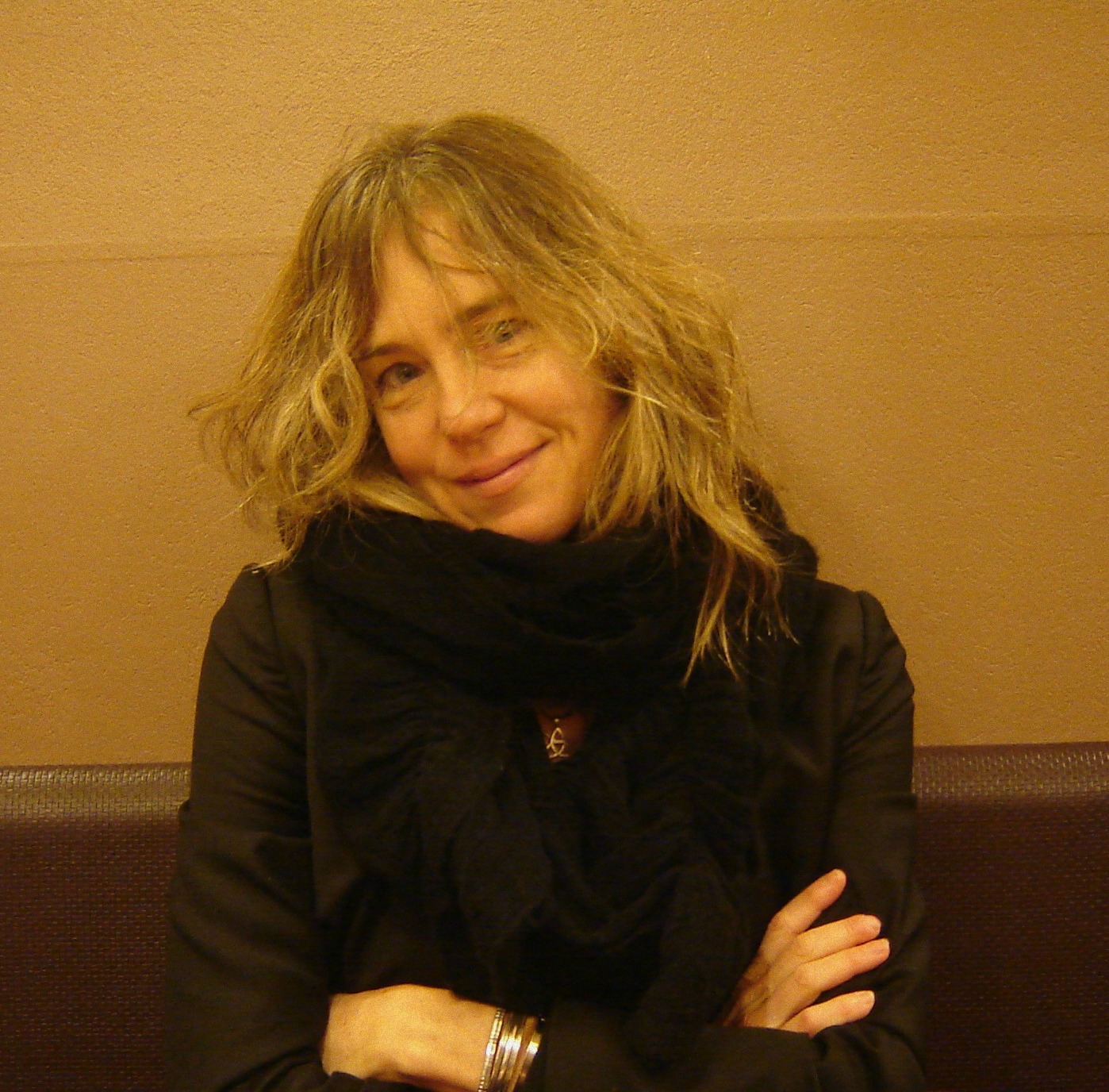
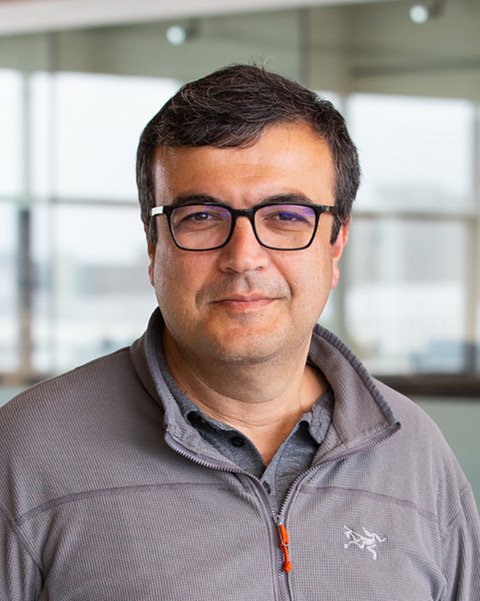
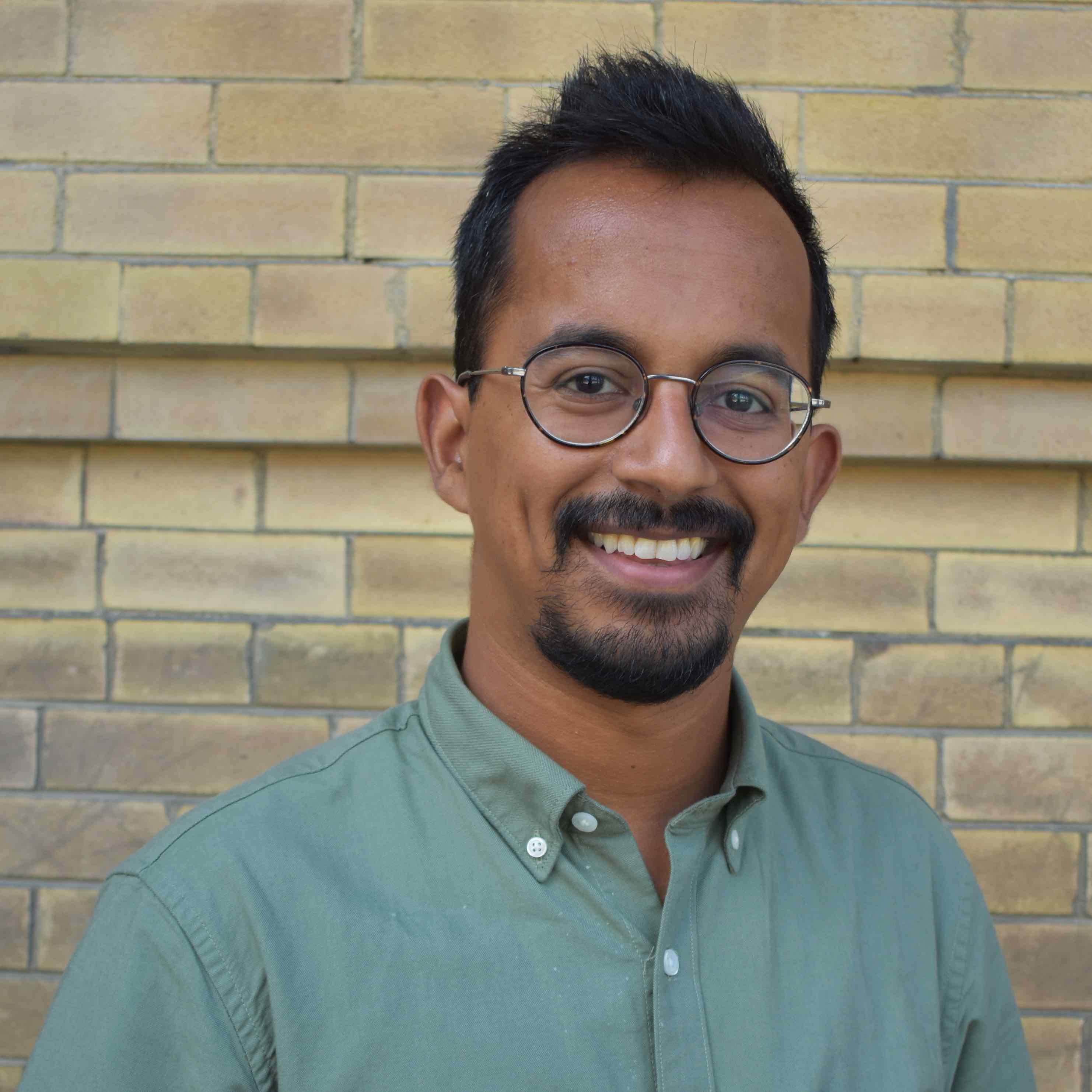
Chantal David is a Professor in the Department of Mathematics and Statistics at Concordia University. Her research focuses on number theory and its intersections with mathematical statistics. Formal Affiliation: Concordia University, Department of Mathematics and Statistics Email: chantal.david@concordia.ca Office: Library Building, LB 927.09 Research Interests revolve around Number Theory , particularly: L-functions and their non-vanishing properties Elliptic curves over finite fields and function fields Statistics of group structures and root numbers Connections to random matrix theory and metaplectic functions Extremal primes and Frobenius distributions Drinfeld modules and supersingular reductions Article Trends show a focus on cubic and quartic L-functions, non-vanishing phenomena, and statistical properties of elliptic curves over finite fields. Recent work explores metaplectic theta functions, extreme value distributions, and one-level density analysis. Labs & Teams : She is affiliated with the Montreal Number Theory Group (CICMA) .
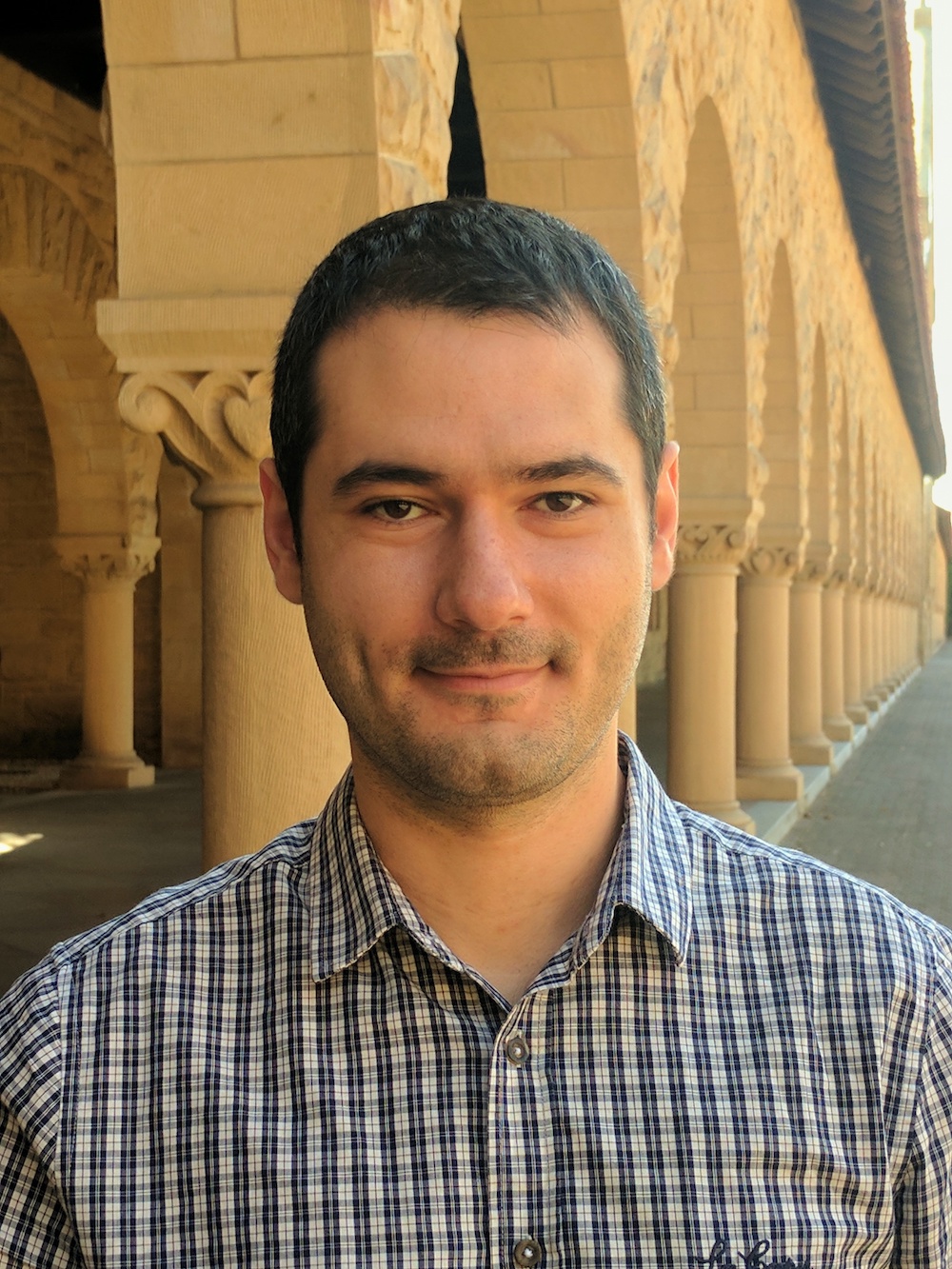
Yang P. Liu is an Assistant Professor at Carnegie Mellon University 's Department of Computer Science . He received his PhD from Stanford University under the supervision of Aaron Sidford and previously studied at MIT . Fields of Interest : Graph Algorithms, Optimization, High-Dimensional Geometry, Additive Combinatorics, Theoretical Computer Science. His research focuses on algorithmic design and analysis for graph problems, optimization, and combinatorics, with applications in machine learning and complexity theory. Recent work includes advancements in parallel repetition games , combinatorial lines , and dynamic graph algorithms . In 2024, his research spanned FOCS , STOC , and RANDOM conferences, addressing problems in k-CSPs , min-cost flow , and hypergraph sparsification . Earlier contributions (2023) included deterministic flow algorithms and spectral hypergraph techniques. Scientific Awards : NDSEG Fellowship (2018-2021), Google PhD Fellowship (2022-2023), FOCS Best Paper (2022), STOC Best Student Paper (2022), FOCS Best Student Paper (2021). He teaches CS 15-759 , a graduate course on convex optimization theory and applications, covering gradient descent, interior point methods, and algorithmic sparsification techniques.
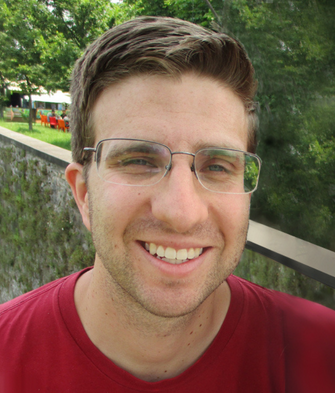
Murat Erdogdu is an Assistant Professor at the University of Toronto, jointly appointed in the Department of Computer Science and Department of Statistical Sciences . He is also a faculty member at the Vector Institute and holds the CIFAR Chair in Artificial Intelligence . PhD in Statistics, Stanford University (advised by Mohsen Bayati and Andrea Montanari) MSc in Computer Science, Stanford University BSc in Electrical Engineering and Mathematics, Bogazici University His research focuses on machine learning theory , high-dimensional statistics , and optimization . He has contributed to understanding gradient-based algorithms, sampling methods, and feature learning in structured data. Recent publications address problems in: Heavy-tailed sampling Mean-field Langevin dynamics Robust feature learning Minimax regression Stochastic optimization under infinite noise Scientific Awards: CIFAR Chair in Artificial Intelligence ICLR 2023 Spotlight NeurIPS 2019 & 2021 Spotlights He teaches graduate courses like STA 414/2104 (Statistical Methods for Machine Learning II) and STA 4273 (Modern Learning Theory) , emphasizing probabilistic modeling and theoretical analysis.
Benjamin Landon is an Assistant Professor in the Department of Mathematics at the University of Toronto, where he has been faculty since 2021. His office is located in the Bahen Centre for Information Technology, Room 6264. Prior to joining the University of Toronto, he was a CLE Moore Instructor at the Massachusetts Institute of Technology from 2018-2021. Education: PhD in Mathematics, Harvard University (2018). Advisor: Horng-Tzer Yau M.Sc. in Mathematics, McGill University (2013). Advisors: Vojkan Jaksic and Robert Seiringer B.Sc., McGill University (2012) Dr. Landon's research focuses on Probability and Mathematical Physics, with particular expertise in Random Matrix Theory. His work spans various aspects of spectral statistics, eigenvalue distributions, and universality phenomena in random matrix ensembles. He has made significant contributions to understanding the behavior of extremal eigenvalues, linear spectral statistics, and connections to other areas of mathematical physics such as spin glasses and the KPZ universality class. His research often involves developing novel analytical techniques to establish precise asymptotic behavior in complex random systems. Analysis of Dr. Landon's publication record reveals a strong focus on the intersection of probability theory and mathematical physics. His work consistently explores universality phenomena across different random matrix ensembles and related stochastic systems. A notable trend is his investigation of connections between random matrix theory and other areas of mathematical physics, particularly spin glass models and the KPZ equation. His research demonstrates both technical depth in establishing rigorous asymptotic results and breadth in connecting seemingly disparate areas of mathematical physics.
Golnoosh Farnadi is an Associate Professor at the Department of Computer Science and Operational Research at the University of Montreal and an Assistant Professor at the School of Computer Science at McGill University. She holds a Canada-CIFAR Chair in Artificial Intelligence and serves as a Senior Academic Member at Mila - Quebec Institute for Artificial Intelligence. Her interdisciplinary work bridges computer science, operations research, and ethical AI considerations. Her educational background includes a Ph.D. in Computer Science from KU Leuven and Ghent University (2017), followed by postdoctoral positions at the University of Montreal/MILA (2018-2020) and the University of California, Santa Cruz (2017-2018). Her research focuses on algorithmic fairness, responsible AI, deep learning, and probabilistic models, with applications spanning healthcare, recommender systems, and public policy. Farnadi's recent publications demonstrate a strong emphasis on addressing fairness in machine learning systems, with particular attention to cultural diversity in recommender systems, fairness in healthcare optimization (particularly kidney exchange programs), and mitigating hallucinations in large language models. Her work consistently combines theoretical rigor with practical applications, often employing novel mathematical frameworks to tackle complex ethical challenges in AI. Among her notable recognitions are the Google Scholar Award (2021), Facebook Research Award (2021), Google Award for Inclusion Research (2023), and being named one of the 100 Brilliant Women in AI Ethics (2023). She was also recognized as a Rising Star in AI Ethics in 2021. Farnadi supervises numerous graduate students through her EQUAL Lab (EQuity & EQuality Using AI and Learning algorithms), which focuses on developing AI systems that promote fairness and equity. Her teaching includes courses on Responsible AI, Machine Learning, and Trustworthy Machine Learning at both McGill University and HEC Montreal.
Yingli Qin is an Associate Professor in the Department of Statistics and Actuarial Science at the University of Waterloo, part of the Faculty of Mathematics. His research focuses on high-dimensional statistics and random matrix theory, with applications to covariance matrix analysis and hypothesis testing. He holds a PhD in Statistics from Iowa State University, alongside MA and BSc degrees in Mathematics and Statistics from Iowa State University and Northeast Normal University, China. Education : PhD in Statistics, Iowa State University, USA MA in Statistics, Iowa State University, USA BSc in Applied Mathematics, Northeast Normal University, China Research Interests : Qin’s work emphasizes high-dimensional statistical methodologies, including covariance matrix estimation, spectral distribution analysis, and the application of random matrix theory to address challenges in large-scale data. His contributions include developing bias-reduced estimators and testing frameworks for high-dimensional datasets. Publications : Qin has published extensively in top-tier journals such as the Annals of Statistics , Journal of Multivariate Analysis , and Biometrika , with a focus on advancing statistical theory for high-dimensional settings. Teaching : He teaches advanced courses including Multivariate Analysis (Stat 923), Estimation and Hypothesis Testing (Stat 850/450), and Mathematical Statistics (Stat 330).
Brad Rodgers is an Associate Professor in the Department of Mathematics and Statistics at Queen's University. He holds a Ph.D. from the University of California Los Angeles. His research focuses on the intersection of analytic number theory, probability, and random matrix theory, particularly exploring connections between prime number distributions and statistical physics models. He investigates randomness in discrete mathematical structures and the implications of these for open problems in number theory. Education: Ph.D., University of California Los Angeles Research Interests: Rodgers examines quantitative questions in number theory using tools from analysis and probability. His work bridges analytic number theory with random matrix theory, a field emerging from studies on the Riemann zeta-function's zeros. He explores how randomness manifests in discrete mathematical systems, including applications to statistical physics. Awards/Grants: No specific awards or grants listed in available information. Labs/Teams: No dedicated lab or team affiliation explicitly mentioned.
Aurélie Labbe is a Full Professor in the Department of Decision Sciences at HEC Montréal, holding the prestigious FRQ-IVADO Chair in Data Science. Appointed as Co-Scientific Director – Academic Partnerships at IVADO in October 2023, she plays a key leadership role in establishing connections between IVADO and partner universities. Her academic journey includes a PhD in Statistics from the University of Waterloo, a Master's degree in Statistics from the University of Montreal, and dual Bachelor's degrees in Applied Mathematics and Social Sciences from Paris-Dauphine University and Pure Mathematics from Versailles-St Quentin University. Her research spans multiple interdisciplinary domains with a focus on developing advanced statistical and machine learning methodologies for big data analysis. Labbe's work bridges theoretical statistics with practical applications across diverse fields including genomics, neuroscience, transportation systems, and health informatics. She has made significant contributions to kernel methods, matrix factorization techniques, random forest applications, and spatiotemporal data analysis, with publications appearing in top journals across multiple disciplines. Analyzing her recent publications reveals a clear trend toward methodological innovation applied to complex real-world problems. Her work demonstrates expertise in handling high-dimensional data from diverse sources including neuroimaging, transportation networks, and genomic studies. The interdisciplinary nature of her research connects statistical theory with applications in healthcare, transportation safety, and biological sciences, reflecting her ability to develop methods that address domain-specific challenges while advancing statistical methodology. Holder of the FRQ-IVADO Chair in Data Science Member of the Center for Mathematical Research Training Professor Labbe actively mentors the next generation of data scientists, supervising numerous doctoral and master's students. Her supervision portfolio includes 1 doctoral thesis (2023), 4 master's theses (2022-2024), and 32 supervised projects spanning 2019-2025. Her students' work covers diverse applications including transportation safety, healthcare analytics, financial modeling, and environmental analysis. Through her leadership of the FRQ-IVADO Chair in Data Science, she coordinates research activities that integrate mathematical, statistical, and computer science expertise with domain knowledge from various data-generating fields. As Co-Scientific Director at IVADO, Professor Labbe leads efforts to establish connections with faculties and departments across five partner universities, integrating them into IVADO's research and knowledge transfer activities. Her leadership role positions her at the forefront of advancing data science research and applications in Quebec's academic ecosystem.
Ryan Browne is an Assistant Professor in the Department of Statistics and Actuarial Science at the University of Waterloo. He holds a BMath (2004), MMath (2006), and PhD (2009) from the same institution. His research focuses on model-based clustering , classification , and measurement system quality assessment , with applications in multivariate analysis and statistical inference. He is particularly known for contributions to mixture models and their computational optimization. Education: BMath in Statistics, University of Waterloo (2004) MMath in Statistics, University of Waterloo (2006) PhD in Statistics, University of Waterloo (2009) Ryan’s work emphasizes flexible statistical methodologies , including advancements in skewed distributions, high-dimensional data analysis, and robust algorithms for clustering and classification. He has received the prestigious 2011 W.J. Youden Award from the American Statistical Association for his PhD research on measurement system evaluation. His research trends span computational statistics (e.g., sketching algorithms for big data) and model-based clustering innovations (e.g., mixtures of generalized hyperbolic distributions). Recent work explores parsimonious models, nested Gaussian structures, and efficient parameter estimation for complex datasets. Key Awards: 2011 W.J. Youden Award (American Statistical Association) Ryan collaborates on applied projects, including industrial ecology and sensory data analysis. He has developed R packages like mixture and MixGHD , which implement his methodological contributions.
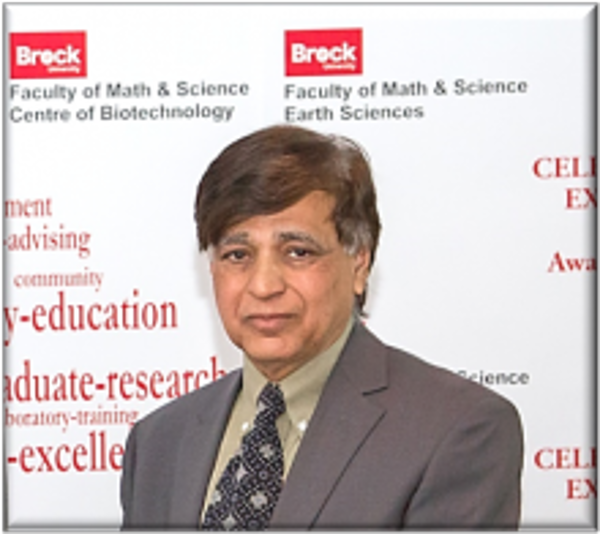
Syed Ejaz Ahmed is a distinguished Professor of Mathematics and Statistics at Brock University , with a career spanning multiple institutions including the University of Windsor, University of Regina, and University of Western Ontario. He serves as a Review Editor for Technometrics and holds editorial roles for several journals. PhD, Carleton University MSc, University of Guelph MSc in Statistics, University of Karachi BSc (Honors), University of Karachi His research focuses on big data analytics , statistical machine learning , and shrinkage estimation , with applications in healthcare, economics, and environmental science. He has organized international workshops on high-dimensional data analysis since 2011. Recent scientific contributions highlight advanced methods for high-dimensional regression, censored data analysis, and predictive modeling. His work has received international recognition through awards and fellowships. Fellow, American Statistical Association Fellow, Royal Statistical Society Elected Member, International Statistical Institute NSERC Discovery Grant (2017-2022) ISOSS Gold Medal A dedicated educator, he has supervised numerous PhD/MSc students and postdoctoral fellows. Currently, he leads the Centre for Business Analytics at Brock and collaborates with institutions worldwide through honorary professorships and visiting roles.
Jeremy Quastel is a University Professor in the Department of Mathematics at the University of Toronto, within the Faculty of Arts and Science. He has been a prominent figure in the department since returning to Canada in 1998, serving as Chair of the Department of Mathematics from 2017 to 2021. Under his leadership, the mathematics department has become a world center for research in random interface growth and the KPZ universality class. His educational background includes: Undergraduate studies at McGill University PhD from the Courant Institute (NYU) in 1990 under S.R.S. Varadhan Professor Quastel is a specialist in probability theory, stochastic processes, and partial differential equations . His research focuses on the large scale behavior of interacting particle systems and stochastic partial differential equations, with particular emphasis on the Kardar-Parisi-Zhang (KPZ) universality class. He made groundbreaking contributions by discovering the first exact distributional solutions of the KPZ equation in 2010 and the KPZ fixed point in 2017 - the scaling invariant, integrable Markov process at the center of the KPZ universality class. His work bridges probability theory, mathematical physics, and statistical mechanics, with applications to interface growth models and directed polymers. Analysis of his recent publications reveals a consistent focus on KPZ-related phenomena, with increasing sophistication in understanding the KPZ fixed point and its properties. His work has evolved from discovering exact solutions to establishing convergence results and exploring connections to other integrable systems like the Toda lattice. The research spans theoretical developments in stochastic PDEs, connections to random matrix theory, and applications to physical growth models. His scientific achievements have been recognized with numerous prestigious awards: Sloan Fellow (1996-98) Invited session speaker at the International Congress of Mathematicians (2010) Current Developments in Mathematics lectures (2011) St. Flour lectures (2012) Plenary speaker at the International Congress of Mathematical Physics (2012) Fellow of the Royal Society of Canada (2016) Fellow of the Royal Society (2021) CRM-Fields-PIMS prize (2018) Jeffery-Williams Prize of the Canadian Mathematical Society (2019) Professor Quastel has supervised numerous PhD students who have gone on to successful careers in academia and industry, including Xuicai Ding at UC Davis, Hanna Jankowski at York University, and Konstantin Matetski at Columbia University. His research group has attracted many postdoctoral fellows who have become leading researchers in probability theory. While specific grant information isn't detailed in the provided text, his sustained research output and leadership position suggest significant grant funding supporting his work in probability theory and stochastic processes. Though not explicitly mentioned in the provided text, Professor Quastel's work has established the University of Toronto as a global hub for research on the KPZ universality class. His collaborations span institutions worldwide, and his research group likely includes graduate students, postdocs, and visiting scholars working on various aspects of stochastic processes, interface growth models, and integrable probability. His recent work on the KPZ fixed point represents the culmination of decades of research in this field.
Anthony Quas is a Professor in the Department of Mathematics and Statistics at the University of Victoria, Canada. He holds a PhD from the University of Warwick and has held academic positions at institutions including the University of Memphis and King's College, Cambridge. His research focuses on ergodic theory and dynamical systems, with contributions to multiplicative ergodic theory, Lyapunov exponents, and symbolic dynamics. Education: B.A. in Mathematics (First Class), Cambridge University (1986–1989) Certificate of Advanced Study in Mathematics (Distinction), Cambridge University (1989–1990) PhD in Mathematics, University of Warwick (1990–1994) Research Interests: Ergodic theory and its connections to stochastic processes Lyapunov exponents and operator cocycles Symbolic dynamics and shift spaces Applications to percolation theory and information theory Publications and Grants: Over 70 peer-reviewed articles, including work on multiplicative ergodic theorems and metastable systems Recipient of NSERC and NSF grants, and former Canada Research Chair (2005–2014) Editor for Dynamical Systems: An International Journal Awards and Recognition: Tyson Medal (1990) Cambridge Smith Prize (1992) Organizer of international workshops and conferences (e.g., Banff International Research Station) Teaching and Service: Supervised multiple PhD and Master’s students Contributed to outreach initiatives like Pi in the Sky magazine Served on NSERC Grant Selection Committees and editorial boards
Ozgur Yilmaz is a Professor in the Department of Mathematics at the University of British Columbia (UBC). He is the Director of the Pacific Institute for the Mathematical Sciences (PIMS) and has held roles such as Interim Deputy Director at PIMS and Deputy Director at the Banff International Research Station (BIRS). His research focuses on applied harmonic analysis, signal processing, compressed sensing, and seismic signal processing. Education: PhD in Applied and Computational Mathematics from Princeton University (2001), B.Sc. in Mathematics and Electrical Engineering from Boğaziçi University (1997). Research Interests: Mathematical problems in analog-to-digital conversion, blind source separation, sparse approximations, compressed sensing, and their applications in seismic exploration. He has contributed to advancements in sigma-delta quantization, low-rank matrix recovery, and compressed sensing algorithms. Funding: Recipient of NSERC Discovery Grants, UBC Data Science Institute grants, and leadership in collaborative research groups (CRGs) on high-dimensional data analysis and applied harmonic analysis. His work bridges theoretical mathematics with practical applications in signal processing and AI-driven medical imaging. Students and Postdocs: Supervised numerous PhD and MSc students in areas like compressed sensing, seismic data reconstruction, and machine learning. Current advisees include Aaron Berk and Xiaowei Li. Former students hold positions at academic institutions and tech companies. Labs and Collaborations: Affiliated with UBC’s Data Science Institute (DSI), Centre for Artificial Intelligence Decision-making and Action (CAIDA), and the Institute of Applied Mathematics (IAM). Collaborates on projects integrating AI with scientific discovery, such as retinal biomarker identification using deep learning.
Asif Ali Zaman is an Associate Professor in the Department of Mathematics at the University of Toronto's Faculty of Arts and Science. He specializes in analytic and probabilistic number theory, with applications to algebraic structures and arithmetic statistics. His work intersects prime distribution, zeros of L-functions, Chebotarev density theorem, random multiplicative functions, and binary quadratic forms, extending to elliptic curves, modular forms, and mass equidistribution. PhD in Mathematics (2017), University of Toronto NSERC Postdoctoral Scholar (2017–2019), Stanford University MSc in Mathematics (2012), University of British Columbia BSc in Mathematics (2010), Simon Fraser University His research leverages log-free zero density estimates, Deuring-Heilbronn phenomenon, and Artin's holomorphy conjecture to derive bounds for primes, ℓ-torsion class groups, and equidistribution on modular surfaces. Recent publications (2025–2022) focus on Tauberian theorems, multiplicative chaos, and large sieve inequalities. Grants include sponsored research on L-functions (2022–2027) and computational projects (2025). He supervises Masters and PhD students in number theory and teaches multivariable calculus and cryptology courses.
Patrick Desrosiers serves as an Adjunct Professor in the Department of Physics, Physical Engineering and Optics within Université Laval's Faculty of Science and Engineering, while conducting neuroscience research at the CERVO Brain Research Center. He co-directs Dynamica, a multidisciplinary complex systems research group, and participates in UNIQUE (neuroscience-AI integration) and CIMMUL (mathematical modeling applications). His academic training spans physics and mathematics at Université Laval, the University of Melbourne, and CEA-Saclay. Dr. Desrosiers' research centers on mathematical and computational neuroscience , with signature contributions in dimensionality reduction and network resilience analysis . His work bridges biological and artificial neural networks , zebrafish brain mapping , and neurovascular coupling using advanced techniques from spectral graph theory , random matrix theory , and dynamical systems . Current investigations focus on neural decoding under chronic stress and structural-functional relationships in brain networks. Analysis of his 2023-2025 publications reveals three dominant trajectories: (1) Low-dimensional representations for predicting cognitive decline and neural dynamics, (2) Network reconstruction methodologies applied to neuroscience and biodiversity, and (3) Development of computational tools like NeuroTorch for neural data analysis. His work consistently integrates mathematical rigor with biological relevance across species and scales. His recognition includes: Professeur étoile prize for exceptional teaching (Faculty of Science and Engineering, Université Laval, 2018) As Dynamica co-director, he mentors a research team comprising Antoine Légaré, Arthur Légaré, Benjamin Claveau, Jordan Charest, Marziyeh Pourmousavi, Pierre-Luc Larouche, Vincent Savard, Vincent Thibeault, and Zahra Yazdani. His collaborative framework connects physics, mathematics, and neuroscience to address fundamental questions in neural network organization, with funding evident through sustained publication output and lab operations. Dynamica Lab ( https://dynamicalab.github.io/ ) serves as the operational hub for his interdisciplinary research, maintaining active collaboration with CERVO Brain Research Center and international institutions.