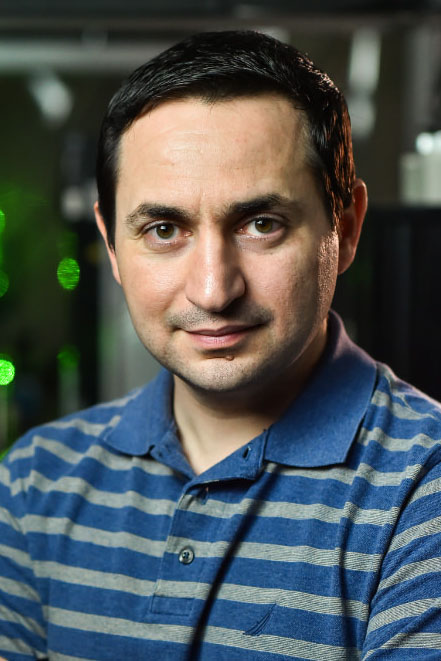
Miguel A. Bandres is an Assistant Professor at CREOL, The College of Optics and Photonics at the University of Central Florida. His research focuses on topological photonics, spatiotemporal light control, and ultrafast optical phenomena. Research directions include: Topological protection mechanisms for light propagation Synthesis of complex spatiotemporal waveforms Optical analogies to condensed matter phenomena Novel beam solutions for imaging and sensing His group (Bandres Group) integrates theoretical modeling, optical fabrication, and experimental characterization. Current projects explore Lorentz-invariant wavepackets, topological lasers, and multidimensional pulse shaping techniques.
Gaetano Assanto is a Researcher at Tampere University, focusing on advanced photonics and nonlinear optics. His work explores nematic liquid crystals and spatial solitons, particularly their applications in random lasers and waveguide technologies. He has contributed significantly to understanding soliton-assisted phenomena and directional control in optical systems. Research Interests: His primary areas include Nematic Liquid Crystals, Spatial Solitons, Random Lasers, and Nonlinear Optics. He investigates how these systems can be engineered for novel applications in photonics. Key Contributions: His recent work includes studies on directional random lasers via soliton control, accelerated optical solitons in reorientational media, and the spatiotemporal features of soliton-assisted lasers. These contributions highlight his expertise in manipulating light-matter interactions in complex media. 2018: Published breakthrough work on beaming random lasers using soliton control mechanisms. 2019: Advanced research on spatial soliton control in nematic liquid crystals for lasing applications.
Bhupesh Kumar is a Research Fellow at the School of Physics and Astronomy, University of St Andrews. His work focuses on advancing optical and photonic technologies through disorder engineering, particularly in random lasers and spectrometers. He has contributed to studies on solid-state polymer lasers, temperature-controlled spectral tuning, and multifractal scattering media applications. His research bridges fundamental physics with practical engineering solutions. His research interests include developing high-throughput optical devices, exploring localized modes in disordered systems, and applying light-based techniques to biomaterials like silk. These interests span Optics, Photonics, Lasers, and Materials Science, with a strong emphasis on interdisciplinary applications. Recent articles highlight advancements in tunable lasers, disorder-enhanced spectrometers, and the mechanics of silk. Collaborations with international researchers have been active in the last five years, though specific details are not provided here. No scientific awards are mentioned in the provided texts. His advising and grant activities are not detailed, but his research outputs include datasets related to speckle spectrometers. He is affiliated with the University of St Andrews’ School of Physics and Astronomy, contributing to both experimental and theoretical research.
Professor Tony Roberts is the Head of School in the School of Mathematical Sciences at Queensland University of Technology (QUT). He holds a PhD from the Australian National University and is a Fellow of the Australian Mathematics Society. His research focuses on the interplay between material microstructure and macroscopic properties, with emphasis on topology optimization, random structure modeling (e.g., Gaussian fields, percolation models), and material property analysis such as conductivity, diffusion, and fluid flow. He develops computational methods for analyzing experimental techniques like 3D statistical reconstruction and small-angle scattering. His recent work includes optimizing piezoelectric materials for robotics, studying diffusion dynamics in fractal networks, and modeling material failure mechanisms. Key contributions span multi-functional piezoelectric components, anisotropic elastic properties of additively manufactured alloys, and fracture mechanics in perforated materials. Awards include his fellowship in the Australian Mathematics Society. Supervision interests include structural optimization, diffusion in random media, and porous material failure modeling. Education: PhD (Australian National University) Affiliations: Faculty of Science, School of Mathematical Sciences Research Themes: Material science, computational modeling, fracture mechanics, stochastic systems
Dr. Hongrong Hu is a Research Fellow at the Institute of Nanotechnology, Karlsruhe Institute of Technology (KIT), Germany, affiliated with the Electronic Devices and Systems research unit. Her work focuses on advancing printed memristive technologies for next-generation memory applications. Her research expertise spans: Memristive Devices and Resistive Random-Access Memory (ReRAM) Printed Electronics Fabrication (Inkjet/Laser Printing) Non-Volatile Memory Systems Metal-Oxide Semiconductor Materials High-Entropy Compounds for Memory Neuromorphic Computing Hardware Analysis of her 2021-2025 publications reveals a strategic progression from fundamental device characterization (e.g., noise properties in printed transistors) toward sophisticated material engineering (high-entropy Prussian Blue analogs, metal-organic frameworks) and neuromorphic applications. Her work consistently bridges materials science, electrical engineering, and nanofabrication to solve scalability challenges in printed memory devices. Scientific recognition: No awards or fellowships documented in available sources Dr. Hu's academic mentoring and grant activities are not publicly detailed, though her collaborative publications suggest active participation in KIT's research ecosystem. She contributes to the Electronic Devices and Systems unit's mission of developing innovative electronic solutions through printed and flexible technologies for real-world applications.
Soraya Caixeiro is a Research Fellow in the Department of Physics at the University of Bath, affiliated with the Centre for Photonics and Photonic Materials, NanoBioPhotonics, and multiple interdisciplinary research centres. Her work focuses on developing micro- and nanolasers for biosensing and biomedical applications, leveraging photonics, nanofabrication, and chemistry. She is actively involved in advancing laser-based technologies for real-time cellular and molecular monitoring, with a particular emphasis on early disease diagnosis and in vivo measurements. Education: She earned a Doctor of Philosophy in Physics from King’s College London (2014–2018), specializing in random lasing action from biocompatible materials. Her research integrates interdisciplinary expertise, including collaborations with institutions in Ireland, Germany, and the University of Bath’s Department of Life Sciences. Research Interests: Caixeiro’s multidisciplinary research combines photonics with nanofabrication to create compact laser sensors for biological applications. Key areas include enhancing laser specificity, optimizing geometric designs for sensitivity, and developing coatings for targeted biomolecular interactions. Her innovations aim to overcome limitations of traditional biosensing methods, such as low signal intensity and poor tissue penetration. Publications: Her recent work includes breakthroughs in DNA sensing using whispering gallery mode microlasers, hyperspectral confocal imaging for high-throughput analysis, and optical manipulation techniques for cellular delivery. These contributions highlight advancements in both fundamental photonics and translational biomedical applications. Outreach & Engagement: She actively participates in public lectures, school outreach programs, and interdisciplinary conferences (e.g., Photon 2024). Her commitment to diversity drives efforts to attract students from varied backgrounds to photonics research. Labs & Facilities: She utilizes state-of-the-art facilities at Bath, including the Nanofabrication Lab and Photonics and Nanoscience Labs, to pioneer functional biointegrated sensors for tissue and single-cell applications.
Dr. Karla O'Dell is an Associate Professor of Clinical Otolaryngology-Head and Neck Surgery at USC. She co-directs the USC Airway Intervention and Reconstruction Center and specializes in voice, swallowing, and airway disorders. Clinical interests include office-based laser procedures and gender-affirming voice care. Her research examines airway stenosis treatments and vocal cord rehabilitation. Education includes an Alpha Omega Alpha-honored medical degree, residency at USC, and fellowship at Oregon Health Sciences University. She practices at Keck Medical Center and USC Verdugo Hills Hospital.
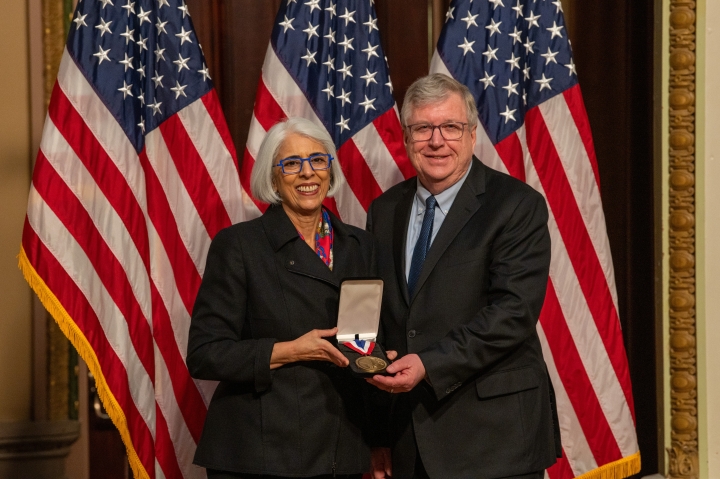
Eric R. Fossum is the John H. Krehbiel Sr. Professor for Emerging Technologies at the Thayer School of Engineering at Dartmouth College. He serves as Vice Provost for Entrepreneurship and Technology Transfer and Director of Dartmouth's PhD Innovation Program. As one of the world's leading experts in solid-state image sensors, he invented the CMOS active pixel sensor technology that revolutionized digital imaging in smartphones, medical devices, and automotive systems. His work has earned him numerous accolades, including the National Medal of Technology and Innovation (2025) and the Queen Elizabeth Prize (2017). His research interests focus on: Solid-state image sensors (CCDs, CMOS active pixel sensors, Quanta Image Sensors) Advanced imaging systems and on-chip processing New applications for image sensors in medicine, security, and space Dr. Fossum's recent publications demonstrate significant advancements in: Photon-counting sensors for low-light applications High-speed imaging for microscopy and radiography Backside-illuminated and sub-diffraction-limit pixel designs Quantum random number generation using sensor technology Infrared spectral extension of CMOS sensors His scientific awards include: National Medal of Technology and Innovation (2025) Queen Elizabeth Prize for Engineering (2017) IEEE Andrew S. Grove Award (2009) Induction into National Inventors Hall of Fame (2011) Emmy Award for Technology & Engineering (2021) Doctor of Science, Honoris Causa from Trinity College (2014) As an entrepreneurial leader, Dr. Fossum has: Co-founded Gigajot Technology with former PhD students Previously led Photobit and Siimpel Corporations Active participant in technology transfer initiatives at Dartmouth Founder and Past President of the International Image Sensor Society
Pererik Andreasson is a Lecturer at the Academy of Information Technology , Halmstad University. His research focuses on 3D printing, materials science, electromagnetic compatibility testing, and wireless communication. Key contributions include optimizing 3D-printed radar lenses, advancing phase-change material characterization via femtosecond x-ray diffraction, pioneering augmented reality methods for electromagnetic field visualization, and developing substrate integrated waveguide antennas for IoT devices. 3D printing of optical components Dynamic processes in phase-change materials Augmented reality for electromagnetic testing IoT antenna design His recent work on frequency-adjustable SIW antennas (2024) and AR-based EMC visualization (2021) demonstrates cross-disciplinary innovation. While no scientific awards are documented, his 15+ publications since 2007 highlight sustained expertise in material science and wireless technologies.
Erika M. Summers, MD is a Clinical Associate Professor in the Department of Dermatology at the University of Utah. She directs both the Division of Cosmetic Dermatology and the University Inpatient Dermatology Service at the University of Utah and Huntsman Cancer Institute, specializing in laser/aesthetic, general, and medical dermatology with exceptional patient satisfaction (4.9/5 from 459 reviews). Her educational background includes: Undergraduate: B.S. in Biology, Magna Cum Laude, Georgetown University, College of Arts and Sciences Medical School: M.D., Summa Cum Laude, University of Maryland School of Medicine Residency: Internal Medicine, Beth Israel Deaconess Medical Center Residency: Dermatology, University of Utah Dr. Summers pioneers non-surgical cosmetic treatments using neuromodulators, fillers, and advanced lasers (fractional CO2, Fraxel, pulsed dye) for aging, acne scars, rosacea, and vascular conditions. Her medical dermatology expertise spans venous insufficiency, complex inpatient cases, and drug-induced eruptions in elderly patients, blending technical precision with compassionate care. Her publication record (2008-2021) reveals sustained focus on Stevens-Johnson Syndrome/Toxic Epidermal Necrolysis, safety of cosmetic procedures post-isotretinoin, and cutaneous manifestations of systemic diseases through multicenter collaborations and clinical trials. Scientific recognition includes: Women’s Dermatologic Society Mentorship Award (2014) She trains dermatology residents in cosmetic injections/lasers and oversees inpatient care for life-threatening dermatologic conditions, mentoring through structured curriculum development and hands-on supervision. Her leadership extends to directing medical staff and aestheticians in the Cosmetic Dermatology division. Dr. Summers leads two integrated clinical teams: the Cosmetic Dermatology division delivering cutting-edge aesthetic treatments, and the University Inpatient Dermatology Service managing complex cases at Huntsman Cancer Institute, demonstrating exceptional operational and clinical leadership across outpatient and hospital settings.
Thomas Fuhrmann-Lieker serves as Associate Professor in the Faculty of Mathematics and Natural Sciences at the University of Kassel, where he leads the Physical Chemistry of Nanomaterials research group. His laboratory is located at Heinrich-Plett-Str. 40, 34132 Kassel in Space IBC, room 3111, with contact information th.fuhrmann@uni-kassel.de and +49 561 804-4720. He maintains an active research program with multiple PhD students, postdoctoral researchers, and specialized projects across nanomaterials science. Professor Fuhrmann-Lieker's research focuses on self-organization and photonics of soft matter , applying physicochemical principles to create optical functions in soft materials. His work spans two primary domains: organic optoelectronic materials and hybrid biological materials . In organic optoelectronics, his group develops molecular glasses for vacuum vapor deposition, with expertise in spiro-type compounds for organic lasing. Current projects investigate random lasers generated from mechanically stressed films that form surface corrugations (wrinkles), achieving stimulated emission even in everyday materials like copy paper. His team also explores 3D-nanofabrication using azo materials responsive to polarized light, creating complex structures from flat layer systems. In biological materials research, Professor Fuhrmann-Lieker studies diatoms (single-celled algae with ornamental silica cell walls) as natural photonic crystals. His work examines biomineralization processes, particularly the role of highly phosphorylated proteins in silica formation, and explores connections between diatom reproduction mechanisms and pattern formation within the "Biological clocks" graduate program. Additional research investigates renewable biopolymers for biomedical applications including drug delivery systems and bone tissue regeneration. His laboratory maintains active projects in five specialized areas: Renewable Biopolymers, Photolithography, Biomineralization Processes, Wrinkled Amorphous Films, and Biological Clocks. Analysis of Professor Fuhrmann-Lieker's publication record reveals a consistent trajectory in molecular photonics and biomineralization research. His most recent work (2019-2020) focuses on random lasing in wrinkled organic glasses and paper-based photonics, demonstrating practical applications of fundamental principles. Earlier publications establish his pioneering work on diatoms as photonic crystals (2004) and molecular glasses for optoelectronic applications (1999-2015). The research shows strong interdisciplinary connections between chemistry, physics, biology, and materials science, with applications spanning optoelectronics to biomedical engineering. Professor Fuhrmann-Lieker supervises a diverse research team including postdoctoral researcher Dr. Marilia Horn (biopolymers and nanopharmacy), PhD students Lukas Wolfram (wrinkled amorphous films), Jonas Ziebarth (biological clocks), Benedikt Mohr (biomineralization processes), Sekvan Bagatur (3D-nanofabrication), and visiting PhD student Eduardo Milan (renewable resources). His former PhD students include Nicolai Hoinka (random lasers in paper) and Michael Grimann (phase separation in molecular glasses, 2018). The research group participates in interdisciplinary initiatives including the PhosMOrg consortium for biomimetic approaches to silica formation.
Mark Danson is a Professor at the University of Salford's School of Science, Engineering & Environment, specializing in remote sensing and forest ecology. His research focuses on developing terrestrial laser scanning technologies for vegetation analysis and ecological monitoring. He leads work on the Salford Advanced Laser Canopy Analyser (SALCA) system and contributes to global environmental databases like Globe-LFMC. His research explores vegetation structure measurement, lidar technology development, and ecological applications of remote sensing. Key interests include forest canopy analysis, plant moisture estimation, wildfire risk assessment, and climate change impacts on ecosystems. Recent work advances 3D forest modeling and validation of satellite-derived ecological parameters. The publication record demonstrates consistent focus on terrestrial laser scanning methodologies and forest applications. Research trends show progression from instrument development (dual-wavelength lidar systems) toward large-scale ecological validation studies and global dataset creation for climate monitoring. Danson leads technology development initiatives including the SALCA instrument design and calibration. Collaborative work appears through international projects like the Global Ecosystem Dynamics Investigation validation studies.
Naghmeh Karimi is an Associate Professor in the Department of Computer Science and Electrical Engineering at the University of Maryland Baltimore County (UMBC), where she has held this position since 2023, after serving as an Assistant Professor from 2017 to 2023. She is a recipient of the NSF CAREER Award (2020) and the Best Paper Award (2019). Her research focuses on hardware security, trustworthiness, and reliability of integrated circuits, with a particular emphasis on cryptographic devices, PUF-based authentication, and aging-related vulnerabilities. She directs the SECure, REliable and Trusted Systems (SECRETS) Lab at UMBC, which explores topics including hardware security countermeasures, fault tolerance, and AI-driven security solutions. Prior to UMBC, she was affiliated with Rutgers University, New York University, Duke University, and Yale University. Her research interests span hardware security, design-for-trust, fault tolerance, AI for security, and VLSI design. Recent work emphasizes aging effects on cryptographic circuits, PUF resilience, and digital sensor-based failure detection. Her publications address challenges in side-channel attacks, fault injection, and secure IoT frameworks. Dr. Karimi’s work is supported by sponsors, and she actively mentors Ph.D. students in hardware security and reliability. Her lab offers openings for self-motivated researchers in these areas.
David Schipf is an Assistant Professor of Engineering and Physics at Whitworth University , located in the Eric Johnston Science Center. He leads the Wave Information Laboratory (WIL), focusing on advanced research in optoelectronics, metamaterials, and additive manufacturing. His academic role includes teaching courses such as Optics , Control Systems , and Engineering Design . Dr. Schipf holds a Ph.D. in Engineering from the University of Washington. His research interests span Optics/Photonics , MEMS , Acoustic Metamaterials , and Additive Manufacturing of piezoelectric ceramics. Notable projects include developing mirrorless MEMS imaging systems and binder-jet-printed piezoelectric composites . His work emphasizes all-optical deep learning and fluid-optical encryption systems . Recent publications (2013–2024) cover topics like underwater 3D imaging, electrowetting lens dynamics, and non-reciprocal metamaterials. He has received prestigious awards including the National Research Council Postdoctoral Fellowship (2019–2022) and Boren Fellowship (2015–2016). Dr. Schipf is expanding his lab’s capabilities with a planned acquisition of a BlueWave Spectrometer from StellarNet, Inc. His teaching includes Principles of Engineering Design and Thermal Fluids Lab . Current research also explores acoustic wave control and metamaterial-based sensors .
Giuseppe Rizzelli Martella is a Lecturer at the School of Electronics and Telecommunications , Polytechnic University of Turin , affiliated with the Department of Electronics and Telecommunications (DET) . He is a member of the Interdepartmental Center Photonext - PoliTo Interdepartmental Center on Applied Photonics and leads the Photonext: Hands-on course on Photonics for Fiber Transmission as a main teacher for multiple academic years. His role spans both Electronic Engineering and Communications Engineering programs, with contributions to courses like Digital Transmission, Signal and Communication Theory, and Optical Fiber Communications. Education : Not explicitly detailed in the provided text. Rizzelli Martella’s research focuses on Optical Communication Systems , with a strong emphasis on Coherent Metro Networks , Passive Optical Networks (PON) , and Filtering Impact Analysis . His work explores network convergence, system design for ultra-high bitrates, and signal processing in photonic systems. Recent publications highlight advancements in coherent digital subcarriers, network architectures for converged metro+PON systems, and filtering impact estimation models. These studies are published in venues like Optical Fiber Communications Conference (OFC) , International Conference on Optical Network Design and Modeling (ONDM) , and the JOURNAL OF OPTICAL COMMUNICATIONS AND NETWORKING . Scientific Awards : National Patent for OPTIALP, a fiber optic-based system for avalanche detection, debris flow, and rock block impact monitoring on rockfall networks. Rizzelli Martella has supervised PhD student Giuseppe Caruso in the Optical Communication group (OPTCOM) , focusing on next-generation optical architectures and passive optical networks. His teaching roles include collaborations on courses such as Optical Communications and Wireless Communications and ICT Tools for Service Management .