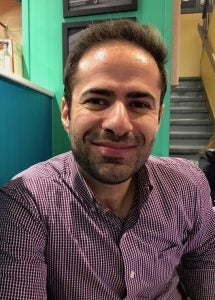
Steffen Winter is a Lecturer (PD Dr.) at the Institute of Stochastics, Karlsruhe Institute of Technology (KIT). His research specializes in Fractal Geometry, Geometric Measure Theory, Stochastic Geometry, and Dynamical Systems. He leads the DFG-funded project Scaling of curvature measures and the modified Weyl-Berry conjecture and serves as Principal Investigator for project 12 ( Morphometric Roughness of Nanostructured Surfaces ) within the DFG Priority Programme 2265 (Random Geometric Systems). Winter's work explores the mathematical foundations of fractals, stochastic processes, and geometric measurements. Key themes include Minkowski content, curvature measures, self-similar sets, percolation models, and applications to materials science and geoscience. Recent publications emphasize fractal dimensionality, surface roughness quantification, and stochastic convergence in complex systems. He teaches advanced courses including Stochastic Geometry , Fractal Geometry , and Markov Chains , and mentors students through seminars and proseminars. No awards or research grants besides DFG projects are documented.
Dr. Sikha Bagui is a Distinguished University Professor in the Department of Computer Science at the University of West Florida , within the Hal Marcus College of Science and Engineering . She previously served as Chair of the department and Founding Director of the Center for Cybersecurity. Her research spans Big Data Analytics, Machine Learning, Data Mining, and Database Design, with extensive publications and funded projects from NSF and NSA. Ed.D. in Curriculum & Instruction: Math & Stat / Science / Computer Science, University of West Florida M.B.A., University of Toledo B.S., Cuttington University (Liberia) Dr. Bagui's research centers on data-intensive computing , focusing on scalable algorithms for Big Data analytics, optimization in distributed environments (Hadoop, Spark, Hive), and applications in cybersecurity such as intrusion detection and phishing classification. She is particularly known for her work in data preprocessing, association rule mining, and improving classifier performance on imbalanced datasets. Her recent publications reveal a strong trend toward cybersecurity applications of machine learning , leveraging frameworks like MapReduce and Spark for scalable solutions. Topics include network traffic classification, load balancing in FP-Growth, and resampling techniques for intrusion detection. Her work bridges theoretical algorithm development with practical implementation in real-world Big Data systems. Distinguished University Professor Askew Fellow NSF CSForALL Grant ($300,000) NSA NCAE Grant ($375,511) Dr. Bagui has successfully led multiple federally funded research projects and mentored numerous students through research and academic programs. While specific advisees are not listed, her leadership in research groups and outreach initiatives like Women in Computing demonstrates strong mentorship. She has also authored influential textbooks used internationally. Her lab and research efforts are aligned with the UWF Smart Home Research , AI Research Group , and High Performance Computing Research , contributing to interdisciplinary innovation.
Ranadeep Daw is an Assistant Professor in the Department of Mathematics and Statistics at the University of West Florida, part of the Hal Marcus College of Science and Engineering. He joined UWF in Fall 2024 after completing a postdoctoral fellowship at the National Institute of Environmental Health Sciences. He holds a Ph.D. in Statistics from the University of Missouri Columbia and degrees in Statistics from the Indian Statistical Institute, Kolkata. Ph.D. in Statistics, University of Missouri Columbia, 2023 M. Stat., Indian Statistical Institute, Kolkata, 2016 B. Stat., Indian Statistical Institute, Kolkata, 2014 Dr. Daw's research lies at the intersection of spatial statistics, computational methods, and machine learning. He develops low-rank spatial models, regionalization techniques using Karhunen-Loève expansions, and novel algorithms like REDS and SBoost for large-scale spatial prediction. His work applies to environmental risk modeling, exposure assessment, and biostatistics. He is actively developing computational tools in Julia, including the CAGE.jl package. His recent publications demonstrate a strong trend in scalable spatial methodologies, blending statistical theory with machine learning for environmental and public health applications. Key themes include data reduction, uncertainty quantification, and high-resolution imputation of pollutants like NO2. He has published in top journals such as Journal of Geographical Systems , Environmetrics , and Journal of Data Science . Scientific Awards: INSPIRE Scholarship, Department of Science and Technology, Government of India (2011–2016) Qualified for National Level, Regional Mathematical Olympiad (2010) Dr. Daw has served as a reviewer for journals like Spatial Statistics and Signal Processing . He has mentored at the graduate level as a Teaching Assistant and Instructor at the University of Missouri. He is actively seeking collaborations, particularly in biostatistics and Julia-based tool development. His research has been supported through academic appointments and fellowships, including at NIEHS and Deloitte. He is involved in developing open-source tools and has presented his work at major conferences including JSM and ICSA. His current projects include SBoost and MVCAGE, focusing on supervised dimension reduction and boosting for spatial data.
Lisa Hartung is a Full Professor (W3) at Johannes Gutenberg University Mainz's Department of Mathematics since 2025, leading research in stochastic processes. She previously held Associate (2019-2025) and Assistant Professor (2019) positions at the same institution and served as a Courant Instructor at NYU's Courant Institute (2016-2018). Her educational background includes a PhD from Bonn University (2016) under Prof. Anton Bovier in Probability Theory. Key research interests span branching Brownian motion , Gaussian free fields , random energy models , and stochastic processes on evolving networks , with applications in statistical mechanics and mathematical physics. Her work frequently addresses extremal processes, phase transitions, and complex temperature phenomena. Analysis of her recent publications reveals dominant trends in log-correlated random fields, variable-speed branching processes, and hard-wall boundary conditions. Articles consistently explore asymptotic behavior, maximum processes, and structural properties of stochastic systems, with increasing interdisciplinary connections to computer science through data stream modeling. Scientific recognition includes: Förderpreis der Fachgruppe Stochastik (2018) Hartung secures substantial research funding as PI for multiple high-impact projects: the ANR-DFG grant Random Energy Models (2020), DFG's SPP 2265 Random Geometric Systems (2020), TRR146 Multiscale Simulation Methods (2020), and Carl-Zeiss project TOPML (2022). She also serves on the executive board of DMV Fachgruppe Stochastik (since 2023) and coordinates Jugend trainiert Mathematik for grades 8/9. Her research group participates in the DFG-funded network Stochastic Processes on Evolving Networks and collaborates internationally through workshops on interacting particle systems and stochastic population models.
Firas Rassoul-Agha is a Professor of Mathematics in the Department of Mathematics at the University of Utah, College of Science. His academic work centers on the rigorous mathematical analysis of probabilistic models arising in statistical mechanics and complex systems. His research interests include: Probability theory and its applications Random walks in random environments Random polymer measures (random paths in random potentials) Large deviations and Gibbs measures Random growth models and disordered systems Interplay between probability and mathematical physics His research seeks to uncover the mathematical laws governing systems with complex interactions, such as particles in disordered media, traffic flow, crystal growth, and biological interfaces. He has developed theoretical frameworks to understand the long-term behavior and fluctuations in such stochastic systems, often drawing analogies to foundational results like the Law of Large Numbers. There are no articles listed in the provided text, so no trend analysis can be performed. He has no listed scientific awards in the provided material. Firas Rassoul-Agha has been actively involved in academic service, notably as an organizer of the Frontier Probability Days 2018 conference at Oregon State University, supported by the National Science Foundation. He has advised numerous graduate and undergraduate courses in probability, statistics, and stochastic processes, indicating a strong commitment to teaching and mentorship. While specific grants are not detailed, his research has likely been supported through conference funding and institutional resources. There is no explicit mention of labs or research teams in the provided text, though his collaborative work on conferences suggests engagement with broader research networks.
Dr. Iulia Salaoru is an Associate Professor in Materials Science and Engineering at De Montfort University, affiliated with the School of Engineering and Sustainable Development within the Faculty of Computing, Engineering and Media. She is a key member of the Emerging Technologies Research Centre and the Institute of Engineering Sciences, where she leads research in functional electronic materials and green manufacturing technologies. PhD in Solid State Physics, Al.I. Cuza University, Romania MSc in Physics of Thin Films, Al.I. Cuza University, Romania BSc in Physics, Al.I. Cuza University, Romania Postgraduate Certificate in Teaching in Higher Education (Merit), De Montfort University, UK Her research expertise lies in printed and flexible electronics , with a focus on resistive memory devices (ReRAM) , inkjet printing , 3D printing , and green electronics . She investigates novel materials such as polymer composites, TiO2 thin films, and graphene-based materials for applications in sustainable electronics and energy harvesting. Her work bridges fundamental physics with practical device fabrication and manufacturing innovation. The most recent articles highlight a strong trend toward additive manufacturing of memory devices , green electronics , and functional materials for energy . Her publications span high-impact journals in materials science, nanotechnology, and electronic engineering, reflecting interdisciplinary innovation in memory technologies and sustainable fabrication methods. She has received several scientific recognitions, including: Doctoral College studentship (DMU, 2023) Award for Research Engaged Teaching (2020) Certificate of Outstanding Contribution in Reviewing, Additive Manufacturing (2018) Guest Editor for Special Issues in Micromachines (2020) and Materials (2023) Fellow of the Higher Education Academy (2017) Dr. Salaoru actively supervises PhD students and has served as principal investigator on multiple funded research projects, including grants from the Royal Society and De Montfort University. She mentors BSc, MSc, and MPhil students, acts as internal examiner for PhD theses, and has hosted Erasmus trainees. Her leadership in externally and internally funded research demonstrates a strong commitment to advancing knowledge and training future researchers. She is also involved in professional service as a member of editorial and reviewer boards for journals such as Electrochem, Micromachines, and Polymers (MDPI), and serves on organizing committees for international conferences including ICPAM and ICREPQ.
Prof. Mattias Hammar is a Professor at the Department of Electrical Engineering, Division of Electronics and Embedded Systems at KTH Royal Institute of Technology. He holds a MSc (1986) and PhD (1993) from KTH's Department of Physics. His research focuses on optoelectronic materials, photonic devices, and nanotechnology. He has led multiple national/international projects in photonics and serves as Program Director for KTH's International Master's in Nanotechnology. He teaches courses in analog/digital electronics, research methodology, and nanotechnology. Research interests include semiconductor lasers (VCSELs, photonic crystal lasers), quantum dot-based photonics, nanomembrane fabrication, and quantum communication technologies. His work spans device fabrication, material characterization, and integration of III-V semiconductors with silicon platforms. Key projects involve developing single-photon sources for telecom applications and hybrid photonic systems. He has advised numerous students through KTH's master's and PhD programs in electrical engineering and engineering physics. His lab focuses on next-gen optoelectronic devices with applications in quantum communication, energy harvesting, and flexible electronics. Recent work includes advances in β-Ga₂O₃-based devices, entangled photon generation at telecom wavelengths, and nanomembrane transfer printing for silicon photonics. He collaborates with institutions like IBM Research and Zarlink Semiconductor, emphasizing industrial-academic partnerships.
Min Xu is an Assistant Professor in the Department of Statistics at Rutgers University – New Brunswick. He is affiliated with the School of Arts and Sciences and focuses his research on theoretical and methodological aspects of machine learning and high-dimensional statistics, with applications in network analysis and nonparametric estimation. Education: Ph.D. in Machine Learning, Carnegie Mellon University (2015) B.S. in Electrical Engineering and Computer Science (with minor in Mathematics), UC Berkeley Research Interests: Min Xu’s research lies at the intersection of machine learning , high-dimensional statistics , and network science . He develops computationally scalable methods with strong theoretical guarantees for complex data structures, particularly in nonparametric estimation , network analysis , and large-scale inference . His work addresses fundamental challenges in estimating high-dimensional distributions and understanding the structure of evolving networks, with applications in economics and social sciences. Grants & Funding: NSF Grant DMS-2113671 NSF Grant DMS-2311299 Research Trends: Across his publications, a consistent theme is the development of statistically rigorous methods for high-dimensional and network data. His work spans optimal estimation in stochastic block models, convex M-estimation, and inference on dynamic network structures, with a strong emphasis on theoretical guarantees and practical scalability. Affiliations: Previously, Min Xu served as a departmental postdoctoral researcher in the Statistics Department at the Wharton School, University of Pennsylvania. He is currently based at Hill Center, Rutgers University.
Professor Matthew Wyon is a leading academic and researcher at the University of Wolverhampton , currently serving as Professor of Exercise Physiology within the Faculty of Education, Health and Wellbeing and School of Sport . He has held leadership roles including Deputy-Chair of the Sport and Physical Activity Research Centre , Chair of the Sport Ethics Committee , and Lab Director for Sport . His career spans over 30 years with international impact, notably as President of the International Association for Dance Medicine and Science (IADMS) and Founding Director of the National Institute of Dance Medicine and Science (NIDMS) . PhD in Sport Sciences from the University of Roehampton Over 150 peer-reviewed publications Current Professor of Exercise Physiology (since 2022) His research focuses on exercise physiology , vitamin D effects , dance injury epidemiology , performance enhancement , cardiorespiratory profiles , and fatigue impact on movement . Recent articles examine bone health , VO2max prediction , and spinal biomechanics in dance genres. Grants include Horizon 2020 funding for fatigue research and British Council support for UK-Brazil collaborations. Scientific awards include: Fellow of the Higher Education Authority (2018) Dutch government award for 10-year dance periodisation project (2012-2022) Fellow of the International Association for Dance Medicine and Science (2018) He supervises research students on topics including strength conditioning in dance , bone health , and balance in aging populations . His lab manages the Dance HALO project and Elmhurst Ballet School collaborations .
Igal Szleifer is a Professor at Northwestern University in the Department of Chemistry, holding the Christina Enroth-Cugell Professorship in Biomedical Engineering and affiliated with the Chemistry of Life Processes Institute (CLP). His interdisciplinary work bridges medicine, biology, chemistry, physics, and materials science through molecular modeling of biointerphases. His academic foundation includes: B.Sc. in Chemistry from Hebrew University of Jerusalem, Israel Ph.D. summa cum laude from Hebrew University of Jerusalem, Israel Professor Szleifer develops theoretical frameworks to study molecular-scale interactions between synthetic materials and biological systems. His research group focuses on predicting how molecular factors govern biocompatibility, enabling rational design of drug carriers and biomaterials. This dual approach combines fundamental understanding of interfacial phenomena with practical engineering applications, consistently through experimental-theoretical collaborations. His 2011 publications reveal dominant trends in computational biophysics and soft matter, with recurring themes in nanoparticle design, membrane biophysics, and responsive polymer systems. These works demonstrate how molecular simulations translate to macroscopic material properties, particularly in drug delivery and biosensing contexts. No specific awards are documented in the source material, though his research appears in high-impact journals including Journal of the American Chemical Society and Biophysical Journal. Professor Szleifer maintains active collaborations with experimental labs across disciplines and has supervised graduate students. His grant-supported research emphasizes predictive modeling as a tool for materials innovation, particularly in biomedical applications requiring precise molecular control. As a core member of the Chemistry of Life Processes Institute, he contributes to Northwestern's interdisciplinary ecosystem focused on chemistry-driven life sciences research.
Marco Blokland is a researcher at Wageningen University & Research, specializing in mass spectrometry and analytical chemistry for food and feed safety. He leads projects focused on detecting veterinary drugs, growth promotors, and pesticides using advanced techniques like LC-HRMS, GC-HRMS, and ambient ionization methods. His research spans food authenticity, contaminant screening, and endocrine disruption studies. Recent work includes on-site analysis of bovine urine for steroids, rapid antibiotic residue detection in livestock, and pesticide exposure assessment via metabolite analysis in urine and diets. He also contributes to method validation and software tool development for automated data processing. Marco collaborates in workshops and conferences, emphasizing innovative sampling strategies and portable mass spectrometry. His projects include EU-level regulatory frameworks, environmental impact studies of veterinary pharmaceuticals, and biomarker discovery for hormone abuse. He has co-authored over 97 research outputs and participated in 8 activities, including oral presentations and workshops on analytical methodologies.
Marcin Wierzbicki serves as an Assistant Professor in Interdisciplinary Science at McMaster University, with primary appointments in the Department of Medical Physics and Radiation Sciences within the Faculty of Science. His research bridges medical physics and radiation oncology, focusing on optimizing radiotherapy treatments for cancer patients, particularly those with lung cancer. Dr. Wierzbicki plays a key role in major clinical trials including the LUSTRE trial (comparing SBRT versus conventionally hypofractionated radiotherapy) and the OCOG-ALMERA trial (investigating metformin as a radiosensitizer). Dr. Wierzbicki's scholarly work demonstrates a progression from earlier contributions in cardiac modeling and image-guided surgery toward his current specialization in radiation oncology physics. His research addresses critical challenges in treatment planning accuracy, quality assurance protocols, and toxicity management for stereotactic body radiotherapy (SBRT), particularly for challenging tumor locations like ultracentral lung tumors. His publications reveal a strong emphasis on clinical trial methodology, credentialing standards for multi-institutional studies, and the application of advanced computational techniques to improve treatment precision. Analysis of his 15 most recent publications shows consistent focus on optimizing lung cancer radiotherapy, with particular attention to planning target volume margins, dose reconstruction methods, and the relationship between treatment parameters and clinical outcomes. His work on the LUSTRE trial credentialing process has established important standards for SBRT delivery across multiple institutions, while his recent exploration of AI-based dose prediction systems represents cutting-edge integration of machine learning in radiation oncology. Growth differentiation factor 15 (GDF15) as a biomarker for treatment response prediction (2025) LUSTRE Phase 3 trial comparing SBRT versus conventional radiotherapy (2024) Long-term toxicity analysis for ultracentral lung tumors (2023-2024) AI-based dose prediction systems for adaptive radiotherapy (2023) Dr. Wierzbicki contributes significantly to graduate education through courses including 'Anatomy for Medical Physicists' (MEDPHYS 783) and 'Radiation Oncology Physics I' (MEDPHYS 778), demonstrating his commitment to training the next generation of medical physicists. His consistent teaching record since 2018 and active research program position him as an important contributor to translational research in cancer treatment.
Diana M. Patterson, MD is an Adjunct Clinical Assistant Professor in the Department of Obstetrics & Gynecology at Indiana University-Purdue University Fort Wayne (IPFW). Her clinical expertise spans women's health and trauma surgery, with recent research focusing on preoperative skin antisepsis protocols for extremity fractures. Key research themes: Surgical antisepsis, Gut microbiota modulation, Animal nutrition, Prebiotic applications Academic affiliation: IU School of Medicine Notable publications include randomized trials on skin preparation (2024), ruminant carbohydrate metabolism (2012), and poultry gut health studies (1997). Her work demonstrates methodological rigor across clinical and preclinical domains.
Dr. Jeroen Dudink is an Associate Professor at University Medical Center Utrecht (UMC Utrecht) and a practicing neonatologist at Wilhelmina Children's Hospital. His research bridges neonatal neurology, advanced neuroimaging (MRI/ultrasound), and sleep physiology, with a focus on protecting brain development in preterm infants. He chairs multiple university research initiatives including '1001 Critical Days' (Dynamics of Youth), 'Developmental Disorders' (BRAIN theme), and 'Perinatal Damage' (Child Health theme). His work centers on: Neuroprotective strategies via sleep cycle analysis and the Sleep Well Baby Project , developing algorithms to optimize NICU care timing Cerebellar development and injury patterns in hypoxic-ischemic encephalopathy Advanced monitoring using EEG, near-infrared spectroscopy (NIRS), and ultrafast ultrasound Recent publications demonstrate strong emphasis on: Neuroimaging biomarkers for outcome prediction (DTI, synthetic MRI) Clinical interventions for perinatal brain injury (stem cells, allopurinol trials) Sleep architecture quantification and its developmental impact Non-invasive monitoring innovations (UWB radar, actigraphy) He collaborates extensively with data science teams and international consortia, including the PASSIoN trial for perinatal stroke and Dolphin CONTINUE nutritional study.
Zaher Hani is a Professor of Mathematics at the University of Michigan, holding the Frederick W. and Lois B. Gehring Professorship. He previously served as an assistant professor at Georgia Tech (2014-2018) and as a Courant Instructor/Simons Fellow at NYU's Courant Institute (2011-2014). He earned his Ph.D. (2011) and M.A. (2008) in Mathematics from UCLA under Terence Tao. Research Focus: Nonlinear partial differential equations (PDE), particularly dispersive wave equations, turbulence theory, and connections to harmonic analysis, dynamical systems, probability, and mathematical physics. Editorial Roles: Editor for Archive for Rational Mechanics and Analysis and Ars Inveniendi Analytica . His work explores the behavior of solutions to nonlinear dispersive PDEs in deterministic and probabilistic frameworks, with applications in quantum mechanics, nonlinear optics, plasma physics, and general relativity. Recent publications focus on wave kinetic equations, turbulence derivation, and Sobolev norm growth. He has collaborated extensively with Yu Deng, Pierre Germain, Jalal Shatah, and others. Scientific Awards: Courant Instructor/Simons Fellow at NYU Frederick W. and Lois B. Gehring Professorship He contributes to expository works and curriculum development, including a Ph.D. thesis on nonlinear Schrödinger equations. His teaching and administrative contact details are listed at the University of Michigan's Mathematics Department.