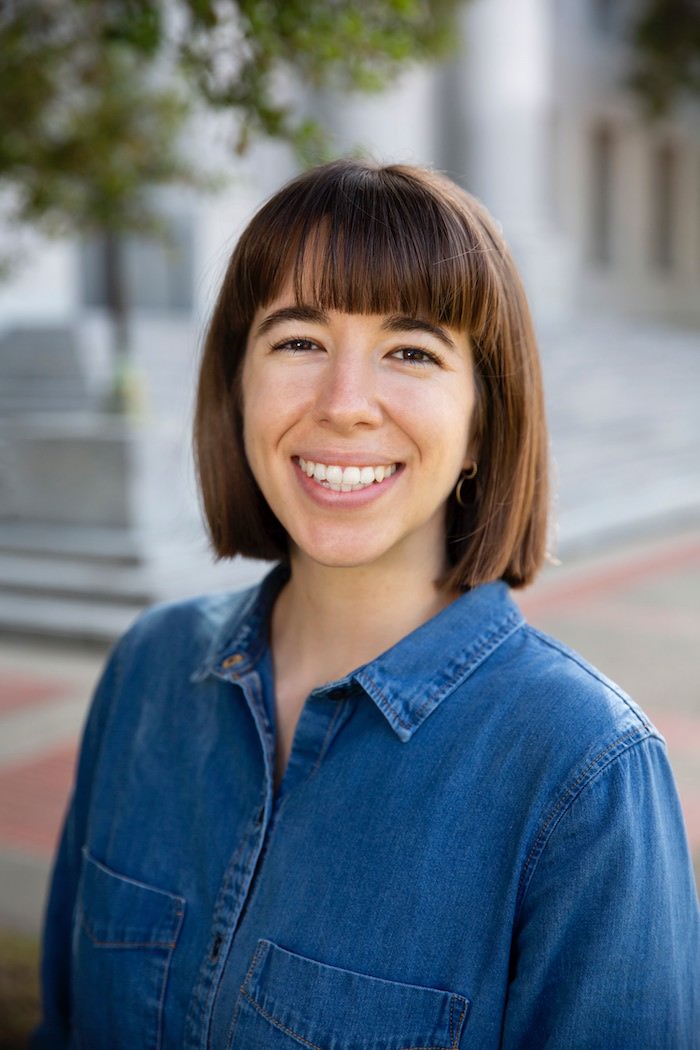
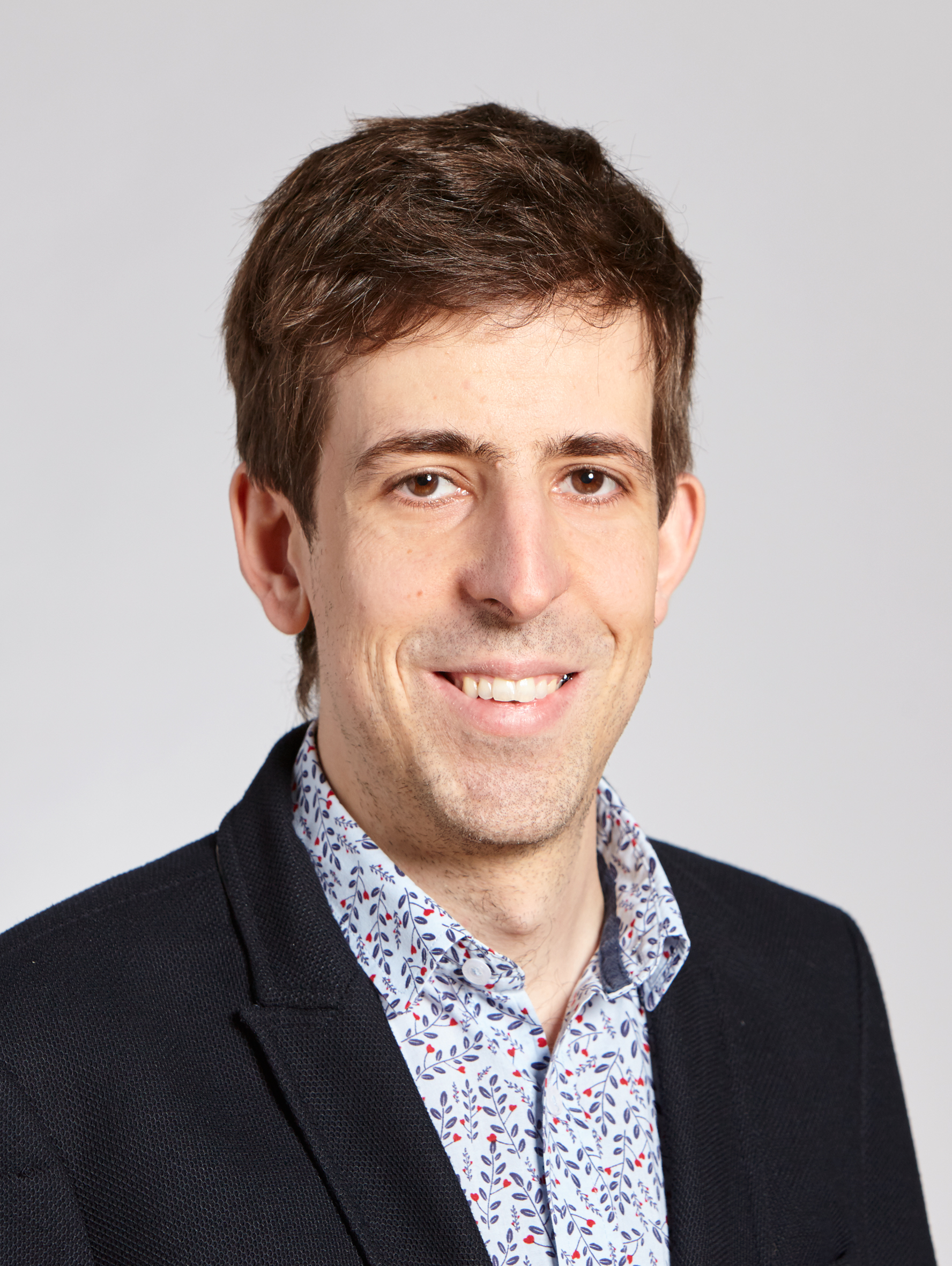
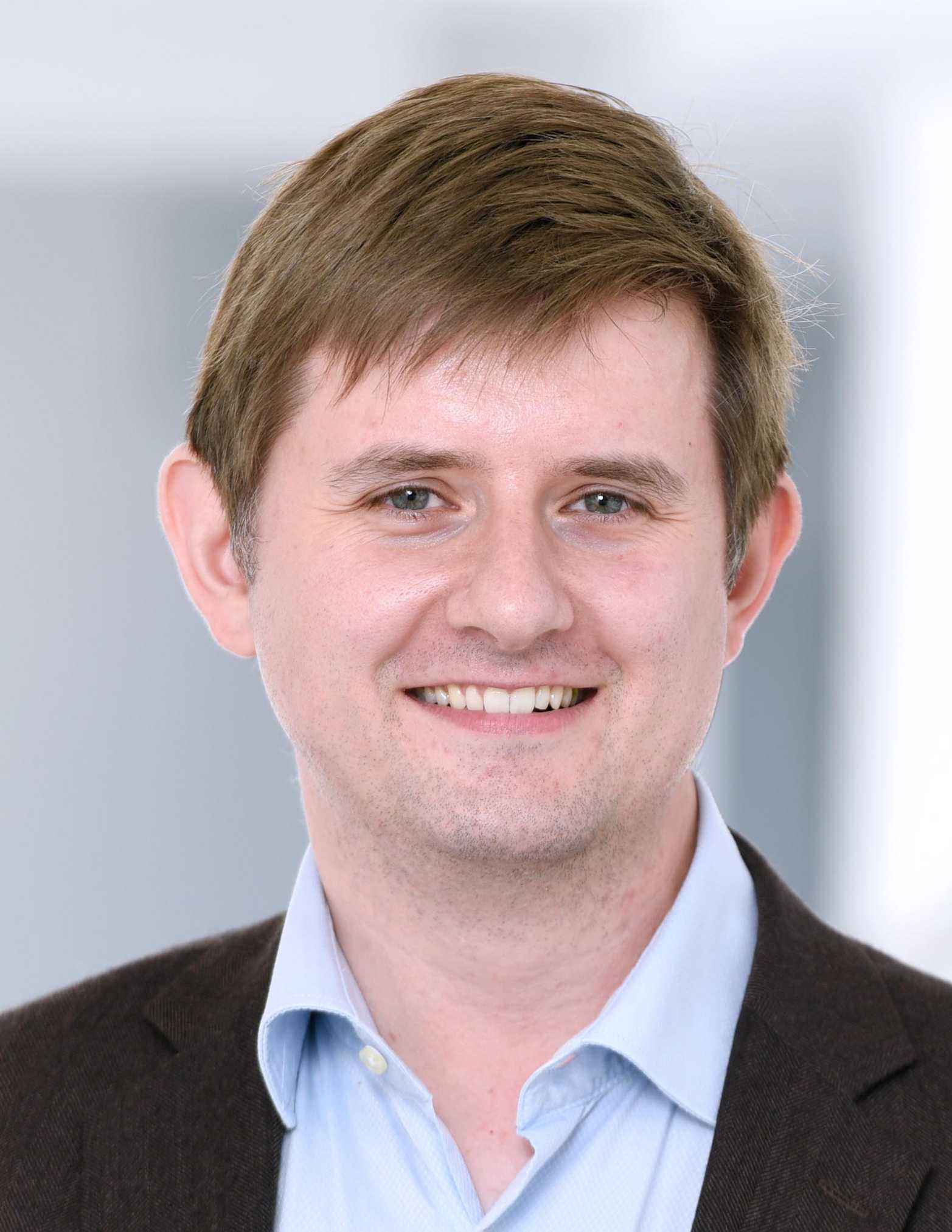
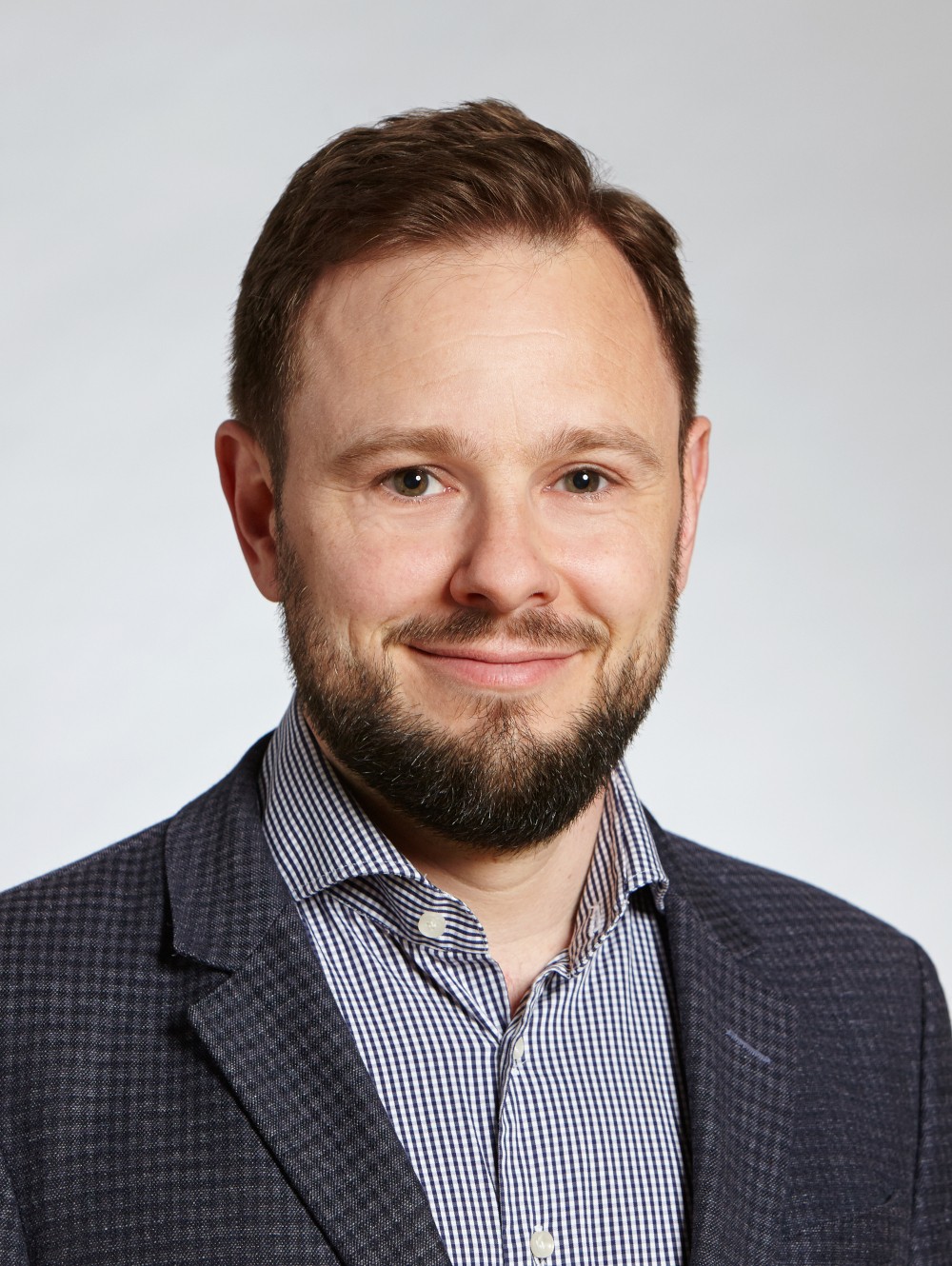
Annina Iseli is a Lecturer in the Department of Mathematics at École Polytechnique Fédérale de Lausanne (EPFL), affiliated with the College of Basic Sciences. She holds dual roles as both a Scientist and Lecturer, contributing to research and teaching within the Institute of Mathematics (MATH-GE). Her work bridges pure and applied mathematics, focusing on geometric and analytical properties of fractals. University: École Polytechnique Fédérale de Lausanne (EPFL) School: College of Basic Sciences Department: Institute of Mathematics (MATH-GE) Role: Lecturer and Scientist Research interests span multiple areas in mathematics: Fractal geometry and its connections to complex dynamics Geometric measure theory applications to projections in normed spaces Conformal and quasiconformal geometry Analysis in metric spaces Her publications include work on projection theorems, fractal dimensions, and hyperbolic space properties. She co-organizes the Quasiworld Seminar and EPFL Geometry Seminar, collaborating with researchers like Mario Bonk, Nicolas Monod, and Zoltán Balogh. Contact: annina.iseli@epfl.ch
Ali H. Sayed is the Dean of the School of Engineering (Faculté des sciences et techniques de l'ingénieur - STI) at École Polytechnique Fédérale de Lausanne (EPFL), Switzerland, where he also directs the Adaptive Systems Laboratory (Laboratoire de systèmes adaptatifs). Previously, he served as an emeritus professor and chair of the Electrical Engineering Department at UCLA. He is a highly cited researcher and a member of the US National Academy of Engineering and the World Academy of Sciences. Sayed served as president of the IEEE Signal Processing Society in 2018 and 2019. Professor Sayed's research focuses on adaptation and learning theories, data and network sciences, statistical inference, multi-agent systems, adaptive networks, and optimization. His work bridges theoretical foundations with practical applications in signal processing, machine learning, and network science. He has made significant contributions to distributed learning algorithms, social learning over networks, and adaptive signal processing techniques that have influenced both academic research and practical implementations. His recent publications demonstrate a strong focus on multi-agent systems, distributed learning, privacy-preserving techniques, and social learning over networks. The research trends show increasing emphasis on federated learning with privacy guarantees, graph-based learning approaches, and the intersection of social dynamics with information processing. His work consistently addresses fundamental theoretical questions while maintaining relevance to practical applications in communication networks, social media analysis, and distributed artificial intelligence systems. Professor Sayed has received numerous prestigious awards throughout his career, including: IEEE Fourier Award (2022) Norbert Wiener Society Award (2020) IEEE Signal Processing Society Education Award (2015) Papoulis Award from the European Association for Signal Processing (2014) Technical Achievement Award from IEEE Signal Processing Society (2012) Terman Award from the American Society for Engineering Education (2005) IEEE Donald G. Fink Prize (1996) Multiple Best Paper Awards from IEEE and EURASIP Sayed has authored or co-authored over 570 publications and six monographs. He has mentored numerous PhD students and researchers in the fields of signal processing and adaptive systems. His editorial leadership includes serving as Editor-in-Chief of IEEE Transactions on Signal Processing (2003-2005) and EURASIP Journal on Advances in Signal Processing (2006-2007), as well as Founding Editor-in-Chief of the Open Access Book Series on Information and Learning Sciences. At EPFL, Professor Sayed leads the Adaptive Systems Laboratory, which focuses on developing theoretical frameworks and practical algorithms for adaptive systems, networked learning, and distributed signal processing. The lab's research encompasses both fundamental theoretical investigations and applications to real-world problems in communications, social networks, and computational biology.
Afonso S. Bandeira is a Professor in the Department of Mathematics (D-MATH) at ETH Zurich, where he conducts research at the intersection of mathematics, statistics, and computer science. He maintains strong affiliations with several interdisciplinary research centers including the Institute For Operations Research (IFOR), the Max Planck ETH Center for Learning Systems, the ETH Foundations of Data Science, and the ETH AI Center, with a courtesy appointment at D-ITET. Bandeira actively teaches courses including Mathematics of Signals, Networks, and Learning, and Mathematics of Data Science. His research focuses on High Dimensional Probability, Random Matrices, Mathematical Statistics, Theoretical Computer Science, Combinatorics, and Mathematical Optimization. Bandeira's work often explores the theoretical foundations of data science, examining phase transitions in statistical problems, computational barriers, and the geometry of high-dimensional spaces. He maintains a research group blog called Randomstrasse101 that emphasizes open problems in his field. Analysis of his recent publications reveals a strong focus on matrix and tensor concentration inequalities, synchronization problems, nonconvex optimization landscapes, and computational-statistical tradeoffs in high-dimensional inference. His work bridges theoretical mathematics with practical applications in machine learning and data analysis, particularly examining where computational limitations arise in statistical problems. Bandeira actively mentors students and researchers, currently supervising several doctoral candidates including Daniil Dmitriev, Konstantin Donhauser, Anastasia Kireeva, Kevin Lucca, Chiara Meroni, Gil Kur, Petar Nizic-Nikolac, and Almut Roedder. He emphasizes that students working with him should participate in the DACO seminar and group meetings, and encourages prospective students to have completed his Mathematics of Signals, Networks, and Learning or Mathematics of Data Science courses. He leads a research group focused on the mathematics of data science, with regular group meetings and seminars. Bandeira has developed comprehensive lecture notes including 'A Tour Through the Mathematics of Signals, Learning, and Networks' (2025) and 'Mathematics of Machine Learning' (2021), and previously authored 'Ten Lectures and Forty-Two Open Problems in the Mathematics of Data Science' (2015).
Karsten Borgwardt is a Professor and Director of the Department of Machine Learning and Systems Biology at the Max Planck Institute of Biochemistry. He holds a PhD in Computer Science (2007) from LMU Munich and has held academic positions at ETH Zürich, Universität Tübingen, and the Max Planck Institutes in Tübingen. His research focuses on machine learning applications in biology and medicine, including biomarker discovery, personalized medicine, and systems biology. Education: PhD in Computer Science (2007), LMU Munich M.Sc. in Biology (2003), University of Oxford Diplom (M.Sc. equivalent) in Computer Science (2004), LMU Munich Research Interests: Development of machine learning algorithms for large biomedical datasets Pattern recognition in genomic and clinical data Applications in sepsis biomarkers, antimicrobial resistance prediction, and personalized medicine Grants & Projects: Scientific Coordinator of Marie Curie Networks (2013-2022) Swiss National Science Foundation Starting Grant (2014) Personalized Swiss Sepsis Study (CHF 5.3M, 2018) Awards: Krupp Award (2013), Golden Owl Teaching Award (2017), multiple 'Top 40 under 40' recognitions (2014-2016). Labs: Leads the Machine Learning and Systems Biology Department at MPI, collaborating with 22+ labs in sepsis research and international networks.
Prof. Dennis Komm is an Associate Professor at ETH Zurich's Department of Computer Science, leading the group for Algorithms and Didactics. He chairs the Center for Computer Science Education (ABZ) and serves on committees such as the Swiss Maturity Board (Schweizerische Maturitätskommission) and the STEM Commission of the Swiss Academies. Previously, he held roles at RWTH Aachen University (Master's, 2008), ETH Zurich (PhD, 2012), University of Zurich (external lecturer, 2014–2020), and PH Graubünden (including department head and professor of 'Fachdidaktik Informatik'). Education: He completed a Master's in Computer Science at RWTH Aachen (2008), a PhD at ETH Zurich (2012), and studies in Information Technology at Queensland University of Technology (2006). His academic journey includes visiting roles at King's College, Stanford, and Comenius University. He has taught extensively across institutions, emphasizing Python and LOGO-based approaches for beginners. Research focuses on algorithm design, approximation algorithms, reoptimization, and advice complexity in theoretical CS. His work in education explores computational thinking, programming pedagogy (especially for K–12), and interdisciplinary approaches (e.g., robotics in math). Recent trends in his articles highlight advancements in online algorithms, optimization under dynamic conditions, and initiatives to integrate CS into Swiss school curricula sustainably. He actively promotes CS education through platforms like WebTigerPython and collaborates on projects such as CyberQuest and MINTerlink. His outreach includes organizing conferences (e.g., STIU 2025) and workshops on programming and cybersecurity for teachers and students. Despite no listed scientific awards, his contributions to education and theoretical CS are recognized through editorial roles in journals like Informatics in Education and contributions to the TigerJython Group. Grant-related advising includes co-supervising doctoral theses on robotics, USOs, and programming didactics. He advocates for equitable educational opportunities via the Passerelle exam and the Swiss Beaver Competition. His team's work spans teacher training, didactic certifications, and bridging university-school collaborations through initiatives like MINTerlink. Labs and teams: Head of ABZ (ETH's CS education center), collaborator with the Computational Robotics Lab, and part of the TigerJython Group. He also co-organizes the Colloquium on Mathematics, Computer Science, and Education with ETH's Mathematics Department.
Christoph Stadtfeld is Associate Professor of Social Networks at ETH Zurich's Department of Humanities, Social and Political Sciences and co-director of the ETH Social Networks Lab. His research examines social network dynamics, focusing on tie formation processes, network effects on individuals, and advanced statistical methodologies for longitudinal network analysis. Education: PhD from Karlsruhe Institute of Technology (2011) Postdoctoral researcher and Marie-Curie fellow at University of Groningen, University of Lugano, and MIT Media Lab (2011-2014) His work bridges sociology, statistics, and computer science to address fundamental questions about how social structures evolve and influence behavior. Key interests include relational event modeling, co-evolution of networks and attributes, and applications in mental health, political polarization, and scientific collaboration. He develops innovative methods for analyzing dynamic networks using cutting-edge computational approaches. Recent publications reveal strong emphasis on methodological rigor in temporal network analysis, with significant contributions to relational event modeling and dynamic network actor frameworks. His work increasingly addresses societal challenges including political polarization, mental health impacts of social isolation, and innovation dynamics in healthcare. Scientific awards: Raymond Boudon Award of the European Academy of Sociology (2017) Freeman Award of the International Network for Social Network Analysis (2021) As co-director of the ETH Social Networks Lab, Stadtfeld leads interdisciplinary research teams developing novel network methodologies. His work has been supported by prestigious fellowships including Marie-Curie funding, and he actively mentors graduate students in network science methodology and applications across diverse domains. The ETH Social Networks Lab serves as a hub for advancing network theory and methodology, with ongoing projects examining student networks during crises, scientific collaboration dynamics, and innovation ecosystems through the lens of network science.
Rasmus Kyng is an Assistant Professor in the Department of Computer Science at ETH Zurich, where he has been since 2019. His research focuses on fast algorithms for graph problems, convex optimization, and their applications in machine learning. He has received grants from the Swiss National Science Foundation, including project grants and a starting grant. Education: B.A. in Computer Science from the University of Cambridge (2011), PhD in Computer Science from Yale University (2017), advised by Daniel A. Spielman. Postdoctoral positions included Harvard University (2018–2019) and a research fellowship at the Simons Institute, UC Berkeley (2017). Research Interests: Development of nearly linear-time algorithms for fundamental graph problems (e.g., maximum flow, minimum-cost flow), dynamic graph algorithms, discrepancy theory, and fine-grained complexity. His work bridges numerical linear algebra and combinatorial optimization, emphasizing practical implementations such as the Laplacians.jl package. Awards: FOCS Best Paper Award (2022), Inaugural ICBS Frontiers of Science Award (2022), Machtey Award (Best Student Paper, FOCS 2017). Teaching: Advanced Graph Algorithms and Optimization (ETH Zurich, 2020–2023), Algorithms, Probability, and Computing (ETH Zurich, 2020–2022). Supervised numerous PhD students and mentored postdocs in theoretical computer science. Labs/Teams: Co-leads a research group with Maximilian Probst Gutenberg, focusing on dynamic graph algorithms and optimization. Collaborations include work on sparsification, spectral graph theory, and machine learning applications.
Vincent Dufour-Décieux is a researcher at the Professorship for Energy and Process Systems Engineering at ETH Zürich , focusing on developing computational methods for material screening in separation processes and global net-zero transitions. He earned his Master's in Materials Chemistry from Ecole Polytechnique (France) and a PhD in Materials Science from Stanford University , where he pioneered statistical methods combining Kinetic Monte Carlo and random graph theory to study planetary diamond formation. Research Highlights: Application of Classical Density Functional Theory (cDFT) for 100x faster adsorption property predictions in porous materials Development of science-based definitions for "hard-to-abate" emissions to guide climate action prioritization Integration of Coulombic interactions in cDFT for CO2 adsorption accuracy Article Trends : His work spans computational materials science (cDFT, random graph theory) and climate policy analysis, with recent publications in Joule , AIChE Journal , and Physical Review E . These studies emphasize scalable solutions for carbon capture, material screening efficiency, and accurate thermodynamic modeling. Collaborations : Active in international conferences (FOA15, MolMod, Gordon Research Conference) and cross-institutional projects with teams at Stanford, ETH Zürich, and industry partners.
Xiang Yin is a Research Associate at the Department of Computing in Imperial College London , affiliated with the Computational Logic and Argumentation group (CLArg) . His work bridges Explainable AI (XAI) and Computational Argumentation (CA) , focusing on the explainability of Quantitative Bipolar Argumentation Frameworks (QBAFs) through attribution and counterfactual explanations. Research Interests: Explainable AI (XAI) Computational Argumentation Quantitative Bipolar Argumentation Frameworks Model Interpretability Human-AI Interaction Logical Reasoning for AI Publication Trends reveal a focus on argumentation-based explainability, with 2025-2024 works addressing large language models for claim verification, truth-discovery frameworks, and counterfactual explanations. Earlier works (2023-2022) explore random forest explanations, faithfulness criteria, and QBAF analysis. His 2018 publications on aircraft prediction systems demonstrate applied machine learning expertise. Education PhD in Artificial Intelligence under Prof. Francesca Toni and Dr. Nico Potyka Pre-PhD: Machine Learning R&D Engineer at Baidu Labs & Teams Xiang is part of the CLArg group at Imperial College London, focusing on integrating computational argumentation with AI explainability and contestability.
Tatiana Smirnova-Nagnibeda is an Associate Professor in the Mathematics Section at the University of Geneva, where she obtained her PhD before holding positions at ETH Zurich and KTH Stockholm. She returned to UNIGE where she has established herself as a leading researcher in geometric and combinatorial group theory. Her research focuses on combinatorial, asymptotic and geometric group theory, as well as probabilities on groups and graphs. She has made significant contributions to the understanding of branch groups, self-similar groups, Schreier graphs, and spectral properties of group actions. Her work often bridges algebra, probability, and geometry, revealing deep connections between these areas through the study of Thompson's groups, Grigorchuk's group, and other important group constructions. Her recent publications demonstrate a consistent focus on subgroup structure in various classes of groups, spectral properties of Schreier and Cayley graphs, and connections to dynamical systems. She frequently collaborates with researchers from around the world, particularly with Rostislav Grigorchuk, and has mentored numerous doctoral students who have gone on to successful academic careers. Managing Editor for Groups, Geometry, and Dynamics Editor for L'Enseignement Mathématique Organizer of GAGTA conferences (2022, 2024) Organizer of specialized workshops on high-dimensional expanders (2015, 2016) She leads an active research group comprising postdoctoral fellows and doctoral students working on various aspects of group theory and its applications. Her teaching includes advanced courses on graph theory, random walks on groups, spectral theory of graphs, and amenability at the University of Geneva.
Ulrik Brandes serves as Full Professor and Head of the Department of Humanities, Social and Political Sciences at ETH Zurich, holding the Professorship for Social Networks. He actively teaches courses including Network Analysis and Applied Network Science: Sports Networks for Fall semester 2025, with office location at WEP J 14, Weinbergstr. 109, Zurich. His research spans Social Network Analysis, Graph Theory, and Network Science, with significant applications in sociology, sports analytics (particularly soccer and Australian Football League), and archaeological networks. As a longstanding member of the International Network for Social Network Analysis (since 2001) and the Academy of Sociology (since 2017), he bridges theoretical graph algorithms with practical interdisciplinary applications, recently expanding into sports analytics through the Football Scouting Association (2023). Analysis of his recent publications reveals strong thematic continuity in network centrality, temporal dynamics, and robustness, with increasing application diversity across sports analytics, archaeological trade networks, and decentralized social media platforms. His work consistently emphasizes efficient computational methods for real-world network problems. Honors: Simmel Award (2024) Prof. Brandes maintains active research leadership through departmental oversight and course development, though specific grant details and student advisement records are not publicly documented in available sources. His departmental role indicates substantial administrative responsibilities alongside research and teaching commitments.
David Steurer is an Associate Professor in the Department of Computer Science at ETH Zurich, where he leads the Institute for Theoretical Computer Science. His research bridges theoretical computer science, mathematics, and practical applications in machine learning and statistics. Steurer has made significant contributions to the understanding of sum-of-squares methods, semidefinite programming, and high-dimensional estimation problems. Steurer earned his B.Sc. & M.Sc. in Computer Science from Saarland University in 2006, followed by a Ph.D. in Computer Science from Princeton University in 2010 under the supervision of Sanjeev Arora. His doctoral dissertation, "On the Complexity of Unique Games and Graph Expansion," received an Honorable Mention for the ACM Doctoral Dissertation Award in 2011. Steurer's research focuses on algorithm design through mathematical programming relaxations, particularly semidefinite programming and the sum-of-squares method. His work addresses computational complexity of high-dimensional estimation problems including tensor decomposition, clustering, Gaussian mixture models, and stochastic block models. He also investigates algorithmic aspects of robustness and differential privacy, especially for estimation tasks. His theoretical contributions have practical implications for machine learning and data analysis in the presence of noise and adversarial conditions. Analysis of Steurer's recent publications reveals a consistent trajectory in advancing the sum-of-squares framework for high-dimensional estimation and robust statistics. His work demonstrates how sophisticated mathematical programming techniques can provide certifiable guarantees for challenging problems in machine learning. The research spans theoretical foundations while maintaining relevance to practical applications, particularly in scenarios involving corrupted or noisy data. A notable trend is the extension of sum-of-squares methods to handle increasingly complex statistical models while providing rigorous performance guarantees. ERC Consolidator Grant (2019) Michael and Sheila Held prize (2018, with Raghavendra) Invited speaker at International Congress of Mathematicians (2018) STOC Best Paper Award (2015) Alfred P. Sloan Research Fellowship (2014) NSF CAREER Award (2014) Microsoft Research Faculty Fellowship (2014) FOCS Best Paper Award (2010) Steurer has advised numerous PhD students and postdocs who have gone on to prominent positions, including Sam Hopkins (now faculty at MIT), Jonathan Shi, and Aaron Potechin. His research is supported by multiple prestigious grants, including an ERC Consolidator Grant, an NSF CAREER Award, and a Microsoft Research Faculty Fellowship. He has served on numerous program committees for top theoretical computer science conferences and has been recognized for his service to the community through roles such as internal member of the Scientific Advisory Committee of the Institute for Theoretical Studies at ETH Zurich. As head of the Institute for Theoretical Computer Science at ETH Zurich, Steurer leads a research group focused on advancing the theoretical foundations of computer science with particular emphasis on mathematical optimization methods. His team explores the boundaries of what can be efficiently computed in high-dimensional settings, with applications spanning machine learning, statistics, and data science. The group maintains strong connections with both theoretical and applied researchers across ETH and the broader academic community.
Florent Krzakala is a Full Professor at École polytechnique fédérale de Lausanne (EPFL) in Switzerland, holding positions across multiple departments including the School of Basic Sciences (SB), School of Engineering (STI), and specifically within the Department of Physics (IPHYS) and Department of Electrical Engineering (IEM). He leads the Information, Learning and Physics Laboratory (IdePHICS) and maintains an office at ELD 239, Station 11, 1015 Lausanne. His research bridges statistical physics and computational disciplines, with significant contributions to understanding the theoretical foundations of machine learning and optimization problems. Dr. Krzakala received his MSc in Physics from Orsay, France in 1999, followed by a PhD in Statistical Physics from Orsay, Paris XI, France in 2002, and completed a postdoctoral position at Roma La Sapienza in 2004. This strong foundation in physics has informed his interdisciplinary approach to computational problems. His research interests span Statistical Physics, Machine Learning, Probability and Statistics, Computer Science, Information Theory, Inference on Graphs, Random Constraint Optimization, and Computational Optics. Krzakala's work focuses on applying methods from statistical physics to problems in theoretical computer science, probability, and machine learning. He investigates how concepts from disordered systems and phase transitions can illuminate computational barriers in optimization and inference tasks. His research has particular relevance for understanding the behavior of neural networks, compressed sensing, and high-dimensional statistical models. Analysis of his recent publications reveals a strong trend toward understanding the fundamental limits of learning in high-dimensional settings, with particular emphasis on phase transitions, statistical-to-computational gaps, and the theoretical properties of deep learning architectures. His work frequently bridges rigorous mathematical analysis with practical machine learning applications, demonstrating how insights from statistical physics can inform algorithm design and theoretical understanding in AI. Krzakala actively mentors the next generation of researchers, supervising numerous PhD students whose work continues to advance these interdisciplinary fields. His laboratory serves as a hub for researchers exploring the intersection of physics and computation, fostering collaborations across traditional disciplinary boundaries. He teaches advanced courses including Fundamentals of Inference and Learning, Statistical Physics, and Statistical Physics for Optimization & Learning, which examine the connections between physical principles and computational methods. His educational materials, including lecture notes on statistical physics methods in optimization and machine learning, have become valuable resources for students and researchers worldwide. As founder and scientific advisor of the startup Lighton, Krzakala has also demonstrated a commitment to translating theoretical insights into practical applications, particularly in the realm of optical computing for machine learning tasks.
Benny Sudakov is a Professor of Mathematics at ETH Zurich, where he conducts research in combinatorics. He has previously held positions at UCLA, Princeton University, and the Institute for Advanced Study. His work is supported by the SNSF grant 200021_196965. Research Interests: His primary research areas include Extremal Graph and Hypergraph Theory, Ramsey Theory, Random Structures, and the application of Algebraic and Probabilistic Methods in Combinatorics, with strong connections to Theoretical Computer Science. He investigates fundamental structural properties of discrete systems, such as the existence of regular subgraphs, extremal configurations, and the behavior of random combinatorial objects. The recent popular science articles on his work highlight a consistent trend of solving long-standing open problems in extremal combinatorics using sophisticated probabilistic and algebraic techniques. His research spans topics like equiangular lines, graph decompositions, and the emergence of cycles in sparse graphs, demonstrating a deep focus on the interplay between structure and randomness. Scientific Awards: No specific awards are mentioned in the provided text. Advising and Grants: He has advised numerous Ph.D. students, many of whom have gone on to become professors at top universities (e.g., Oxford, Stanford, CMU, ETH, Princeton). His research is currently funded by the Swiss National Science Foundation (SNSF). He has organized workshops and seminars, such as the Theory of Combinatorial Algorithms Mittagsseminar at ETH and a workshop at UCLA on Extremal and Probabilistic Combinatorics. Labs and Teams: He is a key member of the combinatorics group at ETH Zurich and co-organizes the Theory of Combinatorial Algorithms Mittagsseminar, a central forum for research discussions in discrete mathematics at the institution.
Beat Rechsteiner is a Senior Lecturer and Postdoctoral Researcher at the Institute of Education, University of Zurich, specializing in educational processes within schools. He serves as Project Lead for the SNSF Research Project R2 (Regulation of Routines in Teaching Development) and contributes to theoretical and empirical research on teacher collaboration, school improvement, and social network analysis. His work emphasizes self-regulated learning, instructional capacity, and adaptive strategies for educational challenges. Doctoral Program in Education (University of Zurich, 2018–2022) Master’s in Educational Science (University of Zurich, 2014–2018) Secondary School Teacher Training (Zurich University of Teacher Education, 2005–2009) His research focuses on: Teacher collaboration networks and their impact on school improvement Professional development dynamics through experience sampling Brokerage mechanisms in educational change Adaptation of routines during crises (e.g., pandemic effects on math competencies) Recent publications highlight trends in social network analysis, school reform, and collective regulation. Key themes include boundary-crossing activities, data-driven school development, and stress management in collaborative environments. Awards include the GRC Travel Grant (2022). He actively reviews for journals like Teaching and Teacher Education and Journal of Educational Change , participates in international exchanges (University of Antwerp), and teaches graduate courses on systematic reviews, school improvement routines, and educational research.