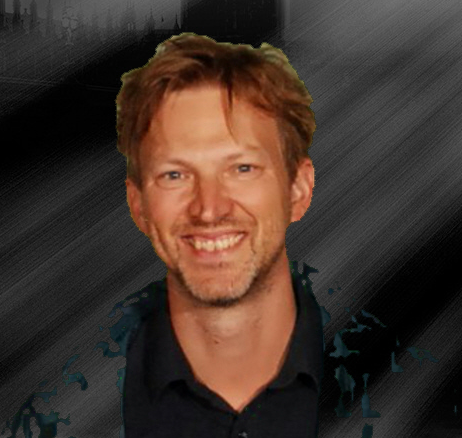
Dr. Kenan Bektas is a researcher at the University of St.Gallen, focusing on Augmented Reality , Eye Tracking , and Context-Aware Systems . His work bridges Mixed Reality and Human-Computer Interaction , with a particular emphasis on gaze-enabled interfaces, object identification, and activity recognition. University of St.Gallen His research explores how Augmented Reality can enhance cognitive offloading and improve user performance. He develops systems like NeighboAR and GEAR , which leverage gaze data and machine learning for object retrieval and activity recognition. Key article trends include: Integration of Eye Tracking with AR/MR systems Development of Context-Aware Interfaces Investigations into Responsible Personalization and privacy in MR Applications in Industrial Processes and remote living (Telelife) His work often involves interdisciplinary collaborations with researchers such as Simon Mayer and Jannis Rene Strecker, and has been published in venues including ACM, PLOS ONE, and Frontiers.
Prof. Fabio Galasso heads the Perception and Intelligence Lab (PINLab) at the Department of Computer Science, Sapienza University of Rome. Previously, he founded and directed the Computer Vision Department at OSRAM in Munich, Germany, and conducted research at the University of Cambridge and Max Planck Institute for Informatics. His educational background includes a Master's Degree cum laude from RomaTre University and a PhD from the University of Cambridge, Department of Engineering. Prior to his academic career, he worked as a Researcher at Ericsson Laboratories and as a Project Engineer at Telecom Italia. Prof. Galasso's research focuses on fundamental aspects of computer vision and machine learning, with particular interest in distributed and multi-agent intelligent systems, perception tasks including detection, recognition, re-identification, and forecasting, and general intelligence encompassing reasoning, meta-learning, and domain adaptation. His work emphasizes sustainable AI frameworks with low-power consumption and constrained computational resources, as well as interpretable and verifiable AI systems. Earlier in his career, he conducted significant research on video analysis and segmentation, scene understanding, clustering, and 3D reconstruction from texture. His recent publications demonstrate strong contributions across multiple cutting-edge areas in computer vision, with a clear progression from fundamental research on video segmentation and texture analysis to practical applications in human motion forecasting, person search, and anomaly detection. His work consistently bridges theoretical computer vision with practical applications in smart lighting, retail, and city infrastructure. 2019 IoT/WT Innovation World Cup 2019 Digital Champions Award 2018 Deutscher Digital Award Prof. Galasso has coordinated a Marie Sklodowska-Curie Actions project (Horizon 2020) and served as Principal-Co-Investigator in multiple German-funded projects. He is actively involved in the academic community, serving as area chair for major conferences including NeurIPS, ECCV, and CVPR, and organizing workshops on specialized topics in computer vision. His leadership in the Perception and Intelligence Lab drives innovation in both theoretical understanding and practical implementations of computer vision technologies.
Elvin Isufi is an Associate Professor at the Delft University of Technology (TU Delft) , where he co-founded and co-directs AIdroLab , one of the 24 TU Delft AI Labs. His research focuses on fundamental and applied graph-based data processing with applications to water networks, flood modeling, infrastructure systems, and recommender systems. Elvin obtained his Ph.D. from TU Delft in graph signal processing and completed his master's and bachelor's studies at the University of Perugia in Italy. He has been mentored by renowned academics including Prof. Alejandro Ribeiro (postdoc), Prof. Geert Leus (Ph.D.), and Prof. Paolo Banelli (master's/bachelor's). His research integrates signal processing , machine learning , and mathematical modeling to develop techniques for graph signal processing, graph neural networks (GNNs), and higher-order network analysis. Key application domains include water distribution networks , flood modeling , and recommender systems . His work addresses critical challenges such as stability analysis of GNNs, dynamic graph processing , and physics-informed machine learning . Recent publications highlight advancements in multi-scale hydraulic GNNs for flood prediction, carbon footprint-aware recommender systems , and simplicial vector autoregressive models for edge flow analysis. His research group includes Ph.D. students like Bishwadeep Das and M.Sc. students exploring topics such as online edge flow prediction and topological signal processing . 2021: Audience Choice Award, IEEE Data Science and Learning Workshop 2022: Best Student Paper Award, IEEE DSLW 2023: Top 3% Recognition Award, ICASSP Elvin actively supervises students in graph machine learning projects, emphasizing requirements like Python and PyTorch/TensorFlow expertise . He provides structured thesis project themes covering dynamic graph analysis , physics-informed GNNs , and self-supervised learning for networked data.
Ambrus Gergely is a Research Fellow affiliated with the Geometry Department at the Hungarian Academy of Sciences. His work bridges discrete mathematics, convex geometry, and probability theory, focusing on geometric configurations, optimization, and combinatorial problems. Research Interests: Discrete Mathematics, Convex Geometry, Probability Theory, Discrete Analysis Grants: Combinatorics in Geometry and Number Theory (2020-2025), Limits of discrete structures (ERC, 2014-2019) His recent publications address vector balancing, Helly-type theorems, and geometric optimization, with a focus on convex bodies, planar sets avoiding unit distances, and extremal problems in discrete geometry. He has made significant contributions to understanding the interplay between convex geometry and probabilistic methods. Scientific Awards: János Bolyai Research Fellowship (Hungarian Academy of Sciences, 2015) Grünwald Géza Memorial Medal (Bolyai János Matematikai Társulat, 2009) Rényi Kató Award (Bolyai János Matematikai Társulat, 2006) Ambrus is part of the GeoScape Research group at the Rényi Institute, collaborating on problems related to convex sets, tight frames, and geometric algorithms.
Franck Gabriel is an Associate Professor at University Claude Bernard Lyon 1 , affiliated with the Institut de Science Financière et d'Assurances (ISFA) . His research bridges Machine Learning , Economics/Blockchain , Mathematical Physics , and Random Matrices , with notable work on neural tangent kernels, DeFi protocols, and asymptotic matrix theory. Research Focus : Machine Learning: Theoretical analysis of neural networks, kernel methods, and generalization bounds. Blockchain Economics: Decentralized finance, staking mechanisms, and smart contract design. Mathematical Physics: Holonomy fields, Yang-Mills theory, and random matrix asymptotics. Recent Publications highlight trends in denoising diffusion models, free probability in matrix theory, and DeFi credit systems. His work often integrates cross-disciplinary approaches, merging deep learning with financial technology and quantum field theory. Scientific Awards : 2025 AI 2000 Most Influential Scholar Award in Theory 2024 AI 2000 Most Influential Scholar Award in Theory 2023 AI 2000 Most Influential Scholar Award in Theory As an organizer of the ISFA Seminar , he fosters interdisciplinary discussions in insurance, economics, and machine learning. His collaborations span institutions like Ecole Polytechnique Fédérale de Lausanne, Courant Institute, and EPFL.
Patrick Schnider is a lecturer in the Department of Mathematics and Computer Science at the University of Basel and the Department of Computer Science at ETH Zürich. His academic journey includes postdoctoral positions at ETH Zürich under Prof. Bernd Gärtner and Prof. Emo Welzl, and at the University of Copenhagen with Prof. Karim Adiprasito. He holds a PhD in Theoretical Computer Science from ETH Zürich between 2015 and 2020. Education: Bachelor's and Master's degrees in Mathematics from ETH Zürich. PhD in Theoretical Computer Science under Prof. Emo Welzl. Research focuses on combinatorial and topological methods in discrete geometry and high-dimensional data analysis, including topological methods for mass partitions, combinatorial depth measures, geometric transversals, computational geometry, and topological properties of solution spaces. Recent work explores geometric algorithms, topological data analysis, and combinatorial optimization, with notable contributions to clustering algorithms, persistent homology applications, and fair division problems. No scientific awards explicitly mentioned. Collaborations include the Theory of Combinatorial Algorithms Group at ETH Zurich and research groups led by Prof. Gärtner and Adiprasito. Other interests include music, playing clarinet in a wind orchestra, and conducting in various orchestral projects.
Dr. Lucas Slot is a Lecturer at the Department of Computer Science, ETH Zurich, specializing in theoretical computer science, computational complexity, and optimization algorithms. His research focuses on polynomial optimization, sum-of-squares hierarchies, and semidefinite programming, with applications to algorithmic design and complexity analysis. Recent work includes studies on computational thresholds in stochastic block models, convergence rates of optimization hierarchies, and kernel-based methods for high-dimensional inference. His contributions span theoretical foundations and algorithmic advancements in mathematical programming and geometric data analysis. Lacking explicit mentions of academic awards or grants, Dr. Slot’s scholarly activities emphasize computational and mathematical challenges in optimization and discrete geometry. No student advisees are listed in the provided materials.
Prof. Angelika Steger is a Full Professor in the Department of Computer Science at ETH Zurich, leading research in theoretical computer science since 2003. She holds a Master's in Applied Mathematics from Stony Brook University (1985) and a PhD from the University of Bonn (1990). Her career includes roles at Kiel, Duisburg, and TU München before joining ETH. She is a Leopoldina member (2007), ICM speaker (2014), and Collegium Helveticum Fellow (2009+). Research focuses on probabilistic methods, randomized algorithms, graph theory, and combinatorial optimization. She has contributed to understanding discrete structures, neural networks, and algorithmic resilience. Awards include recognition in both computer science and mathematics circles. Her work bridges theoretical foundations with applications in AI, neuroscience, and distributed systems.
Dr. Andreas Lichtenberger is a Lecturer at the Department of Physics at ETH Zürich. His research focuses on advancing physics education through innovative technologies like augmented reality and exploring effective teaching methodologies. His work emphasizes conceptual understanding in electromagnetism, kinematics, and vector fields, with a particular interest in formative assessment strategies and the role of multiple external representations (MER) in learning. Key research areas include: Technology-enhanced learning (AR/VR in physics education) Cognitive aspects of physics concept acquisition Gender differences in representational competence Experimental validation of educational interventions His publications highlight contributions to: Designing AR tools for Lorentz force visualization Concreteness fading pedagogy in secondary physics Eye-tracking analysis of student problem-solving Development of competency assessment inventories No scientific awards are explicitly listed. He collaborates widely with educational researchers and physicists, contributing to both theoretical and applied aspects of STEM education.
Prof. Amos Lapidoth is a Full Professor at ETH Zürich's Department of Information Technology and Electrical Engineering, leading the Signal and Information Processing Lab. He holds a B.A. (summa cum laude) in Mathematics and B.Sc. (summa cum laude) in Electrical Engineering from the Technion, along with an M.Sc. from Technion and Ph.D. from Stanford University. Previously, he was an Associate Professor at MIT and held the KDD Career Development Chair in Communications and Technology. His research focuses on Digital Communications and Information Theory , with contributions to coding theory, channel modeling, and signal processing. He has conducted R&D in wireless communications at the IDF Signal Corps Labs, earning two Creative Thinking Awards. His awards include the NSF CAREER Award and Rothschild Fellowship. Recent work explores state-dependent channels with helpers, feedback-assisted communication, and identification over noisy channels. His lab develops theoretical frameworks for reliable communication in complex systems, with applications in coding, modulation, and network design. Labs/Teams: Head of Signal and Information Processing Lab at ETH Zurich Key Contributions: Pioneering work on helper channels, zero-error capacity, and Rényi entropy applications
Ola Svensson is an Associate Professor at the School of Computer and Communication Sciences, EPFL. His research focuses on approximation algorithms, combinatorial optimization, computational complexity, and scheduling. He has been supported by grants including the ERC Starting Grant "OptApprox" (2014-2019), SNF grants, and the ERC Consolidator Grant "POTCO" (2023-). He teaches courses such as Advanced Algorithms and Approximation Algorithms and Hardness of Approximation. Education: PhD from IDSIA - Universita della Svizzera italiana (2009) and Master's from Uppsala University (2005). Research Interests: Design and analysis of approximation algorithms for NP-hard problems, scheduling, and computational complexity. He explores limitations of approximation techniques through hardness results and contributes to theoretical computer science. Publications span clustering, scheduling, and graph problems like the Traveling Salesman Problem. Recent work includes learning-augmented algorithms and robust optimization. Awards: I&C teaching award and best paper awards at FOCS (2017) and STOC (2018). Over a dozen PhD students advised, many entering postdocs or industry roles. Labs/Teams: Part of the theory group at EPFL, collaborating on academic projects and course development.
Prof. Ingo Scholtes is a Full Professor of Machine Learning for Complex Networks at Julius-Maximilians-Universität Würzburg's Center for Artificial Intelligence and Data Science (CAIDAS). He holds a doctorate in computer science and mathematics from the University of Trier and has held roles including SNSF Professor at the University of Zurich, Full Professor at Bergische Universität Wuppertal, and Senior Assistant at ETH Zürich. His research focuses on higher-order graph analytics for temporal networks, machine learning, and computational social science. Education: PhD in Computer Science (University of Trier, Germany), Postdoctoral Research at ETH Zürich (2011–2016), and prior roles at Karlsruhe Institute of Technology and CERN. Research Interests: Machine learning on graphs, temporal network analysis, higher-order network models, and their applications in software engineering and social systems. He develops open-source tools like pathpy and git2net for network analysis. Recent Work: Focuses on causality-aware graph neural networks, temporal graph isomorphism, and network science applications in AI. Recent articles include studies on temporal network dynamics, path prediction, and Bayesian inference of network transitions. Awards: SNSF Professorship (2018), Junior-Fellowship (2014), and German Academic Scholarship Foundation (2004-2005). Active in editorial roles for EPJ Data Science and leadership in GI's Computational Social Science working group.
Daniele Zambon is a postdoctoral researcher at the Dalle Molle Institute for Artificial Intelligence (IDSIA), affiliated with Università della Svizzera italiana (USI) in Lugano, Switzerland. He is a member of the Faculty of Computer Science and the Graph Machine Learning Group, as well as the IEEE Task Force on Learning for Graphs. PhD : Informatics, Università della Svizzera italiana (USI), 2022 Master’s & Bachelor’s : Mathematics, University of Milan, Italy Visiting Researcher : University of Florida, University of Exeter Internship : STMicroelectronics, Italy His research lies at the intersection of machine learning and graph-structured data, with a strong emphasis on graph representation learning , learning in non-stationary environments , and time series analysis . He explores how to model dynamic graphs, detect anomalies and changes over time, and develop deep learning methods for spatiotemporal forecasting. His work integrates statistical testing, geometric deep learning, and neural architectures like Graph Neural Networks (GNNs) and Neural ODEs. The recent publications highlight a clear trend toward temporal and dynamic graph modeling , especially for time series forecasting and irregularly sampled data . There is a growing focus on generative and foundation models for graphs , uncertainty-aware learning , and the creation of benchmark datasets like PeakWeather. His work bridges theoretical contributions (e.g., statistical tests, Kalman filters on graphs) with practical applications in sensing, environmental modeling, and system monitoring. Co-author of patent: Method for the Detecting Electrocardiogram Anomalies and Corresponding System (US10610162B2) PhD thesis featured in D22 Excellent Computer Science Dissertations (2022) Associate Editor, IEEE Transactions on Neural Networks and Learning Systems (IEEE TNNLS) Organizer of tutorials and special sessions at ICML, LoG, KDD, and ESANN Daniele actively contributes to the academic community through advising and teaching at USI’s Bachelor’s and Master’s programs. He has co-supervised research projects and co-organized educational initiatives such as tutorials on graph deep learning. His collaborative work involves grants and partnerships with institutions like MeteoSwiss, leading to impactful datasets and applied research. He is deeply involved in building research capacity through workshops and community engagement in the graph learning field. He is a core member of the Graph Machine Learning Group at IDSIA and contributes to the IEEE Task Force on Learning for Graphs , fostering international collaboration and setting research agendas in the domain of graph-based AI.
Anders Karlsson is an Associate Professor at the University of Geneva since 2010 and holds a concurrent professorship at Uppsala University since 2013. His academic journey began with engineering physics studies at KTH, followed by a mathematics PhD from Yale University in 2000, with subsequent positions at ETH Zurich, Neuchâtel, Bielefeld, Yale, and KTH. His research spans multiple mathematical domains with significant interdisciplinary applications: Ergodic theory and random walks Metric geometry and group actions Spectral invariants Deep learning and neural networks Karlsson's theoretical work focuses on noncommuting random products and metric functional analysis, applied to random walks on groups, operator theory, complex variables, stochastic game theory, and machine learning. He also investigates connections between zeta functions of graphs, spaces, and numbers using heat kernel analysis. He leads the Algebra and Geometry research group, mentoring PhD students Kamila Kashaeva and Dylan Mueller, and supervising postdoctoral researcher Tsviqa Lakrec. His teaching portfolio includes various mathematics courses documented in the university database, reflecting his expertise across theoretical and applied mathematics domains.
Antti Knowles is a Full Professor at the University of Geneva , Section of Mathematics. His research lies at the intersection of probability theory, mathematical physics, and analysis, with a strong focus on random matrices, random graphs, and quantum dynamics. He leads the research group Analysis, Mathematical Physics and Probability and mentors postdocs and doctoral students. Research Interests: Prof. Knowles's work spans a wide range of topics including random matrices , random graphs , statistical mechanics , stochastic processes , high-dimensional statistics , quantum field theory , and quantum dynamics . His contributions are foundational in understanding spectral properties of complex systems and their physical implications. Publications: His recent publications demonstrate a consistent focus on spectral theory of random graphs and matrices, delocalization phenomena, and quantum statistical mechanics. These works often appear in top-tier journals such as Communications in Mathematical Physics , Annals of Probability , and Journal of the European Mathematical Society . Grants & Support: He has received significant funding from the European Research Council (ERC) and the Swiss State Secretariat for Education, Research and Innovation through projects RandMat (2017–2022) and ProbQuant (2022–2027). Editorial Work: Prof. Knowles serves on the editorial boards of Annales de l’Institut Fourier , Annals of Applied Probability , L'Enseignement Mathématique , and Journal of Statistical Physics .