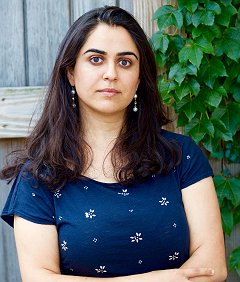
Maryam Mehri Dehnavi is an Associate Professor in the Department of Computer Science at the University of Toronto and a Principal Research Scientist at NVIDIA. She holds the Canada Research Chair in Parallel and Distributed Computing and leads the ParaMathics research group. Research focuses on high-performance computing , machine learning , sparse matrix optimizations , and compiler design for heterogeneous systems. Her work develops domain-specific languages , scalable numerical libraries , and auto-vectorization techniques for cloud and GPU platforms. Recent publications address LLM compression , sparse code translation , GPU kernel synchronization , and control flow optimization . Scientific recognition: Ontario Early Researcher Award (2021), NSF CRII Grant, NSERC New Frontiers in Research Fund. Current students: Mushegh Shahinyan , Martin Phan , Maryam Haghifam , and others. Former advisees: Kazem Cheshmi (NJIT), Zachary Blanco (MIT Lincoln Lab), Yuanxi Li (Amazon).
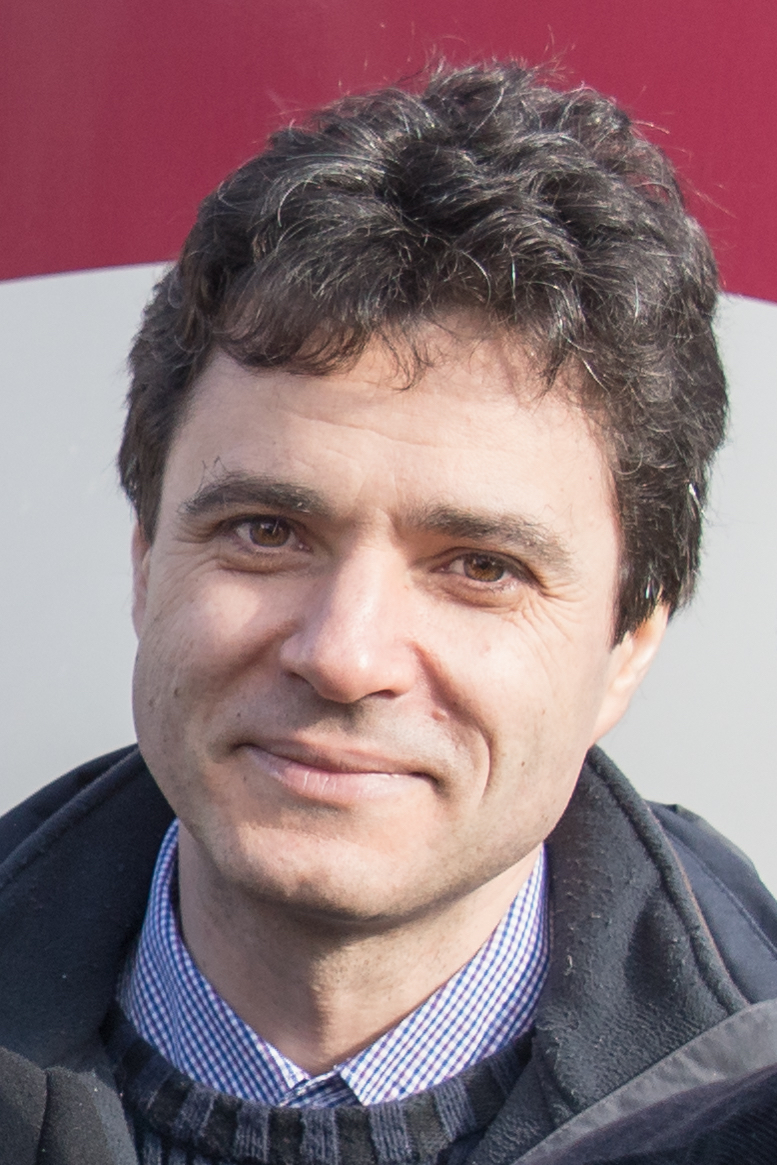
Ioan Todinca is a Professor of Computer Science at the University of Orléans, France, affiliated with the LIFO (Laboratoire d'Informatique Fondamentale d'Orléans) research laboratory. His academic career spans over two decades, with significant contributions to theoretical computer science, particularly in graph algorithms and distributed computing. Faculty of Science, University of Orléans LIFO Research Laboratory Member of Institut thématique pluridisciplinaire Modélisation, Systèmes, Langages (since 2014) Former director of MIPTIS doctoral school (2012-2014) Former head of Computer Science degree program (2007-2011) Former leader of LIFO Graphs, Algorithms and Computational Models team (2008-2012) Todinca's research focuses primarily on graph algorithms, with expertise in exact algorithms (moderately exponential), parameterized algorithms, and algorithms for specific graph classes. He has made significant contributions to techniques involving tree decompositions, treewidth, minimal separators, and potential maximal cliques. More recently, his work has expanded into distributed algorithms, especially in communication-constrained models like the broadcast congested clique. His research bridges theoretical foundations with practical algorithmic approaches for NP-hard problems. The analysis of his recent publications reveals a strong trend toward distributed computing problems, particularly in congested network models. His work spans from fundamental graph theory problems (cycle detection, graph modification) to applications in quantum computing and model checking. The consistent focus on communication complexity, verification, and efficient algorithms across different computational models demonstrates his ability to adapt theoretical computer science principles to emerging computational paradigms. Todinca has supervised numerous PhD students and has been actively involved in the theoretical computer science community through conference organization and editorial work. His publications appear consistently in top-tier venues including SIAM Journal on Computing, Algorithmica, and proceedings of major conferences like STACS, WG, and DISC. Teaching responsibilities include algorithms, graph theory, and discrete structures for undergraduate and graduate students, with previous experience teaching databases, programming, and software engineering. His educational materials are hosted on the university's Celene platform.
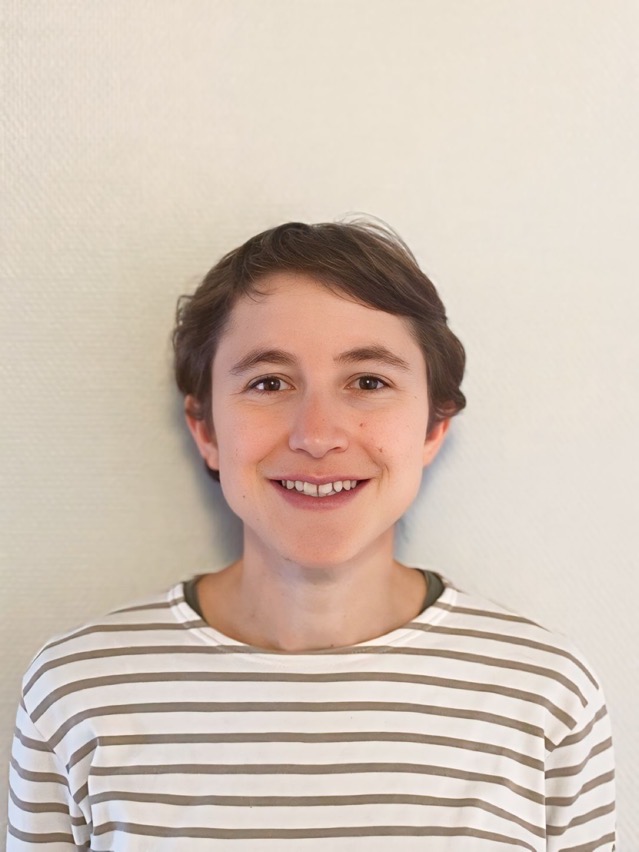
Irène Marcovici is a Professor in the Department of Mathematics at the University of Rouen Normandy, affiliated with the Raphaël Salem Mathematics Laboratory (LMRS). She leads the Probability and Dynamical Systems team within LMRS and participates in the ALEA and SDA2 working groups of the GDR Informatique Fondamentale et ses Mathématiques. PhD in Mathematics (2013, University of Paris Diderot) Habilitation à Diriger des Recherches (2021, University of Lorraine) Her research focuses on probability theory , dynamical systems , and cellular automata , with significant contributions to percolation theory, self-organization phenomena, and combinatorics on words. She investigates how randomness influences complex systems, particularly through probabilistic cellular automata and their ergodic properties. Analysis of her recent publications (2021-2025) reveals a strong emphasis on percolation dynamics (e.g., corner percolation with directional bias), self-stabilization mechanisms in cellular systems, and combinatorial structures like Kolakoski sequences. Her work bridges theoretical computer science and pure mathematics, often employing stochastic methods to solve problems in symbolic dynamics and discrete geometry. Supervision & Collaborations: Currently supervising Maxence Poutrel (with Jérôme Casse) Previously supervised Pierrick Siest (2021-2024), Jocelyn Begeot (now Associate Professor), and Pierre-Adrien Tahay (now PRAG at Telecom Nancy) Regular collaborations with Régine Marchand, Nazim Fatès, and Pascal Moyal Laboratory Context: As leader of the Probability and Dynamical Systems team at LMRS, she contributes to France's national research infrastructure in fundamental mathematics, with connections to CNRS and international working groups focused on automata theory and discrete probability.
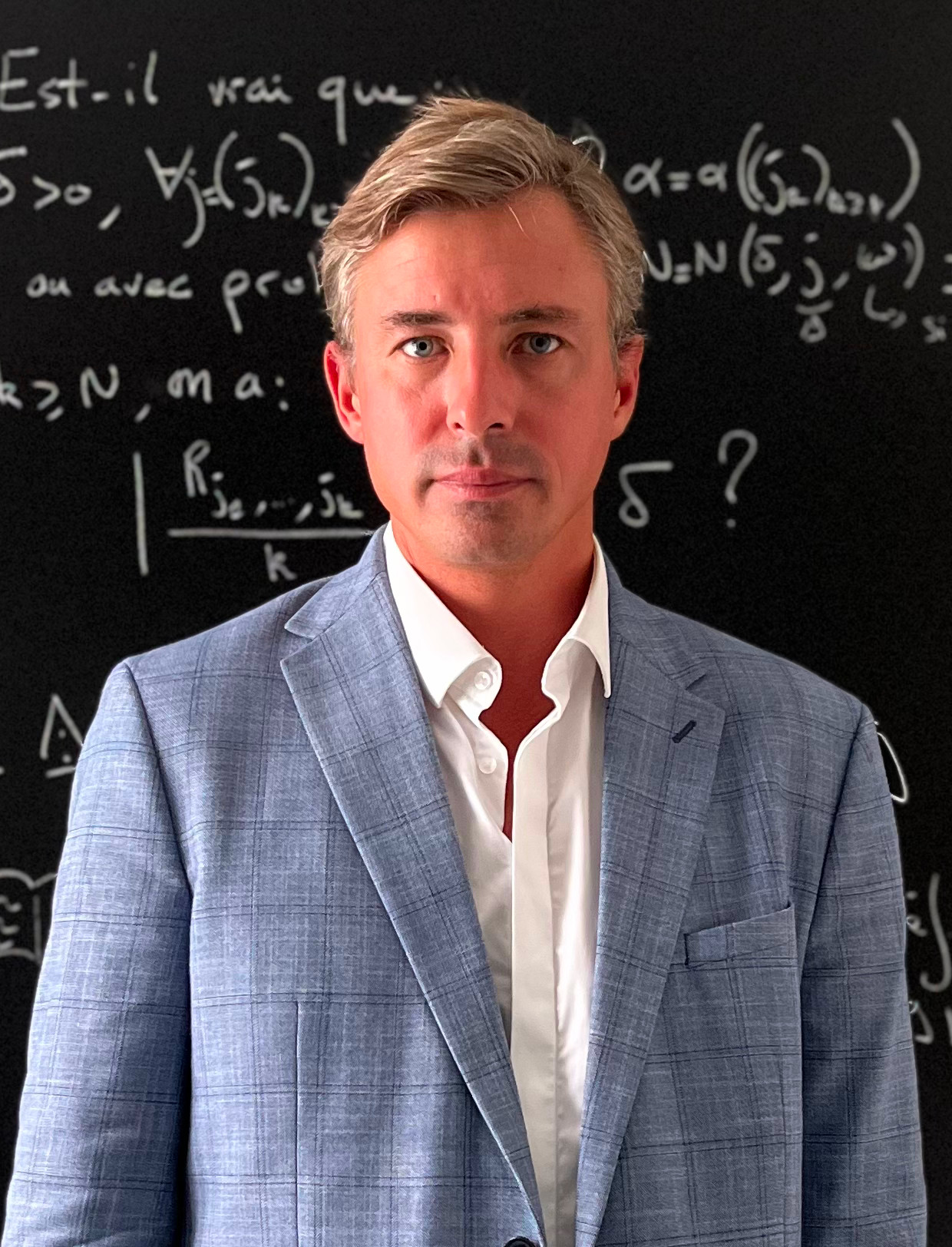
Thomas Haettel is a Senior Lecturer at the University of Montpellier and IUT Montpellier-Sète since 2013. He is a Junior member of the Institut Universitaire de France (IUF) for 2025-2030. His academic affiliation spans the Faculty of Science's Department of Mathematics, where he contributes to research and teaching. His research focuses on geometric group theory, specifically group actions on nonpositively curved spaces. Key areas include: Combinatorial nonpositive curvature (CAT(0) cube complexes, Helly graphs, Garside categories) Coarse nonpositive curvature (hierarchically hyperbolic spaces, coarse median spaces) Continuous nonpositive curvature (symmetric spaces, Teichmüller spaces, injective metric spaces) Braid groups and Artin-Tits groups Mapping class groups and surface fundamental groups His article analysis reveals: Geometric rigidity of higher rank lattices Injective metric structures in buildings and symmetric spaces New Garside theory applications Proper affine actions on Lp spaces Horofunction compactifications Automorphism classifications in Helly graphs Awards: IUF Junior membership HDR (Habilitation à Diriger les Recherches) 2021 He supervises PhD students in geometric group theory and has held visiting positions at CRM Montréal, EPFL, and Princeton University.
Mikael de la Salle is a CNRS Senior Researcher (Directeur de recherche) at the Institut Camille Jordan, Université Claude Bernard Lyon 1. He received his PhD from Université Paris 6 in 2009 and his Habilitation from ENS de Lyon in 2016. Previously, he held positions at Institut de Mathématiques de Jussieu, DMA, Laboratoire de Mathématiques de Besançon, and École Normale Supérieure de Lyon. During 2023-2024, he was a member at the Institute for Advanced Study in Princeton. His research focuses on interactions between functional analysis and group theory, including operator algebras, harmonic analysis, ergodic theory, and geometric group theory. His publications demonstrate expertise in non-commutative functional analysis, group representations, and geometric properties of discrete groups. He has received the Prix Charles-Louis de Saulce de Freycinet (2021) and was an invited speaker at the International Congress of Mathematicians (2022). He advises or has advised several students including Ignacio Vergara, Emilie Mai Elkiaer, Guillaume Dumas, and Martin Gilabert Vio. He organizes academic events such as the Entropies School/Workshop (2018) and serves on editorial boards for Confluentes Mathematici, Mathematische Zeitschrift, and Proceedings of the London Mathematical Society.
Arnaud ROUSSELLE is a Lecturer at the University of Burgundy Europe, affiliated with the Institute of Mathematics of Burgundy (UMR 5584). He teaches at the IUT Dijon Auxerre, Polytech Dijon (formerly ESIREM), and UFR Sciences et Techniques. Current roles: Lecturer, IMB Scientific Mediation Correspondent, Head of PopMath Group Research focuses on Probability Theory , Stochastic Geometry , and Random Graphs , particularly in percolation models and extreme value analysis. His publications address topics like IDLA forests, random walks in random sceneries, and geometric percolation theory. He holds a doctoral degree from the University of Rouen (2014), with research on random walks on random geometric graphs generated by point processes. Professional activities include membership in the IMB Council, coordination of internships in BUT GEA, and leadership in mathematical outreach initiatives like the Science Festival and PopMath group at IREM Dijon.
Derya Malak is an Assistant Professor at EURECOM in the Communication Systems Department, with an adjunct position at Rensselaer Polytechnic Institute (RPI) in the Department of Electrical, Computer, and Systems Engineering. She leads the ERC-funded SENSIBILITÉ project, focusing on distributed computing of nonlinear functions over communication networks. Education: Ph.D. in Electrical and Computer Engineering, University of Texas at Austin, 2017 M.S. in Telecommunication Engineering, Koç University, 2013 B.S. in Electrical and Electronics Engineering, Middle East Technical University (METU), 2010 Minor in Physics, METU Her research bridges information theory, coding, and distributed computing, with emphasis on reducing communication costs through structured data encoding. She explores distributed matrix multiplication, function computation over networks, caching optimization, and secure computation, leveraging tools from graph theory and stochastic modeling. Her work has significant implications for content delivery networks, distributed machine learning, and efficient data transmission. Her recent publications focus on distributed computation using structured coding schemes and multi-server frameworks, demonstrating substantial gains over classical approaches. These works are unified by a theme of optimizing computation under limited bandwidth and correlated data structures. Scientific Awards: ERC Starting Grant (2022) Best Paper Award, WiOpt 2023 Best Paper Award, WiOpt 2022 Harold N. Trevett Award (student advisee) She advises PhD students, including Aiden Chen, and has secured major grants from the European Research Council (ERC), Agence Nationale de la Recherche (ANR), National Science Foundation (NSF), Rensselaer-IBM AI Research Collaboration, and DARPA Dispersive Computing. She teaches Information Theory and Advanced Wireless Communications at EURECOM, and previously taught Digital Communications and Signal Processing at RPI. She leads the FASS student seminar series and organizes workshops such as the Workshop on Distributed Computing, Optimization & Learning. Her lab focuses on theoretical and practical aspects of distributed computation, with strong ties to computer science and information theory.
Stéphan Thomassé is a Professor in the Computer Science Department at Ecole Normale Supérieure de Lyon, where he is affiliated with the Parallel Computing Laboratory (LIP) and leads the Computational Models, Complexity, Combinatorics (MC2) research team (2023-2025). He was a Member of the University Institute of France from 2016-2021 and has held significant administrative roles including Head of M2 Fundamental Computer Science (2013-2015) and Deputy Director of the Computer Science Department (2013-2015). Thomassé's research focuses on graph theory, combinatorics, algorithms, and theoretical computer science. His work spans structural graph theory , parameterized complexity , graph coloring , and combinatorial optimization . He is particularly known for his groundbreaking work on twin-width, a graph parameter that has revolutionized understanding of sparse and dense graph classes and their algorithmic properties. His research connects combinatorial structures with computational complexity, often bridging theoretical insights with practical algorithmic applications. His recent publications demonstrate a strong focus on structural graph theory, with the twin-width series representing a major contribution to the field. These papers have established connections between graph parameters, model theory, and algorithm design, particularly for problems that were previously thought to be intractable on dense graph classes. Thomassé's work on graph coloring, particularly regarding dense triangle-free graphs and the Erdős-Hajnal conjecture, has resolved long-standing open problems. Member of University Institute of France (2016-2021) ANR projects: GRAAL, AGAPE, STINT, COMPA, Digraphs, TWIN-WIDTH, GODASse As an advisor and educator, Thomassé has taught numerous advanced courses including Algorithmics, Optimization and Approximation, Tree Decompositions and FPT Algorithms, and Graph Decompositions. His teaching reflects his research expertise, emphasizing both theoretical foundations and practical applications of discrete mathematics. His administrative leadership in the MC2 team and the Computer Science Department demonstrates his commitment to advancing research and education in theoretical computer science. Thomassé maintains active collaborations with researchers worldwide, as evidenced by his extensive publication record with co-authors from various institutions. His work continues to shape the landscape of structural graph theory and parameterized algorithms, with recent results opening new avenues for research in combinatorics and theoretical computer science.
François Briatte is an Assistant Professor in Political Science at the Catholic University of Lille , affiliated with the European School of Political and Social Sciences (ESPOL). He serves as Co-Director of International Mobility and has previously taught at Sciences Po Paris, Grenoble, Reims, the University of Lille 2, and the University of Edinburgh. His research focuses on legislative networks in European parliaments and comparative health policies . He combines methodologies from network analysis, political sociology, and digital politics to study legislative collaboration patterns, electoral behavior, and healthcare system reforms. His work often addresses Political polarization Electoral turnout dynamics Open data governance Health policy analysis Recent publications include empirical studies on Voting indecision in the 2022 French presidential election Covid-19’s impact on 2020 French local elections Network visualization tools for political science Comparative analysis of legislative cosponsorship He has developed open-source software packages like GGally and ggnetwork for network analysis in R, and actively participates in academic conferences across Europe and North America.
BEZOUI Madani is a Researcher-Lecturer at CESI, affiliated with the 'Engineering and Numerical Tools' research team. He holds a PhD in Operational Research from the University of Science and Technology Houari Boumediène (2019), with a focus on multi-objective programming in portfolio optimization. His academic roles include serving as a pedagogical tutor for FISA training courses and heading the 'Data Sciences' program for 5th-year Computer Science Engineers at CESI. His research interests center on Industry 4.0/5.0, optimization of complex systems, machine learning, IoT/BIM technologies, and scheduling. Notable work includes integrating human-centricity and sustainability into digital twin models and advancing hybrid metaheuristics for multi-objective manufacturing optimization. Recent publications (2021–2024) address preference-driven optimization methods, tabu search algorithms, and IoT network vulnerability detection. He has authored a book on Euclidean graph boundaries and contributed to frameworks for flexible job shop scheduling. His ongoing research focuses on decision-maker preference integration in dynamic scheduling under Industry 5.0 contexts. Advising and grants: No specific advising roles or grants mentioned in the CV. His educational activities emphasize pedagogical leadership in data science and operational research. Labs/teams: Active member of CESI’s Engineering and Numerical Tools group, collaborating on IoT, digital twins, and optimization projects.
Charles Bertucci is a CNRS researcher in Mathematics at the Applied Mathematics department of École polytechnique in Palaiseau, France. He also serves as a part-time teacher at École polytechnique since 2020. Bertucci defended his thesis on December 11, 2018, and his Habilitation à Diriger les Recherches (HDR) in June 2022, granting him accreditation to supervise research. His educational background includes being a former student of École Polytechnique (class of 2012) and Paris-Sorbonne University. His doctoral studies were conducted at Paris-Dauphine University under the supervision of Pierre-Louis Lions. Bertucci's research focuses primarily on mean-field game theory , optimization , and the analysis of partial differential equations . He is particularly interested in identifying stability principles for equations posed in infinite dimensions. His work spans theoretical mathematics with applications in economics, finance, and real-world phenomena such as oil markets, cryptocurrency markets, and telecommunications. His interdisciplinary approach bridges pure mathematics with practical applications in various economic and technological domains. Analysis of his recent publications reveals a strong focus on mean field games theory, with extensions to applications in finance (particularly cryptocurrency markets), optimal transport theory, and connections to PDEs. His work often involves collaborations with leading mathematicians including Pierre-Louis Lions, Jean-Michel Lasry, and others. The research demonstrates both theoretical depth in mathematical analysis and practical relevance to economic modeling. His notable scientific achievements include: Recipient of the prestigious Peccot Course for 2022-2023 at Collège de France Bertucci has been actively involved in academic service, including organizing the workshop "Mean Field Games and Applications" in 2022 with Yves Achdou, Jean-Michel Lasry and Pierre-Louis Lions. His teaching activities include delivering the Peccot Course on "Mean-field games and stochastic control in Wasserstein space" in 2023 at Collège de France, consisting of four lectures between March 31 and April 21, 2023. His research is conducted within the vibrant mathematical community at École polytechnique and through collaborations with researchers at CNRS and other institutions, focusing on advancing the theoretical foundations of mean field games while exploring novel applications across various domains.
Bastien Mallein is a Professor of Mathematics at the University of Toulouse III Paul Sabatier, where he is affiliated with the Institut de Mathématique de Toulouse (IMT). His research focuses on probability theory, particularly branching processes, random walks, and their applications in statistical mechanics and mathematical physics. Education: PhD in Mathematics (2012–2015), Université Pierre et Marie Curie, supervised by Zhan Shi Agrégé-préparateur (2013–2016), École Normale Supérieure Postdoctoral Researcher (2016–2017), Universität Zürich under Jean Bertoin Research Interests: Mallein studies branching processes, including branching random walks, branching Brownian motion, and Lévy processes. His work explores extreme value theory, phase transitions, and the behavior of stochastic systems over time. He has contributed to understanding critical phenomena in random trees, percolation models, and population dynamics. Recent Publications: His recent work addresses reinforced Galton-Watson processes, extremal point processes, and applications to evolutionary models. Key topics include phase transitions, large deviations, and stochastic stability. Students: He advises PhD students such as Simon Delalande (2024–) and Lianghui Luo (2023–), focusing on branching processes and extreme value analysis. Notable co-advised students include Elie Cerf (2020–2024) and Mohamed Ali Belloum (2018–2021). Labs/Teams: Active member of the IMT Probability group. Collaborates internationally on projects involving stochastic processes and mathematical physics.
Jean-Marc Vincent is an Associate Professor at Grenoble Alpes University's UFR IMAG school, with a focus on performance evaluation and stochastic models. His research spans Markov processes, perfect simulation, and analysis of large-scale distributed systems. He has contributed extensively to trace visualization, resource modeling, and algorithm design for parallel computing environments. Key research areas: Performance evaluation, Stochastic models, Markov processes, Perfect simulation Recent work trends: IoT resilience in fog computing, stochastic automata networks, trace analysis Teaching: Algorithms, complexity analysis, distributed systems at L3 and Master's levels His 15 most recent publications highlight interdisciplinary approaches combining computer science, statistics, and education. Collaborations include Inria, LIG, and international institutions like PUCRS. Students under his supervision have worked on trace visualization, stochastic modeling, and system performance optimization.
Dr. Tim Seppelt is a postdoctoral researcher at the IT University of Copenhagen , working under the mentorship of Prof. Radu Curticapean. Previously, he earned his PhD from RWTH Aachen University with supervisors Prof. Martin Grohe and Prof. Michael Schaub. His research focuses on theoretical computer science, specifically homomorphism indistinguishability , a framework connecting graph isomorphism, quantum information, and logical equivalences. Current Role: Postdoc in Theoretical Computer Science, ITU Education: PhD in Computer Science, RWTH Aachen University Tim's work addresses algorithmic meta-theorems for homomorphism indistinguishability over minor-closed and treewidth-bounded graph classes. He has extended Lovász-type results to CMSO2 logic, resolved complexity conjectures for the Lasserre hierarchy, and classified quantum group-induced indistinguishability relations. His research spans quantum computing , graph algorithms , and descriptive complexity , often intersecting with applications in machine learning and finite model theory. Recent publications include a 2025 paper on quantum group-driven homomorphism indistinguishability and a 2024 journal article on logical equivalences and forbidden minors. He presented at workshops like the Graph Learning Meets TCS (Simons Institute, 2025) and delivered tutorials on finite model theory at Finite and Algorithmic Model Theory 2025 (Les Houches, France).
Mr. Nicolas THIBAULT is a Lecturer in Computer Science at Paris-Panthéon-Assas University, affiliated with the Center for Research in Economics and Law (CRED). His academic career combines teaching and research in theoretical computer science, with a focus on algorithms and network optimization. His research interests include: Algorithms (particularly randomized and truthful scheduling) Dynamic graph maintenance and incremental/decremental tree problems Online computation and bicriteria optimization Network interconnection and parallel machine scheduling Recent publications highlight his work on: Truthful mechanisms for weighted completion times Disturbance minimization in connection trees Hardness results for multi-group interconnection Competitive analysis of online scheduling Optimal rebuilding strategies for dynamic trees Scientific awards include the Best Young Researcher Article at AlgoTel 2006 for his work on connection tree updates. He co-heads the Professional License program in Organizational Management, specializing in Network and Information Systems Management.