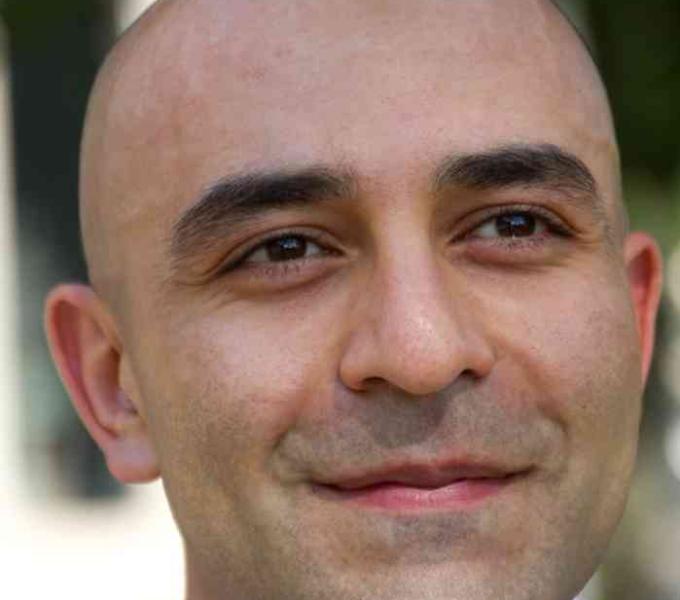
Dovgun Andriy Yaroslavovych is an Associate Professor at the Department of Computer Science, Yuriy Fedkovych Chernivtsi National University. His academic profile includes a Candidate of Physical and Mathematical Sciences degree (specialty 01.05.01 - Theoretical Foundations of Informatics and Cybernetics) and formal certification in computer science teaching methods. Research Focus : Stochastic dynamic systems, automatic control, biomedical optics, algorithms, and information technologies. Key Publications : Authored educational manuals on data structures (2024), algorithms (2022), and contributed to cross-platform decision support systems analysis (2023). Professional Affiliation : Member of the Chernivtsi IT Cluster since 2019.
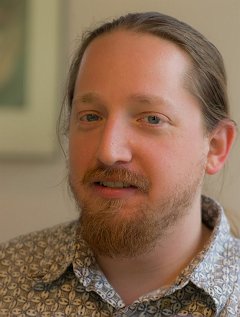
Professor Wassim Jabi is a Chair in Computational Methods in Architecture at the Welsh School of Architecture, Cardiff University . His work bridges computational design, digital fabrication, and sustainable building technologies, focusing on graph machine learning, non-manifold topology, and blockchain integration in architectural workflows. As a course leader for the MSc in Computational Methods in Architecture, he supervises postgraduate research and contributes to International Journal of Architectural Computing as an editorial board member. Research themes: Graph-based architectural modeling 3D printing with earthen materials Autism-informed design taxonomies Blockchain for decentralized design Machine learning in building performance Robotic fabrication workflows Recent publications analyze energy efficiency through graph ML , explore biomimetic façades for arid climates, and develop topological BIM frameworks . His team's VIRIS simulator combines architectural design with pandemic risk analysis. He serves as an external examiner at the University of Liverpool and University of East London.
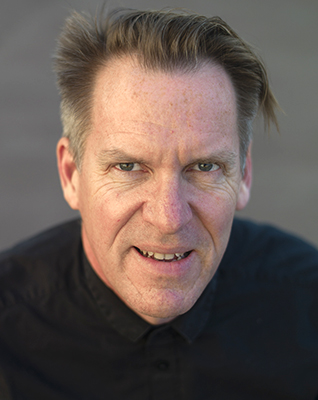
Amin Rahimian is an Assistant Professor at the University of Pittsburgh , affiliated with the Swanson School of Engineering and leading the Sociotechnical Systems Research Laboratory . He is also associated with the Intelligent Systems Program and the Institute for Cyber Law, Policy, and Security . PhD in Electrical and Systems Engineering (University of Pennsylvania) Master’s in Statistics (Wharton School) His research spans networks, data, and decision sciences , focusing on robust autonomy , control of large-scale networked systems , satellite constellations , and decision support in mission-critical applications . His work bridges applied probability, statistics, algorithms, and decision/game theory to address challenges in online social networks, public health, e-commerce, cyberinfrastructure, and warfare . Recent publications highlight his expertise in differential privacy, network resilience, and social contagion dynamics. Awards include the Meta Foundational Integrity Research Award (2023) and Pitt Cyber Accelerator Grant (2022) . He has served on program committees for conferences like ACM Economics and Computation and IISE Annual Conference.
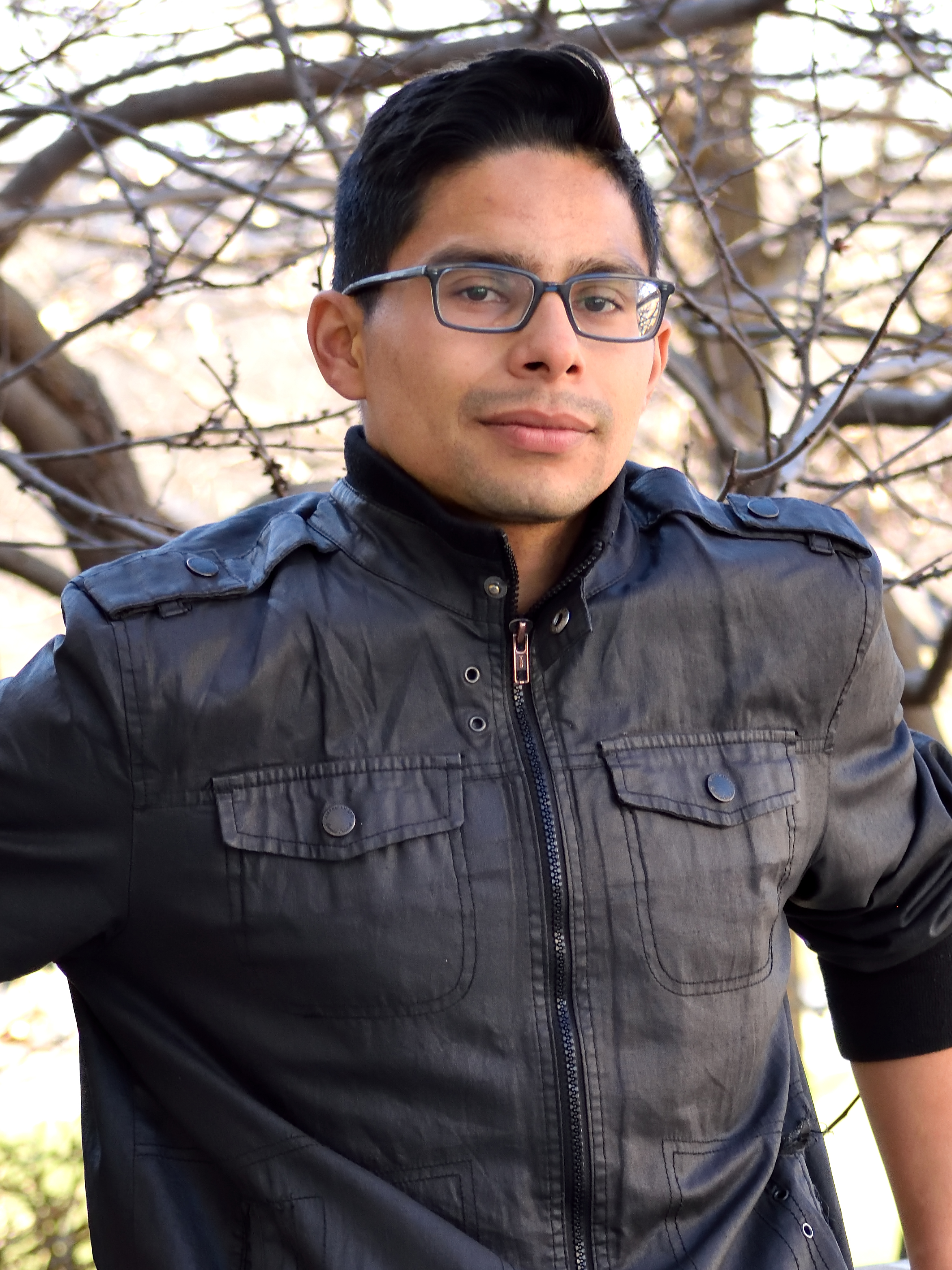
Damien Garreau is Professor for the Theory of Machine Learning at Julius-Maximilians-Universität Würzburg , Germany. Until March 2024 he served as Associate Professor in the Probability and Statistics team of the J. A. Dieudonné laboratory at Université Côte d'Azur and was a member of the Inria Maasai team in Sophia-Antipolis. Earlier positions include post-doctoral research at the Max Planck Institute for Intelligent Systems in Tübingen and PhD studies in the Inria Sierra team in Paris. Education & Career Path PhD, Inria Sierra team, Paris – advisors Sylvain Arlot & Gérard Biau Post-doc, Max Planck Institute for Intelligent Systems, Tübingen – mentor Ulrike von Luxburg Associate Professor, Université Côte d’Azur / Inria Maasai (until March 2024) Professor for Theory of Machine Learning, Julius-Maximilians-Universität Würzburg (since 2024) Research Focus Garreau’s research centers on trustworthy machine learning . He investigates how to explain, audit, and robustify modern AI systems, with particular emphasis on post-hoc interpretability , statistical guarantees of explanation methods, fairness , and causality . Representative contributions include theoretical analyses of LIME and Anchors, novel explanation methods such as SMACE and GLEAMS, and practical tools for vision and NLP that remain faithful under adversarial or out-of-distribution settings. Across computer vision, natural-language processing, and healthcare applications, his work bridges rigorous theory with impactful algorithms, advancing the societal goal of deploying AI systems whose decisions can be trusted and understood by humans. Scientific Awards & Recognition Best Paper Award , ECML 2024 Area Chair , ICML 2025 ANR JCJC Grant NIM-ML (2021–2025) Université franco-allemande support for Winter School on Causality and Explainable AI Advising, Grants & Collaborative Projects Garreau has successfully supervised or co-supervised a growing cohort of doctoral and master’s students, including Gianluigi Lopardo, Kensuke Mitsuzawa, Martin Charachon, Jonas Wacker, Samuel, Antonio, Magamed, Arthur Assad, Charbel Yahchouchi, and Mariana Chaves. He is the PI of the ANR JCJC project NIM-ML , whose goal is to develop next-generation interpretability methods endowed with statistical guarantees. He co-organizes the annual Winter School on Causality and Explainable AI , fostering Franco-German academic exchange. Labs & Teams Since 2024 he leads the Professorship for the Theory of Machine Learning at Julius-Maximilians-Universität Würzburg. Previously he was a core member of the Maasai Inria team on the Sophia-Antipolis campus, and an active collaborator of the J. A. Dieudonné mathematics laboratory. He maintains strong ties with the TML group at the Max Planck Institute for Intelligent Systems and regularly hosts joint visitors and workshops.
Alberto José Gonçalves Carvalho Proença serves as Full Professor in the Department of Informatics at the School of Engineering, University of Minho, and holds the position of Senior Researcher with Dr. habil at Centro ALGORITMI. His academic career spans over 45 years, beginning at the University of Porto in 1976 before transitioning to the University of Minho in 1977 where he has remained ever since. His educational foundation includes: Licentiate in Electrical Engineering from Coimbra, Portugal (1976) MSc in Digital Electronics from UMIST, Manchester, UK (1979) PhD from Manchester, UK (1982) Dr. habil (Habilitation) from the University of Minho (1998) Professor Proença's research spans from digital electronics to cutting-edge high-performance computing, with core expertise in computer architecture, parallel computing, and heterogeneous computing systems. His work bridges theoretical computer science with practical applications across diverse domains including particle physics (LHC data analysis), forensic science (DNA library systems), materials science (crystallographic imaging), and cultural heritage preservation. Current research focuses on optimizing computational efficiency across heterogeneous resources for scientific applications, addressing challenges in big data processing, parallel random number generation, and scheduling algorithms for distributed environments. Throughout his career, Professor Proença has successfully supervised numerous MSc dissertations and PhD theses while contributing significantly to institutional computing infrastructure. He chaired the University Computer Centre for 17 years (1985-2002), establishing Portugal's first national parallel computing service. For 11 years (2006-2017), he led the Advanced Computing theme in the University of Texas at Austin-Portugal cooperation program. Since 2005, he has directed the university's SeARCH heterogeneous computing cluster, supporting research across multiple scientific disciplines. His research group has developed several influential frameworks including JaSkel (Java Skeleton-Based Framework for Cluster and Grid Computing), HEP-Frame (for LHC data analysis), Im2Cr (crystallographic imaging tool), and CROSS-Fire (risk management decision support system). These platforms demonstrate his commitment to translating theoretical advances into practical tools that address real-world scientific and societal challenges.
Dr. Troy Lee is an Associate Professor of Quantum Cryptography at the Centre for Quantum Software and Information within the Faculty of Engineering and Information Technology at the University of Technology Sydney . His research focuses on quantum algorithms, computational complexity, and graph theory, with particular emphasis on quantum-classical separations and query complexity. Education: Not explicitly mentioned Research Areas: Quantum algorithms, computational complexity, graph theory, quantum cryptography, and Boolean function analysis Teaching: Supervised the course Data Structures and Algorithms in 2022 Grants: Currently involved in quantum algorithm design and defense optimization projects (2025-2028, 2021-2024) His recent publications highlight advancements in quantum query complexity, graph algorithms, and exact learning techniques. Notably, his work includes quantum speedups for graph connectivity problems and improved bounds for Fourier-sparse function learning. Dr. Lee maintains active collaborations across theoretical computer science and quantum computing domains, contributing to both foundational and applied research in quantum software development.
Kazushi Kawamura is an Assistant Professor at the Tokyo Institute of Technology 's AI Computing Research Unit , with prior roles at Waseda University and the Institute of Science Tokyo. His academic journey began at Waseda University, where he earned a Dr. Eng in 2016. 2025.04 - Now: Assistant Professor, School of Fundamental Science and Engineering, Tokyo Tech 2024.10 - 2025.03: Assistant Professor, School of Fundamental Science and Engineering, Waseda 2020.04 - 2025.03: Specially Appointed Assistant Professor, Institute of Integrated Research, Institute of Science Tokyo His research spans combinatorial optimization , annealing processors , Ising machines , and FPGA-based computing systems . He has contributed extensively to LSI design methodology and high-level synthesis . Key publication trends include neural network compression , parallel annealing algorithms , edge AI inference , and sparse matrix operations on FPGAs. His work often integrates theoretical optimization with practical hardware implementations . 2023 CS Achievement Award 2016 ISOCC Best Paper Multiple Algorithm Design Contest Prizes (2014-2019) IPSJ SLDM Outstanding Student Awards Kawamura teaches courses like Physical Electronics Laboratory and Machine Learning at Waseda, with recent projects such as Amorphica (metamorphic annealer) and Pianissimo (sub-mW DNN accelerator). He serves on committees for IEEE , IPSJ , and IEICE , focusing on system design and circuit optimization.
Cameron Freer is a Research Scientist in the MIT Probabilistic Computing Project , with prior roles including Instructor in Pure Mathematics at MIT, Postdoctoral Fellow at CSAIL, and Project Associate Professor at Keio University. His work bridges probabilistic computing, logic, and theoretical computer science. Education PhD in Mathematics, Harvard University, 2008 (Thesis: Models with High Scott Rank ) Research Interests Freer's research explores the deep interplay between randomness and computation , focusing on: Foundations of probabilistic programming languages and systems Efficient samplers for discrete and continuous distributions Mathematics of random structures like graphons and exchangeable processes Computability in measure theory and probabilistic inference Publications Overview His recent work (2020–2024) advances probabilistic programming systems (e.g., GenSQL), theoretical frameworks for random graphs via Markov categories, and computable approaches to PAC learning. Earlier contributions include exact sampling algorithms, computable exchangeability, and algorithmic barriers in conditional probability. Academic Service Steering Committee Member, LAFI (formerly PPS) workshop series (2017–2025) Program Committee Chair/Co-chair, PPS 2017–2018 Session Chair, POPL 2017 (PPS track) Industry & Visiting Roles Chief Scientist, Remine (2017–2018) Research Scientist, Gamalon Labs (2013–2016) Lyric Labs Visiting Fellow, Analog Devices (2013–2014) Project Associate Professor, Keio University (2021–2024) Labs & Collaborations Freer collaborates extensively with the MIT Probabilistic Computing Project, Harvard Logic Group, and international partners in Oxford, CMU, and Keio University. His work integrates theoretical insights with practical systems in AI and probabilistic inference.
Patrick Bas serves as Research Director and Thematic Group Facilitator for the Data Intelligence Group (DatInG) at the University of Lille, France, where he leads the Signal and Images team within the CRISTAL laboratory. His office is located at ESPRIT in Lille's Scientific City, and he holds membership on the institution's Scientific Council. Bas earned his Electrical Engineering degree (1997) and Ph.D. in Signal and Image Processing (2000) from the Institut National Polytechnique de Grenoble. His academic journey includes postdoctoral work at Université Catholique de Louvain, CNRS research at Gipsa-Lab (2001-2009), and a visiting position at Helsinki University of Technology (2005-2008). His primary research centers on steganography, steganalysis, and digital watermarking, with significant contributions to image manipulation detection and neural network applications in multimedia security. He has organized major initiatives including the BOSS steganalysis contest (2010) and served as co-coordinator for the Ecrypt European NoE's watermarking virtual lab (2004-2008). While his Google Scholar profile indicates recent publications in graph theory and combinatorics (2021-2025), these appear inconsistent with his documented research focus on multimedia security as evidenced by his thesis supervision and professional activities. Bas has supervised seven doctoral theses including Rony Abecidan's work on robust image manipulation detection (2024) and Solène Bernard's research on neural network steganography (2021). He has held editorial roles for the Eurasip Journal on Information Security (since 2011) and IEEE Transactions on Information Forensics and Security (2013-2016), and co-organized the International Workshop on Information Hiding (IH07).
Zhou Fan is an Associate Professor in the Department of Statistics and Data Science at Yale University, specializing in mathematical statistics, probability theory, and computational algorithms with applications in statistical genetics and computational biology. Education: Ph.D. in Statistics, Stanford University, 2018 His research spans Random matrices and free probability , Statistical physics and inference , High-dimensional statistics and machine learning , and Applications in genetics and computational biology . He develops theoretical frameworks for complex data analysis, focusing on inferential problems in scientific contexts through advanced computational methods. Recent publications demonstrate leadership in Approximate Message Passing algorithms, empirical Bayes methods, and group orbit estimation, with significant contributions to high-dimensional statistics and biological applications. His work bridges statistical theory with practical computational solutions for modern data challenges. As Co-Director of Graduate Studies, Professor Fan provides academic leadership for the department's graduate program while teaching advanced courses in high-dimensional probability, statistical theory, and random matrix applications.
Rolando de Santiago is an Assistant Professor in the Department of Mathematics and Statistics at California State University Long Beach. Previously, he was an Assistant Professor at Purdue University (2020-2024) and a Postdoctoral Fellow at UCLA (2017-2020). His educational background includes a Ph.D. in Mathematics from the University of Iowa (2017) under Professor Ionut Chifan, an MS in Mathematics from the University of Iowa (2014), and both BS and MS degrees in Mathematics from Cal Poly Pomona (2012). Rolando's research focuses on Operator Algebras, von Neumann Algebras, Functional Analysis, Ergodic Theory, Group Theory, and Quantum Graphs. His work primarily investigates the classification of type II 1 factors arising from groups through Popa's deformation/rigidity theory. He has made significant contributions to understanding graph product von Neumann algebras, Thompson-like groups, and quantum chromatic numbers. His recent publications demonstrate a strong trend in applying operator algebra techniques to problems in quantum information theory, particularly in the area of quantum graphs and non-local games. His research connects operator algebras with geometric group theory through the study of group von Neumann algebras and their structural properties, with applications to quantum computation and information theory. UC Presidential Postdoctoral Fellowship (2018-2020) NSF Award: East Coast Operator Algebras Symposium DMS-2321632 (2024) NSF Award: Groundwork in Operator Algebras Lecture Series DMS-2247796 (2022) NSF Award: Groundwork in Operator Algebras Lecture Series DMS-2154574 (2022) NSF Award: Groundwork in Operator Algebras Lecture Series DMS-200131 (2020) MAA Project NExT Member (2020) Rolando actively mentors students including Patrick DeBonis (PhD candidate at Purdue), A. Meenakshi McNamara (undergraduate researcher), and Krishnendu Khan (Visiting Scholar). He has been deeply involved in outreach programs to increase representation of underrepresented groups in mathematics, serving as a mentor for the Math Alliance Field of Dreams Conference and the Pacific Math Alliance PUMP Research Symposium. He co-organizes the Operator Algebras Seminar at CSULB and is a co-creator and editor of Sorin Popa's W*-News Blog, which provides educational insights into notable problems in von Neumann algebras for the broader mathematical community.
Devdatt Dubhashi is a Professor at the Data Science and AI 3 department at Chalmers University of Technology. His research spans multiple domains within computer science and data science, with a focus on theoretical foundations and practical applications of algorithms and machine learning. Professor Dubhashi's primary research interests include the design and analysis of randomized algorithms, machine learning for Big Data, and computational biology. His work demonstrates a strong interdisciplinary approach, connecting theoretical computer science with practical applications in diverse fields such as quantum computing, transportation modeling, genomics, and social sciences. His research often bridges the gap between theoretical foundations and real-world implementations, as evidenced by his numerous collaborations across different domains. Dubhashi's recent publications reveal a consistent research trajectory focusing on algorithmic foundations of machine learning, with increasing emphasis on interdisciplinary applications. His work shows significant contributions to bandit algorithms, kernel methods, graph-based learning, and the theoretical understanding of deep learning models. There's also a growing focus on societal implications of AI, as seen in his publications addressing responsible AI development and policy considerations. Among his notable scientific contributions are publications in prestigious venues including ACM, IEEE, and Nature journals, covering topics from fundamental algorithm design to applications in computational biology and social sciences. His work has been cited extensively across multiple disciplines, reflecting its broad impact. Professor Dubhashi actively supervises PhD students and collaborates with researchers across Chalmers and internationally. His research group appears to focus on the intersection of theoretical computer science and practical machine learning applications, with projects spanning quantum computing, transportation modeling, and biological applications.
June Cocomello-Hayes is an Assistant Professor of Mathematics at Bucknell University, where she is a member of the Department of Mathematics and Statistics. Her primary research area is probability theory, with a focus on interacting stochastic processes on sparse and heterogeneous random networks. She applies these methods to model biological and social systems, including epidemiology, neuroscience, and opinion dynamics. Education PhD in Applied Mathematics, Brown University M.S. and B.A. in Mathematics, New York University Dr. Cocomello-Hayes' research integrates techniques from probability theory, dynamical systems, statistical physics, graphical models, and network science. She seeks mathematically rigorous explanations for how global behaviors arise from local interactions in networked systems. Her recent work includes the analysis of SIR and SEIR epidemic models on large sparse networks, demonstrating how network structure influences global epidemic dynamics. She is also affiliated with the Institute for the Quantitative Study of Inclusion, Diversity, and Equity (QSIDE), where she contributes to the Pharmacy Refusal Lab project investigating prescription refusal patterns and their societal impacts. In teaching, Dr. Cocomello-Hayes emphasizes active student engagement and community-centered learning. She has taught Calculus II at Bucknell and designed a pre-college network science course at Brown University, focusing on making complex mathematical concepts accessible through real-world applications.
Adva Mond is a Researcher in the Department of Mathematics at King's College London, affiliated with the Probability Group within the Faculty of Natural, Mathematical & Engineering Sciences. She holds a PhD from the University of Cambridge, supervised by Professor Béla Bollobás, and a postdoctoral position under Dr. Matthew Jenssen. Her research focuses on Discrete Probability, Random Graphs, and Extremal Combinatorics, with a particular emphasis on probabilistic combinatorics and graph theory applications. Education: BSc and MSc in Pure Mathematics, Tel Aviv University Part III Mathematics, University of Cambridge PhD in Combinatorics, University of Cambridge Research Interests: Adva's work explores theoretical and applied aspects of combinatorics, including random graph structures, extremal problems, and probabilistic methods. She investigates properties of Hamiltonian cycles, graph decomposition, and percolation processes. Her recent studies address spanning forests, discrepancy in dense graphs, and game-theoretic approaches to combinatorial problems. Publications: Over 10 peer-reviewed articles and preprints, focusing on probabilistic combinatorics, graph algorithms, and extremal graph theory. Key contributions include work on Hamiltonian cycles in hypergraphs, online Ramsey numbers, and percolation games on random graphs. Labs/Teams: Active member of the Probability Group at King's College London, collaborating with institutions globally on interdisciplinary projects in combinatorics and graph theory.
Dr. Sarah Plosker is a Professor and Tier 2 Canada Research Chair in Quantum Information Theory at Brandon University's Department of Mathematics & Computer Science. She holds adjunct roles at the University of Manitoba, University of Regina, and University of Guelph. Her research focuses on quantum information theory, operator theory, linear algebra, and matrix analysis, with emphasis on quantum coherence, positive operator valued measures (POVMs), and quantum state transfer. She is affiliated with the Manitoba Quantum Institute and Winnipeg Institute for Theoretical Physics. Education: Ph.D. Applied Mathematics (University of Guelph, 2013), M.Sc. Mathematics (University of Regina, 2010), B.Sc. Combined Mathematics and Statistics (University of Regina, 2008). Her work is supported by CRC, CFI-JELF, and NSERC grants. She actively mentors students and co-supervises at multiple institutions. Research trends in her articles emphasize quantum resource theories, matrix structures (e.g., centrosymmetric, tridiagonal), and graph-based quantum state transfer. Recent work explores coherence measures, universality of quantum unitaries, and applications of operator algebras. Awards include the prestigious Canada Research Chair designation and major grants. Awards: Tier 2 CRC, CFI-JELF Grant, NSERC Discovery Grant. Advising & Grants: Mentors postdocs, PhD/MSc students across institutions. Supervised over 20 students since 2013, specializing in quantum information, linear algebra, and applied mathematics. Labs/Teams: Active in Manitoba Quantum Institute, Winnipeg Institute for Theoretical Physics, and collaborates with University of Regina/Manitoba groups.