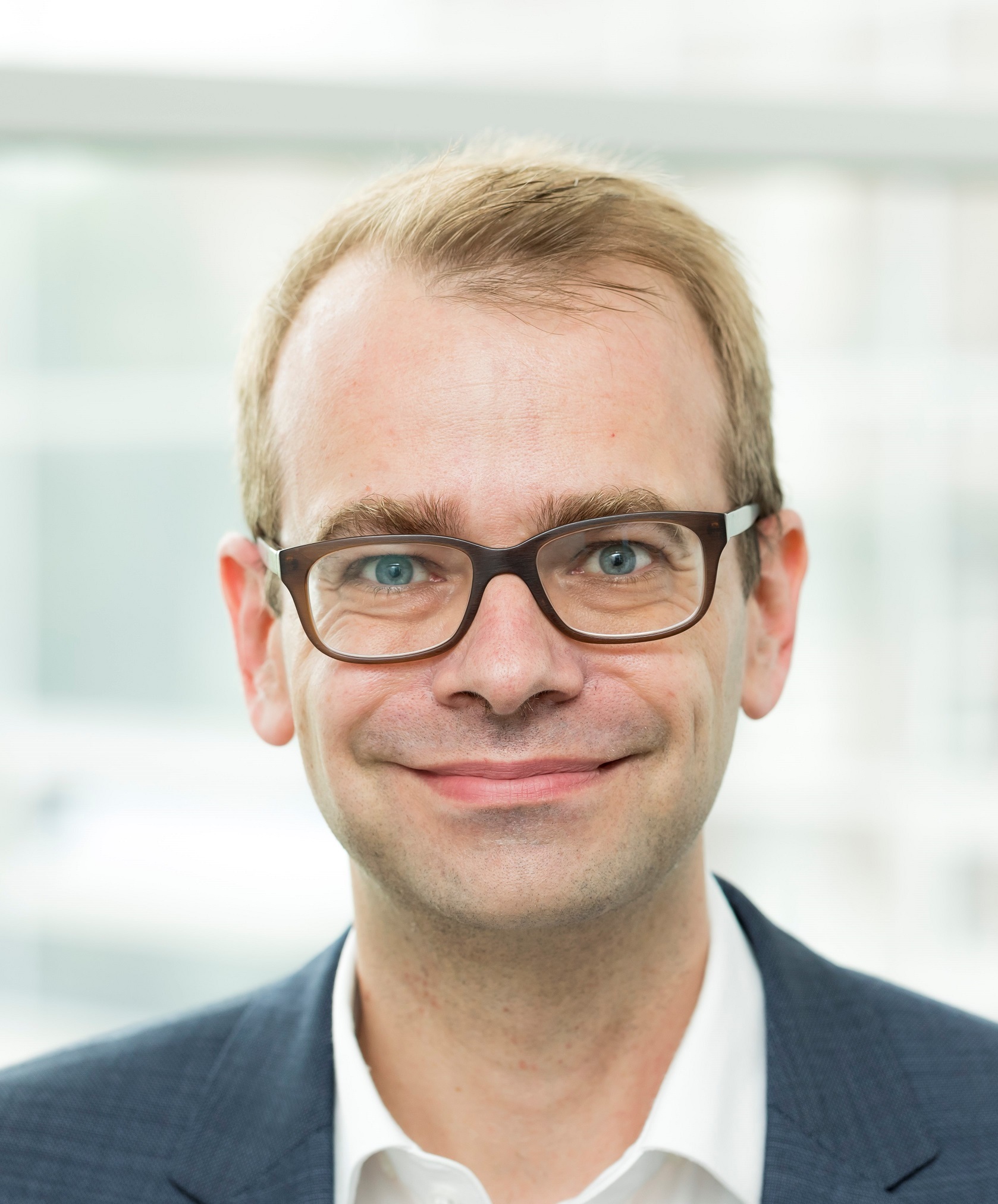
Sabine Storandt is a Lecturer at the Department of Computer Science, University of Freiburg, with a focus on algorithm design and transportation systems. She has contributed significantly to research in route planning, electric vehicle navigation, and public transit optimization. Her work emphasizes practical applications of theoretical algorithms in real-world scenarios. Her research interests include algorithms for vehicle navigation, route optimization, and facility location problems. She has received notable awards, including the Best Paper Award at VLDB 2014 and the INFOS Award for her PhD thesis on 'Algorithms for Vehicle Navigation.' In teaching, she has led courses such as Information Retrieval (as a tutor), Randomized Algorithms (lecture + tutorial), and Information Extraction (seminar). She has also collaborated on projects like DORC (Distributed Online Route Computation) and Enabling E-Mobility, addressing challenges in transportation and energy efficiency. Her recent publications highlight advancements in electric vehicle infrastructure, public transit planning, and efficient route algorithms, reflecting her expertise in bridging theoretical computer science with practical transportation solutions.
Raphael Twerenbold is a Professor at the Clinic and Polyclinic for Cardiology, University Medical Center Hamburg-Eppendorf. His research spans Cardiology , Oncology , and Neuroscience , with a focus on cardiovascular biomarkers , myocardial infarction , and brain aging . He leads studies in population-based cohorts like the Hamburg City Health Study and collaborates on international trials (GMMG-CONCEPT, DEDICATE-DZHK6). University: University Medical Center Hamburg-Eppendorf School: Medical Faculty Department: Cardiology Academic Rank: Professor Research trends in his 15+ recent articles (2023–2025) include biomarker development for myocardial infarction, brain aging in vascular disease, and occupational risk factors for coronary heart disease. His work integrates epidemiological data with multimodal imaging and machine learning . Notable projects involve the GRACE scores for coronary angiography timing, transcatheter aortic valve trials, and neuroimmune interactions in post-COVID conditions. He contributes to Clinical Research Cardiology and JAMA literature.
Prof. Dr. Alexander Grigoryan is a faculty member at the Faculty of Mathematics , University of Bielefeld. He serves as a Subproject Manager for SFB 1283 "Taming uncertainty and profiting from randomness and low regularity in analysis, stochastics and their applications" (Project A3: Analysis of manifolds, metric spaces and graphs). His office is located at UHG V4-234 , and his contact email is grigor@math.uni-bielefeld.de . Affiliated with the Doctoral Committee Dr. math at the Faculty of Mathematics Participating scientist in the International Research Training Group 2235 Member of the Computer Commission within the Faculty of Mathematics Associated with the Bielefeld Graduate School in Theoretical Sciences as a Professor His research aligns with the university's strategic focus on the Mathematical World , developing fundamental concepts in mathematics and their applications to economics and natural sciences. He contributes to projects involving analysis, stochastics, and their interdisciplinary applications under Bielefeld's guiding principle of Transcending Boundaries . As a W2 Professor , he oversees modules like Advanced Analysis and Probability Theory for Quantitative Economics , reflecting his role in both teaching and advanced mathematical research.
Eckehard Olbrich is a Group Leader and Researcher at the Max Planck Institute for Mathematics in the Sciences (MiS) in Leipzig, Germany. His work bridges mathematics, information theory, and social science with a focus on complex systems analysis. He has coordinated major European research projects including SoMe4Dem (Social Media for Democracy) and ODYCCEUS (Opinion dynamics and cultural Conflict in European Spaces). His educational background includes a PhD in theoretical solid-state physics from the Technical University Dresden (1995), followed by postdoctoral work at the Max Planck Institute for the Physics of Complex Systems in Dresden and research at the University of Zürich. Since 2004, he has been affiliated with the Max Planck Institute for Mathematics in the Sciences. Olbrich's research spans computational social science, information theory, and complex systems. He applies information-theoretic approaches to analyze social media data, complex networks, and human sleep EEG patterns. His work on information decomposition, multi-level systems, and time series analysis has produced significant contributions to understanding complex phenomena across disciplines. He has developed methods for analyzing polarization, opinion dynamics, and network structures in social systems. His publication record shows a strong trend toward interdisciplinary research combining information theory with social and biological systems. Recent work focuses on computational social science applications, particularly analyzing polarization and issue alignment on social media platforms, while maintaining connections to fundamental information theory and complex systems research. Olbrich has collaborated extensively with researchers including Sven Banisch (Karlsruhe Institute for Technology), Peter Achermann (University of Zürich), David Wolpert (Santa Fe Institute), and Jürgen Jost at MiS. His research has been supported by major funding programs including Horizon Europe, Horizon 2020, and the DFG. He has taught courses on Complex Systems Methods and Data Analysis and Modeling at the University of Potsdam, and has contributed to the development of TISEAN, free software for nonlinear time series analysis. His current research continues to explore the intersection of information theory, network science, and computational social science with applications to understanding democratic processes in the digital age.
Daniele Taufer is a postdoctoral researcher affiliated with the NUMA research unit at KU Leuven (Belgium) since 2022, supported by the FWO (Flemish Fund for Scientific Research) under project 12ZZC23N. Previously, he worked at CISPA (Germany) from 2020 to 2022 as a postdoc on elliptic curve cryptography within the ERC-669891 project, supervised by Antoine Joux. Education: Ph.D. in Mathematics (2016–2020), University of Trento (IT), cum laude, thesis: "Elliptic Loops" (supervised by Massimiliano Sala) Master in Mathematics (2014–2016), University of Duisburg-Essen (DE) and University of Leiden (NL) via the ALGANT double-degree program, thesis: "Algebraic aspects of the Number Field Sieve" (supervised by Hendrik W. Lenstra) Bachelor in Mathematics (2011–2014), University of Padova (IT), thesis: "Gröbner bases and applications" (supervised by Alberto Tonolo) Research interests span computational and commutative algebra, applied algebraic geometry, and cryptographic applications. Key areas include symmetric tensor decomposition (Waring, tangential, Chow, cactus ranks), effective decomposition algorithms (apolarity, Hankel operators), and algebro-geometrical properties of apolar schemes. His work bridges theoretical algebra and practical cryptography, particularly focusing on elliptic curves and their applications in blockchain and isogeny-based systems. Recent scientific contributions examine decompositions of symmetric tensors, elliptic curve discrete logarithm problems (ECDLP), and group structures over discrete rings. His algorithmic developments leverage apolarity and Hankel operators for computational efficiency. Scientific accolades: Maître de conférences qualification (2025) in Mathematics and Applied Mathematics sections Member of the SIAM Activity Group on Algebraic Geometry Labs and teams include the NUMA group at KU Leuven and the ERC-669891 project at CISPA.
Prof. Ehrhard Behrends is a Professor of Mathematics at the Department of Mathematics and Computer Science, Freie Universität Berlin. His research focuses on functional analysis, probability theory, and stochastic processes. He is also deeply involved in mathematical education and public outreach, having authored numerous popular mathematics books and articles. Key roles include leading the European Mathematical Society's Raising Public Awareness committee (2009–2015) and developing the mathematics portal mathematics-in-europe.eu . Behrends has organized major exhibitions like 'Mathematics for all the Senses' and contributed to initiatives such as the Year of Mathematics 2008. His work bridges advanced research with accessible communication, reflected in his books on Markov chains, analysis textbooks, and the Five Minutes of Mathematics column.
Carlos Cinelli is an Assistant Professor in the Department of Statistics at the University of Washington. He is also a Data Science Fellow at the eScience Institute and Affiliate Faculty at the Center for Statistics and the Social Sciences. He obtained his Ph.D. in Statistics from the University of California, Los Angeles, where he was advised by Chad Hazlett and Judea Pearl. His research focuses on developing new causal and statistical methods for transparent and robust causal claims in empirical sciences. Key interests include: Causal inference challenges in social and health sciences Intersections of causality with machine learning and AI Sensitivity analysis for omitted variable bias Robust statistical methods for observational studies Instrumental variables and Mendelian randomization Generalizability of experimental findings His publications demonstrate a consistent focus on developing practical sensitivity analysis tools and advancing causal methodology, with recent work emphasizing applications in machine learning and econometrics. Honors include: Best Paper Award at SBE 2024 in Econometrics UCLA Dissertation Year Fellowship (2020) He actively advises PhD students and has received research funding from: NSF/MMS Royalty Research Fund He leads development of several open-source software packages for sensitivity analysis and maintains active collaborations with researchers at UCLA and other institutions.
Nicolai Bissantz is a Senior Lecturer in the Department of Stochastics at Ruhr University Bochum's Faculty of Mathematics. His research focuses on statistical inverse problems, applied statistics in science and technology, and medical imaging reconstruction. He contributes to interdisciplinary projects in cybersecurity, astrophysics, and biophotonics. PhD supervision: Advises on statistical methods in interdisciplinary applications. Grants: Collaborates on BMBF-funded projects improving diagnostic precision in medical imaging. Recent work includes a 2024 Distinguished Paper Award for advancing software fuzzing evaluation methodologies. His statistical methods address challenges in internet security, medical imaging, and astrophysical modeling.
Prof. Dr. Matthias Keller is a leading researcher in discrete spectral theory and graph analysis, affiliated with the Institute of Mathematics at the University of Potsdam since 2015. His work bridges geometric properties of graphs with spectral theory, focusing on Dirichlet forms, Schrödinger operators, and functional inequalities. Key Collaborations : Daniel Lenz, Radoslaw Wojciechowski, Yehuda Pinchover Books Authored : Graphs and Discrete Dirichlet Spaces (Springer, 2021) His research explores non-positively curved graphs, stochastic completeness, and magnetic sparseness. Recent projects include optimal Hardy inequalities and spectral analysis of fractional Laplacians. Scientific Awards : Swiss Fellowship (2023) Golda Meir Fellowship (2012-2013) Klaus Murmann PhD Fellowship (2007-2010) He advises PhD and Master’s students such as Yannik Thomas , Matti Richter , and Philipp Bartmann , while maintaining active roles in DFG-funded projects and international workshops.
Dr. Eric Hall is a Baxter Fellow and Lecturer in Applied Mathematics at the University of Dundee's School of Science and Engineering. He holds a PhD in Mathematics from the University of Edinburgh (2013) and a B.A. in Mathematics from the University of Pennsylvania. Prior to joining Dundee in 2020, he held postdoctoral positions at KTH Royal Institute of Technology, University of Massachusetts Amherst, and RWTH Aachen University. His research focuses on the mathematical foundations of data science, specializing in uncertainty quantification , stochastic simulation , and predictive modeling for complex systems. Current work develops domain-aware surrogate models and sensitivity analysis techniques for scientific machine learning, with applications spanning materials science, finance, geophysics, and solar physics. Publications demonstrate a strong focus on multi-scale systems and scientific machine learning , with recent work expanding into astrophysical applications. Research consistently integrates mathematical rigor with practical applications across physics and engineering domains. Awards and Honors Dundee Difference Awards 2025 - Innovation of the Year Fellow of the Institute of Mathematics and its Applications (2022) Science and Engineering Staff Awards - Innovation in Teaching (2022) Dr. Hall actively supervises PhD students in uncertainty quantification and scientific machine learning, and serves as second supervisor for doctoral projects on chaotic differential equations. He has secured research grants including STFC PhD funding for Solar Physics applications and Heilbronn Focused Research Group funding. He maintains memberships in the Edinburgh Mathematical Society (Trustee), Institute of Mathematics and its Applications, Society for Industrial and Applied Mathematics, and American Mathematical Society. Dr. Hall leads research in uncertainty quantification within the Mathematics division and collaborates internationally on multi-scale modeling projects.
Dr. Michael Hinz is a researcher at Bielefeld University's Faculty of Mathematics with significant involvement in multiple research initiatives. He is affiliated with the International Research Training Group 2235 as a participating scientist and contributes to the Collaborative Research Center 1283 (SFB 1283) project titled 'Taming uncertainty and profiting from randomness and low regularity in analysis, stochastics and their applications,' specifically working on subproject A3: 'Analysis of manifolds, metric spaces and graphs.' Additionally, he is a member of the Bielefeld Graduate School in Theoretical Sciences academic staff. His research focuses on the intersection of mathematical analysis and stochastic processes, with particular emphasis on geometric structures. Dr. Hinz maintains offices at locations UHG V4-239 and UHG V3-237 on campus and can be reached through the Faculty of Mathematics secretariat at +49 521 106-4773. Research interests include: Analysis on manifolds and metric measure spaces Stochastic processes in geometric settings Spectral theory on graphs and fractals Dirichlet forms and potential theory Geometric analysis with applications to mathematical physics Dr. Hinz contributes to the 'Mathematical World' strategic research area at Bielefeld University, which develops fundamental mathematical concepts and theories with applications to solve long-standing open problems in economics and the natural sciences. His work aligns with the university's interdisciplinary research culture, particularly connecting mathematical theory with applications in complex systems.
Prof. Dr. Karsten Borgwardt is Director of the Research Department of Machine Learning and Systems Biology at the Max Planck Institute of Biochemistry in Martinsried, Germany. A leading figure in the intersection of machine learning, bioinformatics, and systems biology, he heads a multidisciplinary team that develops novel computational methods to extract knowledge from large biomedical data sets. Research Mission: The Borgwardt lab converges big data analytics and biomedical research . Two overarching goals drive their work: (1) Automatically generating new biological and medical knowledge from massive data via state-of-the-art machine-learning algorithms. (2) Understanding the molecular underpinnings of biological system function, with emphasis on personalized medicine and biomarker discovery. Their methodological toolbox spans graph neural networks, kernel methods, conformal prediction, deep learning on sequences and structures, and topological data analysis . Application domains include antimicrobial resistance prediction, protease engineering, acute-kidney-injury forecasting, coronary-artery-disease diagnostics, single-cell spatial proteomics, and Long-COVID immune profiling. Recent Publication Landscape (2023-2025): The group’s latest articles demonstrate a clear trend toward translationally relevant machine learning . High-impact venues such as Nature Communications , Science , ICLR , and RECOMB feature their work on: Data-driven protein engineering using DNA-recorded deep mutational scanning. Guaranteed antimicrobial resistance detection from MALDI-TOF spectra via conformal prediction. Graph-based biomarker discovery with theoretical guarantees. Deep phenotyping of human iPSC-derived neuronal networks to study disease mutations. Multi-modal learning that fuses genomics, proteomics, and clinical data for patient stratification. These contributions collectively advance both the theoretical foundations and real-world deployment of machine learning in medicine. Scientific Awards & Honors: While no explicit award list is provided, the breadth and impact of publications, invited book chapters, and keynote-level conference presentations (ICLR, RECOMB, ISMB/ECCB) testify to sustained international recognition. Laboratory & Collaboration Ecosystem: The Borgwardt lab operates at the Max Planck Institute of Biochemistry —a world-leading biomedical research campus. Collaborations span multiple Max Planck centers, university hospitals across Europe, and international consortia such as the EyeConic study on optogenetics therapy. The lab’s open-source footprint includes the Multi-SConES R package for multi-task network-regularized feature selection, fostering reproducible science across the community.
Prof. Ofer Shayevitz is a faculty member at the School of Electrical Engineering , Tel Aviv University , holding the academic rank of Professor . He is affiliated with the Department of Systems and leads interdisciplinary research at the intersection of information theory , statistical inference , and data science . His research explores theoretical challenges in interactive communication , machine learning , and quantum information , with applications to communication complexity , graph analysis , and non-stationary environments . Notable work includes advances in high-dimensional regression , entropy estimation , and memory-constrained algorithms . The trends in his recent publications highlight information-theoretic bounds , statistical inference under constraints , and interactive protocols . His group has made significant contributions to quantum key distribution , planted graph detection , and guesswork analysis . Scientific awards include the Best Student Paper Award at ISIT 2020 . His research is supported by major grants from the Israel Science Foundation (ISF) , ERC Starting Grant , and Israel Innovation Authority . Prof. Shayevitz advises current PhD students Assaf Ben-Yishai , Uri Hadar , and Shahar Stein Ioushua , as well as M.Sc. students Inbar Pinsly and Oz Ben Hamo . Former advisees include faculty members at institutions like Kyushu University and University of British Columbia .
Lukasz Grabowski is Professor for Theoretical Mathematics at the Institute of Mathematics, Leipzig University, actively engaged in research, teaching, and academic outreach. His institutional affiliation places him within Germany's prominent research-focused university system. His research centers on advanced mathematical structures with three core emphases: Group Theory (discrete groups, group rings, l2-invariants, and finite approximations), Measured and Borel Combinatorics (expansion properties, Kazhdan property, Aldous-Lyons conjecture, and equidecompositions), and Algorithms/Complexity Theory for graphs and groups (including Lovasz Local Lemma applications). These interconnected fields address fundamental questions in theoretical mathematics with implications for computational theory. Professor Grabowski currently supervises PhD students Jardon Hector Sanchez (Aldous-Lyons conjecture and Kazhdan property in groupoids) and Onur Bilge (Borel and measurable combinatorics), building on mentorship of former postdocs Joan Claramunt and Tomasz Ciesla. He actively promotes mathematical talent through the Mathe-Zirkel program for secondary students and delivers specialized lectures internationally, as evidenced by his 2024 Bonn talk on unimodular random graphs and 2018 Madrid lecture notes on L2-invariants. He leads a dynamic research group within Leipzig University's Institute of Mathematics, fostering collaboration through seminar presentations and academic exchanges while maintaining strong institutional ties through departmental teaching responsibilities including Algebraic Topology courses.
Meik Hellmund is a theoretical physicist and Research Fellow at the Numerical Mathematics group in the School of Mathematics at University of Leipzig. He also serves as the administrator of the institute's computer network. His research spans multiple areas in theoretical physics, including Quantum Physics (quant-ph) Statistical Mechanics (cond-mat.stat-mech) High Energy Physics - Theory (hep-th) Mesoscale and Nanoscale Physics (cond-mat.mes-hall) High Energy Physics - Phenomenology (hep-ph) His publications focus on quantum entanglement, high-temperature series expansions for lattice models, and topological defects in field theories. Key trends include entanglement quantification, critical phenomena in spin systems, and effective mass analysis in quantum Hall systems. Meik Hellmund has no recorded scientific awards in the provided texts, but his work is supported by the Simons Foundation.