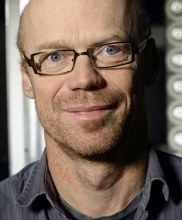
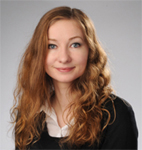
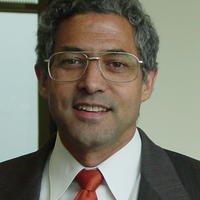
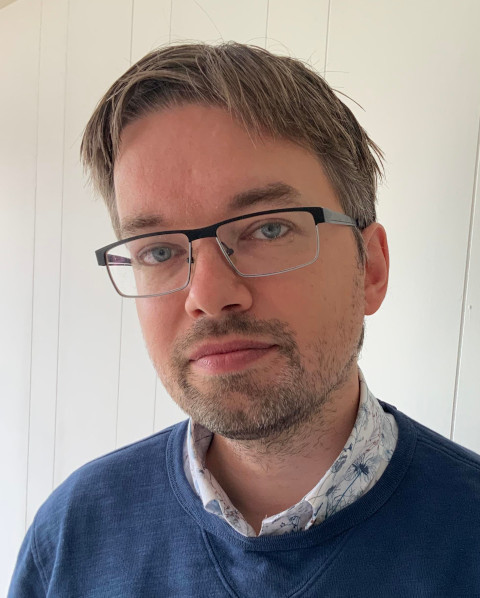
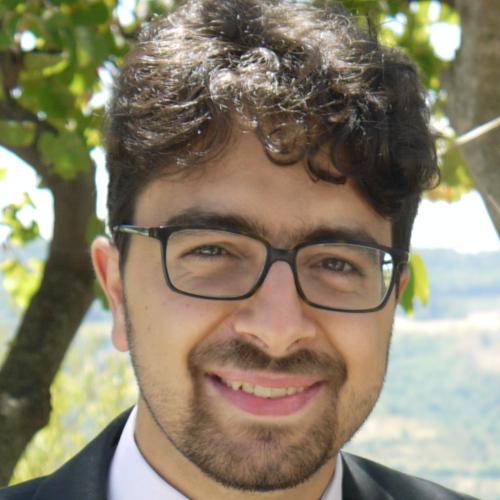
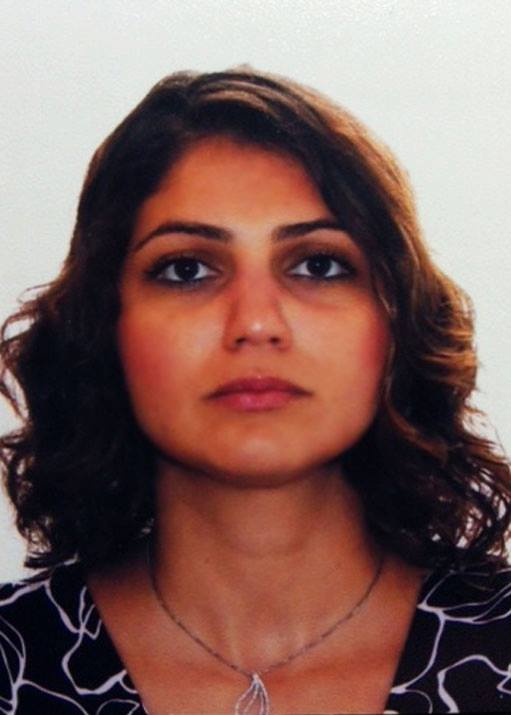
Daniel Reichman is an Assistant Professor at the Department of Computer Science, Worcester Polytechnic Institute (WPI). Prior to this role, he pursued postdoctoral research at Cornell University, University of California, Berkeley, and Princeton University. He earned his Ph.D. at the Weizmann Institute under the supervision of Uri Feige. His research spans machine learning, neural networks, artificial intelligence, and cognitive science. He actively explores computational complexity in neural network structures, interactive proofs in game theory, and theoretical aspects of optimization algorithms. His recent work includes publications in top-tier venues like Nature Human Behaviour, COLT, and ISIT. Ongoing projects include analyzing time lower bounds for the Metropolis process, depth separations in neural networks, and complexity of counting linear regions. He contributes to academic communities as an Area Chair at AISTATS 2023 and 2024 and participates in conferences like RANDOM and COLT.
Matthew Arnold is an Associate Professor in the School of Mathematical and Physical Sciences at the University of Technology Sydney (UTS), where he has been employed since 2007, progressing from Lecturer to Senior Lecturer and currently Associate Professor. His academic career includes postdoctoral research at the University of Canterbury and visiting positions at the Fraunhofer Institute Jena (2001) and University of Southampton (2008). Arnold holds a PhD and BSc(Hons) from the University of Otago, New Zealand. His leadership roles at UTS include serving as Physics Discipline Leader, BSc(Physics) Program Director, and currently as HDR director and RAO for the Faculty of Science. He is also active in professional organizations, having served as Chair of the NSW Australian Institute of Physics and as a senior member of both Optica and SPIE. Arnold's research focuses on the interaction of electromagnetic fields with complex systems, spanning from modeling and design to fabrication and characterization. His primary research areas include neuromorphic computing using percolating networks of nanoparticles, plasmonic resonators and materials, self-assembled metamaterials, and opto-thermal coatings for energy applications. His work bridges fundamental physics with practical applications in building technologies, solar energy, and next-generation computing architectures. His recent publications demonstrate a strong trend toward neuromorphic and brain-inspired computing systems, particularly exploring the computational capabilities of self-assembled nanoscale networks. These works investigate how the intrinsic physical properties of nanomaterials can be harnessed for energy-efficient information processing, with applications in random number generation, Boolean operations, and image classification. His research also maintains a strong focus on practical optical applications, including high-temperature polarizers and spectrally selective solar absorbers. AIP NSW Branch Service Award (2024) UTS MAPS: Individual Teaching Award (2023) STANSW Dedicated Service Award (2019) Arnold is deeply committed to mentoring the next generation of scientists, having successfully guided research students at all levels from internship to PhD. His teaching philosophy emphasizes engaging students in experiences that develop practical skills and deep insight, which has been recognized with teaching awards. He has secured significant research funding through ARC Linkage Infrastructure grants and numerous industry collaborations, particularly with building industry partners on glazing and facade performance. His current funded projects include advanced deposition systems for superconducting circuits and solar-thermal performance evaluations. Arnold leads research activities centered around experimental and computational investigations of nanoscale systems, with particular expertise in physical vapor deposition, optical characterization techniques, and computational modeling of complex electromagnetic systems. His work connects fundamental physics with real-world applications through strong industry partnerships and interdisciplinary collaborations across physics, materials science, and engineering disciplines.
Sonia Mazzucchi is a Full Professor in the Department of Mathematics at the University of Trento, specializing in probability theory, stochastic processes, and mathematical physics. Her research focuses on Feynman path integrals, quantum mechanics, and operator theory, with recent extensions into quantum information and photonics applications. She teaches core courses including Probability Calculus II, Mathematics and Statistics II, Quantum Information, and Stochastic Processes. Her research interests bridge abstract mathematical theory with practical quantum technologies. She investigates stochastic processes for modeling quantum systems, develops rigorous mathematical frameworks for path integrals on Lie groups, and applies probability theory to quantum random number generation and LiDAR systems. Her work combines functional analysis, measure theory, and differential equations to solve problems in quantum mechanics and information science. Recent publications (2022-2025) reveal a strong interdisciplinary trajectory merging mathematical physics with quantum engineering. Key trends include quantum random number generators using single-photon entanglement, SPAD-based LiDAR innovations for photon flux measurement, and advanced treatments of path integrals on Riemannian manifolds. Her work demonstrates consistent progression from foundational mathematical theory to quantum technology applications. No scientific awards are documented in the available information. Details regarding graduate student supervision and research grants are not specified in the source materials. Her academic activities center on teaching core mathematics courses and publishing in high-impact journals spanning mathematical physics and quantum information science.
Prof. Dr. Uwe Rascher is the Head of the Shoot Dynamics group at the Institute of Bio- and Geosciences (IBG) , Plant Sciences (IBG-2) within the Jülich Research Centre . His research bridges biophysical processes in photosynthesis with remote sensing applications. Research Focus: Spatiotemporal dynamics of photosynthesis Non-destructive physiological monitoring Solar-induced chlorophyll fluorescence (SIF) for ecosystem analysis Drought and stress response in crops Machine learning for agricultural decision support Integration of leaf-to-canopy scale observations Scientific Trends: Analysis of SIF for photosynthesis quantification, development of hyperspectral imaging systems, cross-scale stress detection (drought, heat), machine learning applications in plant phenotyping, and climate research collaborations. Technical Contributions: Development of HyScreen, FloX, and FluoMap systems for field spectroscopy, UAV-based sensor validation, and standardized ground measurement networks. His work emphasizes sensor fusion, light distribution models, and fractal geometry for fluorescence downscaling.
Ioana Ciotir is an Associate Professor (Maître de Conférence) in the Department of Mathematical Engineering at INSA Rouen, France, where she has been employed since 2014. She previously served as an Assistant Professor at the Institute of Mathematics at the University of Neuchâtel, Switzerland (2012-2014) and as an Assistant at the Department of Mathematics at "Alexandru Ioan Cuza" University of Iasi, Romania (2008-2012). Her research focuses on stochastic partial differential equations, homogenization theory, and optimal control problems, with applications to porous media flow, traffic modeling, and financial mathematics. Dr. Ciotir earned her Ph.D. in Mathematics from "Alexandru Ioan Cuza" University of Iasi, Romania in 2010, with a thesis titled "Stochastic Porous Media Equations." She later obtained her Habilitation à Diriger des Recherches (HDR) from the University of Rouen, France in 2022. Her academic journey includes additional training in educational methodologies and summer schools in mathematical finance. Her primary research interests span stochastic analysis and partial differential equations, with a focus on stochastic porous media equations, homogenization of stochastic processes, optimal control theory, and probabilistic representations. She investigates the behavior of stochastic processes with singular diffusivity, including fast and super-fast diffusion equations with various types of noise (Stratonovich, Itô, gradient-type). Her work extends to applications in physics (plasma diffusion), engineering (porous media flow), and social sciences (traffic flow modeling, pandemic economic impacts). Dr. Ciotir's publication record demonstrates consistent contributions to high-impact mathematical journals, with recent work focusing on regularity theory for stochastic diffusion equations, state-constrained control systems for porous media, and non-local models for traffic flow. Her research often involves international collaborations with institutions in Switzerland, Germany, Japan, and China, reflecting the interdisciplinary nature of her work. Among her scientific recognitions are the Thesis Prize for Applied Mathematics from ROMAI (2011) and the Doctoral and Research Supervision Bonus (PEDR) for the periods 2018-2021 and 2022-2025. She has successfully supervised multiple doctoral students through completion of their theses and currently mentors several Ph.D. candidates working on topics related to stochastic PDEs and control theory. Dr. Ciotir has secured significant research funding through projects such as Scale Op (2024-2028, with Siemens Gamesa Renewable Energy), DEFHY3GEO (2022-2025), M2SiNum (2018-2021), M2Num (2015-2019), and the ANR Project QUantum Turbulence Exploration by High-Performance Computing (ANR-18-CE46-0013). She serves as the Sustainable Development Representative for the LMI laboratory and the GM Department since May 2020, and has been elected to the LMI laboratory council (2017-2021 and 2021-2025). She is actively involved in the Mathematics Laboratory (LMI) at INSA Rouen, where she serves as the SMAI correspondent and Mathrice correspondent via FR CNRS 3335. Her international collaborations include partnerships with Siemens-Gamesa, ENSTA Paris, universities in Romania, Switzerland, Germany, and Japan, demonstrating her position within a broad academic network focused on applied mathematics and stochastic analysis.
Scot Adams is a Professor in the School of Mathematics at the University of Minnesota, with research spanning pure mathematics and machine learning applications. His primary academic affiliation is with the Mathematics Department at the University of Minnesota, where he maintains an active research program while managing phased retirement paperwork. His research interests include dynamical systems, foliations, ergodic theory, hyperbolic groups, trees, Riemannian geometry, and more recently neural networks and thermodynamics. In his diary entries through August 2025, he documents ongoing work developing neural network slides, focusing on visual chain rule explanations, diagram of functions, and coordinate vector spaces. His recent publications reflect a transition toward machine learning applications while maintaining his foundational mathematics work. The 15 most recent articles show increasing focus on neural network theory (2025), with earlier works covering financial mathematics, climate policy presentations, and pure mathematics topics like Banach-Tarski paradox and central limit theorem. As an advisor, he works with graduate student Aarya Garimella on neural network research, meeting regularly to refine slides and explore mathematical foundations of neural networks. His teaching activities include courses in linear algebra and financial mathematics. His diary reveals active engagement with climate policy through Citizens' Climate Lobby (CCL), including Capitol Hill lobbying efforts and local climate forum organization. He maintains detailed records of academic and civic activities while managing household responsibilities.
Peter Bruin is an Assistant Professor at the Mathematical Institute of Leiden University, specializing in algebra, geometry, and number theory. He is affiliated with the Quantum Software Consortium, an NWO Gravitation project, and the ALGANT Organisation. His research focuses on concrete arithmetic between geometry and number theory, with particular interest in elliptic curves, Galois representations, and modular forms. Peter Bruin completed his PhD at Universiteit Leiden in 2010 with the thesis "Modular curves, Arakelov theory, algorithmic applications" under the supervision of Prof. dr. S. J. Edixhoven and Dr. R. S. de Jong. Prior to that, he earned his Master's degree from the same institution in 2006 with the thesis "Green functions on Riemann surfaces and an application to Arakelov theory." His academic journey includes postdoctoral positions at Université Paris-Sud 11, Institut des Hautes Études Scientifiques, Universität Zürich, and the University of Warwick, where he served as an Assistant Professor (Warwick Zeeman Lecturer). Bruin's research interests lie at the intersection of algebraic geometry and number theory, with particular focus on elliptic curves, Galois representations, modular forms, and arithmetic geometry. His work often involves developing computational methods and software tools to explore theoretical questions in these areas. He has made significant contributions to understanding torsion structures of elliptic curves, L-functions, and the connections between modular curves and number fields. His research has applications in cryptography, particularly in lattice-based and post-quantum cryptographic systems. His recent publications demonstrate a strong focus on the arithmetic properties of elliptic curves and their generalizations, with particular attention to torsion structures, modular curves, and the computational aspects of Galois representations. His work spans both theoretical developments and practical implementations, as evidenced by his creation of specialized mathematical software packages. Organized "An Expedition into Arithmetic Geometry" (2023) in memory of Bas Edixhoven Co-organized COUNT workshop (2023) on computations in number theory Organized 6th General Assembly of Quantum Software Consortium (2021) Organized Algorithms in Number Theory and Arithmetic Geometry workshop (2017) As an educator, Bruin teaches a variety of courses including Linear Algebra, Topology, Modular Forms, and Representation Theory of Finite Groups. He also leads seminars on presenting and communicating mathematical concepts. His teaching philosophy emphasizes connecting theoretical concepts with practical applications, particularly in the emerging field of quantum computing.
Prof. Dr. Andreas Kleiner is a Professor at the Department of Economics, University of Bonn, with affiliations to the Institute for Microeconomics, Hausdorff Center for Mathematics, ECONtribute, and CRC TR 224. His research bridges economic theory, game theory, and political science, focusing on mechanism design, information economics, and institutional decision-making. Kleiner's work centers on mechanism design , game theory , and political economy , with emphasis on voting systems, delegation models, and bargaining under asymmetric information. His research addresses fundamental questions about how institutions aggregate preferences, design incentives, and verify information in collective decision-making. His publications predominantly explore theoretical frameworks in microeconomics, featuring recurring themes: delegation mechanisms in multidimensional environments (2024-2025), voting theory robustness under incomplete information (2021-2023), and bargaining efficiency with veto players (2020-2021). Methodologically, he employs mathematical optimization, equilibrium analysis, and combinatorial geometry to solve economic design problems. Kleiner collaborates with interdisciplinary teams across the Hausdorff Center for Mathematics and CRC TR 224, contributing to advanced mathematical frameworks for economic applications. No awards or supervised students are documented in the provided text.
Simone Di Marino is an Associate Professor in the Department of Mathematics at the University of Genoa. His research focuses on Optimal Transport, Mathematical Analysis, and their applications to Partial Differential Equations and Functional Analysis. He is a member of the research commission and teaches courses such as Mathematical Analysis, Calculus, and specialized topics in Mathematics and Engineering programs. His research interests include Optimal Transport Theory, Nonlinear Analysis, and the development of variational methods for problems in mathematical physics and differential geometry. He explores topics such as gradient flows, entropy regularization, and geometric inequalities on manifolds. Recent work highlights contributions to the theory of Grand-Canonical Optimal Transport, nonlinear mobilities in transport models, and the convexity properties of ground state energies in quantum systems. His articles often bridge pure analysis with applications in physics and numerical methods. Di Marino is available for student consultations on Wednesdays from 2pm to 4pm. Though no specific grants or awards are listed, his extensive publication record reflects active engagement in collaborative research.
Márton Pósfai is an Assistant Professor at the Central European University (CEU), specializing in network science and statistical physics. His research focuses on the structural and dynamic properties of complex networks, particularly physical networks, their controllability, and interdependencies. He holds a PhD and MSc in Physics from Eötvös Loránd University, Budapest. His work explores interdisciplinary topics including the impact of physical constraints on network topology, resilience under damage, and social behavior in non-human primates. Notable projects include the DYNASNET initiative to understand and utilize network structures. Pósfai’s publications span theoretical models of network dismantling, multiplex centrality metrics, and algorithmic instabilities in ranking systems. Key research trends in his articles include analyzing physical network structures (e.g., 3D shape, bundling effects), controllability strategies (input node placement, longest control chains), and social dynamics influenced by resource access. His studies often bridge abstract network theory with empirical systems like primate societies and Bitcoin transaction networks. Advising and grants are not explicitly detailed in the provided materials. Pósfai maintains a lab or team focused on network science applications, though specific lab names are unspecified.
Jérôme Casse is an Assistant Professor of Mathematics at the University Paris-Saclay, affiliated with the Probability and Statistics team at the Mathematics Department (IMO). He holds teaching roles at the IUT of Sceaux (School of Marketing and Management), NYU Shanghai, and Mines Nancy. His research focuses on probability theory, stochastic dynamical systems, combinatorics, and integrable systems, with particular emphasis on probabilistic cellular automata (PCA), nearest neighbour trees, and models like the 8-vertex system. Research interests span reversible stochastic systems, ergodic theory, spatial stochastic processes, and their applications in statistical mechanics. His work often explores the interplay between discrete and continuous probabilistic structures, with a focus on invariant laws, integrable models, and processes iterated ad libitum. Key contributions include studies on Poisson-Kirchhoff systems, edge correlations in lattice models, and the dynamics of random trees with catastrophes. Teaching responsibilities include calculus, probability, graph theory, and partial differential equations across institutions like IUT GEA (192h/year) and NYU Shanghai. His publications (15+ articles since 2012) reflect expertise in stochastic processes, cellular automata, and their applications in both pure and applied mathematics. Laboratory affiliations include the Laboratoire de Mathématiques d'Orsay (LMO), where he occupies office 3E3, and the IUT of Sceaux (office 401). No specific grants or awards are highlighted in the provided materials.
Armin Schwartzman is a Professor at the Halıcıoğlu Data Science Institute and Department of Biostatistics at the University of California, San Diego (UCSD). He holds a PhD in Statistics from Stanford University, an MSc in Electrical Engineering from the California Institute of Technology, and a BSc in Electrical Engineering from Technion-Israel Institute of Technology. His research focuses on statistical methods for signal and image analysis with applications in biomedical and environmental domains, including spatial inference, high-dimensional data analysis, and random field theory. Education : PhD in Statistics, Stanford University, 2006 MSc in Electrical Engineering, California Institute of Technology, 1996 BSc in Electrical Engineering, Technion-Israel Institute of Technology, 1995 Research Interests : Dr. Schwartzman develops statistical methodologies for analyzing complex data, particularly in neuroimaging, climate science, and genomics. Key areas include spatial inference for image analysis, multiple testing in high-dimensional data, and applications of random field theory. His work bridges theoretical statistics and practical challenges in biomedical and environmental research. Grants & Funding : NIH R01EB026859 (2019–2023): Spatial inference methods for image analysis NIH R21EB013795 (2012–2015): Voxelwise analysis of imaging response in neuro-oncology NIH R01CA157528 (2012–2019): Multiple testing methods for random fields Advising : Current advisees include Sam Davenport, Anubhav Singh-Sachan, and others. Former students have transitioned to roles at institutions like Moderna, University of Florida, and Cruiser. Labs & Collaborations : His research group works on projects such as: Random field theory for noise modeling in images Spatial inference in neuroimaging and climate data Machine learning for medical imaging (e.g., glaucoma diagnosis) Mountain glacier monitoring via satellite imagery
Termeh Kousha is an Adjunct Professor in the Department of Mathematics and Statistics at the University of Ottawa’s Faculty of Science. Their research focuses on the intersection of environmental health and statistical modeling, particularly examining the impact of air pollution on emergency healthcare utilization. They specialize in applying advanced statistical methods to analyze environmental health risks and public health outcomes. Key research areas include air pollution exposure effects on mental health, respiratory diseases, skin conditions, and cardiovascular health, often employing case-crossover study designs. Their work bridges mathematical rigor—such as convex geometry and algorithmic optimization—with real-world public health challenges. Publications highlight trends in linking air quality indices (e.g., AQHI) to emergency department visits for conditions like asthma, otitis media, and hypertension. Methodological contributions include derandomization of computational algorithms and factorization techniques for environmental pollutant source analysis. No scientific awards or student advisees are explicitly listed. Research has been applied in Canadian cities such as Montreal, Edmonton, Calgary, and Windsor, emphasizing regional health disparities and urban environmental challenges.
Davide Pigoli is a Senior Lecturer in Statistics at King's College London, based in the Department of Mathematics within the Faculty of Natural, Mathematical & Engineering Sciences. He holds a Ph.D. in Mathematical Models and Methods in Engineering from Politecnico di Milano, Italy (2013). Before joining King's in 2017, he held research positions at the University of Warwick and the University of Cambridge. His research focuses on functional and high-dimensional data analysis, manifold-valued data, spatial statistics, and applications in linguistics, forensics, and biosciences. Key contributions include work on covariance operators, Kriging methods for Riemannian data, and statistical modeling of linguistic and acoustic phonetic data. Recent projects include analyzing vocal audio data for COVID-19 screening and developing optimal experimental designs. Pigoli has co-authored over 19 peer-reviewed publications, including studies on machine learning in public health and forensic entomology. He contributed to the EPSRC-funded project 'Multi-objective optimal design of experiments' (2020–2025). His work aligns with UN Sustainable Development Goals, particularly in health and innovation. Office: S2.10 Strand Building, Strand Campus, London WC2R 2LS. Office hours: Monday 15:30–16:30.
Oren Yakir is an NSF Postdoctoral Fellow at Stanford University's Department of Mathematics, part of the School of Humanities and Sciences. He joined Stanford for the 2024-25 academic year. His research focuses on Analysis and Probability Theory, with particular attention to random polynomials, stochastic processes, and statistical mechanics. His work explores topics like root separation laws, charge fluctuations in Coulomb gases, and the behavior of Weierstrass zeta functions under random perturbations. Yakir holds a PhD from Tel Aviv University, completed in 2024. His academic contributions span theoretical and applied probability, with a strong emphasis on rigorous mathematical analysis of random systems. His recent studies investigate universality phenomena in root distributions and the interplay between stochastic models and geometric structures. Notable achievements include the NSF Postdoctoral Fellowship, which supports his research into probabilistic methods in analysis. While no formal advising roles are listed, his publications reflect collaborative engagement with stochastic modeling and mathematical physics. His office is located in Building 380, Room 384-F, and he can be reached at orenya@stanford.edu .