

Marc HOFFMANN is a Professor at Université Paris Dauphine-PSL and holds the Fundamental Chair at the Institut Universitaire de France since 2024. His academic journey includes roles at institutions such as INRIA (2020-2022), École Polytechnique (2007-2015), and Université Gustave Eiffel (2003-2012). Research Focus: Statistics of random processes, nonparametric statistics, and applications in financial modeling and population biology. Key Contributions: Adaptive estimation, confidence bands, inverse problems, rough volatility modeling, and growth-fragmentation processes. Advising: Supervised 19 PhD students with topics spanning statistical inference, Hawkes processes, and stochastic volatility. Collaborations include CIFRE grants with EDF, SCOR, and Banque de France. Scientific Awards : Fundamental Chair at Institut Universitaire de France (2024).
جستوجوی استاد و پژوهشگر
استاد راهنما، استاد دانشگاه یا پژوهشگر مناسب برای مسیر پژوهشیتان را پیدا کنید و با او ارتباط بگیرید.
نمایش ۷۰۶-۷۲۰ از ۲٬۲۱۱ استاد راهنما
اطلاعات این پروفایلها از صفحات عمومی دانشگاهها جمعآوری شده و ممکن است بهروز نباشد.
Sixu Liuمشاهده پروفایل
استادیار
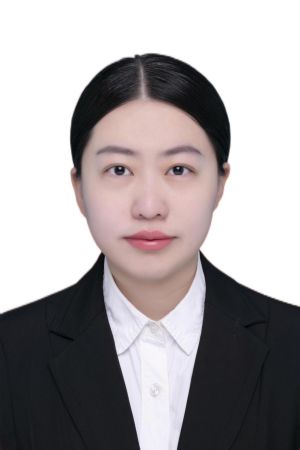
Sixu Liu is an Assistant Professor at BIMSA (Beijing Institute of Mathematical Sciences and Applications) within the Analysis and Geometry research group, a position she has held since 2022 following her postdoctoral fellowship at Tsinghua University's Yau Mathematical Sciences Center. Her academic foundation includes: 2017-2019: Joint Doctoral student in Mathematics at the University of Maryland 2013-2019: Doctorate in Mathematics from Peking University 2009-2013: Bachelor's degree in Mathematics and Applied Mathematics from Dalian University of Technology Dr. Liu's research bridges two sophisticated domains: Dynamical Systems and Ergodic Theory where she pioneers limit theorems and recurrence properties, and Statistical Design and Analysis of Experiments where she develops cutting-edge methodologies for optimal experimental structures. Her dynamical systems work reveals profound connections between probabilistic laws and deterministic systems, while her experimental design research creates practical frameworks for complex factor interactions in scientific investigations. Analysis of her publication trajectory (2019-2025) demonstrates sustained innovation across both fields. In dynamical systems, she has redefined recurrence theory through multiple Borel-Cantelli lemmas, while in experimental design she has revolutionized space-filling techniques with maximin distance criteria and orthogonal-MaxPro constructions. This dual expertise positions her at the intersection of theoretical mathematics and applied statistics. Her recognition includes: Second Prize in the National Mathematics Competition (2012) No information is available regarding student advising or research grant acquisitions. She actively contributes to BIMSA's intellectual ecosystem through her membership in the Analysis and Geometry group, where she advances mathematical frontiers through rigorous theoretical work and practical statistical applications.
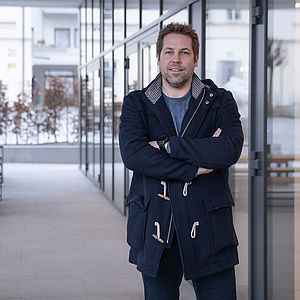
Professor Joscha Prochno is a faculty member at the University of Passau since April 2021, holding the Chair of Functional Analysis within the Faculty of Computer Science and Mathematics . His academic journey includes positions at Kiel University (diploma and doctorate), University of Alberta (postdoc), Johannes Kepler University Linz (Senior PostDoc), University of Hull, and Karl Franzens University Graz (habilitation in 2021). Research focuses on high-dimensional phenomena at the intersection of analysis, geometry, and probability theory. Key article trends include random projections, Schatten and Orlicz classes, large deviations, and fragmentation processes in high dimensions. Scientific Awards : Austria's highest mathematics prize (2021) Editorial Roles : Co-editor of Mathematische Nachrichten and Journal of Complexity
- Theoretical Solid State Physics
- Quantum Effects in Electronic Properties
- Mesoscopic Physics
- +۱ مورد دیگر
Dietmar Weinmann is a Senior Researcher at the CNRS (Centre National de la Recherche Scientifique) affiliated with the IPCMS (Institut de Physique et Chimie des Matériaux de Strasbourg) and the University of Strasbourg. His work focuses on theoretical solid-state physics, particularly quantum effects in electronic properties, mesoscopic physics, and quantum transport phenomena. His research explores non-local heating in quantum thermoelectrics, scanning gate microscopy applications in graphene and semiconductor heterostructures, power dissipation asymmetry in quantum point contacts, and orbital magnetization mechanisms in mesoscopic systems. Key themes include electron correlations, spin-orbit interactions, and disorder effects in nanoscale devices. Scientific awards include the Marie Curie Fellowship during his postdoctoral work at SPEC Saclay. He teaches an elective course on Electronics for Quantum Science and Technology at the University of Strasbourg. As a member of the Mesoscopic Quantum Physics team, his research combines theoretical modeling with experimental collaborations on quantum transport imaging and inverse problem solving via machine learning.
Károly Simon is a Professor of Mathematics at the Budapest University of Technology and Economics , where he serves as Head of the Department of Stochastics and Head of the Doctoral School of Mathematics and Computer Science . He is affiliated with the Institute of Mathematics and leads research in fractal geometry, dynamical systems, and complex networks. Education : MSc thesis and initial research in real-time functions at the University of Szeged under Vilmos Totik, followed by PhD studies at ELTE under Miklós Laczkovich, and an MTA PhD (2007) on fractals under Péter Major. His research spans fractal geometry , dynamical systems , and complex networks . Key contributions include studies on random fractals (Mandelbrot percolation, 2000-present), deterministic hyperbolic systems (1990s), and complex networks (2009-present), including leadership in a five-group consortium project and the TAMOP Theoretical Foundations of the Future Internet. Scientific Recognition : Alixits Prize (Hungarian Academy of Sciences, 2001) Bolyai Plaque (2008) Advising : Supervised 3 doctoral graduates (Balázs Bárány, Júlia Komjáthy, Péter Móra) and advises 4 ongoing PhD candidates (István Kolossváry, Roland Molontai, Hajnal Tóth, Lajos Vágó). Collaborated with international scholars including Michel Dekking, Michal Rams, and others. Leadership & Service : OTKA mathematics jury chairman (2010-2012), member of Hungarian Bar Association's committee (2008-2012), editor of Central European Mathematical Journal (2003-2007), and organizer/co-organizer of fractal/dynamical systems conferences in Poland, India, Hong Kong, and France.
- Geometry
- Topology
- Geometric Knot Theory
- +۳ مورد دیگر
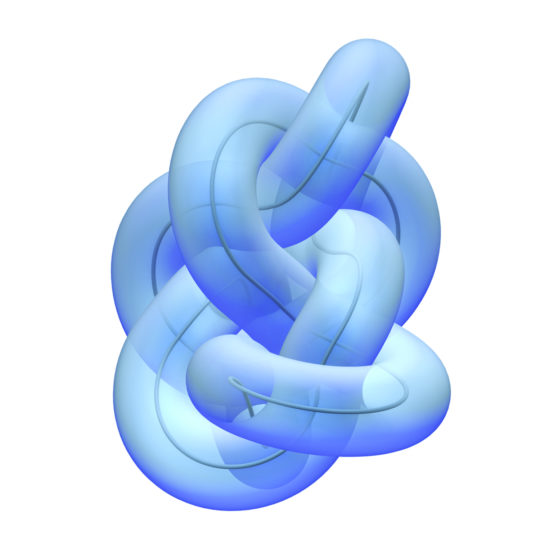
Jason Cantarella is a Professor in the Mathematics Department at the University of Georgia. His research focuses on geometric knot theory, particularly the shapes of random curves and polygons. He teaches Differential Geometry of Curves and Surfaces (MATH 4250) every spring and specializes in the Multivariable Mathematics (MATH 3500-3510) course sequence. His research interests center on geometric properties of random polygons and knots, using differential, algebraic, and symplectic geometry of polygon spaces. Dr. Cantarella is particularly interested in questions like how likely it is that a random curve is knotted or what can be expected from a random diagram of a random space curve. His work bridges pure mathematics with applications in polymer physics and molecular biology. His recent publications show a strong focus on random polygons, topological polymers, geometric probability, and computational methods for analyzing knotting phenomena. There's a clear progression from theoretical foundations to algorithm development and practical applications, particularly in understanding the statistical properties of knotted structures in physical systems. Dr. Cantarella leads a research group that includes graduate students Tom Needham, Michael Berglund, and Harrison Chapman, as well as postdoctoral fellow Clayton Shonkwiler. He collaborates with faculty members Jason Parsley and Matt Mastin at UGA, and internationally with researchers including Tetsuo Deguchi at Ochanomizu University, the Uehara group at Kyoto University, and Clayton Shonkwiler of Colorado State University. He has developed several computational tools including Octrope (for polygonal tube radius calculation), plCurve (polygon library), Ridgerunner (knot tightening software), and Tsnnls (sparse non-negative least squares solver). These tools have enabled significant advances in the computational study of geometric knot theory and random polygon spaces.
- Biodiversity
- Evolutionary Biology
- Zoology
- +۳ مورد دیگر
Gabriele Gerlach is a Professor at the Carl von Ossietzky University of Oldenburg since 2007, affiliated with the Institute of Biology and Environmental Sciences and leading the Department of Biodiversity and Evolution of Animals. She also serves as an Adjunct Senior Scientist at the Marine Biological Laboratory (USA) and an Adjunct Professor at the Boston University Marine Program. Education : Ph.D. (1990) and Habilitation (2000) in Zoology and Ecology at the University of Constance, Germany. Research Interests : Biodiversity, evolutionary biology, and ecology combined with mathematical approaches. Her work focuses on operator theory, spectral analysis, and dynamical systems applied to biological and environmental questions. Publications : Recent contributions include mathematical frameworks for kernel operators, transition semigroups, and spectral convergence, bridging abstract analysis with computational biology.
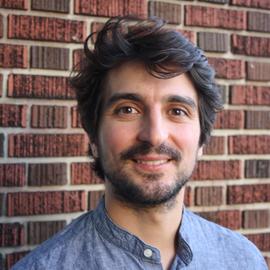
Sylvain Carrozza is a Teacher-Researcher (Maître de Conférences / Associate Professor) at the Institut de Mathématiques de Bourgogne (IMB), University of Burgundy, France. His work bridges gravitational physics, quantum theory, and combinatorics, with a focus on tensor models and group field theory. Education: PhD in Mathematical Physics (2013), Université Paris-Saclay (formerly Paris-Sud 11) Agrégation de Mathématiques (2010), École Normale Supérieure de Lyon Master in Theoretical Physics (2009), École Normale Supérieure de Lyon His research explores the large N limit of random tensors for quantum gravity in dimensions ≥3, non-perturbative quantum field theory , and boundary dynamics in generally covariant theories . Recent work extends these techniques to quantum information, particularly multipartite entanglement and quantum reference frames. Key trends in his publications include: Advancements in tensor models and group field theory for quantum gravity Analysis of edge modes and boundary effects in gauge and gravitational theories Applications to quantum information , such as error correction and entanglement Renormalization and scaling limits in multi-matrix and tensor systems Scientific Awards: Radboud Excellence Fellow (2020–2022) He is affiliated with the Mathematics-Physics team at IMB and contributes to the Parity BFC Mathematics Federation . His collaborations span institutions in France, Netherlands, Canada, and Germany.
- Mathematical Statistics
- Data Science
- Algebra
- +۳ مورد دیگر
Jukka Mikael Kohonen is a University Lecturer in the Department of Mathematics and Systems Analysis at Aalto University, Finland. He is affiliated with the Mathematical Statistics and Data Science, as well as Algebra and Discrete Mathematics research groups. His research interests span lattice theory and combinatorics, with recent work focusing on modular lattice reduction and enumeration techniques. He has contributed to algorithmic optimization and outlier correlation detection, collaborating across disciplines such as biomedical signal processing and computational mathematics. In his publications since 2017, Kohonen has explored topics ranging from symmetry reduction algorithms to additive number theory, with a notable emphasis on computational methods in discrete mathematics. Recent work (2025) advances techniques for simplifying modular lattices through elimination of irreducible elements. Research groups: Mathematical Statistics and Data Science, Algebra and Discrete Mathematics Email: jukka.kohonen@aalto.fi
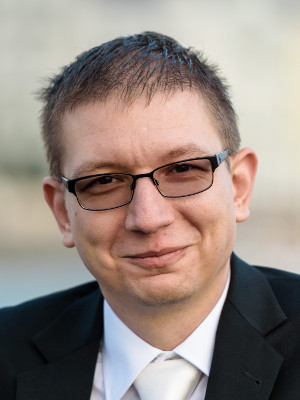
Sándor Kisfaludi-Bak is an Assistant Professor in the Department of Computer Science at Aalto University, specializing in theoretical computer science with a focus on computational geometry. He develops algorithms for geometric problems involving points, curves, shapes, and spatial networks. His research interests include Algorithm design for geometric optimization Computational geometry fundamentals Spatial network analysis Hyperbolic and planar graph algorithms Parameterized complexity in geometric contexts Recent publications demonstrate expertise in Traveling Salesman Problem optimization, Steiner network construction, and hyperbolic graph analysis. Key research trends span computational geometry, graph theory, and algorithmic complexity in spatial domains. He has no listed scientific awards in the provided materials. No information about student advising or organizational affiliations beyond Aalto University was found.
Matthew B. Dayمشاهده پروفایل
دانشیار
Matthew B. Day is an Associate Professor in the Department of Mathematical Sciences at the University of Arkansas. His research focuses on geometric group theory, low-dimensional topology, and combinatorial group theory, with a particular emphasis on automorphism groups of right-angled Artin groups (RAAGs), free groups, and mapping class groups. Research Interests: Automorphism groups, RAAGs, free groups, Torelli subgroups, Johnson homomorphisms, symplectic structures on groups. Collaborators: Richard D. Wade, Andrew Putman, Benson Farb (PhD supervisor). Education: PhD from the University of Chicago (2008), supervised by Benson Farb. Key Contributions: Studied virtual cohomological dimensions, solvable subgroups, and exact sequences related to automorphism groups.

Tamsen L. Bassford, MD is an Associate Professor in the Department of Family and Community Medicine at the University of Arizona College of Medicine. With extensive clinical and research experience spanning several decades, Dr. Bassford has made significant contributions to women's health, cancer prevention, and healthcare for individuals with developmental disabilities. Her educational background includes a BS in Biology from Bryn Mawr College and an MD from the University of Southern California. She completed her Family Medicine residency at the University of Arizona College of Medicine (1987) and Pediatrics training at Los Angeles County Hospital (1984). Dr. Bassford's research focuses on critical areas including cancer prevention (particularly breast and cervical cancer in minority populations), health disparities, quality improvement, serious mental illness, and intellectual/developmental disabilities. She pioneered the Mensajeras de Salud Project, a decade-long lay health education initiative targeting Hispanic women, and has led the Sonoran University Center for Excellence in Developmental Disabilities since 2006. Her work on the Women's Health Initiative as Principal Investigator for the Arizona site demonstrates her leadership in large-scale clinical research. Her scholarly contributions include numerous publications in high-impact journals related to women's health, bone density, hormone therapy, and health disparities. Dr. Bassford has served on prestigious committees including the FDA Mammography Advisory Committee and NIH Consensus Panel on Osteoporosis. Dean's List of Excellence in Teaching (multiple years) President's Award for Best Paper (American Association for Cancer Education) Career Development Award (American Cancer Society) Local Hero Award (American Academy of Developmental Medicine and Dentistry) Leonard Tow Humanism in Medicine Award Dr. Bassford has received significant grant funding including the Women's Health Initiative grant from NHLBI and has been instrumental in developing community-based health initiatives. She currently teaches courses including "Care of Individuals with IDD" and maintains an active research program focused on improving healthcare access and quality for vulnerable populations.

Gilles Blanchard is a Professor at Paris-Saclay University , affiliated with the Institute of Mathematics in Orsay. His research focuses on statistical learning theory , multiple testing , kernel methods , and high-dimensional statistics . Key Contributions: Decontamination of mutually contaminated models Novelty detection with semi-supervised learning Non-Gaussian component analysis (NGCA) for dimension reduction Scientific Awards: PhD thesis award from University of Paris 6 (2004) Google Scholar h-index of 49 with over 8,000 citations Recent Research Trends: False Discovery Rate (FDR) control in structured hypothesis testing Conformal prediction for link analysis Adaptive sampling in restless bandits Statistical learning on measure spaces His work bridges theoretical statistics with practical machine learning applications, including genome-wide association studies , persistent homology in topological data analysis , and random feature moments for compressive learning . He is involved in open-source software development like μTOSS for multiple testing standardization and has advised on projects related to flow cytometry and Hadrontherapy applications.

Bernhard Eggerمشاهده پروفایل
استادیار
Bernhard Egger is a junior professor (adidas Stiftungsprofessur) at the Chair of Visual Computing, Cognitive Computer Vision Lab at Friedrich-Alexander-Universität Erlangen-Nürnberg (FAU) . His research bridges human/machine perception of faces and shapes with synthetic data generation. Formerly, he was a postdoc at MIT's Computational Cognitive Science Lab and Computer Science & AI Lab, following a PhD in facial image annotation at the University of Basel. Research Focus: 3D Morphable Models, Statistical Shape Modeling, Inverse Rendering, AI in Mental Health, Medical Imaging. Education: PhD (University of Basel, 2017), MSc/BSc in Computer Science (University of Basel), Teaching Diploma (University of Applied Sciences Northwestern Switzerland). Notable Awards: Best Poster Award (2024, Cognitive Computational Neuroscience) Best Paper Award (CVPR Workshop 2019) Honk Award (SIGBOVIK 2020) Publications Trends: Recent work spans implicit surface modeling (ICLR 2025), 3D scene decomposition (3DV 2025), medical shape models (BVM 2025), and multimodal AI (npj Mental Health 2024). Labs: FAU's Cognitive Computer Vision Lab (advisor to 8+ students/researchers).
- Mechanics of a deformable solid body
- Methodology of teaching mathematics in higher education
- Electromagnetic processes simulation
- +۳ مورد دیگر
Iryna Mykhailivna Kilymnyk is an Associate Professor at the Department of Mathematics, Faculty of Mechanical Engineering, Zaporizhzhia Polytechnic National University. With a distinguished career spanning nearly five decades since joining the university in 1976, she has established herself as a respected academic in both mathematical education and applied mechanics, maintaining active research and teaching activities through 2024. Education: Diploma with honors from Dnipropetrovsk State University, Faculty of Mechanics and Mathematics (1976), specialty: Applied Mathematics Candidate of Technical Sciences (equivalent to PhD) with thesis 'Object-oriented modeling of the thermal stress-strain state of the "casting - metal mold" system' (1997) Research Interests: Dr. Kilymnyk specializes in the mechanics of deformable solid bodies and the methodology of teaching mathematics in higher education. Her work bridges theoretical mathematics with practical engineering applications, particularly in electromagnetic processes simulation and power transformer modeling. She has developed innovative approaches to mathematical modeling of complex physical systems, with a focus on industrial applications. Her research has contributed significantly to understanding thermal stress-strain states in casting processes and electromagnetic field behavior in industrial equipment, with publications spanning mathematical theory, engineering applications, and interdisciplinary medical research. Publication Trends: Over her extensive career, Dr. Kilymnyk has published more than 50 scientific papers, with 9 indexed in Scopus. Her recent work (2023-2024) shows continued productivity with publications spanning mathematical education textbooks, electromagnetic modeling, and interdisciplinary medical applications. Her research demonstrates a consistent focus on applying mathematical principles to solve practical engineering problems while maintaining strong contributions to mathematics education methodology. The breadth of her work reflects both deep expertise in core mathematical disciplines and the ability to apply these principles across diverse fields including electrical engineering, materials science, and medical applications. Awards and Honors: Honorary Diploma of the Ministry of Education and Science of Ukraine (2000, 2004) Zaporizhzhia Polytechnic National University Badge 'For Impeccable Work' (3rd degree, 2008) Zaporizhzhia Polytechnic National University Badge 'For Impeccable Work' (2nd degree, 2015) Badge of the Ministry of Education and Science of Ukraine 'Distinguished Educator of Ukraine' (2020) Zaporizhzhia Polytechnic National University Badge 'For Impeccable Work' (1st degree, 2024) Academic Service: Dr. Kilymnyk serves as responsible for the educational and methodological direction of the Department of Mathematics and is a member of the university staff conference. She has maintained an active research profile while contributing significantly to curriculum development and mathematical education at the university. Her scientific contributions include 1 patent, 3 textbooks, and over 50 scientific papers, with consistent publication activity well into her later career years, demonstrating remarkable scholarly dedication and productivity.