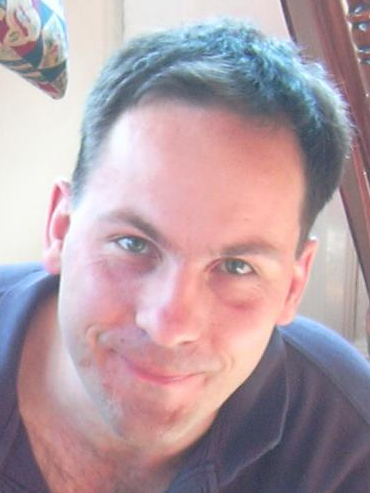
Prof. Mathieu Luisier is a Full Professor of Computational Nanoelectronics at ETH Zurich's Department of Information Technology and Electrical Engineering. He earned his PhD in 2007 from ETH Zurich, followed by postdoctoral research there and a role as Research Assistant Professor at Purdue University (2008–2011). His research focuses on nanoscale device modeling, including nanowire transistors, memristors, and 2D semiconductors, with a strong emphasis on quantum transport and high-performance computing. ERC Starting Grant (2013) SNSF Advanced Grant (2022) ACM Gordon Bell Prize (2019) His work integrates advanced simulation techniques like GW approximations and parallel algorithms to address challenges in nanoelectronics. He teaches courses on digital circuits and integrated systems, and leads research groups exploring next-generation devices for applications in quantum computing and neuromorphic systems.
Barbora Hudcová is a Lecturer at École Polytechnique Fédérale de Lausanne (EPFL), affiliated with the School of Basic Sciences and the Department of Mathematics . She works under the Chair of Statistical Field Theory and is involved in teaching courses like "Cellular Automata and Models of Artificial Life" through the SMA-ENS program. Her research focuses on computational and dynamical aspects of discrete systems. Research Interests Cellular Automata Artificial Life Discrete Dynamical Systems Computational Complexity Reservoir Computing Statistical Field Theory Publications Her work explores computational hierarchies, complexity transitions, and mathematical structures in cellular automata, with recent contributions to encoding-decoding relations and dynamical cavity methods. Key topics include artificial life modeling, computational universality, and transient behavior analysis in discrete systems.
Dr. Philip Marmet is a Researcher and Lecturer at the Institute of Computational Physics (ICP) within the School of Engineering at Zurich University of Applied Sciences (ZHAW). His work focuses on Multiphysics and Multiscale simulations, characterization and stochastic modeling of microstructures, with particular expertise in solid oxide fuel cell electrode design. His educational background includes a PhD in Physics/Modeling and Simulation from the University of Fribourg (2019-2023), an MSc in Physics/Soft Matter Theory from the same institution (2013-2016), and an MSc in Engineering from Bern University of Applied Sciences (2011-2013). PhD in Physics / Modeling and Simulation, Solid Oxide Fuel Cells, University of Fribourg (2019-2023) MSc in Physics / Soft Matter Theory, University of Fribourg (2013-2016) MSc in Engineering BFH / Industrial Technologies, Bern University of Applied Sciences (2011-2013) BSc in Mechanical Engineering / Mechatronics, Bern University of Applied Sciences (2003-2007) Dr. Marmet's research spans Multiphysics Simulation, Multiscale Modeling, Microstructure Characterization, and Digital Materials Design. His work bridges theoretical modeling with experimental validation to optimize materials for energy applications. He has developed specialized methodologies for virtual microstructure variation and optimization of porous materials, particularly for solid oxide fuel cells and aerosol filters. His publication record shows a clear progression toward increasingly sophisticated multiscale modeling approaches, with recent work focusing on stochastic microstructure modeling using pluri-Gaussian methods. His research demonstrates strong integration of computational techniques (including GeoDict, Comsol Multiphysics, ANSYS, OpenFOAM, and Matlab/Simulink) with experimental validation. Best graduation results of 2013 "Gold", Master of Science in Engineering Dr. Marmet supervises student projects and lectures Analysis 1 and 2 for bachelor courses. His research has received funding from the Swiss Federal Office of Energy (SFOE) and Eurostars program. He has developed practical software tools including the Python app for stochastic microstructure modeling of SOC electrodes and the Characterization-app for standardized microstructure analysis, demonstrating his commitment to translating research into practical engineering solutions. His work is organized around the Digital Materials Design workflow, connecting virtual microstructure generation, automated characterization, and multiphysics simulation to enable data-driven optimization of energy materials without extensive experimental iteration.
Dr. Manuela Fischer is a Lecturer at the Department of Computer Science at ETH Zürich. Her research focuses on distributed computing, algorithms, and parallel processing, with a particular emphasis on graph theory and massively parallel computation. She has contributed to advancements in algorithms for sparse graphs, approximation techniques in semi-streaming models, and distributed systems optimization. Her work often explores theoretical computer science challenges, including algorithm design and computational complexity. Dr. Fischer’s publications span topics such as exponential speedups in MPC frameworks, deterministic symmetry breaking in graphs, and efficient connectivity algorithms in distributed environments. These contributions highlight her expertise in leveraging parallel and distributed computing paradigms to solve complex computational problems. No scientific awards or grants are explicitly mentioned in the provided information. She is affiliated with ETH Zürich and contributes to teaching and research in computer science, though specific educational qualifications or lab affiliations are not detailed in the text.
Ioan Manolescu is a professor in the Department of Mathematics at the University of Fribourg, Switzerland. His research focuses on probability theory and statistical mechanics, particularly percolation, random-cluster models, Potts models, and self-avoiding walks. He obtained his PhD from the University of Cambridge under Geoffrey Grimmett in 2012 and was a postdoc at the University of Geneva (2012-2015). Education ENS Paris (student) University of Cambridge (PhD, 2012) Supervisors: Geoffrey Grimmett Research Specializes in critical phenomena in statistical mechanics Key techniques: FKG inequality, Russo-Seymour-Welsh methods, star-triangle transformations Focus on universality and scaling relations across models His recent publications analyze arm exponents in FK-percolation, crossing widths in Poisson Boolean models, and universality in loop O(n) models. He teaches Analyse I & II at University of Fribourg, supported by assistants. Contact: ioan.manolescu@unifr.ch
Paolo Ricci is a Full Professor and Director at the Swiss Plasma Center (SPC) at École Polytechnique Fédérale de Lausanne (EPFL) since October 2023. He previously held the Tenure Track Assistant Professor position (2010) and Associate Professor position (2016) at EPFL. His academic affiliations include leadership roles in multiple SPC sub-groups, such as Theory, Low Temperature Plasma Physics and Applications, International Installations, Tokamak Physics, Material Group, Plasma Processing, Applied Superconductivity, Edge Plasma Physics, and Administration. Politecnico di Torino (Italy): Master's in Nuclear Engineering (2000) Los Alamos National Laboratory: Doctoral studies in kinetic simulation of magnetic reconnection Dartmouth College: Postdoctoral research in gyrokinetic simulations of Z pinch plasmas Ricci's research focuses on plasma turbulence and instabilities, numerical simulations of laboratory and fusion plasmas, and computational methods for plasma physics. His work spans tokamak and stellarator boundary layer dynamics, scrape-off layer turbulence, fast ion transport, and validation of plasma simulation codes like GBS. His recent publications emphasize global fluid simulations in diverted geometries, snowflake magnetic configurations, and theoretical scaling laws for scrape-off layer widths. His scientific awards include the 2016 Section de Physique Teaching Prize, 2021 Craie d'Or (EPFL physics bachelor students), and 2021 Polysphère d'Or (AGEPoly). Ricci has supervised numerous Ph.D. theses on topics ranging from gyrokinetic moment-based models to scrape-off layer simulations, and actively collaborates with institutions on plasma turbulence validation projects.
Nicolas Boumal is an Assistant Professor in Mathematics at EPFL, Switzerland, holding dual affiliations in the Continuous Optimization Chair (OPTIM) within the Institute of Mathematics (MATH) and the SMA Education Group. He leads research in optimization on Riemannian manifolds, non-convex optimization, and statistical estimation. His work bridges geometry, numerical analysis, and applications in cryo-electron microscopy and synchronization problems. Education: PhD in Mathematical Engineering from UCLouvain (2014), postdoctoral research at Inria Paris and Princeton University. Prior to EPFL, he was an Instructor and Assistant Professor at Princeton’s Mathematics Department. Research Interests : Non-convex optimization landscapes, optimization on manifolds, low-rank matrix optimization, synchronization, phase retrieval, and computational methods in cryo-EM. His ERC Starting Grant (GEOSYM, 2022–2027) focuses on geometric and symmetric optimization techniques. Grants & Awards : ERC Starting Grant (2021), SIAM Optimization Prize (2018 for student co-author), and several conference best paper awards. Teaching : Courses include Continuous Optimization (MATH-329), Algebra Linéaire (MATH-111), and graduate-level Optimization on Manifolds (MATH-512). He authored the textbook An Introduction to Optimization on Smooth Manifolds (Cambridge University Press, 2023). Labs & Teams : Heads the OPTIM lab at EPFL, collaborating with global researchers in optimization and applications. His group develops the Manopt toolbox for manifold optimization.
Riedi Rudolf is a Full Professor at the Haute école d'ingénierie et d'architecture de Fribourg, affiliated with the iSIS Institute for Intelligent and Secure Systems. His primary role involves academic leadership in telecommunications and signal processing education. His research focuses on wireless network capacity, network coding limitations, and stochastic processes with a focus on fractal/multifractal systems. Key projects include co-leading a CHF 167k project (2011-2013) on predictive caching for time-series storage and collaborating on a CHF 220k metadata mining initiative (2009-2012) involving data mining and cryptography. His work bridges theoretical foundations (e.g., Brownian motion properties) with applied telecommunications solutions like pathChirp bandwidth estimation tool. Received Best Student Paper Award for pathChirp research Published extensively in IEEE Transactions and Wiley's Encyclopedia of Environmetrics
Dr. Damien Barbier is a researcher specializing in theoretical physics, with a focus on statistical mechanics, condensed matter physics, and neural networks. His work bridges computational and theoretical approaches to understanding complex systems. Research Interests : Disordered systems, optimization algorithms, and quantum transport phenomena. Publications : Active in journals like SciPost Physics , with contributions to high-dimensional geometry and thermalization in harmonic models. Scientific Contributions : His recent articles explore anomalous transport in Anderson models, connected-solutions states in perceptrons, and generalized Gibbs ensembles. These works highlight interdisciplinary methods combining physics and machine learning.
Alessandro Sisto is an Associate Professor at Heriot-Watt University, specializing in Geometric Group Theory with a focus on generalizations of hyperbolic groups. He leads research in the GGT (Geometric Group Theory) group at Heriot-Watt and advises PhD students including current student Giorgio Mangioni and former students Stefanie Zbinden, Antoine Goldsborough, and Davide Spriano. His work intersects geometric topology, low-dimensional topology, and hyperbolic geometry. Sisto maintains an active blog and collaborates internationally on projects such as the Centre for Doctoral Training in Algebra, Geometry, and Quantum Fields. Education: Completed his PhD at the University of Oxford under the supervision of Cornelia Druțu. Research interests span hierarchical hyperbolicity, coarse median structures, and the interplay between group theory and geometric spaces. His recent articles explore topics like bounded cohomology, asymptotically CAT(0) metrics, and cohomological characterizations of hyperbolicity. Sisto's contributions often blend algebraic, geometric, and probabilistic methods to advance foundational questions in geometric group theory. Labs/Teams: Active member of the GGT group at Heriot-Watt. Collaborations include projects on mapping class groups, Artin groups, and hyperbolic 3-manifolds.
Benjamin Wesolowski is a CNRS researcher (chargé de recherche) at the Unité de Mathématiques pures et appliquées (UMPA), École Normale Supérieure de Lyon (ENS Lyon), France. He previously held a CNRS researcher position at the Institut de Mathématiques de Bordeaux (IMB) and completed postdoctoral work at Centrum Wiskunde en Informatica (CWI) in the Netherlands. His research lies at the intersection of mathematics and cryptography, particularly in number theory and algebraic geometry. PhD, EPFL (2018) Master’s in Mathematics, EPFL (2014) Bachelor’s in Mathematics, EPFL (2012) Habilitation (HDR), ENS Lyon (2024) His research focuses on cryptologic algorithms rooted in number theory and algebraic geometry, especially isogeny-based cryptography , post-quantum signatures , and verifiable delay functions . He explores the structure of isogeny graphs of abelian varieties and their applications to blockchain and randomness generation. His work combines deep theoretical mathematics with practical cryptographic design. The most recent articles highlight a consistent trend in isogeny-based cryptography , particularly in constructing compact and secure post-quantum signature schemes like SQISign and PRISM. His contributions also extend to cryptanalysis, as seen in the key recovery attack on SIDH, and foundational work on verifiable delay functions. These works span top-tier venues such as Eurocrypt, Asiacrypt, and PKC, reflecting his leadership in advancing both theoretical and applied aspects of modern cryptography. CNRS 2025 Bronze Medal ERC Starting Grant AGATHA CRYPTY (2023) Secretary of the IACR (elected, 2023) Best paper award PKC 2025 Best paper award Eurocrypt 2024 Top-3 paper Eurocrypt 2023 Best paper award Asiacrypt 2020 Best young researcher paper Eurocrypt 2019 Benjamin Wesolowski has been supported by competitive grants including the ERC Starting Grant AGATHA CRYPTY . He has advised students during his tenure at EPFL as a teaching assistant and likely through doctoral supervision, though specific advisees are not listed. His academic service includes being elected Secretary of the IACR , a major recognition in the cryptology community. He has also received fellowships such as the Doctoral EDIC Fellowship and prizes including the Kudelski Prize and EPFL Prize . His research is conducted primarily within the Unité de Mathématiques pures et appliquées (UMPA) at ENS Lyon, a leading center for mathematical research in France. He was part of the Cryptology Group at CWI under Ronald Cramer during his postdoc and has collaborated extensively with institutions such as EPFL, UC Berkeley, and IMB. His work often bridges theoretical mathematics and practical cryptographic implementation.
Miklós Abért is a Professor at the MTA Alfréd Rényi Institute of Mathematics. His research focuses on measured and asymptotic group theory, with specific interests in spectral theory of graphs and groups, Benjamini-Schramm convergence, invariant random subgroups, homology growth, sofic entropy, and cellular automata. He leads the ERC Consolidator Grant research group "Asymptotic invariants of discrete groups, sparse graphs and locally symmetric spaces" (2015–present). Award of the Academy (2023) Rényi Prize (2017) János Bolyai Research Fellowship (2011) Erdős Pál Prize (2010) Grünwald Géza Memorial Medal (2003) His recent work explores the interplay between physical network structures, stochastic processes, and group-theoretic invariants, with applications to spectral radius analysis, torsion growth, and unimodular random trees. He has organized major conferences on measured group theory and collaborated extensively with leading mathematicians.
Valentin Hartmann is a Researcher at the Data Science Laboratory (DLAB) within the School of Computer and Communication Sciences at École Polytechnique Fédérale de Lausanne (EPFL). His work focuses on advanced topics in data science, including differential privacy, optimal transport theory, and privacy-preserving machine learning. He holds a postdoctoral position and contributes to cutting-edge research in computational statistics and secure distributed learning. His research interests span multiple domains: (1) Development of privacy-preserving techniques for machine learning and data analysis, (2) Optimization of transport problems with applications in statistics and geometry, (3) Design of secure algorithms for distributed systems, and (4) Implementation of robust statistical methods through R packages like 'transport'. Valentin actively publishes in top-tier venues, with recent contributions addressing neural network behavior analysis, privacy risks in data distribution inference, and novel cryptographic approaches for collaborative learning. His work bridges theoretical foundations with practical software solutions, as evidenced by his development of the 'transport' R package for optimal transport computations. He is affiliated with the DLAB research group at EPFL's INN building (Office INN 315), contributing to interdisciplinary projects at the intersection of computer science, mathematics, and privacy engineering.
Dr. Amir Joudaki is a Researcher affiliated with the Department of Biomedical Informatics at ETH Zürich. His role is part of the Professorship for Data Analytics, focusing on interdisciplinary research at the intersection of machine learning and biomedicine. He is stationed at CAB F 53.1, Universitätstrasse 6, Zurich. His research interests span machine learning, biomedical data analytics, neural network theory, genomics, and bioinformatics algorithms. Notable contributions include work on deep neural network dynamics, batch normalization techniques, and graph-based genomic sequence analysis. Though not explicitly listed in the provided texts, his work suggests involvement in projects related to alignment-free bioinformatics methods, optimization in deep learning, and theoretical aspects of neural networks. Lab/Team Affiliation: Part of the Biomedical Informatics group at ETH Zürich, likely contributing to interdisciplinary data science initiatives in healthcare and genomics.
Dr. Gil Kur is a Lecturer in the Department of Mathematics at ETH Zürich. His research focuses on statistical estimation, high-dimensional data analysis, convex regression, machine learning theory, optimization, and probability theory. He has contributed to areas such as nonparametric estimation, convex body approximation, and differential privacy mechanisms. His work bridges theoretical foundations with applications in computational statistics and optimization. Key research themes include analyzing convergence rates of estimators, developing optimal algorithms for convex regression, and studying geometric properties of high-dimensional spaces. His recent articles explore topics like debiased LASSO methods, log-concave maximum likelihood estimation, and the performance of empirical risk minimization under various constraints. Kur’s publications demonstrate a strong focus on rigorous mathematical analysis, often combining tools from probability, functional analysis, and convex geometry. While no specific awards or grants are listed, his active publication record reflects sustained contributions to statistical theory and machine learning fundamentals.