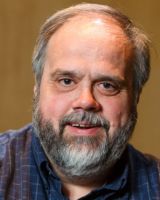
Joel M. Cohen is a Professor of Mathematics at the University of Maryland, College Park. He specializes in Algebraic Topology , Harmonic Analysis , and Functional Analysis , with a focus on Operator Theory and Differential Equations on Trees . His work bridges abstract mathematical theory with applications in Mathematical Physics and Geometric Analysis . His recent publications include studies on Carleson measures, harmonic structures on trees, and the Radon transform. He has received the 2006 Lester R. Ford award for his article in the American Mathematical Monthly. Key Collaborators: Flavia Colonna, David Singman, Massimo Picardello Courses Taught: Math 136 (Calculus for Life Sciences), Math 734 (Algebraic Topology) Cohen has served in various academic roles, including Former Member of the University Senate and Founding Member of the Coalition on Intercollegiate Athletics . His research has been published in journals such as Ann. Inst. Fourier Grenoble, American Journal of Mathematics, and Advances in Applied Mathematics.
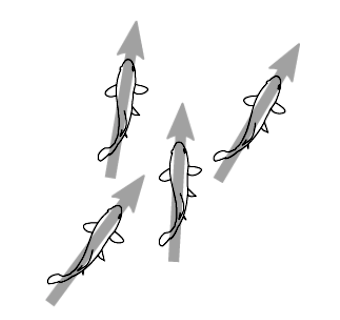
Professor Tim Rogers is affiliated with the University of Bath as a faculty member in the Department of Mathematical Sciences . He is actively involved in research spanning complex systems, network theory, and stochastic processes. PhD in Random Matrix Theory from King's College London (2010) His research focuses on emergent behavior in random systems , including: Collective Behavior : Crowd dynamics, lane formation, and noise-enhanced synchronization Epidemics & Networks : Spread prediction, node risk assessment, and misinformation impacts Ecology & Evolution : Trait emergence, species boundaries, and demographic noise effects Random Matrix Theory : Spectral analysis and applications to complex systems Publication trends reflect interdisciplinary work bridging Physics, Biology, and Mathematics , with a focus on network structures , stochastic modeling , and emergence phenomena . Scientific awards include: 2015 : Editor's Choice for Europhys. Lett. 109, 28005 2016 : Highlight of Journal of Physics A 2017 : Editor's Suggestion for Phys. Rev. E 92, 032708 He has supervised numerous PhD students and postdocs on projects related to stochastic dynamics , network modeling , and mathematical biology , with ongoing grants from agencies like EPSRC and The Leverhulme Trust .
Dr. Felipe Rincón is a Senior Lecturer in Algebra at Queen Mary University of London, affiliated with the School of Mathematical Sciences and the Centre for Combinatorics, Algebra and Number Theory. He works at the intersection of combinatorics, tropical geometry, and algebraic geometry, focusing on matroid theory and its connections to tropical geometry. Research Interests Combinatorics Matroid theory Tropical geometry Algebraic geometry His research explores how combinatorial structures like matroids influence geometric and algebraic objects, particularly through tropicalization. Key topics include tropical ideals, moduli spaces, and applications to compressed sensing. Recent Publication Trends Dr. Rincón’s work bridges abstract combinatorics (e.g., matroid subdivisions, positroids) with applied fields (e.g., signal processing). He investigates tropicalization of algebraic varieties, CSM cycles, and the balance properties of tropical ideals. Advising and Grants He advises PhD students Benjamain Dobres, Samuel-Louis Gardiner, and Xiaoan Yang, and leads the EPSRC-funded project Matroids in tropical geometry (2021-2023, £210,270). Labs and Teams Dr. Rincón is a core member of Queen Mary’s Combinatorial Algebraic Geometry Research Group and the Centre for Combinatorics, Algebra and Number Theory, collaborating on international programs like the Barcelona CRM Intensive Research Program (2026).
Martin Wells is the Charles A. Alexander Professor of Statistical Sciences at Cornell University, with joint appointments in Social Statistics, Clinical Epidemiology, and Industrial Labor Relations. Since joining Cornell in 1987, he has developed methodologies spanning Bayesian inference, tensor analysis, and machine learning applications in biomedicine and finance. His research integrates statistical theory with computational innovations, particularly in high-dimensional modeling and quantum-inspired algorithms. Recent work focuses on geometric approaches to tensor decomposition, misclassification correction methods, and phylodynamic models incorporating dormancy effects. Professor Wells teaches statistical methodology across disciplines including law, medicine, and biology, adapting analytical frameworks to diverse research contexts. His interdisciplinary collaborations extend to Weill Medical College and the School of Industrial and Labor Relations.
Vincent Vargas is a French mathematician and Associate Professor at the University of Geneva, where he joined in 2021 after holding a research position at CNRS. He completed his PhD in mathematics at Paris-Diderot University under the supervision of Francis Comets. His primary research interests include: Probability Mathematical Physics Statistical Mechanics Quantum Field Theory Gaussian Multiplicative Chaos Liouville Quantum Gravity Vargas has made significant contributions to the rigorous probabilistic construction of Liouville field theory and the proof of the DOZZ formula, work that was featured in Quanta Magazine. His research bridges mathematics and theoretical physics through probabilistic methods applied to quantum gravity. Analysis of his recent publications reveals a strong focus on mathematical structures underlying conformal field theory, with particular attention to Liouville quantum gravity across various geometries and the connections between probability and quantum physics. His notable scientific achievements have been recognized with prestigious awards: Marc Yor Prize (2019) George Pólya Prize (2022) Vincent Vargas has mentored several PhD students including Romain Allez, Yichao Huang, Guillaume Rémy, and Tunan Zhu. He has been actively involved in the academic community through organizing conferences and workshops, including a trimester at the Institut Henri Poincaré in 2015 and a conference on 'Probability and quantum field theory' in 2019. His professional activities extend to industry applications through his previous consultancy with Capital Fund Management (2007-2013) and his current role on the board of their research foundation.
David B. Dunson is the Arts and Sciences Distinguished Professor of Statistical Science at Duke University, with a joint appointment in the Department of Mathematics. He is also a Faculty Network Member of the Duke Institute for Brain Sciences. His research bridges theoretical statistics with practical applications across multiple scientific domains, focusing on developing new tools for probabilistic learning from complex data. Dr. Dunson earned his Ph.D. from Emory University in 1997 and his B.S. from Pennsylvania State University in 1994. Dr. Dunson's research focuses on developing statistical methods directly motivated by challenging applications in ecology/biodiversity, neuroscience, environmental health, and criminal justice/fairness. His methodological work spans models for low-dimensional structure in data (latent factors, clustering, geometric and manifold learning), flexible/nonparametric models (neural networks, Gaussian/spatial processes), Bayesian inference frameworks, and models for "object data" (trees, networks, images, spatial processes). His approach emphasizes creating practical tools that scientists and decision makers can use routinely. Dunson's recent publications demonstrate a strong focus on advancing Bayesian methodology for complex data structures across applications in biodiversity mapping, brain connectomics, environmental health, and infectious disease modeling. His work shows consistent innovation in nonparametric Bayesian methods, computational efficiency, and the handling of high-dimensional and structured data, always with an eye toward solving real-world scientific challenges. Dr. Dunson has received numerous prestigious awards including: IMS Medallion Lecturer (2019) Mitchell Prize from the International Society of Bayesian Analysis (2018) Carnegie Centenary Professorship (2018) DeGroot Prize (2017) COPSS Award: President's Award (2010) Fellow of the Institute of Mathematical Statistics (2010) His extensive publication record with numerous co-authors suggests an active research group mentoring graduate students and postdocs. His research on projects like biodiversity mapping (funded by a European Research Council Grant) and brain connectomics indicates well-funded research programs addressing significant scientific challenges across multiple domains. Dr. Dunson's work involves collaborations across multiple labs and teams, particularly through his affiliation with the Duke Institute for Brain Sciences. His research on biodiversity mapping, brain connectomics, and environmental health suggests involvement in large, interdisciplinary teams addressing complex scientific questions that require sophisticated statistical approaches.
Tamás Keleti is a Professor in the Department of Analysis at Eötvös Loránd University (ELTE) in Budapest, Hungary. He has been actively teaching various mathematics courses since at least 2006, including Univariate Analysis, Multivariate Analysis, Real Function Theory, Geometric Measure Theory, and Descriptive Set Theory. His office is located at Pázmány Péter sétány 1/c, Budapest, 1117 Hungary, with contact information including phone (36-1)-209-0555 / ext. 8510. Professor Keleti's research primarily focuses on Geometric Measure Theory , with special emphasis on Hausdorff Dimension and dimensional properties of sets in Euclidean spaces. His work investigates how dimension behaves under transformations, projections, and other operations, making significant contributions to understanding sets avoiding certain patterns and structures. He has developed deep connections between geometric measure theory, combinatorial geometry, and harmonic analysis. Analysis of his recent publication record reveals a consistent research trajectory in dimensional properties, with particular attention to Fubini-type theorems for Hausdorff dimension, Kakeya-type problems, and tiling problems with connections to Diophantine approximation. His work often bridges pure mathematical theory with applications in fractal geometry and combinatorial number theory. Scientific Awards and Achievements: Led ELTE's team to win the International Mathematics Competition for University Students in 2007 Led ELTE's team to win the International Mathematics Competition for University Students in 2008 As an advisor and mentor, Keleti has cultivated exceptional mathematical talent. In the 2007 and 2008 International Mathematics Competitions, his students Endre Csóka, Demeter Kiss, Péter Pál Pach, Roland Paulin, András Béla Rácz, and Balázs Strenner won first prizes, while Márton Hablicsek won a second prize. Several achieved remarkable individual rankings, with Roland Paulin placing 3rd overall and András Béla Rácz 5th in 2008. Professor Keleti has developed extensive course materials and problem sets for his analysis courses, contributing significantly to mathematics education at ELTE. His teaching spans from introductory analysis for first-year mathematics teacher training students to advanced topics like Geometric Measure Theory and Descriptive Set Theory for specialized students, demonstrating his commitment to both research and education.
Yuhan Jiang is a Research Fellow in the Department of Mathematics at the University of California, Berkeley, where they work under the mentorship of Professor Sylvie Corteel. Previously, Jiang completed their PhD at Harvard University under the supervision of Professor Lauren K. Williams. Their academic address is 931 Evans Hall, Berkeley. Education: PhD in Mathematics from Harvard University, advised by Professor Lauren K. Williams Dr. Jiang specializes in algebraic combinatorics, with research spanning polytope theory, matroid theory, and algebraic statistics. Their work connects combinatorial structures with algebraic geometry and representation theory, particularly focusing on coinvariant rings, poset dynamics, and Ehrhart theory. Jiang's research demonstrates a strong interplay between discrete mathematics and geometric structures, often revealing deep connections between seemingly disparate areas of mathematics. Analysis of Jiang's recent publications shows a consistent focus on combinatorial structures with geometric interpretations. Their work on alternating diagonal coinvariants, echelonmotion, and positroid polytopes demonstrates expertise in connecting algebraic combinatorics with geometric reasoning. The publications reveal a progression from foundational combinatorial structures to applications in probability (through Markov chain analysis) and statistics (through algebraic statistical models). A notable trend is Jiang's ability to bridge theoretical combinatorics with concrete computational results, as seen in their work on Ehrhart series and k-ellipses. Dr. Jiang teaches Math 185: Complex Analysis for Fall 2025 at UC Berkeley, indicating active participation in the department's educational mission. While specific grant information isn't provided in the available text, their productive research output across multiple mathematical domains suggests successful funding support for their scholarly activities.
Mihyun Kang is a Professor in the Institute of Discrete Mathematics at Graz University of Technology (TU Graz), leading the Combinatorics Group. She holds significant academic positions and has been recognized with a Heisenberg Fellowship (German Research Foundation) and a Friedrich Wilhelm Bessel Research Award (Alexander von Humboldt Foundation). Her research focuses on combinatorics, discrete probability, and algorithms, with a specialization in random graph theory. She contributes to editorial boards, including Random Structures & Algorithms . Her research interests emphasize high-dimensional graphs, percolation processes, and structural properties of random graphs. She explores topics such as phase transitions, graph enumeration, and algorithmic applications in combinatorial problems. Her work bridges theoretical foundations with practical applications in algorithm design and probabilistic modeling. Dr. Kang’s scientific achievements include pioneering studies on hypergraphs, bootstrap percolation, and the evolution of random graph processes. Her recent publications highlight advancements in understanding graph components, connectivity thresholds, and universality phenomena in random structures. She collaborates widely, contributing to conferences and international initiatives like the SFB “Discrete random structures: enumeration and scaling limits.” Her professional activities include advising doctoral students and supervising research projects at TU Graz. She leads the Combinatorics Group, which hosts the Graz Combinatorics Seminar and actively engages in academic outreach. Her contributions extend to textbook authorship, including Diskrete Mathematik für die Informatik , and she maintains an active presence in discrete mathematics education and research.
Paul Horn is a Professor and Associate Chair of Graduate Studies in the Department of Mathematics at the University of Denver, within the College of Natural Sciences and Mathematics. He earned his Ph.D. in Mathematics from the University of California, San Diego (2009), under the supervision of Fan Chung. Prior to joining DU in 2013, he held postdoctoral positions at Emory University and Harvard University. His research focuses on combinatorics, graph theory, and probability, with a particular emphasis on applying probabilistic, algebraic, and geometric methods to analyze networks and graphs. Dr. Horn co-organizes the Rocky Mountains-Great Plains Graduate Research Workshop in Combinatorics (GRWC) and contributes to the graph theory section of the Masamu Advanced Studies Institute in southern Africa. He also serves as the graduate coordinator in the Mathematics Department, overseeing graduate student advising and program administration. His work spans theoretical contributions to graph structure, stochastic processes on networks, and applications in multi-agent systems and sensor networks. Publications highlight his expertise in graph curvature, network robustness, and combinatorial optimization, reflecting his interdisciplinary approach to discrete mathematics and its real-world applications. His research bridges pure and applied mathematics, addressing challenges in algorithm design, network dynamics, and geometric graph theory. Horn’s advising and mentorship activities include guiding graduate and undergraduate students in mathematics, emphasizing hands-on research experiences through workshops and collaborative projects. His contributions to academic leadership and research dissemination are evident through editorial roles and conference organization in combinatorics and graph theory.
Gourab Ray is an Associate Professor in the Department of Mathematics and Statistics at the University of Victoria, Faculty of Science. He holds a PhD from the University of British Columbia, Vancouver. His research focuses on the intersection of probability theory, geometry, and mathematical physics, particularly large-scale patterns in stochastic models inspired by physics. Key areas include random planar maps, random walks, lattice spin models, dimer models, Gaussian free field properties, and Liouville quantum gravity. Recent work emphasizes establishing Gaussian free field-like behaviors in dimer models across various graphs and surfaces. He teaches courses such as MATH 236: Introduction to Real Analysis and MATH 555: Topics in Probability. His publications span leading journals including Inventiones Mathematicae , Annals of Probability , and Probability Theory and Related Fields . Notable contributions include studies on unimodular hyperbolic triangulations, half-planar map classifications, and conformal invariance in dimer models. No specific awards are listed for Dr. Ray, though his work has been recognized in peer-reviewed venues. He actively contributes to academic service, including roles on graduate committees and research collaborations. His research group engages with theoretical and applied aspects of probability theory, often bridging discrete and continuous mathematical frameworks.
Jonathan Weare is a Professor of Mathematics at the Courant Institute of Mathematical Sciences, New York University. He holds affiliations with the Faculty of Arts and Science and the Graduate School of Arts and Science. His academic journey includes roles as an Associate Professor at the University of Chicago (2014–2019) and Assistant Professor (2011–2014), following postdoctoral work as a Courant Instructor at NYU. He earned his Ph.D. in Mathematics from UC Berkeley in 2007. His research focuses on stochastic algorithms and models, with applications in astrophysics, biophysics, computational chemistry, and climate science. Key areas include Monte Carlo methods, rare event simulation, and machine learning-driven scientific analysis. Collaborations with domain experts ensure his work addresses real-world challenges in diverse fields. Recent publications emphasize advancements in trajectory stratification, rare event prediction using machine learning, and efficient algorithms for high-dimensional problems. Notable contributions include the BAD-NEUS framework and AI-based solar system instability predictions. His group’s interdisciplinary approach bridges computational methods with scientific inquiry. Weare has advised numerous students and mentored postdocs, fostering talent in applied mathematics and computational science. His work on Mercury’s orbital dynamics and extreme weather prediction showcases the societal impact of his research. Current projects explore AI applications in weather modeling and rare event analysis, leveraging cutting-edge machine learning techniques. Labs/Teams: His research group at Courant develops stochastic algorithms and collaborates with interdisciplinary teams in computational chemistry, climate science, and astrophysics. Key collaborations include the University of Chicago and Columbia University.
Professor Stefan Glock is an Assistant Professor of Discrete Mathematics at the University of Passau's Faculty of Computer Science and Mathematics, a position he has held since September 2022. Prior to this appointment, he spent three years as a Junior Fellow at the Institute for Theoretical Studies at ETH Zurich, following the completion of his doctorate at the University of Birmingham. Stefan Glock received his mathematics education at Technische Universität Ilmenau from 2009 to 2014, then pursued his PhD at the University of Birmingham, which he completed in 2018. His doctoral dissertation, "Decompositions of Graphs and Hypergraphs," was the runner-up for the Richard-Rado-Preis 2018. Professor Glock's research focuses on discrete mathematical structures, with particular emphasis on their asymptotic properties. His work spans several interconnected fields of combinatorics: Extremal Combinatorics : Investigating the maximum or minimum possible size of mathematical structures satisfying certain properties Probabilistic Combinatorics : Applying probability theory to solve combinatorial problems Graph Theory : Studying properties of graphs and networks Ramsey Theory : Examining conditions under which order must appear in large structures Design Theory : Creating arrangements of elements satisfying specific balance properties Discrete Geometry : Analyzing geometric problems with discrete structures Analysis of Professor Glock's recent publications reveals a consistent focus on solving long-standing open problems in combinatorics using innovative methods that combine probabilistic techniques with structural insights. His work often bridges theoretical mathematics with applications in theoretical computer science, particularly in the analysis of algorithms and network structures. A significant portion of his research addresses fundamental questions about graph and hypergraph decompositions, which have implications for coding theory, cryptography, and network design. Professor Glock has received notable recognition for his contributions to mathematics: Runner-up for the Richard-Rado-Preis 2018 for his dissertation "Decompositions of Graphs and Hypergraphs" Awarded funding through the prestigious DFG Emmy Noether Programme in 2024 for his research group on "the interplay of structure and randomness in mathematics" As a faculty member at the University of Passau, Professor Glock leads the Discrete Mathematics research group and actively collaborates with mathematicians worldwide. He has established a strong research program that has attracted funding for academic visitors and supports multiple research projects. His approach to mathematical problems emphasizes developing new methods that have far-reaching implications beyond the specific problems being solved. Professor Glock's research group at the University of Passau focuses on the interplay between structure and randomness in discrete mathematics. The group maintains active collaborations with leading institutions including ETH Zurich, University of Birmingham, and various research centers across Europe. Through the DFG Emmy Noether Programme funding, his group is expanding its research on combinatorial structures and their applications.
Professor Guoyin Li is a faculty member at the School of Mathematics & Statistics , University of New South Wales (UNSW Sydney). He holds a Ph.D. from The Chinese University of Hong Kong (2007) and has been at UNSW since 2011, currently serving as Professor and Research Director. Research Interests His work spans optimization , variational analysis , and multilinear algebra , with applications in robust optimization , structural engineering , and machine learning . He specializes in nonconvex nonsmooth optimization , tensor eigenvalue problems , and exact semi-definite programming relaxations . Recent Publications His articles focus on robust optimization for structural design, nonlinear approximation techniques, and conic programming for uncertain data. Key journals include Foundations of Computational Mathematics , Mathematical Programming , and Computer Methods in Applied Mechanics and Engineering . Awards and Grants Fellow of the Australian Mathematical Society (2023) 2022 AustMS Medal 2024 Marguerite Frank Award ARC Discovery Grants (2021-2023, 2025-2027) ARC Research Hub Project (2017-2021) Professional Roles He serves on editorial boards of SIAM Journal on Optimization , Optimization Letters , and Journal of Optimization Theory and Applications , and has delivered plenary lectures at international conferences in Austria, Spain, and Canada.
Luigi Ambrosio is a Full Professor at the Scuola Normale Superiore di Pisa (SNS), specializing in geometric measure theory, optimal transport, and partial differential equations. His research focuses on the interplay between geometric analysis, functional analysis, and calculus of variations, with applications to metric measure spaces and stochastic processes. He has organized numerous conferences and schools on optimal transport and geometric analysis, including the 2025 'XXXV Convegno Nazionale di Calcolo delle Variazioni.' Key research interests include the theory of currents, regularity of flows, and the application of optimal transport to problems in probability and geometry. Notable contributions include foundational work on metric Sobolev spaces, RCD spaces, and the analysis of geometric flows. Ambrosio frequently collaborates with leading institutions and has supervised numerous seminars on topics ranging from gradient flows to non-smooth geometric structures. His publications span over 150 papers, addressing topics such as the regularity of vector fields, entropy flows in Carnot groups, and the stability of action functionals. Recent works (2021–2025) explore superposition principles for currents, sharp PDE estimates for random matching, and embedding theorems for metric spaces. Ambrosio is also active in academic leadership, contributing to editorial boards and international research networks.