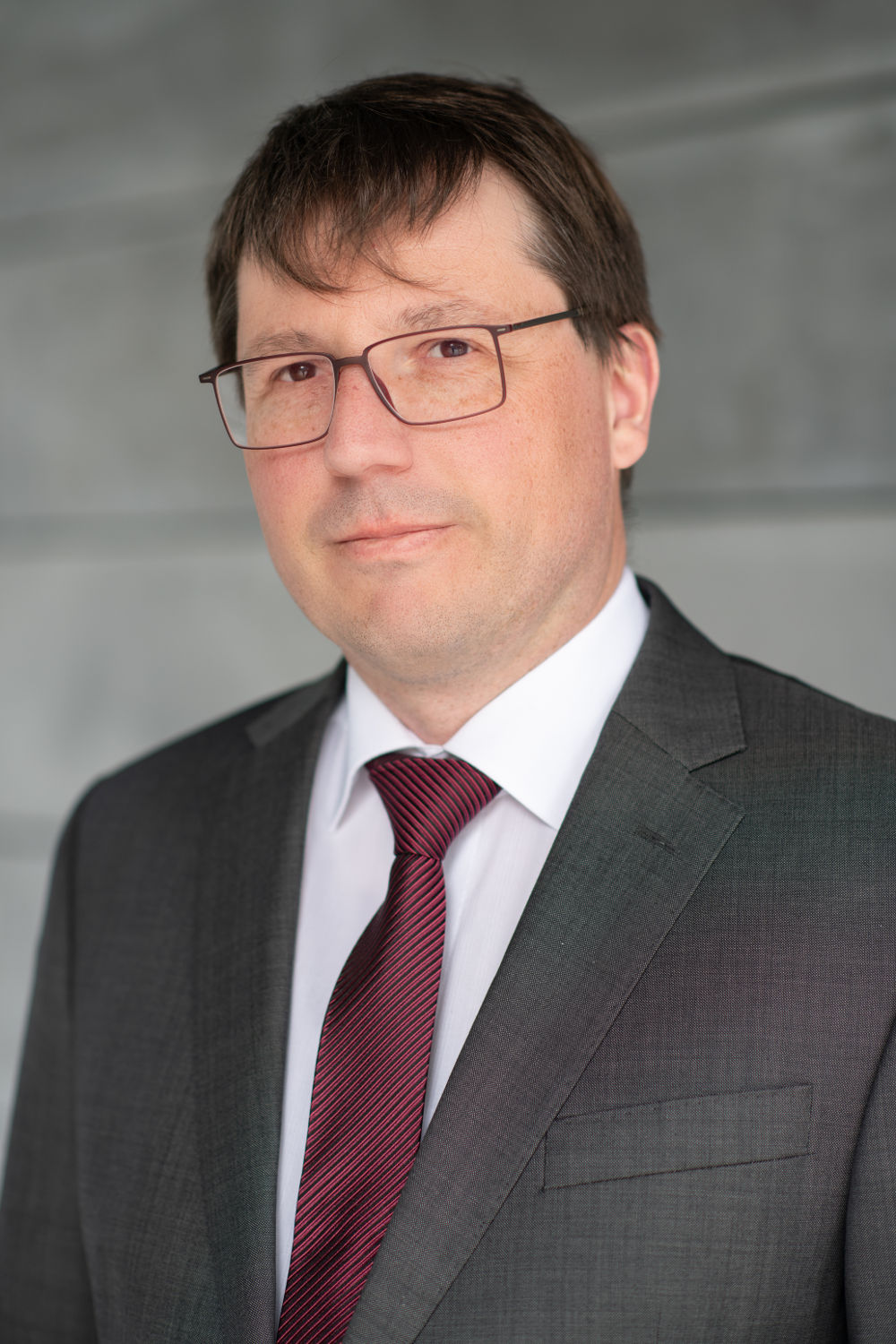
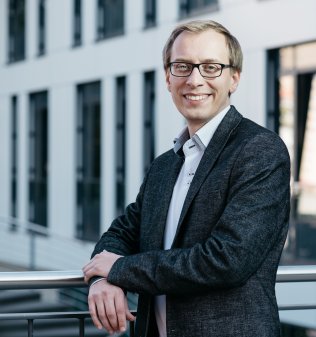
Robert Stelzer is a Professor and Head of the Institute of Mathematical Finance at Ulm University. His research focuses on stochastic processes, financial mathematics, and statistical methodologies. He has supervised numerous PhD students and organized international scientific events. Key contributions include work on multivariate stochastic volatility models, Lévy processes, and time series analysis. Awards include the Förderpreis and Promotionspreis for his doctoral work. He holds editorial roles in leading journals and actively participates in academic service. Research interests span financial mathematics, stochastic volatility, and extreme value theory. His publications explore CARMA processes, supOU models, and geometric ergodicity. Teaching includes courses on financial mathematics, stochastic analysis, and econometrics. Supervised students have contributed to advancements in stochastic finance and statistical theory. Organized events include workshops on extreme value theory and financial mathematics. Editorships include Statistics and Risk Modeling, reflecting his leadership in statistical research. His work bridges theoretical probability and practical applications in finance and risk management.
Prof. Dr. Anita Winter is a Professor at the University of Duisburg-Essen within the Faculty of Mathematics. Her research focuses on Probability Theory, Stochastic Processes, and their applications in areas like Mathematical Biology and Statistical Physics. She holds a prominent position in the field, with extensive contributions to branching processes, measure-valued processes, and tree-valued stochastic dynamics. Her work integrates algebraic and geometric structures with probabilistic methods, such as algebraic measure trees and pruning processes. She has published extensively in leading journals like *Stochastic Processes and their Applications* and *The Annals of Probability*. Her research often explores the interplay between population dynamics and spatial structures, including studies on coalescent processes, random graphs, and evolutionary models. Anita Winter has taught advanced courses in Probability Theory, Levy processes, and stochastic analysis across multiple semesters, reflecting her deep engagement with both research and education. Her team assistance, led by Dagmar Goetz, supports her academic activities and administrative coordination.
Professor Joscha Prochno is a faculty member at the University of Passau since April 2021, holding the Chair of Functional Analysis within the Faculty of Computer Science and Mathematics . His academic journey includes positions at Kiel University (diploma and doctorate), University of Alberta (postdoc), Johannes Kepler University Linz (Senior PostDoc), University of Hull, and Karl Franzens University Graz (habilitation in 2021). Research focuses on high-dimensional phenomena at the intersection of analysis, geometry, and probability theory. Key article trends include random projections, Schatten and Orlicz classes, large deviations, and fragmentation processes in high dimensions. Scientific Awards : Austria's highest mathematics prize (2021) Editorial Roles : Co-editor of Mathematische Nachrichten and Journal of Complexity
Dietmar Weinmann is a Senior Researcher at the CNRS (Centre National de la Recherche Scientifique) affiliated with the IPCMS (Institut de Physique et Chimie des Matériaux de Strasbourg) and the University of Strasbourg. His work focuses on theoretical solid-state physics, particularly quantum effects in electronic properties, mesoscopic physics, and quantum transport phenomena. His research explores non-local heating in quantum thermoelectrics, scanning gate microscopy applications in graphene and semiconductor heterostructures, power dissipation asymmetry in quantum point contacts, and orbital magnetization mechanisms in mesoscopic systems. Key themes include electron correlations, spin-orbit interactions, and disorder effects in nanoscale devices. Scientific awards include the Marie Curie Fellowship during his postdoctoral work at SPEC Saclay. He teaches an elective course on Electronics for Quantum Science and Technology at the University of Strasbourg. As a member of the Mesoscopic Quantum Physics team, his research combines theoretical modeling with experimental collaborations on quantum transport imaging and inverse problem solving via machine learning.
Gabriele Gerlach is a Professor at the Carl von Ossietzky University of Oldenburg since 2007, affiliated with the Institute of Biology and Environmental Sciences and leading the Department of Biodiversity and Evolution of Animals. She also serves as an Adjunct Senior Scientist at the Marine Biological Laboratory (USA) and an Adjunct Professor at the Boston University Marine Program. Education : Ph.D. (1990) and Habilitation (2000) in Zoology and Ecology at the University of Constance, Germany. Research Interests : Biodiversity, evolutionary biology, and ecology combined with mathematical approaches. Her work focuses on operator theory, spectral analysis, and dynamical systems applied to biological and environmental questions. Publications : Recent contributions include mathematical frameworks for kernel operators, transition semigroups, and spectral convergence, bridging abstract analysis with computational biology.
Priv.-Doz. Dr. Susanne Koch is a Senior Lecturer (Akademische Oberrätin) for Teacher Education in the Department of Mathematics at the University of Hamburg. She holds a PhD in Probability Theory from Georg-August-University Göttingen (2000) and has extensive experience in academic teaching and research. Her primary role involves teacher training in mathematics, focusing on bridging didactic and scientific aspects of problem-solving in education. Research Interests: Mathematical Statistics and Stochastic Processes Applications of Probability Theory in Education Discrete Mathematics and Stochastic Reasoning Development of Digital Tools for Mathematics Education Recent Research Trends: Her work combines foundational stochastic analysis with practical educational methodologies, emphasizing problem-solving frameworks for primary and secondary education. Key contributions include studies on Dirichlet forms, random walks, and pedagogical strategies for integrating advanced mathematical concepts into teacher training programs. Awards: Double Prize Winner of the 2006 Pilot Project for Teaching Excellence at Göttingen University. Advising & Grants: Leads academic advising in mathematics education, coordinating courses like 'Fachwissenschaftliche Hintergründe schulmathematischer Inhalte' and 'Grundkonzepte der diskreten Mathematik'. Active in curriculum development for teacher education programs. Lab/Team: Member of the ST Group (Mathematical Statistics and Stochastic Processes) at the Department of Mathematics, contributing to interdisciplinary research and educational innovation.
Prof. Dr. Peter Bürgisser is a Professor at the Technical University of Berlin, affiliated with the Institute of Mathematics and the Algorithmic Algebra research group within Faculty II - Mathematics and Natural Sciences. His research focuses on algebraic complexity theory, computational algebra, and geometric methods in computer science. Bürgisser has made significant contributions to topics including invariant theory, numerical analysis of algorithms, and the computational complexity of algebraic problems. He has authored influential books such as *Algebraic Complexity Theory* and has published extensively in top-tier journals like the Journal of the ACM and SIAM Journal on Computing. His work includes developing polynomial-time algorithms for problems in invariant theory, analyzing the condition numbers of algebraic varieties, and studying the computational aspects of semialgebraic sets. Bürgisser's research also intersects with probability theory, particularly in understanding the statistical properties of zeros of random polynomials and the geometry of random algebraic varieties. Recent trends in his publications emphasize geometric complexity theory, non-commutative optimization, and the application of numerical methods to algebraic problems. He has collaborated with researchers such as Felipe Cucker, Michael Walter, and Avi Wigderson on foundational topics in computational mathematics and theoretical computer science. Bürgisser's office is located in room EB 116, and his contact information includes the email pbuerg@math.tu-berlin.de. His research has been supported through grants and collaborations, though specific grant details are not explicitly mentioned in the provided texts.
Professor Christoph Thäle is a faculty member in the Faculty of Mathematics at Ruhr-Universität Bochum . His research focuses on stochastic geometry, geometric probability, limit theorems for random structures, and applications of Malliavin calculus and Stein's method. He has supervised numerous PhD and master's students, including Tristan Schiller, Nils Heerten, and Kathrin Meier. His work bridges theoretical probability with geometric analysis, particularly in high-dimensional spaces. Research Interests: Stochastic Geometry, Convex Geometry, Limit Theorems, Random Structures in High Dimensions Team Members: Postdocs (Panagiotis Spanos, Ercan Sönmez), PhD students (Philipp Tuchel, Bahareh Yousefi), and collaborators like Anna Gusakova and Zakhar Kabluchko. Key contributions include studies on random polytopes, Poisson hyperplane tessellations, and geometric analysis in hyperbolic spaces. His recent publications (2023–2025) explore intersection probabilities, radial spanning trees, and large deviations in high-dimensional settings. Thäle's research has been supported by collaborations with institutions like the University of Duisburg-Essen and the University of Osnabrück.
Prof. Dr. Shirly Geffen is a Mathematics Professor at the University of Münster, affiliated with the Mathematisches Institut within the Faculty of Mathematics and Computer Science . She serves as an Investigator in Mathematics Münster and is a member of the Collaborative Research Centre (CRC) 1442 “Geometry: Deformations and Rigidity” . Her research focuses on operator algebras and mathematical physics, with active involvement in projects exploring Models and universes (T3) , Groups and actions (T4) , and Random discrete structures and their limits (T8) . Her research expertise lies in operator algebras and mathematical physics, with a particular emphasis on C*-algebras, dynamical systems, and their interplay with geometric and group-theoretic structures. She investigates topics such as boundary actions of hyperbolic groups, tracially amenable actions, and Z-stability of crossed products. Her work also addresses the classification of C*-algebras, nuclear dimension, and the structure of partial dynamical systems. Additionally, she explores applications of operator algebras to problems in geometric group theory and noncommutative geometry. Prof. Geffen's recent publications reflect her contributions to the classification of C*-algebras, the study of crossed products arising from group actions, and the analysis of dynamical systems. Her work often bridges operator algebras with geometric and topological methods, addressing foundational questions in noncommutative geometry and functional analysis. In terms of academic contributions, Prof. Geffen has advised several students, though specific names are not listed in the provided texts. Her research has been supported through her involvement in collaborative projects and the CRC 1442 framework. She is part of the Operator Algebras Research Group at the University of Münster and collaborates within the Mathematics Münster cluster, contributing to interdisciplinary initiatives in geometry and deformation theory.
Vincent Guirardel is a Researcher at the Rennes Institute for Research in Mathematics (IRMAR) within the University of Rennes 1. He specializes in Geometric Group Theory, focusing on hyperbolic groups, group actions on trees, and JSJ decompositions. His research explores topics such as boundary amenability, automorphism groups, and the interplay between algebraic structures and geometric properties. Teaching responsibilities include the 'Mathematical Tools 2' course (OM2) for first-year students, emphasizing Markov chains, martingales, and linear algebra. He has developed course materials, tutorials, and organized workshops like 'Maths in jeans.' Distance learning resources, including video lectures and problem sets, are hosted on Moodle. Key research contributions include studies on hyperbolically embedded subgroups, rotating families in hyperbolic spaces, and the isomorphism problem for hyperbolic groups. His work often involves collaborations with leading mathematicians like Mladen Bestvina and Gilbert Levitt. Publications span over two decades, with notable contributions to Annals of Mathematics, Geometry & Topology, and Memoirs of the AMS. Recent preprints address boundary amenability of Out(Fₙ) and vastness properties of automorphism groups of RAAGs. His academic activities include advising on curriculum design and maintaining an active presence in geometric group theory through conferences, workshops, and editorial work.
Erika Roldán Roa is a mathematician with academic affiliations at Ohio State University (Visiting Assistant Professor, 2019-2020) and Technische Universität München (Marie Skłodowska-Curie Fellow, 2020-2022). She holds a Ph.D. in Probability and Statistics from CIMAT (2018) and has conducted postdoctoral research at institutions like EPFL and Ohio State. Her work bridges stochastic topology, combinatorics, and educational technology, focusing on topics like cubical sliding puzzles, Eden growth models, and extremal topological problems in polyominoes. Education: Ph.D. in Probability and Statistics, CIMAT (2018) M.Sc. in Mathematics, CIMAT (2014) B.Sc. in Mathematics, Universidad de Guanajuato (2010) Research Interests: Her research spans stochastic topology, extremal combinatorics, and applications of discrete geometry to puzzles and games. She explores configuration spaces, topological properties of random structures, and innovative educational approaches like the Music Math Project, which integrates music and mathematics. Awards: Includes the Marie Skłodowska-Curie Fellowship (2020-2022), Arana-Ordaz Prize (2019), and Sofia Kovalevskaia Prize (2019). She has also received grants from CONACYT and CIMAT. Grants & Outreach: Developed workshops in marginalized communities using music and math, and contributed to software tools like the Eden Model analysis package. Active in science popularization through articles and outreach programs. Labs/Teams: Collaborated on projects like the Eden Model (topology analysis software) and extremal animal configurations, often involving interdisciplinary teams in mathematics and computer science.
Sebastian Hensel is a Researcher at the Hausdorff Center for Mathematics (HCM) at the University of Bonn since September 2021, under the mentorship of Prof. Tim Laux. He holds a PhD in Mathematics from the Institute of Science and Technology Austria (IST Austria), where he studied under Prof. Julian Fischer. His research focuses on partial differential equations, particularly interface evolution problems, fluid mechanics, stochastic homogenization, and stochastic PDEs. He has contributed to topics like mean curvature flow, free boundary problems, and weak-strong uniqueness principles. Education includes a PhD (2021, IST Austria), Master of Science in Mathematics (2017, Humboldt-Universität zu Berlin), and Bachelor degrees in Mathematics (2015, Freie Universität Berlin) and Business Administration (2013, Freie Universität Berlin). His work explores geometric PDEs, including multiphase systems, contact angle dynamics, and stochastic influences. Key contributions include stability analyses of evolving interfaces and convergence studies of phase-field models. His articles often bridge analytical rigor and applied mathematics, addressing challenges in nonlinear dynamics and calculus of variations. He has presented research at international conferences such as FBP 2020, SIAM MS20, and Equadiff 2019. His academic activities include seminars at institutions like TU Chemnitz, University of Regensburg, and Max-Planck Institute for Mathematics in the Sciences, Leipzig.
Prof. Dr. Patrick Dondl is a Professor of Applied Mathematics at the Albert Ludwig University of Freiburg , leading the Department of Applied Mathematics. He specializes in Calculus of Variations , Partial Differential Equations , and Scientific Computing , with a focus on interdisciplinary applications in biomaterials and biomechanics. His research includes projects funded by the Cluster of Excellence livMatS, such as the non-local meta-material of the pomelo peel for bio-inspired long-fiber reinforcement. He supervises doctoral student Simone Hermann and collaborates on studies analyzing plant mechanics (e.g., cactus branch abscission, Carex pendula structural adaptations). Prof. Dondl’s work bridges theoretical mathematics with practical applications, including homogenization limits of elastic networks and computational models of plant morphology. His office is located at Room 217, Hermann-Herder-Straße 10, Freiburg, and he holds regular office hours on Mondays 14:15–15:45.
Alberto Espuny Díaz is a postdoctoral researcher at the Institute of Computer Science, Faculty of Mathematics and Computer Science, Universität Heidelberg, where he is part of the Theoretical Computer Science and Discrete Mathematics group led by Prof. Felix Joos, supported by a DFG-funded project. He previously held a postdoctoral position at TU Ilmenau in the Large Networks and Random Graphs group under Univ.-Prof. Dr. Yury Person. He completed his PhD at the University of Birmingham under the supervision of Daniela Kühn and Deryk Osthus. Starting in September, he will take up a position as professor agregat at Universitat de Barcelona. Research Interests: Alberto's research lies at the intersection of combinatorics and theoretical computer science. His primary focus is on extremal and probabilistic combinatorics , with significant work in random graphs , random geometric graphs , graph resilience , Hamiltonicity , spanning structures , and additive combinatorics . He investigates threshold phenomena, embedding problems, and structural properties of graphs under random perturbations. The most recent publications reveal a strong trend in analyzing the resilience and structural richness of random and perturbed graphs, particularly focusing on Hamilton cycles, spanning trees, and graph factors. His work frequently combines probabilistic methods with deep structural insights from extremal graph theory, often targeting sharp thresholds and robustness in discrete systems. Scientific Awards: Ramon Llull Prize (2024) for PhD thesis Best Pure Maths Poster Award, University of Birmingham (2019) Second Best Poster Award, LSE (2019) Third Best Poster Award, LSE (2018) Advising and Grants: While no formal students are listed, Alberto has supervised dissemination and editorial work through student journals. He is currently supported by a DFG-funded project at Heidelberg. He has been actively involved in organizing academic events and committees, including serving on the grants committee for BYMAT and organizing the Combinatorics Research Seminar in Heidelberg. Labs and Teams: He is a member of the Theoretical Computer Science and Discrete Mathematics group at Universität Heidelberg and previously worked in the Large Networks and Random Graphs group at TU Ilmenau. He is also affiliated with the Young Mathematicians community through the Real Sociedad Matemática Española and has coordinated national student events.
Prof. Dr. Norbert Henze is a distinguished statistician at the Institute of Stochastics , Karlsruhe Institute of Technology . His work spans theoretical and applied statistics, with a focus on goodness-of-fit testing , geometric extreme value theory , and multivariate statistical analysis . Research Interests: Statistical Goodness-of-Fit Tests Geometric Extreme Value Theory Multivariate Statistics Key Contributions: Developed novel tests for multivariate normality using Fourier methods and partial differential equations Analyzed limit laws for nearest neighbor distances in high-dimensional spaces Explored stochastic phenomena in Pólya's urn model and random point distributions Students & Collaborations: Supervised 4 PhD students and 22 diploma/master's theses Collaborated with international experts (B. Ebner, M.D. Jiménez-Gamero, S.G. Meintanis) Recent Publications: 2024: Spherical data testing in Statistical Papers 2023: Weibull distribution tests in Annals of Institute of Statistical Mathematics 2022: Complex symmetry tests in TEST Notable Methodological Innovations: Unified empirical process approaches, harmonic oscillator-based normality tests, and geometric extreme value characterizations.