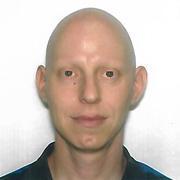
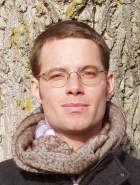
Werner Ballmann is a renowned mathematician specializing in differential geometry and geometric analysis. He served as Full Professor at the University of Bonn (1989–2016) and the University of Zürich (1987–1989). Since 2007, he has been a Scientific Member and Director of the Max Planck Institute for Mathematics (2007–2019). His research focuses on nonpositive curvature, spectral theory, and geometric structures on manifolds. Ballmann holds a Diplom (1976) and Promotion (1979) from the University of Bonn, with a Habilitation in 1984. His work includes groundbreaking studies on the geometry of manifolds, hyperbolic spaces, and orbifolds. Recent articles address spectral instability, eigenvalue analysis, and stochastic processes on geometric structures. Notable contributions include investigations into Martin boundaries, diffusion discretizations, and the interplay between geometry and spectral properties. Ballmann has authored influential textbooks such as Lectures on Kähler Manifolds (2006) and Introduction to Geometry and Topology (2018). His research bridges geometric analysis, topology, and probability, with applications in manifold theory and group actions.
Raimund Seidel is a Professor in the Department of Computer Science at Universität des Saarlandes, leading the Chair of Theoretical Computer Science. He is actively involved in research and teaching, focusing on foundational aspects of algorithms and data structures, particularly in computational geometry. His primary research interests include theoretical computer science , design and analysis of efficient algorithms , geometric data structures , randomized algorithms , and combinatorial geometry . His work addresses fundamental problems such as planar point location, convex hull computation, and efficient encoding of triangulations. He also investigates geometric algorithms under the transdichotomous model, leveraging word-level parallelism. The selected publications reflect a long-standing contribution to computational geometry and data structure theory , with a focus on randomized methods and exact complexity analysis. His research combines theoretical rigor with practical implications for algorithm design. Award or honor not found in the provided text. Prof. Seidel has advised several students, including Alexander Malkis , Ralf Osbild , Udo Adamy , Christian Sohler , and others, many of whom have gone on to academic and research careers. No explicit information about grants or funding is available in the text. He leads a research group within the Department of Computer Science at Universität des Saarlandes, mentoring current staff such as László Kozma , Giorgi Nadiradze , and Lavinia Dinu . The group maintains active research in theoretical computer science and computational geometry.
Ulrich Meyer is a Professor at the Institute for Computer Science at Goethe University Frankfurt. He serves as a prominent researcher in algorithms for big data, with extensive contributions to parallel and external-memory graph algorithms. His work spans theoretical foundations and practical implementations for processing large-scale data sets. Spokesperson of the DFG priority program (SPP 1736) on Algorithms for Big Data in Germany SEA23 Symposium on Experimental Algorithms, Steering Committee Chair ALENEX23 Algorithm Engineering and Experiments, Program Committee Member Professor Meyer's research interests focus on the theoretical and experimental aspects of processing large data sets on advanced computational models. His work particularly emphasizes parallel and external-memory graph algorithms, with recent focus on efficient large-scale network generation according to various stochastic models. His research has produced significant contributions including the parallel Delta-Stepping algorithm (which received the ESA Test of Time Award in 2019) and the first BFS approach with sublinear I/O. He has also explored more specialized topics like energy-efficient sorting (with records in the JouleSort competition 2009/10 and the Germany Land of Ideas Award) and fragile computing (which earned him a best-paper award at ESA 2019). His recent publications demonstrate a strong focus on graph algorithms, network generation, and parallel computing techniques. The research trends show consistent advancement in scalable algorithms for massive graphs, with particular emphasis on efficient sampling methods, shortcutting techniques, and communication-free distributed approaches. His work bridges theoretical computer science with practical engineering considerations for real-world big data applications. ESA Test of Time Award 2019 for Parallel Delta-Stepping algorithm Records in the JouleSort competition 2009/10 Germany Land of Ideas Award Best-paper award at ESA 2019 for fragile computing research Professor Meyer has made substantial contributions to the academic community through his leadership in the DFG priority program on Algorithms for Big Data, which has fostered significant research collaborations across Germany. His extensive publication record in top venues demonstrates sustained research productivity and impact in the algorithms community. While specific grant details aren't provided in the text, his role as spokesperson for a major DFG priority program indicates substantial research funding and leadership responsibilities. His work appears to be conducted within collaborative research environments focused on algorithm engineering and experimental evaluation. His research appears to be conducted within the Institute for Computer Science at Goethe University Frankfurt, likely involving collaborations with other researchers in the Algorithms for Big Data priority program. The extensive list of co-authored publications suggests active participation in research teams focused on parallel algorithms, graph processing, and network generation.
Sebastian Hensel is a Professor of Pure Mathematics at the Mathematical Institute of Ludwig Maximilian University of Munich (LMU), where he also serves as the Dean of Studies. His research focuses on the intersection of low-dimensional topology and geometric group theory, with emphasis on mapping class groups, handlebody groups, and diffeomorphism groups of surfaces. He leads the Geometry and Topology Working Group and is actively involved in teaching advanced seminars. Hensel received his PhD from the University of Bonn in 2011 under Ursula Hamenstädt. Before joining LMU, he held positions as a Dickson Instructor at the University of Chicago and as a temporary academic councilor in Bonn. His research employs geometric methods to study algebraic structures in topological spaces, particularly surfaces and 3-manifolds. Scientific Awards: Dickson Instructor Fellowship, University of Chicago Teaching & Advising: Hensel regularly teaches courses on Riemannian geometry, geometric group theory, and manifold topology. He currently advises bachelor and master's theses in geometry/topology and organizes block seminars. As Dean of Studies, he oversees academic programs at the Mathematical Institute. Affiliations: Member of the Geometry and Topology Group at LMU, with collaborations spanning multiple institutions including TUM and international partners.
Prof. Sebastian Hensel is a Professor of Pure Mathematics at Ludwig Maximilian University of Munich (LMU), serving as Dean of Studies at the Mathematical Institute. His research focuses on low-dimensional topology, geometric group theory, and their interplay with mapping class groups, handlebody groups, and diffeomorphism groups of surfaces. He holds a PhD from the University of Bonn (2011) and has held positions at the University of Chicago as a Dickson Instructor and in Bonn before joining LMU. Research interests include algebraic and geometric properties of mapping class groups, handlebody groups, and their actions on geometric spaces. Recent work explores applications of geometric group theory to surface diffeomorphism groups. Preprints and publications span topics like thick laminations, curve graphs, and handlebody group rigidity. Teaching responsibilities include courses on geometric group theory, Riemannian geometry, and topology. He co-organizes advanced seminars such as the Geometry and Dynamics of Homeomorphisms and Representation Theory block seminars. His work also extends to pedagogical projects, including a textbook on representation theory for students and translations of foundational papers like Hilbert's ninth-degree equation. Current sabbatical (Winter 2024/25) involves collaboration on seminars while maintaining research output. The Geometry and Topology Working Group at LMU is central to his academic activities.
Manuel Penschuck is a Research Fellow at the Institute of Computer Science , Goethe University Frankfurt, Germany. His research focuses on algorithm engineering, graph theory, and scalable network generation, with emphasis on parallel computing, I/O-efficient algorithms, and random graph models. He actively contributes to conferences like ESA, SEA, and IPDPS, and has co-authored publications in top venues including LIPIcs , IEEE Transactions , and SIAM . His work includes engineering algorithms for non-linear preferential attachment , parallel shuffling , and hyperbolic graph generation . He has co-organized program committees for ESA, EuroPar, and SEA, and his collaborations span institutions such as MPI-INF, TU Darmstadt, and Australian National University. Recent publications highlight advances in uniform graph sampling, geometric network models, and distributed systems. His research integrates theoretical rigor with practical implementation, addressing challenges in big data and high-performance computing. He is a key contributor to the Networkit toolkit for large-scale network analysis.
Dr. Arie Levit is a Senior Lecturer (tenure track) in the Department of Theoretical Mathematics at Tel Aviv University's School of Mathematics, a position he has held since 2021. Previously, he served as a Gibbs Assistant Professor at Yale University from 2017. His academic career centers on pure mathematics with emphasis on structural properties of discrete groups and dynamical systems. His educational background includes: B.A in Mathematics from the Hebrew University of Jerusalem (2004) M.A in Mathematics from the Hebrew University of Jerusalem (2012) Ph.D. in Mathematics from the Weizmann Institute of Science (2017) under Prof. Tsachik Gelander Levit's research spans discrete groups, geometric and analytic group theory, and ergodic theory, with significant contributions to lattice theory, invariant random subgroups, character rigidity, and group stability. His work integrates algebraic, geometric, and probabilistic frameworks to solve fundamental problems in classification and rigidity of group actions, particularly in non-Archimedean and hyperbolic settings. Analysis of his 14 publications (2014-2024) reveals evolving focus from foundational lattice theory toward contemporary stability phenomena and character theory, with 60% of recent work (2022-2024) addressing permutation stability, Hilbert-Schmidt representations, and ergodic properties of group actions. Key methodological threads include the application of ergodic theory to group-theoretic classification and the development of analytical tools for stability problems. His scholarly recognition includes: Klein Prize (2017) ISF-BSF research grant (2020) As principal investigator of the ISF-BSF grant, Levit leads research on group stability and ergodic theory. His extensive collaborations with Gelander, Lubotzky, and Lazarovich demonstrate active mentorship within the global mathematics community. His work is conducted within Tel Aviv University's Theoretical Mathematics department, which maintains strong international partnerships in geometric group theory and dynamics.
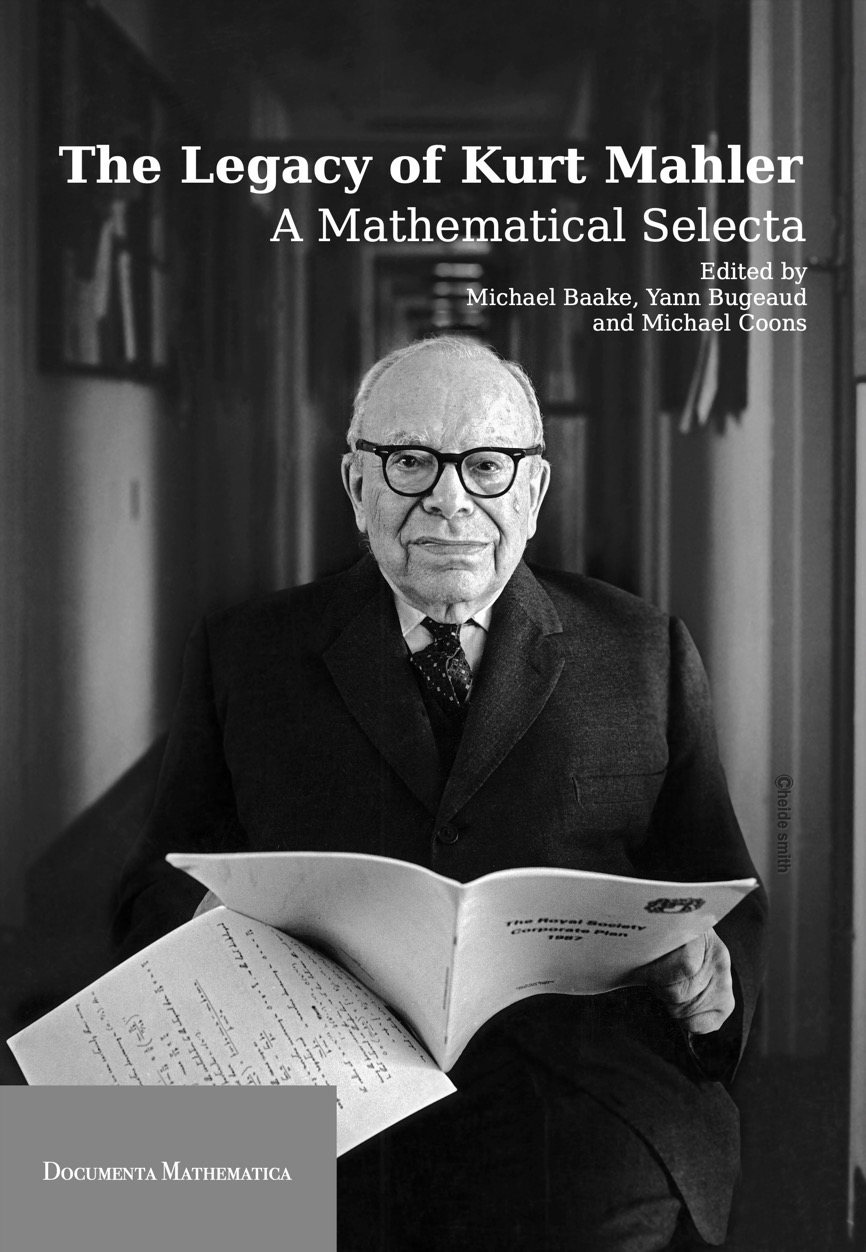
Michael Baake is a Professor of Mathematics at Bielefeld University, affiliated with the Faculty of Mathematics. His research focuses on Aperiodic Order, Dynamical Systems, Combinatorics, and Mathematical Physics. He leads multiple research projects, including the SFB/TR 358 'Integral Structures in Geometry and Representation Theory' and SFB 1283 'Taming Uncertainty'. His work bridges pure mathematics with applications in crystallography and stochastic systems. Affiliations: Representative for the Faculty Library, Co-Director of the Research Focus on Mathematical Modeling. Cooperations: Collaborates with international experts like Uwe Grimm, Daniel Lenz, and Nicolae Strungaru on topics such as aperiodic tilings and spectral theory. Research Groups: Leads a vibrant research group with members including Anna Klick, Daniel Luz, and Timo Spindeler, focusing on quasicrystals, combinatorial structures, and number theory applications. His contributions include co-editing the book 'Aperiodic Order: Crystallography and Almost Periodicity' and organizing workshops on spectral theory and dynamical systems. He actively engages in academic service, including editorial roles and conference organization.
Dr. Max Willert is affiliated with the Theoretical Computer Science Group at the Institut für Informatik, part of the Fachbereich Mathematik und Informatik at Freie Universität Berlin. His research focuses on computational geometry, algorithm design, and theoretical computer science, with a particular emphasis on problems involving polygonal domains, geometric algorithms, and combinatorial optimization. He has contributed to routing schemes, conflict-free chromatic guarding, and geometric covering problems. Education includes a Bachelor's thesis (2014) on orthogonal variants of the chromatic art gallery problem and a Master's thesis (2016) on routing schemes for disk graphs and polygons. His work bridges theoretical foundations with practical algorithmic solutions in geometric computing. Teaching spans from 2011 to 2020, covering courses like Informatik A/B, ProInformatik I, randomized algorithms, and programming. He has also led exercise sessions and seminars in topics such as logic, discrete mathematics, and object-oriented programming. His publications, including contributions to Computational Geometry: Theory and Applications and ISAAC , reflect expertise in geometric algorithms and discrete mathematics. Collaborations include work on routing in polygonal domains, chromatic guarding, and stabbing intersecting disks.
PD Dr. Frieder Ladisch serves as an Associate Professor at the Institute for Mathematics within the Faculty of Mathematics and Natural Sciences at the University of Rostock, Germany. His institutional affiliation includes membership in the Geometry working group (AG Geometry), with office location at Ulmenstraße 69, Haus 3, Room 231, and contact via university email and phone. His research program centers on Quantum Physics and Quantum Information , with specialized expertise in: Non-Hermitian quantum systems and PT-symmetry phenomena Topological photonic implementations including Su-Schrieffer-Heeger lattices Non-Abelian geometric phases and quantum holonomy Quantum random number generation using solid-state photon sources Experimental quantum optics with integrated photonic circuits Analysis of his 15 most recent publications (2019-2025) reveals consistent focus on PT-symmetry breaking experiments, quantum walk implementations in topological photonic structures, and quantum random number generation using hexagonal boron nitride emitters. His work bridges theoretical non-Hermitian quantum mechanics with practical photonic implementations. Dr. Ladisch operates within the Geometry working group at Rostock's Institute for Mathematics, where his research integrates mathematical geometry concepts with quantum information processing through photonic chip technologies and single-photon source applications.
Elmar Teufl is a Senior Lecturer in the Department of Mathematics at Eberhard Karls Universität Tübingen. He holds a Doctorate (2002) and a Habilitation (2015) from Graz University of Technology and Tübingen University, respectively. His research focuses on random walks on graphs and groups, combinatorial problems on self-similar structures, asymptotic methods, and fractal geometry. His work bridges probability theory, combinatorics, and graph theory with applications to fractal networks and recursive systems. Teufl has held academic positions across Europe, including visiting professorships at the University of Stuttgart (2012–2013) and a Marie Curie Fellowship at Bielefeld University (2005–2006). His research has been supported by the Austrian Science Fund (FWF) and the EU. Key achievements include contributions to spanning tree enumeration on Sierpinski graphs and resistance scaling in self-similar lattices. His publications span topics like asymptotic enumeration, determinant identities for Laplacian matrices, and structural properties of nilpotent groups. He received the Austrian Mathematical Society's Studienpreis (2003) for his thesis on self-similar graphs and fractals. Teaching responsibilities include advanced courses in combinatorics and probability, with a full teaching record documented in alma.
Mordecai J Golin is a Professor in the Department of Computer Science and Engineering at The Hong Kong University of Science and Technology (HKUST), School of Engineering. His research lies at the intersection of theoretical computer science, algorithms, and discrete mathematics, with strong applications in information theory and computational geometry. His research interests include algorithms , computational geometry , data structures , dynamic programming , coding theory , and combinatorics . He has made significant contributions to the design and analysis of optimal search trees, prefix-free coding, and minmax regret optimization in dynamic flow networks. His work often combines probabilistic analysis with algorithmic efficiency. The recent publications highlight a sustained focus on optimization problems in graphs and trees, particularly in dynamic flow networks for applications like evacuation modeling, and in data compression via advanced Huffman and AIFV coding techniques. The research spans from theoretical foundations to algorithmic innovation, with recurring themes of efficiency, robustness, and structural analysis. Scientific Awards No specific awards mentioned in the provided text. Advising and Grants : While specific students and grants are not listed, Dr. Golin has an extensive record of collaborative research with colleagues at HKUST and internationally, suggesting active supervision and project leadership. His frequent publications in top-tier venues indicate sustained funding and research activity. Labs and Teams : Though not explicitly named, his work is likely conducted within theoretical computer science or algorithms research groups at HKUST, possibly associated with centers focusing on discrete mathematics or information sciences.
Markus Heydenreich is a Professor at the Institute of Mathematics, Faculty of Mathematics, Natural Sciences and Technology, University of Augsburg. His research focuses on probability theory, particularly discrete random objects in statistical mechanics, mean-field behavior, lace expansion, and spatial random graph models. 2025: Workshop Bayrischzell 2024: Workshop Frauenchiemsee His recent publications highlight critical phenomena in random connection models, percolation, and spatial networks. He contributes to editorial boards and DFG-funded projects, including Random Geometric Systems and Mathematics of Many-Body Quantum Systems . Teaching includes courses on stochastic processes and seminars on probability and forensics. Key research themes: phase transitions, high-dimensional random walks, and mathematical physics applications. Collaborators include Remco van der Hofstad, Christian Hirsch, and Kilian Matzke. The team at Augsburg comprises doctoral researchers and postdocs.
Alice Niemeyer is a Professor at the Algebra Teaching and Research Area of RWTH Aachen University , specializing in computational algebra, finite group theory, and interdisciplinary applications in civil engineering. She has co-authored over 30 publications in journals like PNAS Nexus , Linear Algebra and Its Applications , and International Journal of Solids and Structures , with recent work bridging abstract algebra and topological interlocking concrete systems. Research Interests : Finite groups, matrix decomposition algorithms, combinatorial design, and applications to sustainable construction. Key Collaborators : Cheryl Praeger, Tomasz Popiel, Wilhelm Plesken, Daniel Robertz, Reymond Akpanya. Notable Grants : Funding from the Simons Foundation for computational algebra research. Awards : No explicit awards mentioned in the provided text.
Federico Vigolo is a Junior Professor in pure mathematics at the University of Göttingen's Mathematical Institute and a Principal Investigator of RTG 2491 - Fourier Analysis and Spectral Theory. He also serves as one of the Equal Opportunities Officers (Gleichstellungsbeauftragte) of the Mathematical Institute. His work bridges several areas of mathematics including coarse geometry, operator algebras, and geometric group theory. Dr. Vigolo completed his PhD at the University of Oxford in 2018 with a thesis titled "Geometry of actions, expanders and warped cones". His academic journey has led him to become a prominent researcher in coarse geometry and its interactions with other mathematical fields. His primary research focuses on Coarse Geometry and its rich interactions with operator algebras, index theory, and group theory. Specific topics he has extensively worked on include Roe algebras, Expander Graphs, coarse Baum–Connes conjecture, actions on metric and measure spaces, and CAT(0) and Hyperbolic Cube Complexes. His work often explores the connections between large-scale geometric properties and algebraic structures, with significant contributions to understanding coarse groups and warped cones. An analysis of his publication record reveals a strong focus on the intersection of coarse geometry with operator algebras and group theory. His work consistently explores how coarse geometric properties manifest in algebraic structures like Roe algebras, and how these connections can be used to prove rigidity results or construct counterexamples to important conjectures. A notable trend is his development of frameworks that unify previously disparate concepts in coarse geometry, such as his work on coarse geometric modules and rigidity frameworks for Roe-like algebras. His 2023 monograph "An Invitation to Coarse Groups" represents a foundational contribution to this emerging field. Professional Activities Organizer of the "Autumn School on Large Scale Geometry" (2023, Göttingen) Organizer of the "Random walks and related random topics" workshop (2022, Göttingen) Organizer of the YMC*A conference (2021, Münster) Organizer of the "Interactions between expanders, groups and operator algebras" mini-workshop (2021, Münster) Dr. Vigolo actively supervises students, with Christos Kitsios currently pursuing a PhD under his guidance. He welcomes bachelor's and master's students interested in topics related to coarse geometry, geometric group theory, group actions on measure spaces, and operator algebras. He teaches a variety of courses including "Analytische Geometrie und Lineare Algebra," "Introduction to algebraic topology," and specialized seminars on topics like "Gender and Mathematics" and "topological K-theory." His research has led to significant contributions in multiple areas, particularly in developing the theory of coarse groups and exploring the connections between coarse geometry and C*-algebras. His work on warped cones and asymptotic expanders has provided new counterexamples to the coarse Baum-Connes conjecture and advanced our understanding of coarse geometric invariants.