Devesh Rustagi is an Assistant Professor at the Department of Economics, University of Warwick, and an invited researcher at the Jameel Poverty Action Lab (JPAL) at MIT. His research bridges behavioral economics, development economics, economic history, environmental economics, and political economy. He examines the origins and stability of civic values and institutions, their interplay, and their impact on development, environmental, and political outcomes. He designs and evaluates public policies using quasi-experimental approaches, randomized field experiments, and behavioral experiments, with current projects in Ethiopia, Germany, India, Switzerland, and the United Kingdom. His work has been published in top-tier journals such as Econometrica , American Economic Review , Journal of Development Economics , and Science .
Davide Palitta is an Assistant Professor (tenure track) at the Department of Mathematics of the University of Bologna. His research focuses on numerical linear algebra, matrix equations, and their applications in fields like data assimilation, deep learning, and parallel computing. He holds a PhD in Mathematics from the University of Bologna (2018) and has held postdoctoral positions at the Max Planck Institute in Magdeburg (2018–2021) and a visiting fellowship at Brown University (2020). His work emphasizes the development of efficient numerical algorithms for large-scale matrix equations, including Sylvester, Lyapunov, and Riccati equations. Key contributions include Krylov subspace methods, randomized techniques, and time-parallel integration strategies. His recent publications span topics such as sketched Krylov methods, tensor-based solvers, and preconditioning strategies for weak-constraint data assimilation. Palitta collaborates actively with international institutions and organizes seminars like the Scube series on numerical linear algebra. He is involved in upcoming conferences on matrix equations, data assimilation, and parallel computing. No scientific awards are explicitly mentioned in the provided materials.
Michela Ottobre is a Professor of Mathematics at Heriot-Watt University, affiliated with the School of Mathematical & Computer Sciences. She holds editorial roles at Foundations of Data Science and SIAM Review , and is a member of the European Mathematical Society and Edinburgh Mathematical Society. Her research focuses on applied stochastic analysis, mathematical ecology, and multiscale modeling, with applications to rewilding and ecological systems. Education & Career PhD in Mathematics, Imperial College London (2012) Postdoctoral roles at Warwick University and Imperial College London Joined Heriot-Watt as Assistant Professor (2014), promoted to Full Professor (2024) Research Interests Her work integrates stochastic processes, interacting particle systems, and PDEs to model ecological and biological phenomena. Key areas include: Stochastic multiscale models Mathematical ecology and rewilding Numerical methods for SDEs Grants & Awards Leverhulme Research Grant (2020–2023) EPSRC Standard Grant (2025, £550k) for multiscale methods Sir Edmund Whittaker Memorial Prize (2019) Collaborations & Outreach Organized workshops including the 11th International Conference on Stochastic Analysis (2023) and contributed to ecological modeling initiatives. Supervises PhD students in applied stochastic analysis and mathematical ecology.
Costas S. Patrickios is a Professor in the Department of Chemistry at the University of Cyprus, within the School of Natural and Applied Sciences. His academic career spans over two decades, beginning as an Assistant Professor in 1998 and progressing to his current position as Professor. His research is centered on advanced polymer systems with applications spanning materials science, nanotechnology, and biomaterials. Dr. Patrickios received his Diploma in Chemical Engineering from the National Technical University of Athens (NTUA) in 1988, followed by a Master of Science in Chemical Engineering Practice from MIT in 1990. He completed his PhD at MIT in 1993 and conducted postdoctoral research at the University of Sussex from 1994-1996. His academic journey continued with a lectureship at UMIST before joining the University of Cyprus in 1998. His research focuses on dynamic covalent chemistry , amphiphilic copolymer networks , and microphase separation in polymer systems. Patrickios has made significant contributions to the understanding of polymer synthesis , controlled polymerizations , and degradable polymer networks . His work often bridges experimental and computational approaches, particularly in coarse-grained molecular dynamics simulations of polymer behavior. Recent research has expanded into applications related to RNA and DNA yield , demonstrating the versatility of his polymer systems. Analysis of his publication record reveals a strong focus on amphiphilic polymer conetworks, with consistent exploration of their synthesis, characterization, and applications. His work shows increasing integration of computational methods with experimental approaches, particularly in understanding structure-property relationships. The research spans fundamental polymer science to applied areas including energy materials, biomaterials, and smart responsive systems. Dr. Patrickios has also contributed significantly to the field through book editing, including the comprehensive volumes Amphiphilic Polymer Co-networks: Synthesis, Properties, Modelling and Applications (2020) and Polymer Networks: Synthesis, Properties, Theory and Applications (2010), which have become important references in the field. His collaborative research approach is evident through numerous international partnerships, with co-authors from institutions across Europe and beyond. This collaborative network has enabled multidisciplinary research that bridges chemistry, materials science, and engineering perspectives.
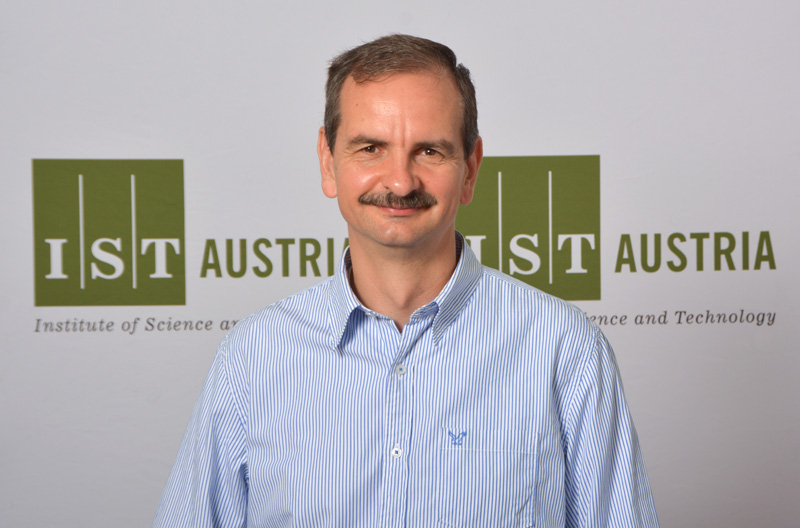
László Erdős is a Professor of Mathematics at the Institute of Science and Technology Austria (IST Austria) since 2013. He previously held positions as C4/W3 Professor at LMU Munich (2003-2013), Associate Professor and Assistant Professor at Georgia Institute of Technology, and was a Member at the Institute for Advanced Study in Princeton (2013-2014). He is an elected Corresponding Member of the Austrian Academy of Sciences (2015). Erdős earned his Diploma in Mathematics from Lorand Eotvos University, Budapest (1990), followed by a PhD in Mathematics from Princeton University (1994) under advisor Elliott H. Lieb. He completed his Habilitation at the University of Vienna (2001). His research focuses on Mathematical Physics, particularly in the areas of Random Matrix Theory, Spectral Analysis of Quantum Systems, and Many-Body Quantum Dynamics. Erdős has made significant contributions to understanding universality in random matrices, quantum dynamics of Bose-Einstein condensates, and spectral properties of disordered quantum systems. His work bridges rigorous mathematical analysis with fundamental questions in theoretical physics. Analysis of Erdős's recent publications reveals a strong focus on spectral statistics of random matrices and their applications to quantum physics. His research demonstrates how universal patterns emerge in complex quantum systems, connecting stochastic processes with spectral theory. The work spans from foundational mathematical results to applications in condensed matter physics and quantum information. His scientific achievements have been recognized with numerous honors including: ERC Advanced Grant (2013) ICM Invited Speaker (2014) SPA Plenary Speaker (2014) QMATH 12 Plenary talk (2013) Aisenstadt Chair, Montreal (2012) ICMP Plenary speaker (2009) ECM Invited Speaker (2008) ICMP Invited Speaker (2000) Elected Corresponding Member of Austrian Academy of Sciences (2015) Geza Grunwald Prize (1995) Annales Henri Poincare Distinguished Paper Award (twice) Erdős has secured significant research funding throughout his career, including an ERC Advanced Grant (2014-2019) worth 1.755M Euro, multiple NSF grants, and participation in major collaborative projects like the Elite Graduate Program TMP and SFB TR12 "Symmetries and Universality." His research group at IST Austria continues to advance the mathematical understanding of quantum systems and random matrices.
Benjamin Rossman is an Associate Professor in the Computer Science and Mathematics Departments at Duke University , affiliated with the Theory Group. His research focuses on computational complexity, particularly circuit complexity and finite model theory, with notable contributions to lower bounds for subgraph isomorphism problems and logical definability. Rossman earned his Ph.D. from MIT under Madhu Sudan's supervision. He has held faculty positions at the University of Toronto and postdoctoral roles at the Tokyo Institute of Technology and National Institute of Informatics in Japan. He has received prestigious awards including the Alfred P. Sloan Fellowship and NSERC grants. His teaching includes courses on computational complexity, mathematical logic, and discrete mathematics. Recent publications explore homomorphism preservation theorems, formula complexity, and treedepth in subgraph isomorphism. Rossman advises graduate students in theoretical computer science and has led research on circuit lower bounds, algorithmic logic, and combinatorial complexity. His work bridges foundational theory with practical algorithmic challenges, contributing to the understanding of computational limits in combinatorial problems.
Professor John Simes AO is a Professor of Clinical Epidemiology at the University of Sydney's Faculty of Medicine and holds leadership roles at the NHMRC Clinical Trials Centre (CTC), including Senior Associate Director and Co-Director of Cancer Trials. He has led over 100 multicenter clinical trials, notably the LIPID and FIELD trials, contributing to global guidelines in cardiovascular and diabetes care. His research spans cancer, cardiovascular disease, neonatal medicine, and clinical trial methodology. Education: BSc (Med), MBBS, FRACP, SM (Harvard), MD. He is a practicing Medical Oncologist at Royal Prince Alfred Hospital and Chris O'Brien Lifehouse. Research Interests: Large-scale clinical trials in oncology (e.g., gastrointestinal, genitourinary cancers), cardiovascular risk reduction, and neonatal medicine. Notable contributions include demonstrating pravastatin's survival benefits (LIPID trial) and fenofibrate's microvascular benefits (FIELD trial). Current trials include INTEGRATE (gastric cancer) and INSPIRE (aspirin in VTE). Awards: Order of Australia (2020), MOGA Cancer Achievement Award (2010), Harvard Biostatistics Alum Award (2009), and R.T. Hall Prize (1999). Advising: Supervises students like Janene Dalrymple on translational research. Grants: Holder of NHMRC Senior Principal Research Fellowship and Program Grants. Labs/Teams: Leads CTC's oncology trials group and chairs INSPIRE Steering Committee.
Dr. Dmitri Finkelshtein is an Associate Professor in the Department of Mathematics at Swansea University, within the Faculty of Science and Engineering's School of Mathematics and Computer Science. He holds a PhD (2004) and DSc (2014) from the Institute of Mathematics, Kyiv, Ukraine, and a BSc/MSc from the National University of Kyiv. His research focuses on mathematical analysis, probability, and their applications to complex systems, including infinite-dimensional analysis, stochastic dynamics, and non-local evolution equations. Key areas include mathematical physics, point processes, and population ecology. He has contributed to frameworks for analyzing individual-based ecological models and spatial stochastic systems. Recent work includes studies on entropy behavior in Poisson distributions, spatial cumulant models in cancer systems, and the dynamics of non-local Fisher-KPP equations. He has secured grants, such as the £265k Horizon-Infra-2021 Biodiversity Digital Twin Project. Dr. Finkelshtein advises multiple PhD students on topics like reaction-diffusion models, umbral calculus, and tumor growth dynamics. His teaching spans mathematical analysis, dynamical systems, and probability theory.
Andrew Zeitlin is an Associate Professor at the McCourt School of Public Policy at Georgetown University. He also serves as a Non-Resident Fellow at the Center for Global Development, an Affiliated Professor at J-PAL, and a Research Associate at the Centre for the Study of African Economies at Oxford University. His research focuses on experimental methods to study how individual decision-making impacts state effectiveness, including public-sector incentives, tax policy, and social welfare programs. Zeitlin’s work emphasizes field and lab experiments in developing economies, particularly in Rwanda and Uganda. Key topics include performance contracts for civil servants, cash transfer program efficacy, and tax audit policies. In 2024, he received the Provost’s Distinguished Achievement in Research Award for contributions to teacher incentive studies in Rwanda. His recent articles explore cash vs. in-kind transfers, youth employment barriers, and public-sector performance reforms. Notable collaborations include work with Craig McIntosh on medium-term employment impacts and analyses of Rwanda’s tax evasion strategies. He has also contributed to policy discussions on refugee economic integration and small business development in conflict-affected regions. Zeitlin’s affiliations with global institutions like J-PAL and CGD reflect his commitment to applied policy research with real-world impact. His grants and projects focus on scalable solutions for governance challenges in Africa, combining rigorous empirical analysis with actionable insights for policymakers.
Jörg Schürmann is an Adjunct Professor at the Faculty of Mathematics and Computer Science , University of Münster, affiliated with the Mathematical Institute . He serves as an Investigator in the Mathematics Münster cluster and a member of the CRC 1442 Geometry: Deformations and Rigidity project, specifically subproject D03: Integrability . His research focuses on Arithmetic Geometry and Representation Theory , with key contributions to topics in K-theory , moduli spaces , field theory , and randomness in mathematical structures . His work intersects algebraic geometry , topology , and equivariant theories . Recent publications highlight his work on Chern-Schwartz-MacPherson classes , equivariant toric geometry , generic vanishing theorems , and topological coherence of characteristic classes . Collaborations span leading mathematicians like Paolo Aluffi , Leonardo Mihalcea , and Changjian Su . He is involved in research projects under CRC 1442 , including studies on K-groups and cohomology , moduli spaces in arithmetic and geometry , and field theory and randomness .
Rainer Dietmann serves as Professor in the Department of Mathematics at Royal Holloway, University of London, specializing in Number Theory and its intersections with algebraic geometry and arithmetic. His institutional affiliation places him within the university's mathematical sciences division where he maintains active research and teaching responsibilities. His research program centers on deep problems in Number Theory, particularly focusing on Arithmetic Geometry, Diophantine Approximation, Galois Theory, and Quadratic Forms. Dietmann investigates structural properties of polynomial equations, discriminants of number fields, and geometric configurations of rational points on algebraic varieties. His work combines analytic, algebraic, and combinatorial approaches to address fundamental questions about polynomial behavior and Diophantine structures. Analysis of his recent publications reveals consistent engagement with high-impact problems in arithmetic geometry, including van der Waerden's conjecture, discriminant distributions, and rational curves on hypersurfaces. His research demonstrates increasing international collaboration, particularly with leading number theorists across Europe and Asia, while maintaining methodological rigor in both theoretical proofs and computational aspects of number theory. Professor Dietmann has supervised 3 research students and secured significant funding through two major projects: an EPSRC grant for "Forms in many variables" (2011-2012) and a Royal Society grant supporting the "Joint meeting of the Korean and American Mathematical Society" (2009-2010). These projects reflect his leadership in advancing collaborative research in number theory and polynomial arithmetic.
Ulla Richardson is a Professor at the Centre for Applied Language Studies, part of the Faculty of Humanities and Social Sciences at the University of Jyväskylä. She serves as Vice Head of Department and holds a docentship in experimental psycholinguistics and speech processing at the Department of Languages. Richardson leads the UNESCO Chair on Inclusive Literacy Learning for All and the secretariat of the GraphoWORLD Network of Excellence, while also directing the multidisciplinary GraphoLearn (GraphoGame)/Ekapeli research team. Fields of Interest: Reading and writing skill development, dyslexia, phonology, speech processing, evidence-based technology in language learning, and cross-linguistic literacy interventions. Her research focuses on creating and validating digital learning environments like GraphoLearn (info.GraphoLearn.com), which supports reading and spelling skill development in 30 languages. She has conducted extensive randomized controlled trials in diverse contexts, including India and China, and collaborates on projects like LearnDigi (funded by the Academy of Finland) to study digitalization’s impact on learning. Her recent publications highlight trends in randomized trials, computational frameworks for literacy assessment, and adaptive learning tools for multilingual settings. Scientific Awards: UNESCO Chair on Inclusive Literacy Learning for All Richardson actively advises multidisciplinary teams, including her leadership in the GraphoLearn Rime intervention studies and collaborations with researchers like Heikki Lyytinen. Her work spans neurocognitive predictors of reading outcomes, phonological awareness training, and global literacy initiatives. She contributes to projects such as Lohkanlihkku (Sámi language literacy) and LearnDigi, emphasizing technology’s role in education.
Associate Professor Antony Eagle is affiliated with the University of Adelaide's School of Humanities, part of the Faculty of Arts, Business, Law and Economics. He holds the role of Editor-in-Chief of the Australasian Journal of Philosophy (2022–2027). His academic journey includes a PhD from Princeton University and undergraduate studies at the University of Melbourne, with prior teaching at Oxford University's Faculty of Philosophy (2004–2013) and fellowship at Exeter College. His research spans metaphysics, epistemology, philosophy of science, and philosophy of probability. He also explores early modern philosophy (e.g., Descartes, Cavendish, Hume), logic, philosophy of economics, and religion. His teaching includes courses on these topics and their historical contexts. Recent articles focus on probability theory, causation, spacetime metaphysics, and material constitution. His work bridges theoretical philosophy with interdisciplinary themes, including the interplay between determinism and chance, and ontological debates about persistence and location. While no formal awards are listed, his editorial role and academic contributions highlight his influence in the field. Eligible to supervise PhD and Masters students, Eagle’s research interests align with grants exploring philosophical foundations of science and metaphysics. His intellectual contributions are further disseminated through editorial work and pedagogical materials like Forallx Adelaide , a logic textbook.
Prof. Arndt Reichert is a University Professor of Health Economics and Development Research at Leibniz University Hannover's Faculty of Economics and Management, leading the Institute of Health Economics (IHE). His research focuses on Health Economics, Development Economics, Technological Innovation, Behavioral Economics, and Information Economics. He has held academic positions since 2020 and previously worked at the World Bank and RWI. Professional Background: Professor at Leibniz University Hannover (since 2020) Economist/Consultant at World Bank (2014–2020) Scientific Officer at RWI (2008–2014) Research Interests: His work addresses global challenges such as renewable energy adoption, health insurance impacts, climate migration, and behavioral health interventions. He employs experimental methods and field studies across Africa and Europe. Publications Trends: Recent work emphasizes development economics applications, including climate migration analysis in West Africa, social cash transfers in Kenya, and renewable energy policy experiments in Senegal. He also explores labor market effects of health behaviors and long-term care challenges in aging societies. Grants & Advising: No specific grants listed, but extensive collaboration with international institutions like the World Bank. Advises on health policy, development economics, and behavioral interventions. Labs/Teams: Leading research at IHE and affiliated with global networks addressing health systems, development, and technological innovation.
Robert F. Tichy is a Professor at the Institute of Analysis and Number Theory , Graz University of Technology, Austria. His career spans over four decades with significant contributions to Diophantine equations , uniform distribution , and quasi-Monte Carlo methods . He has held multiple editorial board positions and administrative roles , including Dean of the Faculty of Mathematics, Physics and Geodesy (2018-2019). Research Interests : Uniform distribution, Diophantine equations, algorithmic number theory, fractal structures, quasi-Monte Carlo methods, and mathematics in finance/insurance. Awards : Austrian Mathematical Society award (1985), Honorary Doctorate (University of Debrecen, 2017), Jean-Morlet Chair (2020), and memberships in prestigious societies. Publications : Over 200 papers with recent works (2024) focusing on Diophantine problems , pseudorandom sequences , and Carlitz coefficients . Teaching : Regular courses for engineering and mathematics students, including annual lectures on insurance mathematics .