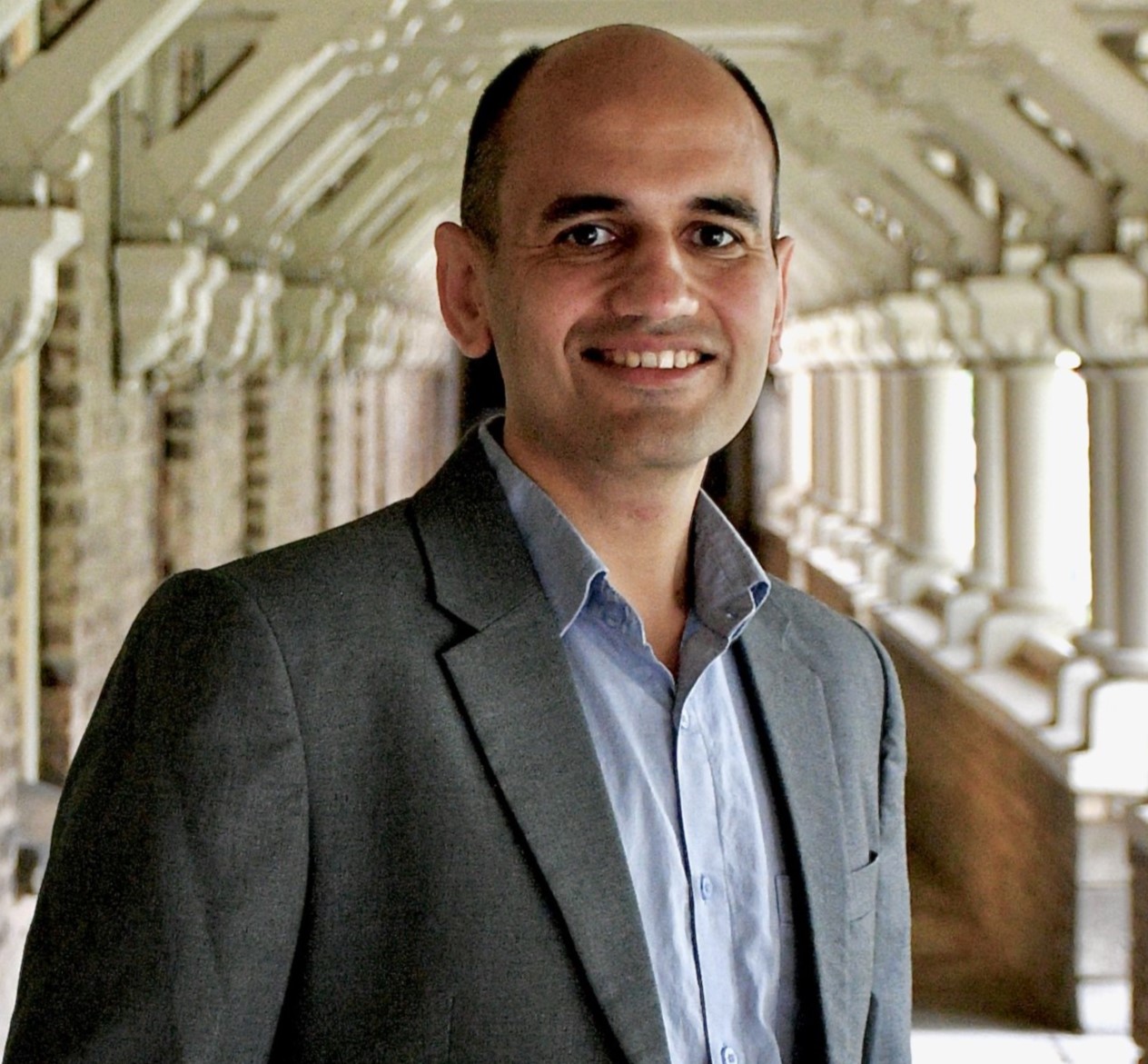
Kuldeep S. Meel is the Stephen Fleming Early-Career Associate Professor at the School of Computer Science, Georgia Institute of Technology, and an Associate Professor at the University of Toronto (on leave). He previously held a NUS Presidential Young Professorship at the National University of Singapore. His research focuses on automated reasoning, aiming to enable computing systems to handle uncertain real-world environments through scalable techniques integrating randomized algorithms, statistical inference, formal methods, distribution testing, and software engineering. Core research areas: Automated Reasoning, Formal Methods, Approximate Model Counting, Probabilistic Inference, Constraint Solving His research group has achieved significant recognition in both individual awards and publications. Key trends in his recent work include advancing model counting algorithms, developing frameworks for probabilistic explanations, and improving scalability in formal verification and constraint satisfaction. His tools have consistently ranked top in international competitions, demonstrating practical impact in automated reasoning. 2019 NRF Fellowship for AI 2022 ACP Early Career Researcher Award 2020 IEEE Intelligent Systems AI's 10 to Watch Top placements in Model Counting, SAT, and CAV competitions He mentors a diverse group of PhD and Master's students and collaborates with institutions worldwide. His group's publications span premier conferences in AI, formal methods, and design automation, reflecting interdisciplinary contributions to theoretical and applied computer science.
Jean-Philippe Brantut is an Associate Professor at École Polytechnique Fédérale de Lausanne (EPFL), affiliated with the School of Basic Sciences (SB), the Institute of Physics (IPHYS), and the School of Physics (SPH-ENS). He leads the Laboratory for Quantum Gases (LQG), a research group focused on quantum simulation with ultracold atomic systems. He also serves as a PhD program committee member for the Doctoral Program in Physics at EPFL. Research Interests: His work lies at the intersection of quantum optics, atomic physics, and condensed matter physics. He investigates strongly correlated fermionic systems, cavity quantum electrodynamics, mesoscopic physics, and quantum transport. His group pioneers the integration of Fermi gases with high-finesse optical cavities to simulate quantum devices and explore novel quantum matter. Recent Research Trends: His recent publications, appearing in Nature , Science , and Nature Physics , demonstrate a strong focus on engineering quantum many-body systems using photon-mediated interactions. Key themes include the realization of random spin models, observation of density-wave ordering, and the investigation of universal pair polaritons in strongly interacting Fermi gases. His earlier work laid foundations in quantum thermoelectricity and quantized transport in neutral matter. Scientific Awards: Latsis University Prize (2023) Physics Teaching Award at EPFL (2023) ERC Consolidator Grant (2022): Driven and Dissipative Quantum Simulators ERC Starting Grant (2016): Devices, engines and circuits: quantum engineering with cold atoms Fondation Sandoz Chair (2016) SNSF Ambizione Fellowship (2013) Advising and Grants: Brantut actively supervises multiple PhD students, including current students Gaia Bolognini, Tabea Bühler, Ekaterina Fedotova, Francesca Orsi, and Zeyang Xue, and has advised several successful graduates such as Victor Helson, Kevin Roux, Nick Sauerwein, and Timo Zwettler. His research is supported by major grants, most notably two European Research Council (ERC) grants, underscoring the significance and innovation of his work in quantum simulation and quantum engineering. Laboratories and Teams: He leads the Laboratory for Quantum Gases (LQG) at EPFL, which operates two main experimental setups: the Fermi gas experiment and the microscope experiment. The team includes post-doctoral researchers, PhD students, and visiting scientists, fostering a collaborative environment for advancing quantum science with ultracold atoms.
Marek Pycia serves as Professor of Organizational Economics at the University of Zurich and Co-Director of the Zurich Center for Market Design. His research has driven tangible policy impacts including the U.S. kidney-transplant voucher program and school system redesigns, with publications in premier journals like American Economic Review and Econometrica . His academic foundation includes a Ph.D. in Economics from the Massachusetts Institute of Technology (MIT), complemented by prior faculty roles at UCLA, Pennsylvania State University, and Leon Koźmiński Academy of Entrepreneurship and Management, plus a visiting fellowship at Princeton University. Professor Pycia specializes in Market Design and Mechanism Design , where he bridges theoretical microeconomics with real-world applications in healthcare allocation and educational systems. His work emphasizes strategyproofness , simplicity , and efficiency in matching markets, influencing both academic frameworks and practical policy implementations globally. Recent publications (2024-2025) reveal a concentrated focus on simplifying mechanism design for discrete environments, advancing double auction theory, and optimizing information structures in trade. These works consistently apply game-theoretic principles to solve complex allocation problems across healthcare, education, and financial markets. Key recognition includes: Research Fellow at the Centre for Economic Policy Research (CEPR) Editorial board membership at Theoretical Economics , Journal of Economic Theory , and Games and Economic Behavior While specific grant details remain unmentioned, his editorial leadership and center directorship indicate active research funding. He supervises graduate work through the University of Zurich’s economics programs, though no named students appear in the source text. The Zurich Center for Market Design, which he co-directs, functions as an interdisciplinary hub connecting theoretical research with practitioners in healthcare, education, and public policy to implement novel market mechanisms.
Emma Brunskill is an Associate Professor of Computer Science at Stanford University, with a courtesy appointment in Education. She holds a PhD in Computer Science from MIT (2009). Her research focuses on reinforcement learning, educational technology, and healthcare applications, aiming to develop AI systems that support human learning and decision-making. Notable projects include AI tutoring systems, policy evaluation methods, and behavior change interventions using large language models. Her work bridges theory and practice, addressing challenges in off-policy evaluation, fairness-aware decision making, and scalable educational tools. Brunskill has contributed to foundational research in reinforcement learning algorithms and their applications in real-world scenarios such as healthcare, education, and human-AI collaboration. She also leads initiatives to improve equity and efficiency in educational technologies through data-driven approaches. Brunskill's research has been supported by grants such as the NSF RI: Small grant for data-efficient reinforcement learning. She actively explores the ethical implications of AI systems, particularly in healthcare and education settings. Her recent work emphasizes leveraging large language models (LLMs) for personalized feedback and simulated training environments, as seen in studies like GPTCoach and LLM-based counselor upskilling.
Brett Kolesnik is a Research Fellow in the Department of Statistics at the University of Warwick. His research focuses on probability theory, random structures, bootstrap percolation, and interactions with combinatorics. He has held postdoctoral fellowships at UC Berkeley, San Diego, and the University of Oxford, and was a Senior Demy at Magdalen College. His work includes organizing workshops on bootstrap percolation and collaborating with leading researchers in probability and combinatorics. Education: PhD in Mathematics from the University of British Columbia (advised by Omer Angel). Notable awards include the NSERC Postdoctoral Fellowship and the Florence Nightingale Bicentennial Fellowship in Statistics. Research interests span bootstrap percolation models, random graph dynamics, and stochastic processes. Recent work includes studies on Brownian map geometry, tournament score sequences, and Coxeter group structures. Selected articles explore topics such as critical beta-splitting processes, Catalan percolation, and random walks on algebraic structures. His publications appear in top journals like Electronic Journal of Probability and Annals of Applied Probability . Awards include the Florence Nightingale Fellowship and NSERC Postdoctoral Fellowship. Professional involvement includes organizing the 2024 BIRS workshop on Bootstrap Percolation and contributing to interdisciplinary collaborations in probability and combinatorics.
Kostas Bekris is a Professor in the Department of Computer Science at Rutgers University, specializing in Robotics and Artificial Intelligence. His research focuses on motion planning, autonomous manipulation, and robot control, with notable contributions to tensegrity robotics, perception-driven systems, and large-scale package handling. He leads a team conducting groundbreaking work in robotics, supported by grants from NSF, NASA, and industry collaborators like ExxonMobil. His group emphasizes interdisciplinary approaches, combining machine learning, topological methods, and differentiable physics modeling to advance robot capabilities in complex environments. Education details are not explicitly stated in the provided texts, but his academic career has included significant mentorship of PhD students and postdoctoral researchers. Key projects involve vision-driven manipulation pipelines, obstacle detection systems (PROBE), and resilient robot designs inspired by biological structures. He has been recognized for his work through prestigious awards including the NASA Early Career Grant and multiple NSF grants, as well as team achievements in robotics competitions like the Amazon Picking Challenge. Research interests span robotics subfields such as: Autonomous manipulation in cluttered environments Learning-based control for dynamic systems Topological data analysis for motion reasoning Tensegrity and soft robotics architectures Sim-to-real transfer in robotic tasks His team's work has produced open-source software tools and datasets, advancing benchmarks in manipulation and perception. Recent articles emphasize scalable solutions for industrial automation and robust navigation strategies in unstructured settings. Scientific achievements include: Development of PROBE for proprioceptive obstacle detection Advances in differentiable physics engines for tensegrity systems NSF-funded projects on robotic rearrangement and modular morphologies Advising contributions span over a decade, with current advisees focusing on topics like non-prehensile manipulation and large-scale storage optimization. Collaborations with industry (e.g., ExxonMobil) and academic partners (Yale University) reflect his commitment to applied robotics research. Labs and teams under his leadership include the Rutgers CS Robotics Group, contributing to projects like the ARIAC challenge platform and packing/industrial automation systems. Future work targets improved robot resilience in disaster scenarios and enhanced human-robot collaboration paradigms.
Bruce W. Smith is an Associate Professor at the University of New Mexico, College of Arts and Sciences, Department of Psychology. His research focuses on resilience , mindfulness interventions , and positive psychology with applications in health and stress management. Ph.D., Arizona State University (2002) Director, The Phoenix Lab Email: bwsmith@unm.edu Smith's research investigates how individuals bounce back from stress and adversity, including through mindfulness , positive psychology , and narrative-based approaches like the "hero’s journey". He developed the Brief Resilience Scale , widely used in stress and health research. His work spans health psychology, examining stress responses in chronic illness (cancer, cardiovascular disease) and emergency responders (firefighters). He has also explored mindfulness-based adaptations for Latino communities and positive psychology classes that improve student well-being. Smith teaches courses in Health Psychology , Positive Psychology , and Psychology Teaching Practicum . Current graduate students in his lab include Kaitlyn Schodt and Naila deCruz-Dixon . He is not accepting new students for Fall 2025 or 2024. Key themes across his publications (2008-2023) include: Resilience measurement and applications Mindfulness in stress reduction Positive psychology interventions Cultural adaptations for mental health His work emphasizes practical applications in both clinical settings and educational environments , with a focus on undergraduate well-being and trauma-informed approaches to personal growth.
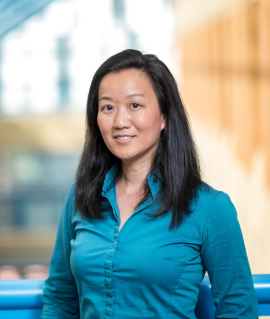
Dr. Frances Chen is a Professor and Area Coordinator in the Department of Psychology at the University of British Columbia (UBC), located on the traditional, ancestral, and unceded territory of the Musqueam People. She holds a PhD from Stanford University (2009). Her research integrates health psychology, social psychology, and neuroendocrinology to explore how social experiences influence mental and physical health. Key areas include the physiological impacts of loneliness, social support, and hormonal changes during puberty on adolescent development. Education: PhD, Psychology, Stanford University, 2009 Research Focus: Dr. Chen investigates how social interactions 'get under the skin' through studies on loneliness, stress, conflict negotiation, and hormonal mechanisms. Her work emphasizes interventions to enhance social connection and reduce health disparities. Recent Article Trends: Recent publications highlight interdisciplinary approaches, including genetic influences on depression, effects of near-infrared lighting on cognition, and longitudinal studies on adolescent hormonal contraceptive use. Her work bridges basic science and applied health outcomes. Awards & Grants: Michael Smith Health Research BC C2 Award (2022) Killam Faculty Research Fellowship (2019) Teaching & Learning Enhancement Fund Grant (2025) SSHRC Prosociality Project Funding (2023) Lab & Mentorship: Director of the Social Health Lab, she mentors graduate and undergraduate students, prioritizing equity and inclusion. Recent lab achievements include studies on teen health development and interventions to improve student success in psychology programs. Lab Initiatives: UBC Teen Health and Development Study (longitudinal hormonal/mental health tracking) NIR lighting health impact research (collaborative interdisciplinary project) Prosociality 'in the Wild' SSHRC project
Pan Xu is a tenure-track assistant professor with joint appointments in the Department of Biostatistics & Bioinformatics, Department of Computer Science, and Department of Electrical & Computer Engineering at Duke University. Previously, Xu was a Postdoctoral Scholar Research Associate at Caltech's Department of Computing and Mathematical Science and earned a Ph.D. in Computer Science from UCLA. Xu's research focuses on developing computationally- and data-efficient machine learning algorithms with strong empirical performance and theoretical guarantees. Xu's research interests center around Machine Learning with broad applications in Artificial Intelligence, Data Science, Optimization, Reinforcement Learning, and High Dimensional Statistics. The research specifically targets real-world problems in Bioinformatics and Healthcare, with recent work emphasizing distributionally robust decision making, efficient exploration strategies, and multi-agent systems. Xu has developed novel algorithms that address the challenges of exploration in sequential decision making and robustness to distributional shifts between training and deployment environments. Xu's recent publications demonstrate a strong trend toward developing theoretically grounded yet practical algorithms for reinforcement learning and bandit problems, with particular emphasis on distributionally robust methods, efficient exploration techniques, and applications to healthcare. The work spans both theoretical analysis (providing minimax optimal regret bounds) and practical implementations (validated on benchmarks like Atari games and real healthcare datasets). Whitehead Scholar award from Duke University School of Medicine (2023) Best Paper Award at ACM FAccT 2023 for Queer In AI paper PIMCO Postdoctoral Fellowship in Data Science (2022) TMLR Featured Certification (2023) NSF award on approximate sampling based exploration (2023) Xu actively mentors multiple Ph.D. students across Duke's Biostatistics & Bioinformatics, Computer Science, and Electrical & Computer Engineering programs, with several alumni now pursuing doctoral studies at top institutions. The research group has secured competitive funding including an NSF award for approximate sampling based exploration for sequential decision making. Xu serves as an action editor for TMLR and as an area chair for major conferences including ICML, NeurIPS, AAAI, ICLR, and AISTATS. Xu leads a dynamic research group focused on sequential decision making, with projects spanning theoretical algorithm development, implementation of practical systems, and applications to healthcare and bioinformatics. The group maintains active collaborations across Duke's medical and engineering schools, with recent work applying machine learning to epidemic forecasting during the pandemic.
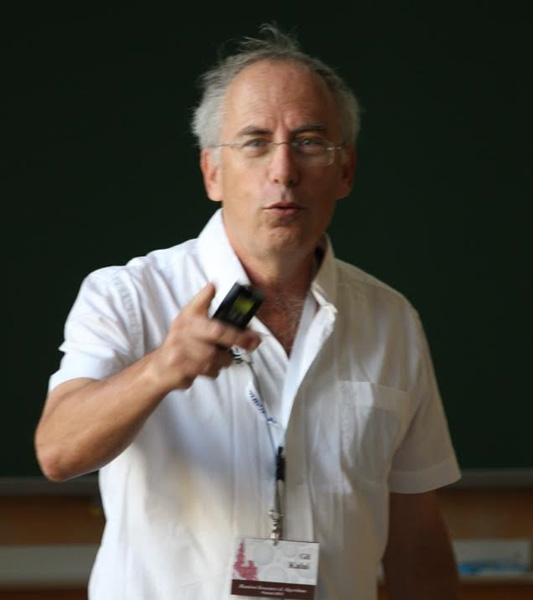
Gil Kalai is a Professor of Mathematics at the Hebrew University of Jerusalem since 1992, where he holds the Henry and Manya Noskwith Chair. He also serves as an Adjunct Professor of Mathematics and Computer Science at Yale University since 2004 in a long-term part-time visiting position. His academic career includes visiting positions at prestigious institutions including MIT, Cornell, IAS Princeton, Berkeley, Bell-labs, IBM, and Microsoft. Professor Kalai's research spans multiple areas within mathematics and theoretical computer science. His work in combinatorics encompasses geometric, probabilistic, and topological approaches. He has made significant contributions to the study of convex sets and polytopes, linear programming, and theoretical computer science. His influential 1988 paper with Kahn and Linial on Boolean functions pioneered applications of Fourier analysis in theoretical computer science. Kalai's research has evolved to include the application of Fourier analysis to thresholds, influences, symmetries, noise, percolation, and social choice. He has developed theories in algebraic shifting and studied face-numbers and other combinatorial invariants of polytopes. His work on the diameter of polytopes and randomized simplex algorithms has been influential in optimization theory. In 1993, his collaboration with Kahn produced a groundbreaking counterexample to Borsuk's Conjecture in 1325 dimensions. Professor Kalai's publications reveal a consistent focus on the intersection of combinatorics, geometry, and theoretical computer science. His work shows a progression from foundational combinatorial geometry to increasingly sophisticated applications of harmonic analysis in discrete mathematics. The recurring themes across his 30+ year career include Boolean functions, polytope theory, and probabilistic methods in combinatorics, demonstrating remarkable coherence in his research trajectory. 2016 European congress of Mathematics, plenary speaker 2013 ERC advanced grant 2012 Rothschild Prize 1994 International Congress of Mathematicians invited section talk, Zurich 1994 Fulkerson Prize 1993 Erdos Prize 1992 Polya Prize Though specific details of his advising are not provided in the source material, Kalai has written over 70 scientific papers and maintains an active research blog entitled "Combinatorics and More." His 2013 ERC advanced grant indicates significant research funding for his work. His extensive collaborations with researchers across multiple institutions suggest a robust research program with numerous PhD students and postdoctoral researchers, though specific names are not mentioned in the provided texts. Professor Kalai maintains active research connections across multiple institutions including Hebrew University, Yale, and various research centers worldwide. His work bridges pure mathematics and theoretical computer science, creating a unique interdisciplinary research environment that influences both fields.
Andrew Markham is a Professor of Computer Science at the University of Oxford , affiliated with Kellogg College . He leads a research group focusing on Cyber Physical Systems (CPS) , specializing in sensors, signal processing, and machine learning to enable machines to better perceive the physical world. His work emphasizes cross-disciplinary collaboration, notably in wildlife tracking and indoor positioning systems. He has held roles as a Postdoctoral Fellow (2008-2012), Associate Professor (2013), and Full Professor (2021). Education : PhD in Electrical Engineering (University of Cape Town, 2008), BSc (Hons) in Electrical Engineering (2004). Research Interests : Tracking and localization in GPS-denied environments (e.g., underground, indoors), magneto-inductive systems, physics-informed machine learning, and data-driven approaches for noisy sensor data. His projects include wildlife monitoring via wireless sensor networks and mmWave radar for human motion capture. Key Projects : CARACAL acoustic monitoring system, mmPoint dense human tracking, and RandLA-Net for large-scale point cloud segmentation. His work spans robotics, environmental sensing, and biomedical applications. Advising & Grants : Supervises over 30 students and collaborates with industrial partners. Research teams include Cyber Physical Systems, Autonomous Ubiquitous Sensing, and Wildlife Monitoring initiatives. Labs/Teams : Leads the CPS research group, focusing on sensor networks, inertial navigation, and multimodal fusion systems. Collaborates with zoology and earth science disciplines on applied projects.
Ying Lu is an Associate Professor at the Department of Applied Statistics, Social Science, and Humanities within the Steinhardt School of Culture, Education, and Human Development at New York University. She holds dual PhDs in Public Policy and Demography from Princeton University (2005) and in Statistics from the University of North Carolina at Chapel Hill (2009). Before joining NYU, she was an Assistant Professor at the University of Colorado Boulder, affiliated with the Institute of Behavioral Science. Her research focuses on quantitative methodology in social and behavioral sciences, including applications in demography, health, and political behavior, as well as statistical methods like model selection and hypothesis testing for high-dimensional data. Her interdisciplinary work bridges statistical rigor with real-world societal challenges. Recent articles highlight her contributions to areas such as employee outcomes in HRM, gut microbiota-cardiometabolic disease links, and innovative clinical trial designs. She has also explored topics in food science, environmental catalysis, and sustainable development policy. Ying Lu’s academic journey reflects a commitment to advancing statistical methodologies while addressing pressing issues in health, policy, and environmental science. She has advised numerous projects but no specific students are listed in the provided texts.
Vladimir Spokoiny is a Professor at the Departments of Mathematics and Economics of the Humboldt University of Berlin and Head of the Research Group "Stochastic Algorithms and Nonparametric Statistics" at the Weierstrass Institute for Applied Analysis and Stochastics (WIAS) in Berlin, Germany. His research spans multiple areas of statistics, machine learning, and financial mathematics, with significant contributions to nonparametric statistics, high-dimensional data analysis, and statistical methods in finance. Spokoiny received his M.Sc. in applied mathematics from the Moscow Institute of Railway Engineering in 1981 and his Ph.D. in mathematics from Lomonosov Moscow State University in 1988. He completed his Habilitation at Humboldt University in 1996. His academic career includes positions at the All-Union Institute of Railway Transport in Moscow, the Institute for Information Transmission Problems in Moscow, and the Institute for Applied Analysis and Statistics in Berlin before joining the Weierstrass Institute and Humboldt University where he has been a professor since 2002. Spokoiny's research focuses on adaptive nonparametric smoothing and hypothesis testing, high dimensional data analysis, statistical methods in finance, image analysis with applications to medicine, classification, and nonlinear time series. His work often addresses the challenges of nonstationarity in time series data and develops innovative methods for volatility estimation and risk management. He has made significant contributions to the development of adaptive weights smoothing procedures, which have applications in image processing, community detection, and manifold learning. His recent work has expanded into high-dimensional statistics, Bayesian inference, and optimization methods for machine learning, with publications demonstrating novel approaches to Gaussian approximation, Laplace methods, and statistical inference in non-Euclidean spaces. Spokoiny has supervised numerous PhD students including Oliver Reiss, Danilo Mercurio, Ying Chen, Elmar Diederichs, and Mstislav Elagin, whose research has focused on mathematical finance, time series analysis, and statistical methods. He serves as an Associate Editor for The Annals of Statistics (since 2004) and Statistics and Decisions (since 2002), and has previously served on the editorial board of the Journal of Statistical Planning and Inference. His professional activities include reviewing for major statistical journals including Annals of Statistics, Bernoulli, Econometrica, and Journal of American Statistical Association, as well as reviewing grant proposals for the National Science Foundation (USA), German Research Foundation, and Netherlands Organisation for Scientific Research. Spokoiny is a member of several professional societies including the International Statistical Institute, American Statistical Association, Institute of Mathematical Statistics, and Bernoulli Society. He is fluent in Russian (mother tongue), English, and German, and has good knowledge of French. His research group at WIAS focuses on developing novel statistical methodologies with applications across various scientific domains, particularly emphasizing adaptivity and robustness in complex data environments. The group's work has significant implications for financial risk management, medical imaging, and machine learning applications, with recent publications addressing fundamental questions in high-dimensional statistics and nonparametric inference.
Dr. Jennifer Katz serves as an Associate Professor in the Department of Educational and Counselling Psychology, and Special Education (ECPS) at the University of British Columbia's Faculty of Education. She joined UBC in July 2016 after previously holding an Associate Professor position in Inclusive Education at the University of Manitoba. Renowned for creating the Three Block Model of Universal Design for Learning (UDL), her framework is now implemented across Canadian school divisions to advance inclusive educational practices. Dr. Katz's research centers on inclusive education K-12 , social and emotional learning (SEL) , and mental health promotion in schools . Her work integrates the Three Block Model of UDL to address diverse student needs while emphasizing indigenous perspectives through extensive collaboration with First Nation elders and communities in Manitoba, Alberta, and Quebec. This intersectional approach reimagines inclusive education through reconciliation frameworks and culturally responsive practices. Analysis of her recent publications reveals consistent focus on mental health literacy programs for students with developmental disabilities, UDL's impact on academic achievement and teacher efficacy, and the integration of Indigenous knowledge systems. Her research bridges theory and practice through classroom-based interventions, cluster-randomized trials, and transformative learning frameworks that prioritize student well-being and social inclusion. Scientific Awards: No scientific awards were documented in the provided sources. Advising and Grants: While specific graduate students and research grants aren't detailed in the text, Dr. Katz's extensive publication record and community partnerships indicate active research leadership. Her work with school divisions across Canada suggests significant program implementation funding, though grant specifics remain unreported. Labs and Teams: Dr. Katz maintains critical partnerships with First Nation communities, embedding Indigenous knowledge into educational frameworks. Her Three Block Model implementation involves multi-school division collaborations nationwide, creating practitioner-researcher networks focused on inclusive classroom transformation.
Sushmita Ruj is an Associate Professor in the School of Computer Science and Engineering at the University of New South Wales (UNSW), Sydney. She serves as the Faculty of Engineering Lead for the UNSW Institute for Cybersecurity (IfCyber) and as the Taste of Research (ToR) Coordinator within the School of Computer Science and Engineering. Her academic journey includes previous positions as a Senior Research Scientist at CSIRO's Data61 (2019-2022), Associate Professor at the Indian Statistical Institute, Kolkata, and Assistant Professor at the Indian Institute of Technology (IIT), Indore. Dr. Ruj's primary research interests focus on applied cryptography, post-quantum cryptography, cybersecurity, blockchains, and data privacy. She designs practical, efficient, and provably secure protocols for real-life applications, with particular emphasis on critical infrastructure including smart grids, cloud computing, ad hoc networks, and data sharing frameworks. As quantum technology advances, her work increasingly focuses on developing quantum-safe algorithms to ensure a more secure Internet infrastructure. Her research spans multiple domains including cryptographic key management, proofs of storage, verifiable computation, vector commitments, and privacy-enhancing technologies for cloud and IoT environments. Her recent publications demonstrate a strong trend toward post-quantum cryptography solutions, with particular emphasis on blockchain applications, DNS security, and privacy-preserving protocols for industrial IoT. The research shows increasing focus on practical implementations of theoretical cryptographic concepts, with applications across multiple sectors including finance, healthcare, and critical infrastructure. Her work bridges the gap between theoretical cryptography and real-world security challenges, with growing emphasis on the transition from classical to quantum-resistant systems. Best Paper Award at ACISP 2024 JNCA Best Survey Award (2023) NSW Innovation Award (iAward) Merit Winner (2022) Women in Science Award from CSIRO (2020) ACM Senior Member (2016) IEEE Senior Member (2015) Samsung GRO award (2014) Dr. Ruj has successfully mentored numerous PhD and Master's students, with many of her former students now holding academic positions at institutions like IIT Indore, TU Wien, and CISPA Helmholtz Center. She has secured significant competitive funding including multiple Australian Research Council (ARC) grants, Samsung GRO Award, NetApp Faculty Fellowship, Cisco Academic Grant, and IBM Research grant. Her current research portfolio includes projects on blockchain-based quantum-safe digital medical passports, embedding trust in digital IDs, and resilience of supply chain unstructured data. As Faculty of Engineering Lead for IfCyber, Dr. Ruj plays a key role in UNSW's cybersecurity research initiatives. She has served on editorial boards for prestigious journals including IEEE Transactions on Information Forensics and Security and has held leadership positions in major conferences such as ACISP 2021 and Indocrypt 2020. She was also a member of the working group on "Blockchain For Cybersecurity" for the National Blockchain Roadmap of Australia and the first Blockchain Working group set up by the Reserve Bank of India.