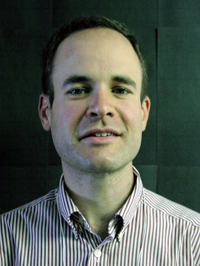
Carlo Marcati is a Researcher in the Department of Mathematics at the University of Pavia, specializing in numerical methods and scientific computing. His research develops advanced finite element methods for fractional partial differential equations and investigates approximation theory for neural operators. Recent work focuses on hp-FEM techniques for integral fractional Laplacians, optimization methods for physics-informed neural networks, and expression rates of deep learning operators for elliptic PDEs in polyhedral domains.
Jürgen Jost is an Honorary Professor in the Department of Mathematics at the University of Leipzig and a retired Director at the Max Planck Institute for Mathematics in the Sciences. He is a member of multiple prestigious academies including the Leopoldina and the Santa Fe Institute for the Sciences of Complexity. His research focuses on geometric analysis, complex systems, network science, and applications in chemistry and neuroscience. Key areas include Ricci curvature in networks, Dirac-harmonic maps, and the evolution of chemical knowledge systems. Jost has received major awards such as the Leibniz Prize (1993) and an ERC Advanced Grant (2010). His work bridges pure mathematics with interdisciplinary applications, including topological data analysis and mathematical biology. He leads the Max Planck School of Cognition and has contributed to foundational studies on minimal surfaces, geometric flows, and information geometry.
Sagun Chanillo is a Professor in the Department of Mathematics at Rutgers, The State University of New Jersey . His research focuses on Nonlinear Analysis , Partial Differential Equations , and related areas in Geometric Analysis and Harmonic Analysis . Research Monographs : "Geometric Analysis of PDE and Several Complex Variables" (AMS), "Harmonic Analysis, Partial Differential Equations and Applications" (Springer), and "Optimal Weak type Inequalities for the Partial Cesaro Sum operator" Research Themes : Dr. Chanillo investigates problems in CR Geometry (e.g., embeddability of CR manifolds, Paneitz operator properties), Fluid Mechanics (e.g., Navier-Stokes with divergence-free data), and Geometric PDE (e.g., Yamabe-type problems, symmetry breaking in eigenvalue optimization). He also explores connections to Number Theory (e.g., Riemann Zeta function in scattering theory) and Mathematical Physics (e.g., Ginzburg-Landau vortices, rotating stars). Recent Publications highlight collaborations with researchers like Paul C. Yang , Jean Van Schaftingen , and Po-lam Yung . Key contributions include sharp bounds for geometric PDEs , nonlinear eigenvalue studies , and probabilistic methods in wave equations .
Duccio Papini is an Associate Professor at the Department of Engineering Sciences and Methods (DISMI) of the University of Modena and Reggio Emilia. His research focuses on differential equations, dynamical systems, and their applications in engineering and biology. He teaches courses in mathematical analysis for Electronic Engineering and Management Engineering programs. His work emphasizes periodic solutions, chaotic dynamics, and boundary value problems. He has contributed to studies on relativistic Kepler problems, nonlinear oscillators, and entropy optimization in cryptographic systems. His research often combines variational methods, topological techniques, and numerical simulations to explore complex systems. Education and Affiliations Department of Engineering Sciences and Methods (DISMI), University of Modena and Reggio Emilia Research Interests Nonlinear differential equations and boundary value problems Chaotic dynamics and bifurcation analysis Applications in physics, engineering, and population dynamics Random number generation and entropy optimization Teaching Mathematical Analysis I (Electronic Engineering) Fundamentals of Mathematical Analysis (Management Engineering) Grants and Collaborations Focus on interdisciplinary projects involving mathematics and engineering applications Labs and Teams Active in collaborative research groups within the Department of Engineering Sciences and Methods, focusing on dynamical systems and applied mathematics.
Evan Randles is an Associate Professor of Mathematics at Colby College, located in Waterville, Maine. He holds a tenure-track position and was awarded the Haynesville Fellowship. His research focuses on probability theory, analysis, and partial differential equations, with notable work on local limit theorems, heat kernel estimates, and Fourier analysis. Randles teaches advanced mathematics courses, including Honors Calculus I/II, Probability, and Topics in Real Analysis. He actively collaborates with students, such as Yutong (Tony) Yan `25, on projects like random walk theory and local limit theorems. His recent work includes presentations at the Joint Mathematics Meetings and AMS Eastern Sectional Meetings. His research trends emphasize interdisciplinary connections between probability, analysis, and mathematical physics. Awards include the Haynesville Fellowship, reflecting his scholarly contributions. He advises students in honors projects and has a strong record of publishing in top-tier journals.
Dr. Isabelle Greff is a Lecturer at the University of Pau and the Pays de l'Adour, affiliated with the Laboratory of Mathematics and their Applications. Her research focuses on finite element modeling, multiscale analysis, homogenization techniques, and computational methods for partial differential equations. Greff develops innovative numerical approaches for problems involving composite materials and random media. Her work on box-schemes for elliptic problems provides efficient computational frameworks for complex physical systems. She has collaborated on interdisciplinary projects connecting mathematical theory with engineering applications. Greff has supervised graduate research on variational principles and fractional dynamics, and contributes to mathematics education outreach through initiatives encouraging girls' participation in STEM fields.
James H. Nolen is a Professor of Mathematics at Duke University's Trinity College of Arts & Sciences. He holds a Ph.D. from the University of Texas, Austin (2006) and a B.S. from Davidson College (2000). His research focuses on probability, partial differential equations, and stochastic dynamics, with applications to biological models and reaction-diffusion systems. Notable awards include the 2025 Bass Chair and an NSF Postdoctoral Fellowship (2006-2008). Leadership: Directed Duke's Mathematics Postdoctoral Training Program (2019-2023) Grants: Co-PI for NSF RTG grant on Analysis and Applications (2021-2026), PI for NSF CAREER award on stochastic dynamics (2014-2020) His work bridges theoretical analysis with applications, including studies on random walks, interacting particle systems, and front propagation in heterogeneous media. He serves as an Associate Editor for SIAM Journal on Mathematical Analysis and SIAM Multiscale Modeling and Simulation.
Andrea Bonito is a Professor in the Department of Mathematics at Texas A&M University, affiliated with the College of Arts and Sciences. His research focuses on numerical methods for partial differential equations (PDEs), including adaptive finite element methods, free boundary problems, geometric PDEs, and non-Newtonian fluid dynamics. He explores topics like finite element approximations of thin structures, fractional operators, and optimal learning algorithms. His work emphasizes applications in material science and fluid dynamics, such as modeling bilayer plates, folding mechanics, and electroconvection of thin liquid crystals. Recent contributions include advancements in PINNs (Physics-Informed Neural Networks) for elliptic PDEs and gamma-convergent methods for large deformations. Bonito’s research bridges theoretical analysis with computational implementation, addressing challenges in high-dimensional approximation and incomplete information scenarios. His academic output spans over two decades, with notable publications on geometric PDEs, spectral fractional diffusion, and adaptive methods for elliptic problems. Bonito collaborates on interdisciplinary projects, leveraging numerical analysis to solve complex physical phenomena.
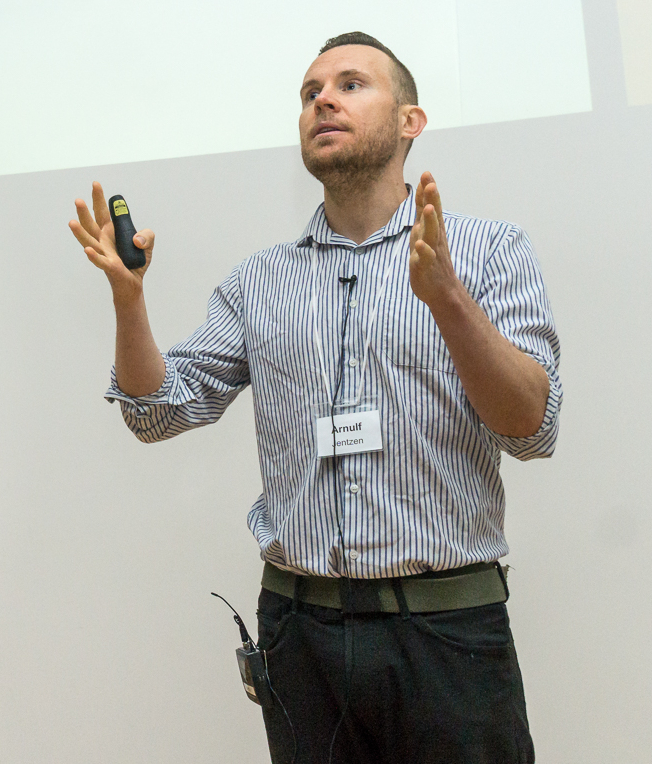
Prof. Arnulf Jentzen is a Professor at the University of Münster (Germany) and the Chinese University of Hong Kong, Shenzhen (China). He holds positions in the Faculty of Mathematics and Computer Science (Münster) and the School of Data Science & Shenzhen Research Institute of Big Data (CUHK-Shenzhen). His expertise spans numerical analysis , machine learning , and stochastic processes . Education: PhD in Mathematics (summa cum laude) from Goethe University Frankfurt (2007–2009), Diploma in Mathematics (2004–2007). Former roles include Assistant Professor at ETH Zurich (2012–2019) and Postdoc fellowships at Princeton University (2011–2012) and Bielefeld University (2009–2010). Research focuses on deep learning (optimization landscapes, convergence of SGD), high-dimensional PDEs (overcoming the curse of dimensionality), and stochastic differential equations (numerical approximations). His work bridges computational finance , dynamical systems , and gradient flows . Recent achievements include the ICBS Frontier of Science Award (2024), ERC Consolidator Grant (2022), and the Felix Klein Prize (2020). He leads a research group with over 20 current and former members, including PhD students and postdocs. Publications emphasize Adam optimizer convergence , gradient flow analysis , and deep learning for PDEs . He serves on editorial boards for journals like Communications in Computational Physics and SIAM Journal on Numerical Analysis .
Peter S. Morfe is a Research Fellow at the Max Planck Institute in Leipzig, supervised by Felix Otto. He holds a Ph.D. from the University of Chicago (2022), advised by Panagiotis Souganidis. His research focuses on elliptic/parabolic PDEs, homogenization, calculus of variations, and stochastic processes. He was supported by the NSF Mathematical Sciences Postdoctoral Research Fellowship from 2022 to 2024. His educational background includes a Ph.D. in Mathematics (2022) from the University of Chicago and prior academic training leading to his postdoctoral appointment. Research interests span theoretical and applied analysis, with emphasis on homogenization theory, nonlinear PDEs, and stochastic methods. Key themes include phase transitions, effective properties of random media, and connections between PDEs and probability. His work bridges mathematical physics and materials science, addressing questions in continuum mechanics and stochastic processes. Publications highlight contributions to drift-diffusion equations, Gaussian free fields, and homogenization in heterogeneous media. Recent work explores scaling limits, Pareto peeling, and surface tension phenomena in periodic environments. Notable collaborations include studies with Felix Otto, Panagiotis Souganidis, and others in fluid dynamics and stochastic analysis. Morfe’s NSF fellowship (2022–2024) underscores recognition of his research potential. He has contributed to advancing techniques in viscosity solutions and variational principles, with applications to both pure and applied mathematical problems. His work often integrates analytical rigor with computational insights, reflecting interdisciplinary strengths.
Stephen Wright is a Professor in the Department of Computer Sciences at the University of Wisconsin-Madison, serving as Department Chair from 2023-2025. He previously held roles at Argonne National Laboratory (1990-2001) and the University of Chicago (2000-2001). His research focuses on computational optimization, with applications in data science, machine learning, and engineering. He co-authored seminal books such as Numerical Optimization (with J. Nocedal) and Optimization for Data Analysis (with B. Recht). Wright leads the Wisconsin Institute for Discovery's research initiatives and has developed widely-used optimization software like PCx and SpaRSA . Key awards include the 2024 George B. Dantzig Prize, 2020 Khachiyan Prize, and SIAM Fellow status since 2011. He has served as editor-in-chief of the SIAM Journal on Optimization and Mathematical Programming, Series B . His teaching includes courses on nonlinear optimization (CS726) and introductory optimization (CS524). Wright’s work bridges theory and practice, emphasizing scalable algorithms and interdisciplinary applications.
David Witt Nyström is a Professor at the University of Gothenburg’s Department of Algebra and Geometry. His research focuses on complex geometry, particularly Okounkov bodies, Kähler manifolds, Monge-Ampère equations, and geometric analysis. He has made significant contributions to the study of Fekete points, Hele-Shaw flows, and embeddings of Kähler balls. Key research areas include algebraic geometry, differential geometry, and mathematical analysis. His work bridges convex geometry with complex analysis, addressing topics like Brunn-Minkowski theorems, Monge-Ampère mass distributions, and coupled Kähler-Einstein metrics. Recent publications explore harmonic interpolation, duality between pseudoeffective and movable cones, and geometric flows. Publications span advanced topics such as convex subequations, non-pluripolar energy, and analytic test configurations. Despite prolific output, no specific scientific awards or grants are explicitly mentioned. No advising or lab affiliations are noted in the provided text.
Wilhelm Schlag is a Professor in the Department of Mathematics at Yale University, specializing in partial differential equations, mathematical physics, and harmonic analysis. His research focuses on nonlinear wave equations, spectral theory, and Anderson localization, with significant contributions to the understanding of wave maps, Klein-Gordon equations, and Schrödinger operators. Dr. Schlag's research interests span multiple areas of mathematical analysis with emphasis on energy critical wave equations , spectral theory of Schrödinger operators , and Anderson localization . His work combines techniques from harmonic analysis, dynamical systems, and geometric analysis to study nonlinear phenomena in mathematical physics. He has developed innovative approaches to understanding the stability of solitons, the behavior of waves on curved backgrounds, and the spectral properties of quasi-periodic operators. Analysis of his recent publications reveals a strong focus on non-perturbative methods in spectral theory, particularly for quasi-periodic operators and Schrödinger cocycles. His work often bridges the gap between mathematical physics and pure analysis, with applications to quantum mechanics and field theory. Schlag has developed multiscale techniques for Anderson localization and made significant contributions to the understanding of wave map dynamics beyond symmetric settings. Dr. Schlag serves on the editorial boards of prestigious journals including Communications in Partial Differential Equations , Inventiones Mathematicae , and Calculus of Variations and PDE . He is the co-author of influential books such as Concentration compactness for critical wave maps and Invariant Manifolds and dispersive Hamiltonian Evolution Equations . His collaborative research program involves extensive numerical computations, as evidenced by the NLKG3_WEB repository containing Bash scripts and data for nonlinear Klein-Gordon equation simulations. Schlag has mentored numerous researchers through his collaborative projects and has presented his work at major international conferences including the International Congress of Mathematicians.
Laurent Saloff-Coste is the Abram Rogers Bullis Professor of Mathematics at Cornell University , affiliated with the College of Arts and Sciences . His research focuses on analysis , probability theory , stochastic processes , and their interplay with Riemannian geometry and geometric group theory . He explores heat diffusion on manifolds, random walks on groups (both finite and infinite), and quantitative estimates for ergodic Markov chains. Education: Ph.D. in Mathematics (1983), Université Paris VI Doctorat d'État (1989), Université Paris VI Research Interests: His work bridges analysis and probability, studying properties of heat kernels, potential theory, and functional inequalities. He investigates geometric aspects of large-scale structures, such as Cayley graphs, and the relationship between group algebraic properties and random walk behavior. Key areas include: Heat kernel estimates on manifolds and graphs Isoperimetric profiles and their applications Mixing times of Markov chains Sub-elliptic diffusions on Lie groups Recent Trends in Publications (2023–2025): His recent work emphasizes geometric analysis of heat kernels, long-range random walks on nilpotent groups, and functional inequalities. He explores applications to stochastic processes on discrete and continuous spaces, including studies of Lévy processes on nilpotent groups and transient subgraphs. Notable themes include: Estimates for hitting times and Harnack inequalities Perturbation methods for Dirichlet eigenfunctions Uniform doubling properties in Lie group geometries Awards: 2022 Simons Fellow Advising and Grants: No specific advisees or grant details are listed in the provided materials. His research has been supported by collaborations with institutions like the Institute of Mathematics in Wrocław, Poland, and participation in events such as the Midwest Probability Colloquium. Labs/Teams: No dedicated lab or team is explicitly mentioned, though his work involves interdisciplinary collaborations in geometric analysis and probability.
Mark Iwen is a faculty member at Michigan State University specializing in computational mathematics and numerical methods for solving complex differential equations. His research focuses on developing efficient algorithms for high-dimensional problems that traditionally suffer from the curse of dimensionality. His work intersects with applied mathematics, computational science, and engineering applications. Iwen's research particularly emphasizes spectral methods, Fourier analysis, and compressive sensing techniques to address challenges in solving multiscale elliptic partial differential equations. He has developed innovative approaches that combine sparse Fourier transforms with randomized rank-1 lattice methods to create more efficient computational frameworks. His work demonstrates strong theoretical foundations with practical applications, showing how computational methods can be optimized to handle problems that were previously considered computationally intractable due to their high dimensionality and multiscale nature. His research bridges theoretical mathematics with practical computational implementation. Iwen actively contributes to the academic community through seminar presentations and scholarly work, sharing advancements in sparse spectral methodologies that have potential applications across various scientific and engineering disciplines where high-dimensional PDEs are encountered.