
Igor Kortchemski is a CNRS researcher at the Department of Mathematics and Applications (DMA) at École Normale Supérieure, Paris, and a lecturer in the Department of Applied Mathematics at École Polytechnique. His primary research focuses on the continuous limits of random discrete models, particularly examining how discrete combinatorial structures converge to continuous objects under appropriate scaling. His educational background includes a PhD in Mathematics (2012) under Jean-François Le Gall at École Normale Supérieure and a Habilitation à diriger des recherches (HDR) in Mathematics (2016). Kortchemski's research spans several interconnected areas: Random trees and Galton-Watson processes with heavy-tailed distributions Random planar maps and their geometric properties Growth-fragmentation processes and their connections to Lévy processes Scaling limits of combinatorial structures and their continuous counterparts His publication record shows a consistent focus on the geometric properties of random discrete structures, with recent work (2023-2025) exploring uniform attachment processes with freezing, critical tree phenomena, and the mesoscopic geometry of sparse random maps. His research often involves sophisticated probabilistic analysis combined with combinatorial insights. Scientific recognition includes: prix de thèse solennel Perrissin-Pirasset / Schneider de la chancellerie des Universités de Paris (2012) Kortchemski actively contributes to academic service: Examiner for the minor math exam at École Polytechnique (FUF) since 2023 Member of the mathematics jury for ENS International Selection (2023) Member of the jury for the external mathematics competitive examination (Agrégation) since 2021 Member of the jury for the Arts and Economic and Social Sciences Bank (B/L) mathematics exams (2015-2018) He mentors the next generation of researchers as co-director of Antoine Aurillard's and Vanessa Dan's theses (both since 2023), and previously directed Etienne Bellin's (2020-2023) and Paul Thevenin's (2017-2020) theses.
جستجوی استاد راهنمای دانشگاهی
برای مسیر پژوهشیتان، استاد راهنما، استاد دانشگاه و پژوهشگر مناسب را پیدا کنید و با آنها ارتباط بگیرید.
نمایش ۱-۱۵ از ۴۶ استاد راهنما
اطلاعات پروفایلها از صفحات عمومی دانشگاهها گرفته شده و ممکن است بهروز نباشد.
Hugo Paquetمشاهده پروفایل
پژوهشگر
Hugo Paquet is a Researcher at INRIA Paris and a member of the ANTIQUE team at École Normale Supérieure , PSL University. He completed a PhD in Computer Science (2015–2019) at the University of Cambridge under Glynn Winskel , focusing on concurrent game semantics for probabilistic programming. His postdoctoral work includes positions at LIPN, Paris (2022–2024, funded by a Marie Skłodowska-Curie Award) and University of Oxford (2020–2022). He has contributed to conferences including LICS , ESOP , FSCD , and POPL . Education : PhD in Computer Science (University of Cambridge, 2019) Research Interests : Probabilistic programming (semantics, inference algorithms, nonparametric models), categorical semantics (game semantics, concurrency models, adjunctions), combinatorial species, and 2-dimensional categories. Teaching : Category Theory (2023–2024), Bayesian Statistical Probabilistic Programming (2021–2022), Lambda-calculus and Types (2020–2021), and small-group teaching at Cambridge (Logic, Discrete Mathematics, Semantics). Awards : Marie Skłodowska-Curie Award under the Paris Region Fellowship Programme Labs : INRIA Paris, ANTIQUE team (2024–present)
Basile de Loynes is a Lecturer at the French National School of Statistics and Information Analysis (ENSAI), holding a permanent academic position since at least 2016. He maintains a dual affiliation as a CREST (Center for Research in Economics and Statistics) Affiliated Member, contributing to interdisciplinary economic-statistical research. His academic trajectory includes a postdoctoral position at the University of Neuchâtel (2012), followed by temporary lecturer roles at the University of Burgundy (2013-2014) and University of Strasbourg (2014-2016). His research centers on advanced probability theory with specific expertise in stochastic processes on non-Euclidean structures. Key areas include: Random walks on algebraic structures (groups, groupoids, tilings, graphs) Poisson-Martin boundary theory and potential analysis Long memory processes and invariance principles Graph signal processing with Fourier/wavelet methods His publication record shows consistent output in top-tier journals since 2012, with recent work (2021-2023) focusing on graph-based signal denoising and differential privacy applications. Analysis of his 10 most recent publications reveals a strong methodological thread connecting classical probability theory with modern graph-based signal processing. Approximately 60% of his work since 2016 involves graph-structured stochastic models, demonstrating an evolving research trajectory from theoretical random walk properties toward applied graph signal analysis. The recurring subfields across publications include Markov additive processes, spectral graph theory, and wavelet transforms on non-Euclidean domains. His academic service includes developing comprehensive teaching materials for core probability and measure theory courses at ENSAI, with publicly available lecture notes and examinations dating back to 2016.

Sonia Fliss is a Full Professor at ENSTA Paris , affiliated with the Department of Applied Mathematics and the POEMS laboratory (UMR CNRS-INRIA-ENSTA) . She teaches applied mathematics courses on partial differential equations (PDEs) , finite element methods , and periodic homogenization to undergraduate and graduate students. Doctor in Applied Mathematics (2009) Authorized to supervise research (2019) Research Interests : Sonia Fliss specializes in the modeling and numerical analysis of wave propagation in periodic, quasi-periodic, and random media . Her work includes transparent boundary conditions , guided waves , and asymptotic methods for acoustic, electromagnetic, and elastic wave phenomena . Recent Publications highlight her contributions to the Half-Space Matching Method , edge states in honeycomb structures , and scattering problems in unbounded domains . Her numerical techniques address multi-scale waveguides and time-harmonic propagation . Laboratory : As a member of the POEMS team, she collaborates on interdisciplinary projects involving mathematical analysis , computational physics , and engineering applications in domains like defence, energy, and transport .
Ioan Todinca is a Professor of Computer Science at the University of Orléans, France, affiliated with the LIFO (Laboratoire d'Informatique Fondamentale d'Orléans) research laboratory. His academic career spans over two decades, with significant contributions to theoretical computer science, particularly in graph algorithms and distributed computing. Faculty of Science, University of Orléans LIFO Research Laboratory Member of Institut thématique pluridisciplinaire Modélisation, Systèmes, Langages (since 2014) Former director of MIPTIS doctoral school (2012-2014) Former head of Computer Science degree program (2007-2011) Former leader of LIFO Graphs, Algorithms and Computational Models team (2008-2012) Todinca's research focuses primarily on graph algorithms, with expertise in exact algorithms (moderately exponential), parameterized algorithms, and algorithms for specific graph classes. He has made significant contributions to techniques involving tree decompositions, treewidth, minimal separators, and potential maximal cliques. More recently, his work has expanded into distributed algorithms, especially in communication-constrained models like the broadcast congested clique. His research bridges theoretical foundations with practical algorithmic approaches for NP-hard problems. The analysis of his recent publications reveals a strong trend toward distributed computing problems, particularly in congested network models. His work spans from fundamental graph theory problems (cycle detection, graph modification) to applications in quantum computing and model checking. The consistent focus on communication complexity, verification, and efficient algorithms across different computational models demonstrates his ability to adapt theoretical computer science principles to emerging computational paradigms. Todinca has supervised numerous PhD students and has been actively involved in the theoretical computer science community through conference organization and editorial work. His publications appear consistently in top-tier venues including SIAM Journal on Computing, Algorithmica, and proceedings of major conferences like STACS, WG, and DISC. Teaching responsibilities include algorithms, graph theory, and discrete structures for undergraduate and graduate students, with previous experience teaching databases, programming, and software engineering. His educational materials are hosted on the university's Celene platform.
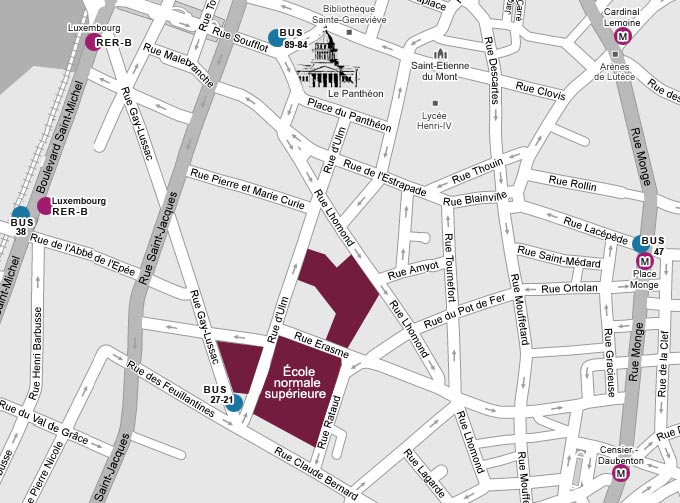
Phong Nguyenمشاهده پروفایل
استاد پژوهش
Phong Nguyen is a Research Professor at Inria (Directeur de recherche) and a part-time professor at the Computer Science Department (DI ENS) of École Normale Supérieure (ENS), PSL University in Paris. He leads the ENS Crypto Team (Inria Equipe Projet Cascade) and serves as the principal investigator for the ERC Advanced Grant PARQ (2020) focused on lattices in parallel and quantum computing. He holds a PhD (1999) and Habilitation (2007) from ENS-Lyon, with an agrégation de mathématiques (1997). His research integrates cryptography, algorithmic number theory, and lattice-based computations, emphasizing: Cryptanalysis : Deconstructing cryptographic protocols, especially lattice-based systems Post-quantum cryptography : Developing quantum-resistant solutions Lattice algorithms : Optimization of reduction, enumeration, and sieving techniques Real-world applications : Bridging theoretical constructs with practical security implementations His publications (spanning Eurocrypt, Asiacrypt, and Journal of Cryptology) demonstrate deep expertise in lattice cryptography, with recurring themes in algorithm efficiency, cryptanalysis of NTRU/GGH systems, and theoretical advancements in lattice reduction. Recent work (2024) continues this trajectory with improved BKZ analysis and hypercubic lattice optimizations. Awards include : ERC Advanced Grant (2020) for PARQ project Best Paper Award at EUROCRYPT 2006 Cor Baayen Award (2001) He advises PhD students (e.g., Henry Bambury, Leo Ducas) and interns from institutions like École Polytechnique and ENS. He directs the ENS Crypto Team and previously held leadership roles as: French Director of the Japanese-French Laboratory for Informatics (2015-2019) European Director of LIAMA (Sino-European Computer Science Lab, 2013-2015) Coordinator of ECRYPT II virtual labs (2008-2012)
Irène Marcovici is a Professor in the Department of Mathematics at the University of Rouen Normandy, affiliated with the Raphaël Salem Mathematics Laboratory (LMRS). She leads the Probability and Dynamical Systems team within LMRS and participates in the ALEA and SDA2 working groups of the GDR Informatique Fondamentale et ses Mathématiques. PhD in Mathematics (2013, University of Paris Diderot) Habilitation à Diriger des Recherches (2021, University of Lorraine) Her research focuses on probability theory , dynamical systems , and cellular automata , with significant contributions to percolation theory, self-organization phenomena, and combinatorics on words. She investigates how randomness influences complex systems, particularly through probabilistic cellular automata and their ergodic properties. Analysis of her recent publications (2021-2025) reveals a strong emphasis on percolation dynamics (e.g., corner percolation with directional bias), self-stabilization mechanisms in cellular systems, and combinatorial structures like Kolakoski sequences. Her work bridges theoretical computer science and pure mathematics, often employing stochastic methods to solve problems in symbolic dynamics and discrete geometry. Supervision & Collaborations: Currently supervising Maxence Poutrel (with Jérôme Casse) Previously supervised Pierrick Siest (2021-2024), Jocelyn Begeot (now Associate Professor), and Pierre-Adrien Tahay (now PRAG at Telecom Nancy) Regular collaborations with Régine Marchand, Nazim Fatès, and Pascal Moyal Laboratory Context: As leader of the Probability and Dynamical Systems team at LMRS, she contributes to France's national research infrastructure in fundamental mathematics, with connections to CNRS and international working groups focused on automata theory and discrete probability.
Sophie Huiberts is a CNRS researcher at LIMOS, Clermont Auvergne University in Clermont-Ferrand since fall 2023. Previously, she was a Simons Junior Fellow at Columbia University in New York City, hosted by Tim Roughgarden. She completed her PhD research at Centrum Wiskunde & Informatica in Amsterdam under Daniel Dadush and received her doctorate in 2022 from Utrecht University. Dr. Huiberts specializes in theoretical aspects of mathematical optimization, particularly focusing on the gap between practical performance and theoretical predictions of linear programming algorithms. Her research examines software implementations like Gurobi, CPLEX, SCIP, and HiGHS to understand why these algorithms perform better in practice than worst-case analysis would suggest. She has made significant contributions to smoothed analysis of the simplex method, establishing both upper and lower bounds on its complexity under perturbations of worst-case inputs. Analysis of her publication record shows consistent focus on bridging theoretical computer science with practical optimization methods. Her work spans linear programming theory, integer programming, combinatorial optimization, and computational geometry, with particular emphasis on understanding the geometric properties of optimization problems and the behavior of algorithms on real-world instances. Simons Junior Fellowship Dr. Huiberts maintains active engagement with the research community through social media platforms including Mastodon and Bluesky, and produces high-quality recordings of her research talks available on YouTube. She has made a conscious decision to stop air travel since 2023 due to climate concerns, demonstrating commitment to sustainable research practices while maintaining scientific connections through digital means. She is affiliated with LIMOS (Laboratoire d'Informatique, de Modélisation et d'Optimisation des Systèmes), a research laboratory at Clermont Auvergne University focused on computer science, modeling, and optimization systems, where she continues her investigations into the theoretical foundations of practical optimization algorithms.
- Graph Theory
- Combinatorics
- Algorithms
- +۳ مورد دیگر
Stéphan Thomassé is a Professor in the Computer Science Department at Ecole Normale Supérieure de Lyon, where he is affiliated with the Parallel Computing Laboratory (LIP) and leads the Computational Models, Complexity, Combinatorics (MC2) research team (2023-2025). He was a Member of the University Institute of France from 2016-2021 and has held significant administrative roles including Head of M2 Fundamental Computer Science (2013-2015) and Deputy Director of the Computer Science Department (2013-2015). Thomassé's research focuses on graph theory, combinatorics, algorithms, and theoretical computer science. His work spans structural graph theory , parameterized complexity , graph coloring , and combinatorial optimization . He is particularly known for his groundbreaking work on twin-width, a graph parameter that has revolutionized understanding of sparse and dense graph classes and their algorithmic properties. His research connects combinatorial structures with computational complexity, often bridging theoretical insights with practical algorithmic applications. His recent publications demonstrate a strong focus on structural graph theory, with the twin-width series representing a major contribution to the field. These papers have established connections between graph parameters, model theory, and algorithm design, particularly for problems that were previously thought to be intractable on dense graph classes. Thomassé's work on graph coloring, particularly regarding dense triangle-free graphs and the Erdős-Hajnal conjecture, has resolved long-standing open problems. Member of University Institute of France (2016-2021) ANR projects: GRAAL, AGAPE, STINT, COMPA, Digraphs, TWIN-WIDTH, GODASse As an advisor and educator, Thomassé has taught numerous advanced courses including Algorithmics, Optimization and Approximation, Tree Decompositions and FPT Algorithms, and Graph Decompositions. His teaching reflects his research expertise, emphasizing both theoretical foundations and practical applications of discrete mathematics. His administrative leadership in the MC2 team and the Computer Science Department demonstrates his commitment to advancing research and education in theoretical computer science. Thomassé maintains active collaborations with researchers worldwide, as evidenced by his extensive publication record with co-authors from various institutions. His work continues to shape the landscape of structural graph theory and parameterized algorithms, with recent results opening new avenues for research in combinatorics and theoretical computer science.
Patrick Basمشاهده پروفایل
استاد پژوهش
- Steganography
- Steganalysis
- Digital Watermarking
- +۲ مورد دیگر
Patrick Bas serves as Research Director and Thematic Group Facilitator for the Data Intelligence Group (DatInG) at the University of Lille, France, where he leads the Signal and Images team within the CRISTAL laboratory. His office is located at ESPRIT in Lille's Scientific City, and he holds membership on the institution's Scientific Council. Bas earned his Electrical Engineering degree (1997) and Ph.D. in Signal and Image Processing (2000) from the Institut National Polytechnique de Grenoble. His academic journey includes postdoctoral work at Université Catholique de Louvain, CNRS research at Gipsa-Lab (2001-2009), and a visiting position at Helsinki University of Technology (2005-2008). His primary research centers on steganography, steganalysis, and digital watermarking, with significant contributions to image manipulation detection and neural network applications in multimedia security. He has organized major initiatives including the BOSS steganalysis contest (2010) and served as co-coordinator for the Ecrypt European NoE's watermarking virtual lab (2004-2008). While his Google Scholar profile indicates recent publications in graph theory and combinatorics (2021-2025), these appear inconsistent with his documented research focus on multimedia security as evidenced by his thesis supervision and professional activities. Bas has supervised seven doctoral theses including Rony Abecidan's work on robust image manipulation detection (2024) and Solène Bernard's research on neural network steganography (2021). He has held editorial roles for the Eurasip Journal on Information Security (since 2011) and IEEE Transactions on Information Forensics and Security (2013-2016), and co-organized the International Workshop on Information Hiding (IH07).
- Mathematical analysis of electronic structure models for quantum chemistry and materials science
- Algorithms for electronic structure calculation
- Numerical analysis of linear and nonlinear eigenvalue problems
- +۶ مورد دیگر
Eric Cancès is a Professor at Ecole des Ponts ParisTech and affiliated with INRIA Paris as part of the Molecular and Multiscale Modeling team. His research focuses on mathematical analysis of electronic structure models for quantum chemistry and materials science, algorithms for electronic structure calculations, numerical analysis of eigenvalue problems, implicit solvent models, and molecular dynamics. He has made significant contributions to the development of continuum solvation models, multiscale methods, and computational frameworks for quantum chemistry. Research Interests Mathematical foundations of quantum chemistry Algorithmic development for electronic structure Implicit solvent models and continuum electrostatics Multiscale and domain decomposition techniques Greedy algorithms for high-dimensional problems Scientific Awards Le Rivot prize (French Academy of Sciences, 1992) Best PhD award (Ecole des Ponts, 1998) Blaise Pascal prize (SMAI and French Academy of Sciences, 2009) Ordway visiting professor (University of Minnesota, 2013-2014) Invited lecturer at ICM (2014) Publications span over two decades, addressing Hartree-Fock and Kohn-Sham models, quantum Monte Carlo methods, domain decomposition for solvation models, and multiscale approaches. His work emphasizes mathematical rigor combined with computational efficiency, with recent studies on perturbation methods, polarization energy calculations, and embedded corrector problems for homogenization.
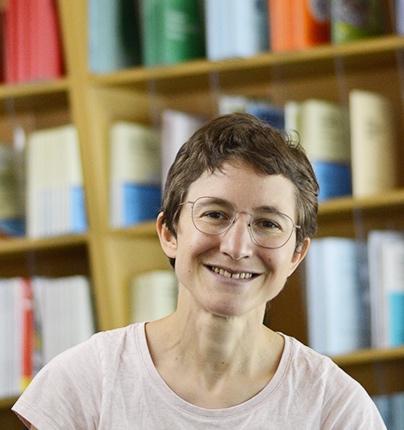
Irène Marcovici is a Professor at the University of Rouen Normandy, affiliated with the Raphaël Salem Mathematics Laboratory (LMRS) and leading the Probability and Dynamic Systems Team. Her research spans probability theory, cellular automata, stochastic processes, and combinatorics, with a focus on ergodicity, percolation, and self-organization phenomena. She collaborates with institutions like the GDR Fundamental Computer Science and its Mathematics and has contributed to journals such as Probability Theory and Related Fields, Annales Henri Lebesgue, and Theoretical Computer Science. Education: Habilitation à Diriger des Recherches (2021, University of Lorraine), PhD in Mathematics (2013, University of Paris Diderot) Research Focus: Marcovici's work explores probabilistic cellular automata, percolation models, and their applications in physics, computer science, and mathematics. Key projects include analyzing stability regions in queueing systems, developing decentralized diagnostics, and studying self-descriptive sequences. Her articles highlight interdisciplinary connections between discrete mathematics and stochastic dynamics. Notable Collaborations: She has co-authored publications with researchers like Jérôme Casse, Régine Marchand, Nazim Fatès, and Mathieu Sablik. Her team participates in the ALEA and SDA2 working groups under GDR Fundamental Computer Science and its Mathematics.
Jérôme Casseمشاهده پروفایل
استادیار
- Probability
- Stochastic Processes
- Combinatorics
- +۳ مورد دیگر
Jérôme Casse is an Assistant Professor of Mathematics at the University Paris-Saclay, affiliated with the Probability and Statistics team at the Mathematics Department (IMO). He holds teaching roles at the IUT of Sceaux (School of Marketing and Management), NYU Shanghai, and Mines Nancy. His research focuses on probability theory, stochastic dynamical systems, combinatorics, and integrable systems, with particular emphasis on probabilistic cellular automata (PCA), nearest neighbour trees, and models like the 8-vertex system. Research interests span reversible stochastic systems, ergodic theory, spatial stochastic processes, and their applications in statistical mechanics. His work often explores the interplay between discrete and continuous probabilistic structures, with a focus on invariant laws, integrable models, and processes iterated ad libitum. Key contributions include studies on Poisson-Kirchhoff systems, edge correlations in lattice models, and the dynamics of random trees with catastrophes. Teaching responsibilities include calculus, probability, graph theory, and partial differential equations across institutions like IUT GEA (192h/year) and NYU Shanghai. His publications (15+ articles since 2012) reflect expertise in stochastic processes, cellular automata, and their applications in both pure and applied mathematics. Laboratory affiliations include the Laboratoire de Mathématiques d'Orsay (LMO), where he occupies office 3E3, and the IUT of Sceaux (office 401). No specific grants or awards are highlighted in the provided materials.
Charles-Edouard Bréhier is a Professor at the University of Pau and the Pays de l'Adour, specializing in numerical methods for stochastic systems. His research spans stochastic PDEs, multiscale modeling, metastable processes, and geometric numerical integration. He leads investigations into error analysis and computational efficiency for complex stochastic systems. Bréhier's work develops advanced numerical schemes for high-dimensional problems, including splitting integrators, Galerkin approximations, and structure-preserving algorithms. His recent publications focus on error bounds for SPDE discretizations, turbulence modeling, and stochastic geometric mechanics. Articles consistently demonstrate rigorous mathematical foundations for computational methods, with applications spanning fluid dynamics, plasma physics, and optimization. The research provides tools for simulating complex systems with inherent randomness across multiple temporal and spatial scales.

Axel Parmentier is a Lecturer and researcher at the École Nationale des Ponts et Chaussées, where he founded the AI for Air Transport industry research chair with Air France. His work focuses on the intersection of operations research and machine learning, particularly in data-driven combinatorial optimization and stochastic optimization, with industrial applications in air transportation, supply chain, and predictive maintenance. He holds a Ph.D. and has been recognized with awards including the AMIES Dissertation Award (2017) for applied mathematics with industrial impact and the Robert Faure Prize (under 35) from ROADEF. His research also includes contributions to structured reinforcement learning, optimization layers in machine learning, and explainable AI for operational decisions. Awards: AMIES Dissertation Award, Robert Faure Prize Labs/Teams: CERMICS laboratory, AI for Air Transport Chair (collaboration with Air France) Grants/Projects: Continent-scale inventory routing solutions, Renault’s logistics optimization His advising includes students like Victor Cohen, whose work on predictive maintenance was featured on France Culture.