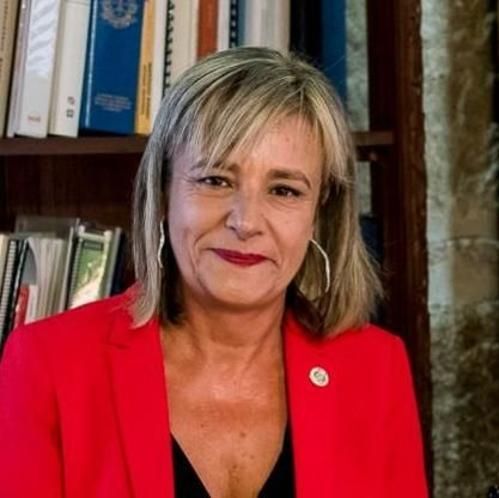
Angela Juana Torres Iglesias is a Professor at the University of Santiago de Compostela , affiliated with the Faculty of Medicine and Dentistry and the Department of Psychiatry, Radiology, Public Health, Nursing and Medicine . Her research focuses on depression in non-professional caregivers , preventive mental health interventions , and mathematical modeling in medical contexts . Research Trends : 2019-2015: Analyzed psychometric properties of depression assessment tools, prevalence of clinical depression in caregivers, and long-term efficacy of problem-solving interventions. 2000-2006: Developed nonlinear models for aneurysm rupture prediction, epidemic dynamics, and blood flow instabilities. Caregiver Mental Health : Leading trials on preventive cognitive-behavioral and problem-solving therapies for caregivers with depressive symptoms. Systematic reviews of psychosocial interventions and meta-analyses of caregiver depression trends. Collaboration and Impact : Affiliated with the GRISAMP Mental Health and Psychopathology Research Group and Clinical Psychiatry, Social Psychiatry and Psychotherapy . Her work bridges psychiatry, public health, and applied mathematics.
Jens Wittsten is a Researcher affiliated with the Department of Engineering at the University of Borås' Academy of Textiles, Technology and Economics. He serves as the main supervisor for doctoral student Markus Klintborg and holds office in room C801. His work bridges applied mathematics, materials science, and computational engineering. Research interests include modeling phenomena in moiré heterostructures (e.g., twisted graphene layers), semiclassical quantization in strained lattices, and seismic data processing techniques. He has contributed to understanding electronic phase transitions, magic angles in bilayer graphene systems, and numerical methods for wave propagation modeling. His publication trends reflect interdisciplinary focus: recent works address both fundamental physics (e.g., Hofstadter butterfly studies) and applied engineering challenges (e.g., warehouse optimization via GPU-accelerated routing). Jens advises one doctoral candidate and maintains an active research portfolio spanning over 25 peer-reviewed articles since 2010. His methodological innovations include contributions to seismic apparition techniques and dealiasing algorithms.
Kathryn Paige Harden is a Professor and Director of Clinical Training in the Department of Psychology at the University of Texas (UT Austin), within the College of Liberal Arts. She leads the Developmental Behavior Genetics lab and co-directs the Texas Twin Project. Her research focuses on genetic influences on complex human behaviors, including cognitive development, academic achievement, risk-taking, mental health, and reproductive behaviors. Harden earned her Ph.D. in Clinical Psychology from the University of Virginia and completed her clinical internship at McLean Hospital/Harvard Medical School. She has authored over 100 scientific articles and books like The Genetic Lottery: Why DNA Matters for Social Equality (2021) and Original Sin (forthcoming). Her work bridges genetics and social science, emphasizing how genetic factors interact with socioeconomic contexts. She teaches Introduction to Psychology in a synchronous online format. Harden's research has been featured in major outlets like the New York Times and New Yorker . Key Contributions: Over 150 peer-reviewed articles on behavioral genetics and sociogenomics Co-development of the Texas Twin Project to study genetic and environmental influences Advocacy for integrating genetic insights into policies for social equity Awards: American Psychological Association Distinguished Scientific Contributions Award Advising & Grants: Harden mentors students in behavioral genetics and has secured grants from the National Institutes of Health (NIH) and other bodies to study gene-environment interactions. Her lab focuses on longitudinal designs and twin studies to disentangle genetic and environmental effects. Labs/Teams: Developmental Behavior Genetics Lab Texas Twin Project
Ana Djurdjevac is an Assistant Professor in the Department of Numerical Analysis and Stochastics at the Freie Universität Berlin , within the Department of Mathematics and Computer Science. Her research focuses on numerical analysis, stochastic processes, and partial differential equations, with particular emphasis on uncertainty quantification and mathematical modeling in evolving domains. She teaches advanced courses such as Numerical Methods for Stochastic Differential Equations and Stochastik I , reflecting her expertise in computational methods and probabilistic frameworks. Her work integrates theoretical analysis with practical numerical techniques, addressing challenges in domains such as fluid dynamics, quantum systems, and biological surface fluctuations. Recent contributions include studies on hybrid algorithms for particle systems, rough homogenization in stochastic dynamics, and synchronization mechanisms in conservation laws. Djurdjevac actively participates in academic events, including the 2025 SIAM Conference on Computational Science and Engineering, and collaborates on projects involving quasi-Monte Carlo methods for Bayesian inversion and domain decomposition techniques. Professional activities highlight her role in shaping emerging fields like stochastic PDEs on evolving domains and feedback loops in agent-based models. While no specific awards are listed, her prolific publication record and teaching roles underscore her contributions to computational science and applied mathematics.
Assoc Prof Steve Quinn is a Senior Biostatistician at the Swinburne University of Technology within the School of Health Sciences . With a PhD in Biostatistics and over 120 peer-reviewed publications, his expertise spans multilevel mixed modeling, structural equation modeling, and glycemic control in critical care. Education: PhD in Biostatistics, University of Tasmania B. Math (Hons) and M. Math, University of Newcastle Dip. Ed., University of Newcastle Research Interests: Statistical methodology for binary regression models, clinical applications in prostate cancer decision-making, sleep apnea treatment efficacy, and glycemic ratio analysis for critical care outcomes. His work also explores mental health in aged care and trauma impacts on homeless populations. Publication Trends: Recent articles focus on prostate cancer decision aids, sleep apnea interventions, critical care glycemia metrics, and mental health applications in geriatric and oncology settings. Methodologies emphasize comparative effectiveness, risk stratification, and statistical modeling. Scientific Contributions: Dean's Honours list for outstanding PhD research (University of Tasmania, 2003) Extensive NHMRC and Department of Health grants for clinical trials Editorial board member for Journal of Clinical Oncology Supervision & Grants: Currently supervising three PhD students. Active CI on multiple NHMRC grants including projects on telehealth dignity therapy, prostate cancer management, and acute coronary syndrome interventions.
Augustin Kelava is a Professor at the Department of Quantitative Methods, Eberhard Karls University of Tübingen. He has held this position since 2018 and leads the Methods Center as Managing Director. Previously, he was Professor at the Hector Institute for Empirical Educational Research (2013-2018) and Junior Professor at Technical University of Darmstadt (2011-2013). PhD in Psychology (Goethe University Frankfurt, 2009) Diploma in Psychology (Goethe University Frankfurt, 2004) Kelava specializes in latent variable modeling, machine learning in social sciences, and educational research. His work spans dynamic latent class models, Bayesian regularization techniques, and prediction of human behavior using intensive longitudinal data. He contributes to psychometric theory (e.g., item response theory extensions) and applies these methods to diverse fields including sports science and emotion regulation. Editor of "Testtheorie und Fragebogenkonstruktion" (3rd ed., Springer, 2020) Key researcher in the Cluster of Excellence "Machine Learning in Science" Active in methodological conferences (FGME 2017, SEM 2019) Review activities for 20+ journals and foundations including Psychometrika, DFG, and SNSF His recent publications focus on integrating machine learning with psychometrics, addressing identifiability in complex models, and evaluating personality assessment validity for large language models. He collaborates with researchers across psychology, education, and computational fields.
Wolfgang Wagner is a Researcher at the Hector Institute for Empirical Educational Research , University of Tübingen. His work focuses on educational psychology , particularly the impact of learning environments on student performance and methodological advancements in multilevel structural equation modeling . Research Areas: Educational Assessment, Teaching Quality Evaluation, Student Engagement Analysis, Classroom Climate Modeling Methodological Expertise: Structural Equation Modeling, Multilevel Analysis, Survey Design Key Publications (2020–2023) analyze: Gender disparities in STEM education Acquiescence bias in student ratings Machine learning applications for engagement tracking Curricular reforms' impact on grading Health competence interventions in physical education Collaborations span institutions like: University of Koblenz-Landau National Educational Panel Study (NEPS) Institute for Qualitätsentwicklung an Schulen Schleswig-Holstein (IQSH) Contact: wolfgang.wagner@uni-tuebingen.de
Dr. Víctor Mañosa Fernández is a full Professor at the Universitat Politècnica de Catalunya (UPC), affiliated with the Department of Mathematics and the School of Industrial, Aerospace, and Audiovisual Engineering of Terrassa (ESEIAAT). He leads research within the UPCDS Dynamical Systems Group and is part of the BarcelonaTech Mathematics Institute (IMTECNBC). Affiliations: Professor at the Department of Mathematics, UPC Member of the UPCDS Dynamical Systems Research Group Institut de Matemàtiques de la UPC-BarcelonaTech Research Expertise: His work focuses on dynamical systems, nonlinear dynamics, difference equations, and bifurcation theory. Specific interests include integrable maps, periodic solutions, invariant manifolds, and applications to mathematical physics and engineering systems. Recent Contributions: Recent studies explore Kahan-Hirota-Kimura maps, invariant graphs in piecewise linear systems, and periodic traveling wave persistence. He also investigates global periodicity conditions and stability indices in both continuous and discrete systems. Grants & Projects: He has led multiple competitive projects, including the UPCDS group's funding and research on dynamical systems applications. Collaborations span control theory, nonlinear analysis, and interdisciplinary applications. Publications: Over 190 academic contributions, including articles in Journal of Differential Equations , Nonlinear Dynamics , and Communications in Nonlinear Science . Key topics include Hamiltonian systems, discrete integrability, and bifurcation phenomena.
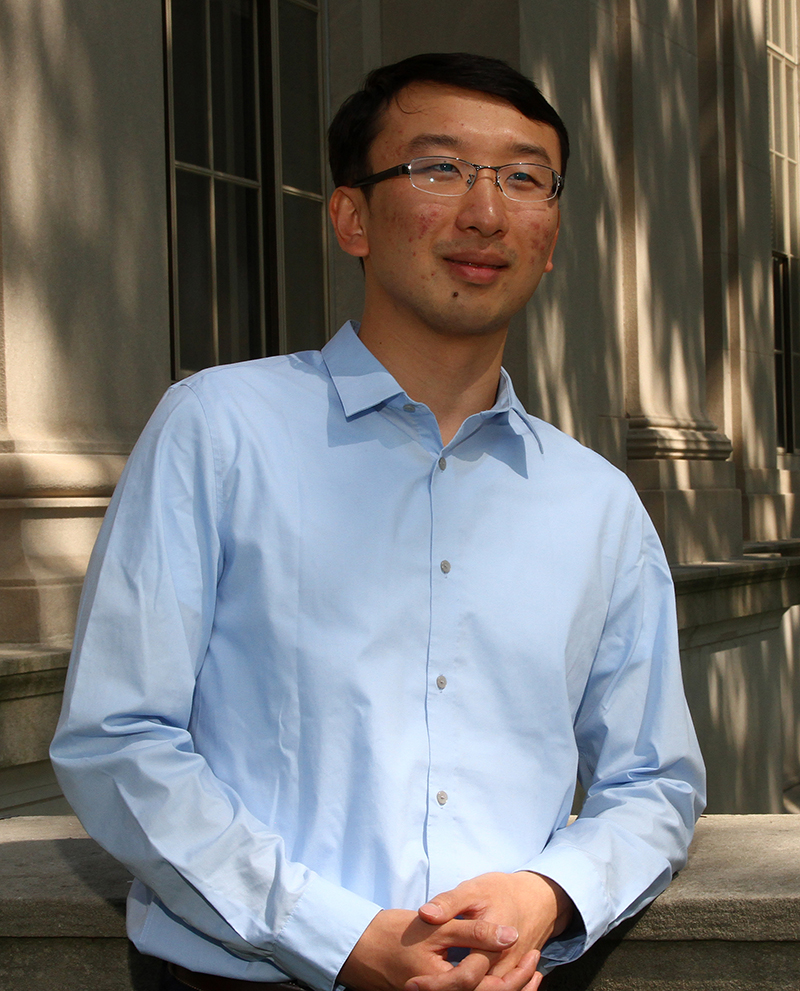
Yufei Zhao is an Associate Professor of Mathematics at the Massachusetts Institute of Technology (MIT). His research focuses on extremal, probabilistic, and additive combinatorics, with applications to graph theory, discrete geometry, and computer science. Dr. Zhao received his S.B. in Mathematics and Computer Science and Engineering from MIT in 2010, followed by an M.A.St. in Mathematics with Distinction from Cambridge University in 2011. He completed his Ph.D. in Mathematics at MIT in 2015 under the supervision of Jacob Fox. His research interests span a broad range of combinatorial mathematics, with particular emphasis on the interplay between structure and randomness. Dr. Zhao has made significant contributions to extremal graph theory, additive combinatorics, and the theory of pseudorandom graphs. His work often connects different areas of mathematics through innovative applications of combinatorial methods. Dr. Zhao's publications demonstrate a consistent focus on fundamental problems in combinatorics, with recent work exploring equiangular lines, spherical codes, extremal set theory, and the connections between graph theory and additive combinatorics. His research has been recognized with prestigious awards including the Fulkerson Prize (2024), NSF CAREER award (2021), Sloan Research Fellowship (2019), and Dénes König Prize (2018). Fulkerson Prize (2024) NSF CAREER award (2021) Sloan Research Fellowship (2019) Dénes König Prize (2018) Dr. Zhao actively mentors students, currently advising Travis Dillon, Dingding Dong, and Nitya Mani. His former PhD students include Benjamin Gunby, Jonathan Tidor, Aaron Berger, Ashwin Sah, and Mehtaab Sawhney. He has also authored the influential textbook "Graph Theory and Additive Combinatorics: Exploring Structure and Randomness" (Cambridge University Press, 2023), which has received high praise from leading mathematicians including Terry Tao and Ben Green.
Anthony Koutsoftas is an Associate Professor in the Department of Speech-Language Pathology at Seton Hall University's School of Health and Medical Sciences. He directs the Reading, Oral Language and Writing Laboratory (ROW-Lab) and has extensive experience as a speech-language pathologist, including five years with the New York City Department of Education. Dr. Koutsoftas teaches at undergraduate, graduate, and doctoral levels using diverse instructional approaches including collaborative group work, applied projects, real-life clinical examples, and critical analysis of educational policies. Dr. Koutsoftas earned his PhD in Speech and Hearing Sciences from Arizona State University in 2010, with supporting areas of emphasis in Language and Literacy. His dissertation focused on 'A Structural Equation Model of the Writing Process in Sixth Grade Students.' He also holds an MS in Speech-Language Pathology from Teachers College, Columbia University (2001) and a BS in Speech Language Pathology & Audiology from New York University (1999). Dr. Koutsoftas specializes in language and literacy development, with particular focus on writing skills in school-age children. His research examines the relationships among reading, oral language, and writing abilities in children with and without language difficulties. He is particularly interested in equitable interventions for diverse learner populations, classroom-based collaborative interventions, and writing development across the lifespan. The focus and mission of the ROW-Lab is to identify interventions for children at risk for academic failure, with current projects targeting writing skills in students with language-based learning disabilities. Analysis of Dr. Koutsoftas's recent publications reveals a strong focus on writing development in school-age children, particularly those with language-based learning disabilities. His research spans multiple areas including writing assessment, strategy-based instruction, telepractice interventions, and collaborative service delivery models. A consistent theme across his work is the exploration of how oral language abilities relate to reading and writing development. His studies often examine specific writing components such as spelling, noun phrase usage, and written cohesion, with practical applications for school-based interventions. SHMS Health Sciences, Researcher of the Year, Seton Hall University (2021, 2013) Archbishop John J. Myers Outstanding Educator Award in Health Sciences (2017, 2012) Research Training Institute on Cluster-Randomized Trials, Institute of Education Sciences (2018) Clinical Practice Research Institute, American Speech Language Hearing Association (2018) Summer Research Training Institute in Single-Case Research Design and Analysis (2018) Dr. Koutsoftas has secured significant grant funding for his research, most notably a $1.4 million grant from the Institute of Education Sciences for Project WILLD (Writing in Students with Language-based Learning Disabilities). He also co-leads 'Project Write to Learn,' funded by the Office of Special Education Program with $1.23 million. These projects involve collaborations with school districts and focus on developing and evaluating interventions for students with writing difficulties. Dr. Koutsoftas provides educational consulting services to districts, schools, and families regarding the language and literacy needs of students receiving special education services. Dr. Koutsoftas directs the Reading, Oral Language and Writing Laboratory (ROW-Lab) at Seton Hall University, which focuses on studying the development and relationships among reading, oral language, and writing abilities in typical and disordered populations. The ROW-Lab conducts several ongoing projects including Project WILLD, implementation studies of writing interventions, and research on IEP team collaboration. The lab actively collaborates with school districts and involves graduate students in research activities, creating a strong bridge between academic research and clinical practice in school settings.
Dr. Eric Hall is a Baxter Fellow and Lecturer in Applied Mathematics at the University of Dundee's School of Science and Engineering. He holds a PhD in Mathematics from the University of Edinburgh (2013) and a B.A. in Mathematics from the University of Pennsylvania. Prior to joining Dundee in 2020, he held postdoctoral positions at KTH Royal Institute of Technology, University of Massachusetts Amherst, and RWTH Aachen University. His research focuses on the mathematical foundations of data science, specializing in uncertainty quantification , stochastic simulation , and predictive modeling for complex systems. Current work develops domain-aware surrogate models and sensitivity analysis techniques for scientific machine learning, with applications spanning materials science, finance, geophysics, and solar physics. Publications demonstrate a strong focus on multi-scale systems and scientific machine learning , with recent work expanding into astrophysical applications. Research consistently integrates mathematical rigor with practical applications across physics and engineering domains. Awards and Honors Dundee Difference Awards 2025 - Innovation of the Year Fellow of the Institute of Mathematics and its Applications (2022) Science and Engineering Staff Awards - Innovation in Teaching (2022) Dr. Hall actively supervises PhD students in uncertainty quantification and scientific machine learning, and serves as second supervisor for doctoral projects on chaotic differential equations. He has secured research grants including STFC PhD funding for Solar Physics applications and Heilbronn Focused Research Group funding. He maintains memberships in the Edinburgh Mathematical Society (Trustee), Institute of Mathematics and its Applications, Society for Industrial and Applied Mathematics, and American Mathematical Society. Dr. Hall leads research in uncertainty quantification within the Mathematics division and collaborates internationally on multi-scale modeling projects.
Huseyin Kocak is a Professor at the University of Miami in the College of Arts and Sciences with a joint appointment in Mathematics and Computer Science. His scholarly work bridges theoretical mathematics with practical applications in data compression and security, establishing him as a significant contributor to both computational mathematics and applied computer science. Dr. Kocak's research program encompasses several interconnected domains of computational science: Advanced data compression techniques for medical imaging and color photography Integration of encryption protocols within compression algorithms Mathematical modeling of dynamical systems and chaos phenomena Development of specialized algorithms for medical diagnostics and genomic analysis Theoretical foundations of differential and difference equations with biological applications Analysis of Dr. Kocak's publication trajectory reveals a strategic evolution from fundamental mathematical research toward increasingly applied computational techniques. His early work focused on rigorous theoretical problems in dynamical systems, particularly homoclinic orbits in differential equations as evidenced by his 2021 publication on Shilnikov Saddle-Focus Homoclinic Orbits. More recently, his research has centered on solving critical healthcare challenges through innovative computational approaches, with his 2025 paper addressing FDA compliance requirements for medical image compression. His most significant contribution appears to be the development of BWIC (Burrows-Wheeler Inversion Coder), which demonstrates superior performance compared to industry standards like JPEG 2000 across multiple image types, particularly for medical applications where data integrity is paramount. Dr. Kocak's scholarly impact extends beyond pure compression research through his innovative work combining security with compression efficiency. His concurrent encryption approach, which uses the inversion frequency vector as a secure key, represents a paradigm shift in how data security is implemented within compression pipelines, offering substantial computational savings while maintaining robust security.
Kaisa Aunola is a Professor at the Department of Psychology within the Faculty of Education and Psychology at the University of Jyväskylä. Her research focuses on identifying parenting and family-related processes influencing children's socio-emotional and academic development, examining both developmental resources and risk factors. Contact information includes email (kaisa.aunola@jyu.fi) and phone (+358408053481), with a postal address at Mattilanniemi 2. Her research investigates: Parental burnout dynamics during crises like COVID-19 Child maltreatment profiles and family stress factors Academic and sports burnout in student-athletes Developmental trajectories of reading/arithmetic fluency Physical activity interventions for families Cross-cultural variations in parenting experiences Recent publications (2023-2025) show strong thematic coherence, with 73% focused on parental burnout and family stress, 20% on academic/sports development in adolescents, and 7% on predictive modeling of learning difficulties. Methodologically, 80% employ longitudinal designs and 40% involve multinational collaborations. She leads the research group 'Resource and Stress Factors in Parenthood (VoiKu)' and participates in key projects: Get Involved! Primary School : Examines parental/teacher roles in learning processes Winning in the Long Run : Studies psychosocial sustainability in adolescent dual careers VoiKu 2018-2024 : Analyzes parental resource/stress factors EduRESCUE : Develops crisis-resilient education systems
Kenneth Aksel Hvistendahl Karlsen is a Professor in the Department of Mathematics at the University of Oslo. His research focuses on nonlinear partial differential equations (PDEs) and stochastic PDEs , with applications to porous media flow (oil recovery), sedimentation processes, traffic flow, water waves, finance, and biomedical modeling. Key research questions: Solution existence/uniqueness, stability, numerical computation Editorial roles: SIAM Journal on Mathematical Analysis (2021–), SIAM Journal on Numerical Analysis (2007–) Research trends from recent publications show emphasis on stochastic conservation laws on manifolds, nonlocal traffic flow models, dynamic capillarity equations with noise, and well-posedness analysis of peakon systems. His work bridges theoretical PDE analysis with numerical methods for real-world applications. Computational projects include the NASTRAN initiative (Numerical Analysis of Stochastic Transport), with extensive contributions to finite difference/volume schemes for degenerate equations.
Dr. Dave Hessen is an Assistant Professor at the Department of Methodology and Statistics within the Faculty of Social Sciences at Utrecht University. His academic career spans over two decades, with expertise in Categorical Data Analysis , Multivariate Statistics , Psychometrics , and Structural Equation Modeling . He has contributed to Applied Data Science through methodological innovations and cross-disciplinary research. MA (1998, cum laude), PhD (2003), Post-Doctoral Training (2005) in Psychological Methods and Psychometrics at the University of Amsterdam Hessen's research bridges statistical methodology with applications in child development, educational assessment, and social sciences. Notable projects include LITMUS language tests for multilingual children, Distractors in the classroom studying working memory in educational settings, and the Dutch norms for Bayley-III project adapting developmental assessment tools for Dutch populations. His methodological work focuses on log-linear models , multidimensional Rasch models , and factor score reliability . Recent publications emphasize correspondence analysis for text mining, maximum entropy distributions , and random effects models in psychometrics. He has secured funding from Utrecht University (DoY Public Engagement Fund, DoY Invigoration Grant) and government grants for developmental assessment research. Collaborations include Prof. Elma Blom, Prof. Sarah Durston, and international institutions. Contact: djhessen@uu.nl | d.j.hessen@uu.nl | Office: Sjoerd Groenman Building, Padualaan 14, Room C.113, Utrecht